Understanding the Gut-Brain Connection After Traumatic Brain Injury: How Chiropractic Care Can Help Restore Balance
A woman is experiencing gut pain symptoms after sustaining a head injury in a motor vehicle crash.
Traumatic brain injury, often called TBI, happens when a sudden blow or jolt to the head disrupts normal brain function. This can range from mild concussions to severe cases that change lives forever. However, many people are unaware that TBI doesn’t just affect the head—it can also impact the entire body, particularly the gut. The gut and brain communicate with each other constantly through a network known as the gut-brain axis. When TBI occurs, this chat becomes disrupted, leading to issues such as leaky gut, imbalanced gut bacteria, and poor digestion. These issues can exacerbate the brain injury by spreading inflammation throughout the body. On the other hand, simple changes like chiropractic adjustments may help alleviate issues by calming nerves, reducing inflammation, and strengthening the gut-brain connection.
In this article, we’ll break down how TBI harms the gut, the symptoms it causes, and why the gut matters for healing the brain. We’ll also examine how integrative chiropractic therapy—think spinal adjustments to enhance nerve signals—can alleviate digestive issues and promote recovery. Drawing from recent studies and expert insights, we’ll keep it straightforward so you can grasp the science without getting lost in jargon.
What Is Traumatic Brain Injury, and Why Does It Matter for Gut Health?
TBI strikes about 69 million people worldwide each year, from car crashes to sports hits (Dhar et al., 2024). Right after the injury, the brain swells and releases signals that stress the body. This stress doesn’t stay in the head; it travels down nerves and hormones to the belly. The gut-brain axis is like a two-way street: the brain instructs the gut when to digest food, and the gut sends back signals that influence mood and focus.
When TBI blocks this street, the gut suffers. One significant change is increased gut permeability, also known as “leaky gut.” Normally, the gut wall acts like a tight filter, letting nutrients in but keeping junk out. After a TBI, that filter loosens, allowing bacteria and toxins to slip into the blood. This sparks body-wide inflammation, which in turn inflames the brain further (Nicholson et al., 2019).
Here’s a quick list of how TBI disrupts the gut-brain axis:
Nerve Signal Glitches: The vagus nerve, a key player in the autonomic nervous system, gets thrown off, slowing gut movement and causing backups.
Hormone Shifts: Stress hormones, such as cortisol, spike, weakening the gut lining.
Immune Overdrive: Brain damage triggers alarm signals that activate gut immune cells, resulting in swelling.
These changes don’t just cause tummy troubles—they can drag out brain fog, fatigue, and even raise risks for long-term issues like depression or Alzheimer’s (Nicholson et al., 2019). Restoring the gut could significantly contribute to the recovery from traumatic brain injury.
The Gut’s Hidden Role in Brain Healing
Your gut isn’t just for breaking down lunch; it’s a powerhouse for brain health. It houses trillions of bacteria—the microbiome—that make feel-good chemicals like serotonin, which boosts mood and sleep. Approximately 90% of serotonin originates from the gut, rather than the brain (Nicholson et al., 2019). After a TBI, this factory slows down, leaving you irritable or exhausted.
The gut also absorbs key nutrients essential for brain repair, such as omega-3s for nerve growth and B vitamins for energy. When gut issues arise, you miss them, stalling the healing process. Additionally, healthy gut bacteria combat inflammation, facilitating the brain’s ability to rewire itself through neuroplasticity—the brain’s capacity to form new neural pathways.
Microbiome Magic: Good bacteria produce short-chain fatty acids (SCFAs) that calm brain swelling and support new cell growth.
Barrier Buddies: A strong gut wall blocks toxins that could cross the blood-brain barrier and worsen damage.
Mood Messengers: Gut signals via the vagus nerve influence stress and focus, key for rehab.
Studies indicate that TBI patients with gut imbalances have slower recovery and more cognitive slips (Hassan et al., 2020). However, nourishing the gut with the right foods or therapies can help reverse the situation.
How TBI Leads to Leaky Gut and Bacterial Imbalance
Leaky gut starts fast after TBI—sometimes in hours. Brain trauma intensifies stress responses, flooding the body with catecholamines that disrupt the gut’s tight junctions, the “zippers” that hold cells together (Pitman et al., 2021). Proteins like occludin and ZO-1 break down, letting bacteria sneak out.
This leakage triggers a firestorm: toxins enter the bloodstream, activating immune cells to release cytokines such as TNF-α and IL-6. These chemicals not only inflame the gut but also travel to the brain, fueling secondary damage (Dhar et al., 2024). In one study, TBI mice exhibited 2.5 times more gut leaks, which was linked to higher mortality rates from infections (Nicholson et al., 2019).
Dysbiosis, or bacterial imbalance, worsens. TBI alters the microbiome, with harmful bacteria, such as Proteobacteria, proliferating while beneficial ones, like Firmicutes, decline (Wang et al., 2021). This imbalance reduces SCFA production, which normally helps soothe inflammation. Human data support this—patients post-TBI have altered gut microbiomes for years, linked to poorer cognitive skills (Hassan et al., 2020).
Key signs of this gut takeover include:
Early Warning: Within days, slower gut motility leads to bloating and irregular poops.
Long Haul: Chronic dysbiosis increases the likelihood of ongoing inflammation and nutrient deficiencies.
Feedback Loop: Leaky gut feeds brain inflammation, which in turn worsens gut leaks—a vicious cycle.
Breaking this loop is crucial; without it, TBI recovery stalls (Cognitive FX, 2023).
Common Digestive Woes After a Brain Injury
TBI’s gut punch shows up in everyday gripes that sap energy and joy. Nausea strikes hard early on, often accompanied by vomiting or dry heaves, making eating a chore (Cognitive FX, 2023). Constipation is sneaky—slowed nerves mean food lingers too long, causing hard stools and belly pain. Diarrhea flips the script, from bacterial overgrowth or stress.
Other hits:
Bloating and Gas: Trapped air from poor motility feels like a balloon in your gut.
Appetite Crash: Loss of hunger leads to weight drops and missing nutrients.
Acid Issues: Reflux or heartburn from weakened barriers irritates the throat.
These aren’t just annoyances; they link to brain symptoms. For example, gut inflammation can amp up headaches or dizziness (Flint Rehab, 2023). In severe cases, feeding intolerance affects up to 50% of patients, hiking infection risks (Dhar et al., 2024). Spotting these early lets you act fast.
Inflammation: The Bridge Between Gut Chaos and Brain Strain
Inflammation is the troublemaker tying gut woes to brain hurt. After a TBI, damaged brain cells release danger signals (DAMPs) that alert the immune system. This revs up gut cytokines, which leak through the damaged wall and reach the brain, causing swelling of neurons (Pitman et al., 2021).
The gut, which contains 70% of immune cells, amplifies this process. Dysbiosis releases pro-inflammatory signals, while low SCFAs allow swelling to run rampant (Wang et al., 2021). Result? A body-wide storm that delays healing and sparks issues like epilepsy or PTSD (Hassan et al., 2020).
Chronic Creep: Lingering inflammation is linked to diseases years later, according to long-term studies.
Taming this fire is key; therapies that cool gut swelling often ease brain fog too (Nicholson et al., 2019).
Enteric Nervous System: The Gut’s Brain Goes Haywire
The enteric nervous system (ENS), your gut’s own nerve web, acts like a mini-brain, controlling wiggles and juices. TBI zaps it via vagus glitches and hormone floods, leading to dysfunction (Nicholson et al., 2019). Serotonin levels in the colon decrease, slowing peristalsis—the wave that propels food through the digestive tract (Traumatic brain injury alters the gut-derived serotonergic system, 2022).
This means gastroparesis (stomach paralysis) or spasms, which can worsen leaks and dysbiosis. ENS glia, support cells, become reactive, adding to swelling (Dhar et al., 2024). In patients, this ties to incontinence or pain lasting months.
Quick facts on ENS fallout:
Signal Static: Vagus tone drops, cutting anti-inflammatory acetylcholine.
Peristalsis Problems: Uneven waves cause backups or rushes.
Repair Potential: Boosting vagal signals can reset the ENS, per animal tests.
Restoring ENS flow could smooth digestion and brain signals alike.
Chiropractic Therapy: A Natural Treatment for Gut-Brain Blues
Integrative chiropractic care excels in this area, utilizing spinal adjustments to optimize the nervous system. Misaligned vertebrae, common after TBI whiplash, pinch nerves and disrupt gut chats (Auburn Chiropractors, 2023). Adjustments realign the spine, easing pressure and boosting vagus tone to promote better motility and reduced swelling.
Vagal Revival: A higher tone helps combat dysbiosis and leaky gut, according to studies on autonomic shifts.
Dr. Alexander Jimenez, a chiropractor with over 20 years in functional medicine, observes this in practice. At his clinic, TBI patients report less nausea and steadier bowels after adjustments, thanks to better spine-gut links. “Spinal care isn’t just for backs—it’s key to whole-body healing, including the gut-brain tie,” Jimenez notes in his wellness posts (Jimenez, 2023). His approach combines adjustments with nutrition, aligning with research on multi-modal solutions.
Real Ways Chiropractic Eases Digestive Drama Post-TBI
Patients under chiropractic care see quick wins. Adjustments lower cortisol, easing stress that tightens gut junctions (Eugene Chiropractor, 2023). A study-linked review shows reduced gastrointestinal symptoms in brain injury cases through vagus stimulation (Northwest Florida Physicians Group, 2023).
Benefits include:
Motility Makeover: Faster transit cuts constipation by 30–50%, according to some reports.
Barrier Build: Less permeability means fewer toxins, aiding brain clarity.
Pain Peace: Fewer headaches from gut-brain loops.
When combined with probiotics, it becomes a potent combination—Jimenez frequently pairs them for microbiome resets (Jimenez, 2023).
Blending Chiropractic with Other Gut-Healing Tools
Chiropractic isn’t a solo approach; it often teams with diet and supplements. Eat anti-inflammatory foods like salmon and greens to feed beneficial bacteria (Flint Rehab, 2023). Probiotics, such as Lactobacillus, help rebuild diversity by reducing cytokines (Li et al., 2024).
Nutrient Power: Omega-3s and fibers repair leaks.
Stress Soothers: Yoga plus adjustments amp vagal calm.
Med Check: Swap gut-hurting pills for gentler options.
Jimenez emphasizes the importance of personalization: “Tailor care to the patient’s axis—test microbiome, adjust spine, track progress” (Jimenez, 2023). This holistic approach aligns with studies on enteral nutrition following TBI (Zhang et al., 2024).
Long-Term Outlook: Healing the Gut for Lasting Brain Gains
Gut fixes post-TBI pay off big. Early action reduces chronic risks, such as neurodegeneration (Wang et al., 2021). Patients with balanced microbiomes show better memory and mood years out (Hassan et al., 2020).
Future paths? More trials on chiropractic for TBI patients, according to experts (Psychology Today, 2025b). Jimenez pushes for integrated clinics: “Chiro plus gut therapy—it’s the future for TBI survivors.”
Wrapping Up: Take Charge of Your Gut-Brain Health
TBI disrupts the gut-brain axis, but knowledge and action can help rebuild it. From leaky gut to dysbiosis, these hits cause real pain—but chiropractic offers a gentle reset. Start with a check-up, tweak your plate, and align your spine. Your body thanks you.
Dhar, R., et al. (2024). Dysregulated brain-gut axis in the setting of traumatic brain injury: Review of mechanisms and anti-inflammatory pharmacotherapies. PMC, 11083845. https://pmc.ncbi.nlm.nih.gov/articles/PMC11083845/
How Spinal Misalignment Affects Digestive Health: A Chiropractic Solution
At El Paso Back Clinic, we understand the intricate connection between your spine and overall health, including digestion. Under the expertise of Dr. Alexander Jimenez, DC, APRN, FNP-BC, our clinic specializes in addressing how spinal misalignments can contribute to digestive issues like bloating and constipation. This article explores this connection, the benefits of chiropractic care, and how our integrative approach helps patients recover from injuries and improve gut health.
Understanding Spinal Misalignment and Digestive Issues
Your spine is the backbone of your nervous system, which controls vital functions like digestion. When vertebrae shift out of alignment—a condition called subluxation—they can press on nerves that send signals to your digestive organs, leading to issues like bloating or constipation. For example, misalignments in the lower back (lumbar spine) can disrupt nerve signals to the intestines, slowing waste movement and causing constipation. Similarly, mid-back (thoracic spine) issues may affect stomach function, resulting in bloating (Medical News Today, n.d.).
Dr. Jimenez has observed this link in patients at El Paso Back Clinic. Those with chronic digestive complaints often show spinal misalignments, which, when corrected, lead to significant relief. Conditions like scoliosis or poor posture from injuries can further aggravate these problems, sometimes contributing to irritable bowel syndrome (IBS) symptoms (Posture Pump, n.d.).
The central nervous system (CNS), housed within the spine, regulates digestion. When the spine is misaligned, nerve communication to the stomach, intestines, or colon can weaken, leading to irregular bowel movements or bloating. Specific spinal regions directly influence digestive organs: the thoracic spine affects the stomach, while the lumbar spine controls the lower intestines. Misalignments here can disrupt these processes, creating a cycle of discomfort (Bronson Heritage Chiropractic, n.d.).
At El Paso Back Clinic, Dr. Jimenez sees patients with digestive issues tied to spinal injuries from motor vehicle accidents (MVAs), work, or sports. His clinical observations show that addressing spinal health can significantly improve gut function, offering a non-invasive solution to persistent digestive problems (Jimenez, n.d.).
Chiropractic Care: A Natural Approach to Gut and Spine Health
Chiropractic care at El Paso Back Clinic focuses on realigning the spine to relieve nerve pressure, improving communication between the brain and digestive system. Adjustments target specific areas, such as the thoracic spine for stomach issues or the lumbar spine for constipation. By restoring proper alignment, chiropractic care enhances nerve function, reducing bloating and promoting regular bowel movements (Spring Hill Premier Chiro, n.d.).
Dr. Jimenez’s approach is holistic, addressing both the symptoms and root causes. His patients, including those recovering from MVAs or sports injuries, often report better digestion after regular adjustments. This natural method avoids medications, focusing on long-term health (Jimenez, n.d.).
Enhancing Nerve Function Through Chiropractic Adjustments
Chiropractic adjustments restore nerve function by removing interference caused by spinal misalignments. For example, a misaligned neck may affect the vagus nerve, which regulates gut motility, leading to bloating. Adjustments to the cervical or lumbar spine can relieve this pressure, improving digestion (Imagine Wellness Chiropractic, n.d.). At El Paso Back Clinic, Dr. Jimenez uses precise techniques to target these areas, helping patients experience relief from digestive discomfort.
This approach not only addresses immediate symptoms but also supports long-term gut health. Dr. Jimenez’s experience with injury-related misalignments ensures tailored care that enhances overall well-being (Jimenez, n.d.).
Dr. Jimenez’s Expertise in Injury Recovery and Digestive Health
Dr. Alexander Jimenez, a chiropractor and nurse practitioner, brings a unique dual perspective to El Paso Back Clinic. Specializing in injuries from work, sports, personal incidents, and MVAs, he uses advanced diagnostics like X-rays and imaging to identify spinal misalignments and nerve issues. His treatment plans combine chiropractic care with medical insights, addressing both injuries and related digestive problems (Jimenez, n.d.).
Dr. Jimenez’s ability to handle legal paperwork for personal injury cases sets him apart, ensuring patients receive comprehensive support. His focus on root causes helps patients recover fully, whether from whiplash, back pain, or digestive issues tied to spinal health (Jimenez, n.d.).
El Paso Back Clinic offers a comprehensive approach to recovery, blending chiropractic care with targeted exercise, massage therapy, acupuncture, and integrative medicine. Chiropractic adjustments realign the spine, while exercises strengthen supporting muscles to prevent future issues. Massage therapy reduces muscle tension, and acupuncture enhances nerve function and blood flow to the gut (Dallas Accident and Injury Rehab, n.d.).
Integrative medicine, including nutritional guidance, addresses inflammation and supports gut health, complementing treatments for injuries and digestive issues. This holistic approach promotes natural healing, helping patients avoid long-term complications and achieve optimal health (Dr. Schaer Institute, n.d.).
Spinal health and digestive function are deeply connected, and at El Paso Back Clinic, Dr. Jimenez and our team are dedicated to helping you address both. Through chiropractic care, integrative therapies, and personalized treatment plans, we tackle the root causes of injuries and digestive issues like bloating and constipation. Whether you’re recovering from an MVA or seeking relief from chronic discomfort, our holistic approach ensures lasting wellness.
Can healthcare professionals implement H.E.A.R.T. protocols for trafficked individuals while providing a safe space?
Introduction
Across the world, many local media and organizations are paying close attention to a phenomenon that many people should be aware of. This phenomenon is known as trafficking, and it can be associated with numerous activities, from forced labor to sex labor, and can affect a person’s sense of self-worth. While many people will correlate that trafficking affects many women and children, it can affect many individuals regardless of age, gender, and background. While many survivors of trafficking are dealing with the psychological and physical injuries that they obtain from their traffickers, many medical professionals can implement protocols and roles through the implementation of H.E.A.R.T. to provide a safe space for individuals suffering from trafficking. Today’s article focuses on the definition of trafficking, what H.E.A.R.T. is, and how it is used in a clinical setting. We discuss with certified associated medical providers who consolidate our patients’ information to assess and identify trafficking in a clinical approach while providing a safe space. We also inform and guide patients while asking their associated medical provider intricate questions to formulate customized treatment plans for their pain and provide them with a safe space and positive experience. Dr. Jimenez, D.C., includes this information as an academic service. Disclaimer.
The Definition Of Trafficking
When it comes to defining trafficking, it can be challenging as it is frequently associated with other issues. However, the main definition for trafficking is “recruiting, transporting, transferring, or harboring many individuals or a person that are threatened or forced to achieve the consent of a person having control of the individuals for exploitation.” With human trafficking being a pressing public concern that affects all races, social classes, demographics, and genders, it can impact society and the individual who is being trafficked. (Toney-Butler et al., 2024) Additionally, many people often mistake trafficking and smuggling as they are completely different. Smuggling requires a person to be transported into a nation through voluntary illicit means. While trafficking can come in two forms, which are labor and commercial sex, it can happen within the person’s own home. (Rambhatla et al., 2021) This is because many survivors who are going to get healthcare services will feel various emotions of fear or shame that can prevent them from asking for help due to what they have been through with their trafficker. However, when many individuals who are trafficking survivors are suffering from significant physical, mental, and social health problems and are seeking healthcare services, many healthcare professionals play an important role by creating a safe and responsive space for them. (The Lancet Regional Health-Western, 2022)
Beyond the Surface: Understanding the Effects of Personal Injury- Video
What is H.E.A.R.T In A Clinical Setting
When it comes to creating a safe and positive space in a clinical setting, many healthcare professionals often miss the signs of trafficking due to a lack of training or confidence to identify and treat patients who are trafficking victims. (Lee et al., 2021) However, healthcare protocols should be implemented, and H.E.A.R.T. should be incorporated into a clinical approach to assess and develop a customized treatment plan for the patient. Healthcare professionals can engage with the patient in a one-on-one discussion away from their trafficker and can offer important medical and psychological care resources. (Exeni McAmis et al., 2022) By incorporating H.E.A.R.T. protocols in a healthcare clinic, many doctors and medical professionals can help many patients be in a safe environment. Below is what H.E.A.R.T. stands for.
H-Hearing
The “H” in H.E.A.R.T. is for hearing as many medical professionals not only to hear but to see what is going on in the clinic and to establish environmental awareness. This is due to looking at the patient and who is accompanied by them. With healthcare providers being at the front, they interact with patients and may not know what health concerns are affecting them. This could be due to the following:
By incorporating the hearing aspect in H.E.A.R.T., many healthcare professionals can provide a safe, thoughtful, and engaging approach to the patient and know what to look for when a patient is coming in for treatment.
E-Evaluating
The “E“ in H.E.A.R.T. is used to evaluate its importance in enhancing patient interactions in a trauma-informed care facility. This is highly important because the individual is seeking health care. For the patients being trafficked, it is important to notice the red flags the individual is experiencing. Some of the red flags that many healthcare providers should look for are:
Physical health
Behavioral Health
The patient is with a controlling person
The patient does not have possession of their I.D.
Additionally, it is always important to show compassion, be sensitive to the individual while addressing their needs and concerns, and use a non-judgmental approach during the interview process. This helps the individual ensure they are in a safe environment when discussing sensitive topics. At the same time, it is important not to let the patient be re-traumatized while avoiding the impulse to rescue and overpromise the patient to mental health as we want them to have their self-worth. At the same time, it is best to remember the four “Rs“ when doing a trauma-informed approach; they are:
Realize: Understanding how trauma can affect people.
Recognize: Recognizing the signs of trauma.
Respond: Have all staff trained, use evidence-based practices, and provide a safe environment.
Resist Re-trauma: Recognizing how some practices may trigger painful memories while avoiding re-traumatizing the patient.
By implementing the four “Rs“ and the “E“ in H.E.A.R.T., many healthcare professionals can provide valuable resources to trafficking survivors with a strong support system.
A-Activating
The “A“ in H.E.A.R.T. stands for activating, where healthcare professionals must have proper protocols to engage all employees. This allows the healthcare providers to understand how beneficial it is to develop a protocol for a person who is being trafficked, understand their state and federal reporting laws, and list key elements of effective trauma-informed screening procedures when assessing the patient. This allows a foundational structure to support a response for suspected patients who are being trafficked. At the same time, by following HIPAA laws and organization policies, many healthcare providers must explain the reporting process to the right officials. Additionally, the benefits of developing a protocol for trafficking are by:
Clarifying procedures
Enhance staff training
Optimize the interactions with the trafficking patients
Improve staff confidence
Prepare for any threatening situations
Maximizing preparedness to aid trafficking patients
Optimize support for patients
Develop collaborative outside resources
R-Resourcing
The “R“ in H.E.A.R.T. stands for resourcing, as many healthcare providers must identify the referral systems. This allows healthcare professionals to understand the important message to convey when assessing trafficking victims and the importance of responding to safety, emergency, and reporting requirements. When assessing and interviewing the patient, many will have to recognize that their patient may be a possible victim of trafficking, what their immediate needs are, and what long-term resources can help.
T-Training
The “T” in H.E.A.R.T. stands for training, as it is important that many healthcare providers continuously train to spot trafficking; this provides confidence to many healthcare workers and can help save a person’s life. By implementing H.E.A.R.T. protocols, the “T” allows the doctor to respect the individual’s decision to want help, providing a positive support system while encouraging them to come back, offering to help with a safety plan, and building a resource network. This is because if the patient is accompanied by someone who is controlling and answering for the patient, handing out information discreetly can provide a bit of hope to the individual to make the move. At the same time, providing local and immediate assistance resources can help the individual in the long run. This allows healthcare providers to build a trusting relationship and even help individuals to have a safe and positive experience on their health and wellness journey.
References
Exeni McAmis, N. E., Mirabella, A. C., McCarthy, E. M., Cama, C. A., Fogarasi, M. C., Thomas, L. A., Feinn, R. S., & Rivera-Godreau, I. (2022). Assessing healthcare provider knowledge of human trafficking. PLOS ONE, 17(3), e0264338. https://doi.org/10.1371/journal.pone.0264338
Gutfraind, A., Yagci Sokat, K., Muscioni, G., Alahmadi, S., Hudlow, J., Hershow, R., & Norgeot, B. (2023). Victims of human trafficking and exploitation in the healthcare system: a retrospective study using a large multi-state dataset and ICD-10 codes. Front Public Health, 11, 1243413. https://doi.org/10.3389/fpubh.2023.1243413
Lee, H., Geynisman-Tan, J., Hofer, S., Anderson, E., Caravan, S., & Titchen, K. (2021). The Impact of Human Trafficking Training on Healthcare Professionals’ Knowledge and Attitudes. J Med Educ Curric Dev, 8, 23821205211016523. https://doi.org/10.1177/23821205211016523
Rambhatla, R., Jamgochian, M., Ricco, C., Shah, R., Ghani, H., Silence, C., Rao, B., & Kourosh, A. S. (2021). Identification of skin signs in human-trafficking survivors. Int J Womens Dermatol, 7(5Part B), 677-682. https://doi.org/10.1016/j.ijwd.2021.09.011
Domestic abuse: October is a�Domestic Violence Awareness Month, so it�is time to get a closer look at this increasing form of violent behavior. By and large, the general public is unaware of the effects domestic abuse has on its victims, other family members and society as a whole. Therefore, attempts are being made to heighten society�s awareness of the many facets of this violent crime that plagues America today.
Because people should be aware of the types of abuse crimes that fall into the category of domestic abuse, and who the victims of domestic abuse are, the center is answering questions, such as �Does one have to be a spouse or other immediate family member to be considered a victim of domestic abuse?�
WHAT IS DOMESTIC ABUSE?
This is a crime that involves abuse of family members, romantic partners, and others. The crimes of domestic abuse are numerous, ranging from verbal abuse to murder. They include emotional abuse, such as intimidation and threats, assault, battery (with or without the use of a deadly weapon), sexual abuse (i.e. spousal rape), kidnapping, and detaining one against his or her will.
When considering crimes of domestic abuse, most states consider certain relationships to be �domestic relationships.� In these states, the relationships usually include spouses, former spouses, persons who share a common child together, persons currently residing together or those that have previously shared a domestic living arrangement together, in their criteria for domestic relationships.
DOMESTIC VIOLENCE TODAY
The problem of Domestic violence is on the rise and becoming ever more dangerous to its victims who live in fear. However, the average person in the United States today is unaware of just how serious and out of hand the crime of domestic violence is becoming. This could possibly be because many Americans do not live with conflict and violence in their homes.
Conversely, many victims of domestic violence do not even realize that they are victims of the crime of domestic violence. They�ve been misled by their abusers and believe that the abuse they are victimized by, really is not abuse at all, but just �a way of life.�
In February, an immigration enforcement case in El Paso earned the attention of domestic violence advocates across the country. As the El Paso Times reported, an undocumented woman was detained by immigration officers right after she went to the courthouse to get a restraining order against a violent and abusive partner. Domestic violence advocates were horrified, worried that it would potentially deter undocumented people from reporting abuse to law enforcement. “It sends a powerful message to victims and survivors that there is no safe place,” Ruth Glenn, executive director of the National Coalition Against Domestic Violence, told Bustle in February.
Now, a month later, the effect of fighting domestic violence is being felt. Sometime after the El Paso incident, Enrique Elizondo, a worker for a domestic violence hotline, received a call from an undocumented woman (I have not included any identifying details to protect her confidentiality), facing an abusive husband. According to Elizondo, she was at the point of fear that the abuse could become lethal. But, after selling all her belongings to come to the United States, she found herself feeling like she was out of options. According to Elizondo, her partner had specifically made threats about contacting Immigration and Customs Enforcement (ICE) and having her deported if she took action. The El Paso case made her fear he could. Elizondo tells Bustle he tried to help her contact legal help, but the woman asked him, Is this legal advocate going to deport me? Ultimately, Elizondo says he was able to get her legal help.
Supporting All Survivors on International Womens Day
As we celebrate International Women’s Day, it’s important to remember that ALL women deserve support and safety, regardless of race, religion, country of…
huffingtonpost.com
According to domestic violence advocates interviewed for this article, these situations are becoming the norm for dealing with undocumented survivors of domestic violence. The 2013 re-authorization of the Violence Against Women Act (VAWA) protects survivors of abuse from deportation for reporting the crime, but, as fear in undocumented communities has grown due to more expansive calls for immigration enforcement under Donald Trump’s administration, it’s hard for the people helping survivors to convince them they’re safe.
The February El Paso case may very well have been a fluke according to the El Paso Times, the woman detained had further criminal complaints against her beyond her immigration status. But the publicity generated by a women detained while seeking help from a court has nevertheless led to worry among violence survivors. Already, four cases in Denver of domestic violence were dropped due to fears of the survivors about immigration status, according to Denver City Attorney Kristin Bronsonm who spoke to NPR about the situation.
“That case [in El Paso] alone, I am actually sure had a chilling effect,” Ruth Glenn tells Bustle a month after we initially spoke. Her organization, the National Coalition Against Violence, is working “to ensure that advocates know how to support those victims by making sure that they know what the laws and the rules are,” she says. Specifically, it has been focusing on helping shelters figure out how to deal with these issues such as knowing that they are expected to maintain the confidentiality of their residents even if ICE officers shows up at the door.
Unfortunately, some are prioritizing continuing to live with abuse.
Under the Obama administration, a 2011 legal memorandum required ICE to exercise prosecutorial discretion when dealing with victims or witnesses to crimes like domestic violence.
According to a statement from Letitia Zamarippa, spokeswoman for ICE, that memo is still in effect. U.S. Immigration and Customs Enforcement (ICE) officers will take into consideration if an individual is the immediate victim or witness to a crime, in determining whether to take enforcement action. Particular attention is paid to victims of domestic violence, human trafficking or other serious crimes.”
But even with the law officially in place, the uncertainty caused by Trump administration actions stepping up deportations and limiting restrictions on ICE causes fear among survivors.
The Trump administration’s recent actions taking aim at sanctuary cities, hoping to push local police agencies to enforce immigration laws, worries advocates, as well.
If you think about victims of domestic violence who are already being controlled by a perpetrator, that is compounded and exacerbated when you rely on that person to interpret the laws for you, who is filtering all that information to control you.”
“When you have your local sheriff, whose job is to come to domestic violence scenes and to be in the community if they’re also enforcing immigration law the question is whether victims are going to come call when they’re being abused or sexually assaulted,” says Huang. “Entire communities are afraid of reaching out for help. ICE officers are not always the best at finding out if there’s victims.”
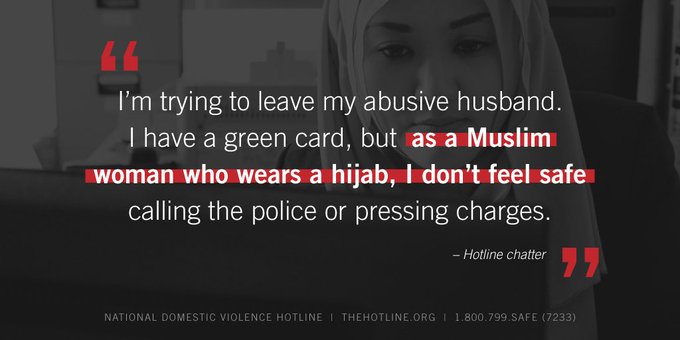
Overall, the growing sense of uncertainty, the anti-immigration rhetoric, and the threats to sanctuary city are leaving a strong impact on domestic violence victims who live in a legal gray area and may not be well versed in their legal rights. “If you think about victims of domestic violence who are already being controlled by a perpetrator, that is compounded and exacerbated when you rely on that person to interpret the laws for you, who is filtering all that information to control you,” Monica McLaughlin, Deputy Director of Public Policy at the National Network to End Domestic Violence, tells Bustle.
The underlying problem is that even if undocumented immigrants can technically get help, McLaughlin explains, “if what’s been communicated indicates that they can’t because they’re not safe, then survivors really aren’t going to reach out to law enforcement for help.”
One of the most troubling concerns facing our community is domestic violence. In Texas, 1 in 3 adult women has been a victim of domestic violence. Over the past year and a half, the Corpus Christi Caller-Times has done an excellent job of putting domestic violence at the forefront by covering its effects and exploring solutions to reduce the deadly trend. These stories and statistics should motivate all of us to work to better protect victims.
Since the 1980s, the prevention of domestic violence in Texas has been a top priority and much of my legislation supports programs that aim to overcome domestic violence. When I was chairman of the House Criminal Jurisprudence Committee, we held public hearings that discussed the serious problem of women serving prison time for defending themselves against a violent partner. As a result, several members carried legislation to change the laws to help protect victims of family violence.
In 2009, committee Chairman Abel Herrero and I authored Mary’s Law, which allows for GPS monitoring of domestic violence offenders. And most recently, in 2015, I sponsored House Bill 2645, which allows juries to hear more information about family violence and increases accountability for offenders monitored by GPS as part of a protective order. This bill now allows law enforcement to arrest the violator in real time for a violation of a protective order, thereby increasing victim safety and offender accountability.
Funding to help prevent family violence is critical. As vice chairman of the Senate Committee on Finance, I secured a $1 million increase in funding for the Battery Intervention Prevention Program, in which offenders are held accountable for past abusive behavior and taught the fundamentals of leading healthy, nonviolent relationships. The increase in funds allows services to expand and adds innovative approaches to current practice. Additionally, the 2016-2017 budget included $53.9 million for core services provided by family violence programs and $3 million to address unmet needs such as housing and childcare. We will continue to work with advocates to address funding shortfalls for organizations that provide assistance to victims and offenders.
While the Texas Legislature has strengthened laws against abusers to give district attorneys and our communities more tools to protect family violence victims and provide funds for family violence programs, much work remains to be done. In order to end the cycle of violence, our community needs to focus on prevention by raising public awareness while also effectively implementing and enforcing laws.
Implementation is key to protecting victims. It was alarming to learn that the family violence center in our community was closed on weekends. However, through the Coastal Bend Community Coordinated Response Coalition forums, victims and advocates called for change. As a result, Corpus Christi Police Chief Mike Markle implemented changes so that family violence detectives are rotated for weekends and after-hours duty. This is a step in the right direction so that victims of abuse do not live in fear simply because it is a weekend.
One solution to addressing domestic violence is to adopt components from the city of El Paso’s 24-Hour Contact Domestic Violence Initiative. The program takes a proactive and aggressive approach by moving domestic violence cases through the criminal justice system more effectively and focuses on victim outreach. Victim advocates seek face-to-face contact with victims of a domestic violence crimes for which an offender has been arrested within the past 24 hours. We need to collaborate among relevant agencies and discuss how we can improve and adopt El Paso’s model.
It will take more than one person, one agency, or one government entity to curb domestic violence. It will take work from legislators, law enforcement, the probation department, our local family violence shelter, public officials, parents, students and residents throughout our community to ensure we protect victims and hold their abusers accountable. Together, and only together, can we make our community a safer place.
Dr. Alex Jimenez D.C.,C.C.S.T’s insight:
The crime victims program continues to help so many in need here in our very own El Paso. As a practicing Chiropractor, I have seen more than my share of domestic dispute violence drama and the physical toll on individuals and families. We touch these individuals and work on their bodies after the ordeals they undergo at the physical and emotional levels. It is this proximity to our patients that allows us to see firsthand the true effects. Logically, the impact of the unseen consequences may not always be physical in nature; the program’s outreach covers the unseen concomitant emotional damage caused by the crimes. The attorney general and district attorney have pledged continued support of this outstanding program. This continues to be great news in our growing city.
IFM's Find A Practitioner tool is the largest referral network in Functional Medicine, created to help patients locate Functional Medicine practitioners anywhere in the world. IFM Certified Practitioners are listed first in the search results, given their extensive education in Functional Medicine