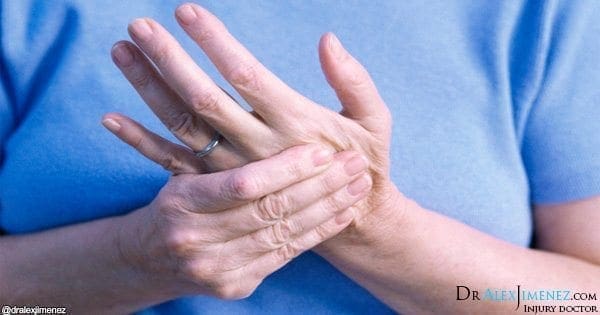
After a long day of work, it�s not uncommon for people to experience symptoms of pain and discomfort throughout their body. In today�s world, however, everyday activities, such as typing and texting, can often cause more than temporary soreness on the extremities. The repetitive movements of the wrist over time may irritate the surrounding tissues, leading to damage, injury, and even the development of uncomfortable conditions like carpal tunnel syndrome.
What is Carpal Tunnel Syndrome?
Carpal tunnel syndrome is a frequently diagnosed medical condition, characterized by pain, numbness and tingling sensations in the hand and arm. The well-known condition develops when one of the major nerves which runs through the hand, medically referred to as the median nerve, is compressed or impinged as it travels through the carpal tunnel, a narrow passageway within the wrist that is surrounded by rigid tissues, making it minimally capable of stretching or increasing in size.
The median nerve originates from a bundle of nerve roots found in the neck. These roots merge into a single nerve in the arm, where it then travels down the arm and forearm, passing through the carpal tunnel at the wrist and into the hand. This main nerve functions to provide feeling in the thumb and index, middle and ring fingers. The median nerve is also in charge of controlling the muscles around the base of the thumb.
Carpal tunnel syndrome is a common condition which may occur due to a variety of factors. With constant overuse of the hand and wrist, the repeated motions or activities may result to irritation on the tendons in the wrist, causing inflammation and swelling to begin applying pressure against the nerve. Additionally, participating in activities which involve an excessive flexion or extension of the hand and wrist for extended periods of time can also increase pressure on the median nerve. On occasion, hormonal changes brought on by pregnancy can cause swelling. In other cases, the presence of previous conditions like rheumatoid arthritis or diabetes, among other, can also be closely associated with median nerve compression. Furthermore, carpal tunnel syndrome is believed to be caused by hereditary traits. For some people, the carpal tunnel passage may be smaller than average and/or other anatomical differences can in turn change the amount of space between the narrow passageway and the median nerve, leaving people at risk of developing carpal tunnel syndrome. Research shows that women and older individuals have a higher chance of developing this uncomfortable condition.
Fortunately, whether you plan to prevent the development of carpal tunnel syndrome or you�ve been recently diagnosed with the condition, there are several effective treatment options available to relieve the painful symptoms and restore the individuals original hand, wrist and arm function.
Chiropractic and Carpal Tunnel Syndrome
Chiropractic care is one of the most common forms of treatment for carpal tunnel syndrome. Foremost, a doctor of chiropractic, or DC, will evaluate the extent of the condition as well as diagnose the individual to determine any underlying cause behind the condition. After diagnosis, the chiropractor will follow up with an appropriate treatment regimen for the individual, according to their specific needs. Through a series of chiropractic adjustments and manual manipulations, the structures surrounding the hand, wrist and arm can be slowly adjusted to gradually reduce the pressure around the median nerve, ultimately reducing the individual�s symptoms. The chiropractor may also recommend a set of stretches and exercises to carefully restore the individual�s mobility and rehabilitate them back into their original state of well-being.
The repetitive movements of the wrist over time may irritate the surrounding tissues, leading to damage, injury, and even the development of uncomfortable conditions like carpal tunnel syndrome. For more information, please feel free to contact us at (915) 850-0900.
For running athletes as well as a variety of other sport professionals, proper muscle strength, flexibility and mobility is fundamental towards the best, overall performance. When an injury or a condition develops, the damage can lead to issues and complications for the athlete. Many muscles surrounding the lower spine, buttocks and thighs are ultimately essential for the athlete and following various methods and techniques can help.
The gluteus medius is a muscle that has peaked a considerable amount of interest among those who actively engage in sports and physical activity as well as healthcare professionals alike.
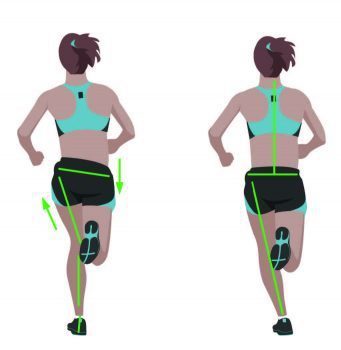
This muscle plays an important role in stabilizing the pelvis during the stance phase of gait and for controlling the sagittal, frontal and coronal planes of movement of the lower extremities during stance phase. An injury or condition affecting the gluteus medius can frequently be associated with a wide variety of musculoskeletal syndromes, including back, hip and knee complications from sports injuries.
Anatomy and Biomechanics of the Gluteus Medius
During single extremity weight bearing exercises, such as stance phase of walking or running, lunging and landing from a jump, amongst others, the lower extremity joints are designed to naturally absorb the impact of gravity being placed against the body. When the force of gravity acts upon the body, the joints move into distinct directions and the muscles need to properly function as to counteract these forces. Generally, these muscles function isometrically and/or eccentrically. For instance, with the absorption movements of a pelvic lateral tilt, the hip abductors work to stabilize the movement. With an anterior pelvic tilt absorption movement, the pelvic posterior tilters such as the gluteals and hamstrings work to stabilize mobility. With hip joint flexion, adduction and internal rotation, the muscles are controlled by the gluteus medius and other hip joint external rotators, such as the gemellus muscles, quadrutus femoris, obturator muscles and the piriformis. And finally, the quadriceps controls the absorption movements of a knee joint flexion, the soleus of an ankle dorsiflexion and the tibialis posterior, FHL and FDL, stabilizes midfoot pronation.
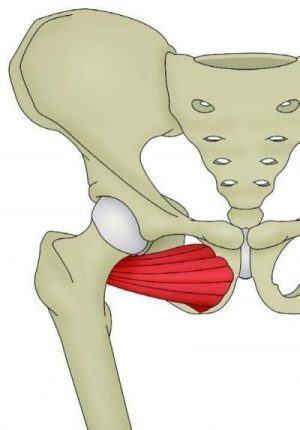
The gluteus medius is a proximal hip muscle which purpose is to control proximal pelvic/hip joint motion that in turn controls lower limb kinetics around the knee and ankle. The gluteus medius attaches to the iliac crest and inserts onto the greater trochanter, functioning as a hip abductor, hip external rotator and stabilizer of the pelvis on the femur during stance phase of gait. It�s most significant role, however, is to compress the femoral head into the acetabulum during the stance phase of gait. The muscle is divided into three equal parts: anterior, middle and posterior.
The fibres which make up the posterior section of the muscle travel parallel with the neck of the femur while the middle and anterior sections travel vertically from the iliac crest to the anterosuperior feature of the greater trochanter. It�s been suggested, that each individual part of the muscle functions independently from each other as each of the three portions contain their own supply of nerves which run through the superior gluteal nerve.
Several conducted EMG studies found that the gluteus medius is not completely active during isolated abduction of the hip, an interesting find contrary to previous studies. The researchers also observed that the tensor fascia lata, or TFL, is considerably more active during isolated hip abduction. It was additionally suggested that the three portions of the gluteus medius muscle have a phasic muscle action during the stance phase of gait. First, the posterior fibres of the muscle are far more active at heel strike and then, the muscle is gradually inducted from posterior to anterior as the movement of the structures occurs from an early stance to a late stance of gait. Most specifically, the front section of the muscle is most active while at full stance during the single extremity support phase while the back fibres function effectively at the beginning of a heel strike.
During the same study, it was suggested that the primary purpose of the gluteus medius is to restrain the head of the femur into the acetabulum, or socket of the hip, throughout normal movement as well as to help stabilize the pelvis on the femur in single limb stance. They also proposed the assumption that each of the three distinct portion of the muscle performs a unique function of movement.
Primarily, the posterior fibres of the gluteus medius contract during the early stance phase to secure the joint into the socket. According to the study, this notion was supported by the observation that the posterior fibres have an almost parallel fibre alignment along the neck of the femur. Therefore, it can be concluded that the posterior fibres essentially function to stabilize and compress the hip joint.
Subsequently, the middle and anterior fibres of the gluteus medius, which travel vertically, initiate hip abduction, which is then completed by the TFL. These fibres function together with the TFL to stabilize the pelvis on the femur, in order to prevent the other side from dropping. The researchers demonstrated that the TFL plays the most crucial role when supporting the pelvis against the hip while the gluteus medius only aids this process. The anterior fibres allow the femur to rotate internally in relation to the hip joint during the mid-to-end stance phase. This is important towards pelvic rotation so that the opposite side leg can swing forward furing gait. The anterior fibres play this role along with the TFL.
Furthermore, the study hypothesized that the primary functions of the gluteus medius are to stabilize the femur against the ilium, to perform as hip rotators and to near the head of the femur into the acetabulum, creating a very tight and stable hip joint during gait.
The gluteus medius has been considered to only function while in neutral hip/pelvic postures as it would when supporting the pelvis and hip during single extremity stance. Exercises and physical activities which force these muscles into lengthened or overly shortened positions may in fact not target the gluteus medius but other hip abductors and external rotators instead. The gluteus medius has the largest CSA of the hip abductors and is considered to be the most dominant of the hip abductors. It can generate tremendous amounts of force despite of its size due to its short fibres which are packed tightly together. However, it does not create large forces over a wide range of lengths. Instead, it is designed to function isometrically to balance the hip on the femur.
Injuries to the Gluteus Medius
Injuries or conditions affecting the gluteus medius can be associated with a wide variety of musculoskeletal complications. These type of issues can occur when the muscles of the gluteus medius are unable to properly control the movements and alignment of the pelvis, femur and tibia. These injuries or conditions include but are not limited to: patellofemoral pain syndromes, lumbar spine complications, ITB friction syndromes and hip joint pathology.
For some time, it�s been believed that hip internal rotation is an undesired pathomechanism of the hip joint as hip joint rotation allows the femur to move inwards and develop valgus collapse at the knee. It�s been suggested that this unwanted hip internal rotation is a consequence of a weak gluteus medius and other hip joint external rotators. However, studies have also suggested that, as a matter of fact, these muscles seem to function better physiologically if the hip is placed in some internal rotation.
Direct trauma from an injury to the gluteus medius, such as trigger points, strain injuries, tendon tears and relative trochanteric bursitis, have also been closely associated to having a weak gluteus medius.
Rehabilitation Exercises for the Gluteus Medius
A wide range of studies have investigated the purpose of the gluteus medius whilst performing several lower extremity exercises. The following conclusions were based on corresponding electromyographic, or EMG, data during specific exercises. In a more recent study, researchers looked at the relative contribution between the gluteus medius and the TFL and identified five exercises that best utilized the muscles of the gluteus medius with minimal TFL: Clam with Thera band, sidestep with Thera band, unilateral bridge, quadruped hip extension, knee extending and quadruped hip extension, knee flexing.
Because there�s many exercise variations which may be beneficial to strengthen the gluteus medius, many healthcare providers may utilize a rehabilitation approach depending on the individual�s level of pain when performing the initially recommended exercises. If the individual experiences pain while participating on weight bearing movements, then non-weight bearing variations may be used. Healthcare providers may often also recommend specific exercises according to what they believe may be the most effective program for the individual�s gluteus medius complication. Furthermore, it�s been previously argued that what an individual feels in and around their posterolateral hip, may be the gluteus medius and/or other hip abductors, such as the gluteus minimus, or other deep hip rotators, such as the piriformis, the obturator group, quadrutus femoris and gemellus muscles. Studies utilizing both surface EMG and fine wire EMG on deep muscles are required to demonstrate the interactions between these muscles.
The gluteus medius functions in various ways during hip flexion to extension as demonstrated in the gait cycle, suggesting the muscle works through very neutral hip and pelvic positions, essentially functioning isometrically or through very short ranges of movement. The following exercises direct weight bearing through the hip joint or simulate weight bearing through the hip joint, making them more functional in terms of activation in weight bearing positions.
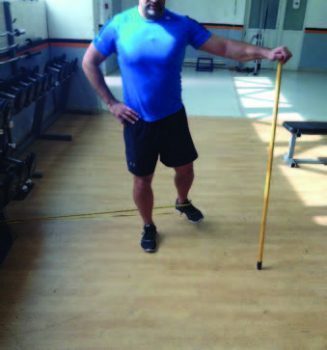
Standing Short Range Hip Abduction
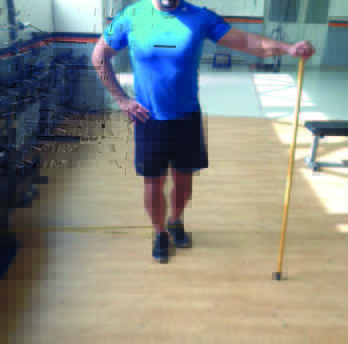
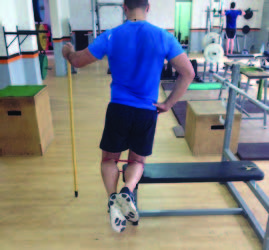
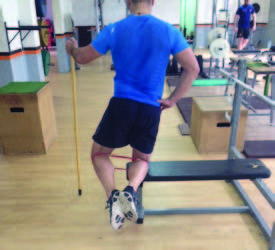
This specific exercise, manages both the stance limb, isometric, and the non-stance limb, concentrically. First, the individual should stand with a band around the foot with the hand on the same side supported by a broomstick for balance. Then, the individual must carefully move the banded leg into abduction, then external rotation and extension. The stance limb must be in slight hip flexion and remain in this position. Follow by performing 8 to 10 repetitions of slow hip abduction/external rotation/extension. The individual should feel the effects of the exercise in both the stance side of the gluteus medius while in slight hip flexion as well as the abducting side of the gluteus medius into slight hip extension.
Kneeling Clam
This exercise is a variation of a popular clam exercise which has been demonstrated in several studies to activate the gluteus medius muscle. This is performed in weight bearing as the limb can accept axial loading via kneeling. First, the individual should kneel on a bench with a band wrapped around their knees. Keeping the feel together, holding onto a broomstick may be used for balance. Then, the individual must carefully move their knees apart whilst maintaining foot contact. This moves the hip into slight abduction and external rotation. Follow by performing sets of 10 to 15 repetitions and ensure the movement is kept small, about 2 to 3 inches only.
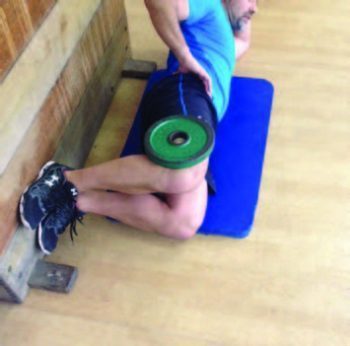
Modified Clam
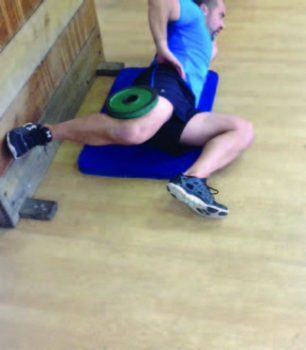
This is another variation of the clam exercise which resembles the traditional clam exercise but with several variations. The first important difference is that the heels push into a wall or box to simulate weight bearing through the extremity. Then, the exercise is performed as an isometric hold and not an active abduction and adduction movement. Finally, the exercise is performed in two positions: slight hip flexion and slight hip extension. A light weight is generally placed on the knee to act as an external resistance. The goal is to hold the limb static for a specific period of time.
Hip Strengthening Exercises
Before attempting any of the above exercises, make sure you�ve consulted a healthcare professional to avoid further injury. The muscles around the hip can also be strengthened prior to experiencing any complication or may be occasionally directed by a specialist as part of the rehabilitation process. By strengthening the tissues around the hip, an individual can avoid damage and injury by increasing the strength and flexibility of the muscles to promote health and mobility.
Pelvic Manipulation, Massage and Chiropractic
Manipulation is the therapeutic application of manual pressure or force to restore the normal functioning of the body by balancing the structure. Often times, complications to the spine can affect other surrounding tissues of the body, including nerves, which can ultimately radiate pain and symptoms to various organs. Best known as osteopathic manipulative treatment, or OMT, this technique is typically utilized to treat a variety of musculoskeletal injuries or conditions, such as low back pain, neck pain and pelvic pain, caused by sports injuries, repetitive stress injuries and even, tension headaches. Foremost, a healthcare professional must properly evaluate and diagnose an individual to determine the presence of an injury or condition which may be causing painful symptoms. Individuals with pelvic pain, or instance, may experience painful symptoms along with connective tissue restrictions along their thighs, and glutes, including the gluteus medius. Pelvic manipulations may commonly be used in this case to improve blood flow to the affected area, decrease swelling and restore mobility to the surrounding structures.
Massage is similar to a manual manipulation. A massage is a hands-on technique that involves applying gentle, sustained pressure into the connective tissue restrictions, also eliminating pain as well as other symptoms and restoring function. Massage can increase blood flow, which in turn delivers more oxygen and nutrients to the muscles surrounding the affected regions of the body. The increased blood flow may also help carry away unnecessary substances which may have accumulated through time.
While osteopathic manipulation and chiropractic often seem to overlap each other, they do differ from each other. Chiropractic is a form of alternative treatment which focuses on musculoskeletal injuries and conditions as well as nervous system complications to naturally restore the structure and function of the body. After a careful analysis of the individual�s symptoms, a chiropractor may commonly follow through with a series of spinal adjustments as well as manual manipulations to correct any misalignments in the structures of the body. When certain areas of the spine are subluxated as a result of an injury or condition, the surrounding structures can often become irritated and inflamed, leading to complications within the tissues, including gluteus medius issues. A chiropractor will perform chiropractic adjustments to gently re-align the spine in order to progressively reduce the pain and swelling around the affected area. A chiropractor may even recommend a series of exercises according to the individual�s needs to promote healing and speed up the rehabilitation process. Chiropractic care has become a popular alternative for many types of complications, including back pain, neck pain and pelvic pain, among others primarily due to its effective treatment techniques.
In conclusion, a variety of methods and techniques are available to athletes to help them strengthen their gluteus medius, especially when enhancing their performance after experiencing an injury from their specific sport or physical activity. Commonly including several types of stretches and exercises aside from their preventive training, athletes can gradually improve the flexibility and mobility of their lower extremities. Also, chiropractic care as well as physical therapy and massage can tremendously help athletes recover to return-to-play immediately.�
For more information, please feel free to ask Dr. Jimenez or contact us at 915-850-0900 .
By Dr. Alex Jimenez
Additional Topics: Low Back Pain After Auto Injury
After being involved in an automobile accident, the sheer force of the impact can cause damage or injury to the body, primarily to the structures surrounding the spine. An auto collision can ultimately affect the bones, muscles, tendons, ligaments and other tissues surrounding the spine, commonly the lumbar region of the spine, causing symptoms such as low back pain. Sciatica is a common set of symptoms after an automobile accident, which may require immediate medical attention to determine its source and follow through with treatment.
Athletes are specially trained to exercise and compete vigorously without experiencing injury or aggravating a previously existing condition. However, accidents and direct trauma during their specific sport or physical activity can inevitably result in damage or injury to the individual. Muscle or tissue damage are common in sports and can be dealt with accordingly but when a bone fracture occurs, these may be more delicate and may require additional diagnosis and care in order to properly help an athlete recover.
Among the general population of athletes, stress fractures can be a rare cause of pain, accounting for only 2 percent of all reported sports injuries. However, a considerably higher number of stress fractures are diagnosed in long distance runners and triathletes.
Stress fractures occurring around the pelvis are significantly uncommon although, a majority of them are often considered a differential diagnosis when athletes, specifically long distance runners and triathletes, report hip, groin or buttock pain during and after running. Because stress fractures around the pelvic/hip region, including the sacral, pubic rami and femoral neck region, are rarely diagnosed, understanding and discussing the anatomy of the injury, their clinical presentation, diagnosis and treatment for each of these types of stress fractures is important for an athlete in order to find a solution for those who do encounter it.
How Stress Fractures Occur
Stress fractures occur over a determined period of time when the bone is no longer capable of withstanding submaximal, repetitive forces. They frequently result when normal stresses cause bone fracture with decreased bone density, such as in an elderly osteoporotic individual, or as a result of an abnormal stress being placed against a normal bone and causing a fracture, such as in a long distance runner.
When the bones are exposed to loading, the introductory physiological response is a respective increase in osteoclastic activity, or bone resorption, leading to temporary structural weakening before new bone formation. If these stresses continue to occur without having the bone properly adjust to this additional, ongoing osteoclastic activity, the pressure may exceed bone regeneration, causing microfractures to occur.
The first characteristic of a stress reaction observed through the use of MRI is bone oedema as well as increased activity on bone scan. Bone scan in the acute phase has high sensitivity but an increased uptake may also be due to infection, bone infarction or neoplastic activity. Researchers from previous studies stated that 60 to 70 percent of X-rays in the acute phase of stress fractures, approximately less than 2 weeks after the injury, have a negative result. Due to its high sensitivity as well as a lack of radiation and high specificity, even despite its elevated cost, MRI is often the preferred procedure to identify stress fractures in their early phases.
Various distinct intrinsic and extrinsic elements have been determined as risk factors for stress fractures. These include but are not limited to: biomechanics, strength and flexibility, nutrition, hormonal and menstrual disturbances, and footwear. These must all be considered prior to assessing an individual with a suspected stress fracture. During an analysis of 8 female athletes with sacral stress fractures, the most significant risk factor for these types of fractures was the rapid increase in impact activity during more intense exercise programs. An increase in workload should thus be considered a significant risk factor for stress fractures.
Anatomy of Sacral Stress Fractures
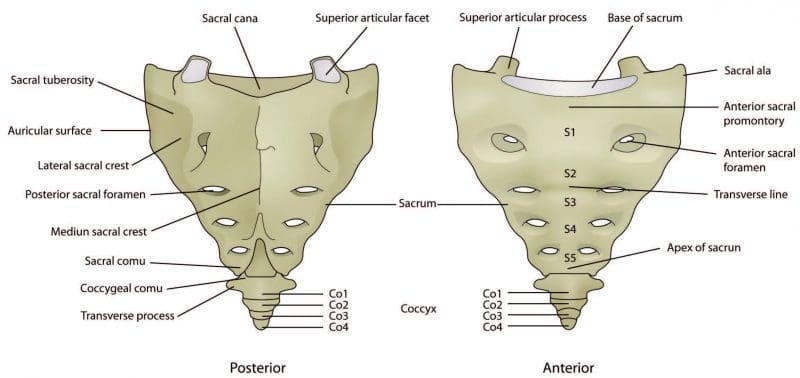
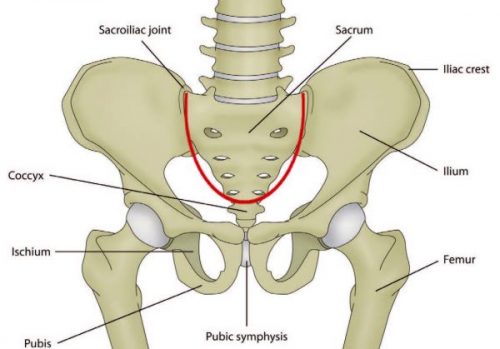
The sacrum consists of 5 fused vertebrae, S1 to S5, and is triangular in shape. It connects with the ilium at the sacroiliac joint and, due to its shape and function to distribute forces, it�s often described as the foundation to the arch of the pelvis. The sacrum, much like an inverted arch, supports the entire weight of the upper body and transfers force to the pelvis.
Sacral stress fractures most commonly occur in the lateral portion of the sacrum and are more frequently diagnosed in women. It�s been hypothesized that the shape of the female pelvis can lead create difficulty when distributing weight through the sacrum than the average male pelvis. However, it�s also been reported that several male elite Australian triathletes have experienced sacral stress fractures in recent years.
Symptoms
An athlete with a sacral stress fracture will often manifest acute onset back, buttock or hip pain which is generally described to occur suddenly during a run, making them incapable of continuing at the time. The individual may also experience limited mobility and they could or could not suffer pain on the palpation of the sacrum. Additionally, they may not experience any neurological symptoms but symptoms of sciatica may be common during this type of stress fracture. Sciatica can include pain, weakness or numbness and burning or tingling sensations along the lower back, buttock or hip, often radiating down the thigh. The individual may suffer pain or tightness when walking and they will experience symptoms when hopping on the affected side. Athletes with sacral stress fractures also frequently report pain during single leg loading tasks, for example, when putting pants on.
Diagnosis
Due to the extreme overlying soft tissue and complex bone anatomy, simple radiographs can rarely conclude the presence of a sacral stress fracture. Bone scan, MRI or CT can be utilized to effectively diagnose a sacral stress fracture. CT and MRI findings suggest that sacral stress fractures occur as a result of constant compressive forces which lead to microfractures of the trabecular bone. These fractures infrequently develop a visible callus on plain radiograph, therefore, MRI or CT scans should be utilized as a follow up imaging if poor healing is detected.
Treatment
The progression of treatment for an athlete with a sacral stress fracture broadly depends on the athlete�s symptoms as these are generally stable fractures. Rehabilitation procedures will progress from non-weight bearing to weight bearing to progressive return to running activities as the symptoms decrease. In most cases, a period of 6 weeks with no running followed by a 6 to 8-week period of a return to running progression may be required. A majority of published works indicate athletes may have a full return to activity by 4 months with rare cases taking up to 14 months.
Repeated CT scans approximately 4 and 8 months after the individual�s original diagnosis can often display no signs of previous fractures which demonstrate a quicker and fuller healing of the well-vascularized trabeculae microfractures when compared to fractures involving the less well-vascularized cancellous bone. Researchers concluded that women with sacral stress fractures who had the best diets and fewer prior stress injuries or menstrual irregularities, healed the fastest.
Anatomy of Pubic Rami Stress Fractures
The inferior pubic ramus slopes downward and medial from the superior ramus, narrowing as it goes down and it is the region where the adductor magnus, brevis and gracilis connect, including the obturator internus and externus. Pubic Rami stress fractures have been diagnosed among runners, triathletes and military service members. These generally occur in the inferior pubic rami next to the pubic symphysis. Researchers proposed that these fractures are a result of repetitive forces being applied to and transmitted to the bone through muscle contraction or fatigue. In a study on female military service members, it was suggested that over-striding during marching procedures was a potential factor contributing to pubic rami stress fractures.
Symptoms
Pubic rami stress fractures are generally detected either in competitive races or during intensive training sessions. These frequently occur at the insertion of the adductors and/or external rotators of the hip. Athletes with pubic rami stress fractures commonly suffer from pain in the hip, buttock, inguinal or adductor region which increases with activity and decreases with rest. It�s important to remember that pain caused by irritation and swelling along these regions may also cause symptoms similar to sciatica. It�s important to receive a proper diagnosis to rule out a compression of the sciatic nerve which could be causing neurological symptoms. Athletes with this type of injury often limp and on clinical testing, they may experience symptoms with passive hip abduction, resisted hip adduction and resisted hip external rotation. Stress fractures of the pelvis can be determined even without radiographic evidence if the following criteria are met by an individual. First, running will be impossible for the athlete as a result of severe discomfort in the groin area. Then, the individual will experience discomfort in the groin with an unsupported stance on the affected leg. And last, an athlete may suffer symptoms of pain and tenderness after deep palpation procedures.
Diagnosis
Simple radiographs may demonstrate displaced fracture lines but a lack of radiographic evidence in the early phases of injury is not uncommon. Bone scan, CT or MRI may be used to determine the presence of fracture and bone oedema may be evident on MRI.
Treatment
These fractures tend to have a high rate for healing following 6 to 10 weeks of rest, however, they have a small risk of non-union and re-fracture if the appropriate amount of rest is not followed. Fractures that display delayed union will likely demonstrate full recovery when further conservative procedures are followed. Progression of treatment should be guided by pain and at first, the individual may require the utilization of crutches as walking may be painful.
Anatomy of Femoral Neck Stress Fractures
The femoral neck is the flattened, pyramid shaped piece of bone which connects the femoral head to the femoral shaft.
Athletes with femoral neck stress fractures generally report hip or groin pain when running. This pain usually has an insidious onset and the symptoms may become significantly worse depending on the intensity or duration of a run. At first, symptoms may occur at the end of a run but as the stress reaction worsens, the pain may begin showing earlier in the run where gradually more time may be required to relieve the pain and discomfort. Athletes with femoral neck stress fractures may experience hip and/or groin pain while resting and may suffer restless nights of sleep due to the symptoms. Often, individuals will also report pain while rolling in bed, single leg stance and during active straight leg raise.
Femoral neck stress fractures are described as either tension or compression stress fractures. Fracture displacement determines the outcome of an injury and tension stress fractures generally have a higher rate of displacement as a result of non-union, malunion or osteonecrosis. Due to this fact, tension stress fractures are considered more serious than compression fractures and may require surgical fixation.
Diagnosis
Conventional radiographs are often negative in the acute setting but may shown signs during instances where symptoms have been present for 2 weeks or more. MRI is the favored standard for diagnosis and should be ordered when a stress fracture of the femoral neck is suspected.
Treatment
Tension side stress fractures require diagnosis from a healthcare professional immediately after its occurred due to their risk of displacement. Compression side fractures are often managed conservatively with protected weight bearing and ongoing monitoring to keep track of the individual�s healing process. Initial phases of management should include non-weight bearing on crutches until there are no symptoms at rest, then progress to partial weight bearing to full weight bearing over a period of 4-6 weeks. A gradual return to run program can be started at 8 to 12-weeks of treatment, once the individual is able to properly walk without experiencing pain and other symptoms.
Return to Activity Plan
With all stress fractures located around the pelvis, a careful, gradual return to activity plan can be an essential element of the rehabilitation process. To make sure the athlete receives progressive loading without sudden increases in workload, the return to activity plan should be at least as long as the time off the individual�s specific activity. For instance, if the athlete had a sacral stress fracture which required 6 weeks of no running, then that athlete needs at least a 6-week gradual return to running plan before they can return to their previous running load.
Hip Strengthening Exercises
A strengthening program of the lower extremities can additionally be implemented early in the rehabilitation process, first beginning with non-weight bearing exercises, which can gradually change as the individual becomes able to weight bear without pain. Early strengthening can also help decrease muscle loss and address any biomechanical complications the athlete might be facing. As the stress fractures heal and the tolerance for load improves, these exercises can be progressed to other higher-load exercises to provide the athlete�s body for the return of their specific sports activity.
Proper stretching and exercising techniques are effective methods and techniques that can help increase an athlete’s strength, mobility and flexibility to prevent experiencing an injury or aggravating a condition. Bone fractures, in this case, pelvic stress fractures, can be challenging to heal but with proper treatment, an athlete will be able to return-to-play in no time.
For more information, please feel free to ask Dr. Jimenez or contact us at 915-850-0900 .
By Dr. Alex Jimenez
Additional Topics: Low Back Pain After Auto Injury
After being involved in an automobile accident, the sheer force of the impact can cause damage or injury to the body, primarily to the structures surrounding the spine. An auto collision can ultimately affect the bones, muscles, tendons, ligaments and other tissues surrounding the spine, commonly the lumbar region of the spine, causing symptoms such as low back pain. Sciatica is a common set of symptoms after an automobile accident, which may require immediate medical attention to determine its source and follow through with treatment.
Low back pain is one of the most prevalent symptoms that lead people to seek diagnosis and treatment with a healthcare professional. When the individual�s low back pain is accompanied with pain in one or both legs or buttocks, resulting in symptoms similar to sciatica, it may be an indicator that the patient may have a lumbar disc herniation, also referred to as a herniated disc, ruptured disc, or slipped disc.
Anatomy of the Lumbar Spine
The lumbar spine consists of five vertebrae that extend through the length of the ribcage and pelvis. From top to bottom, these vertebrae are medically labeled L1 through L5 and they�re each separated by intervertebral discs. The discs are made up of a fibrous tissue known as the annulus with a soft nucleus found at the center of each disc. These discs are fundamental towards the proper function of the spine, performing the important roles of shock absorption and distribution of pressure.
In the instance the annulus becomes ruptured or torn, the nucleus can become separated from the disc. This complication can decrease the disc�s ability to properly separate the vertebrae, an issue which often leads to increased pressure due to the compression or impingement of the spinal nerves found between each vertebrae of the spine. Individuals with a lumbar disc herniation and symptoms of sciatica commonly experience pain and discomfort related to the pinching of the nerves, which can in turn radiate down the legs.
Generally, a herniated disc is caused by the natural degeneration of the body�s structures as we age. If not diagnosed or treated in time, however, this simple wear and tear complication can develop into a more serious injury or condition. In addition, intervertebral discs can also tear due to trauma from heavy lifting or as a result of a sudden injury, such as an automobile accident or a work injury.
Diagnosing a Lumbar Disc Herniation
A chiropractor can properly diagnose a variety of injuries or conditions relating to the musculoskeletal and nervous system, including a lumbar disc herniation. During the first consultation, the chiropractor will conduct a thorough physical exam, including a comprehensive review of your medical history and test results. Using this, the healthcare professional will be able to determine the source of the symptoms. In many cases, the specialist may require additional tests to confirm the presence of a specific injury and/or condition. Most chiropractic offices will provide you with up to date information about your diagnosis, as well as the risks and benefits of each treatment option. Chiropractors will work with the individual personally to decide on the best treatment option for their complication.
Treating a Lumbar Disc Herniation
Chiropractic adjustments and manual manipulations are the most common forms of treatment provided by a doctor of chiropractic, or DC. Using this gentle techniques, the healthcare specialist will carefully realign the spine, correcting the subluxations in order to decrease and eliminate the symptoms caused by nerve compression or impingement. Chiropractors may also redirect a patient to receive other types of treatment depending on the severity of their issue. Chiropractic care can help restore an individual�s strength, mobility and flexibility, offering a wide variety of benefits. Chiropractic treatment is well-known for its natural benefits, including the enhancement of many functions of the body.
Chiropractic Can Improve Sex Life
Many people visit the chiropractor with back pain, but after several sessions of treatment, they often return reporting that their sex life has improved. Jason Helfrich, co-founder and CEO of 100% Chiropractic, stated that the body can positively respond in many aspects when the unnecessary pressure on the nervous system is decreased or removed.
Every function of the body is controlled by the nervous system, however, when the spine is misaligned, known as a subluxation, the nerves traveling between the brain and the rest of the body, these can become blocked, compromising the body�s ability to function properly. A chiropractor�s goal is to remove these subluxations, since they can both cause pain and impede feeling. But treatment can help more than just improve symptoms of back pain. The lumbar region of the spine is where the nerves that extend into your reproductive regions are found. Correcting misalignments in the lower spine can improve nerve flow to your sexual organs, increasing things like blood flow to your clitoris or the penis.
�Correcting a spinal subluxation also allows the organs to send messages to the brain more easily. This means that not only do you become physically aroused faster, but your brain also registers that ready-for-action, heightened sense of pleasure more quickly, so you move past the mental obstacles that may be keeping you from orgasming�, quoted Helfrich.
Other Adjustments for an Improved Sex Life
Libido and fertility need a proper balance of estrogen, progesterone, and other hormones, many of which are released in the upper cervical and neck area of the body. If there are any misalignments or subluxations in the upper region of the spine, the nerve transmissions exiting the brain can be interrupted due to the compression or impingement of these tissues, which will ultimately have an effect all the way down to the reproductive organs, among others.
Including fertility is affected by the nerves and hormones coming out of the spine, as they control the reproductive cycle.
Beyond all of the physiological benefits of spinal adjustments and manual manipulations, chiropractic treatment can also simply give the muscles more range of motion. This means you can try previously difficult positions under the sheets, enhancing an individual�s sex life further.
�We want to improve people�s health, and health is about living life as its intended. Having a great sex life is huge part of that�, Jason Helfrich concluded.
For more information, please feel free to ask Dr. Jimenez or contact us at 915-850-0900 .
By Dr. Alex Jimenez
Additional Topics: Low Back Pain After Auto Injury
After being involved in an automobile accident, the sheer force of the impact can cause damage or injury to the body, primarily to the structures surrounding the spine. An auto collision can ultimately affect the bones, muscles, tendons, ligaments and other tissues surrounding the spine, commonly the lumbar region of the spine, causing symptoms such as low back pain. Sciatica is a common set of symptoms after an automobile accident, which may require immediate medical attention to determine its source and follow through with treatment.
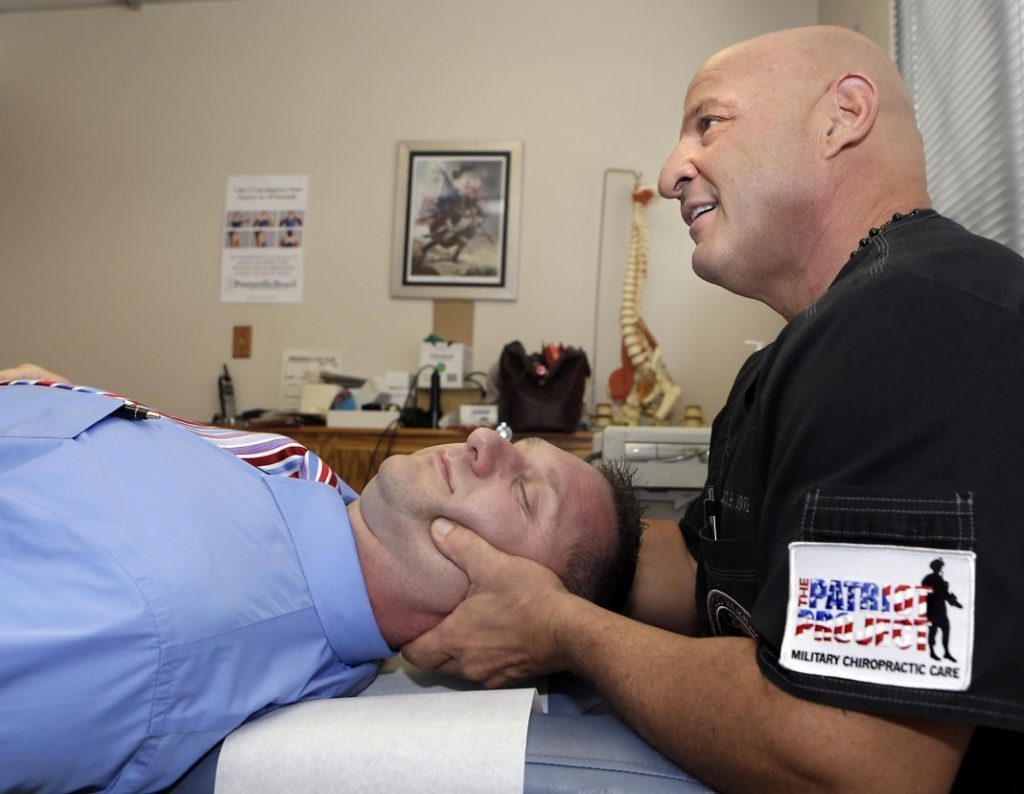
The Patriot Project is a grass roots movement to provide chiropractic care to all Active Military, their Families, Wounded Warriors & All Gold Star Dependents.
The Patriot Project was found by Dr. Tim Novelli, and this inspired organization started after one life changing weekend.
No one tells the story better than the man himself.
It�s a little known fact that chiropractic care is included in veteran�s health benefits, and it�s an underutilized option.�The Patriot Project aims to change this by making chiropractic care readily available to our service members.
With adequate funding, The Patriot Project plans to develop a USO-type chiropractic care tour, visiting military bases at home and around the world, including all active forward operating bases like those in Afghanistan and Iraq.
We are calling on all chiropractors to help by becoming a patriot. �Participating doctors will make time available to�treat at least one armed-service member a week at no�charge. He/she will also help us collect patient testimonials, which will be used to further our cause in Congress.
Mission Statement
-To provide chiropractic care to active military, their families, wounded warriors, and Gold Star Dependents.
-To make full chiropractic benefits in TRICARE care readily available for ALL active duty military, retirees and veterans.
-To have chiropractic physicians commissioned as officers in all armed services.
-To have chiropractic physicians embedded in all forward operating bases of combat.
-To have a Chiropractic Department in every VA hospital and clinic.
-To educate veterans with service related disabilities; they have chiropractic benefit coverage through the Veterans Administration.
Why is The Patriot Project so important?
Military Heroes & Chiropractic
In 2002, President George W. Bush signed Public Law 107-135, legislation that ensured that chiropractic would become a permanent benefit for recipients of veterans� health care services. As a result, chiropractic care was gradually added to more than 30 VA medical centers.
In the remaining 120 VA treatment facilities, however�including those in several major metropolitan areas, the chiropractic care benefit has remained virtually nonexistent.
All veterans with service related disabilities are supposed to have access to chiropractic care; if not at a hospital then in the civilian community. Chiropractic treatment is a standard VA benefit. No VA facility can state that they do not provide these essential health benefits.
Chiropractic physicians are considered specialists with the Veteran Administration and with the Department of Defense, which means the Veteran must request from their PCP an approval for them to receive chiropractic treatment.
Problem #1: Vets DO NOT KNOW they have chiropractic benefits.
Problem #2: There is no listing of chiropractic benefit within the VA HealthCare Benefit section within their website except under ancillary services.
Problem #3: Vets DO NOT KNOW the benefit they can obtain from chiropractic treatment which includes acupuncture.
Problem #4: Vets DO NOT KNOW they can appeal their PCPs denial of their requests for chiropractic treatment.
Problem #5: Armed forces families do not have chiropractic benefits.
Problem #6: Veterans reliance upon medications results in a high probability of developing additional health problems and or even developing life threatening/ending situations.
Some veterans have found their local VA is reluctant to send them for fee-basis care outside the VA facility, and have required they jump through many hoops to get a referral for a Doctor of Chiropractic. This is against VA policy and does not go along with the VA�s own stated mission to be �veteran-centered.�
Many times the VA facility is trying to save money by denying fee-basis care delivered by doctors of chiropractic, even though they spend a great deal on numerous other treatments. VA facilities are unaware that chiropractic treatment can reduce their facilities cost.
Medical literature has revealed that when insurance company limit/reduce chiropractic treatment benefits, their total costs for healthcare, actually increased.
A patient receiving regular chiropractic care experiences reduced hospital admissions, surgeries, and pharmaceutical costs.
Studies indicate that greater chiropractic coverage, despite increased visits to a DC, results in significant net savings in both indirect and direct costs.
Chiropractic care could reduce Medicare costs�both payment for all services and average per claim payment.
Chiropractic patients typically pay less and are more satisfied with their treatment than MD patients.
Chiropractic care can be used to control health care costs.
Chiropractic patients reach maximum medical improvement sooner than when treated by a medical doctor.
Chiropractic treatment is not an add-on, it is a direct substitution for other treatment.
Conclusion:
Services delivered by doctors of chiropractic are part of the standard VA benefits and no VA facility can say �do not provide� these essential health benefits. Some veterans have found their local VA is reluctant to send them for fee-basis care outside the VA facility, and have required they jump through many hoops to get a referral for a Doctor of Chiropractic. This is against VA policy and does not go along with VA�s own stated mission to be �veteran-centered.�
The Patriot Project is determined to change this, with your help.
To learn more about how you can join and help the Patriot Project, click below
It�s a little known fact that chiropractic care is included in veteran�s health benefits, and it�s an underutilized option.�The Patriot Project aims to change this by making chiropractic care readily available to our service members.
Most people don�t go to a chiropractor for a better sex life, but that extra benefits is a pretty happy accident. �People come in with back pain, but after adjustments, they come back and tell me their sex life is so much better,� says Jason Helfrich, co-founder and CEO of 100% Chiropractic. �It�s no surprise to us�it�s amazing what the body will do when you take away the pressure on the nervous system.�
And what are those amazing feats, exactly?
Let�s start with what a chiropractor really does. Every function in your body is controlled from the nervous system, but when vertebra are off position�known as a subluxation�the nerves traveling between your brain and your muscles can become blocked, compromising your body�s ability to function as it needs to. Every chiropractor�s goal is to remove these subluxations, since they can both cause pain and impede feeling, Helfrich says.
But these fixes help more than just back pain. The lumbar region (your lower back) is a huge hub for the nerves that extend into your reproductive regions. Removing lumbar subluxations can improve nerve flow to your sexual organs, increasing things like blood flow to your clitoris or, for your husband, the penis.
The flow of nerve signals is a two-way street, though, meaning that adjustments also allow your organs to send messages to the brain more easily. This means that you not only do you become physically aroused faster, but your brain also registers that ready-for-action, heightened sense of pleasure more quickly, so you move past the mental obstacles that may be keeping you from orgasming, Helfrich explains.
The other key adjustment area for a better sex life?
Right below your brain stem, around the vertebrae known as C1 and C2. �Libido and fertility require a delicate balance of estrogen, progesterone, and other hormones, many of which are released in the upper cervical and neck area,� he explains. If there are any blockages right out of the brain, the impingement up there will have an effect all the way down.
Even your fertility is affected by the nerves and hormones coming out of the spine, as they control your reproductive cycle.
But beyond all of the physiological benefits of tweaking your spine to perfection, chiropractic adjustments can also simply give your muscles more range of motion. This means you can try previously impossible positions under the sheets.
�We want to improve people�s health, and health is about living life as its intended. Having a great sex life is huge part of that,� Helfrich adds. No arguments here!
Most people don�t go to a chiropractor for a better sex life, but the extra benefit is a pretty happy accident. �People come in with back pain, but after an adjustment, they come back and tell me their sex life is so much better.�
Athletes who perform daily rigorous training and/or participate in regular competitions can often be at a higher risk of suffering an injury or developing an injury. Because most sports or physical activities require the repetitive and constant use of the lower extremities, experiencing a complication which affects the lower back, buttocks, thighs and even the feet of the athlete can ultimately alter their performance.
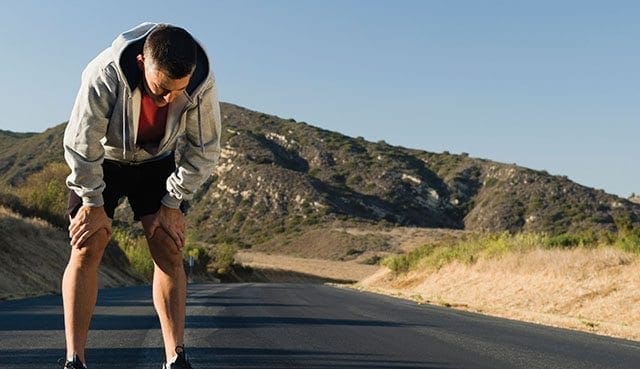
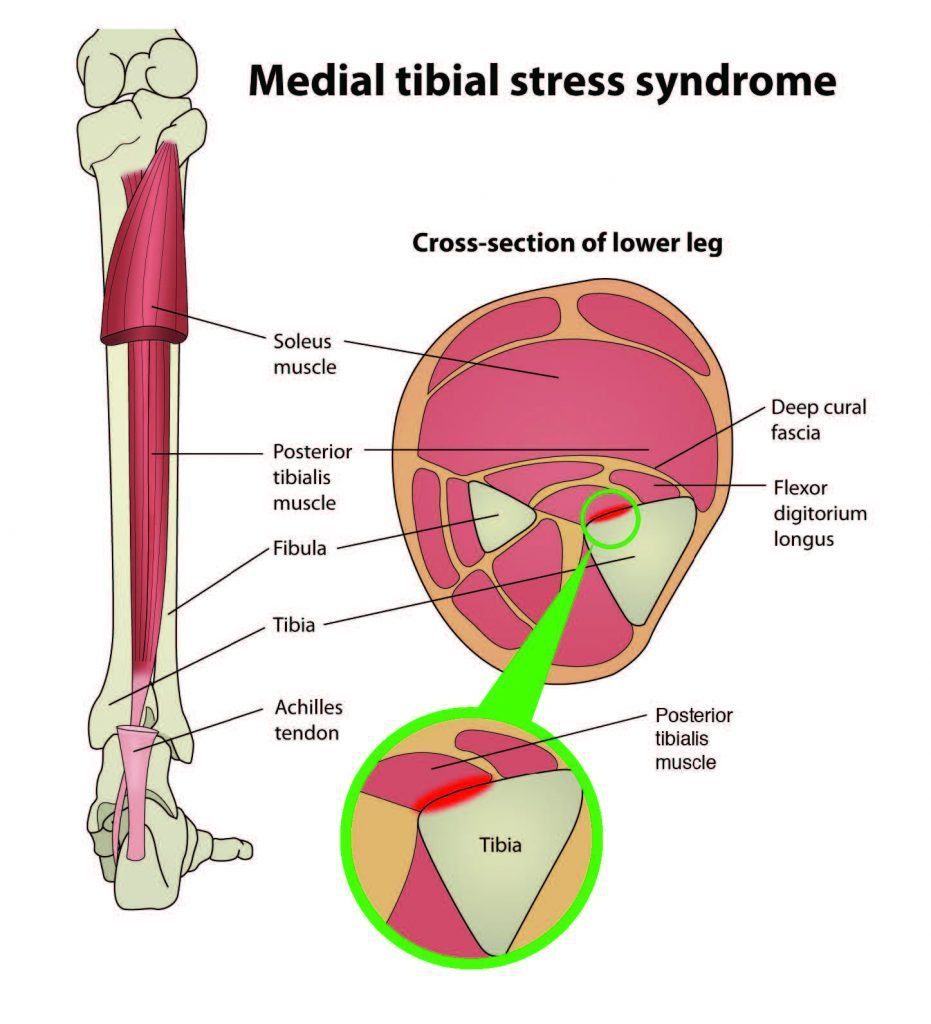
Medial tibial stress syndrome, commonly referred to as shin splints, is not considered to be a medically serious condition, however, it can challenge an athlete�s performance. Approximately 5 percent of all sports injuries are diagnosed as medial tibial stress syndrome, or MTSS for short.
Shin splints, or MTSS, occurs most frequently in specific groups of the athletic population, accounting for 13-20 percent of injuries in runners and up to 35 percent in military service members. Medial tibial stress syndrome is characterized as pain along the posterior-medial border of the lower half of the tibia, which is active during exercise and generally inactive during rest. Athletes describe feeling discomfort along the lower front half of the leg or shin. Palpation along the medial tibia can usually recreate the pain.
Causes of Medial Tibial Stress Syndrome
There are two main speculated causes for medial tibial stress syndrome. The first is that contracting leg muscles place a repeated strain upon the medial portion of the tibia, producing inflammation of the periosteal outer layer of bone, commonly known as periostitis. While the pain of a shin splint is felt along the anterior leg, the muscles located around this region are the posterior calf muscles. The tibialis posterior, flexor digitorum longus, and the soleus all emerge from the posterior-medial section of the proximal half of the tibia. As a result, the traction force from these muscles on the tibia probably aren�t the cause of the pain generally experienced on the distal portion of the leg.
Another theory of this tension is that the deep crural fascia, or the DCF, the tough, connective tissue which surrounds the deep posterior muscles of the leg, may pull excessively on the tibia, causing trauma to the bone. Researchers at the University of Honolulu evaluated a single leg from 5 male and 11 female adult cadavers. Through the study, they confirmed that in these specimens, the muscles of the posterior section of muscles was introduced above the portion of the leg that is usually painful in medial tibial stress syndrome and the deep crural fascia did indeed attach on the entire length of the medial tibia.
Doctors at the Swedish Medical Centre in Seattle, Washington believed that, given the anatomy, the tension from the posterior calf muscles could produce a similar strain on the tibia at the insertion of the DCF, causing injury.
In a laboratory study conducted using three fresh cadaver specimens, researchers concluded that strain at the insertion site of the DCF along the medial tibia advanced linearly as tension increased in the posterior leg muscles. The study confirmed that an injury caused by tension at the medial tibia was possible. However, studies of bone periosteum on individuals with MTSS have yet to find inflammatory indicators to confirm the periostitis theory.
The second theory believed to cause medial tibial stress syndrome is that repetitive or excessive loading may cause a bone-stress reaction in the tibia. When the tibia is unable to properly bear the load being applied against it, it will bend during weight bearing. The overload results in micro damage within the bone, not just along the outer layer. If the repetitive loading exceeds the bone�s ability to repair, localized osteopenia can occur. Because of this, some researchers consider a tibial stress fracture to be the result of a continuum of bone stress reactions that include MTSS.
Utilizing magnetic resonance imaging, or MRI, on the affected leg can often display bone marrow edema, periosteal lifting, and areas of increased bony resorption in athletes with medial tibial stress syndrome. This supports the bone-stress reaction theory. An MRI of an athlete with a diagnosis of MTSS can also help rule out other causes of lower leg pain, such as a tibial stress fracture, deep posterior compartment syndrome, and popliteal artery entrapment syndrome.
Risk factors for MTSS
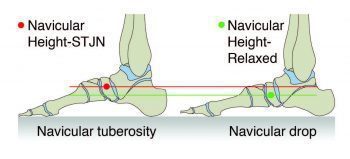
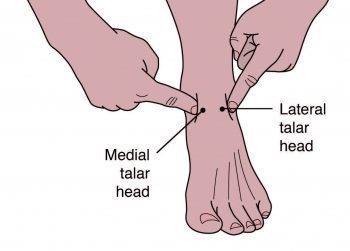
While the cause, set of causes or manner of causation of MTSS is still only a hypothesis, the risk factors for athletes developing it are well-known. As determined by the navicular drop test, or NDT, a large navicular drop considerably corresponds with a diagnosis of medial tibial stress syndrome. The NDT measures the difference in height position of the navicular bone, from a neutral subtalar joint position in supported non-weight bearing, to full weight bearing. The NDT explains the degree of arch collapse during weight bearing. Results of more than 10 mm is considered excessive and can be a considerable risk factor for the development of MTSS.
Research studies have proposed that athletes with MTSS are most frequently female, have a higher BMI, less running experience, and a previous history of MTSS. Running kinematics for females can be different from that of males and has often been demonstrated to leave individuals vulnerable to suffer anterior cruciate ligament tears and patellofemoral pain syndrome. This same biomechanical pattern may also incline females to develop medial tibial stress syndrome. Hormonal considerations and low bone density are believed to be contributing factors, increasing the risk of MTSS in the female athlete as well.
A higher BMI in an athlete demonstrates that they have more muscle mass rather than being overweight. The end result, however, is the same in that the legs bear a considerably heavy load. It�s been hypothesized that in these cases, the bone growth accelerated by the tibial bowing may not advance quickly enough and injury to the bone may occur. Therefore, those with a higher BMI may need to continue their training programs gradually in order to allow the body to adapt accordingly.
Athletes with less running experience are more likely to make training errors, which may be a common cause for medial tibial stress syndrome. These include but are not limited to: increasing distance too quickly, changing terrain, overtraining, poor equipment or footwear, etc. Inexperience may also lead the athlete to return to activity before the recommended time, accounting for the higher prevalence of MTSS in those who had previously experienced MTSS. A complete recovery from MTSS can take from six months up to ten months, and if the original injury does not properly heal or the athlete returns to training too soon, chances are, their pain and symptoms may return promptly.
Biomechanical Analysis
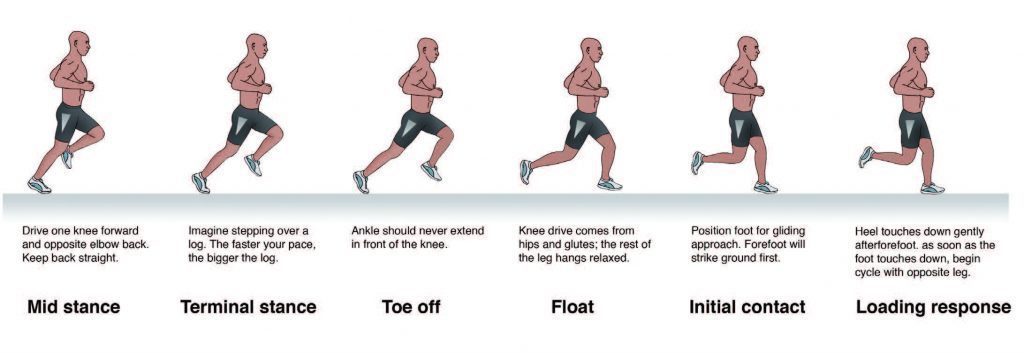
The NDT is used as a measurable indication of foot pronation. Pronation is described as a tri-planar movement consisting of eversion at the hindfoot, abduction of the forefoot and dorsiflexion of the ankle. Pronation is a normal movement of the body and it is absolutely essential in walking and running. When the foot impacts the ground at the initial contact phase of running, the foot begins to pronate and the joints of the foot acquire a loose-packed position. This flexibility helps the foot absorb ground reaction forces.
During the loading response phase, the foot further pronates, reaching peak pronation by approximately 40 percent during stance phase. In mid stance, the foot moves out of pronation and back to a neutral position. During terminal stance, the foot supinates, moving the joints into a fastened position, creating a rigid lever arm from which to generate the forces for toe off.
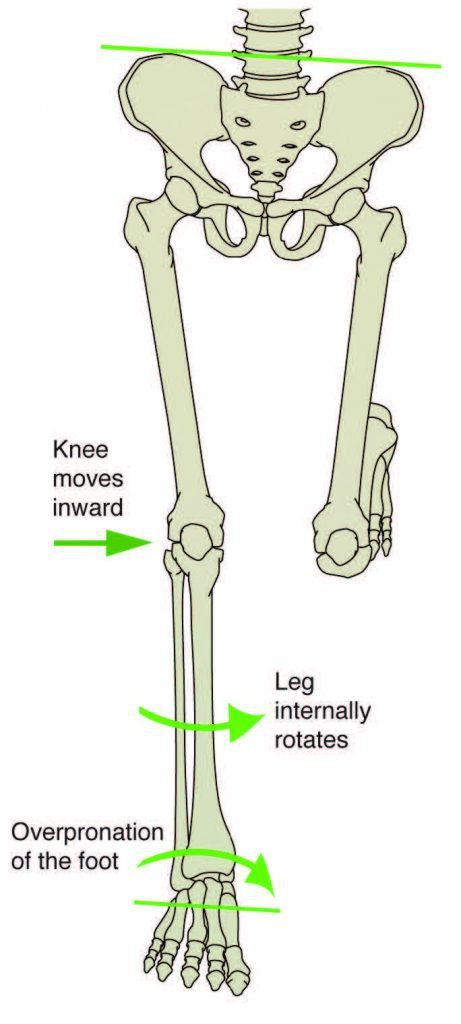
Starting with the loading response phase and throughout the rest of the single leg stance phase of running, the hip is stabilized and supported as it is extended, abducted and externally rotated by the concentric contraction of the hip muscles of the stance leg, including the gluteals, piriformis, obturator internus, superior gemellus and inferior gemellus. Weakness or fatigue in any of these muscles can develop an internal rotation of the femur, adduction of the knee, internal rotation of the tibia, and over-pronation. Overpronation therefore, can be a result of muscle weakness or fatigue. If this is the case, the athlete may have a completely normal NDT and yet, when the hip muscles don�t function as needed, these can overpronate.
In a runner who has considerable overpronation, the foot may continue to pronate into mid stance, resulting in a delayed supination response, causing for there to be less power generation at toe off. The athlete can make the effort to apply two biomechanical fixes here that could contribute to the development of MTSS. First of all, the tibialis posterior will strain to prevent the overpronation. This can add tension to the DCF and strain the medial tibia. Second, the gastroc-soleus complex will contract more forcefully at toe off to improve the generation of power. However, it�s hypothesized that the increased force within these muscle groups can add further tension to the medial tibia through the DCF and possibly irritate the periosteum.
Evaluating Injury in Athletes
Once understood that overpronation is one of the leading risk factors for medial tibial stress syndrome, the athlete should begin their evaluation slowly and gradually progress through the procedure. Foremost, the NDT must be performed, making sure if the difference is more than 10mm. Then, it�s essential to analyze the athlete�s running gait on a treadmill, preferably when the muscles are fatigued, such as at the end of a training run. Even with a normal NDT, there may be evidence of overpronation in running.
Next, the athlete�s knee should be evaluated accordingly. The specialist performing the evaluation should note whether the knee is adducted, whether the hip is leveled or if either hip is more than 5 degrees from level. These can be clear indications that there is probably weakness at the hip. Traditional muscle testing may not reveal the weakness; therefore, functional muscle testing may be required.
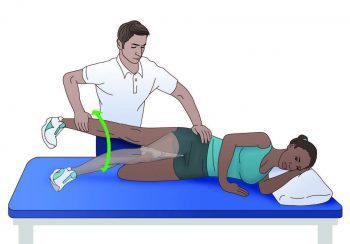
Additionally, it should be observed whether the athlete can perform a one-legged squat with arms in and arms overhead. The specialist must also note if the hip drops, the knee adducts and the foot pronates. Furthermore, the strength of the hip abductors should be tested in side lying, with the hip in a neutral, extended, and flexed position, making sure the knee is straight. All three positions with the hip rotated in a neutral position and at end ranges of external and internal rotation should also be tested. Hip extensions in prone with the knee straight and bent, in all three positions of hip rotation: external, neutral and internal can also be analyzed and observed to determine the presence of medial tibial stress syndrome, or MTSS. The position where a healthcare professional finds weakness after the evaluation is where the athlete should begin strengthening activities.
Treating the Kinetic Chain
In the presence of hip weakness, the athlete should begin the strengthening process by performing isometric exercises in the position of weakness. For example, if there is weakness during hip abduction with extension, then the athlete should begin isolated isometrics in this position. Until the muscles consistently activate isometrically in this position for 3 to 5 sets of 10 to 20 seconds should the individual progress to adding movement. Once the athlete achieves this level, begin concentric contractions, in that same position, against gravity. Some instances are unilateral bridging and side lying abduction. Eccentric contractions should follow, and then sport specific drills.
In the case that other biomechanical compensations occur, these must also be addressed accordingly. If the tibialis posterior is also displaying weakness, the athlete should begin strengthening exercises in that area. If the calf muscles are tight, a stretching program must be initiated. Utilizing any modalities possible might be helpful towards the rehabilitation process. Last but not least, if the ligaments in the foot are over stretches, the athlete should consider stabilizing footwear. Using a supported shoe for a temporary period of time during rehabilitation can be helpful to notify the athlete to embrace new movement patterns.
MTSS and Sciatica
Medial tibial stress syndrome, otherwise known as shin splints, ultimately is a painful condition that can greatly restrict an athlete�s ability to walk or run. As mentioned above, several evaluations can be performed by a healthcare professional to determine the presence of MTSS in an athlete, however, other conditions aside from shin splints may be causing the individuals leg pain and hip weakness. That is why it�s important to also visit additional specialists to ensure the athlete has received the correct diagnosis for their injuries or conditions.
Sciatica is best referred to as a set of symptoms that originate from the lower back and is caused by an irritation of the sciatic nerve. The sciatic nerve is the single, largest nerve in the human body, communicating with many different areas of the upper and lower leg. Because leg pain can occur without the presence of low back pain, an athlete�s medial tibial stress syndrome could really be sciatica originating from the back. Most commonly, MTSS can be characterized by pain that is generally worse when walking or running while sciatica is generally worse when sitting with an improper posture.
Regardless of the symptoms, it�s essential for an athlete to seek proper diagnosis to determine the cause of their pain and discomfort. Chiropractic care is a popular form of alternative treatment which focuses on musculoskeletal injuries and conditions as well as nervous system disorders. A chiropractor can help diagnose an athlete�s MTSS as well as overrule the presence of sciatica as a cause of the symptoms. In addition, chiropractic care can help restore and improve an athlete�s performance. By utilizing careful spinal adjustments and manual manipulations, a chiropractor can help strengthen the structures of the body and increase the individual�s mobility and flexibility. After suffering an injury, an athlete should receive the proper care and treatment they need and require to return to their specific sport activity as soon as possible.
Chiropractic and Athletic Performance
In conclusion, the best way to prevent pain from MTSS is to decrease the athlete�s risk factors. An athlete should have a basic running gait analysis and proper shoe fitting as well as include hip strengthening in functional positions as part of the strengthening program. Furthermore, one must ensure the athletes fully rehabilitate before returning to play because the chances of recurrence of medial tibial stress syndrome can be high.
Chiropractic care is an effective form of alternative treatment which is commonly preferred by many athletes as it can help with the recovery of an injury and/or condition without the need for medications or surgery. Most athletes are specially trained to prevent injuries, however, the constant and repetitive overworking of the structures of the body can gradually begin to degenerate, leading to issues like shin splints which may potentially manifest symptoms of sciatica if left untreated for an extended period of time.
For more information, please feel free to ask Dr. Jimenez or contact us at 915-850-0900 .�
By Dr. Alex Jimenez
Additional Topics: Low Back Pain After Auto Injury
After being involved in an automobile accident, the sheer force of the impact can cause damage or injury to the body, primarily to the structures surrounding the spine. An auto collision can ultimately affect the bones, muscles, tendons, ligaments and other tissues surrounding the spine, commonly the lumbar region of the spine, causing symptoms such as low back pain. Sciatica is a common set of symptoms after an automobile accident, which may require immediate medical attention to determine its source and follow through with treatment.
IFM's Find A Practitioner tool is the largest referral network in Functional Medicine, created to help patients locate Functional Medicine practitioners anywhere in the world. IFM Certified Practitioners are listed first in the search results, given their extensive education in Functional Medicine













 Most people don�t go to a