Women who drink diet drinks while pregnant almost double the risk that their child will be overweight or obese at 7 years of age, says a study lead by researchers at the National Institutes of Health. Childhood obesity is known to increase the risk for health problems later in life, such as diabetes, heart disease, stroke, and some cancers.
Researchers found that as the volume of amniotic fluid increases, pregnant women tend to increase their consumption of fluids. To avoid extra calories, many women replace sugar-sweetened soft drinks and juices with beverages containing artificial sweeteners.
Previous studies of adults have found that artificially sweetened beverages encouraged weight gain, and the study authors sought to discover if drinking diet beverages during pregnancy had an effect on the weight of children.
“Our findings suggest that artificially sweetened beverages during pregnancy are not likely to be any better at reducing the risk for later childhood obesity than sugar-sweetened beverages,” said the study’s senior author, Cuilin Zhang, Ph.D.
“Not surprisingly, we also observed that children born to women who drank water instead of sweetened beverages were less likely to be obese by age 7.”
The researchers limited their analysis to data from more than 900 pregnancies that were complicated by gestational diabetes, a type of diabetes that occurs only during pregnancy.
Approximately 9 percent of these women reported consuming at least one artificially sweetened beverage each day. Their children were 60 percent more likely to have a high birth weight, compared to children born to women who never drank sweetened beverages.
At age 7, children born to mothers who drank an artificially sweetened beverage daily were nearly twice as likely to be overweight or obese.
Drinking a daily artificially sweetened beverage appeared to offer no advantages over consuming one sweetened by sugar. At age 7, children born to both groups were equally likely to be overweight or obese.
Women who substituted water for sweetened beverages, however, reduced their children’s obesity risk at age 7 by 17 percent.
Scientists aren’t sure why drinking artificially sweetened beverages compared to drinking water may increase obesity risk. The authors cited an animal study that associated weight gain with changes in the types of bacteria and other microbes in the digestive tract.
Another animal study suggested that artificial sweeteners may increase the ability of the intestines to absorb the blood sugar glucose. Other researchers found evidence in rodents that, by stimulating taste receptors, artificial sweeteners desensitized the animals’ digestive tracts, so that they felt less full after they ate and were more likely to overeat.
According to the Centers for Disease Control and Prevention, the percentage of obese children has more than tripled since the 1970s. Today, 1 in 5 children between the ages of 6 and 19 are obese.
In addition to increased health risks as adults, obese children also have an increased risk of chronic health problems, such as asthma and Type 2 diabetes. They are also more likely to be bullied, and to suffer from depression and lower self-esteem.
It�s not always possible to keep up with your workout routine while traveling. So one hotel chain is making it easier�to cycle, do yoga, or sweat along to a cardio routine video�without ever�leaving your room.
Last month, Hilton Hotels debuted�their Five Feet to Fitness in-room mini gyms, which offer�11 different fitness equipment options�just steps�away from the bed and nightstand. Eight rooms are currently available�three�at Hilton’s�Parc 55 San Francisco and five�at Hilton McLean Tysons Corner in Virginia.
The chain plans to add�more than 100 rooms with mini-gyms around the country by the end of the year, says Ryan Crabbe, senior director of global wellness at Hilton. They’ll be available in Hilton hotels in�Atlanta, Austin, Chicago, Dallas, Las Vegas, New York, and San Diego.
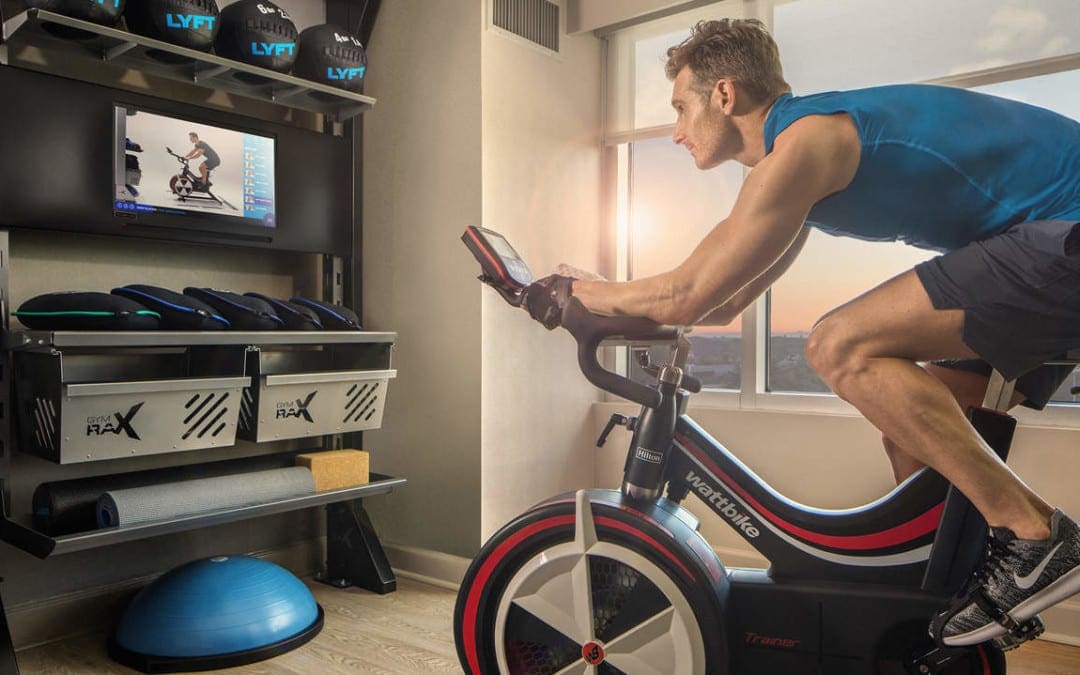
What kind of workout options will guests have?�Features include a�stationary Wattbike, medicine balls, sandbags, a Bosu ball, TRX, a yoga mat, and a foam roller, among other gear and accessories. Each room also comes with a�a touch-screen “fitness kiosk” that shows guests the right way to use�each piece of equipment. The kiosks are also loaded with more than 200 workout�videos covering cardio, cycling, endurance, strength-training, HIIT, yoga, and stretching and recovery.
If guests aren’t up for a cycling session after a long day on a business trip or sight-seeing, Hilton still has them covered�by outfitting each room with other�wellness-related features�such as a�meditation chair, protein drinks in a hydration station, and mini Biofreeze packets for sore muscles.
Hilton�s focus on fitness and wellness was driven by feedback from hotel guests and research into how travelers use hotels. A recent study conducted by Cornell showed that while 46 percent of travelers intend to use the hotel gym, only 22 percent end up doing a workout.
�We know that creating a wellness stage right in the hotel room might just be the solution for those guests who need the convenience of being able to get a quick workout in before breakfast or after a long day of business meetings, or those that prefer to workout in the privacy of their own room,� says Crabbe. �We also know that movement and mindfulness make for a better travel experience.�
No one can pinpoint exactly what causes migraines and headaches or why some people are more prone to experiencing them than others, but what we do know is that there are many factors which could potentially trigger them.
Causes of Cluster Headaches
Abnormalities in the region of the brain, known as the hypothalamus, are the cause of cluster headaches. What makes these headaches different than other types of headache is that they manifest like clockwork. Episodes generally occur in the same time of day and they typically follow the seasons of the year, making these very predictable. These headaches are mostly attributed to changes in the brain rather than changes in the environment or from how people handle stress.
Causes of Tension Headaches
Tension headaches are some of the most common types of headaches and they can affect anyone. �These types of headaches frequently occur when the neck and scalp muscles become tense or tight. Additionally, people who have migraines are more likely to experience moderate or severe tension headaches. The�increased sensitivity to pain resulting from the tension headaches, which might be caused by miscommunication between nerve pathways to the brain. A tension headache is usually triggered by something.
Tension Headache Triggers
A head injury
An illness, such as for example a sinus infection
Drinking alcohol
Eating foods with withdrawal symptoms or too much caffeine from a lack of caffeine
Excessive smoking
Clenching your jaw
Grinding your teeth
Overexertion (caused by intense physical activity, etc.)
Poor posture
Sitting or standing within an uncomfortable position for too long (eg, working at a desk, sewing)
Sleeping with your neck in a abnormal position
Straining your eyes (working at a computer, reading something with very small text, etc.)
Tiredness
Causes of Migraines
Both genetics along with the environment may be the most common cause of migraines. For example, if your mother experiences cases of chronic migraines, you may experience them as well. But in the case you don’t have a family history of migraines, then they may be caused by means of a variety of factors from changes in the weather to too much stress and not handling stress effectively. It’s possible that migraines may also be caused by imbalances in chemicals in the brain. The hormone serotonin helps nerves communicate with each other as well as helps regulate pain in the body. A lack of serotonin may causes a migraine, according to research studies.
Migraine Triggers
Alcohol
Certain foods, for example aged cheese and foods with aspartame (an artificial sweetener)
Changes in your sleeping habits
Dehydration
Depression
Eating foods that have caffeine (eg, coffee, chocolate)
Extreme fatigue
Grinding your teeth
Hormonal changes and menstruation (in women)
Hunger
Poor sleeping habits, lack of sleep, or too much sleep
Skipping meals
Some medications, including oral contraceptives
In spite of the fact that the exact cause of migraines and headaches is unknown, avoiding the triggers mentioned above is certainly one of the best ways to try to prevent headaches and migraines. By avoiding the above mentioned triggers and understanding the causes, you are in a position to help reduce the amount of headaches or migraines you experience in the future.
The scope of our information is limited to chiropractic and spinal injuries and conditions. To discuss options on the subject matter, please feel free to ask Dr. Jimenez or contact us at 915-850-0900 .�
By Dr. Alex Jimenez
Additional Topics: Cervicogenic Headache and Chiropractic
Neck pain associated with whiplash-associated disorders resulting from an automobile accident are reportedly the most prevalent cause for discomfort along the cervical spine. The sheer force of an impact from a rear-end car crash or other traffic incident can cause injuries or aggravate a previously existing condition. While neck pain is commonly the result of damage to the complex structures of the neck, cervicogenic headaches may also result due to neck issues. Chiropractic care can help carefully restore the alignment of the cervical spine to relieve headaches and neck pain.
For many, weight training calls to mind bodybuilders pumping iron in pursuit of beefy biceps and bulging pecs. But experts say it�s well past time to discard those antiquated notions of what resistance training can do for your physique and health. Modern exercise science shows that working with weights�whether that weight is a light dumbbell or your own body�may be the best exercise for lifelong physical function and fitness.
�To me, resistance training is the most important form of training for overall health and wellness,� says Brad Schoenfeld, an assistant professor of exercise science at New York City�s Lehman College. During the past decade, Schoenfeld has published more than 30 academic papers on every aspect of resistance training�from the biomechanics of the push-up to the body�s nutrient needs following a hard lift. Many people think of weight training as exercise that augments muscle size and strength, which is certainly true. But Schoenfeld says the �load� that this form of training puts on bones and their supporting muscles, tendons and ligaments is probably a bigger deal when it comes to health and physical function.
�We talk about bone resorption, which is a decrease in bone tissue over time,� he says. When you�re young, bone resorption is balanced and in some cases exceeded by new bone tissue generation. But later in life, bone tissue losses accelerate and outpace the creation of new bone. That acceleration is especially pronounced among people who are sedentary and women who have reached or passed menopause, Schoenfeld says. This loss of bone tissue leads to the weakness and postural problems that plague many older adults.
�Resistance training counteracts all those bone losses and postural deficits,� he says. Through a process known as bone remodeling, strength training stimulates the development of bone osteoblasts: cells that build bones back up. While you can achieve some of these bone benefits through aerobic exercise, especially in your lower body, resistance training is really the best way to maintain and enhance total-body bone strength.
TIME Health NewsletterGet the latest health and science news, plus: burning questions and expert tips. View�Sample
More research links resistance training with improved insulin sensitivity among people with diabetes and prediabetes. One study published in the journal Diabetes Care found that twice-weekly training sessions helped control insulin swings (and body weight) among older men with type-2 diabetes. �Muscle is very metabolically active, and it uses glucose, or blood sugar, for energy,� says Mark Peterson, an assistant professor of physical medicine at the University of Michigan.
During a bout of resistance training, your muscles are rapidly using glucose, and this energy consumption continues even after you�ve finished exercising, Peterson says. For anyone at risk for metabolic conditions�type-2 diabetes, but also high blood pressure, unhealthy cholesterol levels and other symptoms of metabolic syndrome�strength training is among the most-effective remedies, he says.
Strength training also seems to be a potent antidote to inflammation, a major risk factor for heart disease and other conditions, says Schoenfeld. A 2010 study from the University of Connecticut linked regular resistance training with inflammation-quelling shifts in the body�s levels of cytokines, a type of immune system protein. Another study from Mayo Clinic found that when overweight women did twice-weekly resistance training sessions, they had significant drops in several markers of inflammation.
Some of the latest and most surprising research is in the realm of �light-load training,� or lifting very small weights. �It used to be thought that you needed to lift heavy loads in order to build muscle and achieve a lot of these benefits,� Schoenfeld says. �That�s what I was taught in grad school and undergrad, but now it looks like that�s completely untrue.�
He says lifting �almost to failure��or until your muscles are near the point of giving out�is the real key, regardless of how much weight you�re using. �This is a huge boon to adherence, because many older adults or those with injuries or joint issues may not be able to lift heavy loads,� he says.
If all that isn�t convincing enough to turn you onto weights, perhaps this is: maintaining strength later in life �seems to be one of the best predictors of survival,� says Peterson. �When we add strength�almost every health outcome improves.�
�It used to be we thought of strength training as something for athletes,� he adds, �but now we recognize it as a seminal part of general health and well-being at all ages.�
The UTEP track and field team will be sending nine student-athletes to compete at the 2017 NCAA Championships this week in Eugene Ore., starting Wednesday June 7 through Saturday, June 10.
Wearing the Orange and Blue for the women�s team will be Tobi Amusan (100m Hurdles), Samantha Hall (Discus Throw), Lucia Mokrasova (Heptathlon), Winny Koech (10,000m) and Lilian Koech (800m).
On the men�s side, Emmanuel Korir (800m and 4x400m relay), Michael Saruni (800m and 4x400m relays) and the 4x400m relay ream of Korir, Saruni, Asa Guevara and James Bias will represent the Miners at the NCAA Championships.
Tobi Amusan | Sophomore | Hurdles
The Sophomore makes her return to the NCAA Championships after taking runner-up last year. Amusan heads into the championships with the fastest qualifying time, when she clocked 12.57w at the West Region Prelim. The Nigerian native has yet to lose a 100m hurdles in five races thus far.
The school record holder will compete in the semifinals for the 100m hurdles on Thursday at 6:32 p.m. MT on ESPN2. A total of eight runners out of the 24 will advance to the finals. Three heats will be held (eight athletes in each heat) and the top two finishers from each heat plus the next best two fastest times will advance.
Samantha Hall | Senior | Discus
The senior will make her final appearance in the Orange and Blue at the national stage for the second time in her career after earning 13th overall at the 2015 NCAA Championships. Hall holds the school record in the discus throw with a mark of 58.50m and qualified for the NCAA Championships tossing for 56.50m at the West Region Prelims.Hall will compete on Saturday�s final starting at 4:05 p.m. on ESPN3.
Lucia Mokrasova| Junior | Heptathlon
Mokrasova will take the track in the heptathlon on Friday and Saturday morning for the Miners. The junior broke her previous school record earlier this year at the Texas Relays, she scored 5,671 points.
That point total for Mokrasova ranks her 12th nationally headed into the competition. The Slovakia native will take the track on Fridayat 1:30 p.m. on ESPN3.
Winny Koech | Sophomore | 10,000m
Koech will compete in the 10,000m Final on Thursday night at 8:08 p.m on ESPN2. Koech has clocked a personal-best 33:51.31 when she ran at the Mt. SAC Relays earlier this year. The C-USA champion ranks 17th among the 24 student-athletes competing, after running a qualifying time of 34:39.41. This will be the first trip to the national stage for Koech.
Lilian Koech | Sophomore | 800m
Making a her first appearance at the national stage, the Kenya native will run in the 800m semifinal on Thursday at 7:14 p.m on ESPN2. Koech clocked her personal best earlier this year with a time of 2:04.68 at the Brutus Hamilton Challenge. The sophomore earned one of the automatic qualifying spots from the West Region Prelim with a time of 2:07.68.
Emmanuel Korir | Freshman | 800m
The Kenya native has taken track and field by storm this year. Breaking numerous meet records and school records, including the indoor 600m world record (1:14.97). Korir is undefeated in the 800m through three races. The freshman clocked the fastest-time in the 800m earlier this year with a time of 1:43.73 at the Brutus Hamilton Challenge. Korir is just one of three athletes in the world to run sub-1:44 in the 800m and sub-45 in the 400m.
The All-American will take the track on Wednesday in the 800m semifinal starting at 7:14 p.m on ESPN2.
Michael Saruni | Freshman | 800m
Saruni has been just as spectacular as his teammate Korir. Saruni clocked a personal best 1:45.92 at the Texas Relays beating the 2012 Olympic silver medalist (Leonel Manzano) and the collegiate record holder (Donavan Brazier). Saruni heads into the championships ranked sixth in the nation.
Men�s 4x400m Relay Team
The Men�s 4x400m relay team will consist of both freshman 800m runners, senior James Bias and junior James Bias. The team registered the second-fastest time in program history with a time of 3:03.15 and ranks as the fourth-fastest qualifying time to the NCAA Championship. The team will compete on Wednesday in the 4x400m relay semifinal with the final set for Friday at 8:51 p.m. on ESPN.
You can watch the 2017 NCAA Division I Outdoor Track and Field Championships live on the ESPN family of networks. Both the final day of the men�s championship and women�s championship will be aired in prime time on ESPN.
For live results and breaking news be sure to follow @UTEPTrack on Twitter and uteptrack on Instagram.
Mobility is more than moving from one place to another. It�s freedom and independence.
Whether you have a back or other condition that impacts how you walk, or your body doesn�t move as effortlessly as it once did, decreased mobility impacts a lot of people. But, if you notice changes early on, you and your doctor may be able to work on a plan to keep you moving comfortably for longer.
To see some red flags that may signal a decline in healthy mobility. Do any sound familiar?
Short Walks Become Long Walks
How do you feel after walking a quarter of a mile? Is it painful or taxing on your body?
Unless you have a spine condition or other disease that limits your ability to walk, you should be able to walk your entire life. If it�s challenging to complete short walks, that�s a red flag your mobility is at risk.
Changes In Gait
It�s not just walking distance that foreshadows a decline in mobility�how you walk is just as revealing.
Gait is the medical term for how you walk. While gait changes are a typical part of aging, some gait characteristics aren�t normal. For example: If you walk in a shuffling, unsteady, or cautious manner, you should see your doctor. He or she will help assess your gait and hopefully find the reason for it and ways to improve your movement.
Your �Get Up & Go� Is A Bit Slow
Another way to test your mobility is by doing the �get up and go� test.
You�ll need a friend to time you during this task. First, start by sitting in a chair. When your friend says �go,� get up and walk 10 feet in a straight line, then turn around and walk back to the chair and sit down. Most people who have healthy mobility can complete the exercise in 10 seconds or less.
While speed is an important part of this exercise, think about how you feel afterward. Do you feel any pain in your back muscles or in your legs or joints? If so, you should talk to your doctor to find ways to ease these movements� impact on your quality of life.
Golf & Chiropractic Care
Daily Tasks Aren�t So Routine
Is cooking a meal or taking a shower an ordeal when it used to be just a typical part of your day? Do you have work-arounds for tasks that were once easy?
One can overlook how a once simple part of your daily routine has slowly morphed into a challenging task. You may adjust your lifestyle to accommodate a decline in mobility (like putting a seat in the shower), but that�s a sign it�s time to see your doctor.
Your doctor can get to the bottom of your movement problems and suggest ways to help, such as using an assistive device, like a cane or walker, so you can move easier.
You Don�t Travel Far From Home
This isn�t about getting on a plane�you don�t travel to the other side of town. Avoiding going away from home, even if it�s a grocery store a few miles from your house, could be a sign your ability to move is declining.
Think about it: Running errands across town for an hour or two takes physical endurance. If you feel mentally and physically exhausted over the thought of completing a few errands, that�s a red flag your mobility health is at risk.
The Best Way To Improve Mobility
Want to keep walking well into your later years? The answer is simple: Stay active.
Physical activity is excellent for your heart, lungs, muscles, and spine, and helps preserve your independence. It�s never too late to start exercising.
Caring for your mobility is essential�not just for spine health but for your total health.
The Atlas Orthogonal chiropractic technique is a healthcare system utilized to help adjust misalignments, or subluxations, along the cervical spine, most commonly in the uppermost vertebra, or the atlas. The Atlas Orthogonal treatment program was first developed specifically to help treat spinal complications along the upper back or neck region, particularly among the vertebrae which connect to the skull.
The use of special radiographic views and/or X-rays are essential to determine the extent and direction of a patient’s spinal misalignment. Furthermore, information from X-rays or other radiographic views can help determine how a healthcare professional will adjust the segment of the spine.
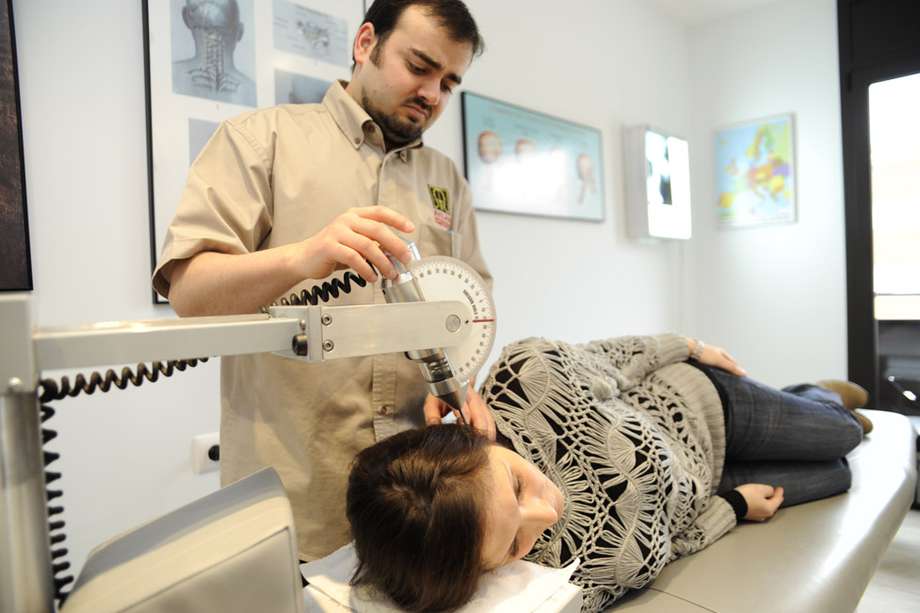
The actual adjustment is performed with an Atlas Orthogonal Percussion Adjusting Instrument. The instrument functions by percussion, or a sound wave, in order for the spinal column bones and joints to be gently restored to their original position and alignment.
Another well-known example of percussion is Newton’s Cradle. The device conservation of momentum and energy using a series of swinging spheres, where when one ball on the end of it is pulled and released, the balls in the middle stay put while the ball on the end bounces away.
The Atlas Orthogonal Percussion Adjusting Instrument functions in the same manner as this principle. In the adjusting head of the instrument, a solenoid that strikes a stylus can be found. The stylus doesn’t move but it allows momentum and energy to be transmitted through the tip. The tip is placed within the side of the vertebra and the percussive force moves the vertebrae in the desired direction based on the coordinated set by the healthcare professional, such as an Atlas Orthogonist, a specialist in the Atlas Orthogonal chiropractic technique.
What is an Atlas Orthogonist?
An Atlas Orthogonist is a healthcare professional within the chiropractic field, who is qualified and experienced with training in the structure, function and bio-mechanics of the upper cervical spine. The human body is capable of maintaining structural balance through the proper and precise interaction of the muscles under the control of the nervous system, allowing the bones and other structures of the body to move and flex in a relatively unrestricted manner. A majority of the complex network of nerves are protected by the spinal vertebrae. Unfortunately however, spinal misalignment, or subluxation, and other spinal complications can often be the underlying source of pain, loss in sensation and mobility. The spine must be able to support its own shifting weight as the body runs, walks, lifts and bends, largely because the human body functions more effectively in an upright position.
The normal curvature of the spine is designed to comfortably maintain the body’s center of gravity aligned over its supporting lower extremities. Spinal complications caused by spinal misalignments, or subluxations, resulting when the vertebra slip from proper alignment, even by the smallest degree, can affect the overall health and wellness of the entire body, if left untreated. This can be true when misalignments occur in the cervical spine or neck.
Chiropractors specialize in the diagnosis, treatment and prevention of injuries and/or conditions associated with the musculoskeletal and nervous system, helping to provide optimal and improved function of the body through spinal health. For many patients, correcting spinal misalignments, or subluxations, results in the individual’s overall health and wellness. Regardless of the cause, when the critical alignment of the spinal column is disturbed, nature tries immediately to repair and heal the damage but chiropractic care can help enhance this process.
Atlas Orthogonist Diagnosis and Treatment
The scope of our information is limited to chiropractic and spinal injuries and conditions. To discuss options on the subject matter, please feel free to ask Dr. Jimenez or contact us at 915-850-0900 .
By Dr. Alex Jimenez
Additional Topics: Cervicogenic Headache and Chiropractic
Neck pain associated with whiplash-associated disorders resulting from an automobile accident are reportedly the most prevalent cause for discomfort along the cervical spine. The sheer force of an impact from a rear-end car crash or other traffic incident can cause injuries or aggravate a previously existing condition. While neck pain is commonly the result of damage to the complex structures of the neck, cervicogenic headaches may also result due to neck issues. Chiropractic care can help carefully restore the alignment of the cervical spine to relieve headaches and neck pain.
IFM's Find A Practitioner tool is the largest referral network in Functional Medicine, created to help patients locate Functional Medicine practitioners anywhere in the world. IFM Certified Practitioners are listed first in the search results, given their extensive education in Functional Medicine









 How do you feel after walking a quarter of a mile? Is it painful or taxing on your body?
 It�s not just walking distance that foreshadows a decline in mobility�how you walk is just as revealing.