Back Clinic Power & Strength Training. These types of conditioning programs are for both athletes and the general population. They can reach higher levels of personal power and strength, making them capable of achieving their personal fitness goals. Power is defined as the ability to generate as much force as fast as possible. It’s needed for athletic movements such as workouts (clean & jerk), swinging a bat, golf club, tennis racket, and running through a tackle.
Power requires strength and speed to develop force. Strength is the amount of force muscle/s can exert against an external load. One rep maximum test is performed where individuals assess the greatest weight they can lift while maintaining proper form. The movement’s speed is not important in a strength test. Dr. Alex Jimenez offers insight into various stretches and exercises and explains the possible risks of injury on strength training through his numerous article archives.
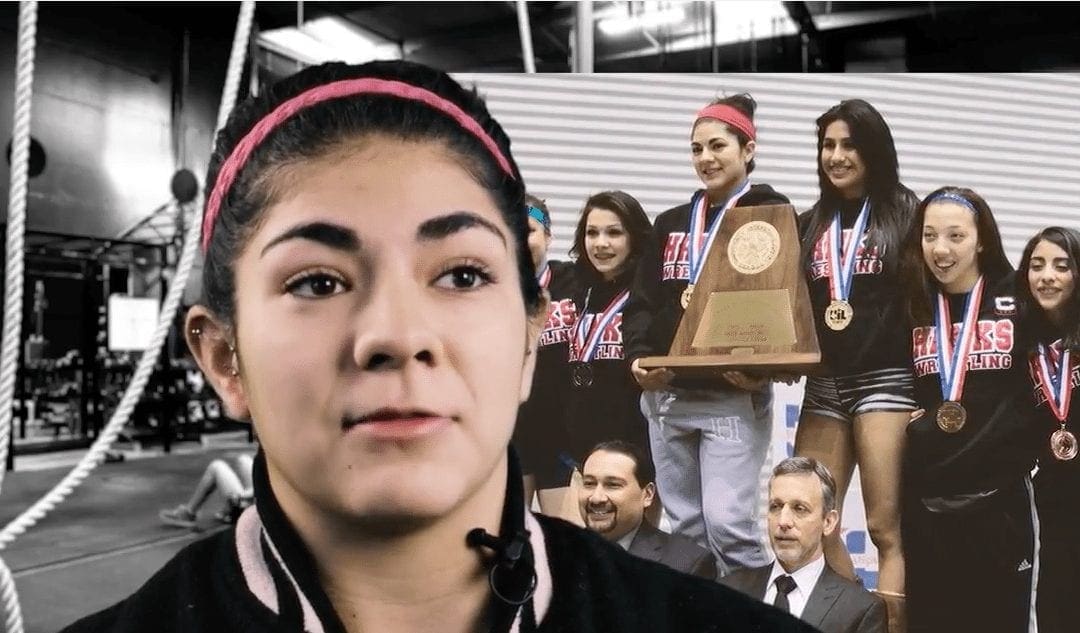
Adrienne Holguin, a wrestler faced with many challenges, pushed herself to strive high by training hard. It was then when she received a back injury that she joined Push-as-Rx �. The training was hard but the trainers at Push as Rx helped her through every step of the way, accommodating the exercises to her injury. Adrienne Holguin is grateful for the friendly atmosphere at Push as Rx and to the trainers for pushing her to become the best.
PUSH-as-Rx � is leading the field with laser focus supporting our youth sport programs. The PUSH-as-Rx � System is a sport specific athletic program designed by a strength-agility coach and physiology doctor with a combined 40 years of experience working with extreme athletes. At its core, the program is the multidisciplinary study of reactive agility, body mechanics and extreme motion dynamics. Through continuous and detailed assessments of the athletes in motion and while under direct supervised stress loads, a clear quantitative picture of body dynamics emerges. Exposure to the biomechanical vulnerabilities are presented to our team. Immediately, we adjust our methods for our athletes in order to optimize performance. This highly adaptive system with continual dynamic adjustments has helped many of our athletes come back faster, stronger, and ready post injury while safely minimizing recovery times. Results demonstrate clear improved agility, speed, decreased reaction time with greatly improved postural-torque mechanics. PUSH-as-Rx � offers specialized extreme performance enhancements to our athletes no matter the age.
Please Recommend Us: If you have enjoyed this video and/or we have helped you in any way please feel free to recommend us. Thank You.
Alex Jimenez Jr., a wrestler since youth, takes us through his compelling story of gaining strength and overcoming challenges. Alex Jimenez gave it his all to become the best at wrestling, and coming to Push-as-Rx � gave him the mental bearing he needed to push himself to go the extra mile in order to gain an edge on his opponents. He continued training at Push as Rx while he participated successfully in wrestling tournaments until he received a crucial injury that changed his life. Despite the odds being against him, Alex Jimenez received surgery and started his journey to recovery. With the help of the trainers at Push-as-Rx �, Alex was able to overcome his challenges, slowly regaining his strength by focusing and prioritizing in his recovery until he was able to start wrestling again and won the state championship as a senior in high school.
PUSH-as-Rx �� is leading the field with laser focus supporting our youth sport programs. The PUSH-as-Rx �� System is a sport specific athletic program designed by a strength-agility coach and physiology doctor with a combined 40 years of experience working with extreme athletes. At its core, the program is the multidisciplinary study of reactive agility, body mechanics and extreme motion dynamics. Through continuous and detailed assessments of the athletes in motion and while under direct supervised stress loads, a clear quantitative picture of body dynamics emerges. Exposure to the biomechanical vulnerabilities are presented to our team. Immediately, we adjust our methods for our athletes in order to optimize performance. This highly adaptive system with continual dynamic adjustments has helped many of our athletes come back faster, stronger, and ready post injury while safely minimizing recovery times. Results demonstrate clear improved agility, speed, decreased reaction time with greatly improved postural-torque mechanics. PUSH-as-Rx �� offers specialized extreme performance enhancements to our athletes no matter the age.
Please Recommend Us: If you have enjoyed this video and/or we have helped you in any way please feel free to recommend us. Thank You.
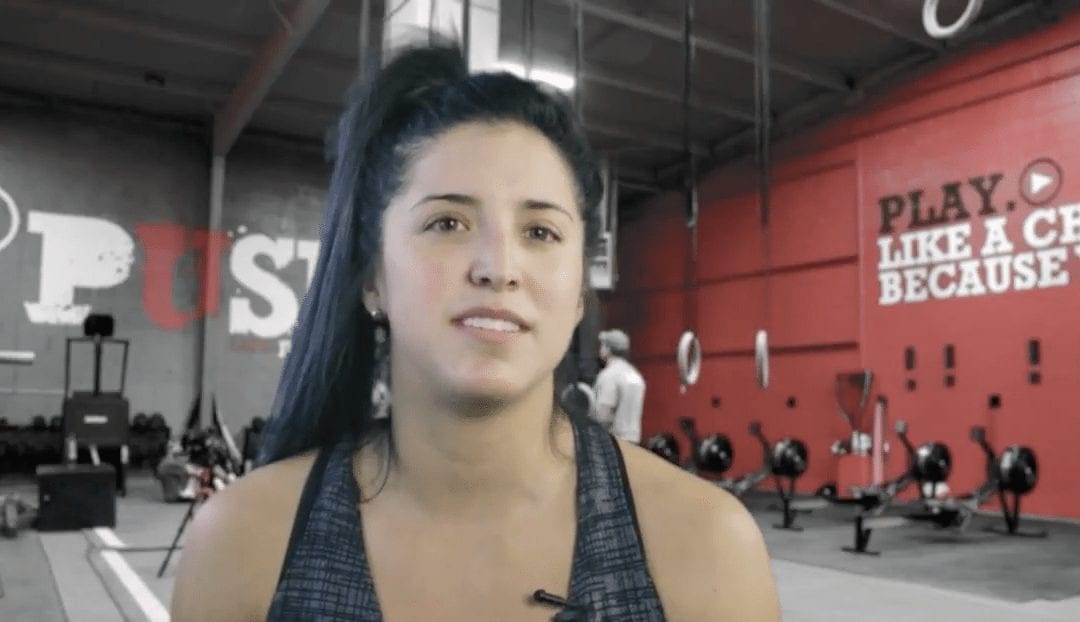
Megan Dominguez, like many, exercised in regular gyms but, when she was talked into trying cross fit at Push-as-Rx �, she knew she wouldn’t be going back to her old routine. Megan described the trainers of Push as Rx as a family and since the beginning, she experienced an atmosphere of instant energy like no other. At Push-as-Rx �, Megan Dominguez was pushed to levels she never thought she could reach.
PUSH-as-Rx � is leading the field with laser focus supporting our youth sport programs.� The�PUSH-as-Rx � System is a sport specific athletic program designed by a strength-agility coach and physiology doctor with a combined 40 years of experience working with extreme athletes. At its core, the program is the multidisciplinary study of reactive agility, body mechanics and extreme motion dynamics. Through continuous and detailed assessments of the athletes in motion and while under direct supervised stress loads, a clear quantitative picture of body dynamics emerges. Exposure to the biomechanical vulnerabilities are presented to our team. �Immediately,�we adjust our methods for our athletes in order to optimize performance.� This highly adaptive system with continual�dynamic adjustments has helped many of our athletes come back faster, stronger, and ready post injury while safely minimizing recovery times. Results demonstrate clear improved agility, speed, decreased reaction time with greatly improved postural-torque mechanics.��PUSH-as-Rx � offers specialized extreme performance enhancements to our athletes no matter the age.
Please Recommend Us: If you have enjoyed this video and/or we have helped you in any way please feel free to recommend us. Thank You.
PUSH-as-Rx �� is leading the field with laser focus supporting our youth sport programs. The PUSH-as-Rx �� System is a sport specific athletic program designed by a strength-agility coach and physiology doctor with a combined 40 years of experience working with extreme athletes. At its core, the program is the multidisciplinary study of reactive agility, body mechanics and extreme motion dynamics. Through continuous and detailed assessments of the athletes in motion and while under direct supervised stress loads, a clear quantitative picture of body dynamics emerges. Exposure to the biomechanical vulnerabilities are presented to our team. Immediately, we adjust our methods for our athletes in order to optimize performance. This highly adaptive system with continual dynamic adjustments has helped many of our athletes come back faster, stronger, and ready post injury while safely minimizing recovery times. Results demonstrate clear improved agility, speed, decreased reaction time with greatly improved postural-torque mechanics. PUSH-as-Rx �� offers specialized extreme performance enhancements to our athletes no matter the age.
Please Recommend Us: If you have enjoyed this video and/or we have helped you in any way please feel free to recommend us. Thank You.
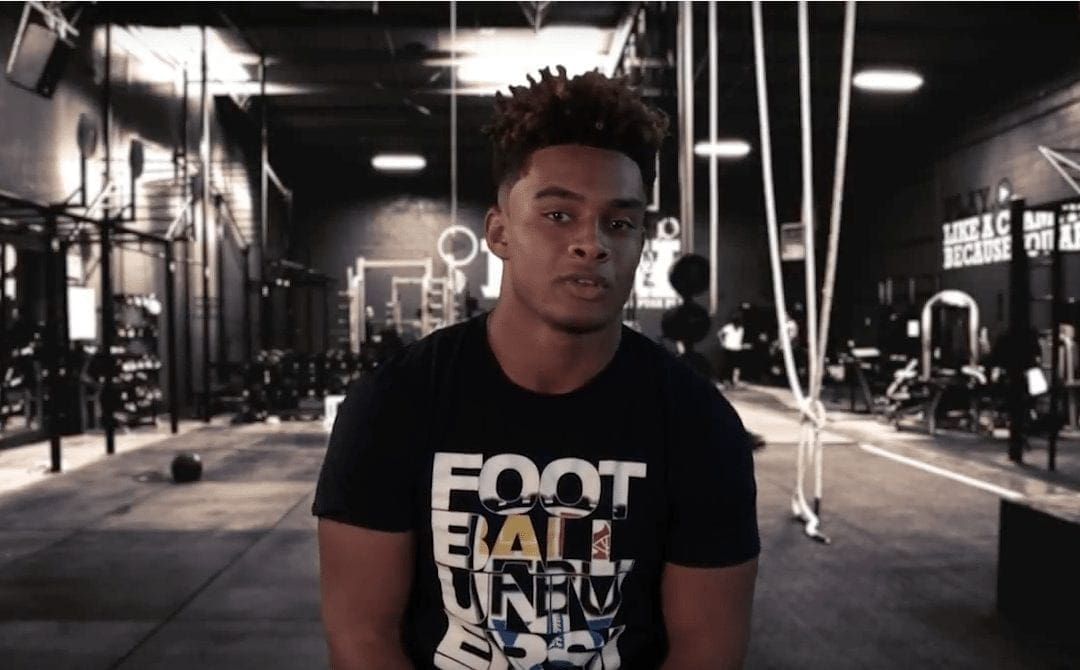
Malik Decquir shares his reason for staying determined in sports by never giving up and being consistent. Malik found Push-as-Rx �� in order to enhance his physical performance and his experience changed his outlook. He expresses how happy and comfortable he is at Push as Rx and offers his greatest gratitude to the trainers who were there when he needed them the most, giving him great advice, and pushing him to become the best at Push-as-Rx �.
PUSH-as-Rx ���is leading the field with laser focus supporting our youth sport programs.� The�PUSH-as-Rx ���System is a sport specific athletic program designed by a strength-agility coach and physiology doctor with a combined 40 years of experience working with extreme athletes. At its core, the program is the multidisciplinary study of reactive agility, body mechanics and extreme motion dynamics. Through continuous and detailed assessments of the athletes in motion and while under direct supervised stress loads, a clear quantitative picture of body dynamics emerges. Exposure to the biomechanical vulnerabilities are presented to our team. �Immediately,�we adjust our methods for our athletes in order to optimize performance.� This highly adaptive system with continual�dynamic adjustments has helped many of our athletes come back faster, stronger, and ready post injury while safely minimizing recovery times. Results demonstrate clear improved agility, speed, decreased reaction time with greatly improved postural-torque mechanics.��PUSH-as-Rx ���offers specialized extreme performance enhancements to our athletes no matter the age.
Please Recommend Us: If you have enjoyed this video and/or we have helped you in any way please feel free to recommend us. Thank You.
I have been travelling through Athens and now Istanbul. My 11 year old is a Percy Jackson nut and has been filling me in with the who’s who of Greek mythology and I am learning Latin words every day. Quite an education!
I looked up the word syndesmosis and the Latin translation is “(New Latin, from Greek sundesmos) bond, ligament, from sundein, meaning to bind together”. As sports injury professionals, we know syndesmosis to be the joint articulation between the tibia and the fibula bones around the ankle. These two bones are �bound’ together with very firm and strong ligaments.
Syndesmosis comes to mind after I saw a girl sprain a syndesmosis at the Archaeological Museum in Istanbul today. This poor girl was preoccupied by the hundreds of cats and kittens running all over the place and did not see the uneven cobblestones on which she placed her foot. At the same time, she turned to change direction. This is a common mechanism of injury for a syndesmosis – a forced dorsiflexion and rotation on a fixed foot.
Rehab Masterclass Issue 140 Of Sports Injury Bulletin
Of all the ankle injuries, injury to the syndesmosis is the biggest pest to sports physios and the like. And unlike simple garden variety ankle sprains that heal quickly, the syndesmosis takes a LONG time to heal properly. If you deal with athletes that are susceptible to syndesmosis sprains, I’m sure you will agree that these are harder injuries to manage because of the severe consequences if done badly.
I go into a fair bit of detail in my Sports Injury Bulletin piece about syndesmosis injuries, detailing how they happen, how to identify them and then manage them. What I would like to highlight here are the implications of mismanaging a syndesmosis sprain.
In the current issue of The Journal of Sports and Physical Therapy, a group of Japanese researchers discovered that individuals who had chronic ankle instability (CAI) had a distal fibula that was positioned more lateral compared with healthy individuals with no CAI. In effect, those who had suffered serious syndesmosis injuries in the past and ended up with a wider distance between the fibula and the tibia, suffered more ongoing ankle pain than those without a tibfib separation.
Research shows that even a 1mm displacement of the talus within the mortise (due to a wider placed fibula) can reduce the contact area in the talocrural joint by 42% (Ramsey and Hamilton 1976). Mismanaged syndesmosis injuries, resulting in an excessive amount of opening, can lead to early onset arthritic changes and chronic ankle instability. The talus bone bounces around in the now wider tibfib articulation.
A Widening Of The Fibula Is Due To One Of The Following:
Poor initial management, whereby the athlete is allowed to weight bear too early and this weight bearing forces the fibula away from the tibia as the syndesmosis ligaments are trying to heal.
The degree of damage is so severe that proper tightening of these ligaments is not possible without surgical intervention such as a screw or similar being placed between the two bones to �force’ them together.
The key for a sports injury practitioner, is to properly identify a regular ankle sprain from a more serious syndesmosis injury. If you get this part wrong and allow the athlete to get back to weight bearing too early, then expect some complaints about a chronically painful ankle some time down the track.
Call Today!
Kobayashi et al (2014). �Fibular malalignment in individuals with chronic ankle instability.’ JOPST. 44(11); pp 841-910.
Ramsey and Hamilton (1976). J Bone and J Surgery Am. 58(3); 356-357.
When you think of a ballerina body, you may picture a petite, slender�physique. But many dancers have rejected that rigid idea of what a ballerina is supposed to�look like�and instead, they’ve led a shift towards�embracing a diverse range of�athletic ballerina bodies. One woman who’s played a major role in that movement is none other than Misty Copeland, the iconic principle dancer at the American Ballet Theater.
�We are real women and ballerinas, muscular, feminine but also strong, lithe but also curvaceous,� Copeland writes in her new book, Ballerina Body: Dancing and Eating Your Way to a Leaner, Stronger, and More Graceful You�($30, amazon.com).�But Copeland doesn�t pretend she always felt so confident in her skin. �None of it was easy. Not my climb in the ballet world, not my arrival at a place of personal contentment and peace, not my journey to the body I stand in.�
Her book is her way of helping other women reach the same state of body confidence that she now exudes to the world. �I dream of sharing what I�ve learned�of showing women everywhere how to reach their body goals and achieve what they see as their best selves,” she says.
For Copeland, that has meant prioritizing exercise, as an integral and positive element of her day.��Working out, so essential to our mental and physical well-being, can and should be woven through every part of our lives,� Copeland says.
Below are four exercises that she incorporates in�her cross-training routine, to help maintain her ideal ballerina body��one that is lean but sinewy, with muscles that are long, sculpted, and toned.� But you certainly don’t have to be a dancer to reap the benefits of these challenging moves. Try them out to�get toned from head to (pointed)�toe.
Relev�
�Relev� means �raised,� or lifted, and describes the position when you rise onto the balls of your feet (demi-pointe) or onto the toes (pointe) of one or both feet.
a. Begin in first position. Demi-pli�, then stretch your knees and rise onto demi-pointe (relev�). Repeat this three times and old on the count of four. When done to music, the counts are to the timing of the music.
b. Repeat once. When you get stronger, you may do four repetitions.
Remember to hold your posture. The flexing and pointing also prepare and strengthen your ankles to allow you to stand on demi-pointe (or en pointe, if you are an advanced dancer).
Balancing Adagio
�Adagio� refers to the slow movement in the ballet technique. As much as the adagio is about flexibility, strength, and fluidity in the movement, learning this exercise on the floor will give you an advantage before approaching it standing. On the floor you acquire a sense of balance and where your weight should be in order to leverage it to make you legs appear higher and more extended in opposition to our upper body.
This exercise should be done slowly to improve balance, alignment, abdominal strength, and stamina.
a. Start by sitting with your legs together on the floor in front of you.
b. Lift your legs into the air by bending your knees, holding the backs of your things with your hands with your legs still bent and parallel to each other.
c. Leaning back, with your back straight and the backs of your thighs (hamstrings) leaning into your hands, slowly lengthen both legs into the air until they are fully straight, making you into a V shape. Bend your knees so the tips of your toes touch the floor. Now do the same with each leg, alone, keeping the tips of the toes of your other leg posed on the floor.
d. Repeat the sequence, beginning with the other leg, when doing the single-leg section.
Seaweed
This exercise is great for freeing and lengthening the spine and for centering and strengthening the core.
a. Begin lying on your back, your legs together and parallel and your feet pointed.
b. Bend your legs slowly, bringing them off the floor, still bent, and lifting your feet off the floor as well, while your back hugs the ground.
c. Keeping your lower back on the floor and your shoulder blades drawn down toward your waist, curl your upper back off the floor, around your lower abs. Your arms should act like seaweed being moved by the motion of the tides, around and behind your lifted legs.
d. Float your upper back and arms down to the floor, legs still bent, body still energized.
e. Repeat four times, bringing your legs gently toward your head as your core and upper body lift, igniting the lower abdominal muscles.
f. After the last time, hold one hand or wrist (depending on the length of your arms) with the other, behind your thighs.
g. Lengthen your legs straight into the air, pressing the backs of your legs into your arms.
h. Propel your legs to the floor, arms still around them, until you get close to the floor. Then open your arms to the sides and move them forward toward your feet, over your head.
i. Your upper back should bend forward over your legs as you transition from lying to sitting, with the backs of your hands on the floor to help stabilize and keep the backs of your legs on the floor.
j. Roll down through your spine until your back is on the floor and you are in the starting position, with your shoulders relaxed. Repeat two to four times.
D�gag�
�D�gag� means �disengaged.� When preparing for d�gag�s in particular, but whenever you�re lying on the floor, you should feel like you are standing or jumping�not lying on the sand at the beach!
This exercise is good for length, strength, and alignment. Be sure to press the parts of your back and body that are touching the surface of the floor to the floor, allowing your working leg to float up, initiating the movement with your inner thighs and the backs of the legs rather than the top of your thighs (quadriceps).
a. Begin lying on your back with your feet in first position (heels together and toes apart, feet pointed).
b. Place your arms at your sides with your palms facing down; you can vary the positioning of your arms depending on what makes you comfortable, as long as your arms don�t go above your shoulders.
c. Keep your legs elongated, straight on the floor.
d. Use your palms and arms by pressing them to the floor. This will help to strengthen ?your core and align the spine.
e. Lift one leg two or three inches from the floor, with your toes still pointed out, by pressing the standing leg (again, whether you�re standing or lying on the floor, the standing leg is the one that is not moving; it helps to maintain balance), your arms, and your head into the floor. This will help you to lift the working leg while maintaining stability throughout your body. Do four d�gag�s with one leg front, then switch legs and do four with the other leg front.
f. Now do four d�gag�s to each side. For these, your working leg stays on the floor, brushing along the floor as it extends to the side. Do not disturb the balance of the pelvis or the back as you move the working leg.
Excerpted from the book BALLERINA BODY by Misty Copeland. Copyright 2017 by Misty Copeland. Reprinted with permission of Grand Central Life & Style. All rights reserved.
IFM's Find A Practitioner tool is the largest referral network in Functional Medicine, created to help patients locate Functional Medicine practitioners anywhere in the world. IFM Certified Practitioners are listed first in the search results, given their extensive education in Functional Medicine








 2017 by Misty Copeland. Reprinted with permission of Grand Central Life & Style. All rights reserved.