by Dr Alex Jimenez DC, APRN, FNP-BC, CFMP, IFMCP | Health News El Paso, UTEP (Local) RSS
The month of September is designated as National Childhood Obesity Prevention Month and the City of El Paso Department of Public Health’s Eat Well! El Paso program is helping to make it easier for families to take steps to improve their health.
These and existing Eat Well! El Paso restaurants commit to improving their menu options specifically for children by improving entrée and side offerings, using healthier cooking methods, and offering healthier beverage options. Owners receive assistance from nutrition professionals, at no cost, to create a new children’s menu with healthier selections.
By becoming an Eat Well! El Paso restaurant, these businesses are not only responding to current industry and customer trends toward healthier and fresher foods, they also help create a healthier food environment for our community.
“We are so pleased to have these new restaurants on board and to see the enthusiasm they have for improving our community’s well-being,” said Joy Leos, Health Project Coordinator. “In addition to adding restaurants our program continues to evolve with the addition of new adult menus that include more fruits and vegetables and healthier ingredients.”
A total of 25 restaurants are now part of the Eat Well! family. The 11 new participating restaurants are:
| R&B Kitchen
9787 McCombs St
El Paso, TX 79924
915-757-1515
|
The Pizza Joint
500 N Stanton
El Paso, TX 79901
915-260-5556
|
The Grooovy Smoothie
702 Wyoming Ave
El Paso, TX 79902
915-532-0362
|
| Okoli Café
800 N Zaragoza Rd
El Paso, TX 79907
915-859-1163
|
Ke’Flauta
5100 Doniphan Dr
El Paso, TX 79932
915-581-4028
|
Zino’s Greek and Mediterranean Cuisine
6590 Montana Ave, Ste H
El Paso, TX 79912
915-584-8166
|
| Ripe Eatery
910 E Redd Rd, Ste A
El Paso, TX 79912
915-584-7473
|
Caffé Fioretti
3429 Montana Ave
El Paso, TX 79903
915-562-4600
|
El Jacalito Restaurant
2130 Myrtle Ave
El Paso, TX 79901
915-532-4643
|
| Good Luck Café
3813 Alameda Ave
El Paso, TX 79905
915-532-9039
|
The Mustard Seed Café
1140 N St Vrain St
El Paso, TX 79902
915-440-7333
|
|
Restaurants with new Eat Well! adult menu options include: Gonzalos G&R Restaurant, Garufa Argentinean Restaurant, T-Coasters, and The Grooovy Smoothie.
The El Paso Restaurant Association, the El Paso Academy of Nutrition and Dietetics, and the College of Health Science at UTEP endorse Eat Well! El Paso. The program is made possible through a Healthy Eating Active Living (HEAL) grant from the Paso del Norte Health Foundation.
Background on National Childhood Obesity Prevention Month
About 1 of every 5 (17%) children in the United States is obese and certain groups of children are more affected than others. While there is no single or simple solution, National Childhood Obesity Awareness Month provides an opportunity for learning about ways to prevent and address this serious health concern.
Children who are obese are more likely to be obese as adults. This can lead to lifelong physical and mental health problems, including diabetes and increased risk of certain cancers.
Childhood obesity is influenced by many factors. For some children and families, factors include too much time spent in sedentary activities such as television viewing, a lack of bedtime routine leading to too little sleep, a lack of community places to get adequate physical activity, easy access to inexpensive, high calorie snacks and beverages, and/or a lack of access to affordable, healthier foods.
There are ways parents can help prevent obesity and support healthy growth in children. To help ensure that children have a healthy weight, energy balance is important. To achieve this balance, parents can make sure children get adequate sleep, follow recommendations on daily screen time, take part in regular physical activity, and eat the right amount of calories.
Parents can substitute higher nutrient, lower calorie foods such as fruit and vegetables in place of foods with higher-calorie ingredients, such as added sugars and solid fats. They can serve children fruit and vegetables at meals and as snacks and ensure access to water as a no-calorie alternative to sugar-sweetened beverages. Parents can help children get the recommended amount of physical activity each day by encouraging them to participate in activities that are age-appropriate and enjoyable.
The efforts and services offered by the Department of Public Health support the City of El Paso’s strategic goal to nurture and promote a healthy, sustainable community.
For more information on the programs and services offered by the Department of Public Health, please visit www.EPHealth.com or dial 211.
Author: City of El Paso

by Dr Alex Jimenez DC, APRN, FNP-BC, CFMP, IFMCP | Posture
�According to a new
University of Iowa study, employees with desks that force them to stand at regular intervals stood 60 minutes more per work day than co-workers with regular desks.
Lucas Carr, an assistant professor and member of the Obesity Research and Education Initiative who worked on the study, says sitting 8 hours a day puts workers at risk for cardiovascular disease, high blood pressure and diabetes and becomes more of an issue with each passing year.
�The idea here is to really redesign the work environment, because most of us will be working for anywhere between 20 and 30 years,� says Carr. �So if somebody is sitting for 40 hours a week and for 30 years, you can imagine how those things would build up.�
Carr says doctors now recommend workers take a break from sitting at their desks to get their blood flowing at least once an hour.
He adds re-configuring work spaces could play a big role in fighting the obesity epidemic in the U.S. The study found employees with sit-stand desks burned up to 87 more calories a day and walked an additional six minutes at work than their sitting counterparts.
Carr notes the study focused on workers who had been using sit-stand desks for an average of one-point-eight years. He says, unlike an exercise bike that ends up collecting dust in the garage, workers continued using the new desks even after they had lost their novelty. Carr says if you can�t convince your boss to buy everyone a newfangled desk, there are still ways you can short circuit the negative impacts of sitting all day.
�One thing that I even recommend is for people just to drink more water,� says Carr. �By doing that it�s a natural reminder for you to get up and get away from your desk every 45 or 50 minutes and go to the restroom.�
Carr points out sedentary jobs have risen 83 percent since 1960 and now account for 43 percent of all jobs in the U.S. He says on average office workers sit more than 80 percent of the work day. So the next time your boss asks why you�re not sitting at your desk? �Sorry, doctor�s orders.�
Author: Eric Galatas � Texas News Service
by Dr Alex Jimenez DC, APRN, FNP-BC, CFMP, IFMCP | Fitness, Health News El Paso, Professionals
Five physicians affiliated with El Paso Children’s Hospital appear on the Best Doctors in America® List for 2015-2016, officials from El Paso Children’s Hospital announced today. Only five percent of doctors in America earn this prestigious honor, decided by impartial peer review.
El Paso Children’s Hospital is proud to announce that Dr. Maria Teresa Ambat, Dr. Eduardo Rosas-Blum, Dr. Gilbert A. Handal, Dr. Garrett Stephen Levin, and Dr. Lewis P. Rubin are recognized as a 2015-2016 Best Doctors in America®
Dr. Rubin  Dr. Glevin
  Dr. Mambat
  Dr. Rosas-Blum,
  Dr. Handal
Best Doctors has earned a sterling, worldwide reputation for reliable, impartial results by remaining totally independent. Doctors cannot pay to be included in the Best Doctors database, nor are they paid to provide their input. The List is a product of validated peer review, in which doctors who excel in their specialties are selected by their peers in the profession.
In bringing together the best medical minds in the world, Best Doctors works with expert physicians from its Best Doctors in America® List to help its 30 million members worldwide get the right diagnosis and right treatment.
The highly regarded Best Doctors in America® List, assembled by Best Doctors, Inc. and audited and certified by Gallup®, results from exhaustive polling of over 40,000 physicians in the United States. Doctors in over 40 specialties and 400 subspecialties of medicine appear on this year’s List. In a confidential review, current physician listees answer the question, “If you or a loved one needed a doctor in your specialty, to whom would you refer?” Best Doctors, Inc. evaluates the review results, and verifies all additional information to meet detailed inclusion criteria.
The experts who are part of the Best Doctors in America® database provide the most advanced medical expertise and knowledge to patients with serious conditions – often saving lives in the process by finding the right diagnosis and right treatment.
El Paso Children’s Hospital’s group of experts listed in the database includes world-class specialists in Neonatology, Neonatal & Perinatal Medicine , Pediatric Gastroenterology and Pediatric Infectious Diseases.
Dr. Maria Teresa Ambat is an Associate Professor of Pediatrics at Texas Tech University Health Sciences Center at El Paso and serves as Associate Director and Neonatologist at El Paso Children’s Hospital. Dr. Ambat is board certified by the American Board of Pediatrics in General Pediatrics and Neonatal-Perinatal Medicine and is a fellow of the American Academy of Pediatrics.
Ambat received her medical degree at the University of Santo Tomas in Manila, Philippines and residency in pediatrics at the University of the Philippines-Philippine General Hospital. Ambat completed her fellowship in neonatal-perinatal medicine at Wayne State University in Detroit, Michigan and then completed her U.S. pediatric residency training at Texas Tech University Health Sciences Center at El Paso.
Ambat is a member of the Texas Medical Association and served at Texas Medical Association Committee on Maternal and Perinatal Health in 2008 to 2012. Ambat is also a member of the Texas Pediatric Society and serves at its three committees including the Fetus and Newborn Committee.
Dr. Eduardo Rosas-Blum serves as a Pediatric Gastroenterologist at El Paso Children’s Hospital and as an assistant professor of pediatrics with the Department of Pediatrics at Texas Tech University Health Sciences Center El Paso. Rosas-Blum earned his medical degree from Universidad Autonoma de Guadalajara and then conducted his pediatric residency at Texas Tech University Health Sciences Center in El Paso.
Rosas-Blum then completed his pediatric Gastroenterology, Hepatology and Nutrition fellowship at the University of Texas Health Sciences Center in Houston. Dr. Rosas-Blum is currently a member of the Alpha Omega Alpha Honor Medical Society; the North American Society for Pediatric Gastroenterology, Hepatology and Nutrition; the American Gastroenterological Association, and is Board Certified through the American Board of Pediatrics and Pediatric Gastroenterology.
Dr. Gilbert Handal serves as a Pediatric Infectious Disease Specialist at El Paso Children’s Hospital and as a Professor in the Department of Pediatrics at Texas Tech University Health Sciences Center El Paso. Handal serves as the Marta Cuellar Chair for Child Advocacy for the Department of Pediatrics at Texas Tech University Health Sciences Center El Paso. Handal received his medical degree from the University of Chile de Pregrado. He went on to complete his pediatric residency at University of Chile de Pregrado and at the University of Miami, Florida. Handal completed his fellowship in infectious diseases and pediatric critical care at the University of Miami, Florida.
Dr. Garrett Levin serves as a Neonatologist at El Paso Children’s Hospital and as an Associate Professor in the Department of Pediatrics at Texas Tech University Health Sciences Center at El Paso. Dr. Levin is board certified by the American Board of Pediatrics in both pediatrics and neonatal-perinatal medicine. Levin received his medical degree from the Universidad Autonoma de Guadalajara in Guadalajara, Mexico.
Levin then went on to complete his pediatric residency at Texas Tech University Health Sciences Center at El Paso and his fellowship in neonatal-perinatal medicine from Baylor College of Medicine in Houston, Texas.
Dr. Lewis P. Rubin serves as Chief Neonatologist at El Paso Children’s Hospital and as Professor and Vice-Chair for Research in the Department of Pediatrics and Professor of Biomedical Sciences in the Texas Tech University Health Sciences Center El Paso. He is certified in Pediatrics and Neonatal-Perinatal Medicine through the American Board of Pediatrics. Dr. Rubin received his medical degree from Yale University School of Medicine in New Haven, Connecticut.
He then completed his residency in pediatrics, a fellowship in newborn medicine, and a postdoctoral fellowship in molecular endocrinology at Harvard Medical School and Boston Children’s Hospital. Dr. Rubin is a recognized authority on intensive care of premature babies and of infants who have complex metabolic, cardiorespiratory, or neurodevelopmental disorders or multiple congenital anomalies. He has received numerous honors and has authored more than 100 articles, invited reviews, and book chapters.
His research focuses on pregnancy, prematurity prevention, neonatal nutrition and metabolism, eye/brain development, and health disparities. Dr. Rubin has been an international consultant in women’s and infant care. He has been named a Top Doctor from 2007 to the present in the U.S. News & World Report “Top Doctors” List. Rubin is an elected member of the American Pediatric Society and has been a longstanding funded investigator with the National Institutes of Health.
About Best Doctors, Inc.:
Best Doctors works with the best five percent of doctors, ranked by impartial peer review, to help people get the right diagnosis and right treatment. Gallup has certified Best Doctors as using the highest industry standards survey methodology and processes in polling physicians to discover the doctors they would choose for their own care.
Founded in 1989 by Harvard Medical School physicians, the global health solutions company, which has grown to over 30 million members worldwide, uses state-of-the-art technology capabilities to deliver improved health outcomes while reducing costs.
Best Doctors seamlessly integrates its trusted health services with Fortune 1000 employers, insurers and other groups in every major region of the world. For further information, visit Best Doctors at www.bestdoctors.com
Author: EP Children’s Hospital

by Dr Alex Jimenez DC, APRN, FNP-BC, CFMP, IFMCP | Fitness, Health News El Paso, UTEP (Local) RSS
For 2016, Americans have three top resolutions in mind – increase savings, increase exercise and lose weight.
According to Nielson, 37% of Americans chose to “stay fit and healthy” as their resolution. To help them get started, El Paso area Sam’s Clubs will be hosting free health screenings, which are open to the public, from 11-4 p.m. this Saturday, Jan. 9.
In fact, two of the free tests being offered, blood pressure and blood glucose, are two key markers that indicate your overall health. Participants will be able to get an idea of where they stand with their health, and what they need to do it improve it for a healthier 2016.
These health screenings are free, confidential and available to the public at all Sam’s Club locations with a pharmacy (617 locations). Additional details on each one will be made available at SamsClub.com.
The first screening will take place on Saturday, Jan. 9 from 11 a.m. to 4 p.m., while supplies last, with a key health indicator review, valued at $150,[ii] which includes the following tests:
- Blood pressure
- Total cholesterol
- HDL (good cholesterol)
- Glucose
- Body mass index (BMI)
- Vision (not available at all locations)
- Hearing (not available at all locations)
“For the last five years, we have been proud to offer these free screenings as an easy and affordable way for the communities we serve to stay on top of their health,” said Jill Turner-Mitchael, senior vice president, Sam’s Club Consumables & Health and Wellness. “Health and wellness remains a top priority for Sam’s Club and we are constantly striving to find ways to make healthcare more accessible.”
Additional information about Sam’s Club health and wellness offerings can be found at SamsClub.com and in the Sam’s Club exclusive bi-monthly wellness magazine, Healthy Living Made Simple.
by Dr Alex Jimenez DC, APRN, FNP-BC, CFMP, IFMCP | Fitness, Health News El Paso, UTEP (Local) RSS
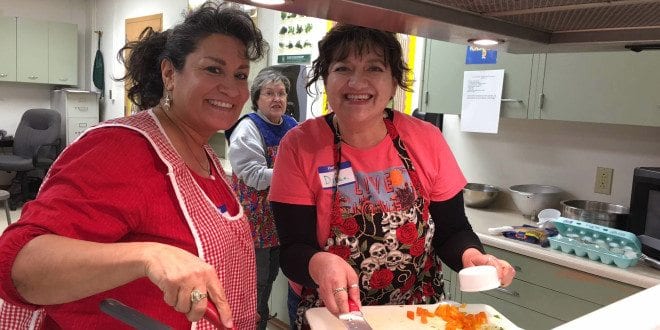
Adults in New Mexico who have been diagnosed with diabetes can learn how to prepare healthy and delicious meals by participating in the Kitchen Creations cooking school, sponsored by the New Mexico Department of Health and offered by the New Mexico State University Cooperative Extension Service.
The next Kitchen Creations session in English will be offered from 5:30-8:30 p.m. April 6, 13, 20 and 27 at Mayfield High School (1955 N. Valley Drive – Las Cruces) The next Kitchen Creations session in Spanish will be offered from 5:30-8:30 p.m. April 7, 14, 21 and 28 at Santa Teresa High School (100 Airport Road in Santa Teresa, N.M.)
The cooking schools are free thanks to funding from the New Mexico Department of Health Diabetes Prevention and Control Program.
“There was so much interest in our last Kitchen Creations session that we were able to schedule two more for April, one in English and one in Spanish,” said Karim Martinez, Doña Ana County Extension Home Economist.
Each Kitchen Creations session consists of four classes taught by a registered dietitian and an Extension Home Economist. Participants will learn food safety, how to plan meals, measure appropriate serving sizes, read food labels, balance carbohydrates and other useful cooking tips. Participants will also prepare and sample a variety of recipes during each class.
Research has shown diabetes complications may be decreased when blood glucose levels are maintained within a range that mimics “normal” levels. In order to achieve these levels, people diagnosed with diabetes are often prescribed lifestyle changes such as diet modification.
According to New Mexico’s Indicator-Based Information System, nearly 11 percent of adults in New Mexico were living with diabetes between 2011 and 2013. The national average during the same time period was about 10 percent.
“Many people with diabetes are not sure what to do to improve their health, especially when it comes to food,” said Cassandra Vanderpool, registered dietitian and extension diabetes coordinator for NMSU’s Department of Extension Family and Consumer Sciences. “Kitchen Creations goes beyond simply providing nutrition information to engaging participants in hands-on cooking and other activities so they can immediately apply what they are learning.”
Vanderpool said that last year, more than 400 people attended Kitchen Creations cooking schools. At the last class, Vanderpool said, every participant reported they understood strategies to plan and prepare healthy meals, and that they were satisfied with the classes.
“Several months after attending the Kitchen Creations cooking school in Valencia County, a participant called the home economist to share her good news,” Vanderpool said. “She had just returned from the doctor, and her A1C had dropped. She attributed the improvement to the changes that she and her husband, who also attended the classes, had made in their cooking and eating habits as a result of what they learned from Kitchen Creations.”
To enroll in the Kitchen Creations cooking school, contact the Doña Ana Cooperative Extension Service at 575-525-6649.
Author: Adriana M. Chavez – NMSU
by Dr Alex Jimenez DC, APRN, FNP-BC, CFMP, IFMCP | Cancer Health, Fitness, Health News El Paso, UTEP (Local) RSS
In honor of Colorectal Cancer Awareness Month this March, the Against Colorectal Cancer in Our Neighborhoods (ACCION) program is teaming up with community partners to raise awareness about colorectal cancer and to encourage El Pasoans to get tested for the disease.
ACCION is a cancer prevention program at Texas Tech University Health Sciences Center El Paso (TTUHSC El Paso) that offers no-cost screenings to qualifying El Paso residents.
Even though colon cancer is easily prevented with a simple screening test, this cancer is the second leading cancer killer in the U.S. Doctors encourage adults age 50 and older to be regularly tested for colon cancer, but many El Pasoans do not follow these guidelines.
In fact, El Paso has one of the lowest colon cancer screening rates in Texas. According to theTexas Department of State Health Services, only 54 percent of qualifying residents get tested for the cancer, compared to 66 percent of the rest of the U.S.
On March 15, TTUHSC El Paso will join efforts with El Pasoan’s Fighting Hunger and New Mexico State University to conduct colorectal cancer education at Guillen Middle School. The event will include a food pantry distribution and NMSU’s giant, inflatable colon for families to tour.
On March 23, TTUHSC El Paso’s ACCION team will visit the San Jacinto Adult Learning Center to educate some 150 adult students about colorectal cancer. Those who are eligible for colon cancer testing will be offered a free screening through the program.
A former ACCION participant will be on-hand to discuss the program and to encourage students to get screened, thereby lowering their risk of colon cancer. NMSU will assist with cancer education and have their giant colon on display.
What: Colon Cancer Awareness Month Events
When: 3 to 5 p.m. Tuesday, March 15 and 8 to 11 a.m. Wednesday, March 23
Where: Guillen Middle School, located at 900 S. Cotton Street, and the San Jacinto Adult Learning Center, located at 1216 Olive Avenue

by Dr Alex Jimenez DC, APRN, FNP-BC, CFMP, IFMCP | Fitness, Health News El Paso, UTEP (Local) RSS
Staff Report May 19, 2016 808 Views
Senator José Rodríguez, in partnership with Ventanas de Socorro, will offer free memory screenings on Friday and Saturday (May 20 and 21) as part of the Alzheimer’s Foundation of America’s National Memory Screening Program (AFA).
AFA’s National Memory Screening Program provides free, confidential memory screenings to individuals who are concerned about memory problems or who want to check their memory now for future comparisons.
Qualified healthcare professionals will administer the face-to-face memory screening, which lasts approximately 10 minutes and consists of a series of questions and tasks designed to gauge memory, language skills and other intellectual functions.
- What: Free Memory Screenings
- When: 3- 6 p.m., Friday (May 20) –and– 2-6 p.m., Saturday (May 21)
- Where: Ventanas de Socorro, 10064 Alameda Ave, Socorro, TX 79927.
Check Also
In honor of Colorectal Cancer Awareness Month this March, the Against Colorectal Cancer in Our …