by Dr Alex Jimenez DC, APRN, FNP-BC, CFMP, IFMCP | Diets, Fitness
Any marathoner will tell you that the grueling 26-mile races can do a number on the hips, knees, ankles and feet.
Now, a small study suggests that these tests of endurance are also tough on the kidneys.
“Marathon runners demonstrate transient or reverse short-term kidney injury,” said Dr. Chirag Parikh, professor of medicine at Yale University.
In his study of 22 participants in the 2015 Hartford, Conn. Marathon, Parikh found that 82 percent showed acute kidney injury after the race. In this condition, the kidneys fail to filter waste from the blood.
The good news is that the kidney injury seems to clear up within two days of the race, he said.
“On day 2, they are all fine,” Parikh said.
Runners likely don’t even know they’ve had this transient injury, Parikh said. “For the short term, I don’t think they would notice anything,” he said.
Parikh isn’t certain why the strenuous event is linked with kidney injury. But some potential causes include the sustained rise in core body temperature, dehydration, or the decreased blood flow to the kidneys that occurs during a marathon, he explained.
When the blood is pumped to the skin and muscles while running, he said, the kidneys may not get as much blood as they normally do.
Nor can Parikh say whether the effect might be cumulative, getting worse with more marathons run. It may be that the kidney adapts over time instead, he noted.
To evaluate this type of kidney injury, his team looked at blood and urine samples collected before and after the marathon. These tests included measuring blood creatinine levels and proteins in the urine, along with looking at kidney cells on a microscope. Creatinine is a waste product excreted by the kidneys; measuring it in the blood helps assess kidney health.
In a previous study, published in 2011, Dr. Peter McCullough, vice chief of medicine at Baylor University Medical Center in Dallas, and colleagues evaluated 25 men and women marathoners. They found 40 percent of the runners met the definition of acute kidney injury based on their blood creatinine levels.
In the new study, Parikh’s team also “performed an in depth evaluation of the urine and found evidence of injury,” McCullough said.
“The larger question looming is: do these repeated bouts of injury in endurance athletes lead to chronic kidney disease years later? Can anything be done about the injury at the time including hydration strategy?” McCullough said. More study is crucial, he added.
Parikh said additional research is also needed to assess whether certain people may not recover as quickly. For now, those with a family history of kidney disease should let their physician know they run marathons, he suggested.
Dr. Cathy Fieseler said marathoners who want to reduce their risk of kidney injury should avoid anti-inflammatory drugs before the race. Those drugs include over-the-counter ibuprofen (Advil, Motrin IB) and naproxen (Aleve), Fieseler said. Acetaminophen (Tylenol) is cleared through the liver.
Fieseler is a primary care sports medicine doctor at Christus Trinity Mother Frances Health System in Tyler, Texas. She’s also medical director of the American Running Association.
The study was published March 28 in the American Journal of Kidney Diseases.

by Dr Alex Jimenez DC, APRN, FNP-BC, CFMP, IFMCP | Fitness, Health, Wellness
The woman I want to be looks something like the woman I saw in a recent Athleta catalog. She�s effortlessly jumping across a babbling brook in a verdant forest�while wearing sleek slate-gray workout tights and a quilted jewel-toned hoodie. Or wait: Maybe I�m the lady doing yoga on the beach in a slouchy pale-pink tank top, who I saw pictured in the window at Lululemon. While I definitely admire both of their strong bodies and what looks like adventurous spirits (as well as their choice of vacation spots)�I also really, really want those clothes.
Confession: I�ve never met a pair of leggings I didn�t love. As far as I�m concerned, if I could spend 90 percent of my life in slimming, strategically seamed workout wear that makes me feel ready to leap and bound, I would.
But it comes with a catch. If I want a piece of new gear, I�ve got to earn it. I have to be out there logging miles, slogging through spin class, grimacing through the ridiculously hard thigh portion of barre workouts. I need to be using the stuff so much that occasionally the items actually wear out and have to be replaced! It�s simple: The more consistent I am with my exercise regimen, the more justified I feel bringing home a new goodie.
RELATED: 8 Mesh-Paneled Leggings We’re Obsessed With Right Now
Judging from what I wear the majority of the time�note that I work from home�you�d think I was pretty much always coming from or going to the gym. But that�s the point. The last person I want to be is the lady who looks like she is suited up for the gym but whose main cardio is gabbing at school drop-off. Oh, and my little sweat-for-spandex bargain also works once the gear has come home with me. On a day when I�m short on motivation, a cute new top is often what gets me out the door.
Look, I�m not aiming to be the best in the class, the fastest in the park, or even a seven-days-a-week exerciser. I�m only trying to keep myself on track when it comes to my spending, my sweating, and my style. Some people need a prize at the finish line. Me? I need something dangling at the starting gate�something just within reach and preferably ankle-length.

by Dr Alex Jimenez DC, APRN, FNP-BC, CFMP, IFMCP | UTEP (Local) RSS
Related Articles
MAUMELLE, ARK. � The UTEP women�s golf team tied for third place at the Little Rock/ASU Invitational on Tuesday in Maumelle, Ark.
The Miners shot rounds of 304, 306 and 307 for a total of�917.��Central Arkansas was champion of the�13-team tournament (295-295-307-897), and�Arkansas-Little Rock was second (306-304-302-912).

Capturing individual medalist honors was�Central Arkansas� Ye Ji Lim, who�carded a�five-over-par 221 (72-72-77).
UTEP placed�two individuals in the top-10, with�Alisa Rodriguez tying for fourth place (74-75-74-223) and Lily Downs tying for 10th place (76-76-75-227).
The Miners��June Ting tied for 20th place (76-76-79-231),�Crystal Wu tied for 38th place (78-81-79-238) and�Abbie Anghelescu tied for 49th place (83-79-82-244).
UTEP will next compete at the�Wyoming Cowgirl Classic April 6-7 in�Maricopa, Ariz.

by Dr Alex Jimenez DC, APRN, FNP-BC, CFMP, IFMCP | UTEP (Local) RSS
Related Articles
Irving, Texas � UTEP sophomore Tobi Amusan was named the Conference USA Track Co-Athlete of the Week as announced by the league office Tuesday afternoon.
In her first outdoor race of the season, the sprinter ran the nation�s fastest time this year in the 100m hurdles (12.63).
Before the race could start there was a 30-minute delay due to a camera malfunction, but that didn�t freeze Amusan from running the ninth-fastest time in NCAA (outdoor) history.

The sprinter set the school record and looks to carry that momentum with her to Austin, Texas, where she will compete against some of the best around the nation at the Texas Relays. Amusan will compete in the 4x100m relay and the 100m hurdles on Friday.
This year�s meet will be available online at espn3.com and via the WatchESPN app for smartphones and tables.
For live updates, follow @UTEPTrack on Twitter.

by Dr Alex Jimenez DC, APRN, FNP-BC, CFMP, IFMCP | El Paso HS Sports (Local) RSS
Related Articles
A special edition of Herald-Post Radio brings you Lubbock Monterey vs Eastlake LIVE starting at 2:55pm on Friday, November 18th
Click to go to FFN Page for live coverage!
Formerly known as �High Desert Radio,� Herald-Post Radio will be available on elpasoheraldpost.com, horizoncity.com and � thanks to a new partnership � on 600ESPN El Paso.
Via the embedded player, fans can follow their favorite team via any web-enabled device � even from the in-dash entertainment centers in newer vehicles.
Users need only log on, click on the story, bookmark it and hit play!
As part of the partnership with 600ESPN El Paso, the coverage will feature Chris Babcock calling all the action, along with different members of 600ESPN�s Football Friday Night Crew throughout the season.
The partnership between Herald-Post and 600ESPN El Paso allows for the most complete, live coverage of high school football in the El Paso area.
****
Thursday, October 27 REPLAY Franklin vs Coronado @ Sun Bowl
Part 1 | Part 2

by Dr Alex Jimenez DC, APRN, FNP-BC, CFMP, IFMCP | Healthcare Providers, Massage, Wellness
Synopsis: Finding the right healthcare provider for you isn�t always easy, especially if they aren�t in the mainstream. This article provides tips and strategies for people looking to find a healthcare provider that will meet their specific needs.
�
The term �alternative healthcare,� sometimes lumped into CAM (Complementary and Alternative Medicine) isn�t always associated with good things in the general populace. The phrase all on its own lends itself to sounding very much second class.
Yet alternative healthcare is anything but; many practitioners are utilizing the latest treatments that�for reasons of funding or sometimes more sinister political agendas �simply don�t have enough studies yet done to fully back the care as �mainstream.�
Finding those expert caregivers isn�t always easy. Doctors aren�t like restaurants; it can be difficult to base your decisions on their online reviews because every patient�s circumstances are unique.
Luckily, there are a few tricks to finding good healthcare.
-
Determine the Type of Care You Need
Before you seek care, you need to figure out what you actually need care for. Different specialties handle treatments that may be specific to your particular needs. For instance, a Chiropractor deals with the musculoskeletal system and the nervous system.
Functional medicine doctors handle many traditional complaints with minimal use of drugs and surgery and are more open to alternative treatments. Chinese medicine has also proven effective for numerous problems, from allergy elimination to pain relief. Physical therapists can help with recovery from injuries.
If you aren�t sure what the best type of doctor is, consider visiting major websites. For instance, the IAOMT.org� website is a good place to visit if you need dental care that goes beyond what your regular dentist may offer. FunctionalMedicine.org�helps you locate a variety of practitioners based on their field of expertise.
Worst case scenario, you may be in for one �wasted� trip to one of these doctors to determine who is best to visit.
-
Be Prepared to Travel

The type of doctor you need to see may not live nearby; some patients travel hundreds of miles to see a specialist that can deal with their condition. My own doctor drives nearly two hours to see a chiropractor that can address his specific condition (there are other chiropractors in the area, but none with the technique he needs).
This is especially true if you live in a more rural area, as some smaller towns may only have a small handful of traditional doctors and few if any alternatives. You can get good results by searching online by using a Virtual Private Network (VPN) to alter your IP address.
You might consider this strategy because local results tend to be more thorough and exact while doing searches about a distant area give broader and less helpful results. A VPN is just an app that lets you connect to remote servers found in other locations; for instance, you could access a server in Los Angeles even if you live in Nevada and get results local to LA.
Obviously, local docs are preferable, but that�s not always good enough.
-
Seek Referrals
Another great way to find doctors that can help is by seeking referrals. This can be done directly through your current doctor or by seeking out patients that have similar problems. Those that experience good results tend to want to spread their success by recommending good doctors.
One place to find concentrated reviews for specific doctors and practices is on Facebook. In many cases, there are support groups that have formed to discuss dealing with varying diagnoses and diseases.
These Facebook groups usually have members that are seeing physicians or have already been to physicians and want to share their knowledge. In some cases, Facebook groups are even run by practitioners that hope to spread awareness of the treatments they have available.
Healthgrades.com�is nice for reviews as well, but you should always be cautious of reviews that you can�t discuss with the reviewer.
-
Check Magazine Directories
Nationwide, you can access health directories to look for doctors available in your area. One of the more well-known sources is a magazine called Natural Awakenings. They publish listings of doctors practicing alternative medicine; you�ll find them available for free at grocery stores and some newsstands.
These types of magazines are also a great place to read about the latest advances in treatment and about different types of care being offered. While the publishing standards aren�t quite as high as a scientific journal such as The Lancet, they serve as a good starting point, particularly for treatments that don�t lend well to randomized controlled studies.
-
Go to Expos
Serving as both an advertising opportunity for businesses and as an educational tool for patients, natural health expos held across the country are a great place to meet with doctors and staff face to face without having to actually pay for an office visit.
These conventions are perfect for viewing a variety of different professions and seeing what each has to offer. You�ll be given dozens of pamphlets; some will offer free samples of products, while others will actually demonstrate what it is they do.
You can use these opportunities to ask specific health questions to �interview� each doctor to see if they�re the right fit for your needs. It�s also a good place to shop around for different prices because many alternative treatments aren�t covered by insurance (or the offices themselves are cash practices and don�t take insurance at all).
6. Taking Control of Your Health

When visits to your doctor let you down or you�re just looking for better alternatives, you�re in for a bit of work. The process for finding a truly appropriate doctor for your condition(s) may be tedious and sometimes even expensive.
Yet the results are certainly worth the time and money. When you�ve put the time in to find that doctor that fits just right, the results will speak for themselves. Having a good healthcare practitioner to serve as a pillar of support in your life can truly turn around an otherwise dark situation.
And for those that already feel healthy, remember that prevention is the best medicine. Seeking a doctor that believes in maintaining maximum healthy function is a great way to avoid chronic diseases later in life.
Will you be at the helm of your health? Tell us what great healthcare means to you and how you intend to get it.

Call Today!
By: Cassie at ehealthinformer.com

About the Author: Cassie is a health enthusiast and technology writer. From her own experiences, she has learned a multitude of ways to efficiently locate doctors to treat conditions in ways that might otherwise be foreign to her primary care doctor.

by Dr Alex Jimenez DC, APRN, FNP-BC, CFMP, IFMCP | Arthritis, Health, Wellness
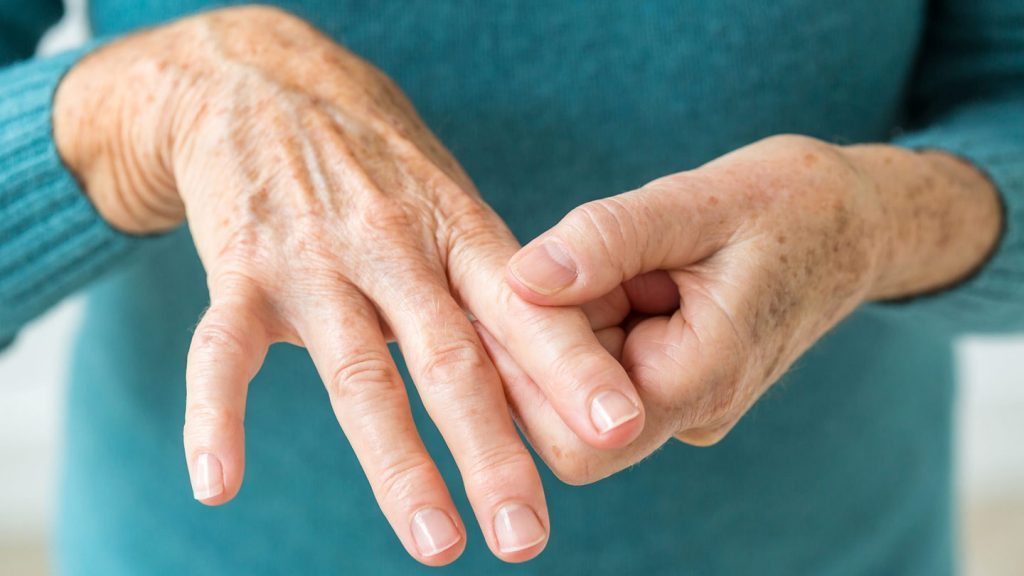
Rheumatoid arthritis is the most prominent autoimmune arthritis. It is caused by a defective immune system that causes your defense system to target your joint linings. It affects the wrist and small joints of your hands, including the knuckles, other joints in your fingers and can eventually spread to your knees too.
It is considered one of the most disabling forms of arthritis as it affects both sides of the body, making it different from other forms of arthritis. It can also affect skin, eyes, lungs, heart, blood and even your nerves which is why it is one of the most feared forms of arthritis.
Over the years, several ways of treating rheumatoid arthritis have been discovered. Although there is still no cure for the condition, the treatment can significantly heal those that are newly diagnosed and can slow down the process that in the patients that have been suffering from the condition for a while.
When your immune system attacks your own body, certain chemicals lead to pain and inflammation on your joints. Medical experts are still unclear about what is the exact cause of inflammation in joints. Some suggest that is due to genetic make-up of the individual while other blame environmental factors such as cigarette smoke and infections.
New treatments have been introduced by rheumatologists to suppress the pain and reduce the inflammation caused by this condition. A major reason for why the inflammation needs to be controlled is because of its effect on your heart health. Inflammation can lead to the buildup of plaque in the walls of your arteries. People with this form of arthritis are advised to consult with their doctors regarding the prevention of heart disease.
Other than medication, regular exercise, specific foods and drinks also help you treat rheumatoid arthritis.
A Virginia-based rheumatologist, Mahsa Tehrani has found that certain organic teas help with the reducing of inflammation caused by rheumatoid arthritis.
�Tea has fantastic�anti-inflammatory properties�which can theoretically help with the underlying inflammation,� she claims.
Here�s a list of teas Tehrani recommends:
Ginger Tea

Ginger tea is known for helping with healing the digestive system but an Italian study in 2016 found that patients that were given regular doses of ginger reported a better quality of life and significant improvement in pain. To make the tea, just slice up some ginger root and let it steep in boiling water for 10minutes. Note that ginger can act as a blood thinner, so if you�re already on blood-thinning medication, opt for a different tea.
Green Tea
Amongst the many benefits of green tea, is its ability to block the effects of RA without impacting cellular function. According to medical experts, green tea can be considered an alternative to medicine in the future for those suffering from RA.
Rose Hip Tea

Rose hip tea is not as common as other teas. The rose hip is the fruit of the rose plant that appears when the plant is not flowering. The fruit is a concentrated source of vitamin C and is regularly used in home remedies. A study published in Australian Family Physician in July 2012 found that the composition of nutrients found in the rose-hips have anti-inflammatory properties which benefit those with arthritis.
Black Tea
The box of regular black tea bags is loaded with quercetin, a bioflavonoid which has anti-inflammatory effects. However excessive amounts of black tea can have adverse effects, the high caffeine content can leave you feeling jittery and can reduce the impact of medication.
Willow Bark Tea
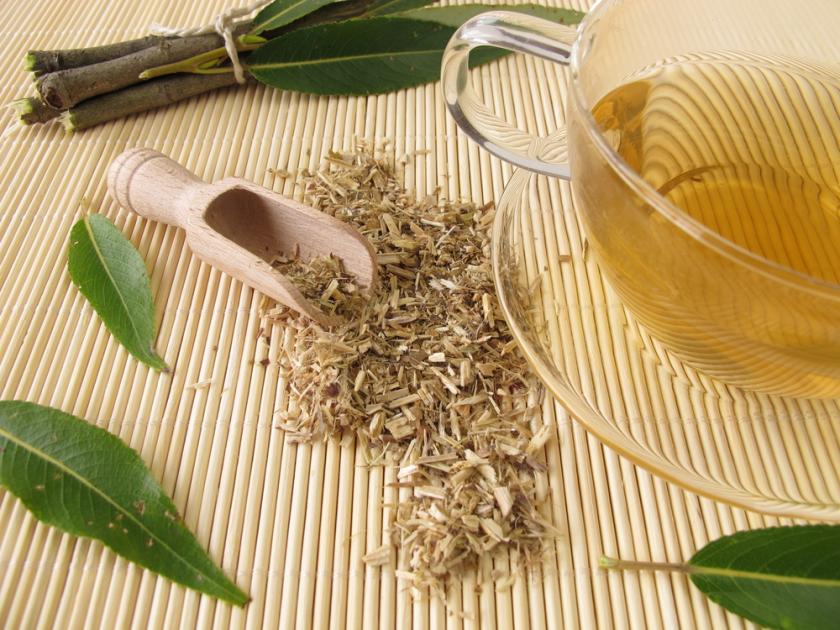
Willow bark tea is an ancient Chinese remedy. Its effects are similar to those of aspirin and several medical studies have found that it helps with joint pain and osteoarthritis. The study revealed that willow bark extracts have anti-inflammatory and pain-killing effects. That being said, willow bark extracts should not be consumed with people on many medications, pregnant women and those younger than 16.
Nettle Leaf Tea
Nettle leaf has been used in Europe to relieve muscle, joint pain, and arthritis for many years. A study published in 2015 found the antioxidant activity in the nettle leaf extracts hinders one of the main enzymes responsible for inflammation. Nettle is easily available in most grocery stores. Pregnant women and those with kidney and bladder issues should are advised not to consume nettle.
Rheumatoid Arthritis may be the most disabling forms of arthritis and it may not be curable, however, early detection and proper treatment can help mitigate its effects. Medication significantly reduces the symptoms of RA but those suffering can look for alternative solutions as well.
About the Author:
Rachael Everly is an undergraduate student who loves to write on the topics related business, finance, health, lifestyle and education. Follow @Rachael Everly for further updates.
Call Today!