El Paso,TX. Chiropractor Dr. Alex Jimenez looks examines a�herniated disc.
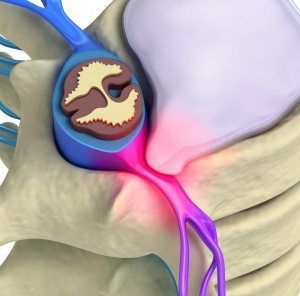
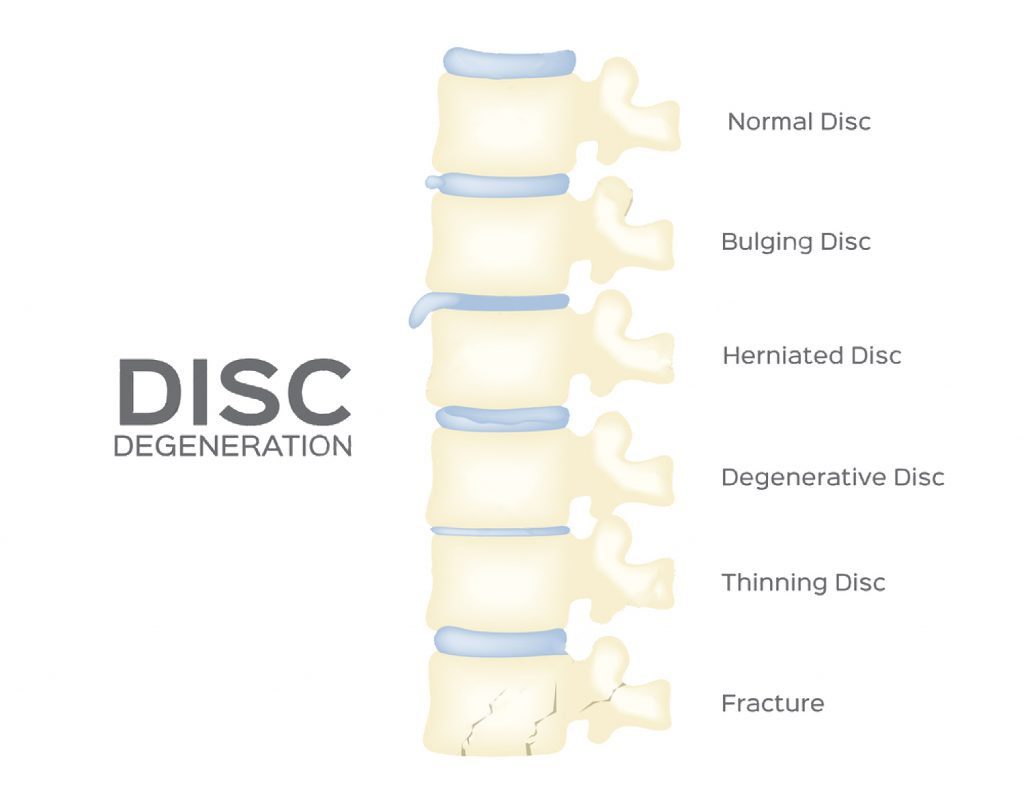
Herniated disc is a somewhat common condition that can occur anywhere along the spinal column, but most commonly affects the lower back or neck area. Also known as ruptured disk or a slipped disc, a herniated disc develops when one of the pillow-like pads between the vertebrae moves out of position and presses on nerves that are adjacent.
Herniated discs are usually caused by overuse injuries or injury to the back; however, disc conditions may also develop as a result of the standard aging process. It’s also known that there is a genetic factor that leads to the evolution of herniated disc and disc degeneration. As the size of herniation shrinks with time via resorption, typically, a herniated disc in the lower back will heal within six months. If physical therapy, drugs along with other treatments fail, operation may be needed.
What’s A Disk?
Spinal discs are cushion-like pads located between the vertebrae. Without these �shock absorbers,� the bones in the spinal column would grind against one another. Along with giving the backbone flexibility and making movements like twisting and bending potential, discs protect the spine by absorbing the effect of trauma and body weight. Each disk has a strong outer layer called annulus fibrosus and a soft, gel-like center, called nucleus pulposus. There are fibers on the outside of each disc that attach to adjoining vertebrae and hold the disc in position. A herniated disc occurs when the gel as well as the outer layer tears or ruptures -like middle leaks to the spinal canal.
The spinal canal has only enough space to place spinal fluid and the spinal cord. When a disc herniates and spills to the spinal canal, it could cause compression of spinal cord or the nerves. Alterations in sensation and intense, debilitating pain often happen. Furthermore, the gel-like substance inside the disk releases chemical irritants that bring about pain and nerve inflammation.
What Causes A Herniated Disc?
As we get older, the spinal disks gradually lose fluid volume. This process progresses slowly and begins at about age 30, over time. As the disks dry out, tears or microscopic cracks can form on the outer surface, causing it to become weak, fragile and much more susceptible to injury. The most common causes of herniated disc are:
Wear and tear: Disks dry out and aren�t as adaptive as they were.
Repetitive�movements: Work, lifestyle, and certain sports activities that place stress on the spine, especially the lower back, further weaken an already vulnerable area.
Lifting the wrong way: Never lift while bent at the waist. Proper lifting entails lifting with a straight back and your legs.
Injury: High-impact trauma can create the disk to bulge, tear or rupture.
Obesity: Carrying excess weight places an undue amount of strain on the back.
Genetics: There are a few genes which might be more typically present in individuals with disc degeneration. More research is necessary to investigate the role of those genes�they could be targets of biological treatment in the future.
Which Are The Symptoms Of A Herniated Disc?
Pain from a herniated disc can fluctuate, determined by severity and the place of the harm. It is typically felt on one side of the body.
Little or no pain could be felt in case the injury is minimal. Pain might be severe and unrelenting, in the event the disk ruptures. If significant nerve impingement has occurred pain may radiate to an extremity in a certain nerve root distribution. For instance, sciatica is often resulting from herniated disc in the low back. Herniated disc can manifest itself with a variety of symptoms, including:
Dull ache to severe pain
Numbness, tingling, burning
Muscle weakness; spasm; altered reflexes
Loss in bowel or bladder control (Note: These symptoms constitute a medical emergency. When they occur, seek medical attention immediately).
How Is A Herniated Disc Diagnosed?
History and physical examination point to some diagnosis of herniated disc. A herniated disc is likely if low back pain is accompanied by radiating leg pain in a nerve root distribution with positive straight leg raising test (ie, elevating the leg while lying down causes radiating pain down the leg), as well as other neurologic deficits for example numbness, weakness, and altered reflexes.
Imaging studies usually are ordered to confirm a diagnosis of herniated disc. X rays are not the imaging medium of choice because soft tissues (eg, discs, nerves) are hard to capture with this specific technology. However, they might be used as an initial tool to eliminate other illnesses such as for instance fracture or a growing. Confirmation of the feeling of herniated disc is generally achieved with:
Magnetic Resonance Imaging (MRI): This technology shows the spinal cord, surrounding soft tissue and nerves. It really is the best imaging study to support the identification of a herniated disc.
Nerve Conduction Studies (NCS) and Electromyogram (EMG): These studies use electric impulses to measure the level of harm to the nerve/s brought on by compaction from a herniated disc along with other conditions that cause nerve impingement may be ruled out. NCS and EMG are not routine evaluations to diagnose herniated disc.
Herniated discs occasionally heal independently through a process called resorption. This means the disk fragments are consumed by the body. Most people suffering from herniated disc do not need surgery and react well to conservative treatment.
El Paso, TX. Chiropractor Dr. Alex Jimenez examines patients that go through chiropractic vs. traditional medical care.
Because back pain is such a common problem, a group of Canadian researchers recently investigated the role�that the type of primary caregiver has on financial compensation.
This was a large study of 5,511 patients who experienced a work-related back injury in Ontario, Canada.
Patients Saw The Following Providers For Their First Visit:
85.3% saw a medical doctor
11.4% saw a chiropractor
3.2% saw a physical therapist
A Comparison Of The Duration Of Financial Compensation For Back Pain Among Patients From Each Group
The study found that chiropractic patients had the shortest amount of time receiving compensation for their pain and also were less likely to have a recurrence.
In addition, chiropractic patients didn�t need to see other healthcare providers for their pain. 75% of chiropractic patients saw no other provider, while 58.6% of physical therapy patients also saw a medical doctor.
The authors conclude:
�The type of healthcare provider first visited for back pain is a determinant of the duration of financial compensation during the first 5 months. Chiropractic patients experience the shortest duration of compensation, and physiotherapy patients experience the longest.�
Call Today!
Blanchette M, Rivard M, Dionne CE, et al. Association between the type of first healthcare provider and the duration of financial compensation for occupational back pain. Journal of Occupational Rehabilitation 2016 Sep 17.
�Lets take a look at the 7 minute and 9 minute workout.
The New York Times has a new super quick workout routine that you can do anywhere, even if you can�t make it to the gym today. I tried it, though, and… hey, wait, am I the only one actually doing these?
Short, intense workouts seem like a good idea on paper. If you�re not already working out, it�s probably because you feel like you don�t have time to get to the gym. But does anyone do these short workouts? Sure, I have nine minutes and some floor space, but do I want to get my work clothes sweaty? And if I�m going to the trouble of changing, why wouldn�t I just head out the door for a run, or turn on Sworkit or Nike Training Club and get something a little closer to a full workout?
After all, the seven-minute workout that got the New York Times started on their repertoire of super short workouts has an odd history. It was published in a scientific journal, but that doesn�t mean any scientists tested whether it was easy to stick to or whether it gave the promised results. Instead, it was designed using hints from previous research, aiming to give people a mini strength workout at a fast enough pace to count as cardio. The designers were coaches at a corporate wellness institute. In other words, people that your boss pays to make you exercise.
We love to talk about these short workouts, but I�m not seeing any evidence that people care to get in a quick couple of minutes of strength or circuit training. The new nine-minute workout dropped earlier this month, but I�ve scoured social media and found almost nobody enthusing or complaining about what it�s like to do this workout�just post after post sharing the fact that it exists.
So, How Is the Nine Minute Workout?
First of all, the nine minute workout actually takes 11 minutes. I just want you to know that going in. There are nine exercises, though, and you do each for one minute. Here�s the structure:
Advertisement
One minute of squats, one minute of push-ups, one minute of mountain climbers.
Rest one minute.
One minute of forearm plank, one minute of jumping split squats, one minute of single-leg hip bridges.
Rest one minute.
One minute of burpees with push-ups, geez, hardcore. One minute of single leg toe touches. One minute of leg raises.
This seems like an exercise program that doesn�t know what it wants to be. The NYT touts it as a strength program, but then says it�s designed according to the �principles of high-intensity interval training�known as H.I.I.T.�
It ends up being a hybrid that doesn�t accomplish either. If you want to build strength by fatiguing your legs doing split squats, you�ll be done before the minute is out. But if you try to stretch out the exercises to fill a full minute, you�ll have to do them at a slower pace than HIIT requires.
And that�s exactly how this workout went. One minute felt way too long for some exercises, too short for others, and overall it didn�t really feel like a strength session or an interval workout. It was fine for what it was, though! A little something that challenges your body in a much better way than sitting at your desk or on your couch for the same amount of time. Still, if that�s your goal, you can find better exercise plans than this awkward one.
Sciatica, medically defined as a set of symptoms rather than a single disorder, is commonly characterized by pain in the lower back and buttocks. This pain can radiate down one or both legs to the thigh, calf, ankle and foot. True sciatica occurs when pain begins to travel below the knee.
Sciatic pain frequently results when the nerve roots surrounding the spinal column are compressed or when pressure has caused the impingement of the spinal roots of the sciatic nerve. The sciatic nerve systems are found in in the sacral regions of the back and the lumbar spine. Sciatic pain or sciatica could be identified as sharp, dull, burning, tingly, numb, constant, or intermittent and usually affects only one side of the body. It may radiate throughout the whole length of the nerve, in certain cases, all the way to the toes.
Sciatic pain is usually the result of a herniated disc, spinal stenosis, or in exceptionally rare instances, infection or tumour. The cause of your pain determines your treatment options to relieve sciatica.
Sciatica Treatment Options
Several of the most popular sciatica treatment options include: alternative treatments, such as acupuncture, chiropractic care, drugs, physical therapy, and surgical interventions.
Once a qualified and experienced healthcare professional has diagnosed you with symptoms of sciatica, many individuals with prevalent lower back pain are prescribed bed rest as a way to offer relief for aching bones and joints. Current research, however, has implied that bed rest alone cannot offer relief for those suffering from nerve pain due to sciatica.
Remaining active might be more beneficial for people who suffer with back pain. Not to say that you should be running marathons! Action means being mobile and active for periods of time which aren’t enough to cause additional pain and/or to aggravate other symptoms of sciatica. Specific exercises may be recommended by your healthcare professional or some may simply suggest walking.
Sciatica Pain Relief
Pain is best treated with non-steroidal anti-inflammatory drugs (NSAID) such as ibuprofen or codeine (in acute cases).
In some instances, a cortisone-like drug may be injected to the epidural space enclosing the spinal column. This process is similar to the epidural used during childbirth, and it’s called an epidural steroid injection. A class of this sort of treatment may offer temporary relief, but it does not address the source of the issue.
Surgery for Sciatica Symptoms
Some patients with sciatica may discover significant relief from surgery. In the case of herniated discs, a surgical procedure called a laminectomy may be performed. In this process, a percentage of the posterior arch is removed to relieve pressure on pinched nerve tissues.
In cases of spinal stenosis, the part of bone that is putting pressure on the sciatic nerve system may be removed.
Operation is not for everyone. Nonetheless, for people who have shown no sign of improvement in 4 to 6 weeks and who have had CT scans (computed tomography) or MRI that show a herniated disc or spinal stenosis, surgery may offer considerable relief.
The scope of our information is limited to chiropractic and spinal injuries and conditions. To discuss options on the subject matter, please feel free to ask Dr. Jimenez or contact us at 915-850-0900 .
By Dr. Alex Jimenez
Additional Topics: Chiropractic and Sciatica
Sciatica is a common group of symptoms reported by a majority of the population alongside symptoms of back and low back pain. Sciatica, or sciatic nerve pain, is frequently the result of compression or impingement of the sciatic nerve and its nerve roots, generally from a spinal misalignment or subluxation. Chiropractic care is a safe and effective form of alternative treatment utilized to restore the natural alignment of the spine, ultimately reducing the pressure being placed against the sciatic nerve and relieving symptoms of sciatica.
El Paso, TX. Chiropractor Dr. Alex Jimenez takes a look at parenthood and longer life.
Parents, take courage. If you survive the sleep deprivation, toddler tantrums and teenage angst, you may be rewarded with a longer life than your childless peers, researchers said Tuesday.
Fathers gained more in life expectancy than mothers, a team wrote in the Journal of Epidemiology & Community Health — and particularly in older age.
“By the age of 60, the difference in life expectancy… may be as much as two years” between people with, and those without, children, they concluded.
Researchers tracked the lifespan of men and women born between 1911 and 1925 and living in Sweden — more than 1.4 million people in total.
Data Was Gathered On Whether The Participants Were Married & Had Children
Men and women with at least one child had “lower death risks” than childless ones, the team concluded.
“At 60 years of age, the difference in life expectancy was two years for men and 1.5 years for women” compared to peers with no kids, the researchers wrote.
By age 80, men who fathered children had a remaining life expectancy of seven years and eight months, compared to seven years for childless men, said the team.
For mothers, life expectancy at 80 was nine years and six months, while for childless women it was eight years and 11 months.
The study merely pointed out a correlation, and cannot conclude that having children is the cause of the life expectancy gains, the researchers admitted.
But they theorised that parents may benefit from social and financial support from their children in older age, which childless people lose out on.
It Could Be That Childless People Live Unhealthier Lifestyles Than Parents Do
The association between having children and longer life was found in married and unmarried people, but appeared to be strongest in single, older men, said the study.
This could be because unmarried men relied more heavily on their offspring in the absence of a partner.
The study did not echo previous research which found that having daughters is more beneficial for longevity than sons.
Fewer and fewer people are having children in Sweden at the same time as older people are spurning old age institutions to receive care at home — often by their children.
“Therefore, to further investigate health and survival consequences for childless older individuals is of importance,” wrote the team.
A new study hints that young blood may harbor clues to a “fountain of youth” for older brains.
Researchers say blood from human umbilical cords appears to have helped reverse memory loss in aging mice.
The findings suggest that something in young blood is important in maintaining mental acuity.
No one, however, is saying that cord blood could be a magic bullet against Alzheimer’s or other forms of dementia.
For one, any effects seen in elderly rodents may fail to translate to humans.
Instead, the findings might set the stage for new drugs that target the dementia process, said study lead author Joseph Castellano. He’s an instructor in neurology at Stanford University School of Medicine.
“Part of what makes this exciting is that it suggests there’s more communication between the blood and brain than we’ve thought,” Castellano said.
The study builds on earlier work by the same Stanford team. There, the researchers found that old lab mice benefited from infusions of plasma (the liquid portion of blood) from young mice.
Specifically, the old mice showed improvements in learning and memory. This was measured by the ability to accomplish tasks like navigating a maze or building a nest.
The aim of the new study, Castellano said, was to see whether injections of human plasma given to mice could have similar effects.
It turned out that they did — at least when the plasma came from umbilical cords. Plasma from young adults had less of an impact. And plasma from older adults, ages 61 to 82, had no benefit at all.
That led to a critical question: What is it about umbilical cord blood that’s special?
The researchers found evidence that it might be a protein called TIMP2. It is present in high levels in cord plasma, they said, but declines with age.
What’s more, injections of TIMP2 benefited older rodents’ brains in the same way that cord plasma did.
Castellano said it was “surprising” that a single protein had such effects.
But, he noted, TIMP2 could be “upstream” of many biological processes. It belongs to a family of proteins that regulate other critical proteins. Those proteins, in turn, have the task of “chopping up” yet more proteins that exist in the matrix surrounding body cells.
But researchers know little about how TIMP2 acts on the brain, Castellano said.
“Now, we really need to get a better understanding of what it’s doing in the brain,” he said. “We are not saying we’ve found the protein that’s responsible for brain aging.”
Dr. Marc Gordon is a professor at the Litwin-Zucker Center for Alzheimer’s Disease and Memory Disorders at the Feinstein Institute for Medical Research in Manhasset, N.Y.
He agreed that the study identifies a protein “target” that should be studied further.
“But this is not saying that cord blood is a cure for aging,” Gordon stressed.
And it’s probably unrealistic to use cord blood as a dementia treatment, said Castellano.
Nor can anyone predict whether TIMP2 will point researchers toward new drugs for dementia. Findings in lab animals often fail to pan out in humans.
Plus, Gordon said, this study involved mice that were old, but did not have an “animal model” of Alzheimer’s. That refers to lab mice that are genetically modified to have Alzheimer’s-like brain pathology.
“What this could mean for human disease is purely speculative,” Gordon said.
Drugs for age-related brain disease have so far been “elusive,” Castellano said. The available medications for dementia symptoms have limited effects, and cannot stop the disease from progressing.
“We’re excited,” Castellano added, “about this knowledge that there are proteins present in the blood that evolve over the life span, and may affect brain function.”
The need to take a daily run might be something that spreads person-to-person, new research shows.
How much people run can depend to a certain extent on their responses to other people’s running, according to the findings from the analysis of social network data worldwide, The New York Times reported.
The results of the study in the journal Nature Communications also suggest that if you want to improve your running performance, it might be a good idea to become virtual friends with people who are a bit slower.
The researchers concluded that “running can be socially contagious,” said study leader Sinan Aral, professor of management, MIT, The Times reported.
“In general, if you run more, it is likely that you can cause your friends to run more,” Aral said.
IFM's Find A Practitioner tool is the largest referral network in Functional Medicine, created to help patients locate Functional Medicine practitioners anywhere in the world. IFM Certified Practitioners are listed first in the search results, given their extensive education in Functional Medicine