Dr. Jimenez has treated hundreds of pregnant individuals over the years. �He touches on questions about treating pregnant patients in our borderland region. �Is it ok? �Are there dangers?
There is a big debate over the merits and safety of having chiropractic treatment during pregnancy. Some people claim that it is dangerous to both the mother and the developing baby, while others say it is safe and provides a variety of health benefits.� The truth is that mothers that receive chiropractic care tend to have an easier pregnancy and delivery.� This article from our El Paso chiropractic team will help to provide you with the information you need.
Chiropractic and Pregnancy
Just as it is safe and beneficial for infants, toddlers, teens and adults, chiropractic is also safe and beneficial during pregnancy. There is no danger to the baby and the benefits for the mom-to-be are quite substantial. Most El Paso chiropractors that go through the proper training, and have all of the required education to be licensed and practicing, have been trained to treat pregnant women. Some chiropractors specialize in adjusting pregnant women which means they may have more experience, but the majority have the necessary skills and knowledge.
Any woman that has been pregnant knows the stress that is put on your back, neck, hips, and knees. Even performing everyday tasks becomes a challenge as the uneven weight distribution can pull certain areas out of balance. Having regular chiropractic adjustments during your pregnancy will relieve much of the added stress placed on your spine, and can prevent nerves from being compressed and causing pain, numbness or tingling in your back, hips, legs, arms, or fingers. Since your posture is continuously changing as your belly grows, regular adjustments may also help with any imbalances this might create.
Tips You Can Follow
Chiropractic adjustments are great to keep your body balanced and feeling great during pregnancy, but you can do a lot to help yourself. Exercises like walking and swimming will keep the blood flowing and keep your muscles working during the course of the pregnancy. It�s important to stay safe, so check with your doctor if you�ve been inactive prior to becoming pregnant.
Avoid wearing heels while you�re pregnant because you�ll be less steady and they can accelerate any postural imbalances you might experience. Stick with flat sensible shoes whenever possible. Also be sure to observe proper lifting techniques for children or other objects. Bend from your knees at all times and if it seems too heavy, ask someone else to lift it for you.
To remove pressure from your lower back while sleeping, lie on your side with a pillow between your knees. If you have to sit at a desk during the day, use a footrest to take pressure off your feet and legs and try not to sit for longer than 30 minutes at a time without getting up and moving around. Schedule chiropractic treatments after you give birth to help with the healing process, as all your muscles, tendons, and ligaments are returning to normal.
Megan Dominguez, like many, exercised in regular gyms but, when she was talked into trying cross fit at Push-as-Rx �, she knew she wouldn’t be going back to her old routine. Megan described the trainers of Push as Rx as a family and since the beginning, she experienced an atmosphere of instant energy like no other. At Push-as-Rx �, Megan Dominguez was pushed to levels she never thought she could reach.
PUSH-as-Rx � is leading the field with laser focus supporting our youth sport programs.� The�PUSH-as-Rx � System is a sport specific athletic program designed by a strength-agility coach and physiology doctor with a combined 40 years of experience working with extreme athletes. At its core, the program is the multidisciplinary study of reactive agility, body mechanics and extreme motion dynamics. Through continuous and detailed assessments of the athletes in motion and while under direct supervised stress loads, a clear quantitative picture of body dynamics emerges. Exposure to the biomechanical vulnerabilities are presented to our team. �Immediately,�we adjust our methods for our athletes in order to optimize performance.� This highly adaptive system with continual�dynamic adjustments has helped many of our athletes come back faster, stronger, and ready post injury while safely minimizing recovery times. Results demonstrate clear improved agility, speed, decreased reaction time with greatly improved postural-torque mechanics.��PUSH-as-Rx � offers specialized extreme performance enhancements to our athletes no matter the age.
Please Recommend Us: If you have enjoyed this video and/or we have helped you in any way please feel free to recommend us. Thank You.
Chiropractor, Dr. Alexander Jimenez talks about strengthening the body without pain through pilates.
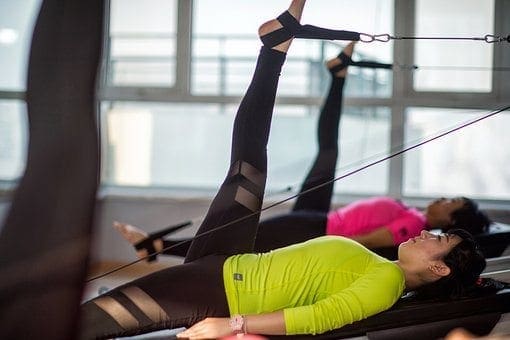
More than 20 years ago in a small walk up studio with hardwood floors that are creaky, several dancers and exercise enthusiasts would join several times for ‘ballet exercise’. In actuality, the motions of Joseph Pilates (Pil-lah-tees) (1880-1967) were in practice. The advantages from his approach removed stress, provided physical and mental balance, and helped to assemble in each individual streamlined and a strong musculature.
Joseph Pilates’ exercise philosophy can help women and men of any age. It’s especially advantageous to individuals who recognize the importance of providing a business support system for the backbone. Its focus is placed by the essence of Pilates on what’s termed the body’s ‘powerhouse.’ Here is the abdominal region, the buttocks, hips and low back – the centre of the body. Pilates works the deep muscles in the body making a powerful centre.
His teachings, “The Art of Contrology” unites mind and body to create a direct connection to the muscles. Each movement that is precise needs mental concentration as well as physical control. The mind and body learn to work together as one harmonious unit. Muscles are stretched and lengthened while building strength through soft, non-impact exercises that, as perfected, are designed to flow in rhythm from one move into the following.
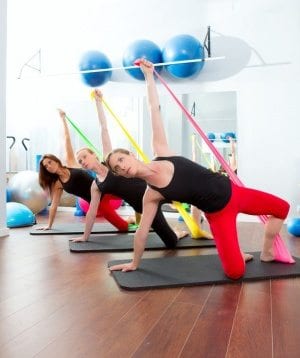
Although, Pilates has been related to odd looking apparatus made up of springs cables and pulleys, or equipment termed the Reformer and also the Cadillac, the foundation is the mat work. Instead of machines and weights, the body uses its own resistance.
The Pilates�Philosophy
The Pilates philosophy incorporates basic principles some of which comprise control and concentration, respiration, and centering.
Concentration and Control includes visualizing the body as movement occurs. Each command that is mental sparks and teaches muscle control that, over time, can become exact. Engram is a medical term used to denote muscle memory, which is stored in the mind ‘s cerebrum. Like learning how to play a musical instrument, diligent practice results in wonderful music. In Pilates, emphasis is positioned on the grade of the motion, not the number of repetitions.
Centering focuses attention on the ‘power station’ – the energy source that flows outward to the extremities of the body. Anatomically, the spinal column is a significant component in the powerhouse. To support the spinal structures, its muscular system (i.e., gluteals, obliques, quadratus, trapezius, scalenes) must be powerful and flexible. Pilates mat work is made to build a strong basis for the entire spinal structure.
Breathing is taking in and expelling air. Breathing properly functions to oxygenate the entire body and cleanse it. Breathing needs complete inhalations and exhalations during the entire length of mat work or exercise when done correctly.
The Advantages Of Pilates
The advantages to be obtained from Pilates are numerous – learn the capability to keep up proper position, which leads to the entire well-being of the body – long, flexible muscles – increased joint range of movement – a flat lean stomach – enhanced circulation and stamina – better dexterity – this and more without pain and soreness often due to conventional forms of exercise.
To realize the numerous benefits Pilates offers does not mean buying clothing or special equipment. All that is needed is a willing disposition to improve the body. The exercises can be performed just about everywhere when completely stretched out the body fits. Many individuals who’ve started Pilates that are in the beginner level state how well they feel after only 8 or 10 sessions.
Check out Brooke Siler’s novel entitled The Pilates Body to find out more about Pilates. This is a superb novel and source for learning the essentials to begin Pilates without attending courses*. The illustrations, photographs and prompts Ms. Siler incorporates make the book easy to use at the mat. The Pilates exercises provided for the beginner, intermediate, and advanced participant are in her novel. Plus, an all-inclusive record of certified Pilates teachers (this is essential!) is provided by the end of her book.
*It is wise to consult with your doctor prior to starting any physical fitness or exercise plan.
Fans who purchase or renew UTEP football season tickets by Friday, June 2 will have access to special privileges, including the ability to purchase tickets to the Miners� season opener at Oklahoma while supplies last.
UTEP will kick off the 2017 campaign versus the perennial national power Sooners on Sept. 2 in Norman.
By meeting the June 2 deadline, fans will also receive two free tickets to UTEP�s home opener against Rice on Sept. 9.� Fans who pay in full by June 2 will also enter a drawing to travel with the Miners to a road game this fall.� Accounts renewed by the deadline will receive the same donor parking from last season.
UTEP season tickets start at just $55 for five home games � Rice, Arizona (Sept. 15), WKU (Oct. 7), UTSA (Oct. 28) and LA Tech (Nov. 18).
Having a pet dog can offer valuable social support to children when they’re stressed according to new US research.
Carried out by the University of Florida, the common belief that pet dogs provide social support for children was tested by the team using a randomized controlled study.
“Many people think pet dogs are great for kids but scientists aren’t sure if that’s true or how it happens,” explained one of the study’s authors Darlene Kertes.
For their study the team looked at 101 children aged 7-12 years who all had a pet dog.
To look at the children’s stress, the researchers asked participants to complete a public speaking task and mental arithmetic task, both of which simulate real-life stress in children’s lives and are known to evoke feelings of anxiety and raise the stress hormone cortisol.
To measure the levels of cortisol samples of saliva were collected before and after the stressing experience.
The children were also randomly assigned to one of three groups, and either had to complete the stressful tasks with their dog present for social support, with their parent present, or with no social support at all.
The results showed that children who completed the stressful tasks with their pet dog had lower levels of cortisol and reported a lower level of stress compared to those who completed the task with a parent for social support or who had no social support at all.
However, the level of cortisol also depended on how the child and the dog interacted.
“Children who actively solicited their dogs to come and be pet or stroked had lower cortisol levels compared to children who engaged their dogs less,” said Kertes, “When dogs hovered around or approached children on their own, however, children’s cortisol tended to be higher.”
Commenting on the significance of the results Kertes explained that, “Middle childhood is a time when children’s social support figures are expanding beyond their parents, but their emotional and biological capacities to deal with stress are still maturing.”
“Because we know that learning to deal with stress in childhood has lifelong consequences for emotional health and well-being, we need to better understand what works to buffer those stress responses early in life.”
The results can be found online published in the journal Social Development.
Chronic pain is a way of life for millions of Americans, and many risk addiction by resorting to dangerous opioids to ease their suffering. Even those who are willing to risk addiction are finding painkillers harder to get as doctors cut down on the amounts of opioids they prescribe. Other desperate victims of chronic pain opt for over-the-counter relief, such as acetaminophen (Tylenol) and ibuprofen (Advil). But in addition to often being less effective, taking just slightly more than the recommended amount can have devastating consequences.
A recent study published in the British Medical Journal (BMJ) found that common non-steroidal anti-inflammatory drugs (NSAIDs) raised the risk of a heart attack as soon as one week after beginning their use, especially in higher doses. The medications include ibuprofen (Advil, Motrin), diclofenac (Voltaren, Cambia), celecoxib (Celebrex), and naproxen (Midol, Aleve).
A Scottish study published in the British Journal of Clinical Pharmacology found that taking large doses of Tylenol over a period of time, even at recommended levels, can build up in the system and cause life-threatening liver damage. In addition to liver damage, ibuprofen can also cause gastrointestinal bleeding.
The answer to chronic pain, especially lower back pain and pulled muscles and ligaments, may be comfrey, an herb that’s been used for thousands of years in topical ointments to ease pain.
“Comfrey is an effective pain killer that can be used to treat any kind of pain,” says nationally recognized pain expert Dr. Jacob Teitelbaum, author of Pain Free 1-2-3! “Comfrey cream can be rubbed on wherever you hurt, and it works immediately � within seconds.”
Comfrey contains two compounds, allantoin and rosmarinic acid (also found in rosemary) that reduce pain and inflammation.
Comfrey’s power isn’t anecdotal. Many studies confirm its effectiveness in helping several painful conditions. They include:
�� Upper and lower back pain. A double-blind, placebo-controlled study published in the British Journal of Sports Medicine studied volunteers between the ages of 18 and 60 who had acute lower or upper back pain. Those who used an ointment containing comfrey root extract three times daily for five days had significant reduction in pain. Patients using the comfrey ointment reported a 95 percent reduction in pain compared to only 38 percent in those who used a placebo ointment. “Comfrey root extract shows a remarkably potent and clinically relevant effect in reducing acute back pain,” wrote the researchers.
� Sprains. A randomized study published in the Journal of the Australian Traditional-Medicine Society found that comfrey relieved the pain of sprains better than a prescription medication. Participants with acute ankle sprains received either topical comfrey root extract cream or the prescription diclofenac (Voltaren) gel. After seven days, swelling was down 70.5 percent in the comfrey groups compared to 69.4 percent in the diclofenac groups. Pressure pain was reduced by 80.6 percent with comfrey compared to 74.7 percent for diclofenac.
� Arthritis. In a study published in Phytomedicine, volunteers with painful osteoarthritis of the knee who used a comfrey cream three times a day for three weeks reported a 55 percent reduction in pain both when moving and when at rest. The randomized, double-blind study found that patients who used a placebo cream reported an 11 percent improvement.
� Wounds. A randomized, double-blind study used comfrey creams to heal wounds. Volunteers used two different strengths of comfrey creams. One contained 10 percent active ingredients and a second cream contained 1 percent. After two to three days, wounds treated with the 10 percent preparation were 49 percent smaller than those wounds not treated with comfrey, and wounds were 29 percent smaller in volunteers treated with the 1 percent cream. Comfrey’s healing power is attributed to a component called allantoin that’s believed to spur the growth of new cells.
Although comfrey can heal, it can also harm due to pyrroloxidine alkaloids (PA), which can be toxic to the liver. Experts warn to limit comfrey’s use to no more than 10 days at a time, and to never put it on an open wound.
Some PA-free comfrey products are available which have no detectible PAs. PA-free ointments can also be used on cuts and abrasions, since there are no toxins to get into the bloodstream.
Comfrey salves are inexpensive, and can be found in health food stores or ordered over the internet.
Doctor of Chiropractic, Dr. Alexander Jimenez shares some insights about a pain free workday.
#1. Use�Healthy Posture & Movement Patterns
Considering all the emphasis on how little or much we should sit or stand at work, there is almost no discussion of technique in standing and sitting. Inferior technique slumpsitting, archsitting, parking weight is used by many people so on, and poorly on joints.
As long as this is actually true, any place is going to stack up badly in the research�we are starting to see it for standing and �ve seen this for sitting. Sitting has been much maligned as �the new smoking�; and now standing as a replacement is being demonstrated to cause increased hospitalization due to varicose veins, atherosclerosis that is increased, etc. A good starting point is stretchsitting, to start the journey back to a pain free workday. Stretchsitting is simple, safe, comfy, and therapeutic.
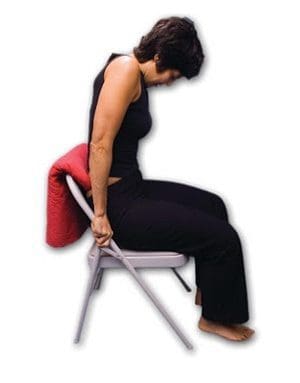
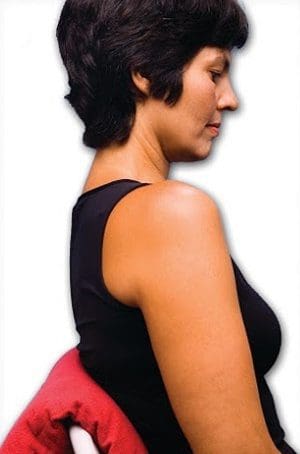
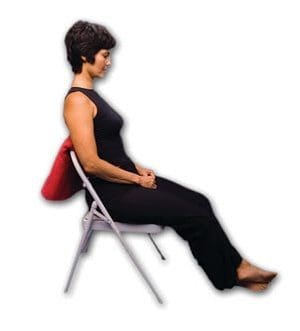
Work with flannel, a towel, or a Stretchsit pillow so it contacts you at mid-back, below the shoulder blades.
Scoot your bottom all the way back in the seat.
Lean forwards from the hips, like a mini crunch is being done by you, and tip your ribcage forward.
Push downwards on the armrests/side bars/seat pan of your chair to get a soft stretch in your lower back.
Keeping the stretch, lean back out of your hips and adhere your mid back on to the Stretchsit pillow/towel.
Relax completely, letting the Stretchsit pillow and come from the mini crunch /towel keep you in traction that is light.
Roll each shoulder back and rest your hands close into your own body.
Angle your chin down slightly, letting the back of your neck be long.
(a) Lean forward from the hips, and tilt your ribcage forward, like you are doing a mini-�crunch. (b) Push downwards on the armrests/side bars/seat pan of your chair to get a gentle stretch in your lower back. (c) Keeping the stretch, lean back from your hips and stick your mid-�back on to the Stretch-sit cushion/towel.
(a) Come out of the mini�crunch and relax completely, letting the Stretchsit cushion/towel keep you in mild traction. (b) Roll each shoulder back and rest your hands close into your body.
Angle your chin down slightly, letting the back of your neck be long.
#2. Vary�Your Baseline Posture
No matter how good your bearing, your body still needs a variety of places. Sitting and standing are the most practical positions for most occupations (example computer occupations)�I recommend switching between them every 20- 30 minutes. If other positions and motions are practical for doing your job (eg, walking when speaking on the phone), that�s an excellent bonus�the more baseline stances and movements, the better. (one sitting against backrest, one stack sitting, standing in a desk, and walking with telephone)
Sitting against the backrest.
Stack sitting
Standing at a desk.
Walking while talking on a cell phone.
#3. Supplement With Rest, Exercise, Movement During & Outside The Workday
Use your breaks in the workday along with your time away from work to supplement your special service line spots. Do you need rest? Exertion? Stretching? Strengthening your abdominal muscles?… There are countless tissues and muscles within your body that have needs just like you are served by a diet that is diverse well, a movement regimen that is varied will also.
#4. Use Well – Designed Tools & Furniture
Experiment and learn with what constitutes furniture that is healthy this is an investment in the way you’ll be spending about half your waking life.
IFM's Find A Practitioner tool is the largest referral network in Functional Medicine, created to help patients locate Functional Medicine practitioners anywhere in the world. IFM Certified Practitioners are listed first in the search results, given their extensive education in Functional Medicine