
Contents
Auto and Work Accident Joint Pain Regenerative Care
Abstract: Joint pain from automobile or work accidents often comes from damaged ligaments, tendons, cartilage, and irritated nerves. Regenerative medicine and specialized injections can lower inflammation, deliver growth factors that speed tissue repair, and soothe tense nerves. Key treatments include Platelet-Rich Plasma (PRP), Micro-Fragmented Adipose Tissue (MFAT), and epidural spinal injections, along with platelet-fibrin products (PFP) and peptide therapies. These options aim to fix the cause of joint weakness rather than just hide the pain. Results improve when paired with physical therapy to build muscle strength and integrative chiropractic care to restore proper movement. This article explains each approach and shows how a multidisciplinary team supports recovery.
Why Accidents Leave Joints Painful and Unstable
A car crash or workplace injury can stretch or tear the soft tissues that hold joints steady. Ligaments may loosen. Cartilage can wear thin. Nerves near the spine or joints can become irritated and tense. The body starts to heal, but limited blood flow and continued stress from poor movement often leave the repair incomplete.
Pain, swelling, and weakness can last for months. Regular pain pills only cover the discomfort for a short time. They do not rebuild tissue or correct the movement problems that continue to stress the joint.
What Regenerative Medicine Offers
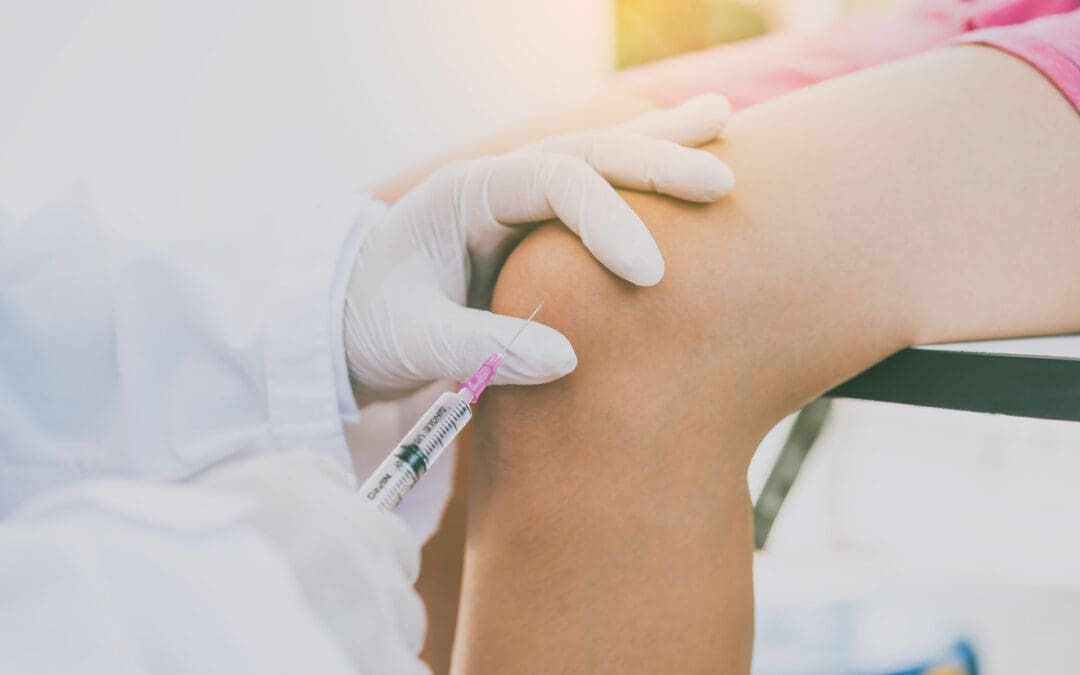
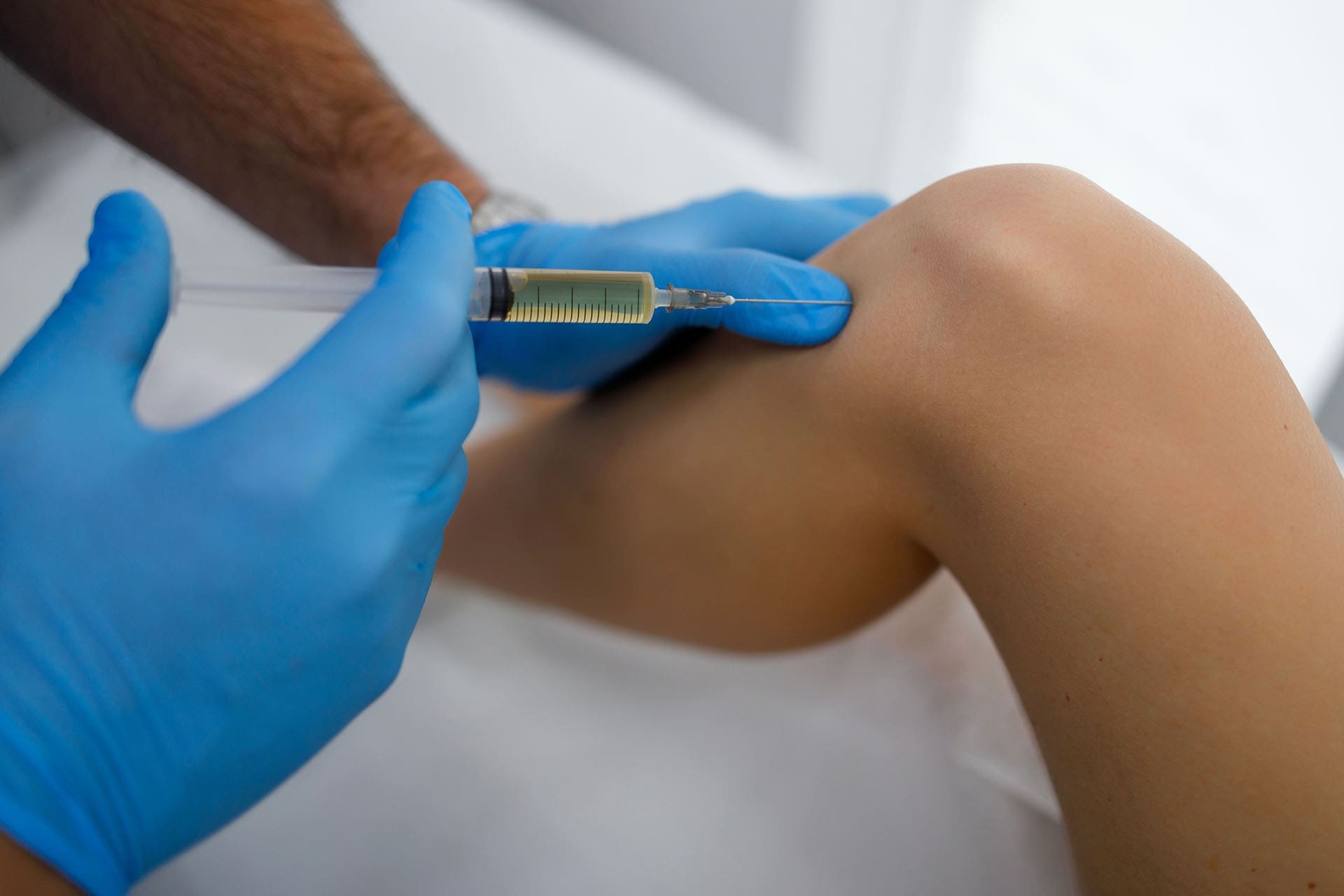
Regenerative medicine uses materials from the patient’s own body to support natural repair. Doctors collect a small sample of blood or fat, process it to concentrate healing factors, and inject the material into the injured area under imaging guidance. The goal is to lower inflammation, bring growth factors to the tissue, and help the body rebuild stronger structures.
These are outpatient procedures. Most people return to light activity the same day. Improvement usually builds over weeks to months as the tissue continues to strengthen.
Key Regenerative Treatments for Accident-Related Joint Pain
Platelet-Rich Plasma (PRP): A blood sample is spun in a centrifuge to concentrate platelets. These platelets release growth factors such as PDGF, TGF-β, and VEGF. When injected into a joint or soft-tissue injury, the growth factors attract repair cells, control inflammation, and support new collagen production. PRP is often used for partial tears, tendon injuries, and early joint changes after trauma.
Micro-Fragmented Adipose Tissue (MFAT): A small amount of the patient’s own fat is processed into tiny fragments rich in regenerative signaling cells. Injected into larger partial tears or more advanced joint damage, MFAT provides cushioning and biological signals. It helps calm chronic inflammation and supports structural repair.
Epidural Spinal Injections: When an accident irritates spinal nerves—common after disc injury or severe whiplash—epidural injections place anti-inflammatory or regenerative material around the nerves. This reduces swelling and soothes tense nerves. Radiating pain often decreases, making movement and rehabilitation easier.
Platelet-Fibrin Products (PFP) and Peptide Therapies: PFP forms a natural fibrin scaffold that holds growth factors at the injury site longer. This provides slow-healing ligaments and tendons extra time to rebuild. Certain peptides act as signaling molecules that encourage new blood vessel growth and help regulate inflammation in soft tissues. Early evidence shows they can work well alongside other regenerative options for musculoskeletal injuries.
Targeted Healing That Addresses the Real Problem
Regenerative treatments share three main actions:
- They lower the inflammation that keeps joints swollen and stiff.
- They deliver concentrated growth factors that speed tissue repair.
- They soothe nerves that are feeling tense so pain signals quiet down.
These treatments are different from regular pain pills because they try to fix the cause of joint weakness. Instead of only covering symptoms, they give the body tools to rebuild.
Combined Care for Stronger, Longer-Lasting Results
Healing tissue is only part of the solution. If the joint continues to move poorly, new stress can slow progress or cause re-injury.
To get better results, it is best to combine regenerative injections with:
- Physical therapy to rebuild muscular strength and joint stability
- Integrative chiropractic care to restore proper movement, improve posture, and reduce repeated stress on the healing area
Chiropractic adjustments and soft-tissue work help the body move correctly so repaired tissue is protected. Physical therapy then strengthens the supporting muscles. Together they create a more stable and functional joint.
A Multidisciplinary Team Approach in El Paso
At Injury Medical Clinic PA in El Paso, Texas, care is provided by a coordinated team. Dr. Alexander Jimenez, DC, APRN, FNP-BC, CCST, CFMP, IFMCP, ATN, leads the chiropractic, functional medicine, and rehabilitation components. He focuses on restoring joint and spinal function, addressing root causes, and supporting recovery after personal injury.
Dr. Maria Guadalupe Cardenas, MD, Board Certified in Internal Medicine (NPI #1164426749, Texas MD License #J2933), serves as Medical Director and Collaborative Physician. With over 40 years of experience as an internist, she provides medical oversight, reviews complex cases, and helps ensure every regenerative procedure is safe and appropriate.
This multidisciplinary setup is common in integrative and injury-care clinics. An MD supplies medical direction while a chiropractor delivers hands-on care. The team also integrates functional medicine for nutrition and lifestyle support, personal-injury care, and structured rehabilitation. Patients receive a complete plan that addresses both the biological damage and the mechanical problems left by the accident.
Clinical Observations From Practice
Dr. Alexander Jimenez has observed that regenerative therapies produce stronger and longer-lasting results when mechanical and internal support are added. Accidents often damage several tissues at the same time—muscles, ligaments, discs, and nerves. Biologics help lower inflammation and jump-start repair. Chiropractic care restores healthy movement patterns. Functional medicine strategies support the internal conditions needed for healing.
Progress is measured through improved range of motion, reduced pain, better strength, and the ability to return to daily activities or work. Clear documentation of these changes also supports personal-injury recovery.
A Clear Path Toward Better Function
Joint pain after an automobile or work accident does not have to become a permanent problem. Regenerative medicine—PRP, MFAT, epidural spinal injections, PFP, and peptide therapies—lowers inflammation, delivers growth factors, and soothes tense nerves. These treatments aim to fix the cause of joint weakness rather than simply hide the pain.
When they are combined with physical therapy and integrative chiropractic care under medical oversight, many people regain strength, stability, and comfortable movement. A thorough evaluation that includes history, examination, and appropriate imaging helps determine the best combination for each person. The focus remains on supporting the body’s natural ability to heal and restoring lasting function.
References
The Science Behind PRP Injections for Joint Regeneration. (n.d.). Phoenix Integrated Medical Center.
Understanding Regenerative Injection Therapy. (n.d.). Form Health PDX.
Regenerative Medicine for Chronic Pain: PRP & Stem Cell Therapy Explained. (n.d.). Woodlands Pain Dr.
Regenerative Injection Therapy. (n.d.). UPMC.
Regenerative Therapy for Joint Pain: A Modern Approach. (n.d.). Physicians Group LLC.
Peptide Injections vs. Platelet-Rich Plasma (PRP) Therapy for Musculoskeletal Injuries: A Review of the Evidence. (n.d.). OSI FTL.
How Regenerative Medicine and Chiropractic Care Work Together. (n.d.). LinkedIn.
Regenerative Options for Personal Injury Recovery. (n.d.). Health Coach Clinic.
Regenerative Medicine. (n.d.). University of Iowa Health Care.
Epidural Injections. (n.d.). NJ Pain Therapy.
Injury Specialists. (n.d.). Dr. Alex Jimenez.
Dr. Alexander Jimenez. (n.d.). LinkedIn.
General Disclaimer, Licenses and Board Certifications *
Professional Scope of Practice *
The information herein on "Auto and Work Accident Joint Pain Regenerative Care Benefits" is not intended to replace a one-on-one relationship with a qualified health care professional or licensed physician and is not medical advice. We encourage you to make healthcare decisions based on your research and partnership with a qualified healthcare professional.
Blog Information & Scope Discussions
Welcome to El Paso's Premier Wellness and Injury Care Clinic & Wellness Blog, where Dr. Alex Jimenez, DC, FNP-C, a Multi-State board-certified Family Practice Nurse Practitioner (FNP-BC) and Chiropractor (DC), presents insights on how our multidisciplinary team is dedicated to holistic healing and personalized care. Our practice aligns with evidence-based treatment protocols inspired by integrative medicine principles, similar to those on this site and on our family practice-based chiromed.com site, focusing on naturally restoring health for patients of all ages.
Our areas of multidisciplinary practice include Wellness & Nutrition, Chronic Pain, Personal Injury, Auto Accident Care, Work Injuries, Back Injury, Low Back Pain, Neck Pain, Migraine Headaches, Sports Injuries, Severe Sciatica, Scoliosis, Complex Herniated Discs, Fibromyalgia, Chronic Pain, Complex Injuries, Stress Management, Functional Medicine Treatments, and in-scope care protocols.
Our information scope is multidisciplinary, focusing on musculoskeletal and physical medicine; wellness; contributing etiological viscerosomatic disturbances within clinical presentations; associated somato-visceral reflex clinical dynamics; subluxation complexes; sensitive health issues; and functional medicine articles, topics, and discussions.
We provide and present clinical collaboration with specialists from various disciplines. Each specialist is governed by their professional scope of practice and licensure jurisdiction. We use functional health & wellness protocols to treat and support care for musculoskeletal injuries or disorders.
Our videos, posts, topics, and insights address clinical matters and issues that directly or indirectly relate to our clinical scope of practice.
Our office has made a reasonable effort to provide supportive citations and has identified relevant research studies that support our posts. We provide copies of supporting research studies upon request to regulatory boards and the public.
We understand that we cover matters that require an additional explanation of how they may assist in a particular care plan or treatment protocol; therefore, to discuss the subject matter above further, please feel free to ask Dr. Alex Jimenez, DC, APRN, FNP-BC, or contact us at 915-850-0900.
We are here to help you and your family.
Blessings
Dr. Alex Jimenez, DC, MSACP, APRN, FNP-BC*, CCST, IFMCP, CFMP, ATN
email: [email protected]
Multidisciplinary Licensing & Board Certifications:
Licensed as a Doctor of Chiropractic (DC) in Texas & New Mexico*
Texas DC License #: TX5807, Verified: TX5807
New Mexico DC License #: NM-DC2182, Verified: NM-DC2182
Multi-State Advanced Practice Registered Nurse (APRN*) in Texas & Multi-States
Multi-state Compact APRN License by Endorsement (42 States)
Texas APRN License #: 1191402, Verified: 1191402 *
Florida APRN License #: 11043890, Verified: APRN11043890 *
Colorado License #: C-APN.0105610-C-NP, Verified: C-APN.0105610-C-NP
New York License #: N25929, Verified N25929
License Verification Link: Nursys License Verifier
* Prescriptive Authority Authorized
ANCC FNP-BC: Board Certified Nurse Practitioner*
Compact Status: Multi-State License: Authorized to Practice in 40 States*
Graduate with Honors: ICHS: MSN-FNP (Family Nurse Practitioner Program)
Degree Granted. Master's in Family Practice MSN Diploma (Cum Laude)
Dr. Alex Jimenez, DC, APRN, FNP-BC*, CFMP, IFMCP, ATN, CCST
(Board Certified: Family Practice Nurse Practitioner—Multistate)*
(Licensed Nurse Practitioner & Chiropractor - Multistate)*
Clinical Director
Digital Business Card
Dr. Maria Cardenas, MD
(Board Certified: Internal Medicine)
(Licensed Medical Doctor)
Medical Director, Clinical Director & Collaborative Physician
NPI # 1164426749
MD License #: J2933
Licenses and Board Certifications:
MD: Medical Doctor
DC: Doctor of Chiropractic
APRNP: Advanced Practice Registered Nurse
FNP-BC: Family Practice Specialization (Multi-State Board Certified)
RN: Registered Nurse (Multi-State Compact License)
CFMP: Certified Functional Medicine Provider
MSN-FNP: Master of Science in Family Practice Medicine
MSACP: Master of Science in Advanced Clinical Practice
IFMCP: Institute of Functional Medicine
CCST: Certified Chiropractic Spinal Trauma
ATN: Advanced Translational Neutrogenomics
Memberships & Associations:
TCA: Texas Chiropractic Association: Member ID: 104311
AANP: American Association of Nurse Practitioners: Member ID: 2198960
ANA: American Nurse Association: Member ID: 06458222 (District TX01)
TNA: Texas Nurse Association: Member ID: 06458222
NPI: 1205907805
| Primary Taxonomy | Selected Taxonomy | State | License Number |
|---|---|---|---|
| No | 111N00000X - Chiropractor | NM | DC2182 |
| Yes | 111N00000X - Chiropractor | TX | DC5807 |
| Yes | 363LF0000X - Nurse Practitioner - Family | TX | 1191402 |
| Yes | 363LF0000X - Nurse Practitioner - Family | FL | 11043890 |
| Yes | 363LF0000X - Nurse Practitioner - Family | CO | C-APN.0105610-C-NP |
| Yes | 363LF0000X - Nurse Practitioner - Family | NY | N25929 |
Dr. Alex Jimenez, DC, APRN, FNP-BC*, CFMP, IFMCP, ATN, CCST
(Board Certified: Family Practice Nurse Practitioner—Multistate)*
(Licensed Nurse Practitioner & Chiropractor - Multistate)*
Clinical Director
Digital Business Card
Dr. Maria Cardenas, MD
(Board Certified: Internal Medicine)*
(Licensed Medical Doctor)*
Medical Director, Clinical Director & Collaborative Physician
NPI # 1164426749
MD License #: J2933







