Kicking the sugar habit is no easy task. But if you�re considering giving it a try, here�s some inspiration to help you succeed: it�ll have profound effects on your short- and long-term health.
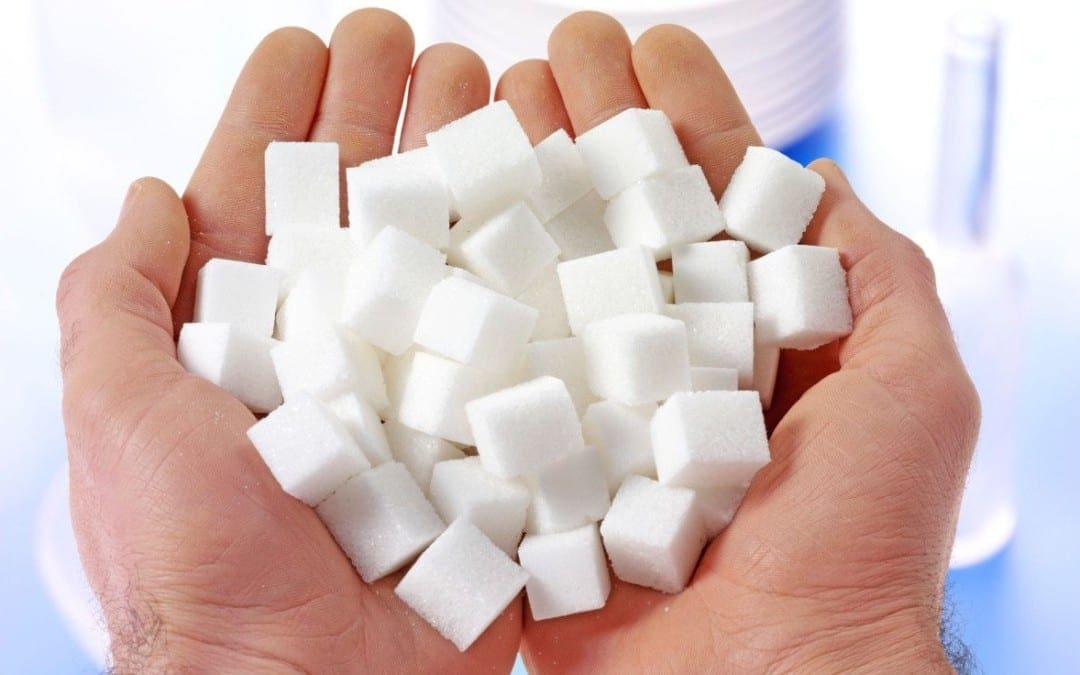
A little of the sweet stuff is okay; the American Heart Association recommends consuming no more than 6 teaspoons of added sugar a day for women and 9 teaspoons daily for men. (Quick comparison: a 12-ounce can of cola has approximately 8 teaspoons.) And you can keep eating unprocessed foods that contain natural sugar, like fruits and vegetables. Unlike added sugar, natural sugar hasn�t been stripped of the vitamins, minerals, and fiber Mother Nature packaged them in.
But if you can dial your intake of added sugar way back, you�ll start to rack up some amazing body benefits, like these.
Your skin will look younger
Think less sag and fewer wrinkles. Studies suggest that the amount of sugar in the blood (which is affected by how much sugar you eat) sets up a molecular domino effect called glycation, which ultimately leaves skin less firm and elastic. Already bothered by premature lines? Cutting your sugar intake can reduce visible signs of aging, research shows.
You�ll have less belly fat
This is the visceral or �deep� fat that builds up around vital organs like your liver, pancreas, and intestines. Stubborn and hard to get rid of, it�s also dangerous; visceral fat is a known risk factor for heart disease and diabetes. In 2016, data from more than 1,000 people who are part of the ongoing Framingham Heart Study showed that the more sugar-sweetened beverages they consumed, the higher their level of visceral fat.
Added sugars are simple carbohydrates. This means they�re digested fast and enter your bloodstream quickly, providing that sugar high that helps jump-start your energy and alertness. But as anyone who relies on a candy bar or pastry for a pick-me-up knows, once that shot of sugar is metabolized, you’re in for a crash.
When you need fuel, swap the sugar-sweetened meals and snacks for items that are low in sugar yet high in protein and/or fat, like almonds. Because they take longer to digest, they�ll supply you with a steadier stream of energy that will last longer, says Diane Sanfilippo, a certified nutrition consultant and author of The 21-Day Sugar Detox.
You�ll lower your risk of obesity
Epidemiological studies show a striking correlation between weight gain and sugar consumption. One study that looked at data from 75 different countries between 1997 and 2010 found that a 1 percent rise in soft drink consumption across a nation was linked to an additional 4.8 people out of 100 being overweight and an additional 2.3 people out of 100 being obese.
Here are some more numbers: sugar has 16 calories per teaspoon, which may not sound like a big deal. But considering how much added sugar is loaded into tons of products, consuming sweetened foods can easily add hundreds of calories to your diet�calories that you may not need and may end up as dangerous fat around your middle.
A healthy heart helps you power through your day, from that a.m. spin class to a late deadline at work. But the more added sugar in your diet, the higher your risk of dying of heart disease, even if your weight is in a healthy range.
In one 2014 JAMA study, researchers found that those who consumed the highest amount of sugar � accounting for more than 21 percent of their totally daily calories �had double the heart disease death risk of people who took in 17 to 21 percent of their daily calories from the sweet stuff. This group in turn had a 38 percent higher risk of dying from cardiovascular disease compared to those who kept their sugar intake to 8 percent of their daily calories (The FDA says getting 10% of your daily calories from added sugar is a solid guideline).
Researchers have long debated whether there was a direct connection between eating sugar and developing type 2 diabetes. But recent research has lent support to this theory. A 2014 Stanford University study of 175 countries found that the more sugar that is available in a population’s food supply, the higher the diabetes rate�and this was true even when a country’s obesity rate was not factored in. (Obesity itself can set a person up for diabetes).
Epidemiological data also suggests that among other factors, diets high in sugar�even in diets that are not necessarily high in calories�cause the body to store visceral fat around the middle, and that can lead to insulin resistance and a diabetes diagnosis.
Whether we�re starting our day with a strong cup of coffee or indulging in a mid-afternoon pick-me-up (preferably of the dark chocolate variety), caffeine is a drug that many of us don�t want to quit. And thankfully, we don�t have to: A new scientific review offers reassurance that, in moderate amounts, caffeine is perfectly healthy.
Specifically, the paper confirms the results of the last big review done on caffeine safety, way back in 2003: that intake levels of up to 400 mg a day, or about four 8-ounce cups of coffee, are not associated with health risks for adults. (Yay!) The results, published in Food and Chemical Toxicology, were presented over the weekend at the Experimental Biology conference in Chicago.
�After decades of research and thousands of papers, we know a lot about caffeine,� says lead author Daniele Wikoff, PhD, health sciences practice leader at ToxStrategies, a private scientific consulting firm. �And what our findings truly confirm is that having caffeine as part of your daily diet is still acceptable and without adverse effects.�
Pregnant Women and Caffeine
The new review also found that existing upper limits for pregnant women (300 mg a day) and children (about 1.1 mg per pound) continue to be supported by scientific data, as well. �This should give pregnant women some comfort that they do not need to eliminate caffeine from their diet,� says Wikoff.
Although there�s no change to the current recommendations, an update was long overdue, says Wikoff. Since the widely-cited 2003 review on caffeine was conducted by Health Canada, more than 10,000 papers have been published on the drug�s effects on various aspects of health.
That’s why the North American branch of International Life Sciences Institute (ILSI), a nonprofit foundation dedicated to advancing the understanding of nutrition and food safety, decided to commission an analysis on more recent literature. To start, the Institute recruited ToxStrategies to comb through more than 700 studies conducted on humans and published between 2001 and 2015.
The researchers narrowed those studies down to 426 for inclusion in the review, all of which focused on how caffeine related to five specific topics: toxicity, bone health and calcium intake, cardiovascular effects (including blood pressure and heart rate), behavioral health (including headaches, mood, and sleep), and reproduction and development (including fertility, miscarriage, and birth defects).
The Effects of Caffeine on Americans
Despite all the new research, the paper�s conclusions remain generally the same as the previous review�s. More than 90% of Americans currently consume less than 400 mg a day of caffeine, the authors wrote, and the findings of the new review “support the safety of standard consumption practices in the United States.�
The authors did note that studies on caffeine in children were limited. While they found no need to recommend a change in current recommendations, they do say that more research on this age group would be valuable. (The American Academy of Pediatrics maintains a long-held position that caffeinated beverages, especially energy drinks, should be avoided in children.)
And because research on the general safety of caffeine is so plentiful, they also recommend that future studies shift their focus to unhealthy populations, sensitive groups, and ways that people may be affected differently on an individual level.
ILSI North America receives funding from the American Beverage Association and the National Coffee Association. Both organizations �received periodic progress reports but did not participate in any aspect of the systematic review,� the authors note in the paper. In addition to scientists from ToxStrategies, the research team consisted of seven scientific advisory board members from academic institutions across the U.S. and Canada, with expertise in the paper�s different areas of focus.
The studies included in the review looked at a variety of caffeine sources, including coffee, tea, chocolate, other beverages, and supplements, but the review did not evaluate the health effects associated with these different sources separately. When considering your caffeine intake, says Health�s medical editor Roshini Raj, MD, it’s important to keep in mind the entire food or drink.
Plain coffee, for example, is rich in antioxidants and may reduce the risk of heart disease, stroke, and diabetes. Soda and fancy coffee concoctions, on the other hand, can be high in calories or contain artificial sweeteners, while energy drinks can contain sugar and other stimulants that have been associated with health risks.
Dr. Raj also says that just because 400 mg a day of caffeine is safe, that doesn�t mean it�s right for everyone. �We don�t all metabolize caffeine the same way: Some people find that even a little cup of coffee or tea can make them restless,� she wrote in a recent column for Health. �Listen to your body, and if you tend to get jittery, try spacing out your caffeinated beverages,� she added.
If you find that you�re becoming dependent on caffeine, make sure you�re getting enough sleep�or talk to your doctor about why else you might be so tired, Dr. Raj adds. You can always try an all-natural energy enhancer, too: A recent study found that 10 minutes of stair-walking provided a better boost than a 50-mg caffeine pill.
The scope of our information is limited to chiropractic and spinal injuries and conditions. To discuss options on the subject matter, please feel free to ask Dr. Jimenez or contact us at 915-850-0900 .
Additional Topics: Weight Loss Eases Back Pain
Back pain and symptoms of sciatica can affect a majority of the population throughout their lifetime. Research studies have demonstrated that people who are overweight or obese experience more back complications than people with a healthy weight. A proper nutrition along with regular physical fitness can help with weight loss as well as help maintain a healthy weight to eliminate symptoms of back pain and sciatica. Chiropractic care is also another natural form of treatment which treats back pain and sciatica utilizing manual spinal adjustments and manipulations.
Alcohol In Moderation�Has A Reputation For Being Healthy For The Heart
Drinking about a glass of wine for women per day, and two glasses for men, is linked to a lower risk of heart attack, stroke and death from heart disease. (Drinking too much, of course, negates these benefits and increases the risk of heart problems.)
Now, a new study of nearly two million people published in The BMJ adds more evidence that moderate amounts of alcohol appear to be healthy for most heart conditions�but not all of them.
The researchers analyzed the link between alcohol consumption and 12 different heart ailments in a large group of U.K. adults. None of the people in the study had cardiovascular disease when the study started.
People who did not drink had an increased risk for eight of the heart ailments, ranging from 12% to 56%, compared to people who drank in moderation. These eight conditions include the most common heart events, such as heart attack, stroke and sudden heart-related death. Non-drinkers had a 33% higher risk of unstable angina�a condition in which the heart doesn�t get enough blood flow�and a 56% higher risk of dying unexpectedly from heart disease, compared to people who drank a glass or two of alcohol a day.
But alcohol does not seem to provide protection against four less common heart problems: certain types of milder strokes, which result from brief periods when blood flow to parts of the brain are blocked, and cases of bleeding in the brain.
The study�s findings are particularly interesting because the researchers separated drinkers into categories that are typically lumped together in these kinds of studies. �Non-drinkers� often include people who have never drank, as well as those who quit drinking (who may have been heavy drinkers in the past, and so may have a higher risk of heart problems). This may have inflated the risk of non-drinkers; in some cases, grouping people this way might make drinking alcohol look better for the heart than it actually is.
It�s not clear from the current study why alcohol lowers the risk of some heart conditions and not others. But Steven Bell, a genetic epidemiologist at University of Cambridge and the study�s lead author, says that another study designed to answer that question is currently underway. �We are unpacking how different risk factors are associated with each different disease,� he says. Future studies will also tease apart whether different types of alcohol�wine versus beer or spirits, for example�have varying effects on the risk of heart disease.
In the meantime, Bell says that the results should reassure people who drink a few glasses of alcohol each week. But it shouldn�t compel people who don�t currently drink to pick up the habit in order to stave off heart disease. Because alcohol carries a risk of liver disease, there are safer ways to lower risk, he says, such as quitting smoking, exercising regularly and eating a healthy diet.
Every year, certain ingredients and dishes emerge as trendy �must-haves��even if it�s something we�ve been eating for centuries. Just a few years ago, for example, no one had even heard of quinoa (which has been around for at least 5,000 years), and now not a day goes by when we don�t see it on a menu.
These Foods &�Aren�t Just Being Whipped Up By Chefs Or Served In Popular Restaurants
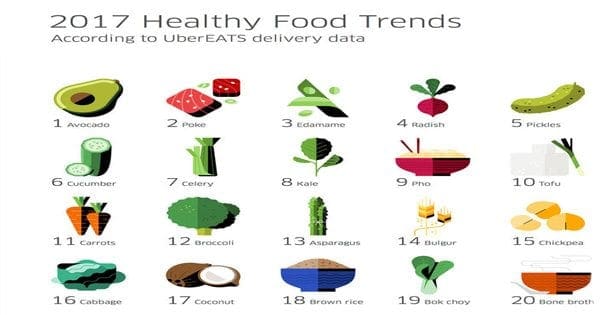
They�ve become mainstream amongst home cooks across America, and thousands of eaters are also ordering them through delivery services. UberEATS has seen a surge in fresh, nutritious delivery orders (so long, pizza and burgers), so they compiled a list of the top 20 healthy food trends for 2017. The data is based on UberEATS order patterns so far this year.
Unsurprisingly, avocado is at the top of the list�it seems this trend is here to stay. According to their data, the fruit is the most popular healthy food in more than 16 cities across the country. Kale has dropped to number 8 on the list, making way for poke (a Hawaiian raw fish salad), edamame, radishes, and pickles. Bulgur and brown rice have replaced quinoa as the resident grains/seeds in the top 20.
The fact that tofu rounds out the top 10 is a nod to people re-thinking the amount of meat they consume�and how it appears on their plates. More and more, in home kitchens, restaurants, and new cookbooks, we�re seeing veggies take center stage with meat as a side, or a garnish. Check out the full list below, and use it as an opportunity to try out some new healthy ingredients this year.
We all know to go easy on the sweet stuff, but what actually happens to your system when you indulge? Here are eight ways sugar affects the body.
Brain Issues
Fructose�the sugar that naturally occurs in fruit and is a component, with glucose, of high fructose corn syrup (HFCS) and table sugar�lights up the brain’s reward center, says pediatric endocrinologist Robert Lustig, MD, of UCSF Benioff Children’s Hospital in San Francisco. But over time, a diet packed with fructose (especially from HFCS) can make it tougher to learn and remember, animal research suggests. To stay in peak mental shape, try sticking with savory snacks.
Increased Appetite
By revving the brain’s reward and appetite center, fructose can interfere with feelings of satiety, research reveals. Translation: That extra cookie may not curb your craving after all.
Faster Aging
Too much sugar can hinder the repair of collagen, the buzzed-about protein that keeps skin looking plump, studies show. A steady diet of sugary treats can result in reduced elasticity and premature wrinkles. Indulge your sweet tooth with fruit instead. Experts say it’s A-OK to eat two to four servings of the natural sugar source each day.
Pause before you slip that additional packet into your a.m. coffee. The liver has an innate capacity to metabolize sugar and use it for energy�but only to an extent, explains Dr. Lustig. The fructose that’s left over is converted into fat in the liver, raising your risk of obesity, type 2 diabetes, and cardiovascular disease.
Cell Damage
Fructose accelerates the usual oxidation process in our cells, says Dr. Lustig. The result? Proteins, tissues, and organs can become damaged, and our risk of health conditions, including liver disease, kidney failure, and cataracts, rises.
Addiction to Sugar
Eating sugar leads to the release of dopamine, the neurotransmitter that makes us like something and want more of it. “As dopamine receptor neurons get overstimulated, the number of receptors to bind to decreases, so you’ll need a bigger hit of dopamine to get the same rush,” explains Dr. Lustig.
Sweets can lower levels of the stress hormone cortisol in the near term, research shows. But continue OD’ing on sugary refined carbs and your risk of insulin resistance, which stresses the body from the inside, goes up. To find your calm, sweat instead: “Exercise is the best treatment for stress. It makes you feel good and reduces cortisol,” says Dr. Lustig.
Ineffective for Energy Production
Refined carbs, like those in white bread and pasta, quickly cause a rise in glucose in the bloodstream, so you might feel extra energized�for a while. But this short-term fix can actually leave you more sluggish later on (when you eventually crash). Instead, opt for protein-rich snacks between meals, such as Greek yogurt with fresh berries or fresh veggies and hummus. They help stabilize blood sugar and keep you going longer.
For more information, please feel free to ask Dr. Jimenez or contact us at 915-850-0900 .
Additional Topics: What is Chiropractic?
Chiropractic care is an well-known, alternative treatment option utilized to prevent, diagnose and treat a variety of injuries and conditions associated with the spine, primarily subluxations or spinal misalignments. Chiropractic focuses on restoring and maintaining the overall health and wellness of the musculoskeletal and nervous systems. Through the use of spinal adjustments and manual manipulations, a chiropractor, or doctor of chiropractic, can carefully re-align the spine, improving a patient�s strength, mobility and flexibility.
Your body is designed to work well and take care of itself, as long as you take care of it. In part, this means eating a balanced diet, exercising regularly, and getting the right amount of sleep. But sometimes you do need outside help to keep your body working at peak efficiency. Chiropractic care serves as an excellent example. Your chiropractic visits�do more than crack your back. Your treatment sessions can help improve your overall body structure and health.
1. Better Posture
If you work in an office or over a machine during the day, you likely develop a slump in your workplace. Your back starts to curve, your shoulders droop forward, and soon you start feeling a bit of an ache to your torso at the end of every day. If you let it go for long, you soon discover you don�t stand or sit as tall as you used to. You can almost feel your body deteriorate around you, from your spine out to your arms and legs.
Chiropractic care helps head this off at the pass. You stretch your body out and stretch and straighten your�back. The small curves that start to set in on you unfurl, and you soon feel your whole body relaxing as a result. The treatment soon has you standing taller, working more comfortably and moving into your evening feeling stronger than ever.
2. Better Body Movement
As you stand straighter and move through your day with your back set more correctly, you begin to see the benefits extend into other areas. One is your overall range of motion. A straighter, better aligned back gives your arms and legs a better base from which to move. You can move more comfortably and freely through your day and your whole body responds, adjusting to your centered, realigned core.�Your body is meant to be flexible;�designed to bounce back and recover quickly and freely from exertion.
Stiffness in the center stifles this natural state throughout the body and chiropractic care brings you back to where you should remain. Instead of movements beginning out of place, you can move your arms and legs with a fuller range of motion. Your body no longer fights itself for you to move. Everything flows in concert, and you feel better with every step and arm swing.
Football & Chiropractic
3. Greater Strength
Beyond flexibility, you also generate strength from your core. Personal trainers and fitness gurus explain this theory from their perspective of toning stomach and back muscles- and they are correct. However,�strength runs deeper than even the muscle groups, extending to your skeletal structure underneath it all. Your spinal column and hips underlie and support the movements you make at a basic, foundational level. When your spine is misaligned, the system of bones and muscles cannot create and work in the harmony with which they were designed to act.
A chiropractic alignment returns the natural order and base of your strength. It allows your vertebrae to work together, each bone supporting and adding to the strength of the next. The result? A body working as one powerful unit, creating and building strength from the center, rather than relying on a less complete support system. You work less to do more, and have more power to use when you need to use it.
�A Healthier You
4. More Effective Nervous System
The body needs a straight, free spine for more than just physical support. Your spine protects the spinal cord, the center (with your brain) from which all communication through your nervous system emanates. If the bones contract or move out of place, that communication system works less efficiently. You cannot react as quickly or respond as well to the world around you.
A chiropractic realignment helps return your body to peak functional capacity. The nerves no longer get pinched off or otherwise interrupted in the process of moving impulses and stimuli though the body. Your senses sharpen and work better, resulting in an improved reaction time. Your internal safety systems and mechanisms work better, and your whole body functions more smoothly. You start to heal yourself more quickly, from physical aches and pains to infections because your signaling mechanisms and pathways are more clear. You can respond to issues inside your body more quickly, and fight off issues more readily.
Whole Body Wellness
5. Pain Relief
In the midst of all of this, some of the symptoms that may initially drive you to a chiropractor can start to diminish. Pain does not come directly when you are not aligned properly. The body has a remarkable tolerance to small changes, and at times,�big changes. This generally works to your advantage, but it has the downside of masking smaller problems and concerns until they become bigger ones. Your body starts to cover up alignment issues with shifts in posture and resilience. By the time you feel the discomfort, you have likely shifted dramatically out of place.
Because of this, expecting immediate relief from chiropractic treatment may be setting yourself up for disappointment. You sometimes do feel instantaneous improvement, but the more likely scenario is to feel your physical symptoms gradually improve. With the help from your body, time heals. Maintaining your body to help�it do its job more effectively goes a long way toward making your life more comfortable.
Your body can do amazing things for you if you let it. Unfortunately, the stress and the wear and tear we put it through over time can diminish its effectiveness in handling everyday experiences and events. When you take the time and effort to maintain your physical condition, you free your body up to do the things it was meant to do: support, protect, and take care of itself. We are remarkable beings, designed to achieve incredible things both mentally and physically.�Chiropractic care�helps you maintain your body, as a support system and a base for everything else that you do.
Sometimes you need outside help to keep your body working at peak efficiency. Chiropractic care serves as an excellent example. Chiropractic �does more than crack your back and treatment can help improve your overall body structure and health.
IFM's Find A Practitioner tool is the largest referral network in Functional Medicine, created to help patients locate Functional Medicine practitioners anywhere in the world. IFM Certified Practitioners are listed first in the search results, given their extensive education in Functional Medicine