The various muscles and ligaments that encompass the back help protect the spine’s thoracic region. The spine has three sections: cervical, thoracic, and lumbar, which assist the body with bending, turning, and twisting. For the thoracic spine, various muscles like the rhomboid, trapezoid, and other superficial muscles provide functionality to the scapula or shoulder blades to stabilize the ribcage. When the body succumbs to injuries or traumatic forces, it can develop myofascial pain syndrome associated with upper back pain. Upper back pain can lead to unwanted symptoms affecting their quality of life. Fortunately, various exercises target the upper portion of the back and can strengthen multiple muscles from injuries. Today’s article looks at the effects of upper back pain in the body and shows a few stretches and exercises that can support the various muscle groups in the upper back region. We refer our patients to certified providers that incorporate techniques and multiple therapies for many individuals suffering from upper back pain and its correlating symptoms that can affect the musculoskeletal system in the neck, shoulders, and thoracic region of the spine. We encourage and appreciate each patient by referring them to associated medical providers based on their diagnosis when it is appropriate. We understand that education is a fantastic way when asking our providers intricated questions at the patient’s request and understanding. Dr. Jimenez, D.C., only utilizes this information as an educational service. Disclaimer
The Effects Of Upper Back Pain In The Body
Have you been experiencing stiffness around or near your shoulder blades? Do you feel muscle strain when you are rotating your shoulders? Or does it hurt when you stretch your upper back in the morning? Many of these issues are signs and symptoms of upper back pain. Studies reveal that back pain is one of the most common complaints many individuals would go for emergency care. Back pain can affect the different regions in the back and cause unwanted symptoms in various areas in the upper back. Additional studies mentioned that persistent pain in the thoracic region could cause hyper-sensitization of the intercoastal nerves that mimic other conditions affecting the back. Some of the causes and effects that can lead to the development of upper back pain include:
When this happens, it can lead to overlapping conditions that mimic other issues and, if not treated right away, leave individuals with chronic disabling symptoms that correlate with upper back pain.
Upper Back Pain Relief-Video
Have you been experiencing stiffness in your shoulders or neck? Do you feel aches and pains when stretching your arms? Or what about feeling muscle strain when lifting a heavy object? Many of these factors correlate with upper back pain affecting the thoracic spine region. When this happens, it can lead to overlapping risk profiles that can develop into different issues that can cause even more pain to the body. There are various ways to prevent upper back pain from causing further issues to the individual and can relieve the pain associated with it. Many people would go to chiropractic therapy to have their spine re-aligned to bring adequate relief or incorporate upper back exercises and stretches to relieve tension accumulated in the neck and shoulder regions. The video above explains how stretches work for different muscle regions in the upper back and provide relief to the thoracic spine.
Exercises For Upper Back Pain
Regarding the upper back, it is important to understand that incorporating various exercises that target the thoracic region can cause prolonged injuries. Studies reveal that different back exercises focus not only on the back but the shoulders, arms, chest, core, and hips providing stability, balance, and coordination to the individual. This allows the muscles in the back region to improve strength and endurance over time when a person continues to work out. More studies reveal that protocols like the McKenzie back exercise are effective programs to treat various musculoskeletal conditions that can cause pain in the back. Many physical therapists use this protocol on their patients to relieve back pain and help improve their muscular structure to have better posture.
Warm Up
Just like any individual that is starting to get back to their health and wellness through exercise, the most important step that anyone has to do is warming up their muscles before getting into a workout. Warming up each muscle group can prevent future injuries and increase blood flow before starting the exercise. Many individuals would incorporate stretches and foam rolling for 5-10 minutes to ensure that each muscle is ready to perform with maximum effort.
Exercises
After the body is warmed up, it is time to begin the exercise regime. Many different exercise movements target each muscle group and help build muscle mass and improve functionality. It is important to build up momentum when it comes to working out. Starting slowly with minimum reps and sets is important to ensure the exercise is done correctly. Afterward, the individual can increase the workout reps and go with a heavier weight. Below are some of the exercise routines that are suited for the upper back.
Superman
Lie on your stomach and extend your arms above the head
Keep neck in a neutral position and lift legs and arms off the floor at the same time
Make sure to use the back and glutes to lift
Briefly pause at the top, then return to starting position
Complete three sets of 10 reps
This exercise helps strengthen the spine and surrounding muscles to support the spine and reduce any future injuries from upper back pain.
Reverse Dumbbell Flies
Grab light weighted dumbbells
Hinge at the waist at 45 degrees while standing
Make sure the arms are hanging down with the weights
Keep the neck in a neutral position while gazing down
Lift the arms (with the dumbbells) out to the side and upwards
Squeeze the shoulders together at the top during this movement
Complete three sets of 8-12 reps
This exercise is excellent for strengthening the muscles that surround the shoulder and upper back.
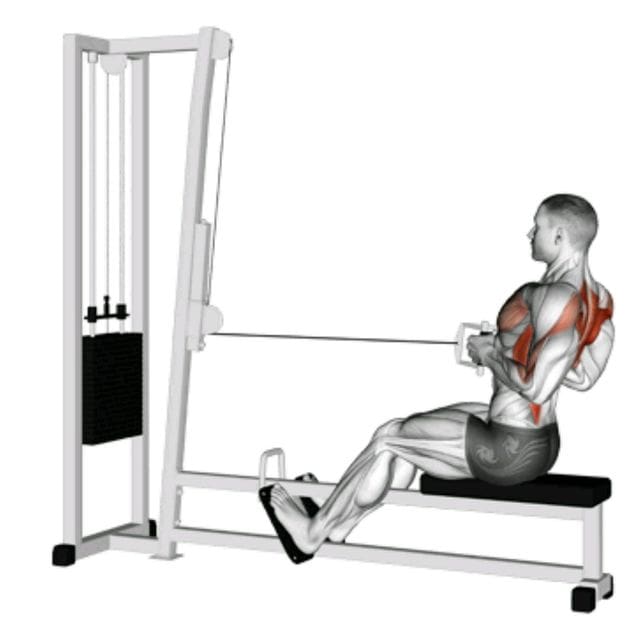
Rows
Use a resistance band or a light weighted dumbbell.
For the resistance band, affix the band to a stable surface above eye level. For the light weighted dumbbells, extend the arms in front of the body above eye level.
Use an overhead grip when holding the resistance band handles and the light weighted dumbbells.
Pull resistance bands or dumbbells toward the face.
Flare out the upper arms to the sides
Squeeze the shoulders together
Pause for a bit and then return to starting position
Complete three sets of 12 reps
This exercise helps strengthen the shoulder muscles and prevent future injuries from occurring in the upper back.
Conclusion
Some various muscles and ligaments encompass the back and help protect the spine’s thoracic region. These muscles help with the stabilization of the ribcage and help provide the functionality to the upper back. When multiple factors cause traumatic injuries to the upper back, it can lead to pain-like symptoms that can cause overlapping features and affect a person’s quality of life. Luckily, various exercises target the upper back and surrounding muscle groups. Each activity targets all the muscles in the upper back and allows a person to regain health and wellness without constant pain.
References
Atalay, Erdem, et al. “Effect of Upper-Extremity Strengthening Exercises on the Lumbar Strength, Disability and Pain of Patients with Chronic Low Back Pain: A Randomized Controlled Study.” Journal of Sports Science & Medicine, U.S. National Library of Medicine, 1 Dec. 2017, https://www.ncbi.nlm.nih.gov/pmc/articles/PMC5721192/.
Casiano, Vincent E, et al. “Back Pain – Statpearls – NCBI Bookshelf.” In: StatPearls [Internet]. Treasure Island (FL), StatPearls Publishing, 4 Sept. 2022, https://www.ncbi.nlm.nih.gov/books/NBK538173/.
Louw, Adriaan, and Stephen G Schmidt. “Chronic Pain and the Thoracic Spine.” The Journal of Manual & Manipulative Therapy, U.S. National Library of Medicine, July 2015, https://www.ncbi.nlm.nih.gov/pmc/articles/PMC4534852/.
Mann, Steven J, et al. “McKenzie Back Exercises – Statpearls – NCBI Bookshelf.” In: StatPearls [Internet]. Treasure Island (FL), StatPearls Publishing, 4 July 2022, https://www.ncbi.nlm.nih.gov/books/NBK539720/.
The upper back is part of the thoracic region of the spine, surrounded by various muscles that protect the thoracic joints and help assist with respiratory functionality for the lungs. The upper back muscles consist of the rhomboids and the trapezoid muscles that provide functionality to the scapula or shoulder blades. Other superficial muscles offer assistance to the thoracic spine. The serratus posterior muscle is one of the superficial muscles that helps the thoracic spine and, like all superficial muscles, can succumb to injuries that can lead to the development of overlapping referred pain symptoms known as trigger points. Today’s article focuses on the serratus posterior muscle function in the back, how trigger points are causing upper back pain, and various techniques to manage trigger points in the upper back. We refer patients to certified providers who are diverse in upper back pain therapies to aid many people suffering from myofascial pain syndrome or trigger points associated with the serratus posterior muscle along the upper back. We advised patients by referring them to our associated medical providers based on their examination when appropriate. We indicate that education is a great solution to asking our providers profound and complex questions at the patient’s request. Dr. Alex Jimenez, D.C., notes this information as an educational service only. Disclaimer
The Serratus Posterior Muscle Function In The Back
Have you been dealing with constant upper back pain? Do you feel soreness at the base of your neck? Or are you having difficulty breathing? Most of the symptoms cause pain in the serratus posterior muscles that can lead to the development of myofascial pain syndrome or trigger points along the upper back. The serratus posterior has various roles in the upper back as it is not only part of the extrinsic muscles but also part of the accessory breathing muscle. The serratus posterior muscle helps with inspiration, which causes the chest cavity to expand as it is a superficial muscle attached to the ribs and is less commonly known. Studies show that the serratus posterior muscle is deep within the rhomboid muscles and is superficial. Even though this muscle is superficial when it has been overused through various activities, that can cause hypertrophy in the accessory respiratory muscles. Additional studies reveal that the serratus posterior superior muscle is considered clinically insignificant but has been impaired by myofascial pain syndrome or trigger points that can lead to upper back pain.
Trigger Points Causing Upper Back Pain
As stated earlier, the upper back is part of the thoracic region of the spine, and when various factors begin to affect the body, the back muscles tend to be involved. Studies reveal numerous sources of spinal pain in the thoracic spine. One is a myofascial pain syndrome affecting the serratus posterior muscles causing referred upper back pain. Myofascial pain syndrome or trigger points can be activated when the serratus posterior muscle is overloaded from thoracic respiratory issues like coughing due to pneumonia, asthma, or chronic emphysema. When respiratory problems affect the muscles in the thoracic region of the back, it leads to the development of trigger points, leading to overlapping issues like referred pain, motor dysfunction, and autonomic phenomena. According to Dr. Travell, M.D., in the upper back, trigger points can make the serratus posterior muscle cause overlapping risk profiles along the shoulder blades and have referred pain travel to the hands. This can make many individuals suffer from serious pain-like symptoms, causing them to be miserable.
Releasing Trigger Points Related Tension In The Upper Back-Video
Have you been dealing with respiratory issues causing you to be hunched over constantly? Do you feel soreness or tenderness at the base of your neck? Or are you suffering from upper back pain? These symptoms are associated with trigger points that are affecting the serratus posterior muscles causing upper back pain. Trigger points, or myofascial pain syndrome, is a musculoskeletal disorder that causes tenderness along the affected muscle that causes referred pain to the surrounding muscles in the body. Trigger points associated with the serratus posterior muscles can cause referred pain in the upper back and mimic various chronic conditions. Trigger point pain is difficult to diagnose but can be manageable with treatment. The video above gives examples of how to treat trigger points to relieve tension in the upper back.
Various Techniques To Manage Trigger Points In The Upper Back
When it comes to upper back pain, many individuals will go to pain specialists like massage therapists or chiropractors to relieve any issues affecting the upper back. These pain specialists utilize various techniques like stretching, spinal manipulation, massages, and ischemic compression to alleviate pain and manage trigger points from forming further in the affected muscle. Pain specialists like massage therapists or chiropractors are excellent for locating pain-like symptoms associated with trigger points. Even though treatment can help manage symptoms associated with trigger points, many people can still incorporate these techniques, like deep breathing or correcting their posture, to prevent the upper back muscles from becoming strained and causing more issues than before.
Conclusion
The serratus posterior muscles have various roles in the upper back region of the body. These superficial muscles are extrinsic and accessory breathing muscles that help expand the chest cavity. When multiple issues affect the upper back muscles, like strenuous activities or respiratory problems, it can develop trigger points along the serratus posterior muscles and invoke pain-like symptoms to travel down to the hand, causing mobility issues. Thankfully, various techniques that pain specialists like chiropractors and massage therapists use can help manage trigger points from escalating and can bring upper back mobility to the body once again.
References
Altafulla, Juan J, et al. “An Unusual Back Muscle Identified Bilaterally: Case Report.” Cureus, Cureus, 15 June 2018, https://www.ncbi.nlm.nih.gov/pmc/articles/PMC6093753/.
Briggs, Andrew M, et al. “Thoracic Spine Pain in the General Population: Prevalence, Incidence and Associated Factors in Children, Adolescents and Adults. A Systematic Review.” BMC Musculoskeletal Disorders, BioMed Central, 29 June 2009, https://www.ncbi.nlm.nih.gov/pmc/articles/PMC2720379/.
Mitchell, Brittney, et al. “Anatomy, Back, Extrinsic Muscles.” In: StatPearls [Internet]. Treasure Island (FL), StatPearls Publishing, 4 Aug. 2021, https://www.ncbi.nlm.nih.gov/books/NBK537216/.
Travell, J. G., et al. Myofascial Pain and Dysfunction: The Trigger Point Manual: Vol. 1:Upper Half of Body. Williams & Wilkins, 1999.
Vilensky, J A, et al. “Serratus Posterior Muscles: Anatomy, Clinical Relevance, and Function.” Clinical Anatomy (New York, N.Y.), U.S. National Library of Medicine, July 2001, https://pubmed.ncbi.nlm.nih.gov/11424195/.
The spine is divided into three different parts: the neck or cervical spine, the upper back or thoracic spine, and the lower back or lumbar spine. Each region of the spine has its own function and abilities. The lower spine helps you lift heavy objects because it is elastic. The neck is also constructed for flexibility, but the upper spine is built for stability and is also essential in supporting the body.
All your ribs stretch out from the thoracic spine. While these ribs help to create a cage that protects most of your organs, if the thoracic spine is damaged, it can cause pain and discomfort in the shoulder and back area. To be able to acquire the best, most effective treatment for your upper back pain (also known as mid-back pain), you should first understand what may be causing it. A healthcare professional, such as chiropractor, can help you figure that out, but here are some of the most common causes of upper back pain.
Causes of Upper Back Pain
Poor posture: Sitting with a rounded back and the shoulders hunched forward can place too much stress on the muscles of the upper and mid back. Because many office employees spend their work days sitting in front of the computer, poor posture is considered one of the top causes of upper back pain. Especially when you’re at your desk for so many hours per day, it’s easy to fall into the bad habit of not sitting correctly.
Improper lifting: In order to protect your spine when choosing to lift something up, you should also use correct body mechanics. Not using the proper form for lifting can cause injury and lead to upper back pain.
Carrying a heavy back pack:�Anybody who uses a heavy back pack may be at risk for back injury. An over-loaded back pack can be harmful to the spine, but most importantly, not wearing a backpack correctly (eg, only using one strap) can cause more harm.
Trauma/injury: Traumatic events, such as automobile accidents, can cause upper back pain as a result of various factors. It is possible to suffer a fracture to the vertebrae of the spine or part of your vertebrae can press on a spinal nerve, which can lead to pain.
Infection:�Even a paraspinal abscess or a spinal epidural abscess can compress the spinal cord or spinal nerves, causing upper back pain, depending on the affected region of the spine.
Osteoporosis: This is a condition which affects the bones, also you might not understand you’ve got osteoporosis until you experience a spinal fracture (eg, spinal compression fracture). Osteoporosis can weaken your bones, making them more likely to fracture and less inclined to carry your weight. You may develop upper back pain if you have osteoporosis on your thoracic spine. Weakened vertebrae don’t support your body’s weight as well, so tendons, ligaments, and muscles need to work harder to make up for that vertebrae. This can result in sprain, strain, or muscle fatigue as well as upper back pain, among other symptoms. In case you have a fracture or fractures due to osteoporosis, you will probably develop a round back from poor posture.
Kyphosis: When looked at from the side, your spine is supposed to curve in your upper back (thoracic spine) area; that curve is called a kyphotic curve or kyphosis. However, it can begin to curve out too much which is referred to as problematic kyphosis. Various conditions, such as osteoporosis, can cause kyphosis in the thoracic spine, leading to upper back pain.
Scoliosis: Scoliosis causes an unusual lateral curvature of the spine. It can make your spine look like an “S”or a “C” when seen from behind. If your spine is curving to the left or to the right in the upper back (thoracic spine), then you might have pain due to how the curve affects spinal nerves, muscles, and other soft tissues.
Other conditions: Upper back pain may develop in conjunction with other medical conditions not related to the spine. For instance:
Acid reflux (GERD)
Ulcer
Cardiac conditions, such as angina
Anatomical Structure and Upper Back Pain
The upper back, or the thoracic spine, is significantly more stable compared to the neck, or the cervical spine, and the low back, or lumbar spine. It doesn’t move as far as the other regions of the spine since one of its most important functions is to protect the inner organs in the chest. It does this in conjunction with the ribs, which are attached to the vertebrae in the thoracic spine.
However, the thoracic spine is less prone to suffer from intervertebral disc issues as well as joint problems that commonly impact the neck and low back. It is much less common, although that does not imply that you can not have a herniated disc causing your upper back pain. It is less frequent to have spinal health issues in the thoracic spine. The neck and low back move much more compared to the upper back, therefore discs and joints may wear out earlier from overuse and misuse.
Chiropractic Care for Upper Back Pain
Although less common than lower back pain, for instance, many people will visit a chiropractor’s office seeking relief for upper back pain. Working with a highly qualified doctor of chiropractic, patients can find relief from their upper back pain. In a chiropractic office, the terms of a treatment are on the patient.
Since many thoracic spine issues also consist of cervical or lumbar spinal issues, a doctor of chiropractic can assess and treat all three regions successfully. Herniation of the upper and lower spine’s discs are common due to the versatility of these two regions. If pain is at the upper of mid back, however, most frequently the reason isn’t because of slippage, but rather an injury or poor posture.
When an individual has had bad posture for many years, their thoracic spine can get used to being pulled forward and the surrounding supporting muscles can become weak. Pain can often increase or worsen from the continuous pulling due to poor posture. A chiropractor can help develop a treatment program which involves carefully restoring the original alignment of the spine in order to improve posture.
Dr. Alex Jimenez’s Insight
Neck and back pain are some of the most common health issues treated in a chiropractic office. Although rare, however, upper back pain may also develop as a result of some of the prevalent causes behind cervical and lumbar spine problems. The thoracic spine is the most stable region of the spine. Because the rib cage is attached to the vertebrae of the thoracic spine, the upper back area of the human body must function efficiently to support the body’s weight. Chiropractic care can help carefully restore the original alignment of the thoracic spine, helping to decrease upper back pain and other symptoms.
If someone becomes injured during an automobile accident, the muscles of the upper back might not be strong enough to offer proper support for the body. Overstretching of significant muscles can lead to severe pain and can trigger the vertebrae of the upper back to slip out of place. If you’re suffering from upper back pain, then drop by a chiropractic office. Finding relief for your upper back pain is a walk-in away with no lengthy insurance forms to complete or odd appointment times to remember. The scope of our information is limited to chiropractic as well as to spinal injuries and conditions. To discuss the subject matter, please feel free to ask Dr. Jimenez or contact us at 915-850-0900 .
Curated by Dr. Alex Jimenez
Additional Topics: Back Pain
According to statistics, approximately 80% of people will experience symptoms of back pain at least once throughout their lifetimes. Back pain is a common complaint which can result due to a variety of injuries and/or conditions. Often times, the natural degeneration of the spine with age can cause back pain. Herniated discs occur when the soft, gel-like center of an intervertebral disc pushes through a tear in its surrounding, outer ring of cartilage, compressing and irritating the nerve roots. Disc herniations most commonly occur along the lower back, or lumbar spine, but they may also occur along the cervical spine, or neck. The impingement of the nerves found in the low back due to injury and/or an aggravated condition can lead to symptoms of sciatica.
Pain in the upper or mid back is less frequent than neck or lower back pain. The upper back is the region below the cervical spine, or the neck, and above the lower back, or the lumbar spine. The upper spine is known as the thoracic spine, and it’s the most stable portion of the spine. The range of motion in the upper back is limited because of the spine’s attachments to the ribs, or the rib cage.
What is Upper Back Pain?
Also called the thoracic spine, the upper back is designed to support the ribs, sternum, vital organs and the vertebrae. Although uncommon, discomfort can be caused by upper back pain and is typically caused by joint irritation or improper posture. In fact, half of all working Americans admit to having back pain symptoms during the year caused by poor sitting posture while working in a desk.
What are the Symptoms of Upper Back Pain?
Upper back pain is generally caused by soft tissue injuries, such as sprains or strains, stress and tension caused by poor posture or from looking down for long time periods (eg, texting, cell phone usage). Symptoms might include:
Pain
Tightness
Stiffness
Muscle spasm
Tenderness to touch
Headache
Since the ribs are attached to the thoracic spine by the vertebral bodies of the spine, some patients experience pain when taking a deep breath, sneezing or coughing.
What Causes Upper Back Pain?
An episode of upper back pain can be triggered by various movements and actions, including:
Twisting
Excessive bending
Whiplash or other neck injury
Lifting improperly
Poor muscle tone
Overuse, repetitive movements
Contact sports
Carrying too heavy a load
Wearing an overloaded backpack
Smoking
Being overweight
Poor posture in general, without taking a break to walk around or working at the computer for a long time can contribute to upper back pain. Both muscle sprain or strain and muscle fatigue, which often results from poor posture, may cause the upper back pain.
Is Upper Back Pain Serious? What Can I Do About It?
In most cases, upper back pain is not a cause for stress although it can be painful, uncomfortable and inconvenient. Furthermore, if pain develops suddenly and is acute, such as in the case of an injury (eg, fall), also, if pain and symptoms (eg, weakness) progressively worsen, you may need to seek immediate medical attention. Generally, several home treatments may help alleviate upper back pain. These include:
Short-term rest
Gentle stretches
Over-the-counter drugs and/or medications, such as ibuprofen, (Motrin�), naproxen sodium (Aleve�), or acetaminophen (Tylenol�). Take with food, and do not take more than the recommended dosage.
Ice (to decrease pain and swelling). Use a cold pack that is commercially available or fill a plastic bag with ice and seal it then wrap it in a towel. Apply for 20 minutes every two to three hours for the first 2 to 3 days to the area.
Heat (following the first 72 hours). After applying moist heat, gently stretch the muscles to improve mobility and relieve stiffness.
Your doctor may prescribe certain drugs and/or medications, like a muscle relaxant or perform trigger point injections to help break up muscle spasms. They may also recommend physical therapy to relieve pain and further increase strength, mobility and flexibility.� Furthermore, a primary care physician may include other treatments, such as chiropractic care and acupuncture. Most cases of upper back pain resolve with no treatment in 1 to 2 weeks. Once you experience no symptoms, resume your normal activities gradually. Do not rush things, though. As always, however, acute or abrupt upper back pain ought to be addressed in order to determine the source of the symptoms.
How Can Chiropractic Care Help with Upper Back Pain?
Chiropractic care may be a great way to control and relieve pain and swelling caused by upper back pain. Routine chiropractic care supplies patients with upper back pain treatment that is a safe, non-invasive, non-addictive alternative to prescription drugs or over-the-counter pain medications (OTCs), that are generally prescribed to patients to help them manage their pain and discomfort.
Chiropractors deliver a gentle, non-invasive, non-addictive treatment, called a chiropractic adjustment. Spinal adjustments reduce misalignments or joint restrictions in the spine and joints and enhance functioning of the musculoskeletal and nervous system. By enhancing spinal health, your system function and decreasing joint stiffness, your body gets the ability to better handle symptoms as well as naturally heal itself. Below are some of the health advantages chiropractic care can provide for patients with upper back pain:
Reduced pain and discomfort
Decreased inflammation
Improved range of motion
Improved flexibility
Increased muscle tone and strength
Dr. Alex Jimenez’s Insight
Although pain and discomfort are most commonly reported along the neck, or the cervical spine, and the lower back, or the lumbar spine, the upper and mid back, or the thoracic spine, may occasionally manifest symptoms of pain and discomfort. The thoracic spine is the largest portion of the spine, consisting of 12 of the 14 vertebrae which make up the spine. Although it is also considered to be the most stable region of the spine, because the rib cage attaches to the thoracic spine, it’s not unknown for dysfunction to affect the upper and mid back regions of the spine, from time to time. Chiropractic care can help treat upper back pain utilizing spinal adjustments and manual manipulations to carefully realign the spine and restore the natural integrity of the spine.
To see if chiropractic care is ideal for your condition, chiropractors will execute a consultation and examination if necessary and they may refer you for diagnostic imaging, such as x-ray or MRI. Dependent on the findings of the chiropractic exam and appointment, your doctor of chiropractic may decide to co-treat your back pain with other healthcare professionals, including other primary care physicians, physical therapists or massage therapists. The scope of our information is limited to chiropractic as well as to spinal injuries and conditions. To discuss the subject matter, please feel free to ask Dr. Jimenez or contact us at 915-850-0900 .
Curated by Dr. Alex Jimenez
Additional Topics: Back Pain
According to statistics, approximately 80% of people will experience symptoms of back pain at least once throughout their lifetimes. Back pain is a common complaint which can result due to a variety of injuries and/or conditions. Often times, the natural degeneration of the spine with age can cause back pain. Herniated discs occur when the soft, gel-like center of an intervertebral disc pushes through a tear in its surrounding, outer ring of cartilage, compressing and irritating the nerve roots. Disc herniations most commonly occur along the lower back, or lumbar spine, but they may also occur along the cervical spine, or neck. The impingement of the nerves found in the low back due to injury and/or an aggravated condition can lead to symptoms of sciatica.
IFM's Find A Practitioner tool is the largest referral network in Functional Medicine, created to help patients locate Functional Medicine practitioners anywhere in the world. IFM Certified Practitioners are listed first in the search results, given their extensive education in Functional Medicine