

Thoracic Herniated Disc Chiropractic Back Clinic
Middle back pain is usually caused by unhealthy posture, improper lifting or twisting, and minor injuries like muscle strains, sprains, and herniated discs. Thoracic herniated discs are less common than neck or low back herniations because of the thoracic vertebrae’s size and rigidity, but they do happen. Chiropractic care can treat thoracic herniated discs and prevent future episodes.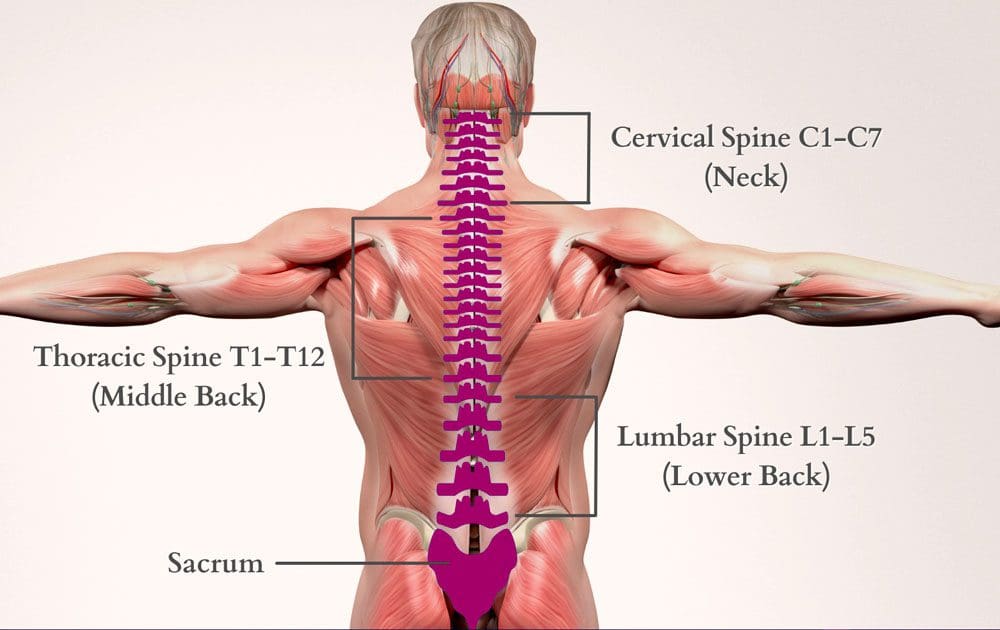
Thoracic Herniated Disc
The 12 thoracic vertebrae between the neck and the lumbar spine make up the largest and least flexible area. The rib cage adds:
- Protection
- Support
- Stabilization of the spine
Symptoms
Herniated discs happen when the soft, gel-like layer of the shock-absorbing intervertebral disc bulges into or leaks through the disc’s tough outer layer. Due to the location, a herniated disc can cause various issues to the middle back, chest wall, and/or abdominal areas around the injured vertebrae. This displacement can cause:
- Inflammation
- Compression to the spinal nerves or spinal cord
- Tingling
- Numbness
- Pain
- Weakness
- If the lower thoracic region is herniated, symptoms can radiate to one or both lower extremities.
Radiculopathy
If the herniation compresses a thoracic spinal nerve, it can cause radiculopathy or pain that radiates down the nerve and out from the spine into the surrounding muscles. The symptoms can present around the rib cage or upper abdominal area. A large disc herniation can compress the spinal cord inside the spinal canal. This is a condition called myelopathy which can cause:
- Numbness
- Tingling
- Weakness in one or both lower extremities
- Sometimes bowel and bladder dysfunction
- In severe cases, paralysis
Causes
Degenerative disc disease and trauma like vehicle collisions or falls are the most common causes of thoracic herniation.
- Individuals between 30 and 50 are more likely to be affected.
- As the body ages, the disc’s soft inner layer loses hydration, making it less effective as a shock absorber.
- The tough outer layer loses elasticity, increasing the risk of disc tears.
Chiropractic Care
- A chiropractor or neurologic physical therapist can personalize a herniated disc exercise treatment plan to reduce pain, improve strength and posture, and increase mobility.
- Therapeutic massage can be useful in managing pain and decreasing inflammation.
- Traction therapy
- Spinal epidural injections can be used with physical therapy to help manage pain and allow the body to heal independently.
Recommendations
- Avoid bending, lifting, reaching, and twisting.
- Apply an ice pack or cold compress for 15- to 20-minute intervals every two hours.
- Sit in chairs with a firm back to support the spine.
- When sleeping, place a small pillow under the head and knees to keep the spine in a neutral position to prevent pressure on the herniated region.
- Avoid too much rest, which can worsen the injury.
- Gentle physical activity will maintain circulation and keep the muscles strong.
Surgery
Most cases of thoracic herniation do not require surgery. Surgery could be recommended if there is intolerable pain, neurological issues, and conservative treatments are not working. A spine specialist can determine if surgery is necessary based on the injury’s size, type, and location. Spinal surgery will remove all or part of the herniated disc compressing a nerve root. Common surgical procedures include:
Herniated Disc Rehabilitation
References
Barrow Neurological Institute. “Herniated Thoracic Disc.” Barrow Neurological Institute, August 3, 2022. https://www.barrowneuro.org/condition/thoracic-disc-herniation/.
Court, C., E. Mansour, and C. Bouthors. “Thoracic Disc Herniation: Surgical Treatment.” Orthopaedics & Traumatology: Surgery & Research 104, no. 1 (2018). https://doi.org/10.1016/j.otsr.2017.04.022.
Dydyk, Alexander M, Ruben Ngnitewe Massa, and Fassil B Mesfin. “Disc Herniation – Statpearls – NCBI Bookshelf.” National Library of Medicine, January 18, 2022. https://www.ncbi.nlm.nih.gov/books/NBK441822/.
Yoon, Wai Weng, and Jonathan Koch. “Herniated Discs: When Is Surgery Necessary?” EFORT Open Reviews 6, no. 6 (2021): 526–30. https://doi.org/10.1302/2058-5241.6.210020.







