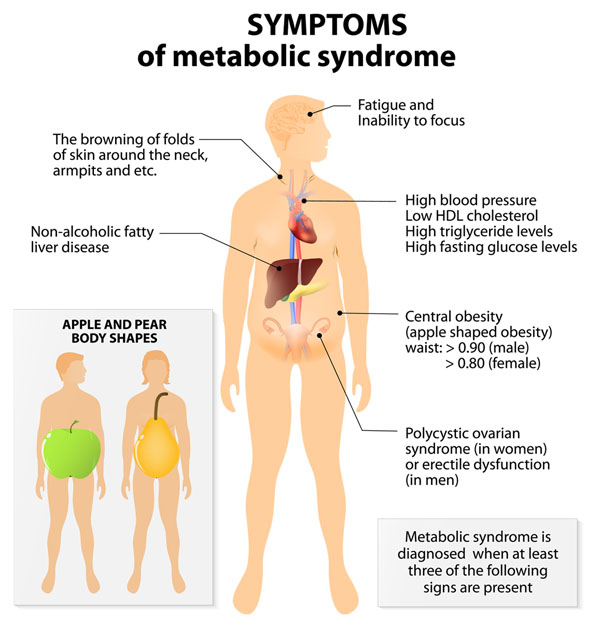
Metabolic syndrome is the term for a group of risk factors like heart disease, diabetes, along with other health issues. The number of individuals dealing with the condition could be as high as 1 in 4. An individual can have one risk factor but most have several in combination. When there are three of these risk factors it becomes metabolic syndrome. The syndrome is a collection of conditions, that culminate in a correlative diagnosis. Risk factors/Symptoms include some or all of the following:
If left untreated and continued poor life choices that include unhealthy diet, lack of physical activity/exercise, and habit formation an individual can die from complications of the syndrome. The condition requires clinical treatment and medical assistance, however, chiropractic has been seen as a viable way to help treat the syndrome.
Causes
The syndrome can have several causes that progress together:
Age the risk goes up as an individual gets older
Genetics and family history
Weight issues
Physical inactivity
Insulin resistance, a condition where the body can't use insulin properly
The resistance can lead to high blood sugar levels
Individuals with metabolic syndrome tend to have excessive blood clotting and inflammation throughout the body. However, research has not shown whether these conditions cause the syndrome or worsen it.
Chiropractic
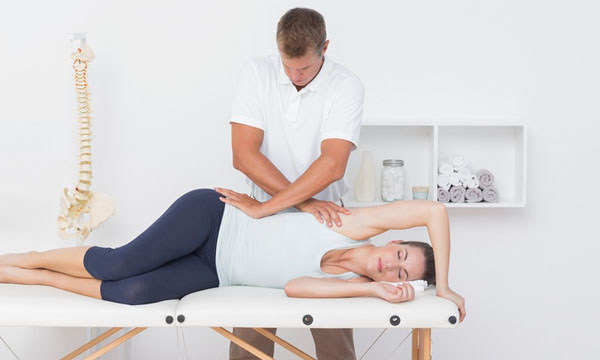
Chiropractic�s role is to stabilize the spine and the body. Too much weight leads to spinal dislocation and vertebral compression issues. This can lead to nerve impingement and disc problems. Even a small subluxation can turn into an extreme condition/s with widespread symptoms. Individuals that are overweight require a spinal realignment in order to gain proper stability. A chiropractor will administer corrective adjustments to generate the body's natural healing process in the affected areas.
Restoring the nerve pathways will promote better blood flow and nutrient delivery to and through the spine. Chiropractic will set the tone for a metabolic syndrome reversal. The second phase of treatment will look at diet and exercise. This serves a dual purpose of introducing proper nutrition to the body, encouraging weight loss, and conditioning the individual's mindset for the lifestyle adjustments/changes. A healthy/balanced spine will help those with metabolic syndrome get a proper foothold on turning their poor lifestyle into a healthy one.
Reversal
The syndrome can be reversed with the right treatment approach. Usually, this begins with weight loss. Once the weight begins to reduce the secondary benefits kick in. This includes a reduction in blood pressure and a decrease in triglycerides. Once an individual's spine is stable, they will then be educated on how to adapt and apply a long-term plan to maintain healthy habits for diet, physical activity, sleep, and stress relief strategies. As chiropractors focus on whole-body wellness, treatment plans will also look at:
Remember, the spine is the root of the body. The key to wellness is total body balance. All-natural chiropractic medicine can help achieve optimal health.
Weight Loss Doctor of Chiropractic
Dr. Alex Jimenez�s Blog Post Disclaimer
The scope of our information is limited to chiropractic, musculoskeletal, physical medicines, wellness, and sensitive health issues and/or functional medicine articles, topics, and discussions. We use functional health & wellness protocols to treat and support care for injuries or disorders of the musculoskeletal system. Our posts, topics, subjects, and insights cover clinical matters, issues, and topics that relate and support directly or indirectly our clinical scope of practice.*
Our office has made a reasonable attempt to provide supportive citations and has identified the relevant research study or studies supporting our posts. We also make copies of supporting research studies available to the board and or the public upon request. We understand that we cover matters that require an additional explanation as to how it may assist in a particular care plan or treatment protocol; therefore, to further discuss the subject matter above, please feel free to ask Dr. Alex Jimenez or contact us at 915-850-0900. The provider(s) Licensed in Texas& New Mexico*
References
Samson, Susan L, and Alan J Garber. �Metabolic syndrome.��Endocrinology and metabolism clinics of North America�vol. 43,1 (2014): 1-23. doi:10.1016/j.ecl.2013.09.009
Chronic pain and a healthy spine can require activity modification. This is so an individual can participate in activities in a way to help prevent pain from presenting. This could include:
Avoiding staying in static positions for too long
Continuous stretches throughout the day
Planning ahead when participating in physical activities that cause pain
Dietary adjustments to reduce inflammation and gain strength/flexibility
Customized exercise program
Health coaching guide
Activity Modification
Chiropractic treatment not only involves correcting spinal alignment but also continuing an individual's health education. The objective is to treat the source, not the symptoms. The goal with activity modification is to change the habit into a positive technique. Rigorous spinal adjustments will only help to a point if the habit continues. Whether there are any underlying conditions or it is an individual's lifestyle, variables like:
These are the primary factors when it comes to spinal health. With recurring spinal problem/s, a chiropractor needs to trace back any kinetic behavior that could have contributed to inflammation causing pain symptoms. Recognizing poor kinetic habits and teaching activity modification are core objectives of chiropractic medicine.
Identification
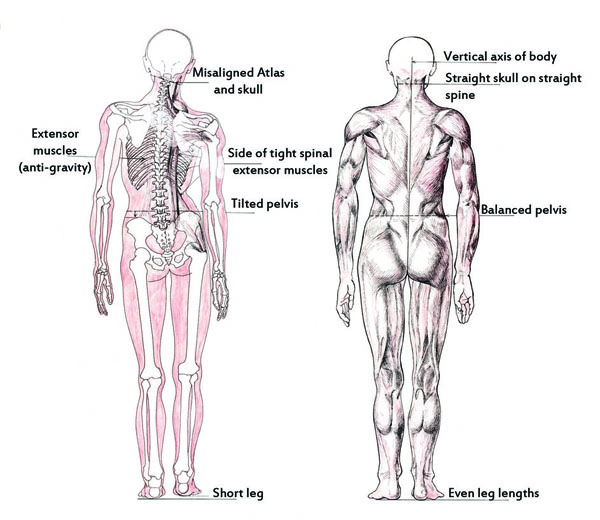
Poor habits need to be identified. Two common are forward head posture and anterior pelvic tilt. These are signs of bad habits that affect spine health. Misaligned biomechanics can be a first clue in understanding why the individual continues to experience pain.
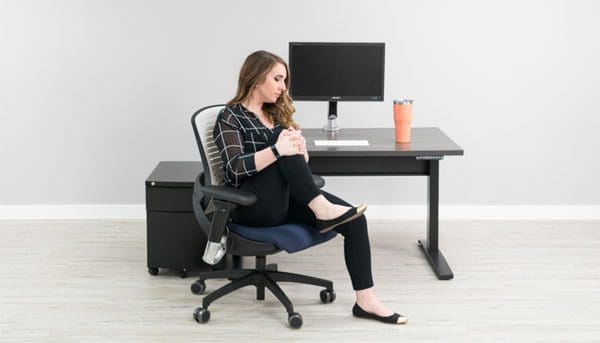
Consistent shifting of the body to not stay in one position for too long is recommended, but when there is recurring pain this is where a chiropractor can show an individual better methods and techniques of shifting to avoid the pain. Poor posture could be traced to sitting at a disproportionate desk with no ergonomic support. And a constant forward head position on the cervical spine, nerves, shoulders, can generate enormous strain.
Modification
Precision adjustments will alleviate the effects of spinal misalignment. But modifications need to become second nature. Chiropractic modification approaches will correct poor posture and body mechanics. A chiropractor will educate an individual to be mindful of certain movements and reinforce proper positioning.
Once an individual is familiar with a healthy way of moving/shifting to restore optimal mechanics, then the individual can learn to engage in other activities with the newfound activity modification tools. This will help break the cycle of chronic spinal misalignments.
Positive Change
Corrective relief and teaching proactive wellness is the primary role of chiropractic medicine. Activity modification can be an individual's first line of defense for changing poor habits responsible for chronic pain and recurring musculoskeletal problems. Educating individuals on how to preserve spinal adjustments and adopting long-term, healthy habits will promote overall wellness.
Chiropractic Care Crossfit Rehabilitation
Dr. Alex Jimenez�s Blog Post Disclaimer
The scope of our information is limited to chiropractic, musculoskeletal, physical medicines, wellness, and sensitive health issues and/or functional medicine articles, topics, and discussions. We use functional health & wellness protocols to treat and support care for injuries or disorders of the musculoskeletal system. Our posts, topics, subjects, and insights cover clinical matters, issues, and topics that relate and support directly or indirectly our clinical scope of practice.*
Our office has made a reasonable attempt to provide supportive citations and has identified the relevant research study or studies supporting our posts. We also make copies of supporting research studies available to the board and or the public upon request. We understand that we cover matters that require an additional explanation as to how it may assist in a particular care plan or treatment protocol; therefore, to further discuss the subject matter above, please feel free to ask Dr. Alex Jimenez or contact us at 915-850-0900. The provider(s) Licensed in Texas& New Mexico*
References
Geneen, Louise J et al. �Physical activity and exercise for chronic pain in adults: an overview of Cochrane Reviews.��The Cochrane database of systematic reviews�vol. 4,4 CD011279. 24 Apr. 2017, doi:10.1002/14651858.CD011279.pub3
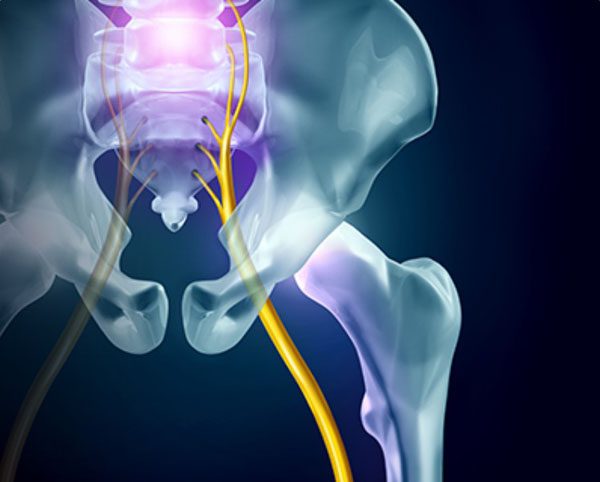
Because sciatica is an inflammatory condition, with the sciatic nerve specifically being the target, sciatica fitness and exercise is one of the first recommendations from chiropractors. Sciatica is a series of symptoms from a variety of underlying medical causes and condition/s. This could be:
Too much sitting, which most of us are doing these days
Work injuries
Automobile accident injuries
Sports injuries
Awkward movements/motions that pulled the sciatic nerve in the wrong direction
A correct diagnosis of the cause is essential to help the chiropractor formulate a customized optimal treatment plan. Individuals can experience the same symptoms across the board, however, despite the similarities, sciatica requires a careful, customized precision approach to treatment. An ideal treatment plan often requires a very specific exercise regimen and chiropractic adjustment schedule. Therefore, there is no one-size-fits-all solution.
Sciatica can be treated effectively with the right chiropractic approach with a high success rate for alleviated symptoms. Effectively treating sciatica requires direct treatment to the specific cause, rather than using techniques that only mask the pain. Example: If a herniated disc is the root cause, sciatica can be relieved by reducing the bulge of the disc, thus bringing down the irritation/inflammation and compression of the sciatic nerve.
�
Sciatica treatment/s depends on the cause
A stretching regimen for sciatica caused by a low back herniated disc will be different than stretches for treating low back spinal stenosis. Understanding how sciatica is the key to unlocking a treatment plan that will work to minimize pain and inflammation.
Exercise Can Help
Exercising and sciatica fitness will help relieve sciatic pain in various ways. These include:
Improves the range of motion, which reduces stress on the spine
Higher activity levels generate adrenaline and endorphins, to help combat the pain
Specific exercises/stretches need to be done that target the sciatic nerve and the root cause. Working with a chiropractor will bring an understanding of specifically how the body should be worked out, the intensity of the workout, and where on the body the focus should be.
For example, if the nerve is irritated from a pelvic tilt and low back compression, a chiropractor could recommend a minimal cardio workout with combined strength exercises for the hamstrings, glutes, and lower body. A strength and conditioning regimen will increase stability in the lower body, prevent pelvic tilt, and reinforce the chiropractic adjustments/alignment.
Chiropractic Benefits
However, sciatica fitness and exercise on its own is not the complete solution for dealing with chronic sciatic pain. Chiropractic adjustments along with chiropractic prevention are necessary to restore the stability and integrity of the spine. When used in combination with exercise, the re-alignment and corrections can take effect sooner and maintain optimal spinal health. When individuals condition and strengthen their body, The musculature that supports the spine gets massive reinforcement. This minimizes the chances of a reoccurring pelvic tilt from weakened core muscles. The long-term effects of sciatica fitness/exercise and chiropractic spinal/hip manipulation work together to form a perfect combination.
�
Sciatica Fitness
For truly long-term effects of pain relief and a better quality of life, a chiropractic treatment plan is highly recommended. Specific targeted adjustments and re-alignment with a sciatica fitness program will promote optimal health and wellness.
�
Whole Body Wellness Foot Orthotics
Dr. Alex Jimenez�s Blog Post Disclaimer
The scope of our information is limited to chiropractic, musculoskeletal, physical medicines, wellness, and sensitive health issues and/or functional medicine articles, topics, and discussions. We use functional health & wellness protocols to treat and support care for injuries or disorders of the musculoskeletal system. Our posts, topics, subjects, and insights cover clinical matters, issues, and topics that relate and support directly or indirectly our clinical scope of practice.*
Our office has made a reasonable attempt to provide supportive citations and has identified the relevant research study or studies supporting our posts. We also make copies of supporting research studies available to the board and or the public upon request. We understand that we cover matters that require an additional explanation as to how it may assist in a particular care plan or treatment protocol; therefore, to further discuss the subject matter above, please feel free to ask Dr. Alex Jimenez or contact us at 915-850-0900. The provider(s) Licensed in Texas& New Mexico*
References
Beavers, Kristen M et al. �Effect of exercise training on chronic inflammation.��Clinica chimica acta; international journal of clinical chemistry�vol. 411,11-12 (2010): 785-93. doi:10.1016/j.cca.2010.02.069
Coulombe, Brian J et al. �Core Stability Exercise Versus General Exercise for Chronic Low Back Pain.��Journal of athletic training�vol. 52,1 (2017): 71-72. doi:10.4085/1062-6050-51.11.16
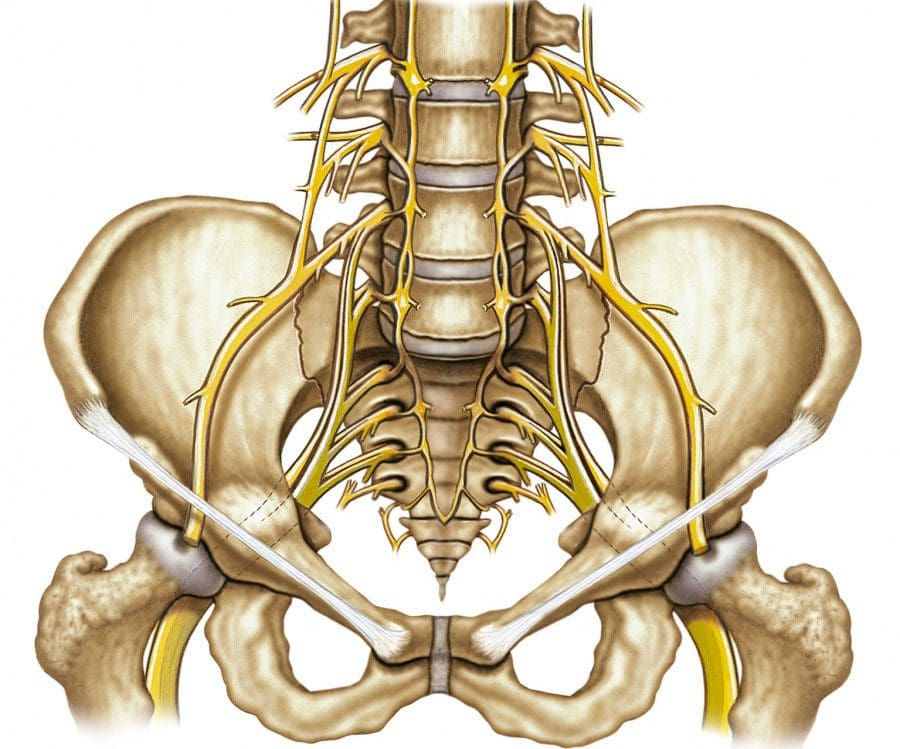
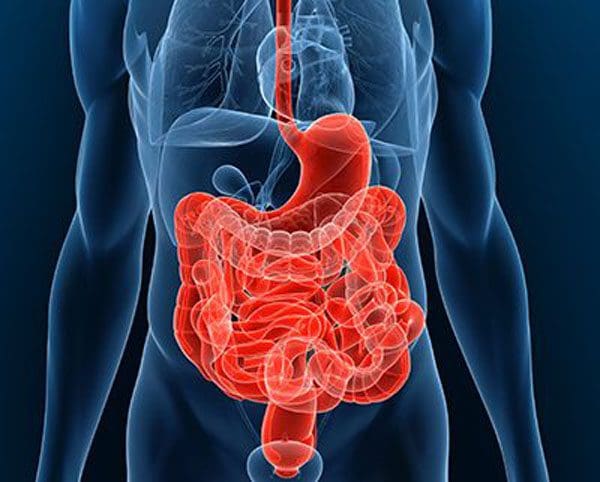
Stomach ache, acid reflux, gas, and other symptoms of gastric distress can be linked to spinal issues and misalignment. The spinal cord sends nerve signals to all parts of the body, specifically those affecting digestion functions. The lumbar spine/lower back includes the sacrum which is vital in terms of nerve function.
Various spinal cord issues could cause problems with the rest of the body. These include:
Disc compression
Herniated discs
Strained ligaments
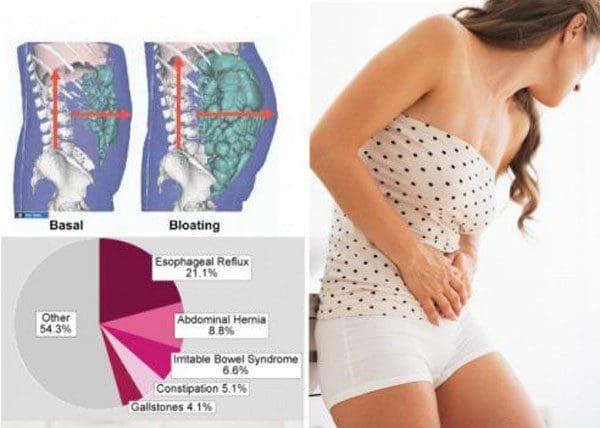
Misalignments/problems in the lower back can result in gastric symptoms like:
Constipation
Diarrhea
Bloating
Gas
Bladder malfunction
This is because this area of the spine includes sympathetic and parasympathetic nerves that are connected to the digestive system. Any problem with these systems can result in miscommunicated signals to the rest of the body. The wide-range effects that compressed nerves can have on the body, as well as, how the spine is affected by the obstruction of these nerves, can be detrimental.
Chiropractic adjustments can help alleviate and release the gastric distress are able to correlate their spine�s role in gut health. This along with an education on the central nervous system. A chiropractic approach can help as a long-term solution to gastric distress.
The Nerves
Every organ in the body functions by sending and receiving electrical impulses, transmitted through the nerves. These impulses direct the function of organs. If blocked or the signals are improperly/partially sent/received, various health issues can begin to present. For the gut, proper nerve signal transmission at full capacity is crucial. The stomach needs to be able to properly digest food while absorbing nutrients and preparing for waste removal. This is where gastric distress conditions begin like:
Irritable bowel syndrome - IBS
Gastroesophageal reflux disease - GERD
Abdominal pain syndrome - APS
Nerve conditions worsen with time if the health and function of the affected nerves are not restored. This could mean severe chronic symptoms and the possibility of permanent nerve damage.
Nerve Blockage
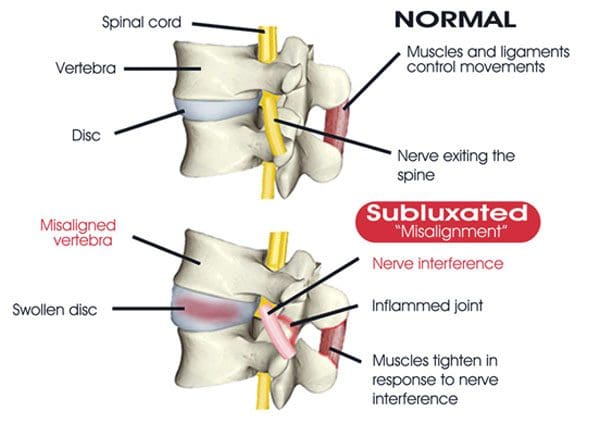
Messed up nerve signals are usually pinched, blocked, or displaced. Most nerve bundles exit through the spine and are usually where a chiropractic exam will start. Through palpitation of the spine along with diagnostic imaging, a chiropractor can track down exactly where the nerve blockage/s are taking place.
The lower back and upper back are common areas to examine. This is because a majority of abdominal organ nerves branch out from these spinal segments. If spinal subluxations are present, more than likely they are affecting the function of these organs. Chiropractic will adjust the spine and reset/realign the spine to its proper form, allowing for proper blood circulation. Compressed nerves can also cause inflammation that could require more complex treatment.
Listening to the Body
If the gut is presenting with aches, and bloating after every meal, it could be indicating that something is wrong or off. Individuals cannot feel blocked nerve signals, but the gut can. Listen to it when it is alerting an issue or problem. We want to educate our patients on gut and spinal health. Chronic gastric distress can be corrected with chiropractic.
Chiropractic Pain Relief
Dr. Alex Jimenez�s Blog Post Disclaimer
The scope of our information is limited to chiropractic, musculoskeletal, physical medicines, wellness, and sensitive health issues and/or functional medicine articles, topics, and discussions. We use functional health & wellness protocols to treat and support care for injuries or disorders of the musculoskeletal system. Our posts, topics, subjects, and insights cover clinical matters, issues, and topics that relate and support directly or indirectly our clinical scope of practice.*
Our office has made a reasonable attempt to provide supportive citations and has identified the relevant research study or studies supporting our posts. We also make copies of supporting research studies available to the board and or the public upon request. We understand that we cover matters that require an additional explanation as to how it may assist in a particular care plan or treatment protocol; therefore, to further discuss the subject matter above, please feel free to ask Dr. Alex Jimenez or contact us at 915-850-0900. The provider(s) Licensed in Texas& New Mexico*
References
Spiegel, Brennan M R et al. �Understanding gastrointestinal distress: a framework for clinical practice.��The American journal of gastroenterology�vol. 106,3 (2011): 380-5. doi:10.1038/ajg.2010.383
Kehl, Amy S et al. �Relationship between the gut and the spine: a pilot study of first-degree relatives of patients with ankylosing spondylitis.��RMD open�vol. 3,2 e000437. 16 Aug. 2017, doi:10.1136/rmdopen-2017-000437
Most individuals go about their lives without thinking about poor posture and spinal misalignment, not to mention the spinal health problems/conditions that are associated with misaligned vertebrae. Most spinal misalignments come on as a result of:
Poor posture habits
Unhealthy diet
Destructive lifestyle choices
Sudden misalignments caused by accident/s or injury/s
Sudden misalignments can be associated with a direct cause that an individual can recognize increased symptoms and injury. It�s the long-term spinal misalignment that can become dangerous if left untreated and out of alignment. This is when it is time to see a chiropractor for an immediate spinal realignment.
Body Posture Mechanics
Poor posture along with poor body mechanics contributes to spinal misalignment. This creates unnecessary and consistent pressure on the:
Muscles
Ligaments
Joints
Discs
The pressure also causes a stretching of the nerves in the neck and low back. These nerves are responsible for transmitting, muscle expansion/contraction signals, vital information, and energy to the body's organs. Any nerve interference will diminish the energy/blood flow to the limbs and organs. This can lead to disease and other major health complications like:
Chronic pain
Decreased mobility
Joint stiffness
Slouched posture
Reduced range of motion
Discomfort when sitting, standing, and lying down
Permanent joint/bone deformity/s
Broken bones, specifically in the spine
Most individuals do not recognize the gradual or long-term health problems linked to the spinal misalignment. Often the signs and symptoms are very subtle, so do not raise a cause for concern. The most direct symptoms of poor posture and spinal misalignment include:
Sore/stiff neck or back
Low energy
Tiredness/fatigue
Headaches
Back muscle spasms
Joint pain
Numbness
Tingling
Altered sensations
In addition to the symptoms, individuals should realize that underlying health conditions could also be linked to poor posture and spinal misalignment. If any of these symptoms are presenting see a chiropractor for an examination and proper diagnosis. These symptoms can be masked with pain killers, mattresses, or caffeinated drinks. However, these will not realign the spine to its proper form.
Chiropractic Lower Back Treatment
Dr. Alex Jimenez�s Blog Post Disclaimer
The scope of our information is limited to chiropractic, musculoskeletal, physical medicines, wellness, and sensitive health issues and/or functional medicine articles, topics, and discussions. We use functional health & wellness protocols to treat and support care for injuries or disorders of the musculoskeletal system. Our posts, topics, subjects, and insights cover clinical matters, issues, and topics that relate and support directly or indirectly our clinical scope of practice.*
Our office has made a reasonable attempt to provide supportive citations and has identified the relevant research study or studies supporting our posts. We also make copies of supporting research studies available to the board and or the public upon request. We understand that we cover matters that require an additional explanation as to how it may assist in a particular care plan or treatment protocol; therefore, to further discuss the subject matter above, please feel free to ask Dr. Alex Jimenez or contact us at 915-850-0900. The provider(s) Licensed in Texas& New Mexico*
References
Veintemillas Ar�iz, M T et al. �Changes in spinal alignment.� �Alteraciones de la alineaci�n vertebral.��Radiologia�vol. 58 Suppl 1 (2016): 115-27. doi:10.1016/j.rx.2016.01.007
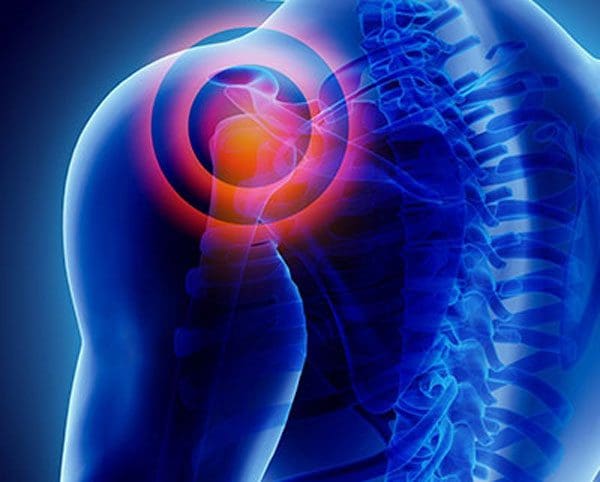
Shoulder and arm pain can be debilitating, especially when there is no obvious cause or injury that needs to be treated. A rare condition known as brachial neuritiscan cause spasms along with pain down the arm, followed by numbness, tingling, and weakness. If not diagnosed and treated early, the symptoms can worsen with time. The pain experienced can be described as sharp, searing, and shooting. Brachial neuritis can be intense and disabling when it presents for hours and even days.
Utilizing a chiropractic approach, shoulder and spinal adjustments can provide relief and a faster healing/recovery from the inflammatory condition. Individuals experiencing shoulder, arm, and possible hand pain should consult with a chiropractor about a potential home and clinic treatment plan to improve their condition.
Medical History and Examination
The process of diagnosing brachial neuritis involves an individual's medical history and physical exam. More complicated cases could require imaging studies and electrodiagnostic tests. The first steps in diagnosing the cause of shoulder and/or arm pain include:
Medical history
Information will be collected on an individual's:
Medical history
Family history
Underlying conditions
Recent illnesses or injuries
Lifestyle habits
How and when symptoms began
Current symptoms
Physical examination
A chiropractor will palpate or inspect by feeling the neck, shoulder, and arm for irregularities. Then they will examine the range of motion, strength, and reflexes. If the individual's history and physical exam suggest that the cause could be brachial neuritis or other condition involving the nerves, imaging studies, and diagnostic tests could be required to evaluate further.
Symptoms of Brachial Neuritis
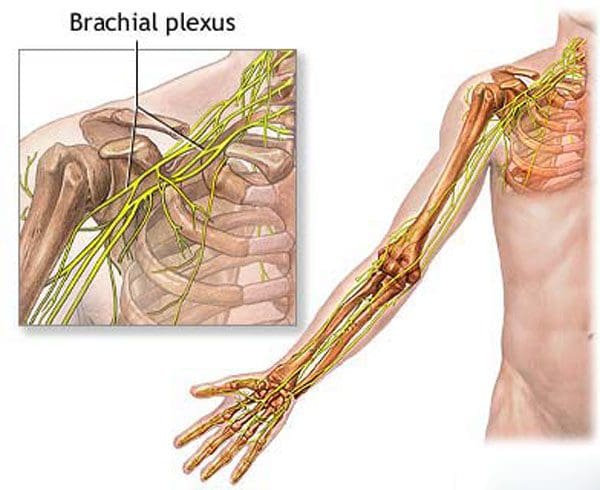
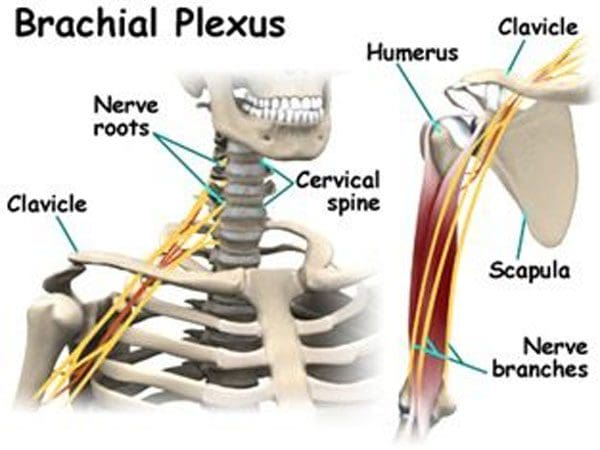
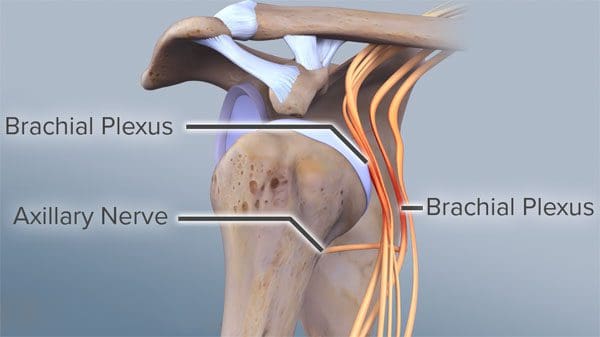
The condition is also known as Parsonage-Turner Syndrome. It affects the brachial plexus, a set of nerves that run from the neck and upper back to the shoulders. The condition usually affects only one side of the body and presents randomly.
What happens is the nerves become inflamed.
Inflammation can be triggered through an autoimmune response. This is often the result of an infection, surgical procedure, or other internal stressors. The inflammation can lead to severe debilitating shoulder pain over a few days.
This also leads to long-term numbness, weakness in the shoulder and arm.
The pain becomes worse with movement.
Typically, the pain goes away on its own within a few days.
Numbness, weakness, or tingling in the shoulder or arm continues.
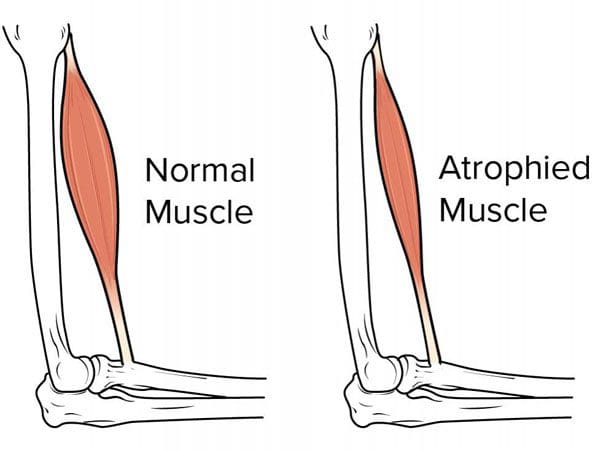
Over time the symptoms begin to worsen and, if left untreated, could lead to muscular atrophy of the arm.
The pain and weakness can make it difficult to move the arm, leading to decreased strength.
Symptoms can last up to a year or more.
This is why individuals have to find ways to strengthen their shoulder/arm despite the condition.
Chiropractic Relief
Treatment requires a pain management program until the pain subsides. Once the pain is manageable, chiropractic, physical therapy, exercises, and stretches could improve mobility and strength. Chiropractic can provide relief and tools necessary to prevent the worsening of symptoms. Chiropractic helps to:
Reduces pain
Improves mobility
Restores strength
Chiropractic manipulation will ensure that the nerves near the brachial plexus do not become compressed, but if they are, then chiropractic can be utilized to decompress/release them. In addition, trigger point release and massage can help alleviate the tension in the surrounding tissues of the arm and shoulder.
A chiropractor will educate the individuals on effective pain management techniques for home, including ice/heat therapy and stretching exercises. These techniques will help restore the proper alignment and flow of the spinal vertebrae, nerves, and muscle tissues, allowing the body to heal quickly, naturally, and more effectively.
Chiropractic Shoulder Pain Treatment
References
Feinberg, Joseph H, and Jeffrey Radecki. Parsonage-turner syndrome. HSS journal: the musculoskeletal journal of Hospital for Special Surgery vol. 6,2 (2010): 199-205. doi:10.1007/s11420-010-9176-x
Seasonal Affective Disorder is a form of depression that has to do with the changing of the seasons, specifically when fall begins. It affects around 10 million Americans during the fall and winter seasons. Back pain can be a symptom of the disorder. For most individuals, the condition follows a pattern:
These are typical symptoms for many dealing with the condition. The individual can experience aches and pains throughout the body, but especially the back. Recent studies have shown how various forms of depression, like Seasonal Affective Disorder, can present with pain, specifically back/spinal pain. Many individuals play it off as the blues, but research has found, depression can have a much more significant impact on an individual's quality of life. The exact cause is still unknown. But research is finding a connection related to the level of sunlight an individual receives throughout the day.
Research has shown there could be a biochemical imbalance in the brain when there is less daylight during fall and winter. As the seasons change from summer to fall individuals can experience a shift in circadian rhythms that can cause them to disrupt their regular daily routine. However, Seasonal Affective Disorder is more common for individuals living where the daylight lessens and has been shown to affect women more than men and young adults.
Depression and Back Pain Connection
Depression can present with pain symptoms and the pain can enhance the depression. Headaches, Body aches, and especially backaches are common symptoms of depression. Research has shown that individuals with severe depression can actually feel a more intense level of pain.
Physical symptomslike back pain or headaches can be the only or the beginning symptom/s of seasonal affective depression. As research continues to grow as to how the nervous system interacts with the body, pain symptoms have been found to be connected to biological mechanisms connected with stress, anxiety, and depression.
Living a sedentary lifestyle, with little or no physical activity and regular exercise can be another cause for Seasonal Affective Disorder. Depression itself can cause fatigue that restrains individuals from exercising and working the core muscles for optimal spinal strength and health.
This added stress on the spine's discs, joints, and ligaments, makes the body more susceptible to low back pain, muscle strains, illness, and injuries. Pain can wear an individual down impacting mood and overall health.
Symptoms
The difference between Seasonal Affective Disorder and chronic depression is that Seasonal Affective Disorder is limited to the same time of the year during the time of less light, and winter months. Symptoms of Seasonal Affective Disorder can be the same as those associated with depression. They are:
Feeling Low/Depressed
Weight gain
Increased appetite
Craving sugar and carbohydrates
Sleeping all-day
Consistent drowsiness
Hopelessness
Loss of interest in enjoyed activities
Symptoms can also be related to low levels of Vitamin D, which is associated with anxiety and depression for individuals with fibromyalgia. Seasonal Affective Disorder can be related to chronic pain conditions the way depression can. Some individuals with chronic fatigue syndrome can also present with symptoms of Seasonal Affective Disorder.
Treatment
Diagnosis for Seasonal Affective Disorder requires an individual to experience at least two years of symptoms that become worse at a specific time of the year. And the depressive episodes have to significantly be worse than the non-seasonal episodes of depression. There are four types of treatments, that can be used individually or in combination. They are:
Cognitive-behavioral therapy/CBT is a form of psychotherapy that is effective for the disorder, as well as other conditions. It relies on techniques that identify negative thoughts and work on ways to not dwell on the negative and focus more on positive things and thoughts.
Lightbox Therapy
Diminished sunlight when fall and winter arrive can be replaced with regular exposure to a bright, artificial lightbox. Individuals sit or stand in front of the lightbox when they get up on a daily basis. This is done when fall begins and goes on until spring. The lightbox filters out ultraviolet rays and requires around 20 to 60 minutes of exposure to 10,000 lux of cool-white fluorescent light.
Vitamin D
Low levels of vitamin D were found in individuals with Seasonal Affective Disorder. Talk to a doctor about the proper level of vitamin D that should be taken through supplements.
The Pain and Backaches
Understanding how pain and depression are interconnected treating both conditions as part of an integrative treatment plan can include:
A light aerobic exercise program that stimulates serotonin levels and releases endorphins to relieve depression and pain.
Low-dose antidepressants can reduce depression symptoms and back pain. They work to inhibit the reuptake of neurotransmitters like serotonin and norepinephrine that is associated with a person�s mood and the way they perceive pain.
What Works
Everyone is unique, which means that different treatment plans and combinations of treatment plans may have to be tried out before finding the optimal one. A significant factor is not settling with the pain and just accepting it. Healing can be a unique and complex experience. The objective is for the individual and doctor to work collaboratively.
Depression and Chronic Pain
Dr. Alex Jimenez�s Blog Post Disclaimer
The scope of our information is limited to chiropractic, musculoskeletal, physical medicines, wellness, and sensitive health issues and/or functional medicine articles, topics, and discussions. We use functional health & wellness protocols to treat and support care for injuries or disorders of the musculoskeletal system. Our posts, topics, subjects, and insights cover clinical matters, issues, and topics that relate and support directly or indirectly our clinical scope of practice.*
Our office has made a reasonable attempt to provide supportive citations and has identified the relevant research study or studies supporting our posts. We also make copies of supporting research studies available to the board and or the public upon request. We understand that we cover matters that require an additional explanation as to how it may assist in a particular care plan or treatment protocol; therefore, to further discuss the subject matter above, please feel free to ask Dr. Alex Jimenez or contact us at 915-850-0900. The provider(s) Licensed in Texas& New Mexico*
References
Robertson, David et al. �Associations between low back pain and depression and somatization in a Canadian emerging adult population.��The Journal of the Canadian Chiropractic Association�vol. 61,2 (2017): 96-105.
IFM's Find A Practitioner tool is the largest referral network in Functional Medicine, created to help patients locate Functional Medicine practitioners anywhere in the world. IFM Certified Practitioners are listed first in the search results, given their extensive education in Functional Medicine