For individuals suffering from back pain, can knowing basic chiropractic terminology help in understanding diagnosis and treatment plan development?
Chiropractic Terminology
The chiropractic principle is that a properly aligned spine positively affects an individual’s overall health. One of the main aspects of chiropractic care is applying calculated force to the spinal joints to restore correct spinal alignment. Chiropractic terminology describes specific types of techniques and care.
General Subluxation
A subluxation can mean different things for various doctors. In general, a subluxation is a significant structural displacement or an incomplete or partial dislocation of a joint or organ.
To medical doctors, a subluxation refers to a partial dislocation of a vertebrae.
This is a serious condition, usually brought on by trauma, that can result in a spinal cord injury, paralysis, and/or death.
X-rays show a conventional subluxation as an obvious disconnect between the vertebrae.
Chiropractic Subluxation
The chiropractic interpretation is more subtle and refers to the misalignment of adjacent spinal vertebrae.
Subluxation in this context refers to position changes in the joints and soft tissues of the spine.
Vertebral misalignment is believed to lead to pain and abnormal intervertebral joint motion.
This difference between the serious subluxation medical condition and the chiropractic version may cause individuals to dismiss seeking back pain treatments.
Motion Segment
Chiropractors and surgeons use it as a technical term.
Motion segment refers to two adjacent vertebrae and the intervertebral disc between them.
This is the area chiropractors assess and adjust.
Adjustment
The chiropractor performs a spinal manual adjustment to realign joint subluxations.
Adjustments involve applying force to motion segments to bring them back into a centered alignment.
The goal for adjustments and realigning the vertebrae includes:
Spinal manipulation is a technique used by chiropractors to provide relief for musculoskeletal pain related to the back and neck. Manipulation provides mild to moderate relief and works as well as some conventional treatments like pain-relieving medications. (Sidney M. Rubinstein et al., 2012)
Spinal manipulation is divided into grades of mobilization.
Depending on their training, practitioners of various medical disciplines may be licensed to perform grade 1 to grade 4 mobilizations.
Only physical therapists, osteopathic physicians, and chiropractors are licensed to perform grade 5 mobilizations, which are high-velocity thrust techniques.
Most massage therapists, athletic trainers, and personal trainers are not licensed to perform spinal manipulations.
Based on a systematic review, the effectiveness of these treatments found that there is quality evidence that manipulation and mobilization can help reduce pain and improve function for individuals with chronic low back pain, with manipulation appearing to produce a more profound effect than mobilization. Both therapies are safe, with multimodal treatments potentially being an effective option. (Ian D. Coulter et al., 2018)
As with any treatment, results vary from person to person and with different chiropractors. There are also potential risks with spinal manipulation. Though rare, cervical, carotid, and vertebral artery dissections have occurred with cervical/neck manipulation. (Kelly A. Kennell et al., 2017) Individuals with osteoporosis may be advised to avoid chiropractic adjustments or manipulation because of the increased risk of injury. (James M. Whedon et al., 2015)
Many individuals choose chiropractic treatment for a variety of conditions. Understanding chiropractic terminology and reasoning allows individuals to ask questions as they discuss their symptoms to develop a personalized treatment plan and restore function and wellness.
What Causes Disc Herniation?
References
Henderson C. N. (2012). The basis for spinal manipulation: chiropractic perspective of indications and theory. Journal of electromyography and kinesiology : official journal of the International Society of Electrophysiological Kinesiology, 22(5), 632–642. https://doi.org/10.1016/j.jelekin.2012.03.008
Blanchette, M. A., Stochkendahl, M. J., Borges Da Silva, R., Boruff, J., Harrison, P., & Bussières, A. (2016). Effectiveness and Economic Evaluation of Chiropractic Care for the Treatment of Low Back Pain: A Systematic Review of Pragmatic Studies. PloS one, 11(8), e0160037. https://doi.org/10.1371/journal.pone.0160037
Rubinstein, S. M., Terwee, C. B., Assendelft, W. J., de Boer, M. R., & van Tulder, M. W. (2012). Spinal manipulative therapy for acute low-back pain. The Cochrane database of systematic reviews, 2012(9), CD008880. https://doi.org/10.1002/14651858.CD008880.pub2
Coulter, I. D., Crawford, C., Hurwitz, E. L., Vernon, H., Khorsan, R., Suttorp Booth, M., & Herman, P. M. (2018). Manipulation and mobilization for treating chronic low back pain: a systematic review and meta-analysis. The spine journal : official journal of the North American Spine Society, 18(5), 866–879. https://doi.org/10.1016/j.spinee.2018.01.013
Kennell, K. A., Daghfal, M. M., Patel, S. G., DeSanto, J. R., Waterman, G. S., & Bertino, R. E. (2017). Cervical artery dissection related to chiropractic manipulation: One institution’s experience. The Journal of family practice, 66(9), 556–562.
Whedon, J. M., Mackenzie, T. A., Phillips, R. B., & Lurie, J. D. (2015). Risk of traumatic injury associated with chiropractic spinal manipulation in Medicare Part B beneficiaries aged 66 to 99 years. Spine, 40(4), 264–270. https://doi.org/10.1097/BRS.0000000000000725
The world of health and fitness has evolved with all kinds of technical jargon and terminology that can require a guide to get a handle on things. It can become confusing and terms like Lean Body Mass and Lean muscle can get mixed up. Body composition analysis allows an individual to understand their body in a much clearer way with insight into the body’s health. Here we break down this technical terminology to get a basic understanding of how it is relevant to the body’s health. Think of this as a combination glossary, and action guide. �
�
Guide to Basic Body Composition
Percent Body Fat Body/Fat Percentage
Percent Body Fat is a reflection of how much of the body’s weight is made up of fat.
It is calculated by dividing the weight of body fat mass by total weight.
It helps to track progress whether trying to lose weight or gain muscle.
�
Takeaway
This percentage can be applied to set percent body fat ranges.
The healthy ranges are around 10-20% percent body fat for men and 18-28% for women.
�
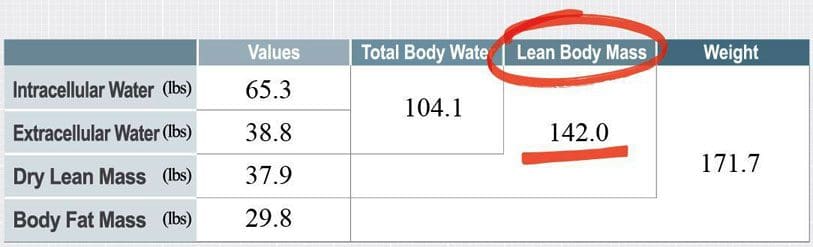
Lean Body Mass/Fat-Free Mass Guide
Lean Body Mass is sometimes used interchangeably with Fat-Free Mass.
Lean Body Mass is the weight of everything in the body that is not fat.
This includes muscles, organs, bones, and body water.
Lean Body Mass plus Body Fat Mass make up entire body weight.
If the Lean Body Mass value is in pounds subtract this number from total body weight to get an approximation of Body Fat Mass.
Divide this number by body weight, results are percent body fat.
Lean Body Mass is closely related to the total number of calories the body needs every day.
The Lean Body Massforms the core of the body’s metabolism, and this number can be used to help determine unique dietary needs.
No more basing nutrition off the 2,000-calorie diet. This is a poor one-size-fits-all approach to food intake.
�
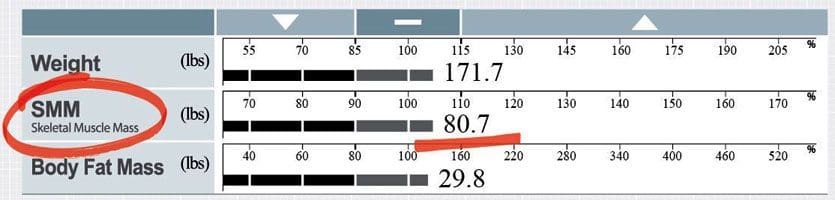
Skeletal Muscle Mass Guide
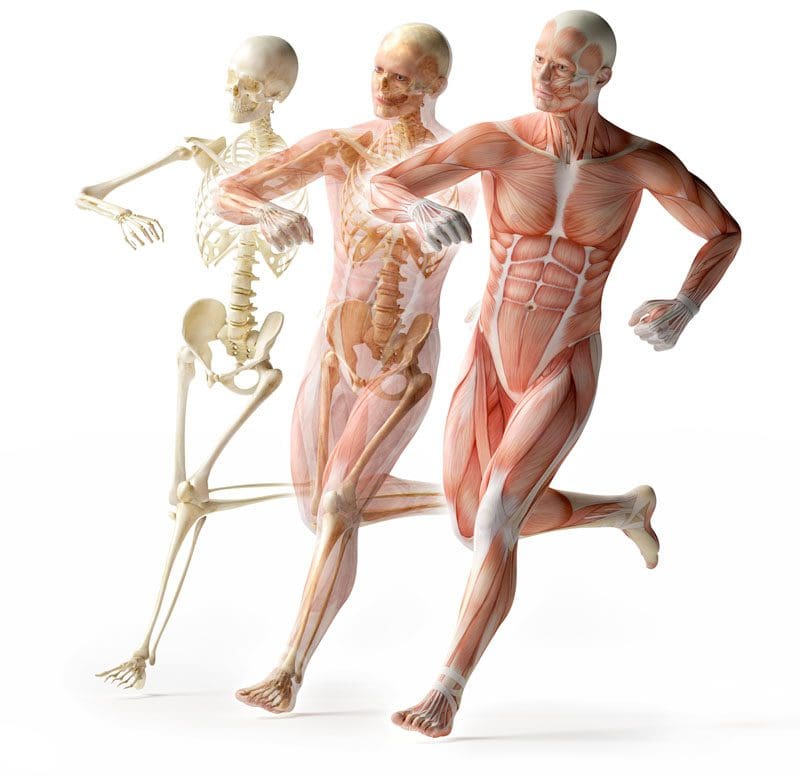
Skeletal muscle is one of four major muscle typesand governs all the movements that are consciously controlled. Everything from texting to deadlifting a barbell.
It is the muscle group that grows/builds when exercising.
Increased Skeletal Muscle Mass translates into increased strength.
When trying to build up the body and grow in size, this is the value to track and watch increase over time.
�
However, muscle is not just for strength.
Muscle is made up primarily of protein and can act as protein storage.
When the body is under severe stress like a traumatic injury, the recovery process is triggered and needs added protein, up to four times the amount.
When the body is not able to get the proper amount of protein from a normal diet, the body begins to get what it needs from the protein storage/muscles.
�
Basal Metabolic Rate/BMR
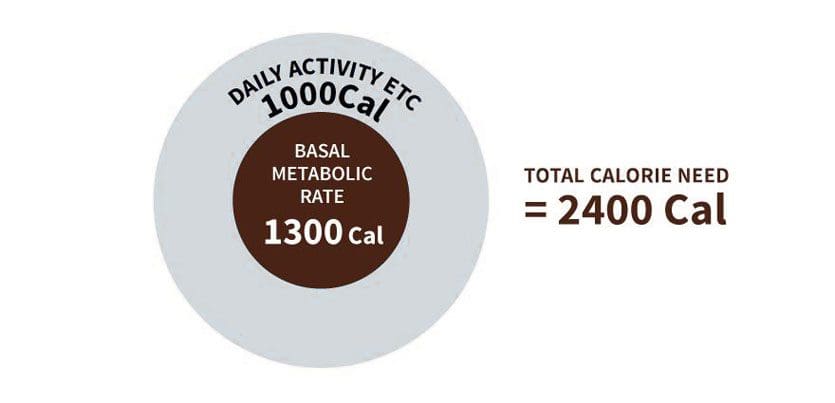
The Basal Metabolic Rate, or BMR, is the number of calories that the body needs to maintain Lean Body Mass. It is a significant component of overall metabolism.
An individual with more Lean Body Mass will have a higher Basal Metabolic Rate.
This is the reason why a 250-pound athlete needs to eat more than a 150-pound sedentary adult. Because the athlete has more Lean Body Mass.
�
BMR can help make a healthy diet plan designed for fat loss or muscle gain by helping understand how much energy/calories from food the body needs.
Using the TDEE as a baseline an individual can develop a nutritional plan based on body composition goals.
�
Body Water Guide
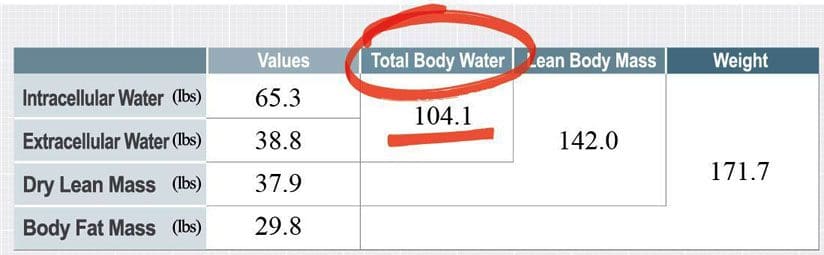
Body Water includes all the water in the body. This means everything from:
The water in the blood
Water in the organs
The water inside the bones
Body water can be subdivided into two types:
Intracellular
Extracellular
Intracellular means inside the cells and includes the water in the organs, muscles, composing 2/3 of total body water.
The remaining 1/3 is extracellular outside the cells and includes the water in the blood.
�
Takeaway
When the body is generally healthy it maintains a healthy balance of intracellular to extracellular water with a ratio of around 3:2.
When the balance becomes unbalanced or falls apart water monitoring becomes important.
For example, individuals with severe health problems, like kidney ailments/failure, are unable to rid the body of extracellular water. This causes a buildup of water and requires removal through procedures like dialysis.
�
Dry Lean Mass
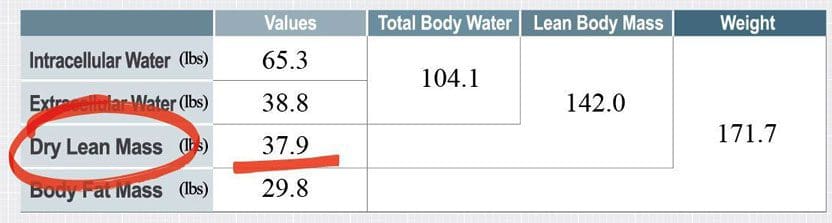
Lean Body Mass includes everything that�s not body fat and includes body water.
When all the water has been taken out what remains is known as Dry Lean Mass.
�
Lean Body Mass – Body Water = Dry Lean Mass
This amounts to the protein content of the muscles and the mineral content of the bones.
Most Dry Lean Mass will be found in these areas.
�
Takeaway
Water monitoring can help track real, physical changes in the body.
Lean Body Mass contains body water, and body water levels can be influenced by different factors like a recent workout or being low on carbohydrates.
Changes in body water are considered technical changes in Lean Body Mass.
When building muscle, the body is actually building new physical protein stores and reflects in Dry Lean Mass.
An increase in Lean Body Mass can signal muscle growth, or not.
However, an increase in Dry Lean Mass is a more favorable indicator that there is muscle growth.
�
Visceral Fat
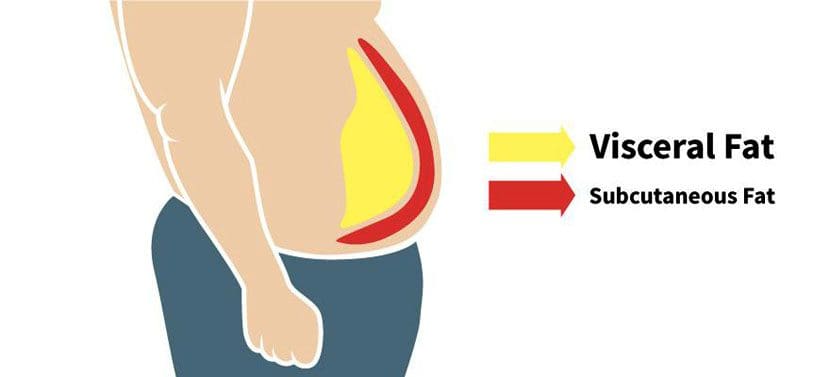
Two major categories of body fat.
Subcutaneous fat is the fat under the skin and is the type that can be seen.
The second type is called visceral fat.
This fat collects inside the abdomen and wraps around the internal organs.
�
Takeaway
Just because it cannot be seen does not mean it is not there.
If it is there it is something definitely worth knowing about.
This is because visceral fat is not just extra pounds but an active organ that secretes harmful hormones into the body that triggers never-ending inflammation.
The more visceral fat, the greater risk of inflammation.
Inflammation over time places added stress on the heart that can lead to cardiovascular problems.
�
Get Tested Today
Hopefully, this guide has clarified some of the common body composition terminology. This is a basic overview designed to provide essential information about body composition and how it applies. A general understanding can help in making healthy lifestyle choices, like deciding to lose weight or dietary adjustments.
Body Health
Dr. Alex Jimenez�s Blog Post Disclaimer
The scope of our information is limited to chiropractic, musculoskeletal, physical medicines, wellness, and sensitive health issues and/or functional medicine articles, topics, and discussions. We use functional health & wellness protocols to treat and support care for injuries or disorders of the musculoskeletal system. Our posts, topics, subjects, and insights cover clinical matters, issues, and topics that relate and support directly or indirectly our clinical scope of practice.*
Our office has made a reasonable attempt to provide supportive citations and has identified the relevant research study or studies supporting our posts. We also make copies of supporting research studies available to the board and or the public upon request. We understand that we cover matters that require an additional explanation as to how it may assist in a particular care plan or treatment protocol; therefore, to further discuss the subject matter above, please feel free to ask Dr. Alex Jimenez or contact us at 915-850-0900. The provider(s) Licensed in Texas& New Mexico*
References
Westerterp, Klaas R. �Exercise, energy balance, and body composition.� European journal of clinical nutrition�vol. 72,9 (2018): 1246-1250. doi:10.1038/s41430-018-0180-4
Borga, Magnus et al. �Advanced body composition assessment: from body mass index to body composition profiling.��Journal of investigative medicine: the official publication of the American Federation for Clinical Research�vol. 66,5 (2018): 1-9. doi:10.1136/jim-2018-000722
IFM's Find A Practitioner tool is the largest referral network in Functional Medicine, created to help patients locate Functional Medicine practitioners anywhere in the world. IFM Certified Practitioners are listed first in the search results, given their extensive education in Functional Medicine