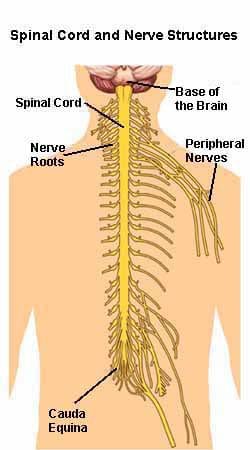
Understanding chronic pain and its alleviation requires an understanding of the anatomy of the nervous system. The nerves of the body are the carriers for the nervous system, as it sends messages to and from the brain. It is quite a complex system. The central nervous system consists of the spinal cord and the brain. The peripheral nervous system branches off the spinal cord.� Both the central and peripheral nervous systems can be affected by neuropathic pain, a type of chronic pain caused by nerve malfunction.
The peripheral nervous system contains 31 pairs of nerve roots that extend from the spinal cord to the rest of the body. There are the feeling nerves/sensory nerves and moving nerves/motor nerves. The chart shows how many pairs of spinal nerves are at each level of the spine.
Peripheral nervous system
The somatic nervous system is comprised of nerves that connect to the musculoskeletal system’s:
Bones
Ligaments
Tendons
Muscles
Skin
It’s what helps generate feeling and what generates the feeling of pain.
It makes sure the heart keeps pumping and the digestive system breaks down food correctly without thinking. Damage to any nerves can lead to the development of chronic pain. The nerves are responsible for sending pain messages, and if they get damaged, they can continually send a steady stream of pain messages.
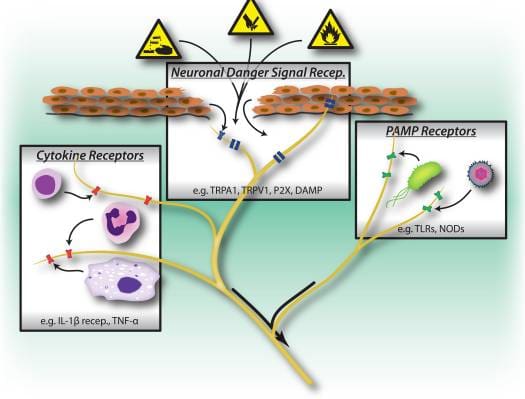
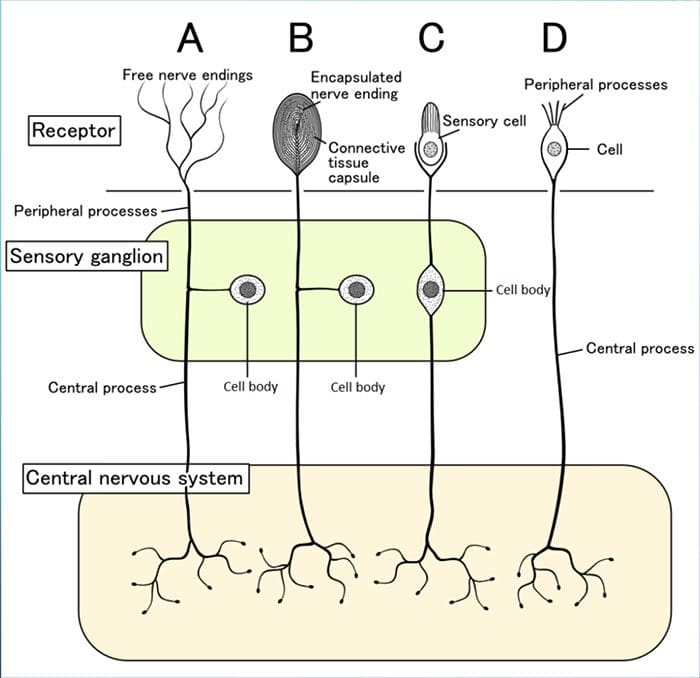
Nociceptorsare another important part of the nerve body. Nociceptors are receptors at the nerve endings, which are activated when something happens and triggers a pain message.
Example: Nociceptors�in the finger turn on and send a pain message through the peripheral nerve to the spinal cord, on to the brain when a finger gets smashed in the car door. Before the finger was smashed, the nociceptors were not on because there was nothing to make them respond.
One possible cause of chronic pain could be malfunctioning nociceptors. Even if there is not a direct or root cause, they could be continually sending pain messages. Using the same example of the finger smashed in the car door. The finger heals after the smashing but pain signals are still being sent. The�finger’s�nociceptor’s nerves could be malfunctioning, which is why they are still sending pain messages. The result is chronic pain.
Chronic pain symptoms
Chronic pain is pain that does not stop for more than 6 months. Pain is a subjective experience, it is different for everyone and takes on many forms. The pain could be:
Aching
Burning
Constant Soreness
Constant Stiffness
Electric
Sharp
Shooting
Throbbing
Tight
Chronic pain can lead to other problems, specifically social, psychological and emotional. It can:
Cause sleeplessness
Drain the body’s energy
Cause depression
Withdraw from activities/friends/family
Weaken the immune system because so much energy is spent dealing with the pain
These added conditions feed off each other. Example: Sleeping is impossible when the pain is active, the next day nothing gets done because of the tiredness. As a result of the inactiveness, a loss of self-esteem begins to set in causing withdrawal from family and social life.
Alleviation
To get the best treatment possible, take note of activities, diet, accidents, injuries, etc before the pain began. Depending on the diagnosis, chiropractic care could help. Research studies have shown that two weeks of regular adjustments/manipulation can bring significant improvement.
Physical therapy combined with stretching and strengthening exercises is part of the treatment for chronic pain. Physical therapy could consist of ice, heat, transcutaneous electrical nerve stimulation, ultrasound, and myofascial release. A chiropractor and other pain professionals can help bring alleviation, so you can fully live your life.
Metabolic Syndrome affects many people. In fact, more than a quarter of the United States has it! Metabolic Syndrome is not a disease, but instead a cluster of disorders. These disorders on their own are not necessarily alarming but when you have more than one, the body starts to feel the repercussions.
Symptoms
Those with metabolic syndrome often suffer from frequent headaches, inflammation, nausea, fatigue, joint pain, and many more. On top of these symptoms, metabolic syndrome can put individuals at a higher risk for Type 2 Diabetes, Heart Disease, Stroke, Obesity, Sleep Apnea, and Kidney Disease.
Risk Factors
Individuals who have an “apple or pear” body shape, are at an increased risk for developing metabolic syndrome. There are no “obvious” signs of metabolic syndrome, but rather one with metabolic syndrome has 3/5 of these risk factors.
A fasting blood glucose level of 100 mg/DL
High Blood Pressure, measuring 130/85
High Triglycerides
Low HDL (Good Cholesterol)� measuring <40mg/DL Men & <50mg/DL Women
Excess Waist Fat (>40in Men & >35in Women)
What Can You Do About It?
Of course, no one wants to be left feeling sick and stranded. There are ways to help prevent metabolic syndrome at home. Below there are five tips for each risk factor and how to prevent/reduce your symptoms.
A Fasting Blood Glucose Level Of 100 mg/DL
Ketogenic Diet
Increase Fiber
Control Portions
Set “Carb Goals”
Choose complex carbs over simple carbs
High Blood Pressure, measuring 130/85
Reduce Sodium
Lower caffeine
DASH diet (Dietary Approaches to Stop Hypertension)
Boost Potassium
Read Food labels
High Triglycerides
Limit sugar intake
Increase fiber
Establish a regular eating pattern
Eat more “tree nuts” ( almonds, cashews, pecans)
Switch to unsaturated fats
Low HDL ( Good Cholesterol) measuring <40mg/DL Men & <50mg/DL Women
Reduce Alcohol
Do not smoke
Choose better fats
Purple Produce (antioxidants to help inflammation)
Increase fish consumption
Excess Waist Fat >40 in Men & >35 in Women
Ketogenic Diet
Exercise Daily
Walk after dinner
Grocery Shop without Aisles
Increase in Water Consumption
Solutions
Aside from doing these tricks and tips at home, a doctor or health coach will be able to further assist one in healing. The main goal is to take these symptoms and disorders and correct them before they become a full-blown diagnosis.
Rather than just running a basic blood panel, they now have tests that allow us to see multiple different levels and numbers. these elaborate blood tests provide great insight to allow us to see the full picture. By completing these labs, it allows the doctor to evaluate the patients better and provide a more specific treatment plan.
In addition to detailed lab work, there are all-natural supplements that have been shown to help improve these symptoms along with proper diet and exercise. Some of these supplements include Vitamin D, Berberine, and Ashwagandha.
On top of these things, there is also an app that is available to download. This app is called, “Dr. J Today”. This app connects you directly to our clinic and allows us to monitor your diet, supplements, activity, BMI, water weight, muscle mass, and more! This app also gives you a direct portal to message Dr.Jimenez or myself.
As stated before, our main goal is to help you decrease your symptoms before they turn into a full-blown diagnosis. One thing we want to surround our patients with is knowledge and a team atmosphere. With the right team, anything is possible and better health is more attainable than you think!
Having Type 1 Diabetes, I have experienced metabolic syndrome before. It is one of my least favorite feelings that exist. I want our patients to know that they do not have to feel that way and there are treatment plans that can help! I will help to create a personalized plan that is tailed to you, so success is the only option. – Kenna Vaughn, Senior Health Coach�
The scope of our information is limited to chiropractic, musculoskeletal, and nervous health issues or functional medicine articles, topics, and discussions. We use functional health protocols to treat injuries or disorders of the musculoskeletal system. Our office has made a reasonable attempt to provide supportive citations and has identified the relevant research study or studies supporting our posts. We also make copies of supporting research studies available to the board and or the public upon request. To further discuss the subject matter above, please feel free to ask Dr. Alex Jimenez or contact us at 915-850-0900.
Functional medicine is about taking the human body and treating it as a whole. The human body has many systems but they all work together to maintain homeostasis. In many cases with traditional medicine, a patient with headaches, joint pain, inflammation, and fatigue will be referred to many specialists to treat each individual symptom.� However, by looking at the entire body as a whole and digging into the root cause of the issue and not just the symptom itself, a lot can be revealed.
With functional medicine, often times a series of labs are run that look deeper than the typical basic blood panel. In traditional medicine, a glucose and AHb1c test will be done to assess diabetes. In functional medicine, a deeper test is ordered to rule out other possibilities and practitioners are able to view all components of diabetes including , Adiponectin, Insulin.� This allows a deeper understanding of what is happening inside the body and how to best treat it.�
With this being said, there are many labs that functional and integrative medicine practitioners utilize, each specializing in their own unique panels. The average integrative practice uses an average of 5-10 different lab companies for their patients to have the best care. Eight of the most utilized lab companies are:
Diagnostic Solutions offer many tests but their specialty lies within their GI Map. This test measures the gastrointestinal microbiota DNA from a stool sample. This allows practitioners to see and detect the exact microbes that may be causing a disturbance in the gut or a factor contributing to illness.
Vibrant Wellness has a wide variety of tests but one of the most frequently used is the food sensitivity panel. This allows practitioners to see what foods their patients are consuming that are creating havoc for their gut health.
SpectraCellstarted as a nutritional testing company but has since evolved into a lab that tests cellular nutrition, cardiometabolic health, hormone balances, and genetic predisposition.
Precision Analytical (the D.U.T.C.H test) the D.U.T.C.H test stands for Dried Urine Test for Comprehensive Hormones and takes a look at adrenal and hormone imbalances.
Genova Diagnostics has a wide variety of tests but one of the most common is the GI Effects Comprehensive Profile. This test takes a patient’s stool and detects an organism’s DNA as part of a comprehensive assessment.
Doctors Data provides a wide array of functional testing to provide patients with the best outcomes. Some tests include Environmental Exposure and Detoxification, Toxic and Essential Elements, and Allergy and Immunity.
Cyrex categories their tests as “arrays”. These arrays test for things like diabetes autoimmune reactivity,� The blood-brain barrier, Mucosal Immune Reactivity and more.
Dunwoody Labs offers food sensitivity testing, adrenal, neurotransmitters and many more. Dunwoody can test for specific IgE and IgG4 molecules.
The patient’s health comes first, and getting down to the underlying issues sometimes requires one than one lab company. These companies use the top of the line technology to ensure their patients and physicians obtain the most accurate results for optimal healing.
It is important to make sure the patient gets the best possible care available. This usually means ordering different labs from different companies to obtain the best results. Each lab is great in its own way, but they often specialize in a certain area. This is key because it often allows the patient and the practitioner to get the highest quality of results. A practitioner who uses multiple labs is educated on the subject and truly cares for their patients. – Kenna Vaughn, Senior Health Coach�
*The scope of our information is limited to chiropractic, musculoskeletal, and nervous health issues or functional medicine articles, topics, and discussions. We use functional health protocols to treat injuries or disorders of the musculoskeletal system. Our office has made a reasonable attempt to provide supportive citations and has identified the relevant research study or studies supporting our posts. We also make copies of supporting research studies available to the board and or the public upon request.�
If you are experiencing any of these situations, then you might be experiencing some stomach digestive disorders.
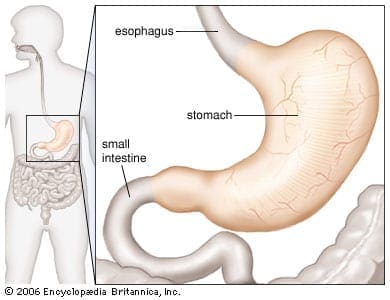
The Stomach
The human stomach�s core function is to aid food to digest when an individual eats. The four critical components of the gastric digestive function are:
A reservoir capacity
Acid secretion
Enzyme secretion
Gastrointestinal motility
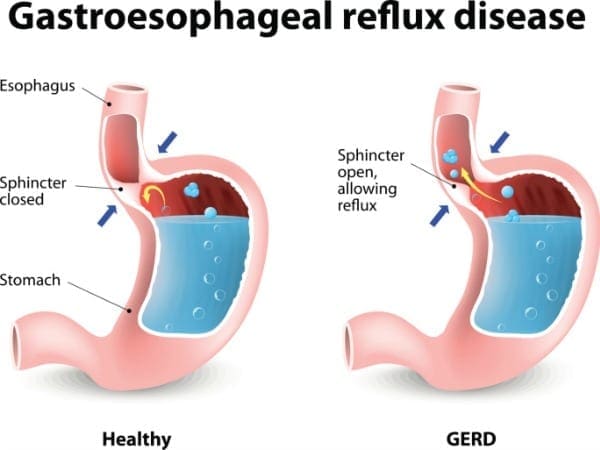
These four components help the stomach function properly in the digestive system and help the body absorb essential nutrients and are responsible for getting rid of waste out of the body. Any disorders like GERD, gallstones, and Crohn’s disease are a few of the many illnesses that can affect not only the stomach but the entire digestive system. It can cause a person to feel discomfort and can be long term if the individual has not treated it.
One of the main symptoms that GERD causes is heartburn. Heartburn is a discomfort feeling that is felt from behind the breastbone as a burning sensation. It tends to get worse on a person if they lay down, bend over, after eating food. Not all individuals with GERD experiences heartburn, there are other possible symptoms such as:
Chest pains
Difficulty swallowing
Bad breath
The sensation of a lump in the throat
Sour taste in the mouth
Respiratory problems
Tooth decay
Gallstones
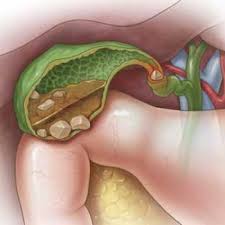
Gallstones are hardened deposits of digestive fluids that can form in the gallbladder. The gallbladder is a small, pear-shaped organ that’s located on the right side of the abdomen, just beneath the liver. It also holds bile fluid that releases into the small intestines. Gallstones can range in sizes from as small as sand to as large as a golf ball. According to Harvard Health Publications, about 80% of gallstones are made of cholesterol, while the other 20% is made up of calcium salts and bilirubin.
Gallstones can lead to pain in the upper right abdomen. An individual may start to feel gallbladder pains when they eat foods that are high in fat, especially fried foods. Furthermore, if the pain continues, it may lead to an inflamed gallbladder or cholecystitis. They may also experience symptoms like:
Pain on the right-hand side of the body, just below the ribs
Back pain between the shoulder blades
Pain in the right shoulder
Nausea
Dark urine
Clay-colored stool
Stomach pain
Researchers stated that some people develop the chemical imbalance in their gallbladders causes gallstones while others do not. Gallstones are more common among people with obesity, and studies revealed that women can develop gallstones and may require surgery to remove them.
Crohn�s Disease
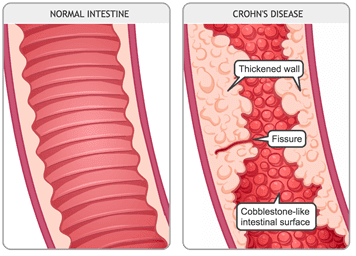
Crohn�s disease is an inflammatory disease. It causes inflammation in the body’s digestive tract and can cause several chronic illnesses. Inflammation caused by Crohn’s disease can be in different areas of the digestive tract in different people. The inflammation often spreads deep into the layers of the affected bowel tissue, causing pain, and sometimes lead to life-threating complications.
Crohn�s disease symptoms can vary depending on which part of the gut is affected in the body. Specific symptoms can often develop gradually and become worse over time, and it is rare for the symptoms of Crohn’s disease to develop suddenly and dramatically. The symptoms of Crohn’s disease include:
Pain
Ulcers in the gut
Mouth ulcers
Diarrhea
A fever
Fatigue
Loss of appetite
Rectal bleeding and anal fissures
Anemia
The exact causes of Crohn’s disease are still unclear, but researchers theorized that it stems from an abnormal reaction in the immune system. The theory stated that the immune system attacks food, good bacteria, and beneficial substances as if they are unwanted substances. During the attack, the body’s white cells start building up in the lining of the gut and triggers inflammation. It is still unclear whether the abnormal immune system causes Crohn’s disease, but there are environmental factors that can increase the risk of inflammation.
Conclusion
The stomach’s primary function is to digest the food that a person consumes. Four components help aid the stomach to function correctly. When the stomach is dealing with chronic illnesses like Crohn’s disease, gallstones, and GERD, it can lead to inflammation on the intestinal barriers. When it is left untreated, it can lead to life long complicated problems in the body. Some products can help aid the stomach digestion as they help support the gastrointestinal system as well.
October is Chiropractic Health Month. To learn more about it, check out Governor Abbott�s bill on our website to get full details on this historic moment.
The scope of our information is limited to chiropractic, musculoskeletal and nervous health issues as well as functional medicine articles, topics, and discussions. We use functional health protocols to treat injuries or chronic disorders of the musculoskeletal system. To further discuss the subject matter above, please feel free to ask Dr. Alex Jimenez or contact us at 915-850-0900 .
Brazier, Yvette. �Cholecystitis: Symptoms, Causes, Diagnosis, and Treatment.� Medical News Today, MediLexicon International, 22 Jan. 2018, www.medicalnewstoday.com/articles/172067.php.
Brazier, Yvette. �Crohn’s Disease: Symptoms, Diet, Treatment, and Causes.� Medical News Today, MediLexicon International, 11 Jan. 2019, www.medicalnewstoday.com/articles/151620.php.
Editorial Team, Healthline, and Heather Cruickshank. �Everything You Need to Know About Acid Reflux and GERD.� Healthline, 7 Dec. 2018, www.healthline.com/health/gerd.
Holland, Kimberly. �Understanding Crohn’s Disease.� Healthline, 2 May, 2019, www.healthline.com/health/crohns-disease.
MacGill, Markus. �GERD: Symptoms, Causes, and Treatment.� Medical News Today, MediLexicon International, 18 Jan. 2018, www.medicalnewstoday.com/articles/14085.php.
Macon, Brindles Lee, et al. �Understanding Gallstones: Types, Pain, and More.� Healthline, 1 June, 2017, www.healthline.com/health/gallstones.
O’Connor, Anthony, and Colm O’Mor�in. �Digestive Function of the Stomach.� Digestive Diseases (Basel, Switzerland), U.S. National Library of Medicine, 2014, www.ncbi.nlm.nih.gov/pubmed/24732181.
Publishing, Harvard Health. �What to Do about Gallstones.� Harvard Health, 2011, www.health.harvard.edu/womens-health/what-to-do-about-gallstones.
Staff, Mayo Clinic. �Crohn’s Disease.� Mayo Clinic, Mayo Foundation for Medical Education and Research, 13 Sept. 2019, www.mayoclinic.org/diseases-conditions/crohns-disease/symptoms-causes/syc-20353304.
Staff, Mayo Clinic. �Gallstones.� Mayo Clinic, Mayo Foundation for Medical Education and Research, 8 Aug. 2019, www.mayoclinic.org/diseases-conditions/gallstones/symptoms-causes/syc-20354214.
Unknown, Unknown. �Definition & Facts for GER & GERD.� National Institute of Diabetes and Digestive and Kidney Diseases, U.S. Department of Health and Human Services, 1 Nov. 2014, www.niddk.nih.gov/health-information/digestive-diseases/acid-reflux-ger-gerd-adults/definition-facts.
A doctor will rule out these causes to make a proper diagnosis.
Diagnosing
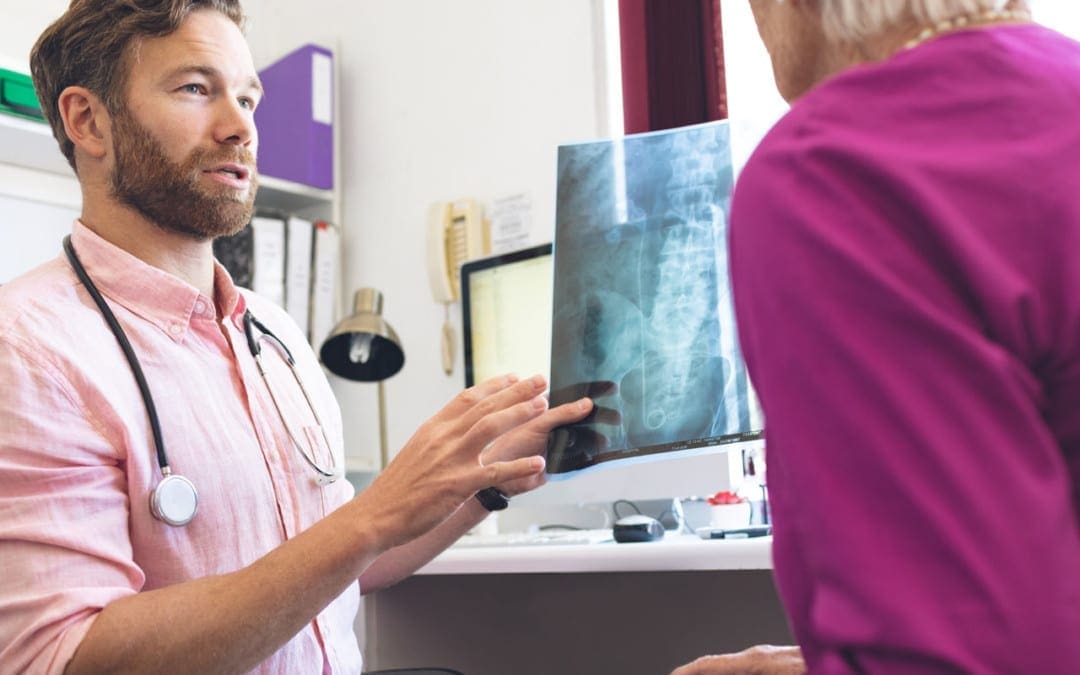
A doctor utilizes medical history and physical exam to diagnose coccydynia.
Imaging scans are usually not necessary, but a doctor may order:
Computed tomography (CT) scan
Magnetic resonance imaging (MRI) scan
If they believe a separate:
Bone
Nerve
Tissue
Problem to be the cause of tailbone pain.
Medical history is important, a doctor wants to know if a
Fall
Accident
Recent trauma
Might have caused the pain.
A physical exam is next in line along with symptoms.
The pain is usually localized in the tailbone, making it straightforward to diagnose.
A doctor will want to know if the pain strikes when sitting or leaning back and which is worse.
A doctor might ask the patient to point to where they’re feeling the pain.
Pointing could be enough for the doctor to tell if the pain is coccydynia when compared to other low back pain conditions.
The doctor will want to palpate the tailbone area for signs of inflammation.
Non-surgical Treatment
Conservative treatment is extremely effective for coccydynia.
Ninety percent of people experience pain reduction using non-surgical means or any medical intervention.
It is first treated with noninvasive methods:
Ice or heating pad can help provide immediate, short-term relief.
Donut/Wedge cushion provides extra padding taking the pressure off the coccyx when sitting. These cushions are available at pharmacies.
Avoid sitting for long times, like a long flight will help prevent additional pain and injury.
Rest is very important to help avoid further injury during recovery.
If there is still pain after these therapies, a doctor may recommend over-the-counter or prescription-strength non-steroidal anti-inflammatory drugs (NSAIDs) or other pain medications.
If the medication doesn’t work then a doctor may try cortisone injection or local spine blocker to send strong medicine directly to the tailbone area.
Surgical Procedure
If none of the conservative treatments work then surgery could be the next step.
The procedure is called a coccygectomy, which means the removal of the tailbone.
A surgeon will discuss the procedure in great detail before it is performed.
These risks include:
Infection
Hematoma (abnormal collection of blood outside an artery or vein)
Perineal hernia (weakened pelvic muscles)
Chronic Coccydynia
A small portion of people can develop chronic coccydynia, which means the pain lasts for more than 2 months.
Chronic coccydynia can take a major toll on the quality of life. Talk to a doctor if symptoms are not resolving.
They may refer you to a doctor that specializes in coccydynia management.
Protecting the Tailbone
There is no exact way or method to prevent coccydynia,
However, reducing the risk of tailbone pain can be achieved by using caution when participating in sports like:
Skating – Ice, Inline, and Roller
Biking
Horseback riding
And take extra care when walking on icy/slippery/hazardous conditions so nobody falls.
El Paso, TX Severe Back Pain Chiropractic Treatment
Gale Grijalva suffered from acute back pain because of an automobile incident injury. Where it was once very tough to do her routine daily tasks, Gale Grijalva is now able to take part in physical activities she was not able to engage in earlier thanks to Dr. Alex Jimenez, a chiropractor in El Paso, TX. Gale Grijalva clarifies how patient Dr. Jimenez is and she discusses how completely he’s been able to help her, such as answering any concerns she might have.
Severe chronic back pain is a serious, recurring condition that affects an individual’s everyday life. Back pain lasting over three weeks is deemed chronic. The backbone is an essential component of the body. Severe chronic back pain might be the backbone’s way of telling the body that there’s a problem. The spine consists of bony vertebrae, soft spinal discs, facet joints, tendons, ligaments, and tendons. Within the bony vertebral artery lies that the spinal cord, the delicate but effective nerve pathway of the central nervous system.
NCBI Resources
Before you run screaming in horror to the medicine cabinet, one of the best reasons to participate in chiropractic treatment is that it helps reduce the chance of a recurrence. By working on the total body and getting it in the best shape possible, the patient is stronger and more balanced to handle their workload and other strenuous activities. Chiropractors also impart advice on how to minimize the chances of re-aggravating the lower back.
Millions of people suffer from back pain each year, and some never visit a chiropractor. Those who do choose�chiropractic treatment�are privy to treatment that reduces their pain, increases healing, shortens their downtime and lessens their chances of a recurrence. If over the counter medication and ice packs haven�t worked within a few days, it�s time to make an appointment for a consultation with a licensed chiropractor. You will be happy you did.
When the weather begins to change and that cold feeling starts to creep into the bones, especially down the back. That’s when sciatica symptoms can flare-up in the worst way.
Cold weather really make sciatica worse
Of the many patients that I’ve treated, those with sciatica firmly state that cold weather makes it worse.
There are bonafide reasons why sciatica acts up when the temperature goes down.
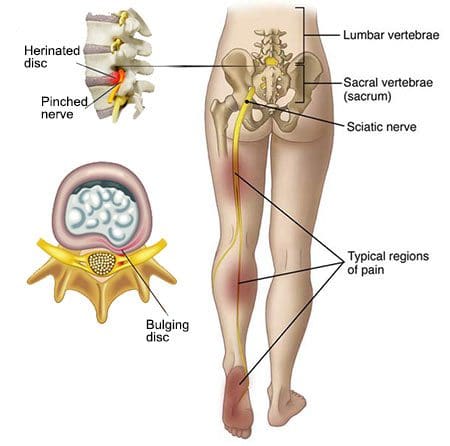
Sciatica
It is a type of radiculopathy, caused by pressure on one or more of the five nerve roots in the lower back;
This is known as the lumbar region of the spine.
The nerves run from the lower spine under buttocks and down each hip into the legs.
Several conditions can compress these nerves at one or more spots along the way:
Numbness
Weakness in the
Lower back
Buttock
Legs on one or both sides
Research Study
Cold weather affects sciatica because it affects different types of pain.
Researchers found that the men who worked in low temperatures reported higher cases of neck and low back pain.
This was compared with those working in warmer temperatures.
Cold Weather & the Spine
Pain and discomfort can increase because the muscles stiffen up in cold weather.
The spine’s muscles also become tight and tense.
Tension and stress, can make the pain worse and increase the risk of muscle strains/sprains.
Barometric Pressure
Air pressure drops before a storm or when the temperature changes.
These changes seep into the sensitive nerves of the lower back and cause swelling/inflammation and pain.
Physical Stress
Any type of movement can wreak havoc on a healthy spine.
This is due to the cold weather causing individuals not to:
Use correct posture
Use correct movement when performing tasks/chores
Hurrying tasks/chores
There is also the chance of a slip and fall accident or twisting your back.
All of this is the perfect set-up for spine and sciatic injury/s.
So How to reduce sciatic pain?
Keep Warm
Wear warm clothing and in layers.
A few thin layers can keep the body warmer than a single thick layer.
Keep the lower back warm
Tuck your shirt into your pants to make sure that your back doesn’t get a cold draft when you reach for something and then put a sweater on over that.
A couple of blankets or an electric blanket on your bed can help keep your muscles from tightening.
Keep home as warm as possible.
Run the car a few minutes to preheat it before heading out.
Wear Proper Shoes or Boots
Proper footwear should have enough tread to prevent slips and falls.
Proper shoes for walking in cold weather. Don’t do the flip-flop thing, that’s just asking for foot/back problems.
Orthotics can help with posture, pronation, and gait.
Warm-Up Before Starting Outdoor Activity
Stretch and loosen the muscles and joints before you go out to:
Trim the lawn/bushes
Take a walk
Play with the kids
Take a few minutes to stretch and warm up inside before going outside.
Do It Right
As previously mentioned use correct form, meaning, lift with your legs, not the back.
Move smaller amounts if landscaping etc., Do it in small increments instead of one or two heavy loads.
Don’t twist your back while lifting.
Face the direction you are going in.
Ask for Help
If sciatica is affecting the task at hand, do not be too proud or afraid to ask for help. Stubbornness can lead to severe injury/s that could have been avoided.
Stay Active
When cold weather starts to make itself known, most of us want to get on the couch, binge watch our favorite movies, sleep, get snuggly, etc.
Exercising and staying in shape is a top remedy for sciatica symptoms.
Consult with a chiropractor, physical therapist/trainer that can offer exercises that won’t present/exacerbate symptoms
Watch your weight when the cold weather kicks in and keep up with your exercise.
El Paso, TX Chiropractor Sciatica Symptoms
Sandra Rubio discusses sciatica, its causes, and its symptoms. Sciatica is the collection of symptoms caused by the compression of the sciatic nerve, the longest nerve in the human body which extends from the lower back to the feet. Sandra Rubio describes how she’s witnessed many patients come into Dr. Alex Jimenez’s office feeling painful and often severe symptoms of sciatica caused by a variety of spinal health issues. Fortunately, Dr. Jimenez is the non-surgical choice for the safe and effective treatment of sciatica symptoms.
Based upon how it’s defined, approximately 2 percent to 40 percent of individuals will experience sciatica symptoms at some point in their lifetime. It is most frequent during people’s ’40s and ’50s, and men are more frequently affected than women. About 90 percent of the time, sciatica symptoms are because of a disc herniation. Other issues that may bring about sciatica comprise of spondylolisthesis, spinal stenosis, piriformis syndrome, pelvic tumors, and compression by a baby’s head during pregnancy, among other spinal health issues.
NCBI Resources
Chiropractic care is a popular, alternative treatment option commonly utilized to help treat symptoms of sciatica. Sciatica is characterized as a collection of symptoms, rather than a single injury or condition. A chiropractor can help diagnose the source of a patient�s sciatic nerve pain, or sciatica, in order to properly determine the best treatment for their specific health issue.
Spinal adjustments and manual manipulations can be utilized to help carefully correct the alignment of the spine, restoring the natural integrity of the spine and allowing the body to heal itself, without the need for drugs and medications or surgery. In certain individuals, sciatica may fix itself, possibly happening just once or a few times throughout their lifetime. But, it�s important to remember that if an injury and/or aggravated condition is not treated effectively, symptoms may worsen.
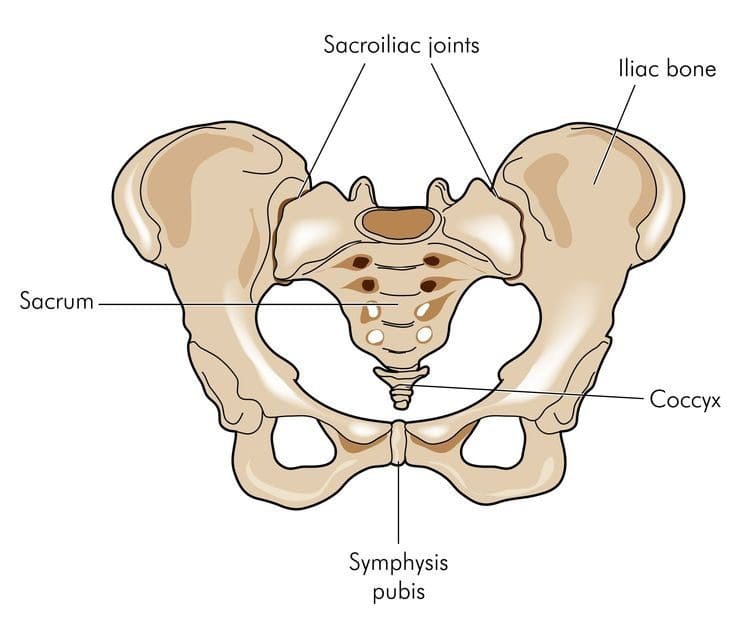
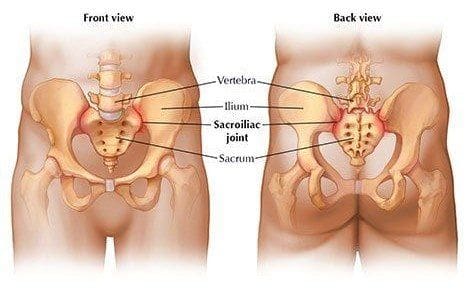
Sacroiliac joint dysfunction is known to cause low back pain, but diagnosing can be hard for some doctors. Especially those that do not have a great deal of experience in sacroiliac joint pain. However, chiropractors specialize in this area as the SI joint is an important part of the musculoskeletal system.
SI joint dysfunction and pain can involve�one or both joints.
�
Other terms associated with SI joint dysfunction are sacroiliitis or degenerative sacroiliitis.
Low back pain may be SI joint-related, so how to start the conversation with your doctor?
Things to Remember Before Appointment
Diagnosing sacroiliac joint-related pain begins before your first appointment with a doctor or chiropractor.
Three things to do before your appointment can help make the visit highly productive.
I. Know your medical history
If you have an existing spinal condition, it can definitely affect SI joint dysfunction
Any recent trauma, like an auto accident or fall?
Pregnant?
Think about these before, because they can help a doctor identify links or cause of Sacroiliac joint dysfunction.
II. Know the symptoms
Make it a point to know the symptoms so you can explain them in full detail.
Dull pain
Achy
Stiff
If you need to, write them down.
Common symptoms:
Low back pain
Pain that travels through:
Hips
Buttocks
Thighs
Groin
Pain when pressing on the Sacroiliac joints�
Stiffness or electrical burning sensations in the pelvis
Know when the symptoms get worse and when they go away. For example:
The pain usually increases when:
Standing
Walking for extended periods
Climbing stairs
Getting/rising up from a seated position
And the pain usually goes away when lying down.
III. Write down questions for your doctor.
Think about what you want your doctor to understand and the pain you are going through.
Write down questions and take them with you.
This questions could be like:
Is this pain caused by a sacroiliac joint problem?
Why rule out sacroiliac joint dysfunction?
How long does it take for the treatment/s to take effect?� �
Is the treatment plan for long sustained relief or short-term relief?
The Appointment
Ask your doctor to examine you for sacroiliac joint dysfunction.
Low back pain research shows the sacroiliac joint, is a definite cause of low back pain.
This problem affects� 30-34% of patients with low back pain.
A doctor can diagnose sacroiliac joint dysfunction based on medical history and a physical exam.
The physical exam, which can include performing specific maneuvers/movements to re-create the pain in a controlled manner, to help confirm a diagnosis.
Physical tests can initiate sacroiliac joint pain and help diagnose low back pain that is being caused by sacroiliac joint dysfunction.
Fortin finger test, which means pressing down near the sacroiliac joints
If three out of five tests produce pain, then more than likely you have sacroiliac joint dysfunction.
Dialogue with your doctor/chiropractor
It�s normal to feel overwhelmed during a doctor’s visit, especially if you have a�condition that is hard-to-diagnose.
Talk with your doctor, their voice should not be the only one heard, this is your body and your health that’s at stake.
Your information is essential to help with an accurate diagnosis.
If your doctor doesn’t feel comfortable or feels they don’t have enough experience in diagnosing sacroiliac joint pain, then ask for a referral to a spine specialist/chiropractor that is comfortable and does have the experience in diagnosing sacroiliac joint pain.
There are a number of treatments for sacroiliac joint dysfunction, including pain medication, epidural steroid injection, and surgery. However, chiropractic care is non-invasive and does not have the unpleasant, sometimes harmful side effects of pain meds. It is safe and effective and treats the entire body instead of just the part that hurts.
Low Back Pain Treatment | El Paso, Tx
Low back pain which gradually influenced his quality of life was developed. David Garcia was unable to walk as his symptoms worsened and his back pain became excruciating. He first visited Dr. Alex Jimenez, a chiropractor in El Paso, TX, following a recommendation from his sister. Dr. Jimenez managed to supply David Garcia with all the aid he deserved for his low back pain, restoring his well-being. David Garcia clarifies the wonderful service Dr. Alex Jimenez and his team have given him to offer him relief from his painful symptoms and he highly recommends chiropractic care as the non-surgical pick for low back pain, among other health problems.
NCBI Resources
Patients who experience lower back pain never want to deal with it again, but�it can flare up periodically. According to the�National Institute of Neurological Disorders and Stroke, roughly 20% of those who suffer from low back pain will eventually deal with it chronically. This can cause frustration, primarily when it affects mobility.
Before you run screaming in horror to the medicine cabinet, one of the best reasons to participate in chiropractic treatment is that it helps reduce the chance of a recurrence. By working on the total body and getting it in the best shape possible, the patient is stronger and more balanced to handle their workload and other strenuous activities. Chiropractors also impart advice on how to minimize the chances of re-aggravating the lower back.
IFM's Find A Practitioner tool is the largest referral network in Functional Medicine, created to help patients locate Functional Medicine practitioners anywhere in the world. IFM Certified Practitioners are listed first in the search results, given their extensive education in Functional Medicine