Exploring the Functions of Supportive Digestive Organs
For individuals looking to improve their gut health, can learning about the supportive digestive organs help with how digestion works and how it can be affected by inflammatory bowel disease/IBD?
Supportive Digestive Organs
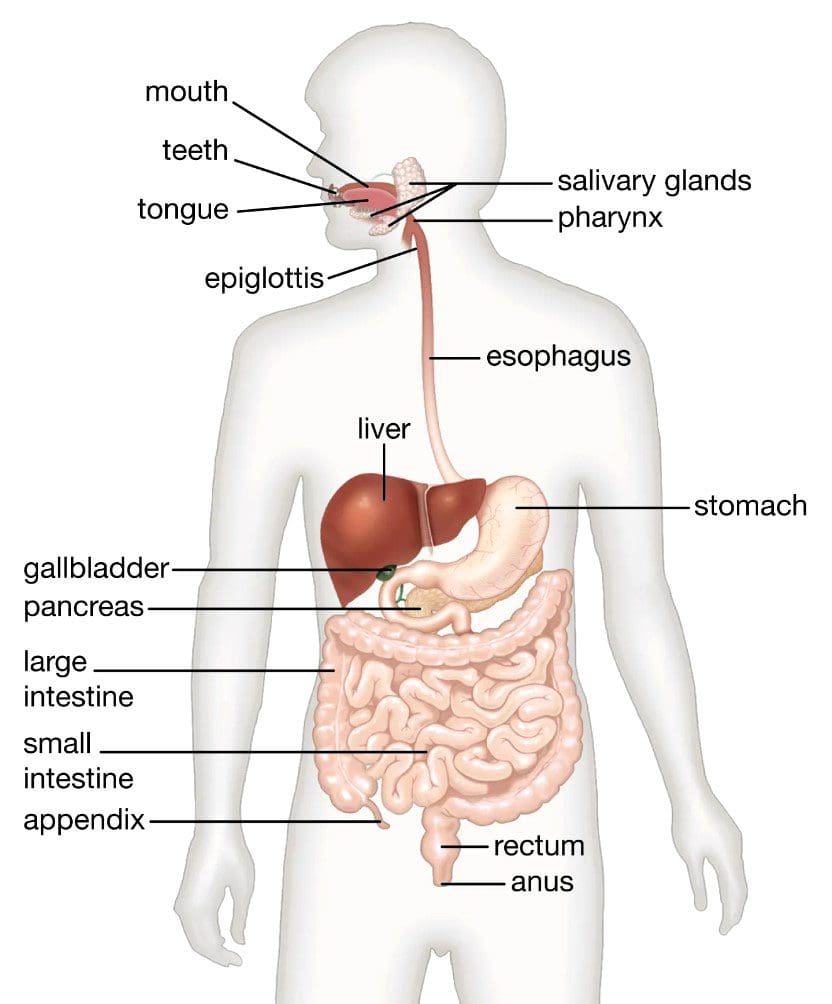
Most people are familiar with food movement from the mouth through the esophagus, stomach, small intestine, and large intestine. However, digestion begins in the mouth with the formation of saliva, and the supportive digestive organs provide the necessary fluids to digest food and used by the body. The digestive tract runs from the mouth to the anus in one long, continuous tube. Several supportive digestive organs assist digestion but are not considered part of the digestive tract, including the salivary glands, pancreas, liver, and gallbladder.
Salivary Glands
The salivary glands produce saliva passed through ducts and into the mouth. Saliva is a clear liquid containing various substances important for digestion and the beginning of the food breakdown process (National Institute of Diabetes and Digestive and Kidney Diseases, 2017). Saliva is important to digestion because it aids chewing, contains antibodies, and helps keep the mouth clean. Infections, mumps, obstructions, Sjogren’s syndrome, and cancer are diseases and conditions that can affect the salivary glands.
Pancreas
Behind the stomach is the pancreas, which is important to digestion because it is where digestive enzymes and hormones are produced. Digestive enzymes help break down food (National Institute of Diabetes and Digestive and Kidney Diseases, 2017). The pancreas also creates Insulin, a hormone that helps balance blood sugar levels. Individuals with Type 1 diabetes are unable to make insulin and need insulin shots to balance sugar levels. Individuals with Type 2 diabetes also need insulin because their body is either resistant to insulin or their pancreas does not respond correctly. (American Diabetes Association, 2024) Glucagon is another hormone produced in the pancreas to raise blood sugar when the levels are very low. For individuals who have diabetes, glucagon can increase blood sugar levels too high. Insulin and glucagon work together to regulate blood sugar. (American Diabetes Association, 2024) Some diseases and conditions affecting the pancreas include pancreatitis, cancer, and cystic fibrosis.
Liver
The liver is one of the largest organs. Its functions include creating bile, storing nutrients and glycogen, converting toxins into harmless substances, and/or enabling their removal. Bile is passed through ducts that run from the liver to the duodenum of the small intestine. Blood circulates through the digestive tract and liver, where vitamins and nutrients are processed and stored (Johns Hopkins Medicine, 2024). The liver is also the body’s detox organ, helping remove byproducts produced by alcohol and medications. The liver also helps break down old or damaged blood cells and produces substances to help with blood clotting. (Johns Hopkins Medicine, 2024) Diseases and conditions of the liver include cirrhosis, hepatitis, hemochromatosis, and cancer.
Gallbladder
The gallbladder is a much smaller organ located just under the liver. This supportive digestive organ stores bile after it is made in the liver. After eating, the small intestine releases a special hormone called cholecystokinin, which prompts the gallbladder to send bile through ducts and into the small intestine. Once in the small intestine, the bile breaks down the fat from the food. Conditions that can affect the gallbladder include gallstones. Surgery to remove the gallbladder, known as a cholecystectomy, is common. Some individuals may initially need to make adjustments to their diet after surgery. (Johns Hopkins Medicine, 2024)
Injury Medical Chiropractic and Functional Medicine Clinic works with primary healthcare providers and specialists to develop highly effective treatment plans through an integrated approach for each patient and restore health and function to the body through nutrition and wellness, functional medicine, acupuncture, Electroacupuncture, and integrated medicine protocols. If the individual needs other treatment, they will be referred to a clinic or physician best suited for them. Dr. Jimenez has teamed up with top surgeons, clinical specialists, medical researchers, nutritionists, and health coaches to provide the most effective clinical treatments.
Healthy Diet and Chiropractic
References
National Institute of Diabetes and Digestive and Kidney Diseases. Dis (2017). Your digestive system & how it works. Retrieved from https://www.niddk.nih.gov/health-information/digestive-diseases/digestive-system-how-it-works
American Diabetes Association. (2024). About diabetes: common terms. https://diabetes.org/about-diabetes/common-terms
Johns Hopkins Medicine. (2024). Liver: anatomy and functions. https://www.hopkinsmedicine.org/health/conditions-and-diseases/liver-anatomy-and-functions
Johns Hopkins Medicine. (2024). Cholecystectomy. https://www.hopkinsmedicine.org/health/treatment-tests-and-therapies/cholecystectomy