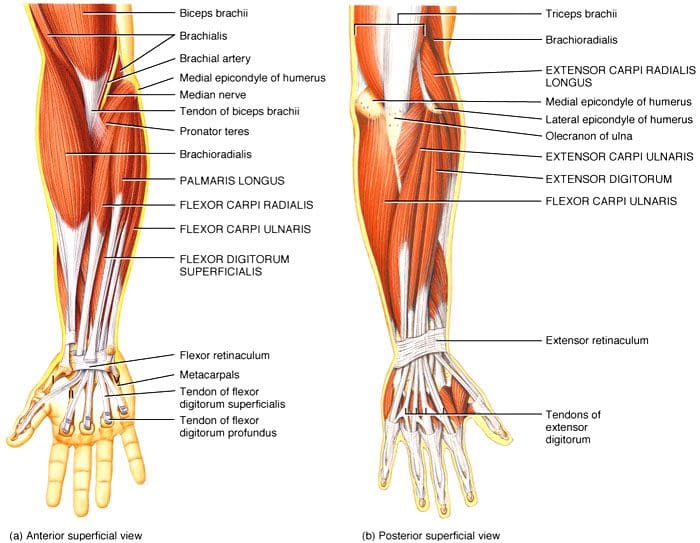
The hands are used for all kinds of tasks/chores day and night. Using the hands requires the wrists. When wrist pain presents, it can make life unbearable, causing individuals to make all kinds of awkward and unhealthy habits that can worsen and cause further injury. Chiropractic wrist and hand adjustments are recommended for this type of injury. A majority of wrist injuries are the result of micro-stress/repetitive tearing use. Repetitive stress injuries often require a multifaceted treatment approach. This is why chiropractic is so effective, in that it treats the symptoms and the causes to get back to work, school, and normal life quickly.
Wrist Tendonitis
Wrist tendonitis happens when a tendon becomes inflamed. This is common among athletes, store workers, clerks, warehouse workers, hair stylists/barbers, etc. Individuals that are constantly using their hands, wrists, and arms have an increased risk of developing tendonitis. And without proper treatment and rest, the inflammation continues and worsens. Chiropractic wrist adjustments for wrist tendonitis include:
Diagnosis and assessment.
Swelling and pain are alleviated using ice, bracing, ultrasound, laser therapy, and other inflammation-reducing techniques.
Once the inflammation has been brought down, massage therapy is incorporated to keep the tendons loose and relaxed.
Physical therapy and manual manipulation will restore mobility and flexibility to the wrist.
When the pain is completely reduced and mobility is restored, chiropractic wrist adjustments will break down the scar tissue to prevent future injury.
The chiropractor will recommend ergonomic tips and exercises to prevent flare-ups.
Wrist Crepitus
Another common issue that can be painful is crepitus, which is a popping, clicking, and/or cracking in the wrist when moving the hand. Different causes depend on the type the popping/clicking/cracking. If it occurs without pain, more than likely, it is the gases escaping from the wrist joint. This is normal and is not something to worry about. However, a chiropractor can help if it becomes burdensome. Another cause is when a tendon extends or contracts over the bone with certain types of movements. This type of popping often results in pain and should be addressed by a professional to prevent further damage. Both issues are commonly treated with wrist adjustments.
Dislocated Wrist
A dislocated wrist needs immediate medical care from the emergency room. The wrist needs to be reset and given time to recover/heal before a chiropractor can work on it to repair any issues that the dislocation caused. There are benefits from chiropractic after a serious wrist injury that includes:
Pain relief
Function restored
Mobility restoration
Proper wrist alignment
Scar tissue removal
Strength training
Aching, popping, and cracking relief
Chiropractic Wrist Adjustment
Wrist adjustments depend on the injury/condition that the individual is going through. A chiropractor uses different approaches and techniques that return the joints to the proper alignment. Wrist adjustments are usually done by hand and are gentle. This is because the bones and tendons do not need major force to correct. Chiropractors focus on the wrist the same way they focus on the whole body.
They relieve pain and swelling first.
They determine what caused the injury.
Then focus on strengthening the joint.
Develop a prevention regimen to keep it from recurring.
Body Composition
Complete Body Measurement
Getting body composition tested will help progress to optimal health by the results, not the weight scale. Determining progress with metrics like this and lean body mass equips individuals with the knowledge needed to get the results faster and smarter. The quickest and easiest way to determine body composition is to use the InBody. This means focusing on body fat percentage instead of weight. The devices being used today are extremely accurate at giving reliable body fat percentage results. Get a complete readout of your body that includes:
Muscle mass
Fat mass
Body water
Body fat percentage
Getting as much information as possible using optimal tests will help with goal planning and achieving optimal health.
References
Hulbert, James R et al. “Chiropractic treatment of hand and wrist pain in older people: systematic protocol development Part 2: cohort natural-history treatment trial.” Journal of chiropractic medicine vol. 6,1 (2007): 32-41. doi:10.1016/j.jcme.2007.02.011
Prasad, Ganesh, and Mustafa J Bhalli. “Assessing wrist pain: a simple guide.” British journal of hospital medicine (London, England: 2005) vol. 81,5 (2020): 1-7. doi:10.12968/hmed.2019.0051
Sadowski, M, and D Della Santa. “Les syndromes douloureux du poignet” [Wrist pain]. Revue medicale suisse vol. 2,92 (2006): 2919-23.
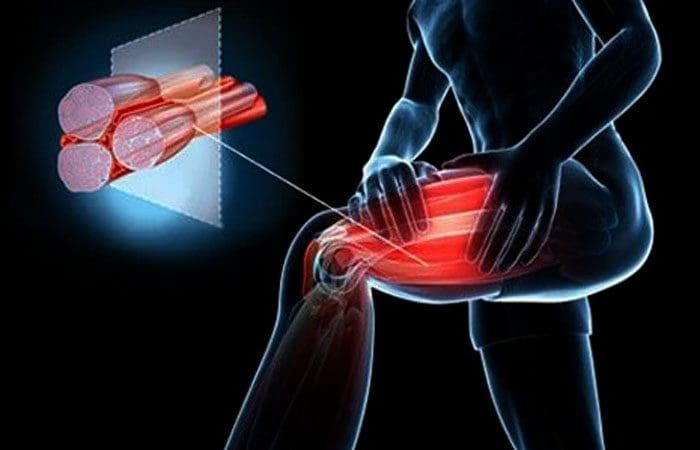
Muscle cramps are sudden and involuntary contractions of one or more of the body’s muscles. They often occur at night or at any moment stopped by a sudden Charley horse. These cramps can cause severe pain, making it impossible to move and use the affected muscle/s. They are usually brought on from:
Muscle cramps are common and can happen to anyone, but often occur to:
Indoor/outdoor physical work employees
Pregnant women
The elderly
Infants
Individuals that are overweight
Athletes
Cramping Up
Muscle cramps can be a symptom of a variety of medical issues. It is typically dehydration and muscle strain from overworking/exercising the muscles, but it can also be a sign of medical conditions like:
Poor circulation
Mineral depletion low levels of magnesium, calcium, potassium, and choline
Nerve disorders are rare cases, but a pinched nerve or spinal cord injury can cause nerve compression that can lead to cramping
Tight muscles, this comes from inactivity and not stretching the body causes the muscles to contract involuntarily
Hypothyroidism, a thyroid gland that is less active than normal can cause cramps
Liver disease
Muscle cramps can make daily activities difficult if not impossible to perform. They often happen at night affecting proper sleep. This can lead to:
Pain hangover
Grogginess
Fogginess
Cautious body behavior – as an individual wants to avoid pain and more cramping they begin to watch how they:
Step
Reach
Bend
Move
So as not to cause discomfort, pain, and further cramping, they develop awkward body positions that create more health problems from improper body posture.
Muscle cramps can happen to any muscle of the body. However, they present most often in the:
This is usually sudden, sharp pain. Individuals can also feel or see a lump of muscle tissue under the skin.
When to see a professional
They usually go away on their own not requiring medical care. However, seek medical attention if the cramps:
Are causing severe discomfort and pain
Severe swelling, redness, or changes in skin tone
Muscle weakness is present
They are occurring frequently
They do not improve with self-care
There is no connection with an obvious cause, like intense physical activity/exercise
Mineral Depletion
Choline is a nutrient that just as important but not as well known as B vitamins. Choline has a fundamental role in muscle physiology and low levels could be a cause/contributor of muscle cramping. Choline is well-known for its function as part of the neurotransmitter acetylcholine. This is a chemical messenger that transmits signals between nerve cells and muscles. Acetylcholine is the physiological link that tells the muscles to contract. This is where medications can interfere with the messaging system.
Most believe that muscle cramps are caused by magnesium deficiency. This is true, but magnesium is not the only nutrient that could present with muscle issues. Choline regulates intracellular calcium and muscle contraction. This is what helps bind calcium proteins to muscle receptors. Choline keeps minerals like calcium available to the muscles so they can use it instantly when they need to contract. For individuals with skeletal muscle issues, which can be muscle cramping, general soreness, or another type of issue, testing for choline status could be the key.
Prevention and Relief
Home self-care for prevention and relief includes:
Heat or ice application to the muscle/s and affected areas
Avoiding caffeine
Drink plenty of water before and during physical activities, indoor/outdoor work, exercise
The information herein is not intended to replace a one-on-one relationship with a qualified health care professional, licensed physician, and is not medical advice. We encourage you to make your own health care decisions based on your research and partnership with a qualified health care professional. Our information scope is limited to chiropractic, musculoskeletal, physical medicines, wellness, sensitive health issues, functional medicine articles, topics, and discussions. We provide and present clinical collaboration with specialists from a wide array of disciplines. Each specialist is governed by their professional scope of practice and their jurisdiction of licensure. We use functional health & wellness protocols to treat and support care for the musculoskeletal system’s injuries or disorders. Our videos, posts, topics, subjects, and insights cover clinical matters, issues, and topics that relate to and support, directly or indirectly, our clinical scope of practice.* Our office has made a reasonable attempt to provide supportive citations and has identified the relevant research study or studies supporting our posts. We provide copies of supporting research studies available to regulatory boards and the public upon request. We understand that we cover matters that require an additional explanation of how it may assist in a particular care plan or treatment protocol; therefore, to further discuss the subject matter above, please feel free to ask Dr. Alex Jimenez or contact us at 915-850-0900.
Dr. Alex Jimenez DC, MSACP, CCST, IFMCP*, CIFM*, CTG*
email: [email protected]
phone: 915-850-0900
Licensed in Texas & New Mexico
References
American Osteopathic Association. Muscle Cramp. Accessed 12/10/2019.
Merck Manual. Muscle Cramps. Accessed 12/10/2019.
Miller, Timothy M, and Robert B Layzer. “Muscle cramps.” Muscle & nerve vol. 32,4 (2005): 431-42. doi:10.1002/mus.20341
Dr. Alexander Jimenez takes a look at how to keep your back healthy while doing yard work and gardening. We�re looking for ways to find mental and physical engagement without socializing. Many individuals are breaking up isolation and monotony by doing some home projects out in the yard and garden.
Doctors may tell patients that yard work and gardening should be avoided if they have a bad back. Individuals with a history of back pain/issues or have had spinal surgery might think that gardening is out of the question.�None of this is true. Yard work and gardening can be therapeutic physically and mentally for individuals with compromised backs as long as they follow some common-sense safety concepts.
Gardening with an ergonomic approach can make yard work and gardening very back/spine-friendly. If possible try to get tools for gardeners with neck and back problems or modify your own. Modified tools can highly reduce the chances of injuring your back. Try to set up the yard or garden in a way where there is minimal bending and reaching.
If this cannot be achieved set up the work to be done in an order where any bending/reaching tasks are spaced out so as not to be doing them all at once. Here are some ways for back-preservation when doing yard work and gardening. They will make your work more productive and reduce fatigue, discomfort, and minimize the risk of exacerbating any back injuries/problems.
Environment
Working in the right environment is an important step for those with a bad back. If possible garden on a raised platform or a raised garden that is at a comfortable height to be able to stand and garden without bending and reaching. Structures can be purchased, or make them yourself with old broken used furniture like tables, shelves, etc. Garden beds can be worked using the square foot technique to minimize bending, reaching and squatting.
The Square Foot gardening technique was invented in 1976 by Mel Bartholomew, a civil engineer, and efficiency expert that took up gardening after retiring. These types of gardens are made to be waist level using old furniture, self-made or store-bought frames that are back-friendly. Gardening like this means less time weeding, bending and reaching with more time enjoying the therapeutic benefits.
Preparation with the Spine in Mind
Here are some tips on modifying your methods and tools for safe yard work and gardening. One example is using a golf bag with wheels for carrying and select long tools. Also using a two-wheeled garden cart/wheel-barrow. It is more balanced than a standard wheelbarrow and is better for the spine.
Practice Safe Posture/Position
Never use the back muscles to lift. Lift with the legs. Bend the knees, hinge at your hips and keep the back straight. If needed practice bending in front of a mirror to see your form and make sure the technique is being done properly. Check out this YouTube video on raking and hoeing. Plant containers while standing using a potting bench, or an old table. Have a stool, chair or heavy-duty bucket to sit down easily when a break is needed.
Containers
One back-friendly gardening technique is to plant in containers. Plant them where they will sit, which minimizes having to lift or carrying to a location. Styrofoam peanuts can be placed at the bottom third of the container instead of gravel to make the containers lighter. If using large containers, invest in a wheeled pot dolly to move the containers easily.
Focus on the Time and Not the Task
With big projects, break them down into smaller more manageable tasks. Dividing the bed/s into halves or thirds makes the work more pleasant. Underestimating how long a project might take can be a major set back. So set time limits and follow through. When recovering from surgery or a back injury, set a limit of 15 minutes of work and see how it feels.If your back is not irritated or sore then expand to 30 minutes and so on.
Work smarter not harder. Under no circumstances should you shovel or pull up heavy, deep-rooted plant/s. This type of movement could put an end to yard work and gardening for some time. Do not forget that pain is our body’s way of telling us to stop. Be sure to talk with a spine specialist or chiropractor before starting yard work or gardening.
Gardening Benefits
Activity and fresh air can make us feel healthy and happy. Gardening can provide this along with healthy exercise. Therapeutic benefits of yard work and gardening have been well documented. Gardeners that did daily work were found to experience significant reductions in stress and improvement in overall health and quality of life compared to non-gardeners.
Gardening can significantly raise levels of energy, optimism, zest for life, self-esteem, openness and other factors relevant to self-image. Even a little gardening goes a long way. Just being outside and the physicality of yard work and gardening contributes to stress reduction. Another benefit from gardening is if planting herbs, and veggies you can cook even healthier. Much like a farm to table restaurant.
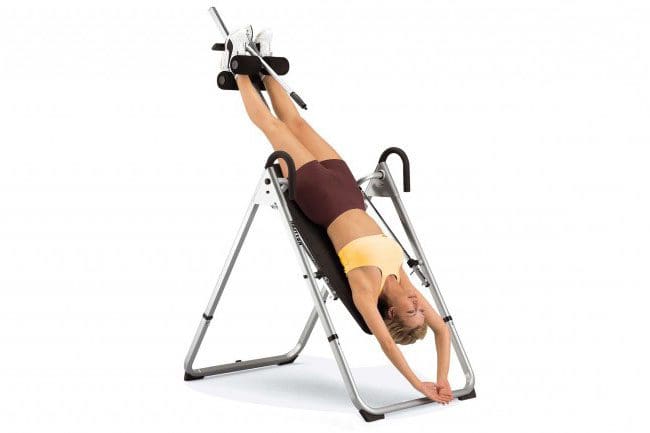
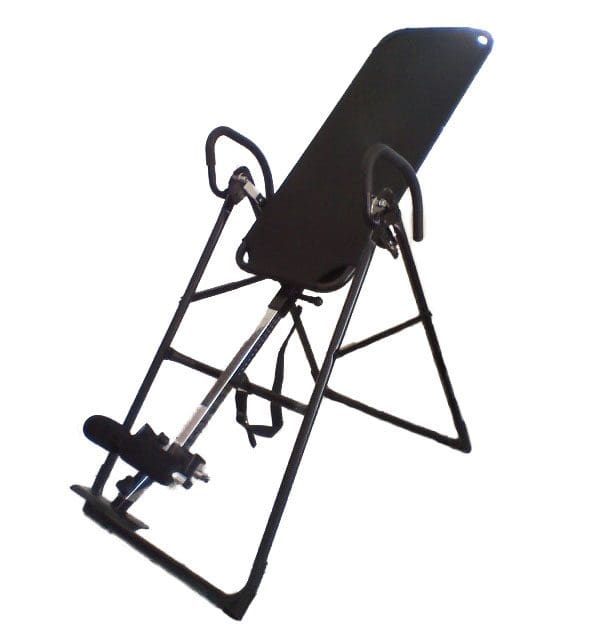
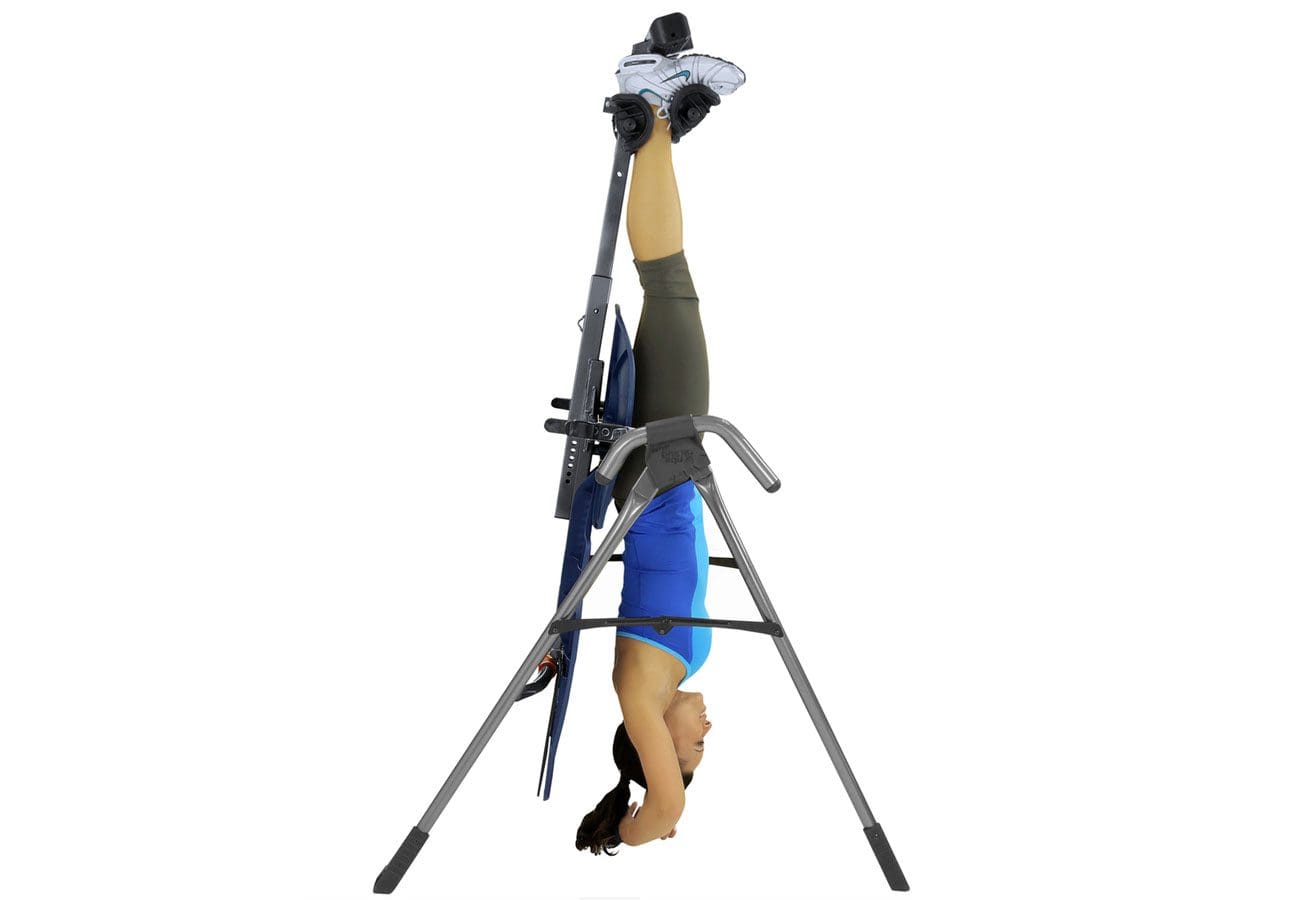
Inversion tables and inversion treatment/therapy could help with low back/leg pain and sciatica. It�s non-surgical and an option your doctor, or chiropractor could recommend to you before looking into more invasive options. Individuals with low back pain, sciatica or both found inversion therapy with an inversion table provided relief from symptoms, and continued use has kept them and their spines healthy.
With an inversion table, you don�t have to use gravity boots or completely hanging upside down. There are inversion boots and hanging racks that also offer inversion therapy, this type is not for beginners. With experience, you can move on to this type but for now, leave it to individuals in top health and athletic condition. This type of inversion table therapy is an alternative that doesn’t require being completely upside down.
An Ancient Therapy Brought Back
Inversion therapy is nothing new. Hippocrates, the father of medicine, saw what inversion therapy could do and the benefits around 400 BC. The goal is to use gravity to release compression in the spine. The downward force pulls everything toward the earth’s center.
How It Works
Inversion therapy works in a way like spinal traction.
For example, when we stand and sit gravity pulls the spine downward and this is what compresses the discs, vertebral bodies, nerves, and other spinal structures. The physical dynamics along with gravity helps relieve spinal compression. As the spine is stretched out the pressure on your back is reduced.
The theory behind inversion therapy sounds like a fantastic non-surgical option to back pain. However, the research going into inversion therapy is a bit more mixed. One study found that almost 77% of patients that were candidates for surgery no longer needed the surgery after using inversion therapy. For patients that didn�t use inversion therapy, only 23% avoided surgery.
But like all back pain/sciatica treatment plans, it’s what works for you. Ask your doctor/chiropractor about the pros and cons of this type of treatment as it relates to your condition to make an informed decision.
Other Benefits
Many patients report that inversion therapy is a great way to:
Stretch the muscles and ligaments
Reduce muscle spasms
Improve circulation
Stretching stimulates the lymph glands which increases the flow of lymphatic fluids, that are part of the body’s waste disposal. Cellular health depends on healthy blood circulation to be delivered, to nourish and remove waste.
The therapy also helped to relieve motion sickness and stress. This is because the body is more aware of its spatial orientation along with balance as the inner ear gets stimulated while inverted. As stated earlier it is not necessary to be positioned completely upside down to benefit from this therapy. Inversion tables are adjustable and offer the flexibility to find the best angle.
Discuss Inversion Therapy with A Doctor
Before you start using an inversion table�talk to your doctor. Certain medications and health conditions could make using an inversion table unsafe.
It could be recommended against inversion table therapy if you have:
There could be other medical conditions that are not listed but could interfere with inversion therapy, so make sure your doctor knows all your medical history/conditions and current health state before beginning.
Starting Inversion Therapy
How to start an inversion therapy program? Take it very slow, easy, taking your time and have someone there to help and assist until you are comfortable doing it on your own.�The tables can be set at different angles and it is recommended you start at the first and work your way to the last. At the 15-degree angle, your body will feel a stretch along with the benefits of increased blood circulation.
Most people don’t have to go beyond 60-degrees, as the spine decompresses at this angle. But you might want to completely invert yourself as you work through the different degrees and go for the full inversion. But don’t overdo it and listen to what your body tells you.
The tables come in a variety of styles, so be sure to research the different brands. Some tables can include a sliding backrest and foot lock that lets you work in gentle stretching exercises during inversion. This could include head movements from side-to-side, stretching the arms overhead, and doing abdominal sit-ups or crunches.
But first, find out from your doctor how often you should invert and the kinds of movements that will help with your condition and enhance your inversion program. Inversion therapy is another option for a back, sciatic pain treatment plan. For the different forms of spine pain, a doctor will try several non-surgical treatment options before discussing surgery. Inversion therapy could be part of a conservative treatment plan and could help prevent the need for spine surgery.
*Effective Treatment* for Sciatic Nerve Pain| El Paso, Tx
NCBI Resources
The spine is the primary support for the body. When it breaks down, the body suffers. Regular chiropractic treatment ensures that the spinal column remains in proper alignment which, in turn, keeps the body in proper alignment. It helps with joint health as well as the health of the related muscles and ligaments.
Your chiropractor can also recommend stretching and strength-building exercises to help keep your spine healthy and supple. Chiropractic helps to keep the back flexible which aids in preventing injury. A healthy spine is also less likely to become misaligned or experience pain. It can significantly improve your quality of life as you are more flexible and mobile.
Many are starting to wonder why more and more kids are starting to be under regular Chiropractic care. For some, this may sound mysterious, but for others who understand what Chiropractic care provides for children, they realize it is much more than fixing back pain.
According to world renowned Chiropractor and author, Dr. Jennifer Barham- Floreani, �The nervous system is the master controller of our body and if its communication channels become fuzzy, distorted or damaged then we may experience all sorts of communication errors. For babies this ineffective communication may play out as colic or irritability, an inability to suckle and breastfeed or poor sleep habits. For a child poor nerve communication may result in developmental delays, an inability to concentrate, behavioral problems, digestive issues, asthma, headaches � the list is endless.�
How can your child�s body lose its natural alignment and develop subluxations? Studies have shown that in the majority of cases, trauma (often unrecognized) from the birthing process or procedures causes subluxation of the infant�s spine. Subluxation damage can be caused by a constricted uterus, a breech presentation or a difficult delivery, and in cases of vacuum extraction or excessive force, the spine is always traumatized. Health problems in childhood or even adulthood have been traced back to spinal and structural damage at birth in many cases.
Abraham Towbin, MD states: �The birth process � is potentially a traumatic, crippling event � mechanical stress imposed by obstetrical manipulation-even the application of standard orthodox procedures may prove intolerable to the fetus � most signs of neonatal injury observed in the delivery room are neurological.�
Research is confirming chiropractors� observations that infants may suffer from spinal subluxations. In one study, 1,250 babies were examined five days after birth; 211 of them suffered from vomiting, hyperactivity and sleeplessness. Subluxations were found in 95% of this group. Although the researchers in this study were MDs, they recognized the power of chiropractic care and these babies were given the care they needed.
The spinal adjustment �frequently resulted in immediate quieting, cessation of crying, muscular relaxation and sleepiness.� The authors noted that an unhealthy spine causes �many clinical features from central motor impairment to lowered resistance to infections- especially ear, nose and throat infections.� The above study discusses an 18-month-old boy suffering from tonsillitis, frequent enteritis, therapy-resistant conjunctivitis, frequent colds, earache and increasing sleeping problems.
He received a chiropractic spinal adjustment. The child demanded to be put to bed and slept peacefully until morning. His health returned to normal. One wonders, what would have happened to this child if he never had chiropractic care? A life of antibiotics and other medications? A life of continued sickness?
The authors of the above-mentioned study concluded that a chiropractic spinal checkup �should be obligatory after every difficult birth� and any spinal stress �should be � adjusted � the success of adjustment overshadows every other type of care.�
According to the Chiropractic pediatric specialist Larry Webster, DC, there are six times in a baby�s first year of life when chiropractic examinations are especially important:�
After the birth process.
When the baby starts to hold his/her head up.
When the baby sits up.
When the baby starts to crawl.
When the baby starts to stand.
When the baby starts to walk.21
Toddlerhood through childhood is a very �physical� time. Those first hesitant steps soon evolve into jumping, running, falls and accidents which are all part of a normal childhood. While most falls are minor, at times they can cause nerve-damaging subluxations with serious long-term consequences. For that reason all children need periodic spinal check-ups.
What are the Benefits of Chiropractic for Kids?
Over many decades parents, clinicians, and researchers have noticed positive changes in behavioral, physical, and emotional health of children under chiropractic care. Many different behavioral conditions have been observed to improve with chiropractic care including ADD/ADHD, anxiety, and also focus, concentration, and grades in school.
Since the nerves collectively control and influence all bodily functions, removing nerve interference may result in improvement of many different health problems depending on the area of the spine and nervous system involved. Improvement is commonly seen in conditions such as colic, constipation, ear infections, allergies, asthma, sinus infections, persistent bed wetting, stomach aches, �growing pains� in the legs or arms, headaches, back and neck pain, scoliosis, and abnormal gait among others.
What�s the Best Reason to Have Your Kids Under Regular Chiropractic Care?
We believe that the best reason to do any health related activity is for wellness and prevention. And it is easier to grow healthy children than to repair damaged adults. Life is so much better when your children never seem to get sick or have health problems than when you are routinely going from appointment to appointment constantly treating the symptoms of ill health.
It is not unusual to hear parents state that since starting chiropractic care their children get sick less frequently and less severely, have less ear infections, and take less antibiotics and other drugs than their classmates. Our vision is to use chiropractic today for a better world tomorrow. Starting from birth, remove interference to the body�s inborn ability to heal itself and allow children to reach their health potential throughout their life.
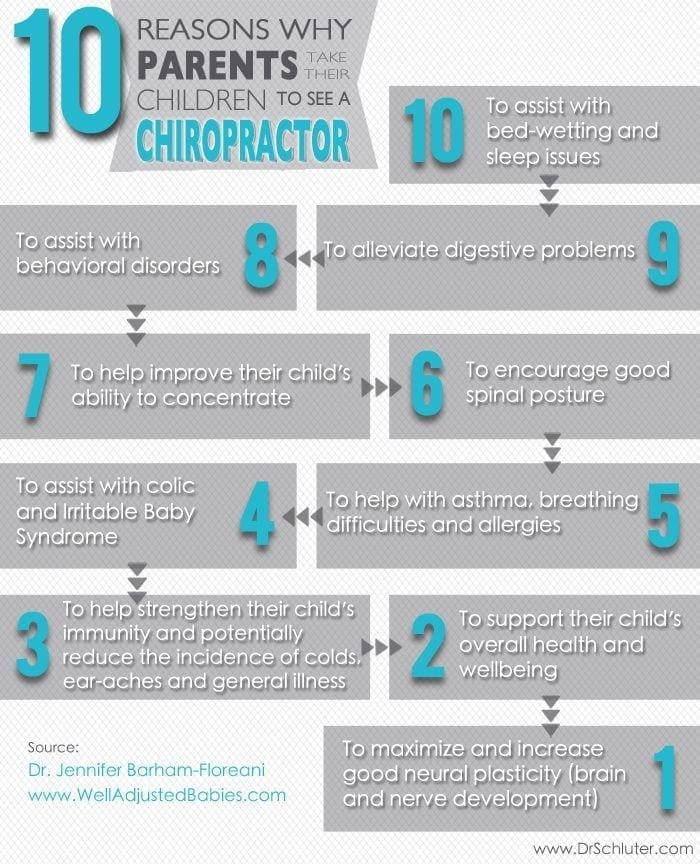
10 Reasons Parents Take Their Children to See a Chiropractor
To encourage good neural plasticity (brain and nerve development).
To support �first-class� nerve communication throughout the body to promoting health and wellbeing.
To help strengthen their child�s immunity � encouraging fewer colds, ear-aches and general illness.
To help resolve breastfeeding issues and colic.
To reduce the detrimental impact our modern world has on our children�s health.
Encourages children to thrive by supporting digestive strength.
To diminish nerve interference which may impact their child�s capacity to learn and concentrate.
To promote body balance � helping to resolve poor posture, asthma, allergies and bed-wetting..
For a child poor nerve communication may result in developmental delays, an inability to concentrate, behavioral problems, digestive issues, asthma, headaches. Parents, clinicians, and researchers have noticed positive changes in behavioral, physical, and emotional health of children under chiropractic care.�For Answers to any questions you may have please call Dr. Jimenez at 915-850-0900
IFM's Find A Practitioner tool is the largest referral network in Functional Medicine, created to help patients locate Functional Medicine practitioners anywhere in the world. IFM Certified Practitioners are listed first in the search results, given their extensive education in Functional Medicine












 According to world renowned Chiropractor and author, Dr. Jennifer Barham- Floreani, �The nervous system is the master controller of our body and if its communication channels become fuzzy, distorted or damaged then we may experience all sorts of communication errors. For babies this ineffective communication may play out as colic or irritability, an inability to suckle and breastfeed or poor sleep habits. For a child poor nerve communication may result in developmental delays, an inability to concentrate, behavioral problems, digestive issues, asthma, headaches � the list is endless.�