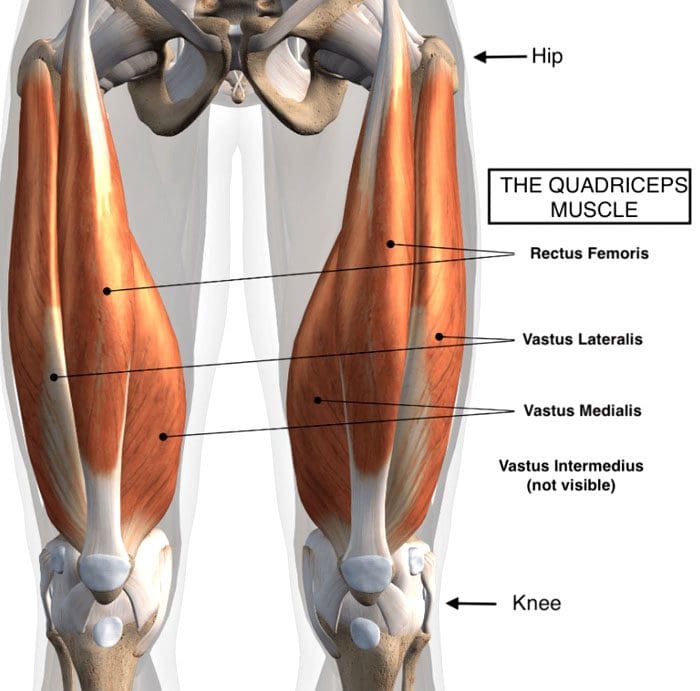
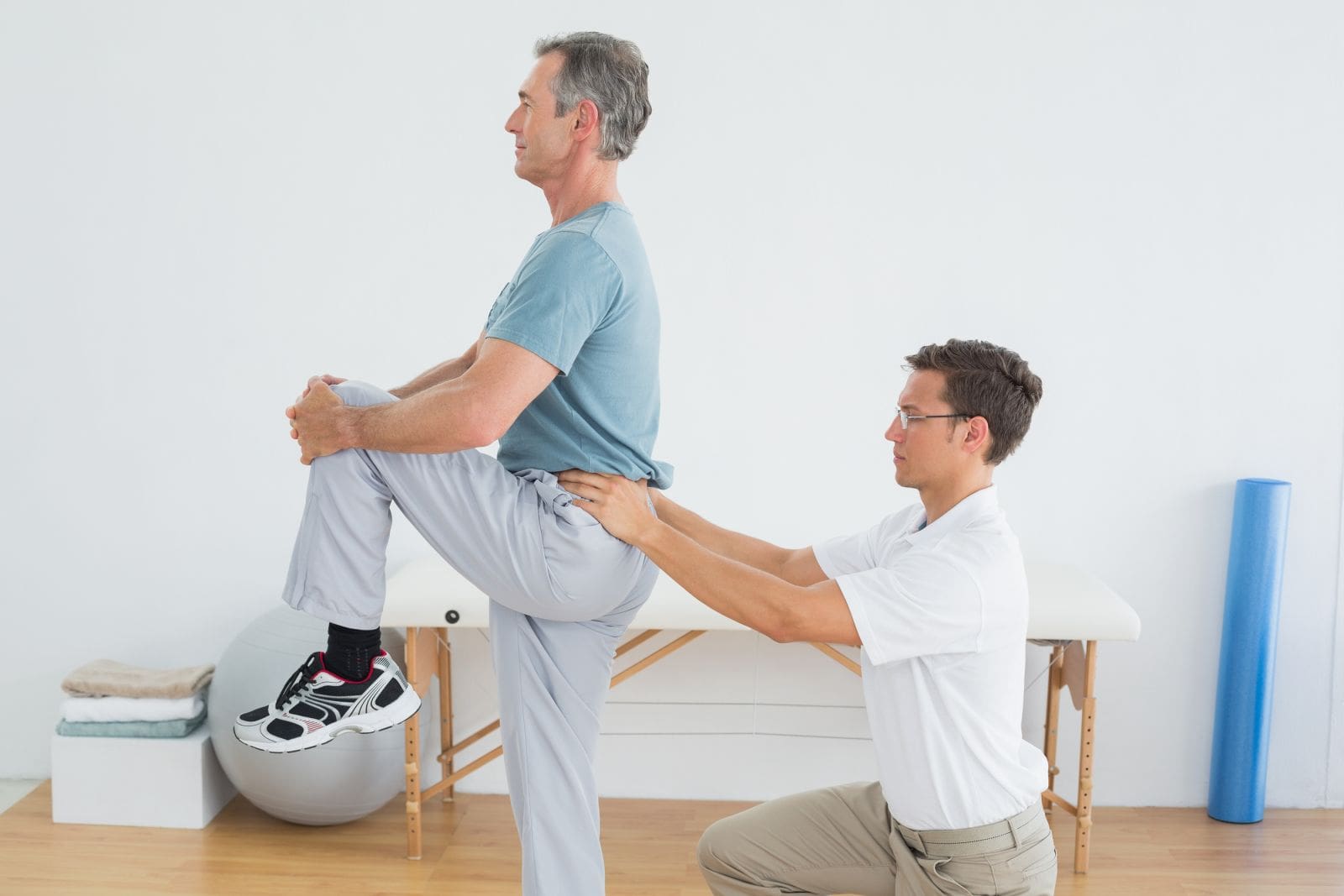
The quadriceps muscle consists of four muscles in front of the thigh that connects to the knee right below the knee cap. These muscles straighten the knee for walking, running, and jumping. They also help bend the knee for squatting. They move the leg forward when running and fire/transmit electrical impulses when the foot hits the ground to absorb shock. When jumping, the muscles provide stability coming down as well as when standing on one leg.
Quadriceps Strain
Thigh strains are common in sports. Most players are sidelined because of this injury when compared to strains in the hamstrings or groin. Factors that can increase the risk of injury include:
Exhaustion
Muscle weakness
The strength of the quadriceps to the hamstrings is uneven, causing one set to get overused.
Consistent sprinting and/or kicking
Previous strain and/or injury
The quadriceps is made up of four muscles. One is the rectus femoris, which gets injured the most. It’s the only muscle that crosses two joints – the hip joint and the knee joint.
Symptoms and Injury Grades
Individuals commonly report a pulling/stretching sensation in the front of the thigh. Common symptoms include:
Pain
Swelling
Bruising
Muscle tenderness
For minor quadriceps strains or tears, moderate to dull pain presents along with stiff movement.
Grades categorize the severity of the strain:
Grade 1 presents with mild discomfort in the thigh with no loss of strength.
Grade 2 presents with moderate pain, swelling, and some loss of strength.
Grade 3 is a complete rupture of the fibers. Individuals are in severe pain and unable to walk.
Grade 3 is where surgery is required.
Symptoms can vary depending on the type of injury that has been sustained and the severity. There is pain and localized swelling for both strains and contusions. If a muscle rupture has happened, there could be a bump/lump within the muscle or a gap in the muscle. If rupture of the Quadriceps Tendon has occurred, individuals often report hearing a pop when the injury happens. The swelling often makes straightening the leg difficult or impossible.
Injury causes
Thigh strains usually happen when slowing down/decelerating after a sprint. This can be because the individual takes too small or too large steps causing the muscles to overstretch, much like a rubber band that, if overstretched, tears, and if under stretched, it bunches up, which can cause spasms and tears.
Treatment
In the initial stages after a quadriceps strain, it is recommended to follow the RICE Procedure for 24 hours: This includes:
Rest
Ice
Compression
Elevate
The leg needs to be rested every 2-3 hours in 20-minute sessions.
A bandage can provide added support.
For slight tears and strains, it is recommended to stretch the quadriceps gently.
This helps prevent the muscles from experiencing shortening. This happens by the formation of scar tissue that pulls the muscle/s, making them shorter.
Gentle stretches allow the muscles to heal with minimal shortening. This helps prevent further and/or re-injury.
Chiropractic Physical Therapy Rehabilitation
After the acute stage of the injury, receiving regular chiropractic sports adjustments, physical therapy massage, coupled with strength training exercises will speed up recovery.
Physical therapy massage will remove scar tissue and keep the muscle/s loose and flexible.
Exercises for strengthening the muscles after injury will be recommended according to the individual’s condition/case.
Following correct post-injury-care, exercises, and physical therapy.
Healing time can be 4- 6 weeks.
Body Composition
Strength Training: The Inverted Row
This workout targets the back muscles, spine and scapular stabilizers, deep abdominals, and arms. Everyday activities that require various types of pulling motion, lifting, etc., become easier. To perform:
Lie flat on your back.
Grab a stable barbell or set of straps that are above you.
Pull your upper body up as high as possible while keeping the back straight.
Squeeze the shoulder blades together at the top.
Complete as many reps as possible.
Once enough strength and endurance have been built, try a pullup.
References
Kary, Joel M. “Diagnosis and management of quadriceps strains and contusions.” Current reviews in musculoskeletal medicine vol. 3,1-4 26-31. 30 Jul. 2010, doi:10.1007/s12178-010-9064-5
Hillermann, Bernd, et al. “A pilot study comparing the effects of spinal manipulative therapy with those of extra-spinal manipulative therapy on quadriceps muscle strength.” Journal of manipulative and physiological therapeutics vol. 29,2 (2006): 145-9. doi:10.1016/j.jmpt.2005.12.003
Wenban, Adrian B. “Influence of active release technique on quadriceps inhibition and strength: a pilot study.” Journal of manipulative and physiological therapeutics vol. 28,1 (2005): 73. doi:10.1016/j.jmpt.2004.12.015
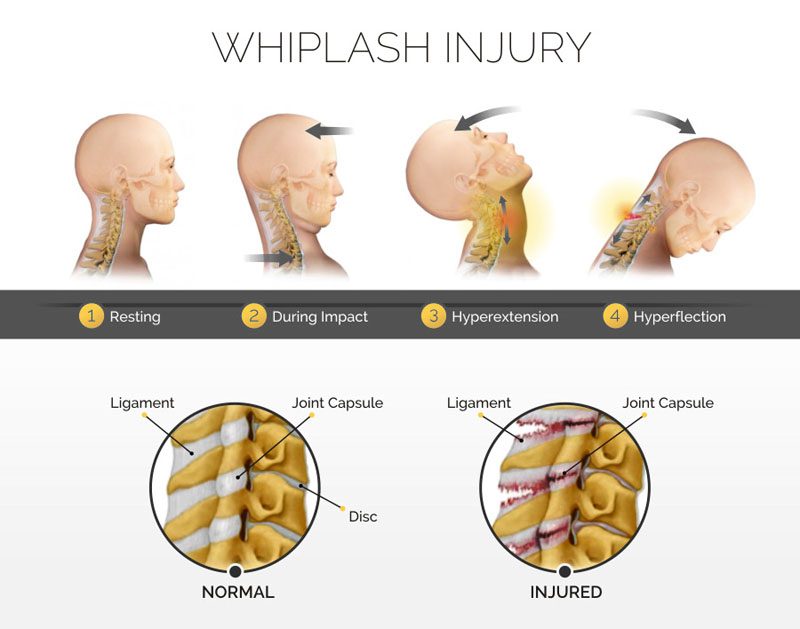
A whiplash injury can cause pain for months, even years after the accident/incident. It can cause persistent pain in the neck, shoulders, back, as well as, headaches, and sleep problems. Waiting to see if it will go away is not recommended. Chiropractic treatment can effectively and successfully expedite the healing process getting back to normal life as quickly as possible. Chiropractors treat whiplash successfully using a combination of techniques, approaches, and exercises for pain relief, recovery, and long-term spinal health. The extent and severity of the whiplash injury determine what type of chiropractic treatment will be implemented.
The Severity of a Whiplash Injury
Whiplash injuries are often the result of:
Automobile accidents
Work injuries
Sports
Amusement park rides
It is primarily an injury of the neck muscles and ligaments, but can also damage the vertebral discs. It is not considered a serious or life-threatening injury, but it can cause long-term complications and severe chronic pain. The biggest risk comes from the delayed presentation of symptoms. It can take days and sometimes weeks for the effects of the injury to present. Individuals that are older or those with arthritis are more likely to have severe and long-term issues.
Other Symptoms
Typical symptoms like neck pain, blurry vision, stiffness, and dizziness are well known. These can range from mild to severe, and last for a few days, weeks, or, in severe cases, years. However, there are some symptoms that most don’t know about and include:
Individuals should be alert for signs/symptoms that the injury requires immediate medical attention. If any of the following are experienced seek immediate care.
The arms, shoulders, or legs are numb, tingling, and/or weak
The neck pain and stiffness return after going away
Bowel or bladder problems could indicate nerve damage
Chiropractic
Chiropractic treatment depends on the individual case. A doctor of chiropractic will determine the right treatment plan by the:
The severity of the pain
Location of the injury
Accompanying symptoms
Medical history
X-rays will be taken of the affected area to rule out any other trauma or injury. The chiropractor will evaluate the entire spine. This is based on how one part of the body influences other areas with the objective being to get the whole body functioning successfully at optimal levels.
Treatment Options
Some of the more common treatments for whiplash include:
Initial
Visiting a chiropractor a short time after the injury means the neck will be inflamed. The doctor will utilize gentle, anti-inflammatory options like:
Cold therapy
Ultrasound
Stretching
Electrical therapy
Laser therapy
Spinal Manipulation
There are different types of spinal manipulation, these include:
Specific Manipulation
This type involves a gentle but firm thrusting, usually done with the hands to the soft tissue areas. It stimulates the nervous system to realign subluxations, and restore mobility/flexibility of the spinal joints and vertebrae.
Flexion Distraction Technique
This is also a hands-on technique that treats slipped and bulging discs. This type of treatment utilizes a pumping motion on the disc/s and not the spine itself.
Instrument Assistance
This treatment is used for patients with degenerative disc disease. Special instrument assistance is often used in combination with hands-on care.
Massage
Massage promotes healing, reduces pain, and improves blood circulation in and around the affected area. It helps relieve tension/stress in the shoulder and neck.
Stretching and Trigger Point Therapy
The muscles and tendons can become tight. A chiropractor will gently stretch the area to relieve pain, ease tension, and reduce tension headaches. Trigger point therapy uses persistent pressure by the chiropractor’s fingers. It relaxes and releases the tight areas.
McKenzie Exercises
McKenzie exercises help reduce disc tears common to these types of injuries. The chiropractor will show how to perform these simple movements at home as part of the recovery.
What to do outside of the clinic
A chiropractor will offer tips and guidance on how to successfully avoid worsening the injury or create new injury/s. Stretches and exercises will be recommended to strengthen and maintain flexibility. Depending on an individual’s:
Overall health
Posture
Work/Occupation
Lifestyle factors
They will offer recommendations to avoid long-term issues.
Body Composition
Successfully regaining fitness after an injury
It is difficult to predict how long it will take to regain a previous level of fitness after an injury. Retraining to peak condition depends on the injury and how much damage was done. A key factor is to not adopt a sedentary lifestyle.Muscle memory can help as the muscles have special cells in the fibers that can recollect previous movements. This means when back to working out after an extended layoff, the body is able to regain the lost muscle. Some tips to help get back into shape:
Ease back into working out to avoid/worsen the injury
Wait a month before starting a less-intense version of a regular workout
Patience and persistence are essential to regaining fitness successfully.
Disclaimer
The information herein is not intended to replace a one-on-one relationship with a qualified health care professional, licensed physician, and is not medical advice. We encourage you to make your own health care decisions based on your research and partnership with a qualified health care professional. Our information scope is limited to chiropractic, musculoskeletal, physical medicines, wellness, sensitive health issues, functional medicine articles, topics, and discussions. We provide and present clinical collaboration with specialists from a wide array of disciplines. Each specialist is governed by their professional scope of practice and their jurisdiction of licensure. We use functional health & wellness protocols to treat and support care for the musculoskeletal system’s injuries or disorders. Our videos, posts, topics, subjects, and insights cover clinical matters, issues, and topics that relate to and support, directly or indirectly, our clinical scope of practice.* Our office has made a reasonable attempt to provide supportive citations and has identified the relevant research study or studies supporting our posts. We provide copies of supporting research studies available to regulatory boards and the public upon request. We understand that we cover matters that require an additional explanation of how it may assist in a particular care plan or treatment protocol; therefore, to further discuss the subject matter above, please feel free to ask Dr. Alex Jimenez or contact us at 915-850-0900.
Dr. Alex Jimenez DC, MSACP, CCST, IFMCP, CIFM, CTG* email: [email protected] phone: 915-850-0900 Licensed in Texas & New Mexico
References
Dagenais, Simon, and Scott Haldeman. “Chiropractic.” Primary care vol. 29,2 (2002): 419-37. doi:10.1016/s0095-4543(01)00005-7
Ritchie, Carrie et al. “Medical and allied health service use during acute and chronic post-injury periods in whiplash injured individuals.” BMC health services research vol. 20,1 260. 30 Mar. 2020, doi:10.1186/s12913-020-05146-0
Ferrari, Robert, and Anthony Science Russell. “Survey of general practitioner, family physician, and chiropractor’s beliefs regarding the management of acute whiplash patients.” Spine vol. 29,19 (2004): 2173-7. doi:10.1097/01.brs.0000141184.86744.37
Car accidents, even minor ones, can cause musculoskeletal problems, especially in the neck and shoulder area. Depending on the severity, it can be dangerous. When whiplash symptoms do not present immediately, this is known as delayed whiplash. Delayed symptoms can appear anywhere from twenty-four hours to months after the accident. The body is masking the symptoms to react to a traumatic event. Symptoms like:
Pain
Stiffness
Headache
Anxiety
Present within 24 hours, but this is not always the case.
Delayed Symptoms
With delayed whiplash, symptoms typically don’t appear until 24 hours after the accident. But there are cases of symptoms being delayed up to six months. Whether immediate or delayed, symptoms include:
Medical treatment should be sought out immediately if any of the below symptoms are experienced:
Weakness in the arms
The neck pain spreads to the shoulders and arms
Unbearable pain
Loss of vision
Causes of Delayed Whiplash
The most common cause of whiplash is automobile accidents. Even a slow-speed tap can cause delayed whiplash symptoms if the head snaps quickly, and it is not only being hit from behind in automobile accidents that cause whiplash. Rear-end, front-end, and side collisions can cause whiplash and delayed whiplash symptoms. Any time the neck snaps in a quick fashion in any direction there is potential for a neck injury. Some less common causes include:
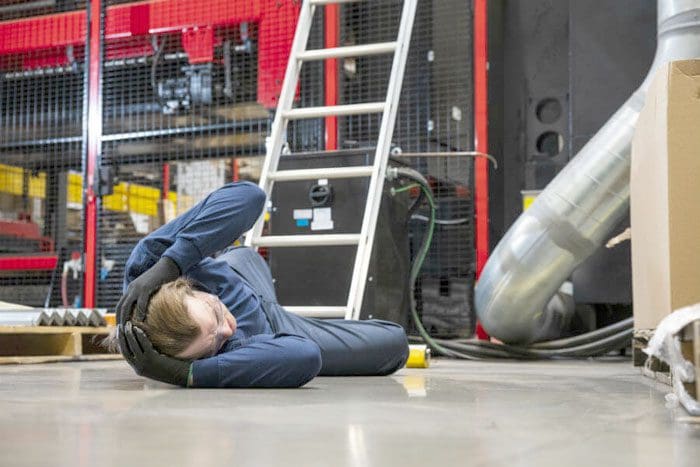
Specific types of falls where the head quickly snaps around
Cycling accidents
Skating/skateboarding accidents
Skiing/snowboarding accidents
Symptoms Can Get Worse With Time
Determining whether to seek medical attention if there is no pain or symptoms after the event can be difficult. However, symptoms can get worse over time and cause serious problems in the neck:
Small fractures
Ruptured discs
Pinched nerves
Untreated Whiplash
Whiplash can get worse with time when they are not treated. This is why seeking medical care after the event is significant. As a doctor, a chiropractor can diagnose if any serious issues are present and develop the best plan to deal with pain and symptoms. When left untreated chronic whiplash and neck pain can develop. Chronic whiplash is rare but does happen, even with injuries considered not severe. Medical professionals will use X-Rays, MRIs, or CT scans to examine the damage’s extent and prevent the symptoms from worsening.
Treatment Options
Wearing a neck brace immediately following a neck injury can be an option but there is evidence that some movement of the neck and head should be incorporated, as it is beneficial for the healing process. If the pain is unbearable, wearing a brace could be implemented into a treatment plan.
Ice and Heat
Ice and heat will help with stiffness and pain.
Ice will help relieve pain and should be used in 15-minute intervals.
Heat packs and ointments can help soothe the area, loosen up the muscles, and promote optimal healing.
Non-Steroidal Anti-Inflammatory Meds
Advil or Ibuprofen can be taken for pain and inflammation. These meds help the symptoms, but should not be the only pain reliever.
Ginger
Ginger tea can help those suffering from nausea and dizziness.
It contains anti-inflammatory properties.
Supplements include green tea, turmeric curcumin, fish oil, and sage.
CBD Oil and Ointment
CBD oil or ointments can help relieve pain and relax muscles.
Stretching
Gentle stretches can help the healing process and keep the neck muscles loose.
Chiropractic
Chiropractic can treat whiplash utilizing several different techniques. They will perform tests to diagnose the extent of the injuries and determine what type and the best treatment plan. The plan can include the following:
Inflammation reduction and Pain relief
Heat, ice, ultrasound, and laser therapy can help reduce pain and inflammation.
Spinal Adjustments
Spinal adjustments will help relieve pain from pinched nerves, bulging discs, and strained muscles.
Massage
Massage is a common practice in whiplash cases. It helps to kickstart the healing process by:
Promoting proper blood and nerve energy circulation
Loosens the muscles
Flushes out the toxins
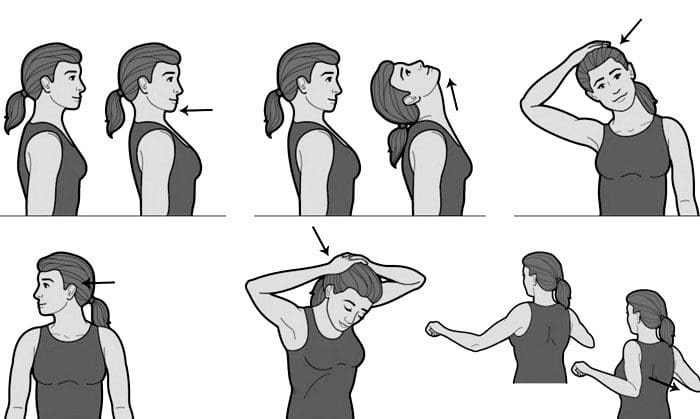
Stretches and Tips
A chiropractor will train the patient on specific stretches/exercises and pain-relief tips at home. These can include:
Physical therapists can help by focusing on the muscles in the affected area.
They will teach the individual stretches and exercises to stretch and strengthen the strained muscles.
They can also utilize heat and ice therapy, ultrasound, and laser therapy.
Body Composition
Hot Yoga and Metabolic Rate
Both internal and external temperatures influence the body’s metabolic rate. The body’s chemical reactions happen more quickly if the temperature is higher. This is because the body works harder to restore average temperature balance. Brief exposure to heat is not enough to increase metabolism. To raise BMR, more prolonged exposure to heat is necessary. This is where hot yoga comes in. Hot yoga involves performing a sequence in a studio that is 105 degrees Fahrenheit with a humidity rate of 40%. It is an intense workout that involves sweating. The high heat:
Increases blood flow
Warms the muscles for deep stretching
Helps the lymphatic system release toxins
Raises the body’s Basal Metabolic Rate
References
Balla, J I. The late whiplash syndrome. The Australian and New Zealand Journal of surgery vol. 50,6 (1980): 610-4. doi:10.1111/j.1445-2197.1980.tb04207.x
Fitz-Ritson D. Phasic exercises for cervical rehabilitation after “whiplash” trauma. Journal of Manipulative and Physiological Therapeutics. 1995 Jan;18(1):21-24.
Seferiadis, Aris, et al. A review of treatment interventions in whiplash-associated disorders. The European spine journal: official publication of the European Spine Society, the European Spinal Deformity Society, and the European Section of the Cervical Spine Research Society vol. 13,5 (2004): 387-97. doi:10.1007/s00586-004-0709-1
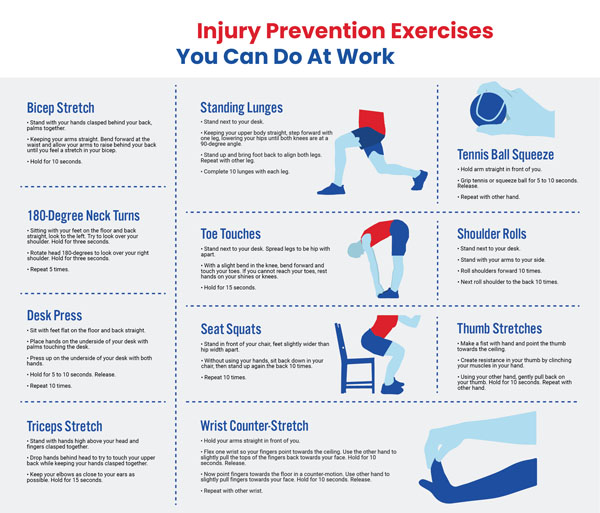
Injury prevention should be on everyone’s mind. All jobs, sports, and activities have the potential to cause some form of injury/s. Sustaining an injury, no matter how big or small can take a toll on the body. It can force an individual to take a lengthy break from work, school, sports, etc, or stop completely.
Some form of rest is usually necessary to expedite the healing process but there are other ways to help with injury prevention. The most common type of injury that can be prevented is overuse/repetitive motion/s injuries. Many individuals realize that an underlying issue for injuries is spinal/body misalignment.
Injury prevention
A few ways that injury prevention can be optimized for various activities:
Full body stretching regularly will keep the body flexible
Developing the body’s ability to learn healthy movement/s
Regular chiropractic, physical therapy
Health coaching
Misalignment and injury
When the spine is out of alignment the entire body goes out of balance and begins to function improperly and eventually breaks down. The nerve, blood circulation energy is affected. This compromises:
Tissue health
The body�s natural healing abilities
Normal body coordination and movement
This increases the risk of injury/s. Proper posture and body mechanics have a primary role in injury prevention. Proper spinal alignment allows the body�s ability to coordinate effective, pain/injury-free movement. Better coordination promotes optimal performance with less effort and corrects/improves muscle strain, tissue damage, and enhances bone health.
Proper spinal alignment
Chiropractic is a specialized expert approach that focuses on addressing core issues related to spinal alignment. Chiropractic treatment will locate and address spinal misalignments that individuals did not even know were there. The chiropractic approach will help establish a solid foundation for regular daily activities without injury. When the spine/body is properly-aligned nerve flow is restored and the body can move with reduced risk of injury or complication/s. Contact a chiropractic specialist and see what they can offer.
Body Composition Clinic
Too Much Sitting Health Consequences
When the body is in a seated position, the gluteal muscles, abdominal muscles, and legs remain static. When sitting for a long time day after day with no exercise/movement the muscles begin to degenerate/weaken and go into a pseudo form of atrophy from the lack of engaged movement/exercise.
Metabolism is linked with body composition meaning that more muscle increases metabolism and helps burn more calories. Muscle loss, especially from the lower body which is the largest muscle group, can lead to continued fat gain if exercise is not implemented and an unhealthy diet is not changed. Gradual muscle loss from the lower body can hurt functional strength and with age increases the risk of falls.
Dr. Alex Jimenez�s Blog Post Disclaimer
The scope of our information is limited to chiropractic, musculoskeletal, physical medicines, wellness, and sensitive health issues and/or functional medicine articles, topics, and discussions. We use functional health & wellness protocols to treat and support care for injuries or disorders of the musculoskeletal system. Our posts, topics, subjects, and insights cover clinical matters, issues, and topics that relate and support directly or indirectly our clinical scope of practice.*
Our office has made a reasonable attempt to provide supportive citations and has identified the relevant research study or studies supporting our posts. We also make copies of supporting research studies available to the board and or the public upon request. We understand that we cover matters that require an additional explanation as to how it may assist in a particular care plan or treatment protocol; therefore, to further discuss the subject matter above, please feel free to ask Dr. Alex Jimenez or contact us at 915-850-0900. The provider(s) Licensed in Texas& New Mexico*
References
McClure, Roderick J. �What is this thing called injury prevention?.��Injury prevention: journal of the International Society for Child and Adolescent Injury Prevention vol. 24,3 (2018): 177. doi:10.1136/injury prev-2018-042838
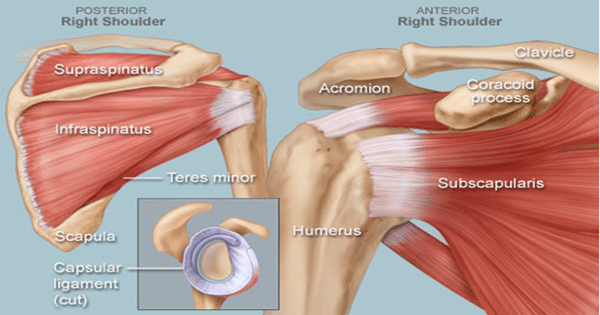
The shoulder/s are the joints where the upper-arm bones known as the humerus, the shoulder blades or scapula, and the collarbone/clavicle come together. The upper-arm bone fits into the scapula socket and is held in place by muscles and tendons. This is the rotator cuff. It covers and protects the upper-arm and allows for raising and movement of the arm. Pain in the shoulder can have a variety of causes.
Injuries can occur in a slip and fall or automobile accident. A task like painting the house could cause a repetitive/overuse injury. The�soft tissues in the shoulder, muscles, tendons, and ligaments�can get injured from excessive strain, falls, and improper motion. Shoulder pain can come from certain conditions like arthritis. And it can present from problems or issues in other parts of the body. This is known as referred pain.
The shoulder takes on more than we realize. It is made up of an intricate network of ligaments and muscles, with the rotator cuff taking most of the load when moving. It is the most flexible joint in the human body, and one of the most unstable. It is�unstable because of its unique construction. Other joints like the ankle or elbow are limited in their range of motion. Shoulder injuries�are common, as the shoulder sustains more injuries than almost any other part of the body.
Injury Symptoms
Here are some questions to help figure out if there is a shoulder injury:
Does the arm move normally?
Is there extreme stiffness?
Is there pain and what type – throbbing, stinging, shooting
Does it feel like it could pop out of the socket?
Is it strong enough for normal activities?
Certain shoulder injuries can be treated at home for a few days with rest and ice. The shoulder can be bandaged with Kinesio tape to hold it in place if necessary. But serious injuries require professional medical help. Symptoms/signs that a medical professional is needed:
The shoulder joint looks deformed
The shoulder cannot be used at all
The pain is extreme and intense
The shoulder is swelling rapidly
The arm and/or hand is weak and/or numb
Common injuries
Dislocation
When the shoulder gets pulled back hard or rotated too far, the top of the arm can get popped out of the socket. This can cause pain, weakness, swelling, numbness, and bruising.
Separation
This is an injury affecting the joint where the collarbone and shoulder blade come together. It is the acromioclavicular or AC joint. An accident, fall, or traumatic impact can tear the ligaments holding it together. If the collarbone gets shifted out of place, a bump on top of the shoulder will appear.
Fracture
After a fall or a hard hit, the bones can break or become cracked. The most common breaks are to the collarbone and the arm bone that is the closest to the shoulder. Pain presents along with bruising can occur. If the collarbone is broken, the shoulder may sag and there will be no ability to lift the arm.
Cartilage tear
The cartilage or rubbery padding that runs around the rim of the shoulder joint can suffer injury and/or get torn. Repetitive motions and overuse can lead to a tear. It can also be injured in a fall, or anytime it absorbs the brunt of the force. Pain can be felt when reaching over the head, or the shoulder feels/seems to be weak. Sensations like catching, locking, or grinding may also be felt.
Rotator cuff tear
The rotator cuff belongs to a group of muscles and tendons that hold the arm in place and allow for lifting the arm up and overhead. It can suffer damage through overuse or in an accident. The rotator cuff begins to show wear and tear with age. It can hurt at night and when trying to lift objects. Individuals have also reported a crackling sound when moving.
Frozen shoulder
This is a condition that limits how much the joint moves. Bands of tissue or adhesions build up in the joint and keep the shoulder from moving freely. This is where the freeze happens. It comes from the pain, causing the individual to not use it, this allows the adhesions to build.
Impingement
This is when the tendons of the rotator cuff become pinched within the bones of the shoulder. It can cause swelling and pain. It is often set off when lifting the arms over the head repetitively.
Bursitis
This is when the fluid-filled sacs or bursa that cushion the joints get swollen and irritated. Usually, the onset occurs from repetitive motions. However, it can also be caused by a fall or other injury. The pain occurs most when moving the shoulder.
Other causes
Osteoarthritis
Also known as degenerative joint disease. It is the most common form of arthritis. It can affect any joint, including the shoulders. The cartilage between the bones breaks down and allowing them to rub against each other causing pain and stiffness.
Rheumatoid arthritis
This is a disease that causes the immune system to attack the protective lining in the joints. It causes pain and stiffness in the shoulders.
Referred pain
There could be nothing wrong, yet pain or discomfort presents. This could be a sign of a condition involving the lungs, gallbladder, liver, nerves, etc.
Heart attack
Shoulder pain could be brought on from the tightness in the chest and trouble breathing. Get emergency medical help immediately.
Tendinitis
The tendons that make up the rotator cuff become inflamed. It can happen progressively over time or quickly from an accident, fall, or a direct hit to the shoulder.
Bone spurs
These are small, smooth pieces of bone that begin to rub up against the rotator cuff keeping the shoulder from proper movement. They can lead to tendonitis or a tear.
Diagnosis
A doctor or chiropractor will begin with a physical exam to check for structural problems to rule out anything involving the spine or neck. Next, is the range of motion exam to see how strong and flexible the shoulder is. This involves moving the arms in different ways, like:
Above the head
Across the body
Behind
Rotate 90 or 180 degrees
The doctor could recommend imaging tests to get a closer look:
X-rays
These can help find bone spurs, arthritis, and other bone-related causes of shoulder pain. The doctor could recommend an arthrogram. This involves using a dye to enhance the details allowing them to render more clearly.
MRI scan
Radio waves and a powerful magnet generate detailed images of the shoulder.
CT scan
This is a series of X-rays taken from various angles. When placed together, they allow for optimal views to be seen.
EMG
This measures electrical activity in the muscles to see if there are any problems with the nerves.
Arthroscopy
A surgical procedure that utilizes a tiny fiber-optic camera, allowing the doctor to see high-definition images. With certain cases, the doctor could be able to treat the problem during the procedure.
Treatment
Dislocations, separations, and fractures require medical attention. Getting the shoulder back to the right position followed by a sling to hold it in place while healing and in recovery. For less serious issues, the doctor could recommend rest, heat/ice, and medicine like ibuprofen or aspirin to help with the pain and swelling.
Chiropractic treatment for shoulder injury/s and pain. A Chiropractor can:
Relieve pain
Improve range of motion
Increase flexibility
Restore function to the joint
If the shoulder does not show improvement after the first steps, the doctor could recommend injecting an anti-inflammatory medication straight into the joint for the swelling and pain relief. There are times when cartilage tears, rotator cuff tears, and a frozen shoulder does not improve with rest, physical therapy, or medication. As a last resort, the doctor could recommend surgery. Any problem with the shoulder means that the treatment plan will probably include stretches and exercises to help strengthen the joint and improve the range of motion.
Prevention
Consider how often the shoulders are used at work and play. Then find ways to protect it:
If working at a desk, make sure the chair has proper back support and promotes proper posture.
Take several short breaks to move around at least once an hour.
If work requires heavy lifting, proper technique is essential.
First face the object being lifted
Keep the back straight
Bend the knees using the legs for power
When reaching for a heavy object overhead, use a step-ladder to get a better position.
Ask the doctor or chiropractor about a strength and conditioning regimen for the muscles around the shoulders, to keep them strong and flexible.
Chiropractic Treatment Shoulder Pain
Dr. Alex Jimenez�s Blog Post Disclaimer
The scope of our information is limited to chiropractic, musculoskeletal, physical medicines, wellness, and sensitive health issues and/or functional medicine articles, topics, and discussions. We use functional health & wellness protocols to treat and support care for injuries or disorders of the musculoskeletal system. Our posts, topics, subjects, and insights cover clinical matters, issues, and topics that relate and support directly or indirectly our clinical scope of practice.*
Our office has made a reasonable attempt to provide supportive citations and has identified the relevant research study or studies supporting our posts. We also make copies of supporting research studies available to the board and or the public upon request. We understand that we cover matters that require an additional explanation as to how it may assist in a particular care plan or treatment protocol; therefore, to further discuss the subject matter above, please feel free to ask Dr. Alex Jimenez or contact us at 915-850-0900. The provider(s) Licensed in Texas& New Mexico*
Finding ways to manage chronic pain is a priority. Chiropractic testing and treatment could be an option that is effective and affordable. Various chiropractic care can help manage chronic pain caused by a condition like herniated disc/s. Chiropractic testing involves diagnosing the root cause/origin of the pain. Getting a proper diagnosis usually involves:
X-rays
CT scan
MRI
DNA
�
�
�
Chiropractic testing
The correct diagnosis is essential to creating an optimal treatment plan. It is a complicated disorder that can be difficult to treat because it can present with no apparent cause. But, researchers are working to find answers to many of the questions surrounding chronic pain. When treating spine-related pain other tests can include:
Discography
Bone scans
Nerve studies
Electromyography
Nerve conduction study
Myelography
A pain specialist might consult with and refer the individual to a neurosurgeon or orthopedic spine surgeon to determine if the pain requires surgery. This is because untreated and not fully treated chronic pain is one of the leading causes of limited mobility and flexibility. Other associated issues are:
There are some experts that believe tests like MRIs are overused. There is a fear that too many tests could expose individuals to unnecessary radiation and increase medical expenses. However, determining the cause/s holds the key to a successful treatment plan. Therefore, choosing the right diagnostic strategy will help in:
Creating the most effective and optimal treatment plan
Quality of life improvement
Prevent potential complications
Reduce the cost of diagnosis
Reduce the cost of treatment
�
Chiropractic Management
Chronic pain does not respond to typical pain management techniques. Chiropractic management deals with chronic pain inflammation and muscle tension. Chiropractors use a variety of non-surgical techniques like:
�
Soft Tissue
Manual release therapy stretches the muscle/s while pressure is applied
Trigger point therapy applies pressure on the area of the tensest muscle/s
Instrument-assisted soft tissue therapy uses a tool/s to apply gentle pressure.
�
Manual Therapy
When the joints are not moving correctly, a chiropractor may utilize this technique to regain a full range of joint motion. This is accomplished through joint mobilization which is slow, gentle stretches of the affected joint and manipulation, which are quick but gentle movement/thrusts that stretch the joint.
�
Exercise Therapy combined with Self-care
A chiropractor will provide simple therapeutic exercises and stretches that can be done at home to help with the pain and to help with prevention. Also provided:
Safe lifting techniques
Posture exercises/tips
Dietary strategies to manage pain and prevent re-injury
Once diagnosed with a pain condition, a chiropractor will develop a unique customized treatment plan. Don’t be afraid to talk with your chiropractor. The more they know the better the treatment plan. Once the pain is fully addressed, patients will be able to gradually increase daily activities.
�
Piriformis Syndrome Chiropractic Treatment
Dr. Alex Jimenez�s Blog Post Disclaimer
The scope of our information is limited to chiropractic, musculoskeletal, physical medicines, wellness, and sensitive health issues and/or functional medicine articles, topics, and discussions. We use functional health & wellness protocols to treat and support care for injuries or disorders of the musculoskeletal system. Our posts, topics, subjects, and insights cover clinical matters, issues, and topics that relate and support directly or indirectly our clinical scope of practice.*
Our office has made a reasonable attempt to provide supportive citations and has identified the relevant research study or studies supporting our posts. We also make copies of supporting research studies available to the board and or the public upon request. We understand that we cover matters that require an additional explanation as to how it may assist in a particular care plan or treatment protocol; therefore, to further discuss the subject matter above, please feel free to ask Dr. Alex Jimenez or contact us at 915-850-0900. The provider(s) Licensed in Texas& New Mexico*
Anybody can have chronic pain. Adults typically complain of joint pain, low back pain, and neurogenic pain. While children and teenagers are more likely to have more headaches, abdominal pain, leg, and hand pain. Regardless there are individuals that have a higher risk because of their age, gender, and job. It isn’t always clear what causes chronic pain. There are several possibilities: �
�
Injury – Even after the injury has healed, the nerves keep sending pain signals to and from the brain. Doctors are still not sure why this occurs.
Disease – Conditions can cause chronic pain like fibromyalgia and osteoarthritis.
Nerve problems – Part of the nervous system can be injured, the nerves themselves. This is called neuropathic pain.
Unknown Cause/s – Pain that presents with no obvious injury, disease, or nerve problem.
�
Military Veterans
Chronic pain is quite common in veterans according to a National Veterans Affairs Study. Around one in five veterans receiving primary care have chronic pain. While one in ten has chronic pain syndrome. Veterans recently served in a war, tend to report a variety of causes for their pain. This includes:
Multiple injuries
Brain trauma
Muscle injuries
Bone/s injuries
�
Athletes
Most sports require a certain level of fitness. Athletes train with all types of activities to help maintain their body’s. Unfortunately, they are still not immune to chronic pain. Chronic pain is common with:
Spinal stenosis is a narrowed spinal canal, which creates added pressure on the nerves that travel through the low spine into the legs
�
Seniors
Age is a high-risk factor for chronic pain. Around 30-40% of individuals older than sixty-five have or are beginning to deal with chronic pain. The severity in anybody forty-five to sixty-five is the greatest. Common conditions that cause chronic pain in older adults are:
Cancer
Arthritis and gout
Heart disease
Kidney disease
Damaged nerves
Stroke
Shingles
�
Women
Men and women experience pain differently. Several factors contribute to this. These include:
Hormones
Menstruation
Puberty
Reproductive health
Women have a higher risk of developing disorders that cause chronic pain. Examples include:
Arthritis
Brittle bones
Migraines
Irritable bowel syndrome
�
Anybody dealing with chronic pain, finding relief can be difficult and time-consuming. Individuals are often sent back and forth between primary care, specialists, and therapists for a solution.
�
Improved Nervous System
When there is a communication breakdown between the brain and the body�s tissues, organs, and cells it can lead to a variety of health problems. There are manychronic and even degenerative health conditions that are impacted by the nervous system. Studies have shown that chiropractic is a highly effective treatment for numerous neurological conditions which include:
Ataxia
Autism
Cerebral palsy
Epilepsy
Multiple sclerosis
Parkinson�s
Tourette�s Syndrome
Vertigo
Anybody can seek treatment and they will experience the benefits. Chiropractic provides a safe, effective treatment for an improved nervous system function. The type, frequency, and intensity of treatment depend on the patient and condition. Chiropractic positively affects the nervous system and as a result, positively affects the whole body.
�
Chronic Body Pain Treatment
Dr. Alex Jimenez�s Blog Post Disclaimer
The scope of our information is limited to chiropractic, musculoskeletal, physical medicines, wellness, and sensitive health issues and/or functional medicine articles, topics, and discussions. We use functional health & wellness protocols to treat and support care for injuries or disorders of the musculoskeletal system. Our posts, topics, subjects, and insights cover clinical matters, issues, and topics that relate and support directly or indirectly our clinical scope of practice.*
Our office has made a reasonable attempt to provide supportive citations and has identified the relevant research study or studies supporting our posts. We also make copies of supporting research studies available to the board and or the public upon request. We understand that we cover matters that require an additional explanation as to how it may assist in a particular care plan or treatment protocol; therefore, to further discuss the subject matter above, please feel free to ask Dr. Alex Jimenez or contact us at 915-850-0900. The provider(s) Licensed in Texas& New Mexico*
IFM's Find A Practitioner tool is the largest referral network in Functional Medicine, created to help patients locate Functional Medicine practitioners anywhere in the world. IFM Certified Practitioners are listed first in the search results, given their extensive education in Functional Medicine