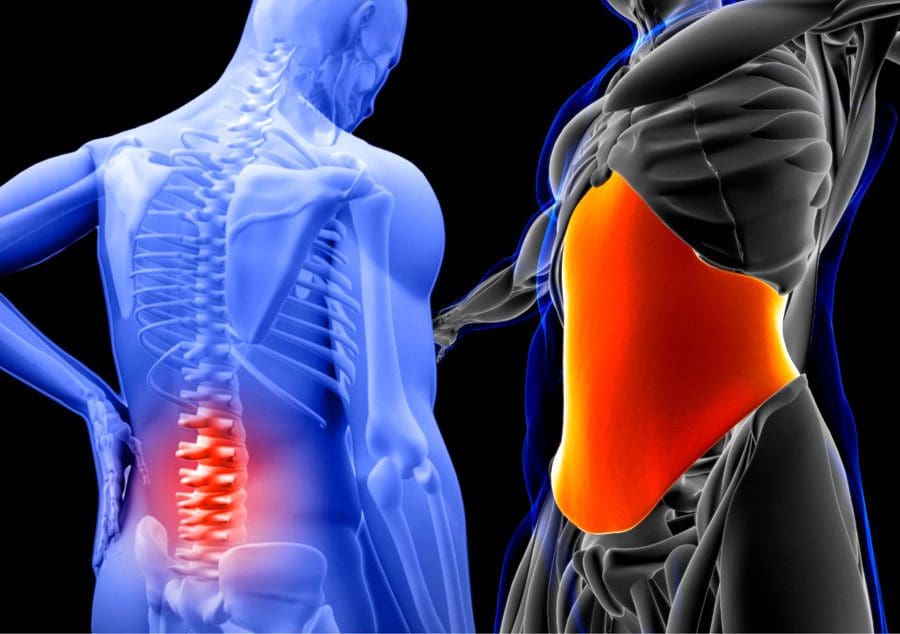
The lower back core muscles initiate and control movement and posture. Total body movements start at the pelvis and are carried out by the low back and abdominal muscles. These core muscles provide control and stability when moving. When the body is not moving, standing and sitting posture habits (healthy and unhealthy) develop based on how an individual controls/holds their pelvis posture. The lower back muscles are in constant demand for performing repetitive motions or forceful actions. The muscles become chronically tight and sore, joints and nerves get compressed, and bones and connective tissue stay in a stressed state, causing intense pain and damage to the body’s structure. These problems can result from muscle memory, the nervous system’s operating procedure to make movements automatic.
Muscle Memory
The nervous system controls the movement and contraction in the muscles and constantly reinforces and learns new movement patterns to become more efficient through muscle memory. However, this learning process allows for the development of healthy muscle habits and unhealthy muscular habits. An example is sitting using a slouching posture. The nervous system will store that posture data and subconsciously contract the abdominal and pectoral muscles, so the slouched posture takes over. Because of the continual usage and compromised postures, various muscles start to tighten up. Individuals are typically not aware of the gradual tightening until stiffness, soreness, and pain sets in. Tight muscles pull the skeleton in awkward ways that cause body misalignments, causing:
Individuals develop unique muscle patterns and tension levels throughout the body due to repetitive daily activities, stress responses, injuries sustained, and physical activities. Muscle memory issues can contribute to chronic back pain and sciatica. Unhealthy muscle memory causes the muscles not to return to their natural state but to the awkward position and makes that the natural state. Healthy muscle memory leads to instant reflexes that make movements smooth and effortless.
Chiropractic will relieve back and sciatica pain by inducing deep muscle relaxation that releases endorphins. The soreness and tension will be massaged, and mechanical decompression if necessary. Massage and stretching will help retrain muscle and movement memory, along with exercises to reinforce the retraining.
Spinal Decompression Therapy
References
Campbell, James N, and Richard A Meyer. “Mechanisms of neuropathic pain.” Neuron vol. 52,1 (2006): 77-92. doi:10.1016/j.neuron.2006.09.021
Wilder, David G et al. “Effect of spinal manipulation on sensorimotor functions in back pain patients: study protocol for a randomized controlled trial.” Trials vol. 12 161. 28 Jun. 2011, doi:10.1186/1745-6215-12-161
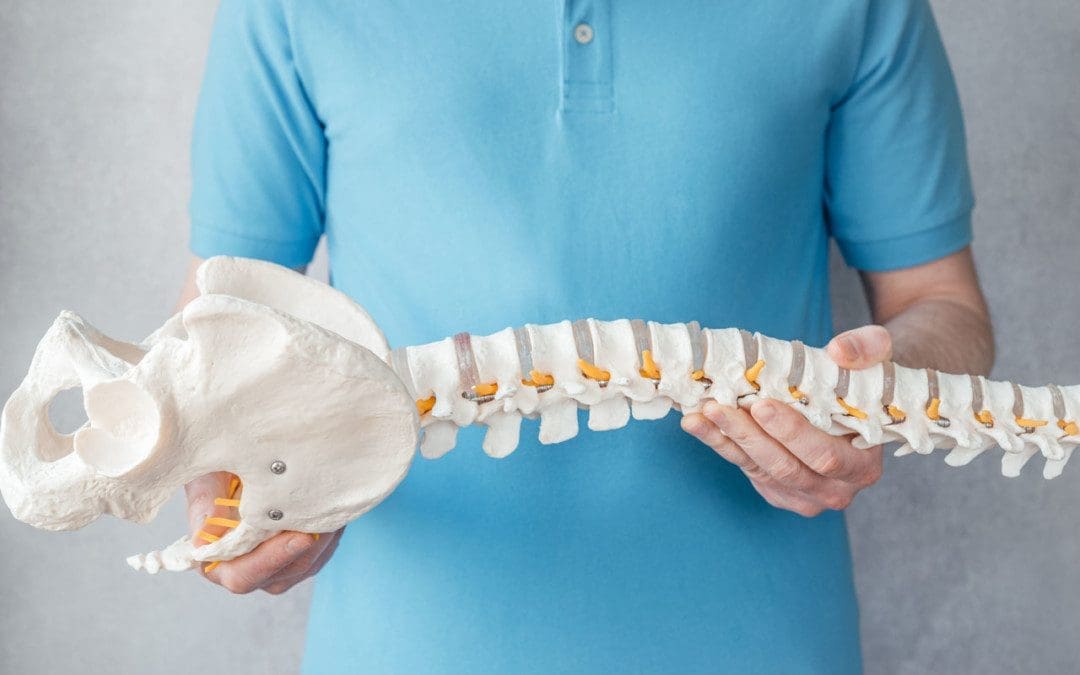
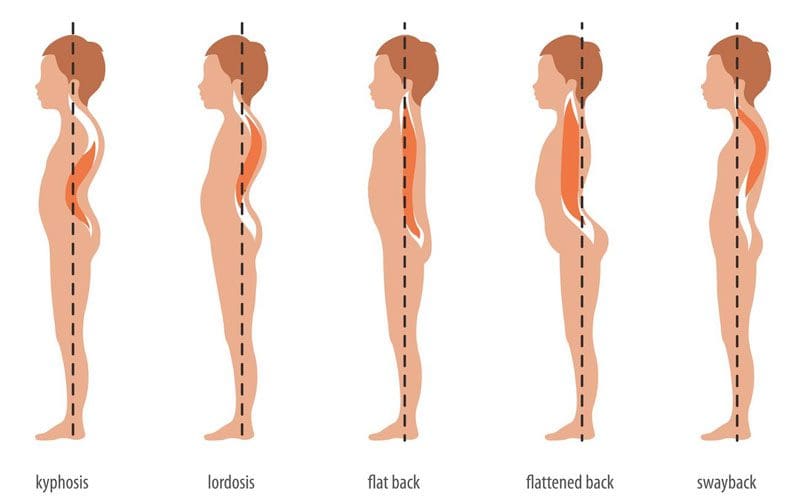
Individuals believe that maintaining a straight/flat back is healthy. However, the back is made up of natural curves that allow flexibility and optimal movement. If there is a lack of these curves, it can lead to spine issues, discomfort, and pain. A common problem to develop from a spine lacking natural curvature is abnormal kyphosis. This is when the natural curve in the thoracic spine – mid-back or lumbar spine – low back disappears, which results in a flat back. Restoring the curvature can be challenging, as flatback syndrome requires chiropractic adjustments to gently shift and realign the spine back into a healthy curve and re-train the spine to maintain the curve.
Causes of Flat Back Syndrome
Flatback syndrome is usually a result of muscle tightness in the lower back muscles, specifically in the psoas muscle. Or it could be degenerative disc disease, where the cartilage supporting the spine begins to weaken. Other causes include arthritis and osteoporosis. Practicing unhealthy posture habits can worsen these conditions, speeding up the loss of the spine’s curvature. Loss of spinal curvature does not occur rapidly, as the body will begin to present with symptoms. The following symptoms could be an indication:
Fatigue when trying to stand upright
Balance problems
Restricted mobility
Muscle spasms
Chronic low back pain
Thigh pain
Groin pain
Disc herniation
Back pain and problems with balance are the earliest warning signs of flatback syndrome.
Symptoms
Flatback symptoms usually get worse as the day progresses, with a sense of fatigue and increasing difficulty to stand upright. Individuals tend to flex or bend their hips and knees to get into an upright position. This can become an exhausting process as the day progresses. Individuals can also have symptoms of sciatica and/or spinal stenosis with leg pain and weakness that gets worse when walking. Neck and upper back pain can begin to present while straining to align themselves. The symptoms become disabling, often requiring pain medications that limit the individual’s ability to perform daily activities.
Realignment Treatment
A chiropractor must determine the severity of the deviation through a thorough assessment and examination. This shows the loss of curvature to help a chiropractor plan a realignment/remodeling adjustment schedule. Restoring a natural kyphosis is done through a combination of adjustments and bracing. Scheduled spinal adjustments will realign and shift the vertebrae back to neutral, while a back brace supports to prevent any deviation. Stretching and exercising relevant muscle groups is also part of a chiropractic treatment plan. An example is core exercises for strengthening the muscles supporting the spine.
Body Composition
Personalized Nutrition
Because the body is so complex and dynamic, there is no perfect fit when it comes to diet, exercise, or a combination. Fad diets typically recommend that individuals adhere to the same eating guidelines, indicating they will reach an expected result like fat loss. These diets work because they focus on a simple reduction in calorie intake, especially processed and fast foods. The problem is that some of these fad diets can restrict critical nutrients that negatively affect an individual’s health. More information about an individual’s body and how it works is an excellent resource in improving body composition and overall health. Personalized nutrition is an innovative and favorable approach to preventing and treating obesity and related conditions. This approach identifies:
Genetic markers
Dietary patterns
Environment
Metabolism
Educated recommendations can be made based on these factors.
References
Drabsch, Theresa, and Christina Holzapfel. “A Scientific Perspective of Personalised Gene-Based Dietary Recommendations for Weight Management.” Nutrients vol. 11,3 617. 14 Mar. 2019, doi:10.3390/nu11030617
Farcy, J P, and F J Schwab. “Management of flatback and related kyphotic decompensation syndromes.” Spine vol. 22,20 (1997): 2452-7. doi:10.1097/00007632-199710150-00025
Lee, Chang-Hyun, et al. “‘Lumbar Degenerative Kyphosis’ Is Not Byword for Degenerative Sagittal Imbalance: Time to Replace a Misconception.” Journal of Korean Neurosurgical Society vol. 60,2 (2017): 125-129. doi:10.3340/jkns.2016.0607.001
Lu, Daniel C, and Dean Chou. “Flatback syndrome.” Neurosurgery clinics of North America vol. 18,2 (2007): 289-94. doi:10.1016/j.nec.2007.01.007
Wiggins, Gregory C et al. “Management of iatrogenic flat-back syndrome.” Neurosurgical focus vol. 15,3 E8. 15 Sep. 2003, doi:10.3171/foc.2003.15.3.8
IFM's Find A Practitioner tool is the largest referral network in Functional Medicine, created to help patients locate Functional Medicine practitioners anywhere in the world. IFM Certified Practitioners are listed first in the search results, given their extensive education in Functional Medicine