Does an individual’s ideal daily intake of vegetables depend on age, sex, and activity level?
Daily Serving of Vegetables
Vegetables are vital to a healthy diet. Every type offers various nutrients in a unique combination of vitamins, minerals, and phytochemicals. Plus, they are low in fat and calories and packed with fiber. The U.S. Department of Agriculture and other health organizations recommend eating a variety for optimal health. An age guide recommends the number of cups of vegetables that babies and older adults should consume daily. The U.S. Centers for Disease Control and Prevention reports that very few individuals meet the vegetable consumption guidelines, putting them at risk for chronic diseases like diabetes and heart disease. (U.S. Centers for Disease Control and Prevention, 2017)
What Is a Serving?
Current Dietary Guidelines recommend 2 1/2 cups of vegetables or nine servings daily. However, the amount varies by age. Serving sizes are also based on the type of vegetable. Overall, individuals are recommended to consume a variety each day. For most vegetables, a serving equals the amount that will fill one measuring cup. However, a serving of raw leafy greens like spinach and lettuce is two cups (U. S. Department of Agriculture, 2020), and eight ounces of vegetable juice also counts as one cup serving. For those who don’t have a measuring cup or kitchen scale, here are some one-cup equivalents for certain vegetables.
One large tomato
One medium potato
One large ear of corn
One large sweet pepper
One large sweet potato
Two medium carrots
Five or six broccoli florets
Another way is to use tablespoons—one cup contains around 16 tablespoons, which can be used when calculating servings for babies, toddlers, and young children.
Babies
Most babies are ready to eat solid foods between four and six months. There’s no ideal order, so starting with vegetables is fine. Starting babies with foods like peas, carrots, and squash could help encourage a preference for these foods that will carry on into adulthood, as babies tend to gravitate toward sweet flavors and may only want applesauce and pears, which could lead to not wanting to eat vegetables. It is recommended to start with a few teaspoons at a time. Eventually, they will eat about three or four tablespoons of baby food, like cereal or purees, a few times a day, which can fill about half a cup.
Toddlers 2-3
Toddlers age two to three should consume one cup of vegetables each day. If that sounds like a lot, remember that one cup can be spread throughout the day—it doesn’t have to be finished in a single meal. It also means one cup of various vegetables, not just one type. For example, some baby carrots during breakfast, steamed broccoli for lunch, and roasted sweet potatoes with dinner. Each serving can include four tablespoons that will become one serving. And if the only vegetable the toddler will eat is corn, that’s okay. There are also ways to disguise vegetables so they will eat them, like spinach or kale, which can disappear into a fruit smoothie. Children under five can choke on uncooked fruits and vegetables, so make sure whatever form is safe.
Young Children 4-8
Boys and girls in this age group should eat one and a half cups of vegetables daily. Regarding preparation, it’s fine to eat raw and cooked veggies. However, four-year-olds are still at risk of choking on raw vegetables. Cut carrots, bell peppers, and other vegetables into pieces no larger than a half-inch long so they won’t get stuck in their throat if inadvertently swallowed without chewing properly. And steamed, baked, and roasted vegetables are the healthiest.
Tweens 9-13
During the tween years, nutritional needs vary slightly based on sex. The recommended daily amount for girls is at least two cups. For boys, the recommendation is at least two and a half cups. Tweens of either gender who are especially active benefit from eating more than the suggested minimum. Research shows that boys eat fewer vegetables and fruits than girls. (Bere E. et al., 2008) Offer as much variety of vegetables and ways to prepare to find the ones they enjoy most.
Teens 14-18
Teenage girls should eat at least two and a half cups of vegetables daily, and boys eat at least three cups. Active teens who get 30 minutes of exercise daily may need more. However, it can be harder to monitor their vegetable intake as kids get older and spend more time eating away from home. In all family meals, try to include a variety of healthy prepared vegetables like:
Raw in salads
Steamed
Roasted
Baked as a side dish
Folded into omelets
Added to soups and stews
Layered on pizzas
Make it easy for teenagers to have vegetables between meals. Pre-cut carrots, celery, and bell peppers can be kept front and center in the fridge alongside hummus or guacamole for dipping.
Young Adults 19-30
The recommended daily amount of vegetables for individuals ages 19 to 30 is the same as for teens: at least three cups daily for men and at least two and a half cups for women. Those who exercise should include more. If a busy lifestyle makes getting all the vegetables needed difficult, take advantage of options like smoothies, including vegetables, pre-tossed salads, and prepped-for-cooking vegetables at the store. They may be more expensive, but if the time saved makes it easier to eat vegetables, it may be worth it, and eventually, individuals will learn how to prepare their own. Kitchen gadgets, like a smoothie blender, can help with faster preparations.
Adults 31-50
As with young adults, the amount of vegetables should be at least two and a half cups daily for women, three cups for men, and more for those who work out or are physically active.
Older Adults 51-Up
Because the body’s metabolism slows down, individuals 51 and older are advised to cut calories to prevent weight gain. This also applies to calories from vegetables. Women 51 and older should consume around two cups of vegetables daily, and men should consume around two and a half cups. Active older adults should continue to factor in the amount of physical activity with vegetable intake. Individuals should talk to their doctor or see a nutritionist if they want more specific guidance on what to include in their diet.
Injury Medical Chiropractic and Functional Medicine Clinic
Injury Medical Chiropractic and Functional Medicine Clinic providers use an integrated approach to create personalized care plans for each patient and restore health and function to the body through nutrition and wellness, functional medicine, acupuncture, Electroacupuncture, and sports medicine protocols. If the individual needs other treatment, they will be referred to a clinic or physician best suited for them. Dr. Jimenez has teamed up with top surgeons, clinical specialists, medical researchers, nutritionists, and health coaches to provide the most effective clinical treatments.
Nutrition Fundamentals
References
U.S. Centers for Disease Control and Prevention. (2017). Only 1 in 10 adults get enough fruits or vegetables. Retrieved from https://archive.cdc.gov/#/details?url=https://www.cdc.gov/media/releases/2017/p1116-fruit-vegetable-consumption.html
U. S. Department of Agriculture. (2020). Vegetables. Retrieved from https://www.myplate.gov/eat-healthy/vegetables
Bere, E., Brug, J., & Klepp, K. I. (2008). Why do boys eat less fruit and vegetables than girls?. Public health nutrition, 11(3), 321–325. https://doi.org/10.1017/S1368980007000729
Can knowing the serving size help lower sugar and calories for individuals who enjoy eating dried fruits?
Dried Fruits
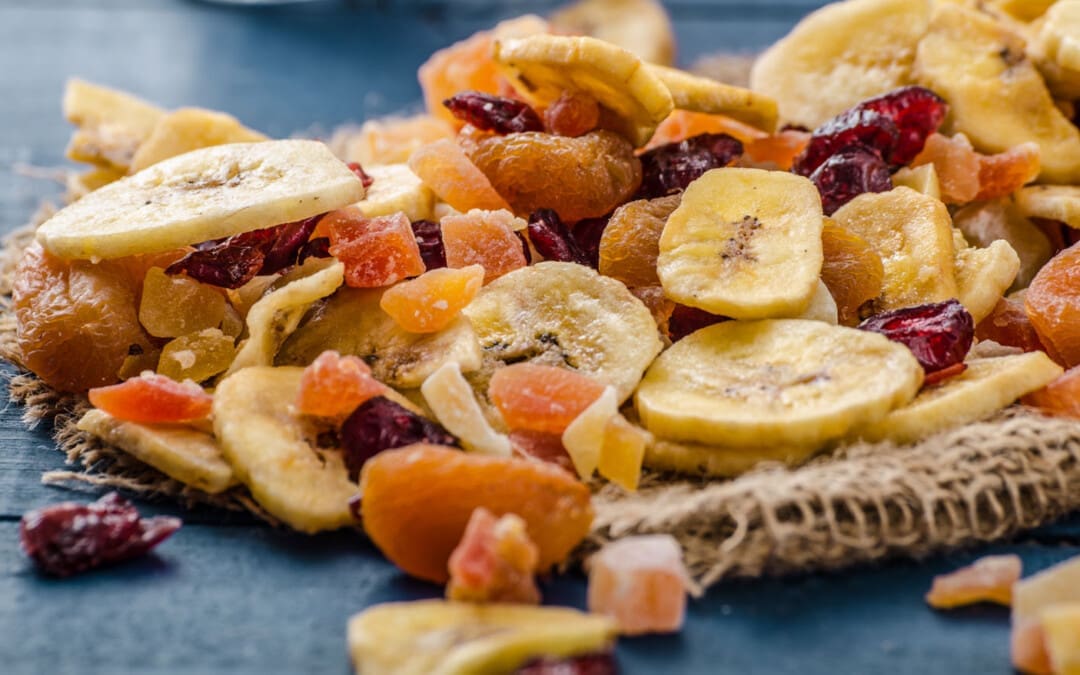
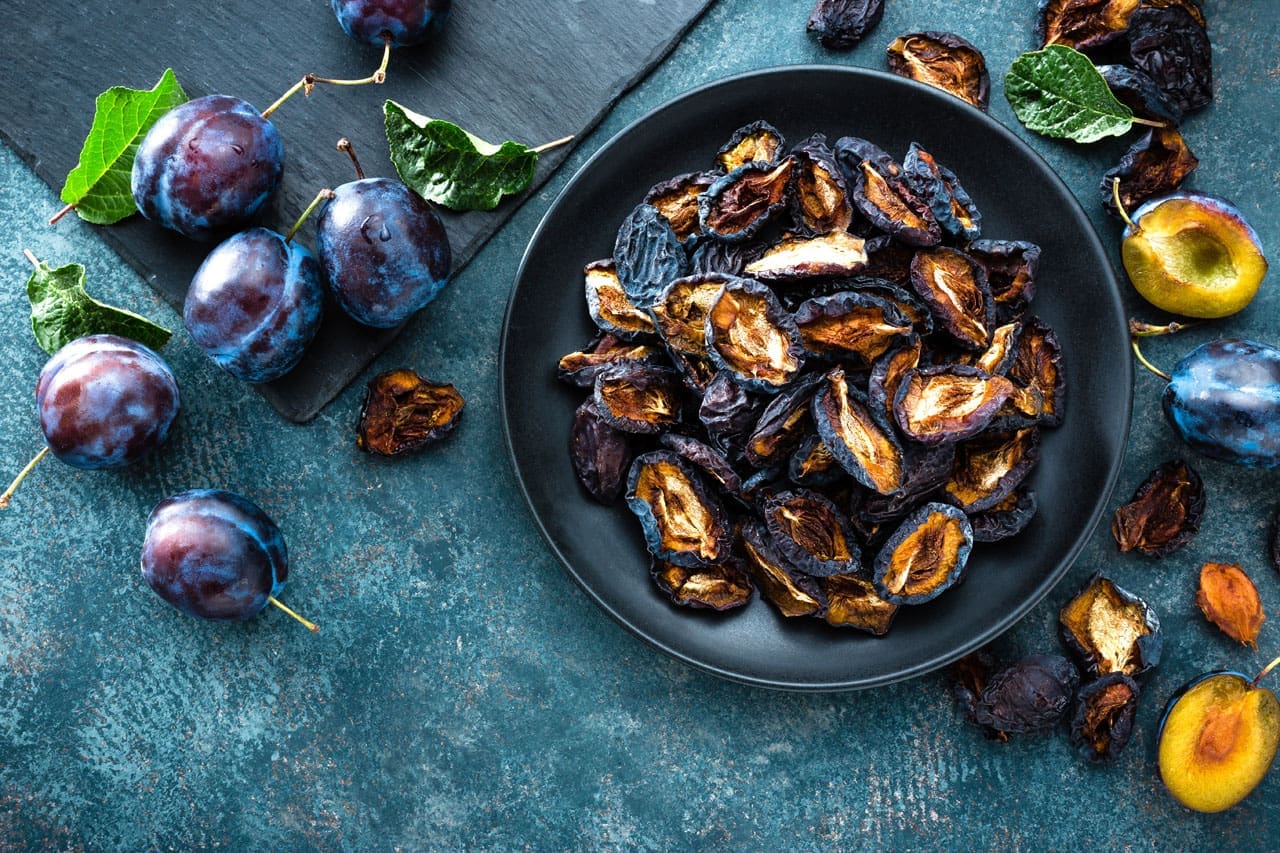
Dried fruits, like cranberries, dates, raisins, and prunes, are great because they last a long time and are healthy sources of fiber, minerals, and vitamins. However, dried fruits contain more sugar and calories per serving because they lose volume when dehydrated, allowing more to be consumed. This is why the serving size matters to ensure one does not overeat.
Serving Size
Fruits are dried in dehydrators or left in the sun to dehydrate naturally. They are ready once most of the water has disappeared. The loss of water decreases their physical size, which allows individuals to eat more, increasing sugar and calorie intake. For example, around 30 grapes fit in a single measuring cup, but 250 raisins can fill one cup once dehydrated. Nutritional information for fresh and dried fruit.
Thirty raisins have 47 calories and under 10 grams of sugar.
Grapes’ natural sugar content varies, so different types can be subject to nutritional value assessments.
Some fruits, like cranberries, can be very tart, so sugar or fruit juices are added during drying.
Ways to Use
Fresh fruit may be higher in certain vitamins, but mineral and fiber content are retained during drying. Dried fruits are versatile and can be made part of a healthy, balanced diet that can include:
Lightly sweeten oatmeal with a small serving of dried fruits for a hearty and healthy breakfast.
Salads
Toss dark, leafy greens, fresh apple slices, dried cranberries or raisins, and cheeses.
Main Course
Use dried fruit as an ingredient in savory entrees.
Protein Bar Substitutes
Raisins, dried blueberries, apple chips, and dried apricots are convenient and last longer than fresh fruit, making them perfect when protein bars are unavailable.
At Injury Medical Chiropractic and Functional Medicine Clinic, our areas of practice include Wellness & Nutrition, Chronic Pain, Personal Injury, Auto Accident Care, Work Injuries, Back Injury, Low Back Pain, Neck Pain, Migraine Headaches, Sports Injuries, Severe Sciatica, Scoliosis, Complex Herniated Discs, Fibromyalgia, Chronic Pain, Complex Injuries, Stress Management, Functional Medicine Treatments, and in-scope care protocols. We focus on what works for you to achieve improvement goals and create an improved body through research methods and total wellness programs.
Functional Medicine’s Influence Beyond Joints
References
FoodData Central. U.S. Department of Agriculture. (2017). Raisins. Retrieved from https://fdc.nal.usda.gov/fdc-app.html#/food-details/530717/nutrients
FoodData Central. U.S. Department of Agriculture. (2018). Grapes, American type (slip skin), raw. Retrieved from https://fdc.nal.usda.gov/fdc-app.html#/food-details/174682/nutrients
FoodData Central. U.S. Department of Agriculture. (2018). Grapes, red or green (European type, such as Thompson seedles), raw. Retrieved from https://fdc.nal.usda.gov/fdc-app.html#/food-details/174683/nutrients
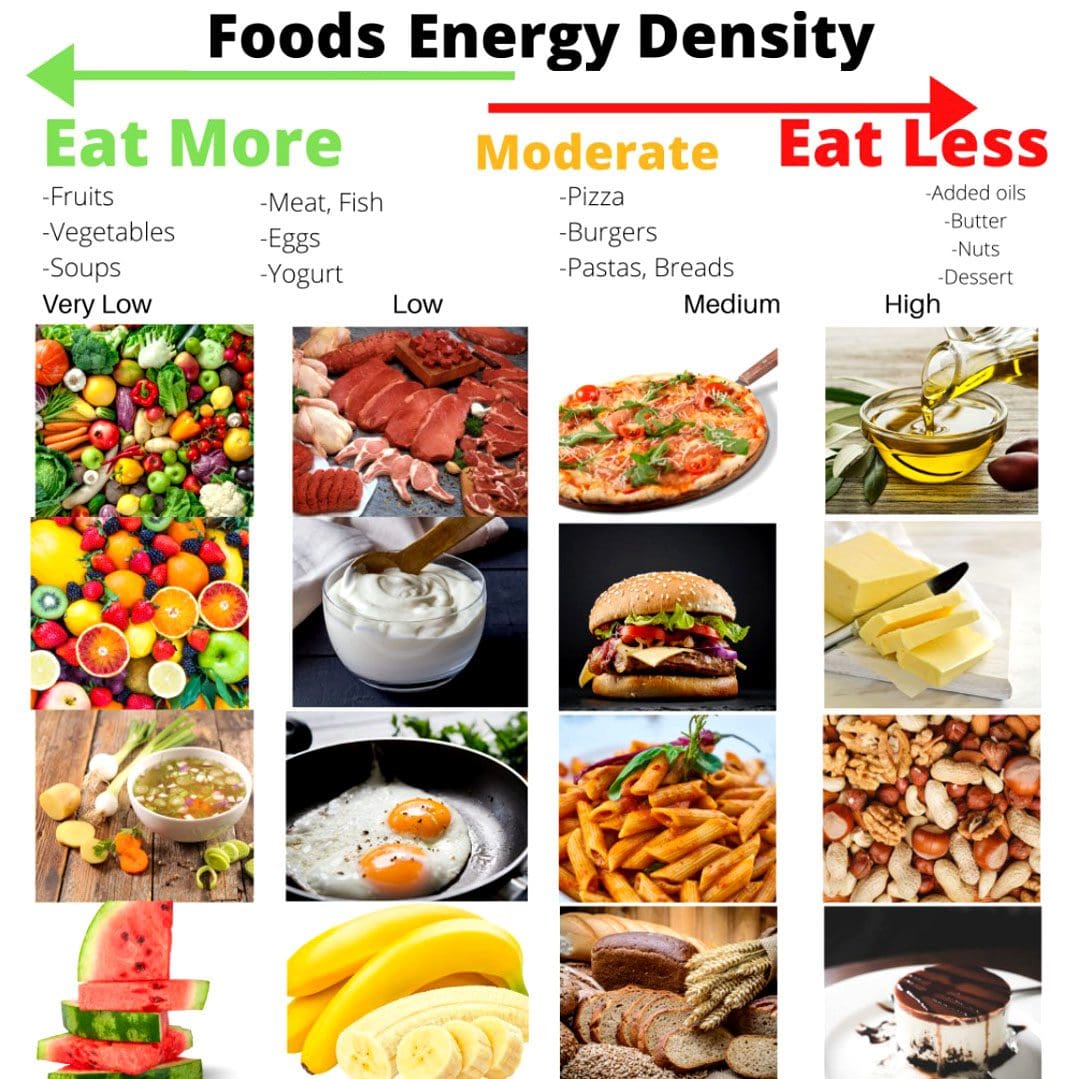
The brain and body need macronutrients that include carbohydrates, fats, and protein in the right amounts to energize the body. About half of the calories should come from carbohydrates, 30% from fat, and 20% from protein. Food energy density is the amount of energy, represented by the number of calories, in a specific weight measurement.
Food Energy Density
Energy density is determined by the proportion of macronutrients – protein, fat, carbohydrates, fiber, and water.
Energy-dense foods are high in calories per serving.
Foods with large amounts of fiber and water have a lower density.
Foods high in fat have an increased energy density.
An example of a high-energy-density food is a donut because of the high-calorie count from the sugar, fat, and small serving size.
An example of a low-energy-density food is spinach because it only has a few calories in a whole plate of raw spinach leaves.
Energy Dense Foods
Energy-dense foods contain a high number of calories/energy per gram. They are typically higher in fat and lower in water. Examples of energy-dense foods include:
Full-fat dairy
Butter
Cheese
Nut butter
Fatty cuts of meat
Starchy vegetables
Thick sauces
Nuts
Seeds
Less nutrient-dense foods include:
Sweets
Deep-fried foods
French fries
Pasta
Crackers
Chips
Foods like soups and beverages can be either high or low energy density depending on the ingredients. Broth-based soups with vegetables usually have low density while creamed soups are energy-dense. Non-fat milk is less dense than regular milk, and diet soda is less dense than regular soda.
Low Energy Dense Foods
Foods with low energy density include high-fiber green and colorful vegetables.
Foods with low energy density are often nutrient-dense, which means they have plenty of nutrients per serving size.
Many fruits, berries, and vegetables are low in calories, high in fiber, and packed with vitamins and minerals.
Foods high in water content like citrus fruits and melons are usually less energy-dense.
Low-calorie foods often have a low energy density, but not always.
It’s important to read nutrition labels to know how many calories are being provided daily.
Weight Management
Weight management is about watching how many calories are taken in and how many calories are burned.
Filling up on foods with low energy density will cause the body to feel satisfied while eating fewer high-density calories.
Plan all meals so they include foods with a low energy density and high in nutrients.
However, the opposite can happen if individuals eat mostly low-energy-dense foods, will need a larger volume of food to fill up, and as a result, will take in more calories.
This is not ideal for losing weight, but it could be helpful if trying to gain weight.
High-energy-dense foods that are nutritious include avocados, nuts, and seeds.
Adjustment Recommendations
Add More Fruits and Vegetables To The Plate
At least half of a plate should be covered with low-calorie fruits and vegetables.
Berries are sweet and delicious and provide antioxidants
Leave a quarter of the plate for the protein, and the remaining quarter can hold a serving of starchy foods like pasta, potatoes, or rice.
Eating more fruits and vegetables will partially fill the body leading to eating less high-energy-dense foods.
Picky eaters should try various recipes, sooner or later, they will discover something they enjoy.
Start With Salad or a Bowl of Clear Broth Soup
Soups and salads will fill the body before the main energy-dense course like pasta, pizza, or another high-calorie food.
Avoid heavy cream-based salad dressings and creamed soups.
Water has zero calories and drinking a few glasses can help suppress the hunger until the next meal, or a low-density snack.
Fernandez, Melissa Anne, and André Marette. “Potential Health Benefits of Combining Yogurt and Fruits Based on Their Probiotic and Prebiotic Properties.” Advances in nutrition (Bethesda, Md.) vol. 8,1 155S-164S. 17 Jan. 2017, doi:10.3945/an.115.011114
Horgan, Graham W et al. “Effect of different food groups on energy intake within and between individuals.” European Journal of Nutrition vol. 61,7 (2022): 3559-3570. doi:10.1007/s00394-022-02903-1
Hubbard, Gary P et al. “A systematic review of compliance to oral nutritional supplements.” Clinical nutrition (Edinburgh, Scotland) vol. 31,3 (2012): 293-312. doi:10.1016/j.clnu.2011.11.020
Prentice, A M. “Manipulation of dietary fat and energy density and subsequent effects on substrate flux and food intake.” The American Journal of clinical nutrition vol. 67,3 Suppl (1998): 535S-541S. doi:10.1093/ajcn/67.3.535S
Slesser, M. “Energy and food.” Basic life sciences vol. 7 (1976): 171-8. doi:10.1007/978-1-4684-2883-4_15
Specter, S E et al. “Reducing ice cream energy density does not condition decreased acceptance or engender compensation following repeated exposure.” European Journal of clinical nutrition vol. 52,10 (1998): 703-10. doi:10.1038/sj.ejcn.1600627
Westerterp-Plantenga, M S. “Effects of the energy density of daily food intake on long-term energy intake.” Physiology & behavior vol. 81,5 (2004): 765-71. doi:10.1016/j.physbeh.2004.04.030
The low back is a common source of discomfort and soreness among volleyball players because of repetitive jumping, bending, and rotating of the trunk. Adolescents have an increased risk of this injury because their vertebral bones are still developing, which increases the risk for stress fractures. Chiropractic care, massage therapy, decompression, rest, and athletic training can help expedite pain relief and heal the injury.
Volley Back Pain
Muscle or ligament strains are the most common injury from repetitive jumping, bending, rotating movements, and hyperextension during serving, hitting and setting. This can lead to excessive compression forces on the discs and joints, causing reduced blood circulation, increasing the risk of overload injuries. One study reported that low back pain is experienced in 63% of players. However, if low-back pain is accompanied by pain that runs down the leg along with numbness or weakness in the foot or ankle, the issue could be a herniated disc.
Causes
One common reason is endurance imbalances in the muscles that stabilize the low back. The core muscles provide stability to the low back and spine for all movements. If imbalances are present, a player may spike or serve the ball with intense turning and arching. The added actions cause increased pressure in the joints and hip, gluteal, and leg muscles, affecting the spine’s stability.
The gluteals run from the back of the pelvis/hip bones down to the outside of the thigh.
The gluteal muscles prevent the trunk and hips from overbending forward when landing.
If the gluteal muscles do not have the strength and endurance to perform this motion, the upper body will bend too far forward, causing poor landing posture and decreased spine stability.
Anterior Pelvic Tilt
Studies have shown that players with low back pain tend to stand and land with an anterior pelvic tilt. This is an unhealthy posture when the front of the pelvis tilts forward, and the back of the pelvis raises. Landing hard with an anterior pelvic tilt causes increased arching and increases the pressure in the joints.
Chronic back pain
Warning signs of a more serious back problem include:
Pain that has lasted for more than 1 week and is not improving or getting worse.
Pain that prevents sleep or causes the individual to constantly wake up.
Difficulty sitting.
Back soreness when performing basic tasks and chores.
Significant pain on the court when jumping, landing, or rotating.
Chronic pain ranges from aches to shooting or throbbing pain that can run down the buttocks and legs.
Chiropractic Care
A chiropractor can alleviate volleyball back pain, rule out a more severe injury, such as a stress fracture or herniated disc, and provide a healthier and faster recovery. According to a study, athletes who received chiropractic care showed better speed and mobility. Quick reflexes and hand-eye coordination depend on an optimal functioning nervous system. 90% of the central nervous system travels through the spine. When one or more spinal segments are misaligned, the effect on the nervous system can seriously impact and disrupt nerve circulation, affecting speed, mobility, reflexes, and hand-eye coordination. Chiropractic adjustments will:
Relax and reset the back muscles.
Realign and decompress the spine.
Remove the pressure around the nerve roots.
Strengthen the core.
Improve and increase range of motion, strength, and overall endurance.
Anterior Pelvic Tilt
References
Haddas R, Sawyer SF, Sizer PS, Brooks T, Chyu MC, James CR. “Effects of Volitional Spine Stabilization and Lower-Extremity Fatigue on the Knee and Ankle During Landing Performance in a Population With Recurrent Low Back Pain.” J Sport Rehabil. 2017 Sep;26(5):329-338. doi: 10.1123/jsr.2015-0171.
Hangai M. et al., Relationship Between Low Back Pain and Competitive Sports Activities During Youth, Am J Sports Med 2010; 38: 791-796; published online before print January 5, 2010, doi:10.1177/0363546509350297.
Jadhav, K.G., Deshmukh, P.N., Tuppekar, R.P., Sinku, S.K.. A Survey of Injuries Prevalence in Varsity Volleyball Players. Journal of Exercise Science and Physiotherapy, Vol. 6, No. 2: 102-105, 2010 102
Mizoguchi, Yasuaki, et al. “Factors associated with low back pain in elite high school volleyball players.” Journal of physical therapy science vol. 31,8 (2019): 675-681. doi:10.1589/jpts.31.675
Movahed,Marziehet al. (2019). “Single leg landing kinematics in volleyball athletes: A comparison between athletes with and without active extension low back pain.”
Sheikhhoseiniet al. (2018). “Altered Lower Limb Kinematics during Jumping among Athletes with Persistent Low Back Pain”
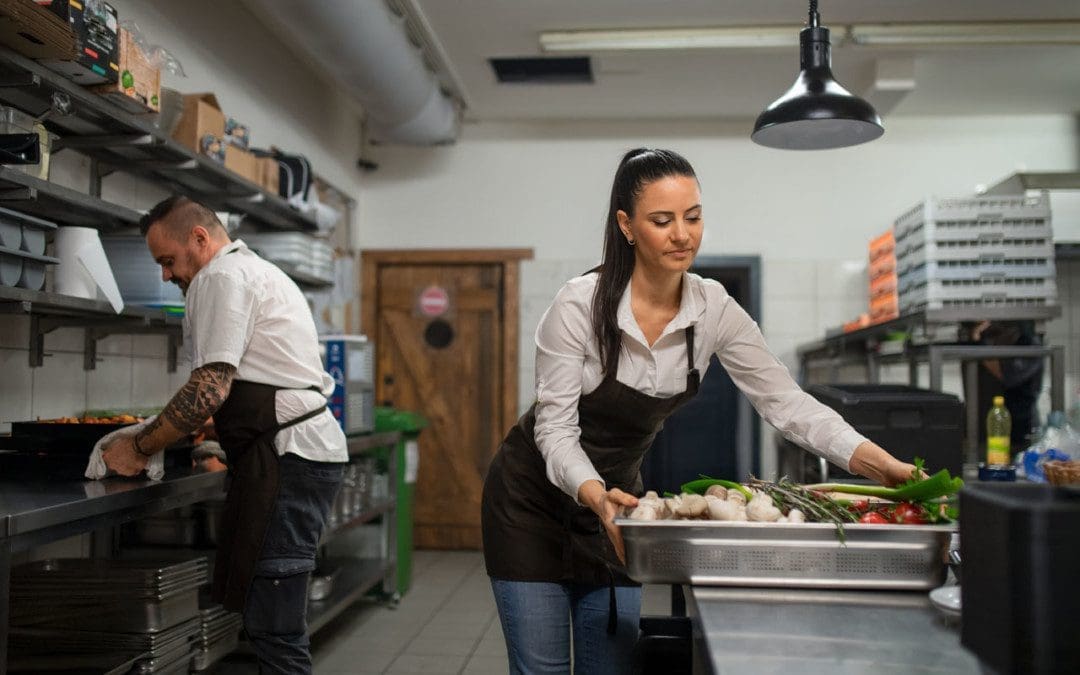
Restaurant work takes a toll on the body with the repetitive moving, bending, twisting, reaching, prepping, cutting, serving, and washing. This is especially true of the shoulders, arms, and hands. When individuals avoid treating their aches and pains, this can lead to chronic pain conditions that can cause severe and permanent damage to the musculoskeletal system. Chiropractic can alleviate the tingling and pain by removing the compression, re-stretching/lengthening, and strengthening the muscles and nerves to perform at optimal levels.
Restaurant Work
The arms and hands are designed to accomplish various tasks. When functioning normally, tasks can be performed flawlessly. Repetitive/Overuse or trauma can cause nerve compression, stiffness, and pain, decreasing function and affecting daily routines.
Carpal Tunnel
Carpal tunnel syndrome is one of the most common disorders that affect the arm and hands.
The carpal tunnel is a space where a nerve and several tendons pass. If the nerve becomes compressed, it can cause numbness, tingling in the fingers, pain, and muscle weakness, making it difficult to grip objects.
Discomfort and pain start gradually in one or both hands.
It can cause tightness and pain in the shoulder, forearm, wrist, and hand.
It can also cause numbness in the palm and fingers.
Avoid scheduling multiple consecutive long shifts for jobs that require repetitive hand motions.
Body Composition
Sticking To A Meal Plan
Identify personal motivation to stick to a meal plan other than improving body composition. To keep motivation high, individuals need to identify other reasons behind goals. This could be:
Saving money from the food budget.
Spending time with loved ones preparing a healthy recipe.
Setting an example to family and friends.
It can be whatever motivates you.
Reassess and tweak the meal plan as needed.
Nutritional needs or dietary preferences change.
Meal planning should be a dynamic process.
Don’t get disappointed if not going as planned.
Refocus by making changes as needed.
References
Gentzler, Marc D, and Janan A Smither. “Using practical ergonomic evaluations in the restaurant industry to enhance safety and comfort: a case study.” Work (Reading, Mass.) vol. 41 Suppl 1 (2012): 5529-31. doi:10.3233/WOR-2012-0872-5529
Laperrière, Ève et al. “Work activity in foodservice: The significance of customer relations, tipping practices and gender for preventing musculoskeletal disorders.” Applied ergonomics vol. 58 (2017): 89-101. doi:10.1016/j.apergo.2016.05.013
Masear, V R et al. “An industrial cause of carpal tunnel syndrome.” The Journal of hand surgery vol. 11,2 (1986): 222-7. doi:10.1016/s0363-5023(86)80055-7
IFM's Find A Practitioner tool is the largest referral network in Functional Medicine, created to help patients locate Functional Medicine practitioners anywhere in the world. IFM Certified Practitioners are listed first in the search results, given their extensive education in Functional Medicine