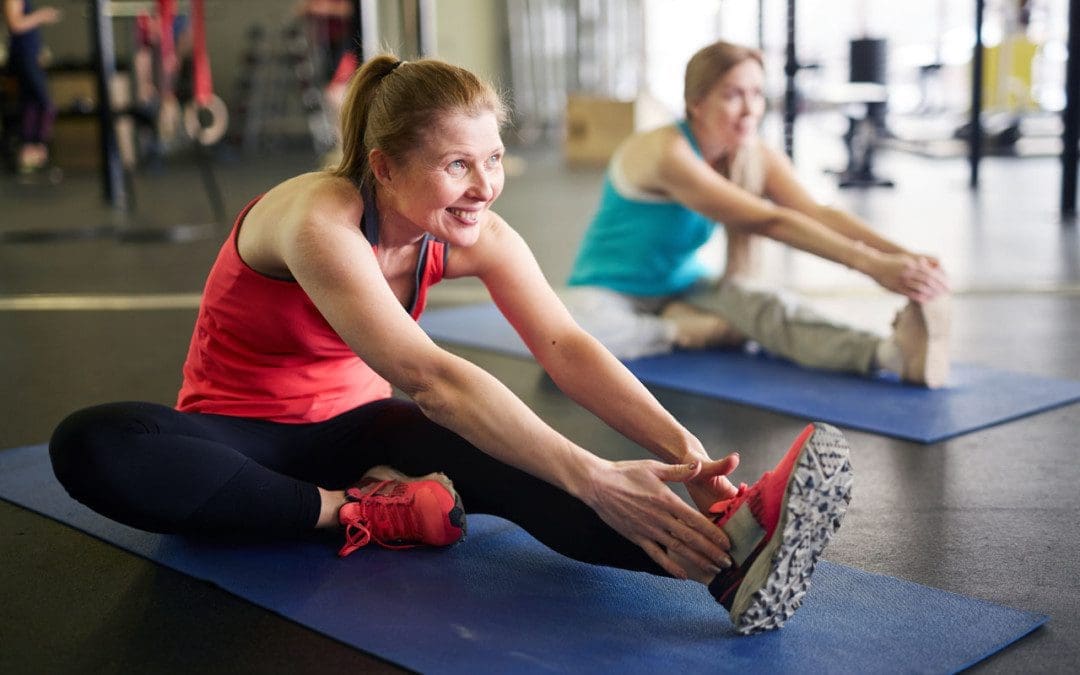
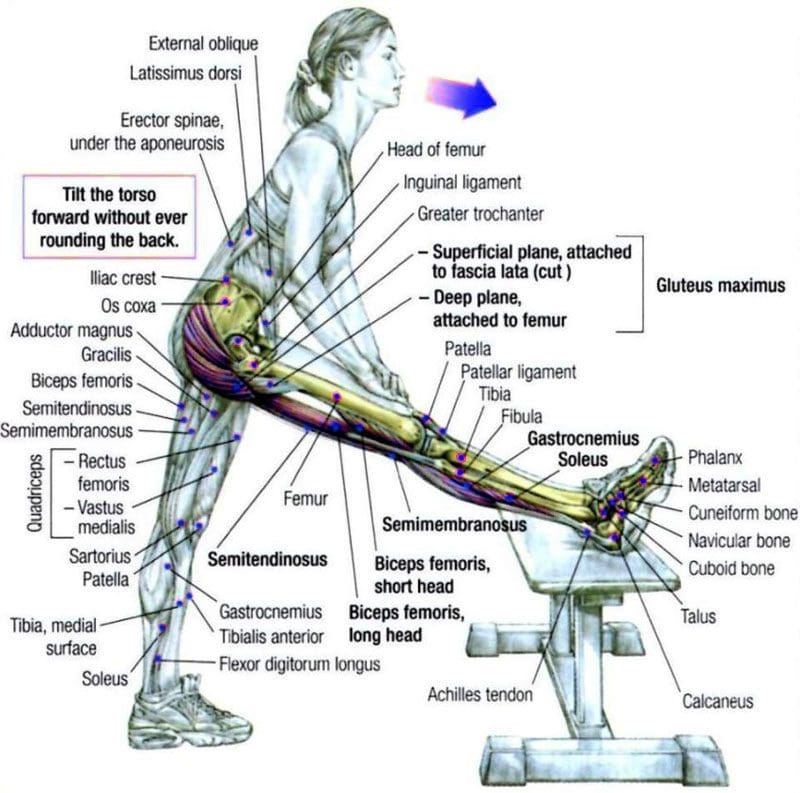
Stretching Fundamentals: Stretching benefits the body by keeping the muscles flexible, strong, healthy, and able to maintain optimal physical performance. As with any other discipline stretching correctly requires using the proper form, correct technique, and practicing regularly. The angles need to be accurate; the body has to move at the right speed and maintain correct posture. The focus should be moving the joint as little as possible as the muscle/s stretch and elongate.
Stretching Fundamentals
Stretching should become a daily activity that turns into a healthy habit. The muscles need frequent maintenance from daily/nightly bending, twisting, reaching, carrying, and lifting work. This is especially true for individuals dealing with constant soreness, aches, pains, and problems with tight, tense, and stressed-out muscles. When the body is stressed, heart rate increases, and individuals tend to tighten up. Stretching benefits include:
Stress relief.
Increased muscle blood flow.
Increased body flexibility.
Helps joints move through their full range of motion.
Improves performance in physical activities.
Decreases soreness, aches, and pains.
Injury prevention.
Improves posture.
Improves sleep.
Preps the body for exercise and activities.
Improves mental health.
Human nature is to take the path of least resistance, which makes the body feel flexible and comfortable. This is a common reason individuals consider stretching unnecessary or too painful to engage in. However,stretching fundamentals need to be maintained as stretching carelessly or poorly can negatively affect other muscles and joints and worsen injuries/conditions.
Guidelines
To stretch safely, it is recommended to do a proper warm-up, stretch slowly, working the right muscles and joints. The guidelines make stretching safer, more effective, and increase body awareness.
Warm-Up
Warming the muscles increases blood flow.
Warming up muscles before physical activity/workout is crucial for preventing injuries and maximizing effectiveness.
Dynamic stretching involves moving into and out of positions through a full range of motion rather than holding a stretch for a prolonged period.
Dynamic stretches are recommended to be held for 2-3 seconds for 4-6 repetitions.
Take It Slow
Stretching out too fast can make the body think that the muscle is about to get torn or injured.
To protect the muscle, it contracts, preventing it from reaching the full stretch.
This is why the correct technique needs to be observed.
A couple of degrees in the wrong direction can mean the difference between a healthy stretch and pulling a joint capsule causing injury.
Body Composition
Muscle Recovery
When engaged in physical activity, exercise, or working, microscopic tears are happening to muscle cells. Because of the body’s stress and fatigue, hormone and enzyme levels fluctuate, and inflammation increases. This helps in fat loss, increases metabolism, increases strength and muscle growth. However, these benefits only happen with proper recovery. Different types of recovery include:
Immediate Recovery
These are the quick moments’ in-between physical movements.
For example, the time between each stride when jogging.
Short-Term Recovery
This is the time between activities or sets of exercises.
For example, the rest periods between doing a heavy job or sprint intervals.
Training Recovery
This is the time between when one workout or job ends, and the next begins.
There is no one size fits all, as everyone’s body is different; it is recommended to consult with a trainer or fitness expert and experiment with what feels right.
For some individuals, 24 hours is enough.
For others, it can take 48 or 72 hours to feel fully recovered.
Other factors that affect recovery are:
Age
Fitness level
Work/exercise intensity
Diet
Sleep
References
Behm, David G, and Anis Chaouachi. “A review of the acute effects of static and dynamic stretching on performance.” European Journal of applied physiology vol. 111,11 (2011): 2633-51. doi:10.1007/s00421-011-1879-2
Freitas, S R et al. “Stretching Effects: High-intensity & Moderate-duration vs. Low-intensity & Long-duration.” International journal of sports medicine vol. 37,3 (2016): 239-44. doi:10.1055/s-0035-1548946
Hotta, Kazuki et al. “Daily muscle stretching enhances blood flow, endothelial function, capillarity, vascular volume and connectivity in aged skeletal muscle.” The Journal of physiology vol. 596,10 (2018): 1903-1917. doi:10.1113/JP275459
Kataura, Satoshi et al. “Acute Effects of the Different Intensity of Static Stretching on Flexibility and Isometric Muscle Force.” Journal of strength and conditioning research vol. 31,12 (2017): 3403-3410. doi:10.1519/JSC.0000000000001752
Moderate physical activity for most expectant moms is encouraged for a healthy pregnancy. The CDC warns that bending too much while pregnant could lead to complications. However, moving boxes is not all there is to do. There are plenty of things like cleaning, organizing, packing, showing where to put the boxes, getting food and refreshments, etc.
Moving during pregnancy
Moving is exciting and stressful at the same time. Questions start to come up like bending, lifting, and wearing a back brace. Here are some tips during your move.
Talk to a doctor
Your doctor or chiropractor should know about the upcoming move giving them an opportunity to help and provide safety tips. If it is during the first trimester it could be stressful for the pregnancy if not careful. Moving during the first three months could cause preterm labor with other possible complications. This does not mean to not move just to make a plan with your doctor for keeping the stress low and avoiding the risk for potential issues.
Questions to ask:
What can I lift while pregnant?
Is there a specific bending technique?
Is lifting during the first trimester safe?
How long should I be on my feet during the move?
Is it safe to go up and down stairs consistently?
Brain fog and planning ahead
This is also known as baby brain or pregnancy brain and is the cognitive slowdown and memory issues that many pregnant women report. If there are issues with general cognitive functioning, fatigue, or other brain fog symptoms, careful planning can help.
Help for pregnancy brain fog:
Create detailed lists and save them to your phone or location where they won�t get lost.
Sleep a lot more as being tired will worsen symptoms.
During the move take frequent breaks.
Eat foods with Omega-3, these benefit brain function, and the baby�s development.
Packing fun
Packing the right way can mean all the difference between a smooth move and a chaotic one. It is recommended to allow for a week longer than anticipated for packing. Declutter a month before packing. Then donate, sell, and give away whatever is not needed to lighten the load. Create a moving day kit with a change of clothes, snacks, water, vitamins, a cooling pack, and anything else that a pregnant woman will need.
Having fun during the packing process can be accomplished by turning the tasks into a game or some type of fun activity. Working/dancing with fun music can ease the monotony, keeps the joints loose, proper blood circulation is achieved and the stress is worked out. Light aerobic dancing has shown to decrease the risk of disorders while pregnant, and the recovery time after giving birth.
Get plenty of help
Nobody wants to help family, friends move. Therefore throw a party or some event where everyone will be of the mindset that it was worth helping out. More help is needed during pregnancy because of the added rest times and minimal heavy lifting. If there is not enough help, an investment in professional movers could be necessary. Prices vary depending on where someone lives and the companies available. However, with some research, it can be money well spent while pregnant.
Safety checklist
Create a safety checklist that includes:
Regular water breaks – hydration is extremely important while pregnant, especially if prone to morning sickness.Dehydration symptoms can include:
Doctors generally recommend twenty-five pounds as the threshold during pregnancy. However, it depends on the trimester and what the individual is already used to lifting. An example is a woman lifting something heavy in the third trimester is different than when they were only five weeks. Proper lifting techniques need to be implemented like bending the knees not the back, keep the back straight while doing so, and avoid quick jerking movements.
Proper moving attire
On moving day, wear lightweight, breathable, stretchy clothing, so discomfort and malfunction won’t pop up. Cotton stays cool and free of sweat or itchiness. When pregnant the center of balance shifts, therefore, the right shoes are a must. Here are some shoes that can help during pregnancy.
Don’t rush the nursery
Getting the nursery finished for the baby, creates added pressure. Pretty much all newborns sleep in the same room with their parents, and the American Academy of Pediatrics recommends this for the first months. So cut yourself some slack when it comes to the perfect baby nursery. The baby is not going to hold it against you and there is time after the move to settle in.
Proper rest
This is a stressful time that requires a lot of energy. But just like proper hydration is important, so is plenty of sleep and embrace the positive aspects rather than focus on the complications. Talk to your doctor, enlist plenty of help, drink lots of water, and leave the heavy lifting to those that are not pregnant. At the end of the day, it will all be worth it.
Back Pain During Pregnancy Treatment
Dr. Alex Jimenez�s Blog Post Disclaimer
The scope of our information is limited to chiropractic, musculoskeletal, physical medicines, wellness, and sensitive health issues and/or functional medicine articles, topics, and discussions. We use functional health & wellness protocols to treat and support care for injuries or disorders of the musculoskeletal system. Our posts, topics, subjects, and insights cover clinical matters, issues, and topics that relate and support directly or indirectly our clinical scope of practice.*
Our office has made a reasonable attempt to provide supportive citations and has identified the relevant research study or studies supporting our posts. We also make copies of supporting research studies available to the board and or the public upon request. We understand that we cover matters that require an additional explanation as to how it may assist in a particular care plan or treatment protocol; therefore, to further discuss the subject matter above, please feel free to ask Dr. Alex Jimenez or contact us at 915-850-0900. The provider(s) Licensed in Texas& New Mexico*
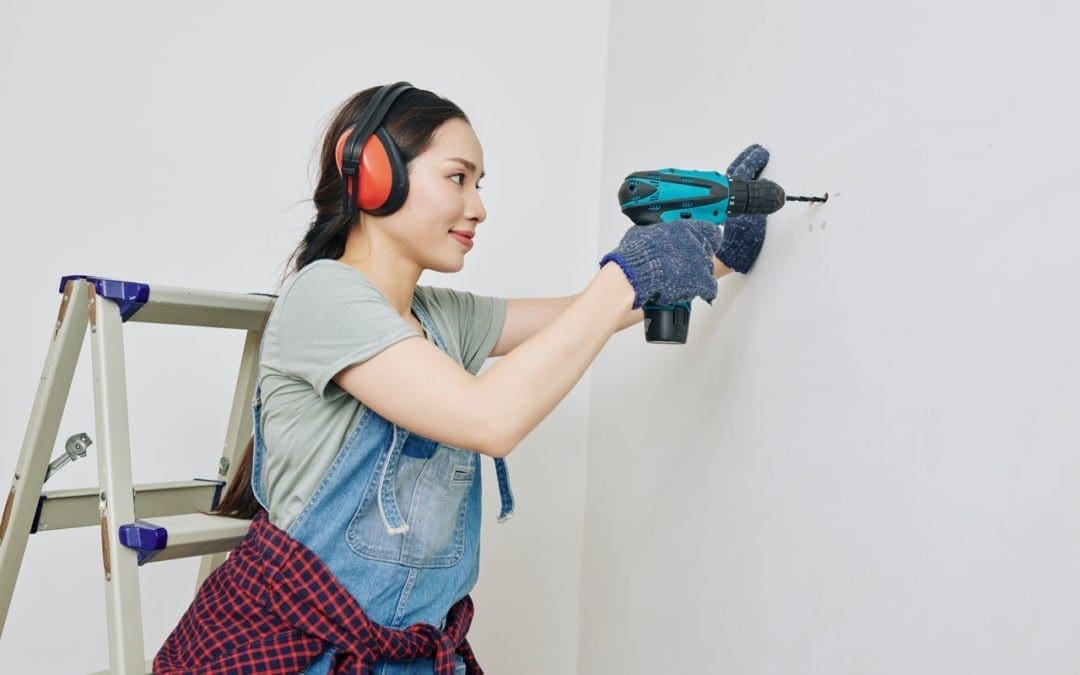
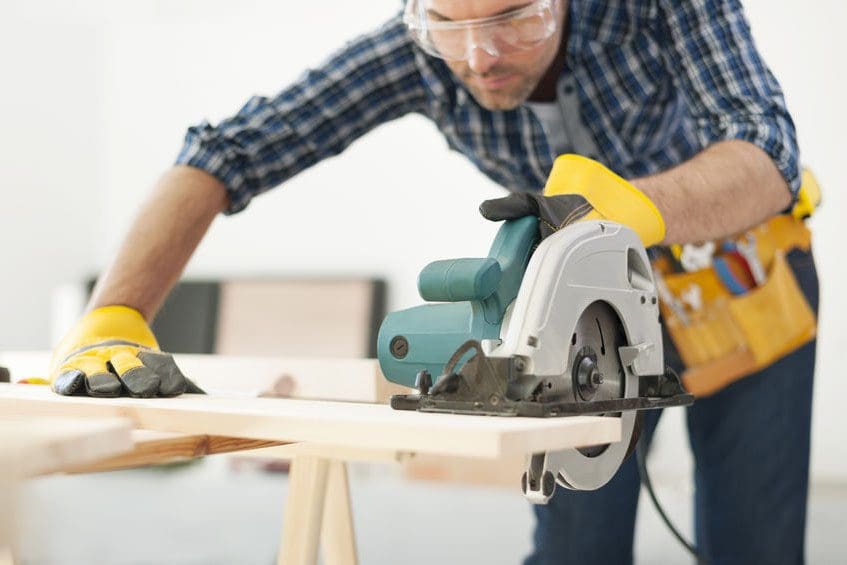
There are all kinds of tools for all kinds of jobs. However, using the correct tool can mean the difference between a job well done and a job that got done but also generated injuries and pain.
Examples:
Long tools are best for when you need leverage, sparing the need for massive physical force.
Vice grips and clamps can grip/stabilize objects rather than trying to hold objects with your hands.
Tilt objects to avoid overbending the wrists.
Use a cart/dolly/arm straps to carry heavy loads.
Take some time to think about how to make the job easier on yourself and look up youtube tutorials to find innovative ways to do these jobs making it less stressful both mentally and physically.
The National Institute for Occupational Safety & Health guidelines hand tool use
Keep the wrists straight &� Avoid bending/rotating the wrists.
Instead bend the tool, not the wrist and there are a variety of bent-handle tools just for this reason. Using the handshake wrist position is a good way to approach a job, as it is a neutral position for the wrist.
Don’t stand still in one place for an extended time when using a heavy tool.
Instead, reduce the size and weight of the tool which will help avoid strain, keeping the elbows low and slightly bent.
Tools that place pressure on the base of the palm stress the soft tissues of the hands and fingers interrupting circulation and nerve function.
Instead, opt for one with finger grooves that fit the hand. Short-handles help by reducing stress on the soft tissues.
Don’t use tools that need a lot of grip force to use or hold.
Instead, use one with a grip that compresses like memory foam and shapes to the hand. This is far better than hard plastic.
Don’t use tools that need the fingers to grip.
Instead, use tools that utilize a full-hand power grip.
Do not use tools that have sharp-edged handles or areas where the hands could get pinched.
Instead, use tools that keep the hands/fingers safe.
Trigger-finger operational tools should be avoided as this can easily cause repetitive finger/hand/wrist injury from the constant on-off motion.
Instead, use tools with large switches that can be operated using all four fingers.
Excessive temperatures affect manual dexterity, therefore keep hands free from extreme heat and cold.
If possible, do a different job that’s away from the extreme weather and if not wear properly insulated work gloves.
Keep excessive vibration to a minimum. Excessive vibration can affect circulation.
Use tools with control�features that limit vibration to the extremities and whole body.
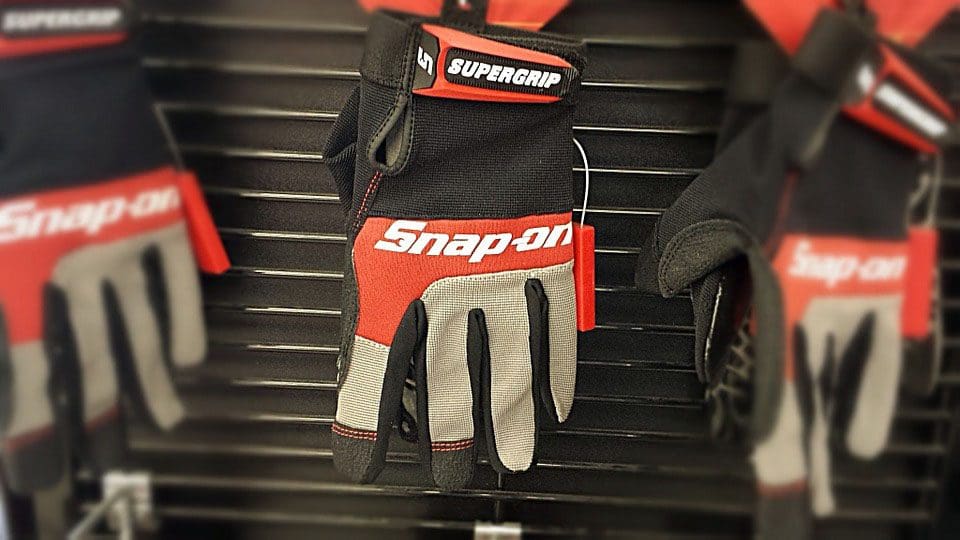
Wear gloves that fit. If they are too tight they will place extreme pressure on the hands. Loose-fitting gloves reduce grip strength and the ability to grip properly.
Instead have a selection that is designed for different jobs.
Safely Operating Tools that Cause Whole-Body Vibration��
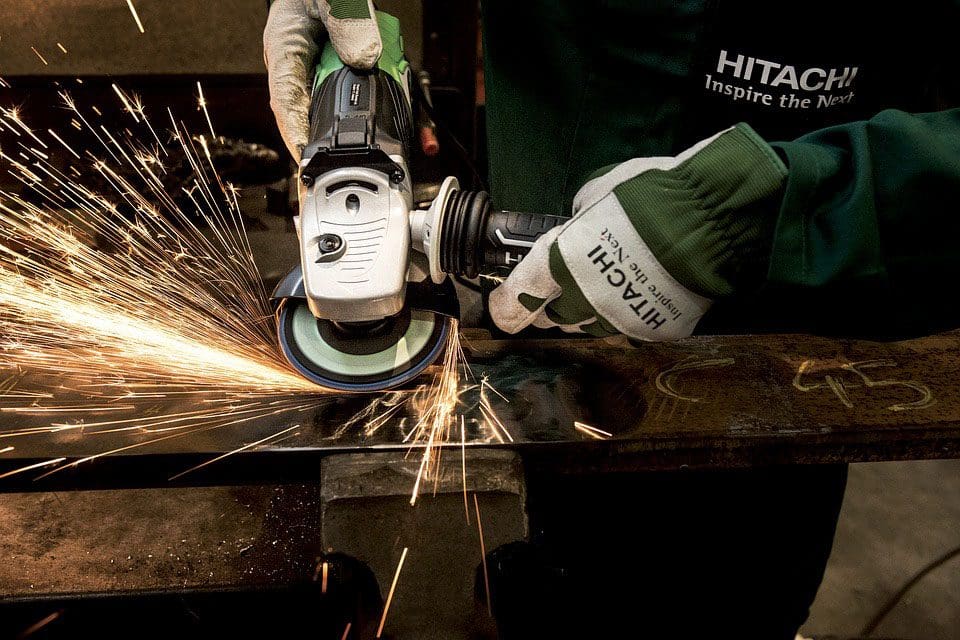
There are power tools that vibrate no matter what and transmit vibration into the operator’s arms and hands, legs, and feet. Using a tool like this can cause a condition called white finger or Raynaud’s Phenomenon to present.
The symptoms include:
Aching in the wrists and muscles of the forearm
Tingling sensations
Numbness
Whiteness in the fingers from restricted circulation
This type of vibration from riveting tools, grinders, pneumatic hammers, drills, and chain saws will affect the whole body’s well being.
Suggestions to help reduce the risk of musculoskeletal disorders
Choose power tools with anti-vibration controls and handles coated with suppressant/cushioned material to help with vibration.
Maintenance power tools by making sure they are balanced, clean, and lubricated.
Use gloves designed to absorb or reduce vibration.
Ask for help if the job requires equipment or tools that vibrate.
Whether using a hand or power tool to get a job done, the whole body is involved. Executing proper posture and body mechanics, along with proper tool choice and how it is used is vital to injury prevention.
El Paso, TX Chiropractor Recommended
Chiropractic care can help keep bodies flexible and help with range of motion. It is a very effective, non-invasive treatment for pain and can help with joint and muscular problems as well. Regular chiropractic treatments can help you better manage your body�s response to your work environment. It can also undo many of the ill effects that that type of work can cause.
NCBI Resources
Standing for extended or frequent periods of time without any breaks (such as walking or stretching) can cause the joints in the feet, knees, hips, and spine to become locked or immobilized temporarily. If the behavior continues, it can cause degenerative damage, leading to rheumatic diseases because the ligaments and tendons become damaged.
IFM's Find A Practitioner tool is the largest referral network in Functional Medicine, created to help patients locate Functional Medicine practitioners anywhere in the world. IFM Certified Practitioners are listed first in the search results, given their extensive education in Functional Medicine