Can stretching quadriceps help relieve stiffness and pain and improve flexibility for individuals with consistently tight quadriceps?
Quadriceps Stretches
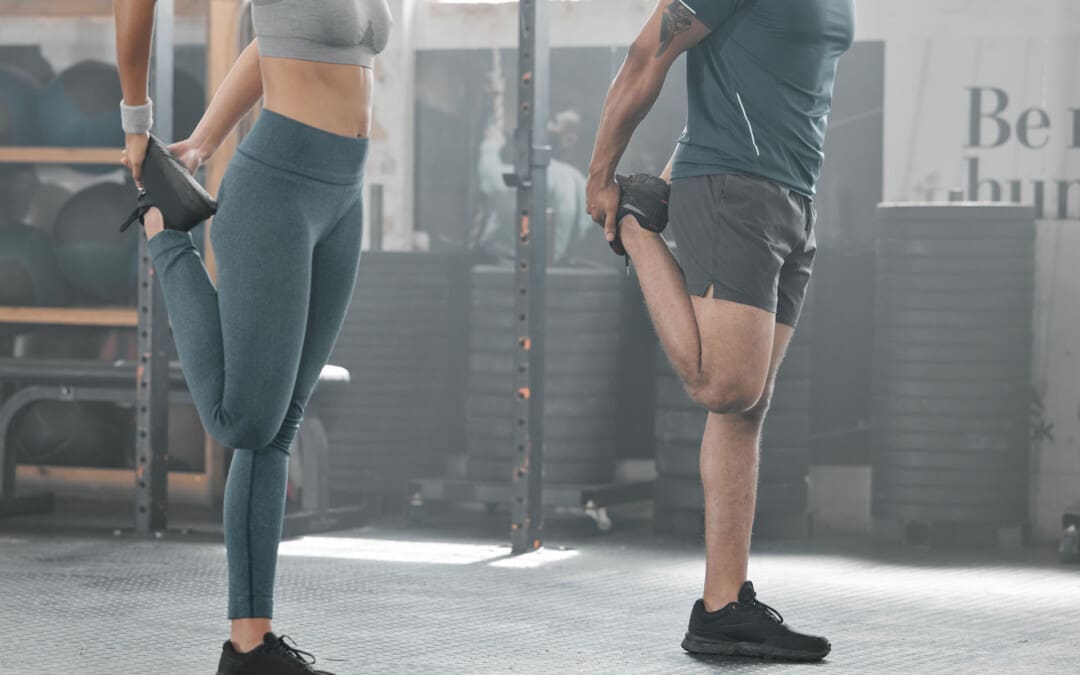
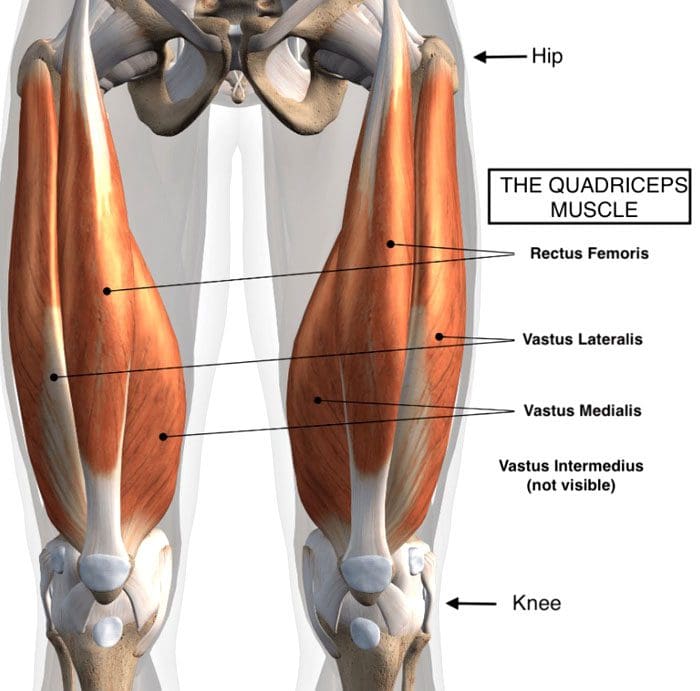
Walking, running, biking, and other daily activities can tighten the quadriceps muscles. The quadriceps are four muscles in the front of the thigh that extend the leg and strengthen the knee. Stretching the quadriceps may be a part of a home or gym exercise program or physical therapy treatment to maintain quadricep flexibility. Resting the quadriceps with an exercise program can greatly maximize mobility and prevent injury.
Tight quadriceps may sometimes result from injuries such as patellofemoral stress syndrome or iliotibial band friction syndrome. The quads may also become tight for individuals with spinal stenosis or other related problems with the lower back. (International Sports Sciences Association, 2023) Ely’s test, also known as the Duncan-Ely test, is one way to determine whether your quadriceps are tight. It is a physical examination used to assess the flexibility and potential spasticity of the rectus femoris muscle (a quadriceps muscle) by passively flexing the patient’s knee. Lie on your stomach and try to touch your foot to your buttocks. If you can’t, the rectus femoris, one of the main muscles, may be tight and benefit from quadricep stretches. (Olivencia, O. et al., 2020)
Safety and Precautions
Before trying this or any other exercise program, consult a healthcare provider to ensure exercise is safe for you and your conditions. A professional can help diagnose any overuse injury that might be causing tight quadriceps. Quadriceps stretches will be a little more comfortable after warming up. A few minutes of walking or biking will warm the quadriceps muscles to stretch more easily.
Stretches
To stretch the quadriceps, try the standing, side-lying, and prone quadriceps stretch once fully warmed up and after a workout. Individuals who frequently experience quadriceps tightness should stretch them daily. Incorporate all or some of these stretches into a cool-down or off-day flexibility routine.
Standing Stretch
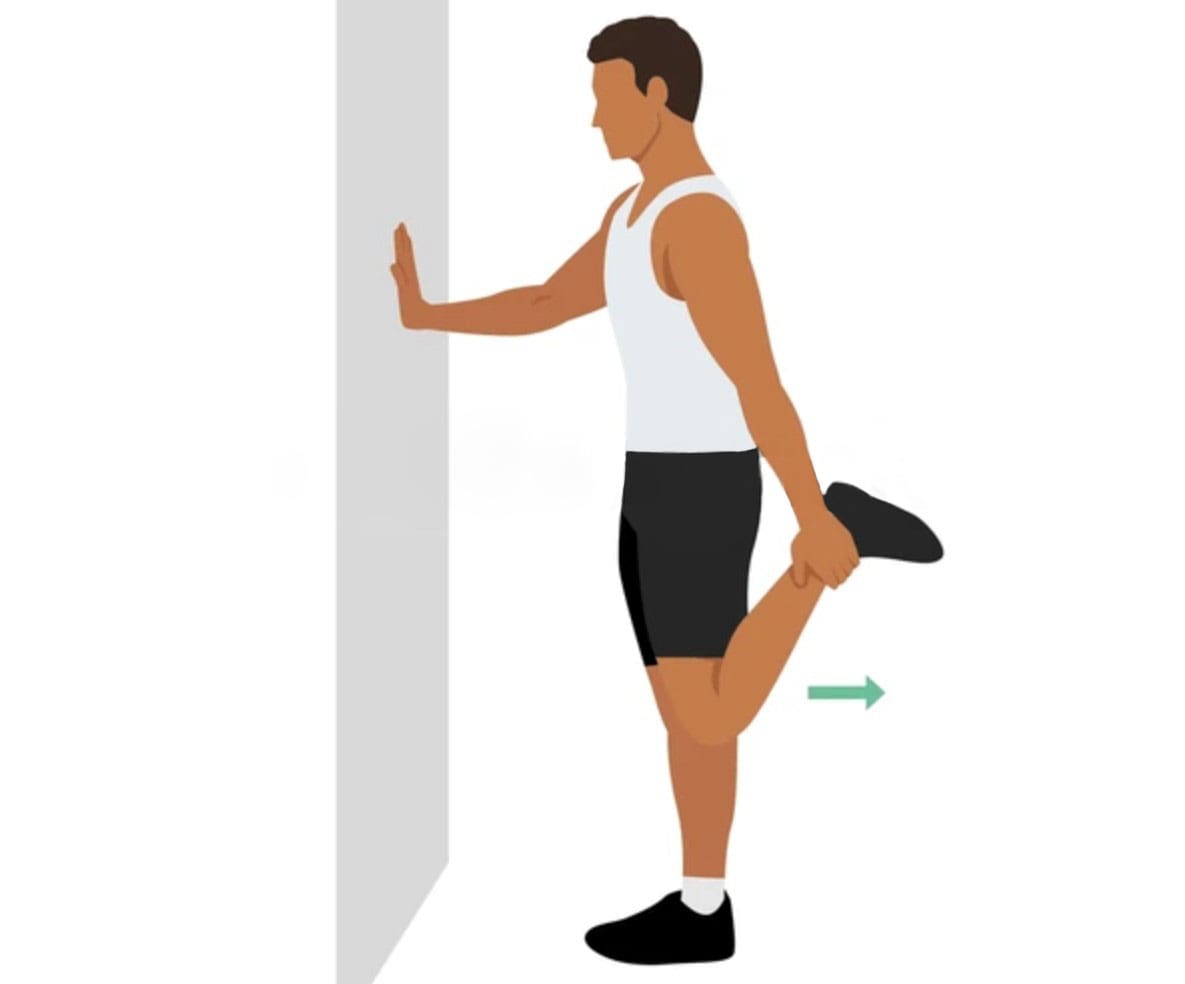
The standing quadriceps stretch can be done anywhere in the office, gym, or outside. All you need is a place to stand. Here is how:
While standing, hold onto a countertop or back of a chair to help with balance.
Bend your knee by grasping your ankle.
Move your foot toward your buttocks.
Gently pull on your ankle to bend your knee as far as possible.
Maintain position for 30 seconds.
Return to the standing position.
Repeat the exercise 3 to 5 times with each leg.
Stop stretching if there are any sharp pains.
Side-Lying Stretch
The side-lying quad stretch lengthens the quadriceps. On the floor in a supported position can help focus on the stretch. Here’s how:
Lie on your side.
Bend the knee of your top leg as far as you can, gently pulling with your hand.
Maintain position for 30 seconds.
Return to the starting position.
Repeat the exercise 3 to 5 more times with each leg.
Prone Stretch
Stretch the quadriceps while lying on your stomach. In this position, the floor helps to stabilize the pelvis, minimizing rocking and maximizing the stretch. To do the stretch:
Lie on your stomach.
Bend your knee back as far as you are able.
Grab your ankle to pull your foot toward your buttocks.
Maintain position for 30 seconds.
Return to the starting position.
Repeat the exercise 3 to 5 more times with each leg.
If you have difficulty reaching your ankle, pull the leg up, wrap a towel or strap around the ankle, and use it to pull. This can help stretch the quadriceps effectively even if you cannot reach the ankle easily.
Injury Medical Chiropractic & Functional Medicine Clinic
Consult a healthcare provider or physical therapist to learn the recommended quadriceps stretches or other strengthening exercises. Keeping the quadriceps healthy will help keep the knees moving and maximize functional mobility. Injury Medical Chiropractic and Functional Medicine Clinic works with primary healthcare providers and specialists to develop an optimal health and wellness solution. We focus on what works for you to relieve pain, restore function, and prevent injury. Regarding musculoskeletal pain, specialists like chiropractors, acupuncturists, and massage therapists can help mitigate the pain through spinal adjustments that help the body realign itself. They can also work with other medical professionals to integrate a treatment plan to resolve musculoskeletal issues.
Chiropractic Care For Leg Instability
References
International Sports Sciences Association. (2023). How to Release Tight Quads in 2 Simple Steps. ISSA. https://www.issaonline.com/blog/post/how-to-release-tight-quads-in-2-simple-steps
Olivencia, O., Godinez, G. M., Dages, J., Duda, C., Kaplan, K., Kolber, M. J., Kaplan, & Kolber (2020). THE RELIABILITY AND MINIMAL DETECTABLE CHANGE OF THE ELY AND ACTIVE KNEE EXTENSION TESTS. International journal of sports physical therapy, 15(5), 776–782. https://doi.org/10.26603/ijspt20200776
For individuals dealing with lower back pain, it could be quadricep muscle tightness causing the symptoms and posture problems. Can knowing the signs of quadricep tightness help prevent pain and avoid injury?
Quadriceps Tightness
Quadriceps muscles are in the front of the thigh. Forces that could be creating chronic pain and posture problems could be happening at the same time are:
Quadricep tightness causes lower back pain as the pelvis gets pulled down.
Tight quadriceps lead to weakened hamstring muscles.
These are the opposing muscles behind the thigh.
Stress and pressure on the hamstrings can cause back pain and problems.
The rectus femoris attaches to the pelvis at the anterior superior iliac spine, which is the front part of the hip bone.
The rectus femoris is the only muscle in the group that crosses over the hip joint, which also affects movement.
When the quadriceps, especially the rectus femoris, become tight, they pull down on the hips.
The pelvis tilts downward or forward, technically referred to as the anterior tilt of the pelvis. (Anita Król et al., 2017)
The spine is between the pelvis, and if the pelvis tilts forward, the lumbar spine compensates by arching.
A larger arch in the lower back is referred to as excessive lordosis and often causes tightness and pain in the back muscles. (Sean G. Sadler et al., 2017)
Hamstring Compensation
When the quadriceps tighten and the pelvis gets pulled down, the back has an abnormal lift. This puts the hamstring on a consistent stretch that can cause pain symptoms.
Healthy posture and hamstring muscle tone help maintain correct pelvic positioning in the back.
This is correct because it helps maintain a comfortable position.
Quadricep tightness can set off a reaction as the pelvis tilts down in front and up in the back while overly stretching the hamstrings.
Pain and soreness are the usual result
Lack of hamstring strength and quadriceps stretching can cause the hamstrings to lose their ability to support correct pelvic and spinal positions. (American Council on Exercise. 2015)
Knowing When Quads Are Tightening
Individuals often don’t realize their quadriceps are tight, especially those who spend most of the day sitting.
The more time spent in a chair can cause the quadriceps and lower back muscles to tighten steadily.
Individuals can try a few tests at home:
Standing Up
Push the hips forward.
Push from the sitting bones so you’re at the correct level.
How far forward do the hips go?
What is felt?
Pain could indicate tight quadriceps.
In A Lunge Position
With one leg forward and bent in front of the other.
The back leg is straight.
How far forward does the leg go?
What is felt?
How does the front of the hip on the back leg feel?
Standing Bent Leg
Stand with the front leg bent and the back leg straight.
Discomfort in the back leg could mean tight quadriceps.
In A Kneeling Position
Arch the back
Grab the ankles
Modify the position to adjust for any pain or joint issues.
If you have to prop yourself up or modify the pose to reduce pain, it could be tight quadriceps.
Helping to understand the condition can help in communication with a healthcare provider.
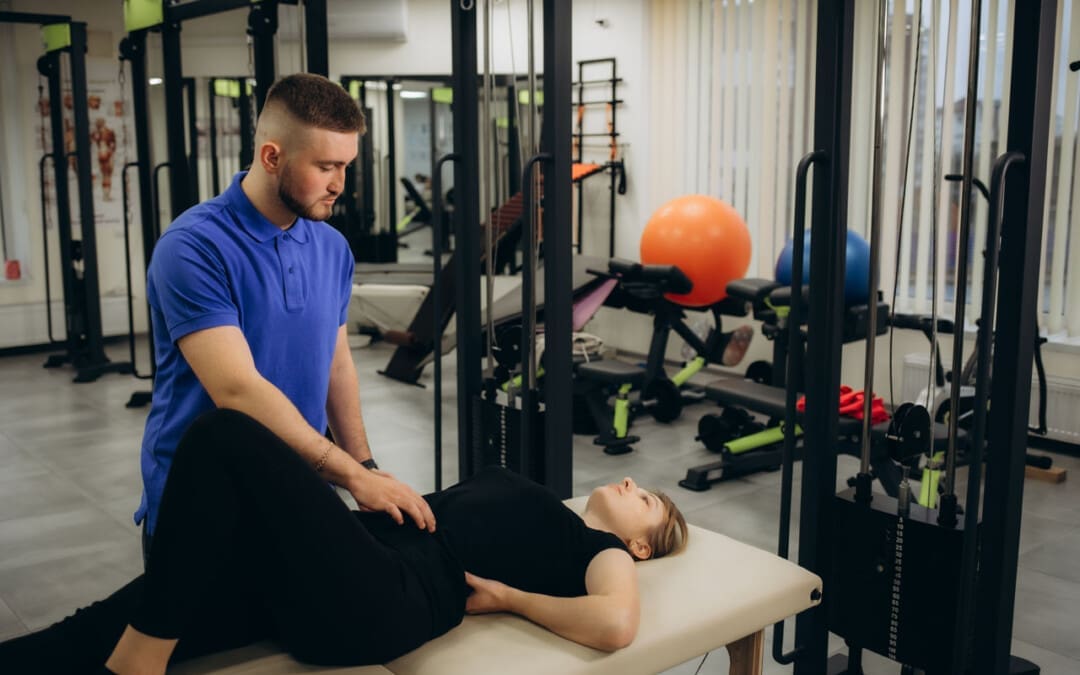
A healthcare provider and/or physical therapist can conduct a posture evaluation examination to test the quadriceps.
Understanding Academic Low Back Pain: Impact and Chiropractic Solutions
References
Kripa, S., Kaur, H. (2021). Identifying relations between posture and pain in lower back pain patients: a narrative review. Bulletin of Faculty of Physical Therapy, 26(34). https://doi.org/doi: 10.1186/s43161-021-00052-w
Król, A., Polak, M., Szczygieł, E., Wójcik, P., & Gleb, K. (2017). Relationship between mechanical factors and pelvic tilt in adults with and without low back pain. Journal of back and musculoskeletal rehabilitation, 30(4), 699–705. https://doi.org/10.3233/BMR-140177
Sadler, S. G., Spink, M. J., Ho, A., De Jonge, X. J., & Chuter, V. H. (2017). Restriction in lateral bending range of motion, lumbar lordosis, and hamstring flexibility predicts the development of low back pain: a systematic review of prospective cohort studies. BMC musculoskeletal disorders, 18(1), 179. https://doi.org/10.1186/s12891-017-1534-0
American Council on Exercise. (2015). 3 Stretches for Opening Up Tight Hips (Fitness, Issue. https://www.acefitness.org/resources/everyone/blog/5681/3-stretches-for-opening-up-tight-hips/
The Q or quadriceps angle is a measurement of pelvic width that is believed to contribute to the risk of sports injuries in women athletes. Can non-surgical therapies and exercises help rehabilitate injuries?
Quadriceps Q – Angle Injuries
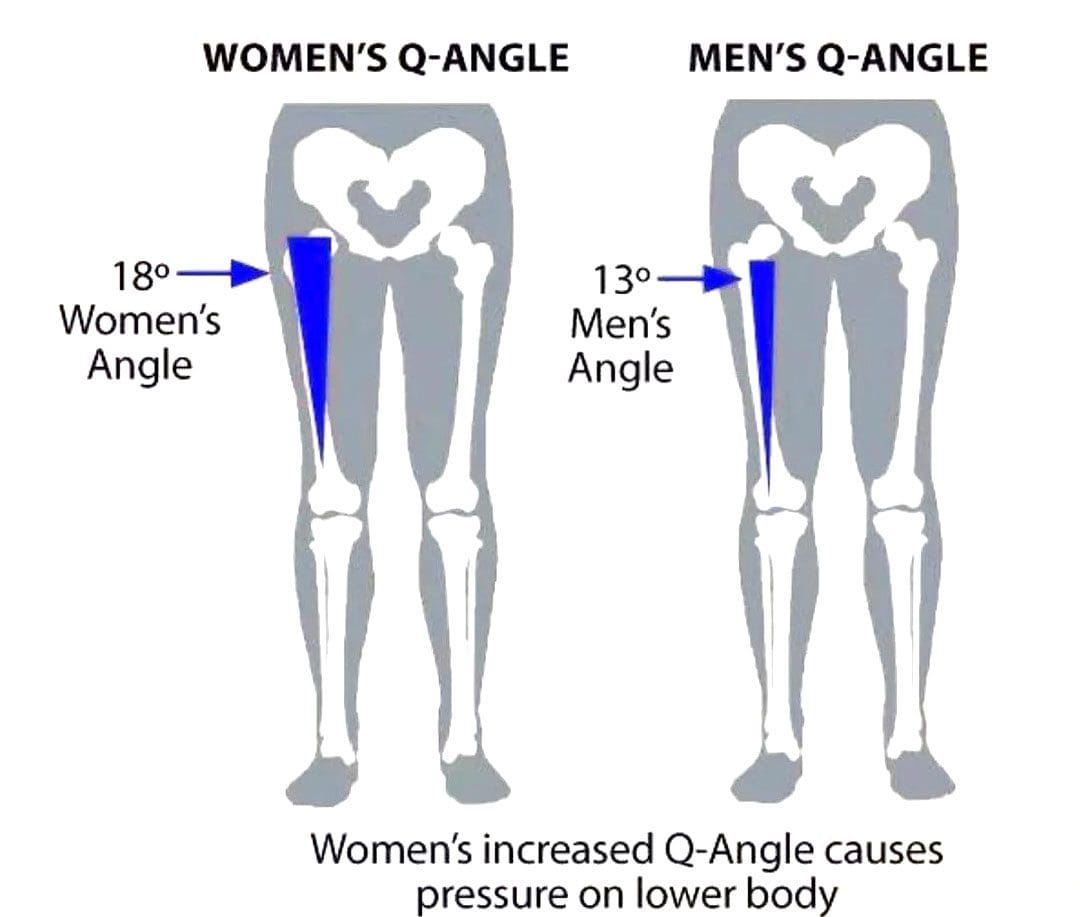
The Q angle is the angle where the femur/upper leg bone meets the tibia/lower leg bone. It is measured by two intersecting lines:
One from the center of the patella/kneecap to the anterior superior iliac spine of the pelvis.
The other is from the patella to the tibial tubercle.
On average the angle is three degrees higher in women than men.
Women have biomechanical differences that include a wider pelvis, making it easier to give birth. However, this difference can contribute to knee injuries when playing sports, as an increased Q angle generates more stress on the knee joint, as well as leading to increased foot pronation.
Injuries
Various factors can increase the risk of injury, but a wider Q angle has been linked to the following conditions.
Patellofemoral Pain Syndrome
An increased Q angle can cause the quadriceps to pull on the kneecap, shifting it out of place and causing dysfunctional patellar tracking.
With time, this can cause knee pain (under and around the kneecap), and muscle imbalance.
Foot orthotics and arch supports could be recommended.
Some researchers have found a link, while others have not found the same association. (Wolf Petersen, et al., 2014)
Chondromalacia of the Knee
This is the wearing down of the cartilage on the underside of the kneecap.
An increased Q angle can be a factor that increases stress and causes the knee to lose its stability.
However, this remains controversial, as some studies have found no association between the Q angle and knee injuries.
Chiropractic Treatment
Strengthening Exercises
ACL injury prevention programs designed for women have resulted in reduced injuries. (Trent Nessler, et al., 2017)
The vastus medialis obliquus or VMO is a teardrop-shaped muscle that helps move the knee joint and stabilize the kneecap.
Strengthening the muscle can increase the stability of the knee joint.
Strengthening may require a specific focus on muscle contraction timing.
Closed-chain exercises like wall squats are recommended.
Glute strengthening will improve stability.
Stretching Exercises
Stretching tight muscles will help relax the injured area, increase circulation, and restore range of motion and function.
Muscles commonly found to be tight include the quadriceps, hamstrings, iliotibial band, and gastrocnemius.
Foot Orthotics
Custom-made, flexible orthotics decrease the Q angle and reduce pronation, relieving the added stress on the knee.
A custom orthotic ensures that the foot and leg dynamics are accounted for and corrected.
Motion-control shoes can also help correct overpronation.
Knee Rehabilitation
References
Khasawneh, R. R., Allouh, M. Z., & Abu-El-Rub, E. (2019). Measurement of the quadriceps (Q) angle with respect to various body parameters in young Arab population. PloS one, 14(6), e0218387. https://doi.org/10.1371/journal.pone.0218387
Petersen, W., Ellermann, A., Gösele-Koppenburg, A., Best, R., Rembitzki, I. V., Brüggemann, G. P., & Liebau, C. (2014). Patellofemoral pain syndrome. Knee surgery, sports traumatology, arthroscopy: Official journal of the ESSKA, 22(10), 2264–2274. https://doi.org/10.1007/s00167-013-2759-6
Vaienti, E., Scita, G., Ceccarelli, F., & Pogliacomi, F. (2017). Understanding the human knee and its relationship to total knee replacement. Acta bio-medica : Atenei Parmensis, 88(2S), 6–16. https://doi.org/10.23750/abm.v88i2-S.6507
Mitani Y. (2017). Gender-related differences in lower limb alignment, range of joint motion, and the incidence of sports injuries in Japanese university athletes. Journal of Physical Therapy Science, 29(1), 12–15. https://doi.org/10.1589/jpts.29.12
Nessler, T., Denney, L., & Sampley, J. (2017). ACL Injury Prevention: What Does Research Tell Us? Current reviews in musculoskeletal medicine, 10(3), 281–288. https://doi.org/10.1007/s12178-017-9416-5
The quadriceps muscle consists of four muscles in front of the thigh that connects to the knee right below the knee cap. These muscles straighten the knee for walking, running, and jumping. They also help bend the knee for squatting. They move the leg forward when running and fire/transmit electrical impulses when the foot hits the ground to absorb shock. When jumping, the muscles provide stability coming down as well as when standing on one leg.
Quadriceps Strain
Thigh strains are common in sports. Most players are sidelined because of this injury when compared to strains in the hamstrings or groin. Factors that can increase the risk of injury include:
Exhaustion
Muscle weakness
The strength of the quadriceps to the hamstrings is uneven, causing one set to get overused.
Consistent sprinting and/or kicking
Previous strain and/or injury
The quadriceps is made up of four muscles. One is the rectus femoris, which gets injured the most. It’s the only muscle that crosses two joints – the hip joint and the knee joint.
Symptoms and Injury Grades
Individuals commonly report a pulling/stretching sensation in the front of the thigh. Common symptoms include:
Pain
Swelling
Bruising
Muscle tenderness
For minor quadriceps strains or tears, moderate to dull pain presents along with stiff movement.
Grades categorize the severity of the strain:
Grade 1 presents with mild discomfort in the thigh with no loss of strength.
Grade 2 presents with moderate pain, swelling, and some loss of strength.
Grade 3 is a complete rupture of the fibers. Individuals are in severe pain and unable to walk.
Grade 3 is where surgery is required.
Symptoms can vary depending on the type of injury that has been sustained and the severity. There is pain and localized swelling for both strains and contusions. If a muscle rupture has happened, there could be a bump/lump within the muscle or a gap in the muscle. If rupture of the Quadriceps Tendon has occurred, individuals often report hearing a pop when the injury happens. The swelling often makes straightening the leg difficult or impossible.
Injury causes
Thigh strains usually happen when slowing down/decelerating after a sprint. This can be because the individual takes too small or too large steps causing the muscles to overstretch, much like a rubber band that, if overstretched, tears, and if under stretched, it bunches up, which can cause spasms and tears.
Treatment
In the initial stages after a quadriceps strain, it is recommended to follow the RICE Procedure for 24 hours: This includes:
Rest
Ice
Compression
Elevate
The leg needs to be rested every 2-3 hours in 20-minute sessions.
A bandage can provide added support.
For slight tears and strains, it is recommended to stretch the quadriceps gently.
This helps prevent the muscles from experiencing shortening. This happens by the formation of scar tissue that pulls the muscle/s, making them shorter.
Gentle stretches allow the muscles to heal with minimal shortening. This helps prevent further and/or re-injury.
Chiropractic Physical Therapy Rehabilitation
After the acute stage of the injury, receiving regular chiropractic sports adjustments, physical therapy massage, coupled with strength training exercises will speed up recovery.
Physical therapy massage will remove scar tissue and keep the muscle/s loose and flexible.
Exercises for strengthening the muscles after injury will be recommended according to the individual’s condition/case.
Following correct post-injury-care, exercises, and physical therapy.
Healing time can be 4- 6 weeks.
Body Composition
Strength Training: The Inverted Row
This workout targets the back muscles, spine and scapular stabilizers, deep abdominals, and arms. Everyday activities that require various types of pulling motion, lifting, etc., become easier. To perform:
Lie flat on your back.
Grab a stable barbell or set of straps that are above you.
Pull your upper body up as high as possible while keeping the back straight.
Squeeze the shoulder blades together at the top.
Complete as many reps as possible.
Once enough strength and endurance have been built, try a pullup.
References
Kary, Joel M. “Diagnosis and management of quadriceps strains and contusions.” Current reviews in musculoskeletal medicine vol. 3,1-4 26-31. 30 Jul. 2010, doi:10.1007/s12178-010-9064-5
Hillermann, Bernd, et al. “A pilot study comparing the effects of spinal manipulative therapy with those of extra-spinal manipulative therapy on quadriceps muscle strength.” Journal of manipulative and physiological therapeutics vol. 29,2 (2006): 145-9. doi:10.1016/j.jmpt.2005.12.003
Wenban, Adrian B. “Influence of active release technique on quadriceps inhibition and strength: a pilot study.” Journal of manipulative and physiological therapeutics vol. 28,1 (2005): 73. doi:10.1016/j.jmpt.2004.12.015
IFM's Find A Practitioner tool is the largest referral network in Functional Medicine, created to help patients locate Functional Medicine practitioners anywhere in the world. IFM Certified Practitioners are listed first in the search results, given their extensive education in Functional Medicine