
ClickCease
+1-915-850-0900 [email protected]
Select Page
Using Natural Biologics for Faster Injury Recovery

Using Natural Biologics for Faster Injury Recovery

As the body grows older the ability to live life to the fullest can be difficult. Can using natural biologics help enhance the body’s natural ability to heal?

Natural Biologics

Though sometimes a necessary treatment option, surgical procedures can be the first line of treatment introduced to patients. Natural biologics is a less invasive alternative that can eliminate hospitalizations and expedite recovery. (Riham Mohamed Aly, 2020)

What Are They?

The body is born with components to initiate healing and recovery. These components include:

  • Cells
  • Cytokines
  • Proteins
  • Collagens
  • Elastin
  • Hyaluronic acid

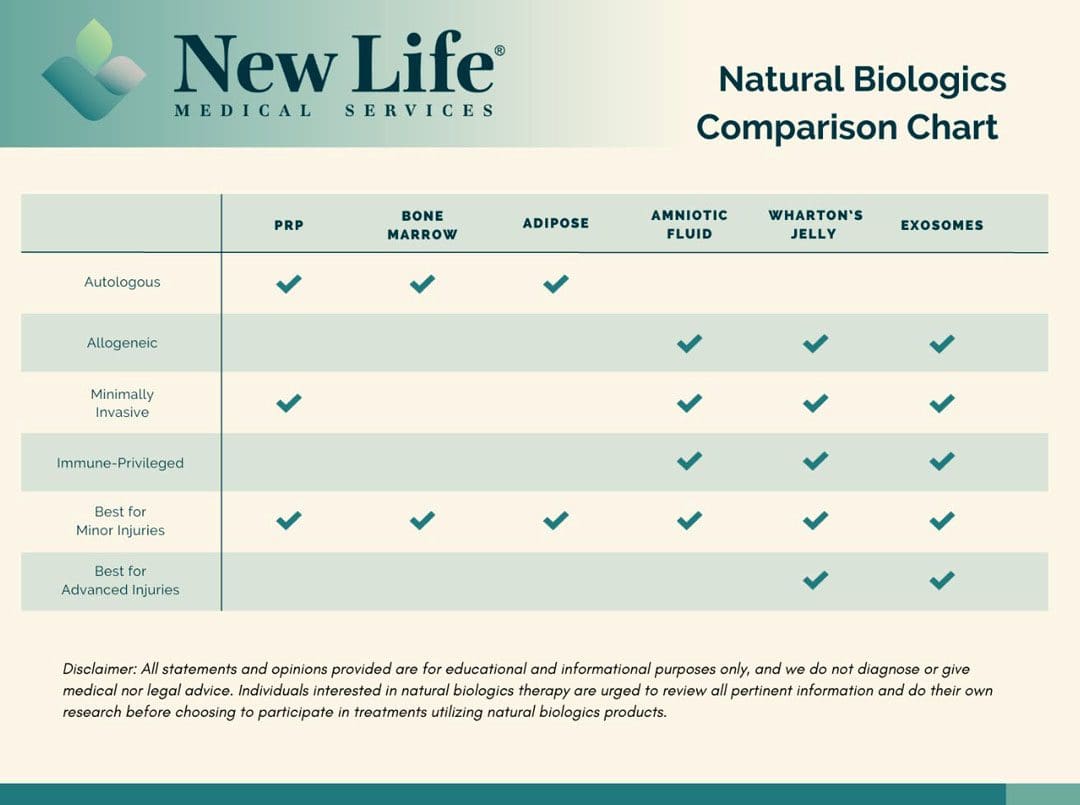
At the time of birth, these components are in abundance but decrease as the body ages. This is why children recover from injuries quicker than adults.  Recovery for adults can be slower from a decrease in these natural healing components. The objective of natural biologics treatments is to increase the healing components by reintroducing the body’s own components – autologous – or by bringing in new components – allogeneic – from a donor. (National Institutes of Health 2016) Choosing between the two options depends on an individual’s age and health, as those who are older or in poor physical health may experience complications from inferior component amounts.

  • Healing components derived from donor sources can show more promise, as treatments are usually acquired from discarded birth tissues at delivery.
  • Birth tissues are rich in healing components, containing the most abundant collection of natural healing elements.
  • It’s important to note that there is no harm to the mother or the baby from the obtained tissue products.
Using Natural Biologics for Faster Injury Recovery

Autologous Treatment

Derived from the individual receiving the cell therapy. (Yun Qian, et al., 2017)

Platelet-Rich Plasma – PRP

  • Platelet-rich plasma is cultivated by drawing an individual’s blood and spinning it in a centrifuge to separate the plasma.
  • The resulting liquid is reinjected into the injured area to generate a healing environment.
  • This form of natural biologics is effective for individuals with minor injuries that can be repaired easily.
  • This process is not as effective for older individuals who already have a reduction in natural healing components.
  • Lifestyle factors such as smoking, unhealthy diet, and alcohol/substance abuse can decrease the effectiveness of PRP treatments.

Bone Marrow Aspirate

  • This is an invasive, painful process that begins by putting a patient under anesthesia and drilling into the bone to extract the marrow. (American Cancer Society, 2023)
  • Like PRP, success depends on the individual’s age, health, and lifestyle.
  • Invasive procedures like this have a higher probability of infection and require a long-term recovery period.

Adipose-Derived Stem Cells

  • Adipose tissue/fat treatments are collected through a procedure that resembles the process of liposuction.
  • The procedure is done under general anesthesia and is an invasive process.
  • Once the tissue is collected, the cells are separated and reinjected. (Loubna Mazini, et al. 2020)
  • The treatment’s success depends on the individual’s health, age, and lifestyle.
  • There is more risk of infection when choosing this procedure and a long-term recovery period.

Allogeneic Treatment

Donor-based regenerative cells.

Amniotic Fluid Therapy

Amniotic fluid contains various growth factors, cytokines, and anti-inflammatory proteins that may promote tissue repair, reduce inflammation, and stimulate cellular regeneration. (Petra Klemmt. 2012)

  • Collected at the time of birth, this therapy is an ideal treatment for individuals who have sustained injuries that affect day-to-day functionality.
  • Physicians and clinicians are utilizing amniotic fluid therapy to treat many conditions, from orthopedic to wound care.
  • Amniotic fluid is collected at the time of birth and is abundant with increased healing components compared to autologous sources.
  • Amniotic fluid is immune-privileged (limits or suppresses immune response) and the risk of rejection is rare.
  • These therapies are usually done in a physician’s office with minimal downtime after treatment.

Wharton’s Jelly

  • Wharton’s jelly is derived from the umbilical cord at the time of birth and is primarily composed of a gel substance made up of hyaluronic acid and a network of collagen fibers.
  • Its unique properties make it ideal for protecting and supporting the umbilical cord. (Vikram Sabapathy, et al., 2014)
  • Believed to contain a population of mesenchymal stem cells that have the capacity to differentiate into various cell types, and other secreted growth factors and cytokines. (F. Gao, et al., 2016)
  • It is considered the most valuable source to enhance the healing of various tissues, including bone, cartilage, skin, and nerve tissue.
  • It is immune-privileged with little risk of rejection and minimal if any, recovery time after an in-office treatment.

Exosomes

  • Exosomes are small, membrane-bound vesicles that play a role in intercellular communication within the body. (Carl Randall Harrell, et al., 2019)
  • They contain a variety of bioactive molecules, including proteins, lipids, nucleic acids (like RNA), and signaling molecules.
  • They serve as vehicles for transferring the signaling molecules from one cell to another, allowing cells to influence the behavior and function of neighboring or distant cells.
  • They can be collected or isolated from various biological fluids and cell cultures through specialized techniques but are most robust when collected at birth.
  • The exosomes within the umbilical cord are utilized for tissue repair and regeneration, signaling the cells to promote:
  • Proliferation – increase in the number of cells through cell division.
  • Differentiation – the transformation of unspecialized cells into specialized cells.
  • Tissue healing in damaged or injured areas.
  • Exosomes from the umbilical cord are immune-privileged with minimal risk of rejection.
  • Treatments are ideal for increasing cell communication and initiating repair when paired with another source of allogeneic therapy like amniotic fluid or Wharton’s Jelly.

Choosing which natural biologics therapy is the best is different for everyone. When selecting a treatment, it is essential for individuals to consult their primary healthcare provider to determine which application will have optimal results.


Is Motion Key To Healing?


References

Aly R. M. (2020). Current state of stem cell-based therapies: an overview. Stem cell investigation, 7, 8. https://doi.org/10.21037/sci-2020-001

National Institutes of Health. (2016). Stem Cell Basics.

Qian, Y., Han, Q., Chen, W., Song, J., Zhao, X., Ouyang, Y., Yuan, W., & Fan, C. (2017). Platelet-Rich Plasma Derived Growth Factors Contribute to Stem Cell Differentiation in Musculoskeletal Regeneration. Frontiers in chemistry, 5, 89. https://doi.org/10.3389/fchem.2017.00089

American Cancer Society. (2023). Types of Stem Cell and Bone Marrow Transplants.

Mazini, L., Rochette, L., Admou, B., Amal, S., & Malka, G. (2020). Hopes and Limits of Adipose-Derived Stem Cells (ADSCs) and Mesenchymal Stem Cells (MSCs) in Wound Healing. International journal of molecular sciences, 21(4), 1306. https://doi.org/10.3390/ijms21041306

Klemmt P. (2012). Application of amniotic fluid stem cells in basic science and tissue regeneration. Organogenesis, 8(3), 76. https://doi.org/10.4161/org.23023

Sabapathy, V., Sundaram, B., V M, S., Mankuzhy, P., & Kumar, S. (2014). Human Wharton’s Jelly Mesenchymal Stem Cells plasticity augments scar-free skin wound healing with hair growth. PloS one, 9(4), e93726. https://doi.org/10.1371/journal.pone.0093726

Gao, F., Chiu, S. M., Motan, D. A., Zhang, Z., Chen, L., Ji, H. L., Tse, H. F., Fu, Q. L., & Lian, Q. (2016). Mesenchymal stem cells and immunomodulation: current status and future prospects. Cell death & disease, 7(1), e2062. https://doi.org/10.1038/cddis.2015.327

Harrell, C. R., Jovicic, N., Djonov, V., Arsenijevic, N., & Volarevic, V. (2019). Mesenchymal Stem Cell-Derived Exosomes and Other Extracellular Vesicles as New Remedies in the Therapy of Inflammatory Diseases. Cells, 8(12), 1605. https://doi.org/10.3390/cells8121605
Spinal Surgery Options

Spinal Surgery Options

Surgery options when back pain is becoming chronic or so severe that an individual cannot function normally and negatively affects their life. Pretty much everyone experiences back pain at some point. This is often from:

  • Lifting heavy/non-heavy objects incorrectly
  • Improper posture
  • Twisting in an awkward way
  • Overreaching
  • Muscle spasms
  • Physical activity the body is not used to doing

Most cases of backaches and pain go away by themselves or with conservative treatment.  But sometimes, surgery is necessary.

Spinal Surgery Options

When Surgery Is Necessary

Acute back pain can last for days or weeks and can often resolve with physical therapy, chiropractic, and self-care. Back pain that continues for 12 weeks or longer is considered chronic. Around twenty percent of individuals who experience acute low back pain after a year begin developing chronic back pain. Doctors try to treat most back pain cases with non-surgical approaches.

  • They usually begin with physical therapy/chiropractic.
  • If that doesn’t work, then medication is incorporated.
  • However, many individuals do not want to take long-term medication, which is when surgery may be recommended.
  • In most cases, surgery is a last resort.

When the pain radiates to the legs or if it is causing problems with bladder and/or bowel function, these are definite signs/symptoms that surgery is needed. If the pain/dysfunction continues after thorough and effective non-surgical treatment, surgery could be recommended to preserve the spine to improve spinal strength and function before the problem worsens, causing further injury and damage. Some of the most common and effective spine surgery options include.

Surgery Options

Microdiscectomy

Microdiscectomy is the most common back surgery in the United States. It is minimally invasive spine surgery. Microdiscectomy patients have low back pain combined with leg pain, tingling, numbness, and weakness. In between the vertebrae are the body’s shock-absorbing discs. The discs can begin to bulge out, a bulging or herniated disc, and press on the surrounding nerve roots, causing pain, tingling, numbness, or weakness. A microdiscectomy removes the portions of the disc pressing on the nerve.

It is called micro because the surgeon wears specialized glasses known as loupes that act as microscopes. This is so the surgeon can see the details when they’re operating. The surgery is performed through a small incision in the middle of the back or on the affected side. Patients can go home a few hours after the surgery and return to normal activities within two weeks. The success rate is 85 – 95%, especially if the surgery is done early before the damage begins to spread out.

Laminectomy

The spinal canal contains a special lining. This is where the nerves and ligaments run through. Age, along with normal wear and tear on the body, causes the ligaments to thicken. This is when bone spurs can develop from osteoarthritis, and the discs can begin to bulge or rupture/herniate. This clogs and impinges the space where the nerves should easily flow through. This narrowing is called spinal stenosis. A laminectomy opens up the space relieving the compression/pressure. The procedure requires removing part of the back of a vertebra called the lamina. This enlarges the spinal canal and relieves the pressure on the nerves. The procedure is done through a small incision in the middle of the back but can also be done through a minimal incision. Leg pain improves after surgery. A traditional incision full recovery takes 6 to 12 weeks. The success rate is around 85 percent.

Spinal Fusion

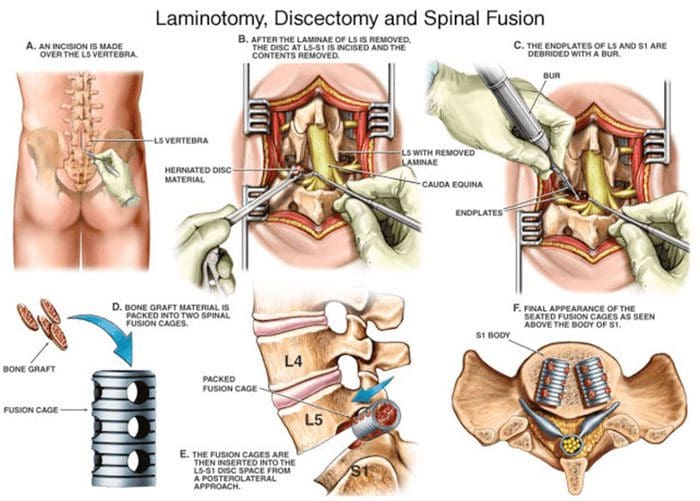
A spinal fusion joins/fuses two or more bones in the spine. This is done when an individual has severe compression of the nerves, severe instability, or spinal revision surgery. A fusion can help stabilize spinal fractures. Other reasons for a spinal fusion are spine deformity, cancer of the spine, and sometimes used for intractable pain. A fusion stabilizes the spine with screws and rods. The disc causing the compression is replaced with a fusion device and bone graft. The surgery is often performed in combination with a laminectomy. Recovery and returning to activities can take around 3-4 months after the procedure. The success rate is 85-90% with pain improvement.

Kyphoplasty

Spinal compression fractures are common in individuals with osteoporosis. When they happen, the pain can be so intense that braces and medication don’t help. Kyphoplasty can bring pain relief. It can be performed by a pain management doctor, interventional radiologist, or surgeon in an outpatient X-ray facility and operating room. The procedure involves conscious sedation, sometimes accompanied by general anesthesia. A small instrument is inserted into the vertebra, and a balloon is inflated to make room for bone cement. After the bone cement is injected, patients can go home within a few hours. The success rate is around 85%, and recovery time could be several days.

Disc Replacement

This is a procedure that can replace spinal fusion for certain cases. A disc replacement can be done in the lumbar/low back or the cervical/neck spine. This procedure is performed to treat a pinched nerve and/or spinal cord compression. The injured/damaged disc is removed and is replaced with an artificial disc. The device allows for motion, whereas fusion procedures fuse the bones to stabilize and immobilize the area. Disc replacement is recommended for younger patients that don’t have serious arthritis. This is because they still have mobility. If significant arthritis is present, the patient could experience more pain and require spinal fusion. Recovery takes around six weeks. Intense physical activity is off-limits for two or three weeks after the initial recovery period. The success rate is more than 90%.

Anterior Cervical Discectomy and Fusion – ACDF

This is a common neck/cervical spine procedure. This surgery is for pain relief, weakness, tingling, and numbness of the arms caused by a pinched nerve or stenosis. The damaged disc is removed through a small incision in the side of the front of the neck. The disc is replaced with a bone graft or specialized spacer and a small plate with screws. This is to stabilize the spine. It is highly effective in relieving pain and in preventing neurological decline from spinal cord compression. Recovery time is around 12 weeks before a full return to normal activities. However, individuals report feeling better after two weeks.

Back Surgery Options

The majority of cases involving back pain get better on their own or with conservative treatment. But if an individual cannot find relief, there are safe and effective surgery options that can help.


Body Composition


When The Immune System Activates

When the body gets sick from a bacterial infection, virus, etc., the body’s defense system activates, causing inflammation. This immune response serves as the first wave of defense against foreign invaders. The infected area becomes red and swollen from increased blood flow. For example, when the nose gets red from a cold, this is inflammation. The reaction is caused by white blood cells known as macrophages, and the proteins they emit called cytokines encourage inflammation. Inflammation that’s triggered by the immune system is normally a good thing. It means the body is releasing a proper amount of hormones and proteins. These activate the white blood cells to start the healing process and work to fight the infection.

References

Low Back Pain Fact Sheet. National Institute of Neurological Disorders and Stroke. https://www.ninds.nih.gov/Disorders/Patient-Caregiver-Education/Fact-Sheets/Low-Back-Pain-Fact-Sheet

A review of complication rates for Anterior Cervical Diskectomy and Fusion (ACDF). Surg Neurol Int. 2019. https://pubmed.ncbi.nlm.nih.gov/31528438/

Rheumatology Advisor. (2017.) “Back Pain.” https://www.rheumatologyadvisor.com/home/decision-support-in-medicine/rheumatology/back-pain/

Mastodon






