A typical diet consists of consuming three meals: breakfast, lunch, dinner, and snacks in between. However, this is not always the case, depending on individual eating patterns and habits. Getting started eating healthy and losing body fat does not require severe dietary restrictions, starvation, and constantly exercising. Although achieving rapid weight loss might sound appealing, individuals often end up feeling depressed, tired, and unmotivated after some time. This is the most common cause of not maintaining a healthy balance and achieving optimal health. Individuals can still eat the foods they love by making long-term improvements that include:
Understanding the body’s caloric needs
Making smart nutritional choices
Adopting healthy eating habits
Incorporating enough exercise
Having all of the necessary information to make educated and informative choices for the body is the most effective and valuable way to getting started eating healthy.
Getting Started
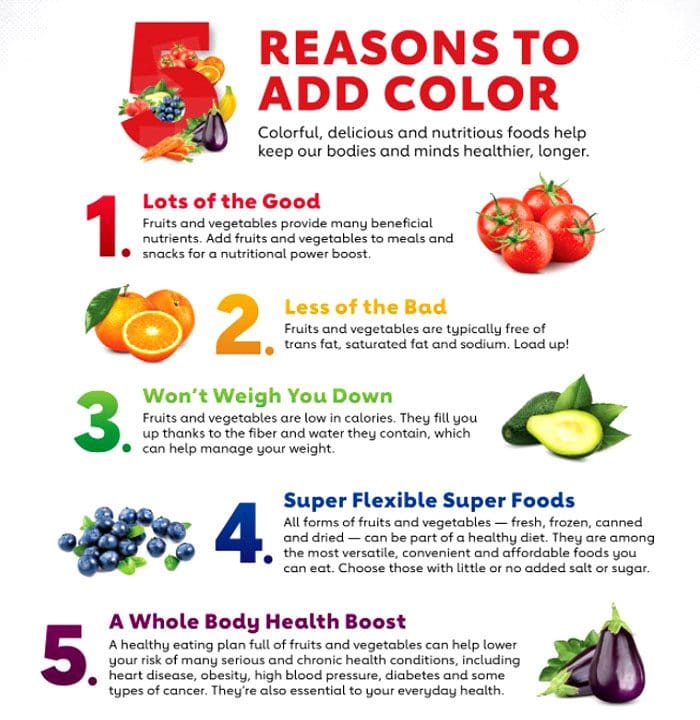
Healthy eating starts with learning and adopting new ways to eat. This means adding fresh fruits, vegetables, whole grains and cutting back on processed foods with added fat, salt, and sugar. Converting to healthier eating also includes learning about balance, variety, and moderation.
Healthy eating is not the same as going on a diet. It means making adjustments/changes that an individual can live with and enjoy. Diets are temporary, as they are intended to cut out certain types of foods to make the body readjust and lose fat. However, during a diet, individuals can become hungrier and think about food all the time. A common side effect is to overeat after the diet to make up for the foods that are missed. Eating a healthy, balanced variety of foods is more satisfying to the body. Combined with more physical activity can help the individual get to a healthy weight—and maintain the healthy weight.
Make Healthy Eating A Habit
Think about the reasons for healthier eating.
Improving overall health.
Increase energy.
Feel better.
Set an example for kids and family.
Think about small changes that can be made.
Choose the ones that can be maintained.
Don’t try to change everything at once.
Set manageable and achievable goals, like having a salad and a piece of fruit each day.
Make long-term goals as well, like having one vegetarian dinner a week.
Get Support
Having a support team can help make the adjustments easier. Family and friends can help make meals, share healthy recipes and cooking tips. For more help, consult a doctor, registered dietitian, or health coach. Get started today.
Body Composition
After Lunch Energy Dip
Most individuals have experienced the moment when after having a nice filling lunch then afterward feeling the need to take a nap. Having a sleepy feeling about one hour after lunch, known as the post-lunch dip, decreases:
Alertness
Memory
Vigilance
Mood
A study in the British Journal of Nutrition followed 80 participants over 12 weeks to find whether eating almonds impacted this post-lunch dip. The results found that an almond-enriched high-fat lunch helped reduce memory decline by 58% compared to a high-carbohydrate lunch.
References
American Dietetic Association (2009). Position of the American Dietetic Association: Functional foods. Journal of the American Dietetic Association, 109(4): 735–746. Also available online: http://www.eatright.org/About/Content.aspx?id=8354.
Dhillon, Jaapna, et al. “Effects of Almond Consumption on the Post-Lunch Dip and Long-Term Cognitive Function in Energy-Restricted Overweight and Obese Adults.” British Journal of Nutrition, vol. 117, no. 3, 2017, pp. 395–402., doi:10.1017/S0007114516004463.
Gallagher ML (2012). Intake: The nutrients and their metabolism. In LK Mahan et al., eds., Krause’s Food and the Nutrition Care Process, 13th ed., pp. 32–128. St. Louis: Saunders.
Katz DL (2008). Dietary recommendations for health promotion and disease prevention. In Nutrition in Clinical Practice, 2nd ed., pp. 434–447. Philadelphia: Lippincott Williams and Wilkins.
U.S. Department of Health and Human Services, U.S. Department of Agriculture (2015). 2015-2020 Dietary Guidelines for Americans 8th ed. http://health.gov/dietaryguidelines/2015/guidelines/. Accessed January 12, 2016.
Any job-related back injury can significantly complicate an individual’s life. Dealing with the pain, trying to figure out how to get things done while in recovery, and workers’ compensation to protect individuals who are injured on the job, getting them healthy without the stress of worrying about losing money from missing work.
Job-Related Injury
According to the Occupational Safety and Health Administration or O.S.H.A., a job-related injury is one that either contributed to or is caused by something in the work environment that injures an individual or exacerbates/worsens a previous injury. This is a general overview of the definition, and there are some exceptions. For example, being at the place of work as a general public citizen and not working when an injury happens will not be covered. If not sure whether a back injury is job-related, it’s better to be cautious and report the incident as soon as it happens.
Common Back Injuries
Back injuries are the most common job-related injuries. Back injuries are the number one reason individuals cannot work, whether they hurt their back at home or on the job. The Bureau of Labor Statistics found that nearly 40% of all musculoskeletal injuries that resulted in lost workdays were because of back injuries. The most common back injuries include:
Every state’s workers’ compensation program is different; however, the basic components are the same throughout. This means that if a workers’ compensation claim is approved and an individual cannot work because of their injury, they can expect to receive a regular base salary during treatment, rehabilitation, and recovery. Individuals also continue to receive medical coverage through the company, while the workers’ compensation fund should pay for treatment and diagnostics related to the injury.
When A Back Injury Occurs at Work
When a back happens at work, inform the employer as soon as possible. Do not be embarrassed or feel as if it is not a big deal to seek workers’ compensation. It is an insurance program for both the individual and the employer. An employer pays into the state’s workers’ compensation program for limited liability when employees get injured. Individuals don’t pay for the program, but it protects the individual in case something happens.
Letting an injury go untreated might not be anything at first, but months and years later, it can come back and be worse than when it first happened, causing greater damage, added medical costs, and procedures that the individual has to pay for out of pocket.
Once an individual knows they have a back injury, it is recommended to seek treatment as soon as possible to prevent worsening the injury or create new ones and develop a treatment, rehabilitation, and strengthening program. If an individual needs emergency care, tell the doctors about the work injury and precisely what happened. Emergency medical care should be sought out when:
There is a loss of function in any of the limbs.
There is a persistent numbness with the back pain.
There is nausea, dizziness, or vomiting after the injury.
There is a fever with back pain.
Loss of consciousness.
Loss of bowel or bladder control.
If the injury is not immediate and progresses gradually, but suspect that it is from work, it should be reported and examined by a medical professional.
Treatment
Proper treatment for a back injury depends on the severity of the injury. Those who prefer non-invasive, medication-free treatment are able to recover with chiropractic or physical therapy. Chiropractic doctors are experts in the spine and the musculoskeletal system. Chiropractic treatment is safe, and proven, and can help relieve pain, restore function, to get back to work safely.
Body Composition
Resistance Exercise
Resistance workouts are made to stress the muscles resulting in muscle gain. Resistance exercise makes the body adapt by growing the muscles to make them more capable of handling intense forces without strain. The stress of resistance exercise causes the muscle fibers to tear at the cellular level. Then, special muscle cells, known as satellite cells, jump into action to repair, rebuild, and grow the muscle. These types of exercises include high-intensity workouts or compound exercises that increase muscle growth. However, there needs to be a healthy balance between workouts and rest to support healthy hormone levels and maximize muscle gain.
Hormones
There are three primary hormones that stimulate muscle hypertrophy. They are:
Insulin-like growth factor 1 IGF-1
Growth hormone GH
Testosterone
Muscle protein synthesis is a critical process in muscle hypertrophy and happens after weight training. The hormones signal to the muscle to repair and rebuild after workout sessions. GH is released in high quantities during sleep, which is why proper sleep is needed to help reach body composition goals. When nutrition, workouts, and hormonal effects are combined, muscle-building happens. Figuring out the right balance is essential for reaching health goals.
References
Burton, A K, and E Erg. “Back injury and work loss. Biomechanical and psychosocial influences.” Spine vol. 22,21 (1997): 2575-80. doi:10.1097/00007632-199711010-00021
Marjorie L Baldwin, Pierre Côté, John W Frank, William G Johnson, Cost-effectiveness studies of medical and chiropractic care for occupational low back pain: a critical review of the literature, The Spine Journal, Volume 1, Issue 2, 2001, Pages 138-147, ISSN 1529-9430, https://doi.org/10.1016/S1529-9430(01)00016-X.(https://www.sciencedirect.com/science/article/pii/S152994300100016X)
Randall, Sara. “1. Avoiding back injury.” The practicing midwife vol. 17,11 (2014): 10, 12-4.
IFM's Find A Practitioner tool is the largest referral network in Functional Medicine, created to help patients locate Functional Medicine practitioners anywhere in the world. IFM Certified Practitioners are listed first in the search results, given their extensive education in Functional Medicine