Can individuals support their parasympathetic nervous system to maintain a relaxed state and avoid excessive agitation, stress, anxiety, and dysregulation?
Parasympathetic Nervous System
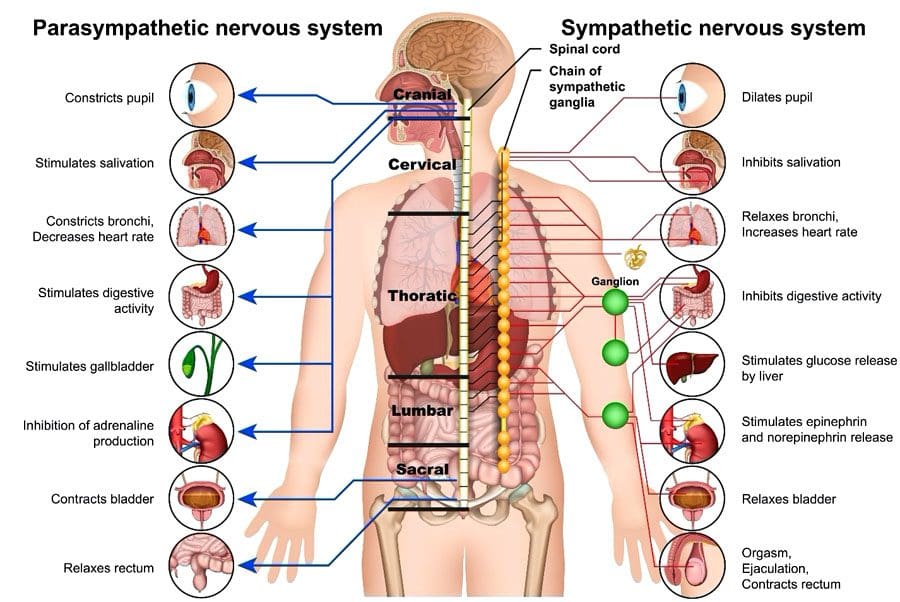
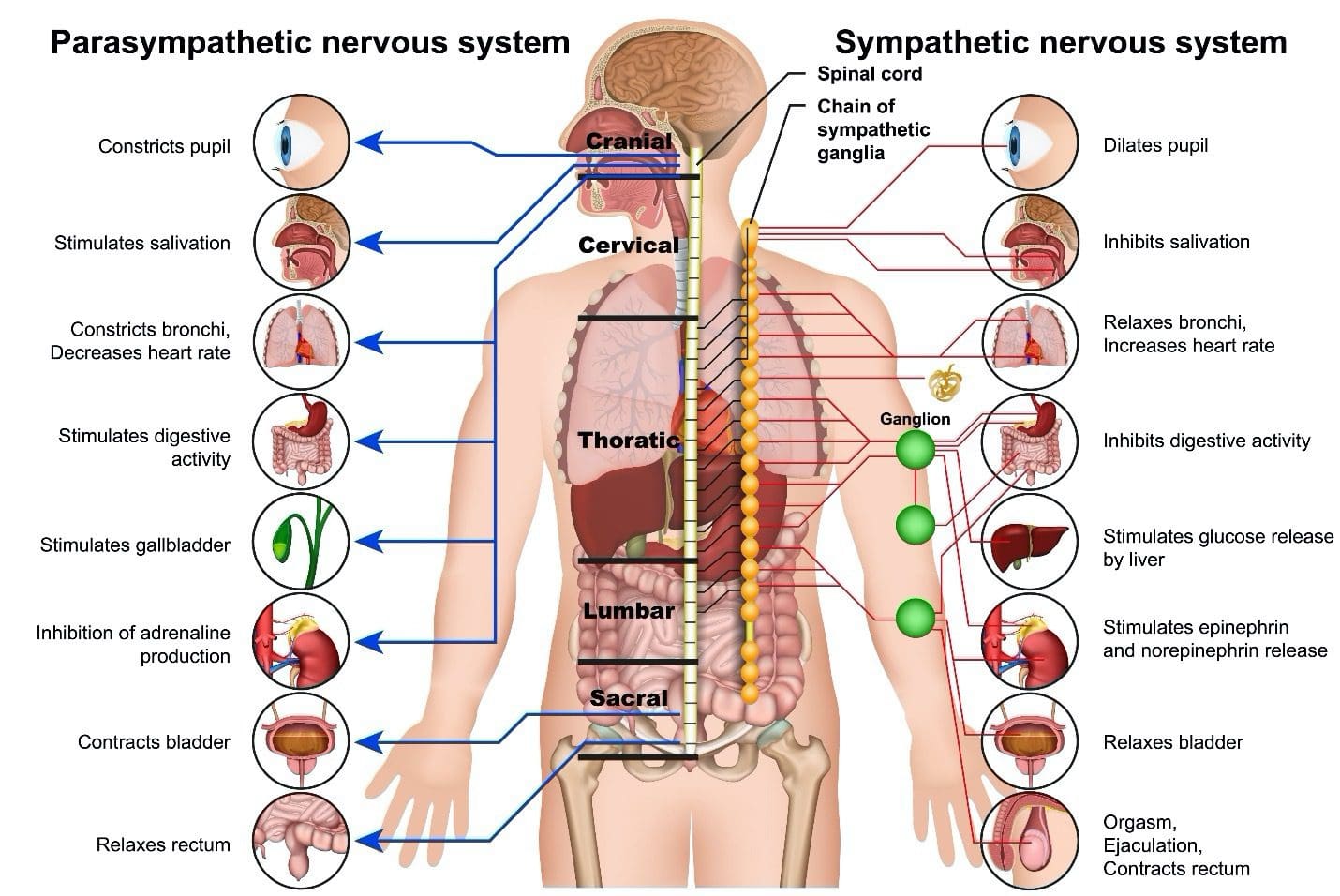
The parasympathetic nervous system (PSNS) involves organs and cells that release neurotransmitters that help the body maintain essential functions like heart rate, breathing, digestion, relaxation, thinking, and sleep. It is part of the autonomic nervous system, which includes the nerves and neurotransmitters that control the body’s internal organs to maintain reliable function. The autonomic nervous system regulates a continual balance between the parasympathetic nervous system’s rest-and-digest functions and the sympathetic nervous system’s fight-or-flight responses.
Functions and Responses
The parasympathetic nervous system includes nerves and neurotransmitters (chemical messengers) distributed throughout the body and is often described as promoting the body’s rest-and-digest state. The body’s needs regulate the control and effects of the system. Certain medications and health issues can modify or alter the function of the autonomic nervous system, including sympathetic and parasympathetic areas. The parasympathetic and sympathetic nervous systems collaborate to control cells, tissues, and organs. The body requires constant functioning and adjustment of both systems. (McQuade J. D. et al., 2017) Functions include: (Valenti V. E. et al., 2024)
Saliva secretion to break down food.
Maintaining blood pressure, resting heart, and breathing rate.
Producing enzymes in the stomach and intestines to break down food further and absorb nutrients.
Kidney balancing of fluid and mineral levels by producing urine.
Constricting pupils (making the dark circle in the eye smaller) to see details up close.
Maintaining focus and concentration to think, remember, and make decisions.
Releasing hormones to fall asleep and stay asleep.
Providing consistent muscle stimulation to maintain endurance for muscle activity.
All functions are adjusted based on the body’s needs.
Activation
The parasympathetic response constantly works to keep the body active, engaged, and healthy and can be stimulated simply by relaxing and resting. Individuals can sometimes focus on promoting their body’s parasympathetic activity through stretching, slow movements, relaxing sounds or music, meditation, and similar activities. Individuals who frequently feel anxious or stressed and have difficulty relaxing could benefit from guidance from a therapist or coach on learning to engage the parasympathetic nervous system. (Goren O. et al., 2024) This can involve activities such as guided meditation or talk therapy, which can help individuals work through fears and anxieties.
Dysregulation
Some medical conditions are associated with dysregulation. Heart disease, respiratory disease, sleep disorders, mental health conditions, and behavioral conditions can be associated with overactive or underactive parasympathetic or sympathetic nervous system regulation. (Veerakumar A. et al., 2022) Various mental health and physical health disorders can involve symptom fluctuations that affect the autonomic nervous system. For example, anxiety disorders can cause periods of overeating as well as loss of appetite and episodic indigestion, nausea, and vomiting. Symptoms of dysregulation can include: (McQuade J. D. et al., 2017)
Excessive sleepiness
Insomnia
Difficulty concentrating
Confusion
Anxiety – nervousness or agitation
A feeling of a rapid heart rate
Shortness of breath
Dry mouth
Throat tightness
Indigestion
Stomachaches
Nausea
Vomiting
Cold hands and feet
Sweating or clammy hands
Sadness
Depression
Dizziness or feeling physically off-balance
Any of these symptoms can develop and resolve quickly. Most individuals experience symptoms or parasympathetic nervous system dysfunction when an unexpected stressful event occurs, and the response is considered normal in traumatic, shocking, sad, or high-stress circumstances. (Veerakumar A. et al., 2022)
Medications may induce parasympathetic overactivity or underactivity until the medicine is broken down and removed from the body. (Valenti V. E. et al., 2024)
Nerves
The system comprises nerves that release hormones and neurotransmitters and nerves that respond to the hormones and neurotransmitters. Parasympathetic activation and response include: (Valenti V. E. et al., 2024)
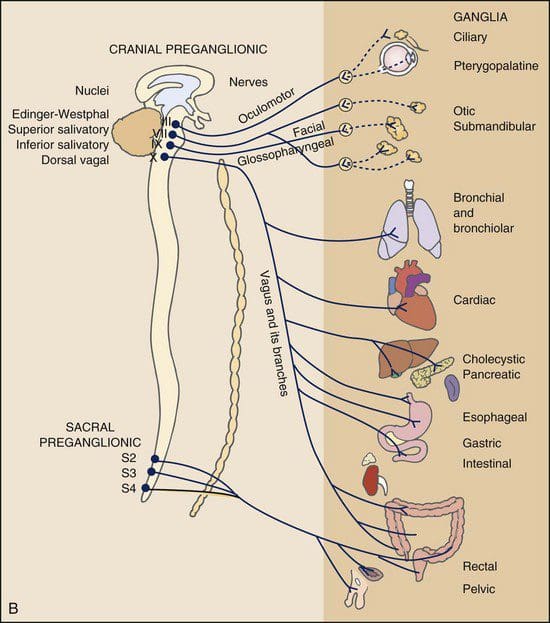
The nerves that activate the parasympathetic nervous system run throughout the body, primarily in the brain, heart, lungs, stomach, and intestines.
The brain, heart, lungs, stomach, intestines, muscles, liver, kidneys, reproductive organs, eyes, and mouth are among the areas of the body that respond to stimulation.
The vagus nerve, one of the cranial nerves, is closely associated with parasympathetic nervous system activity. It runs from the brainstem down into the throat, heart, lungs, and digestive system. (Valenti V. E. et al., 2024) Surgical, medical, and alternative interventions are used to regulate the activity of the parasympathetic nervous system and are targeted toward regulating and controlling the activity of the vagus nerve. (Hernández-Domínguez R. A. et al., 2024)
PSNS Support
Living with any parasympathetic nervous system dysfunction can be challenging. For individuals with heart or lung disease, healthcare providers will evaluate the medical condition and recommend surgery or medication to control symptoms and avoid complications. (Hernández-Domínguez R. A. et al., 2024) Individuals who are living with a mental health disorder or behavioral disorder that is associated with any dysregulation of the parasympathetic nervous system activity may benefit from a combination of behavioral interventions and medication to help control symptoms long term. (Goren O. et al., 2024)
Injury Medical Chiropractic and Functional Medicine Clinic
The spinal cord has multiple functions in restoring, rejuvenating, and strengthening the nervous system. Chiropractic care has a highly responsive therapeutic effect on the nervous system because of its focus on the spine. Spinal decompression, traction, soft tissue manipulation, and other treatments help regulate and restore the function of the nervous system. Chiropractic benefits:
Reduce and/or eliminate pain.
Improves the quality of sleep.
Increases energy.
Improves cognition and clarity.
Reduces or eliminates headaches and migraines.
Improves digestive function.
Improves balance and coordination.
Increases flexibility and mobility.
Regulates respiration.
Regulates lower heart rate.
At Injury Medical Chiropractic and Functional Medicine Clinic, our areas of practice include Chronic Pain, Personal Injury, Auto Accident Care, Work Injuries, Back Injury, Low Back Pain, Neck Pain, Migraine Headaches, Sports Injuries, Sciatica, Scoliosis, Complex Herniated Discs, Fibromyalgia, Chronic Pain, Complex Injuries, Stress Management, Wellness & Nutrition, Functional Medicine Treatments, and in-scope care protocols. We focus on what works for every patient to restore function. If other treatment is needed, individuals will be referred to a clinic or physician best suited to their injury, condition, or ailment.
Chiropractic Secrets Exposed
References
McQuade, J. D., Penzel, T. E., Silk, J. S., & Lee, K. H. (2017). Parasympathetic Nervous System Reactivity Moderates Associations Between Children’s Executive Functioning and Social and Academic Competence. Journal of abnormal child psychology, 45(7), 1355–1367. https://doi.org/10.1007/s10802-016-0246-5
Valenti, V. E., Vanderlei, L. C. M., & Godoy, M. F. (2024). Editorial: Understanding the role of the autonomic nervous system in health and disease. Frontiers in neuroscience, 18, 1446832. https://doi.org/10.3389/fnins.2024.1446832
Goren, O., Paz, A., Bar-Kalifa, E., Gilboa-Schectman, E., Wolff, M., & Atzil-Slonim, D. (2024). Clients’ and therapists’ parasympathetic interpersonal and intrapersonal regulation dynamics during psychotherapy for depression. Psychotherapy research : journal of the Society for Psychotherapy Research, 1–15. Advance online publication. https://doi.org/10.1080/10503307.2024.2378038
Veerakumar, A., Yung, A. R., Liu, Y., & Krasnow, M. A. (2022). Molecularly defined circuits for cardiovascular and cardiopulmonary control. Nature, 606(7915), 739–746. https://doi.org/10.1038/s41586-022-04760-8
Hernández-Domínguez, R. A., Herrera-Orozco, J. F., Salazar-Calderón, G. E., Chávez-Canales, M., Márquez, M. F., González-Álvarez, F., Totomoch-Serra, A., Reyes-Cruz, T., Lip, F., & Aceves-Buendía, J. J. (2024). Optogenetic modulation of cardiac autonomic nervous system. Autonomic neuroscience : basic & clinical, 255, 103199. https://doi.org/10.1016/j.autneu.2024.103199
The digestive system in the body helps with the process of digesting food that the host consumes. The food being digested goes through a bio-transformation where it turns into nutrients and is stored in the intestines, liver, and gallbladder, where it turns into bile to be excreted out of the system to ensure a healthy functional gut system and body. But when disruptive factors like poor eating habits or gut issues start to affect the body and gallbladder, this causes many problems that can make an individual miserable. This affects their quality of life since they are dealing with painful issues in their bodies that overlap the primary source risk profiles. Today’s article looks at the gallbladder, how it functions with the body and parasympathetic nervous system, and how referred shoulder pain and gallbladder dysfunction are connected. We refer patients to certified providers specializing in gastroenterology and chiropractic treatments that help those with issues that affect their shoulders and gallbladder. We also guide our patients by referring to our associated medical providers based on their examination when it’s appropriate. We find that education is the solution to asking our providers insightful questions. Dr. Alex Jimenez DC provides this information as an educational service only. Disclaimer
What Is The Gallbladder?
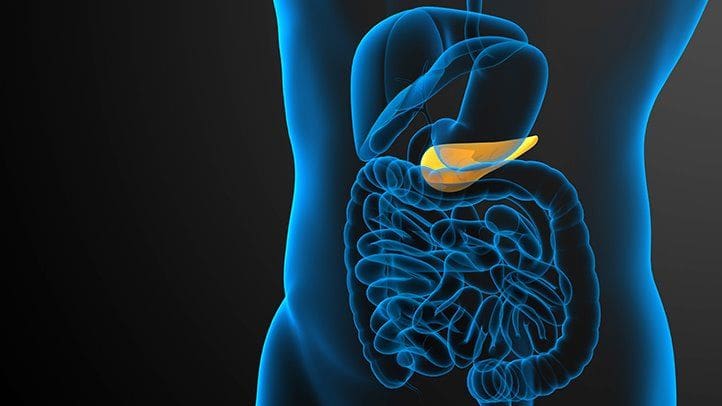
The digestive system comprises the mouth, the internal organs from the GI tract, the liver, the gallbladder, and the anus, where food is consumed, digested, and excreted out of the body to keep it healthy. The gallbladder is a small organ that store and releases bile at the appropriate time into the intestines to be mixed with the digested foods to be excreted out of the body. This pear-shaped organ inflates and deflates like a balloon when it stores and releases bile while having a casual relationship with the nerves and hormones that help regulate the gallbladder functioning properly. Studies reveal that the ganglia become the target of causing the hormone cholecystokinin and the parasympathetic nerve to up or downregulate the neurotransmission to the gallbladder. This causes the gallbladder to be functional in the body.
What Are Its Functions In The Parasympathetic Nervous System?
So what are the functions that the gallbladder provides to the body? For starters, the parasympathetic nervous system allows the body to rest and digest the consumed food to be turned into nutrients. The parasympathetic nervous system also provides gallbladder stimulation as studies reveal that the gallbladder receives innervation from the parasympathetic nervous system connected to the vagus nerve that transmits information to the spine and the brain. Keeping and releasing bile from this pear-shaped organ helps regulate the gastrointestinal tract. This causal relationship between the gallbladder and the parasympathetic nerve is essential because the body needs to know when to store and release bile from the gallbladder, or it might trigger some issues that can do more harm to the body and even affect the gallbladder itself.
Do You Have Shoulder Pain?- Video
Have you been experiencing gut issues causing a sharp or dull ache in your back or sides? How about questionable shoulder pain that seems to come out of nowhere? Or are your experiencing inflammation in your digestive system? Many of these symptoms are signs of visceral-somatic pain affecting the gallbladder. Visceral-somatic pain is defined when there is damage to the organ, and it starts to affect the muscles in a different location in the body. The video above gives an excellent example of visceral-somatic pain in the gallbladder and the shoulder. Now many people wonder how shoulder pain is the mediator of the gallbladder? Well, inflammation in the liver and gallbladder causes the nerve roots to be hypersensitive and compressed. This leads to overlapping profiles, triggering pain in the shoulder muscles and associated with upper mid-back pain.
Referred Shoulder Pain & Gallbladder Dysfunction
Now say the individual is experiencing shoulder pain; however, when they rotate their shoulder, there is no pain? Where is the source of shoulder pain localized, and what is causing the issue? And why is it correlating to the gallbladder? This is known as referred pain, where the source of pain is poorly localized when it is located elsewhere. Studies reveal that gallbladder dysfunctions like cholecystitis might be associated with acute thoracolumbar shoulder pain. So what does this mean? It means that any referred pain that is the causation of shoulder pain gives the impression that something is wrong with the gallbladder. This would provide much-needed information when individuals are being examined by their physicians.
Conclusion
The body needs the digestive system to help process food the host consumes and excretes for a healthy functioning system. The gallbladder stores and releases bile to the digested food. This ensures that the nutrients and bile are transported and passed out of the body. When disruptive factors cause gut issues and affect the gallbladder, it can correlate to different problems impacting the body. An example would be gallbladder issues associated with shoulder pain. This is referred to as pain, which is from an affected organ and associated with the muscle in a different location. This can make the individual feel miserable and wonder what is going on with their shoulders when it might be something associated with their gallbladder. Available treatments can provide better knowledge to determine the problem and how to alleviate the issues.
References
Carter, Chris T. “Acute Thoracolumbar Pain Due to Cholecystitis: A Case Study.” Chiropractic & Manual Therapies, BioMed Central, 18 Dec. 2015, https://www.ncbi.nlm.nih.gov/pmc/articles/PMC4683782/.
Jones, Mark W, et al. “Anatomy, Abdomen and Pelvis, Gallbladder.” In: StatPearls [Internet]. Treasure Island (FL), StatPearls Publishing, 8 Nov. 2021, https://www.ncbi.nlm.nih.gov/books/NBK459288/.
Mawe, Gary M., et al. “Nerves and Hormones Interact to Control Gallbladder Function.” Physiology, 1 Apr. 1998, https://journals.physiology.org/doi/full/10.1152/physiologyonline.1998.13.2.84.
Medical Professional, Cleveland Clinic. “Gallbladder: What Is It, Function, Location & Anatomy.” Cleveland Clinic, 28 July 2021, https://my.clevelandclinic.org/health/body/21690-gallbladder.
The body has many nerves that intertwine and branch out from the spinal cord in the central nervous system. These nerves provide many functions that the body needs to work correctly, from motor function on the arms, legs, and neck to sensory functions like perceiving how much light comes into the eyes, that sense of fullness in the gut system, and when something is touching the skin. The body needs these nerves for everyday function and when a person feels pain from accidents and injuries. When there are factors that cause nerve damage or even gut issues that are internally affecting the body, it can cause many symptoms and cause a person to feel gloomy. Today’s article looks at the parasympathetic nervous system, how it affects the gut microbiota, and how autonomic neuropathy disrupts the gut system in many individuals. Refer patients to certified, skilled providers specializing in gut treatments for individuals that suffer from autonomic neuropathy. We guide our patients by referring to our associated medical providers based on their examination when it’s appropriate. We find that education is critical for asking insightful questions to our providers. Dr. Alex Jimenez DC provides this information as an educational service only. Disclaimer
Can my insurance cover it? Yes, it may. If you are uncertain, here is the link to all the insurance providers we cover. If you have any questions or concerns, please call Dr. Jimenez at 915-850-0900.
What Is The Parasympathetic Nervous System?
Have you experienced gut issues affecting your body? How about feeling dizzy or faint when standing up? Does it seem difficult to adjust your eyesight from dark to light? Or have you experienced gut inflammation? These signs and symptoms are usually affected when the parasympathetic nerves are damaged and causing gut issues in the body. The parasympathetic nervous system. as research has defined it, conserves the body’s energy to be used for a later date while regulating bodily functions. These nerves help the body go into a “resting” condition that allows the body to work in a less stressful environment than the sympathetic nervous system, which drives the “fight or flight” response. The parasympathetic nerves also help with the GI tract, as additional research shows the parasympathetic nervous system helps exert excitatory and inhibitory GI control and motility in the intestines. The parasympathetic nerves and the gut microbiota are connected as they help influence the body’s homeostasis.
How Does It Affect The Gut Microbiota?
So the brain and the gut are connected to the body as they help send the information back and forth to provide the body’s homeostasis and immune function in preventing diseases. So for the parasympathetic nervous system and how it affects the gut microbiota, it’s all due to the vagus nerve that keeps the gut microbiota functioning and doing its job to support the body. Research studies have shown that the vagus nerve is the primary component of the parasympathetic nervous system. The vagus nerve helps with the bi-directional communication between the brain and the gut system by overseeing the crucial bodily functions. Some of the tasks that the parasympathetic nervous system does for the gut microbiota include:
Connect emotional and cognitive areas of the brain
An Overview On The Parasympathetic Nerves-Video
Feeling inflammatory effects inside your gut? How about feeling dizzy by just standing for a little bit? Do you have difficulty eating or have a loss of appetite? Many of these signs of parasympathetic nerves are affected, causing abnormalities in the gut microbiota. The video above explains what the parasympathetic nervous system does and how it plays its role in the entire body. The parasympathetic nervous system also has a partnership with the gut microbiota. Research studies mentioned that the interaction between the parasympathetic nervous system and the gut microbiome ensures the proper maintenance of homeostasis and cognitive functions for the body. The gut-brain axis helps promote optimal bodily function while ensuring that the motor-sensory parts are doing their jobs.
How Autonomic Neuropathy Affects The Gut System
Injuries affecting the gut microbiota and the parasympathetic nervous system can cause gut inflammation in the intestines and nerve damage to the nervous system. This is known as autonomic neuropathy, and research shows that this type of neuropathy causes body and gut issues like diabetes and gastrointestinal motility and contributes to other GI symptoms. Other research studies have found that autonomic neuropathy can alter the gut microbiota’s homeostasis regulation. When this happens, the body will start to have various symptoms affecting each organ and making them dysfunctional. The body will develop more symptoms when the gut microbiota becomes affected. These symptoms cause a decrease in vagal outflow or an increase in sympathetic activity, which will be associated with a slow decreased gastrointestinal motility.
Conclusion
The gut and nervous systems have a bi-directional communication that helps provide the body with proper immune support and metabolizing homeostasis for functionality. The nerves in the nervous system are branched out from the spinal cord and help offer many functions to the arms, organs, legs, and muscle tissues. The parasympathetic nerves in the nervous system help the body rest and digest the nutrients provided to the body. When the nerves or the gut suffer from damage, it can cause various problems that cause dysfunction to the motor-sensory functions of the body. When this happens, many individuals can find different treatments to restore body functions to the gut and the parasympathetic nerves and reduce the symptoms that come with it.
References
Breit, Sigrid, et al. “Vagus Nerve as Modulator of the Brain-Gut Axis in Psychiatric and Inflammatory Disorders.” Frontiers in Psychiatry, Frontiers Media S.A., 13 Mar. 2018, https://www.ncbi.nlm.nih.gov/pmc/articles/PMC5859128/.
Browning, Kirsteen N, and R Alberto Travagli. “Central Nervous System Control of Gastrointestinal Motility and Secretion and Modulation of Gastrointestinal Functions.” Comprehensive Physiology, U.S. National Library of Medicine, Oct. 2014, https://www.ncbi.nlm.nih.gov/pmc/articles/PMC4858318/.
Kornum, Ditte S, et al. “Assessment of Gastrointestinal Autonomic Dysfunction: Present and Future Perspectives.” Journal of Clinical Medicine, MDPI, 31 Mar. 2021, https://www.ncbi.nlm.nih.gov/pmc/articles/PMC8037288/.
Mayer, Emeran A. “Gut Feelings: The Emerging Biology of Gut-Brain Communication.” Nature Reviews. Neuroscience, U.S. National Library of Medicine, 13 July 2011, https://www.ncbi.nlm.nih.gov/pmc/articles/PMC3845678/.
Tindle, Jacob, and Prasanna Tadi. “Neuroanatomy, Parasympathetic Nervous System – Statpearls – NCBI Bookshelf.” In: StatPearls [Internet]. Treasure Island (FL), StatPearls Publishing, 5 Nov. 2021, https://www.ncbi.nlm.nih.gov/books/NBK553141/.
Tougas, G. “The Autonomic Nervous System in Functional Bowel Disorders.” Canadian Journal of Gastroenterology = Journal Canadien De Gastroenterologie, U.S. National Library of Medicine, Mar. 1999, https://pubmed.ncbi.nlm.nih.gov/10202203/.
IFM's Find A Practitioner tool is the largest referral network in Functional Medicine, created to help patients locate Functional Medicine practitioners anywhere in the world. IFM Certified Practitioners are listed first in the search results, given their extensive education in Functional Medicine