Breathing nourishes the whole body and regulates important functions like heart rate and blood pressure. It also reinforces proper body mechanics to lessen the stress on the body when moving. Busy lives combined with sedentary work and lifestyle can condition the body to take only quick, shallow breaths, which can weaken lung muscles and cause tension to build, worsening posture and leading to other adverse symptoms and conditions. Learning deep breathing can positively affect heart rate, mental alertness, and blood pressure and improve posture. Injury Medical Chiropractic and Functional Medicine Clinic can create personalized postural treatment and training plans.
Breathing and Posture
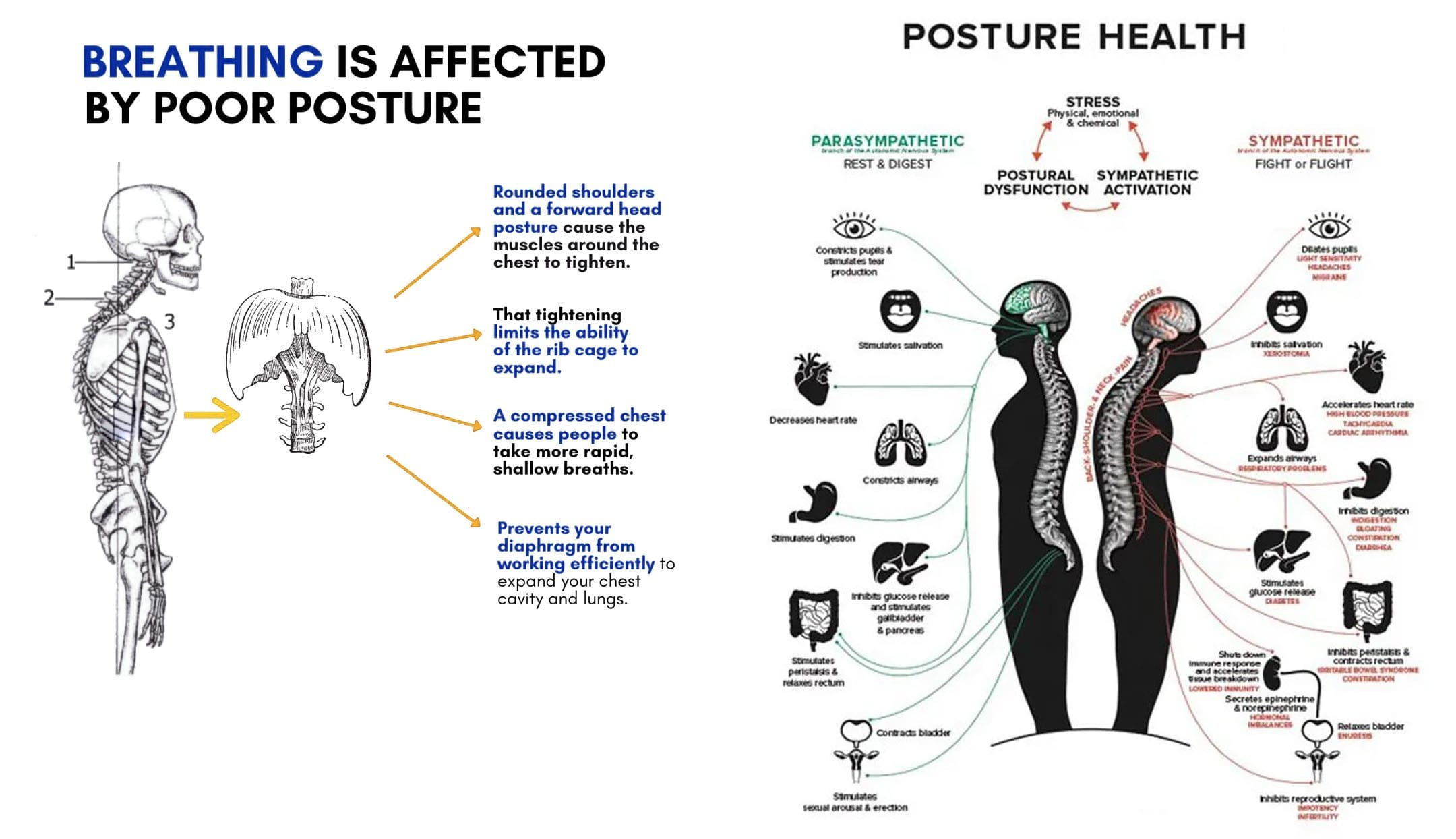
Inhalation causes the lungs to get filled with air, and exhalation releases and empties the lungs. For the lungs to work optimally, the rib cage needs to expand constantly in a gentle, rhythmic way. The respiratory muscle/diaphragm muscle needs to go up and down with each breath cycle. This can only happen when the muscle is not contracted or tense. Tension in the upper body can increase unhealthy postures and undermine health. Continued unhealthy postures at school, work, and home will compress the ribs, intercostal muscles, diaphragm, and base of the neck. This prevents the ribcage from expanding fully, which impairs optimal breathing. Over time, the strength of the respiratory muscles weakens.
Healthy Posture
Proper body alignment reduces strain on supportive structures like ligaments, muscles, joints, and discs. A healthy posture allows individuals to breathe more easily, move more efficiently, relax, and sleep better.
Symptoms Of Unhealthy Posture
Research shows that prolonged practice of unhealthy posture can lead to health problems, including:
Aching and chronic pain in the back, neck, and shoulders.
Tight, sore muscle knots/trigger points.
Tension headaches, limited sleep, and digestive problems.
Brain fog.
Shifting moods.
Digestive problems.
Breathing from the chest relies on secondary muscles around the neck and collarbone instead of the diaphragm. Shallow breathing patterns accompanied by unhealthy postures cause muscles in the upper body to function improperly. The longer the body sits, the less the body can resist the force of gravity and maintain a stable core. Tight muscles around the chest cause rounded shoulders and forward head posture, further weakening the muscles that help maintain an upright posture. Chest and rib discomfort symptoms can result from the tight intercostal muscles and inadequate expansion of the ribs.
Chiropractic Treatment
Shallow breathing can be reversed by regular physical activity, and sessions of respiratory muscle training will help to improve posture and quality of life. Deep or belly breathing involves learning to use the abdominal muscles. Inhaling slowly and deeply through the nose fills the lungs with air and expands the stomach. Learning to breathe deep regularly provides benefits like stress reduction, improved cardiovascular health, stronger lungs, and improved cognitive performance.
Posture correction techniques relieve back and neck pain, improve muscle and joint function, maintain brain health, increase mood stability, and improve spinal health.
Learning how to breathe deeply takes practice.
One beginning technique is to breathe deeply and count to 4 before slowly releasing the breath with another count to 4.
Individuals will notice their abdomen, ribs, and chest push forward as they breathe.
The shoulders, neck, and spine properly align during this action.
Place a hand on the abdomen to check for correct breathing.
It should move outwards slightly as air fills the lungs.
Real Patients, Real Results
References
Albarrati, Ali, et al. “Effect of Upright and Slouched Sitting Postures on the Respiratory Muscle Strength in Healthy Young Males.” BioMed research international vol. 2018 3058970. 25 Feb. 2018, doi:10.1155/2018/3058970
Aliverti, Andrea. “The respiratory muscles during exercise.” Breathe (Sheffield, England) vol. 12,2 (2016): 165-8. doi:10.1183/20734735.008116
Pickering, Mark, and James F X Jones. “The diaphragm: two physiological muscles in one.” Journal of Anatomy vol. 201,4 (2002): 305-12. doi:10.1046/j.1469-7580.2002.00095.x
Sheel, A William. “Respiratory muscle training in healthy individuals: physiological rationale and implications for exercise performance.” Sports medicine (Auckland, N.Z.) vol. 32,9 (2002): 567-81. doi:10.2165/00007256-200232090-00003
Individuals may not be aware that back discomfort/pain symptoms can be connected to not staying hydrated. When the body is dehydrated, it reduces the amount of fluid in the spinal discs making them smaller, resulting in decreased cushioning and support for the spine. The stress can lead to swelling, causing further back discomfort, even a herniated disc. Individuals that experience frequent back pain could find relief by increasing their H2O consumption.
Staying Hydrated
Physical activity and healthy nutrition are important for healthy living. However, individuals can forget the basic need for water, often resulting in dehydration. The body needs to maintain hydration levels to function correctly. Dehydration can cause the body’s fascia/connective tissue which supports every cell and organ, to lose lubrication that allows the muscles to move, slide, and glide smoothly, causing stiffness, and tangled knots/trigger points, making movement difficult and painful.
The Body’s Overall Health
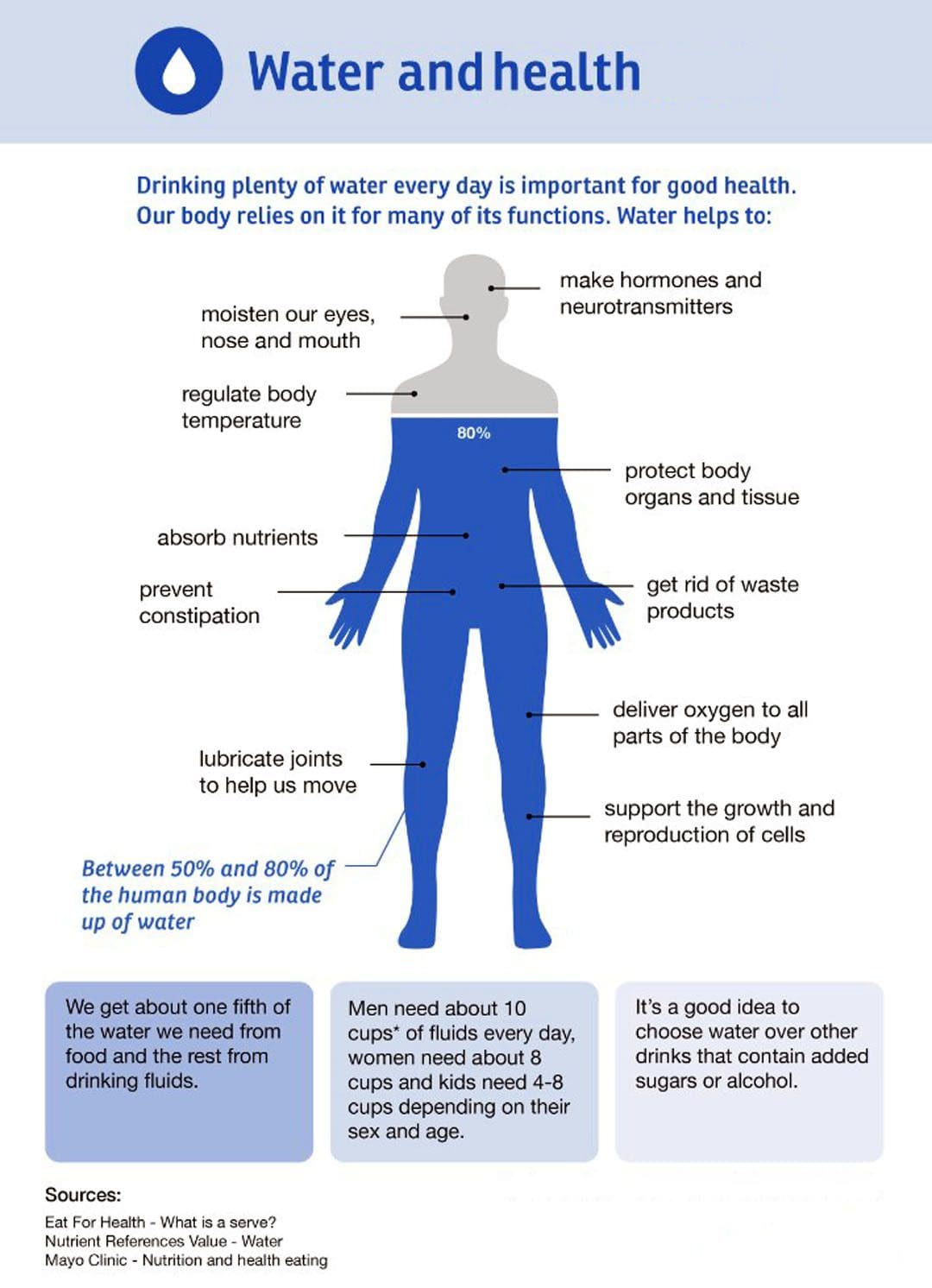
The body is 60% water.
Hydration replaces body fluids lost through exhaling, sweating, and waste elimination.
The body loses and needs to replace around 2-3 quarts of water daily.
Proper hydration regulates temperature, keeps the joints functioning smoothly, protects the spine, and facilitates waste removal.
Dehydration
Even being a little dehydrated is not healthy. Studies have shown that losing 1-2% of body weight without replacing fluids causes thinking and memory problems. A 4% deficit causes headaches, irritability, and sleepiness. Physical work or working outdoors without proper hydration impairs muscle endurance and strength. Dehydration stresses the spine even more which can cause painful swelling and bulged discs. Chronic pain conditions can be worsened by dehydration. This includes:
Overall stiffness
Headaches
Migraines
Joint pain
Arthritis
Fibromyalgia
All can be affected by dehydration.
Lack of water levels can lead to back pain because the discs between the vertebrae need fluid to cushion the bones. They begin to dry out when not properly hydrated, exacerbating back discomfort symptoms that could lead to similar symptoms in the neck or legs.
The spinal discs are filled with a gel substance of around 75% water.
The inner and outer rings/nucleus pulposus are made almost entirely of water.
Water is slowly released from the spinal discs throughout the day.
The discs absorb most of the shock from everyday movements while protecting the spinal cord.
The discs rehydrate during sleep.
Indicators of Dehydration
Other than back pain and discomfort, other symptoms of dehydration.
Fatigue
Irritability
Muscle Cramps
Headaches
Dark Urine
Dry Skin
Dry Eyes
Blurry Vision
Bad Breath
Dizziness
Fever
Caffeinated beverages – soft drinks, tea, and coffee count partly toward daily fluid intake. They do not dehydrate the body, but they can increase urination and are recommended not to be the primary source of liquids during the day.
Hydration
Throughout the day, drink plenty of water and move around and stretch to circulate the H2O.
Increase Water Intake
Sixty-four ounces, eight glasses per day, is the common recommendation.
Water intake encompasses all the liquids consumed in a day, including coffee, tea, and soup.
Foods like cantaloupe and watermelon count toward daily water consumption.
The best sources are water and drinks, primarily water sport replacement drinks, herbal teas, lemon water, and vegetable broth.
Drink more when working out and being active. More water is needed on top of the 64 ounces when active.
Keep hydrating long after the physical activity or workout is over.
When the brain signals thirst, the body is already dehydrated.
Stay ahead by sipping water throughout the day.
Keep a water bottle close by at school or work, refill it twice daily, and increase refills on hot days.
Monitor Hydration Levels
An easy way to assess dehydration is by looking at urine color.
Light yellow or clear is healthy.
Dark yellow or cloudy indicates dehydration.
The Injury Medical Chiropractic and Functional Medicine Team can realign the spine and body to optimal function and assist in developing a nutrition plan to maintain health and wellness.
Benefits Of Healthy Eating and Chiropractic Care
References
El-Sharkawy, Ahmed M et al. “Acute and chronic effects of hydration status on health.” Nutrition Reviews vol. 73 Suppl 2 (2015): 97-109. doi:10.1093/nutrit/nuv038
Johannaber, Kenneth, and Fadi A Fathallah. “Spinal disc hydration status during the simulated stooped posture.” Work (Reading, Mass.) vol. 41 Suppl 1 (2012): 2384-6. doi:10.3233/WOR-2012-0470-2384
Manz, Friedrich, and Andreas Wentz. “The importance of good hydration for the prevention of chronic diseases.” Nutrition Reviews vol. 63,6 Pt 2 (2005): S2-5. doi:10.1111/j.1753-4887.2005.tb00150.x
Ritz, Patrick, and Gilles Berrut. “The importance of good hydration for day-to-day health.” Nutrition Reviews vol. 63,6 Pt 2 (2005): S6-13. doi:10.1111/j.1753-4887.2005.tb00155.x
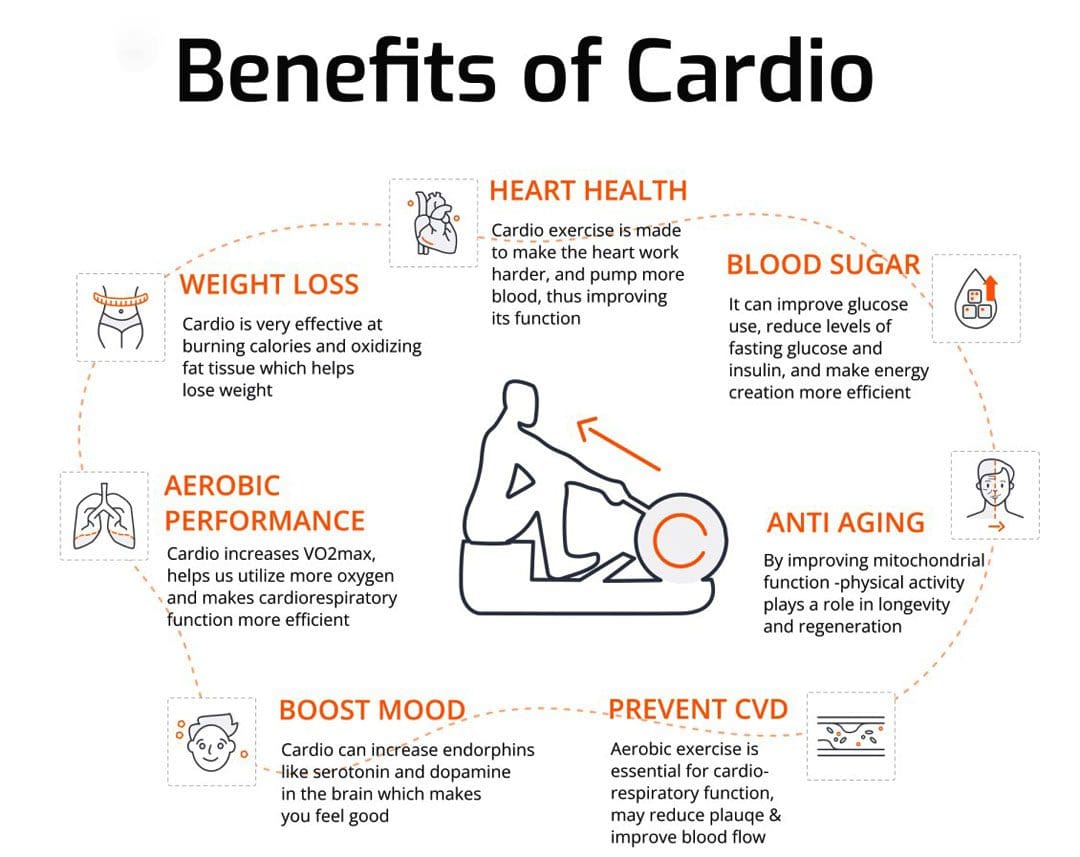
Aerobic Exercise Health: The body adapts differently to different types of exercise. Aerobic, cardio, and endurance all refer to activities stimulating heart and breathing rates to provide the muscles with oxygenated blood. The oxygen is delivered by blood pumped from the heart through the arteries and returns to the heart through the veins. This explains all the heavy breathing during workouts. Aerobic exercise increases energy production in the muscle cells and blood delivery in the cardiovascular system.
Aerobic Exercise Health
The Heart
All the muscles get to rest on and off when in use. The heart is a unique muscle that pumps blood through the body that never gets time off. This is why it is important to strengthen the heart. With aerobic exercise, the heart’s chamber/left ventricle gets larger, producing more blood per pump to the rest of the body. This improves cardiac output for the blood pumped by the heart per minute. When the heart is stronger, pumping more blood per beat means it doesn’t have to beat as rapidly. A lower resting heart rate is associated with a reduced risk of cardiovascular disease and promotes long and healthy life.
Vascular
Each time the heart beats, blood pumps from the left ventricle into the aorta and flows into a branching vessel network. Every artery in the body provides resistance to the circulation that the heart pushes against. The resistance provided can vary, depending on overall health and health conditions.
Aerobic exercise training reduces the workload by reducing arterial stiffness.
Aerobic exercise increases heart rate, pushing more blood through the arteries.
The inner wall of the arteries recognizes the increased blood flow causing the arteries to widen.
With regular training, the arteries acclimate and become more effective at expanding with each rush of blood.
No aerobic activity can cause the arteries to stiffen, causing circulation problems.
Aerobic exercise impacts the vascular system by promoting capillary growth.
Capillaries are microscopic vessels where oxygen diffuses from red blood cells to the muscle and other cells.
The body stimulates a molecule called vascular endothelial growth factor to grow additional capillaries to regulate energy demand more efficiently.
Older individuals benefit from aerobic activity similarly to young individuals.
Metabolic
Along with cardiovascular benefits, aerobic exercise increases the muscles’ energy production. The energy is produced in muscle cells primarily through an oxidative energy system. Oxidative energy production takes place within cells called mitochondria. Once blood delivers oxygen to the muscle cells, it can be used to produce energy that powers the muscles.
Aerobic exercise training improves the muscle cells’ ability to burn fat by generating more mitochondria and enhancing functionality.
Following each training session, the body burns more fat than usual.
Aerobic training can increase resting metabolic rate, resulting in more calories burned.
It can increase post-exercise oxygen consumption/EPOC, resulting in increased calorie burn after training in addition to calories burned during exercise.
Muscle
The muscles adapt from aerobic training. Muscles are made up of various fiber types.
Aerobic exercise training primarily influences type 1 fibers, known as slow-twitch fibers.
The name comes from the proteins responsible for their contractions.
Relative to type 2a fibers/fast-twitch, type 1 fibers contract more slowly but have an increased capacity to contract over and over for longer.
Aerobic training results in hypertrophy of type 1 muscle fibers by adding more slow-twitch proteins.
Strengthening the heart and making arteries more flexible directly impacts health and physical function. Aerobic exercise strengthens and trains the heart to circulate blood efficiently. Injury Medical Chiropractic and Functional Medicine Clinic can develop a personalized health plan for your needs.
Aerobic Exercise Health: Dance Workout
References
Arbab-Zadeh, Armin, et al. “Cardiac remodeling in response to 1 year of intensive endurance training.” Circulation vol. 130,24 (2014): 2152-61. doi:10.1161/CIRCULATIONAHA.114.010775
Gavin, Timothy P et al. “No difference in the skeletal muscle angiogenic response to aerobic exercise training between young and aged men.” The Journal of physiology vol. 585, Pt 1 (2007): 231-9. doi:10.1113/Physiol.2007.143198
Hellsten, Ylva, and Michael Nyberg. “Cardiovascular Adaptations to Exercise Training.” Comprehensive Physiology vol. 6,1 1-32. 15 Dec. 2015, doi:10.1002/cphy.c140080
Nauman, Javaid, et al. “Temporal changes in resting heart rate and deaths from ischemic heart disease.” JAMA vol. 306,23 (2011): 2579-87. doi:10.1001/jama.2011.1826
Popel, A S. “Theory of oxygen transport to tissue.” Critical reviews in biomedical engineering vol. 17,3 (1989): 257-321.
Seals, Douglas R et al. “Aerobic exercise training and vascular function with aging in healthy men and women.” The Journal of physiology vol. 597,19 (2019): 4901-4914. doi:10.1113/JP277764
Anybody can become dehydrated if they don’t take care of themselves and drink plenty of water. Being dehydrated happens when there is insufficient water in the body or increased water loss through sweating, vomiting, and/or diarrhea, along with certain medications, can increase urination and dehydration. Older adults have an increased risk of dehydrating because their body’s fluid reserves decrease, and their body’s ability to signal that they are thirsty does not work as effectively, especially those with memory problems.
Dehydrated Symptoms
Signs of dehydration include:
Muscle cramps.
Dry mouth
Dry cough.
Tiredness/fatigue.
Flushed red skin.
Swollen feet.
High heart rate but low blood pressure.
Dizziness, weakness, light-headedness.
Headache, delirium, confusion.
Loss of appetite with a sugar craving.
Heat intolerance or chills.
Constipation.
Dark-colored urine. Urine should be a pale clear color.
Dehydration Levels
Dehydration is categorized as:
Mild
The body needs more fluids to be taken in.
Drink water
Drinks containing electrolytes are recommended if experiencing significant sweating or fluid losses from vomiting and diarrhea.
The body should feel better after five or ten minutes.
Bhave, Gautam, and Eric G Neilson. “Volume depletion versus dehydration: how understanding the difference can guide therapy.” American journal of kidney diseases: the official journal of the National Kidney Foundation vol. 58,2 (2011): 302-9. doi:10.1053/j.ajkd.2011.02.395
Centers for Disease Control and Prevention. Drinking-Water. (https://www.cdc.gov/healthywater/drinking/nutrition/index.html)
HealthFirst. What Happens to Your Body When You’re Dehydrated? (https://healthyliving.healthfirst.org/happens-body-youre-dehydrated/)
Kenefick, Robert W, and Michael N Sawka. “Hydration at the worksite.” Journal of the American College of Nutrition vol. 26,5 Suppl (2007): 597S-603S. doi:10.1080/07315724.2007.10719665
Thomas, David R et al. “Understanding clinical dehydration and its treatment.” Journal of the American Medical Directors Association vol. 9,5 (2008): 292-301. doi:10.1016/j.jamda.2008.03.006
IFM's Find A Practitioner tool is the largest referral network in Functional Medicine, created to help patients locate Functional Medicine practitioners anywhere in the world. IFM Certified Practitioners are listed first in the search results, given their extensive education in Functional Medicine