Lifting-Related Elbow Pain: Causes and Treatment Options
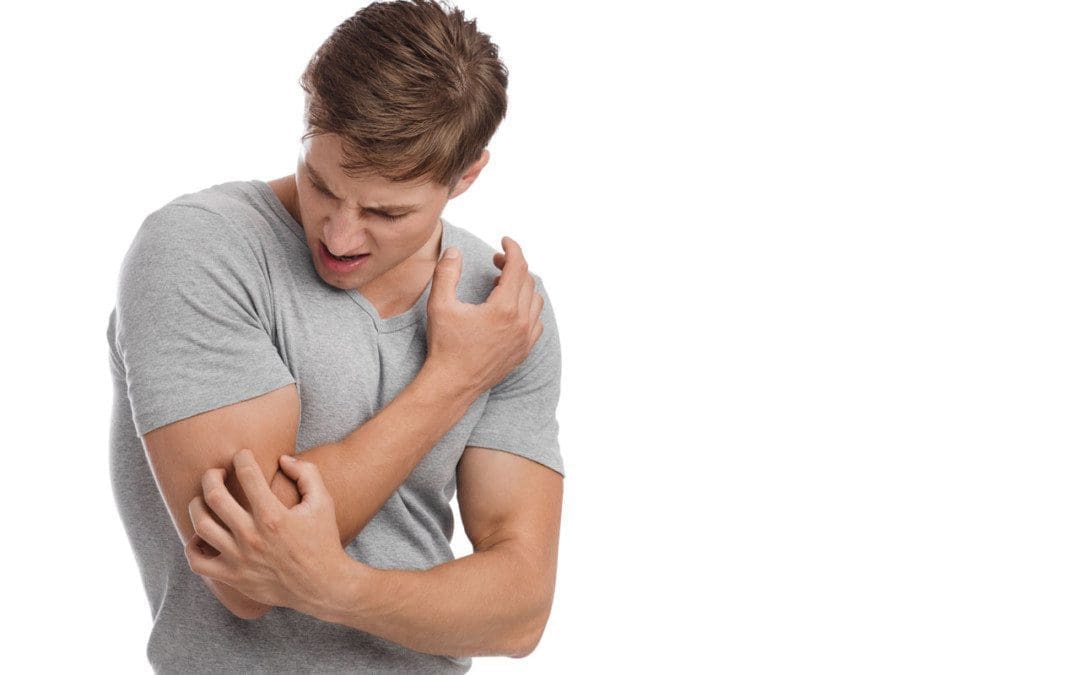
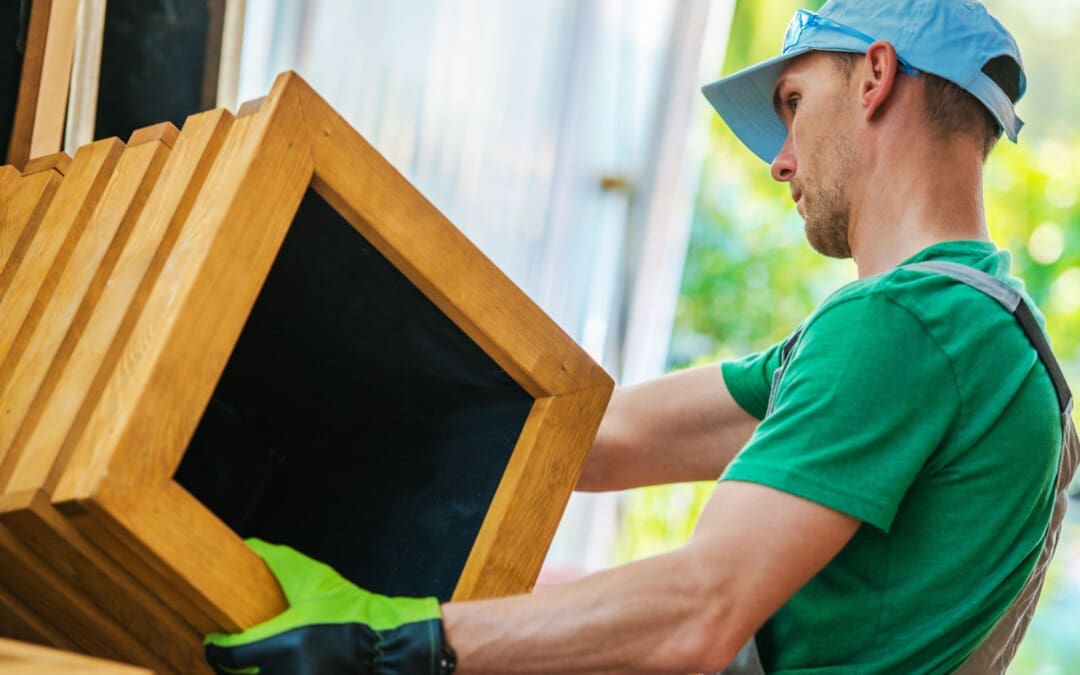
Elbow pain from lifting is a common symptom among individuals who lift weights, heavy objects, children, grocery bags, etc. Depending on the underlying cause, can conservative treatments relieve and heal elbow pain?
Elbow Pain Caused By Lifting
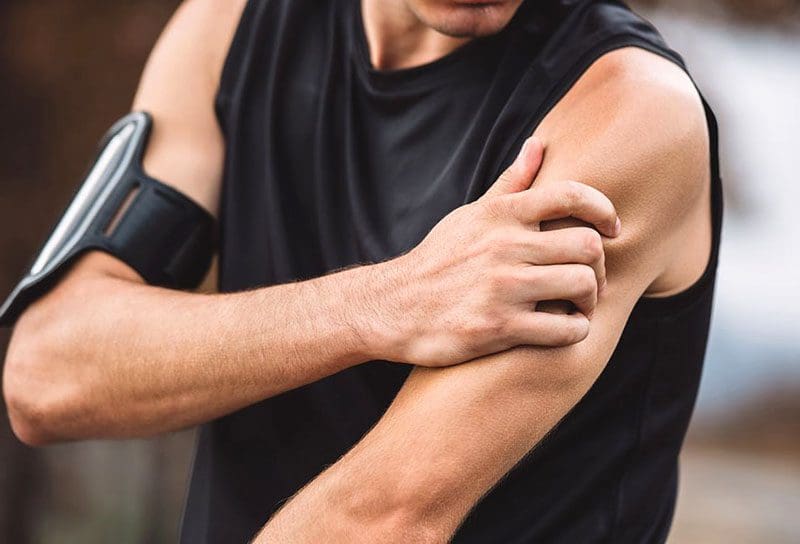
Elbow pain from lifting can result from weight training, repetitive daily tasks, or job duties like lifting small children or heavy objects. Pain can manifest at the sides or the front of the elbow. Most minor injury cases can be treated with ice, rest, and medications at home. However, pain after lifting can also be a sign of a serious injury, such as a tendon rupture/tear.
Minor Pain From Lifting
Lifting puts pressure on the tendons connecting the wrist and upper arm to the bones in the elbow joint. Minor elbow pain can occur from temporary inflammation in any of these structures after lifting an object. Tendonitis occurs when a tendon becomes inflamed, often from overuse or lifting something too heavy, and ranges from mild to severe. Mild tendonitis typically causes pain during the activity and improves with rest. (American Academy of Orthopaedic Surgeons, 2020) Common forms of tendonitis include:
- Tennis elbow – tendonitis on the outside of the elbow
- Golfer’s elbow – tendonitis on the inside of the elbow.
- Biceps tendonitis – at the front of the elbow. (Kheiran A. Pandey, A. & Pandey R. 2021)
Self-Care
Self-care can help reduce elbow pain after lifting and include: (American Academy of Orthopaedic Surgeons, 2020)
Ice
- Add ice to the affected area for up to 20 minutes daily to decrease elbow pain.
Rest
- Avoid lifting heavy objects as much as possible when pain is present.
Wearing A Brace
- If the pain is at the tendons on the inside or outside of your elbow, try wearing a wrist brace to limit the use of your wrist muscles that connect to this area.
Stretching
Gently stretching the wrist flexors and extensors can help reduce elbow pain after lifting. Stretches can be performed several times daily, even after symptoms have resolved. (American Academy of Orthopaedic Surgeons, 2024)
- Hold the arm out in front with the palm down. Keep the elbow straight.
- Bend the wrist down so that the fingers are pointing toward the ground.
- With the other hand, gently pull the wrist further down until a stretch is felt along the back of the forearm.
- Hold this position for 15 seconds.
- Repeat five times.
- Next, bend the wrist upward so the fingers point toward the ceiling.
- Using the other hand, gently pull the hand backward until the stretch is felt along the front of the forearm.
- Hold for 15 seconds.
- Repeat five times.
Medication
Over-the-counter nonsteroidal anti-inflammatory drugs (NSAIDs) can help manage elbow pain caused from lifting and include: (American Academy of Orthopaedic Surgeons, 2023)
- Advil/Motrin – ibuprofen
- Aleve – naproxen
- Bayer – aspirin
- Tylenol – acetaminophen
Healing
Mild cases can improve after a few days of self-care, whereas more pronounced elbow symptoms can take several weeks, months, or even a year. (Kheiran A. Pandey, A. & Pandey R. 2021) If self-care doesn’t work, physical therapy may be recommended. A physical therapy team can use various modalities and treatments to help reduce pain and inflammation from elbow injuries. The therapy can include targeted exercises to strengthen weak muscles and stretch tight muscles that might contribute to the condition. In addition, the therapy team will help individuals modify their lifting technique to help prevent further injury.
Moderate to Severe Elbow Pain
In addition to sharp, severe pain, serious elbow pain caused from lifting have distinct symptoms, including: (American Academy of Orthopaedic Surgeons, 2022)
- Bruising
- Swelling
- Elbow weakness that suddenly happens.
A biceps tendon rupture is a rare but serious injury usually caused from lifting. In addition to other visible signs of the injury, there will be a bulge at the top of the upper arm because the muscle bunches up as it is no longer attached to the elbow. (American Academy of Orthopaedic Surgeons, 2022) Individuals may hear an audible popping sound if an elbow ligament or tendon gets torn while lifting. (Johns Hopkins Medicine, 2024)
Treatment
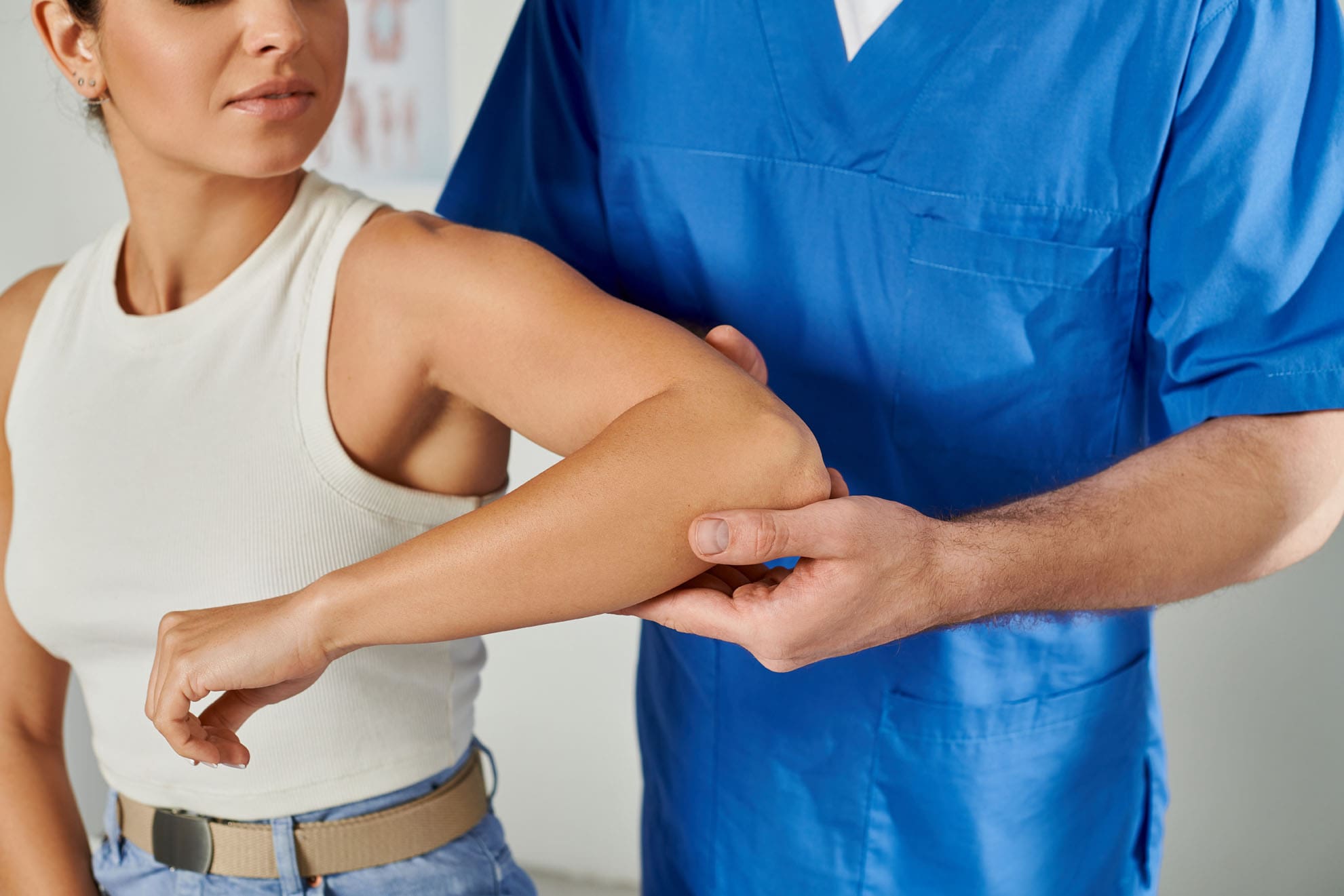
Treatment depends on the severity of the injury, but most cases resolve on their own with rest and, if necessary, physical therapy. Conditions that cause severe pain require orthopedic surgeon expertise. These physicians specialize in treating musculoskeletal system injuries. Imaging such as X-rays, MRIs, or CT scans are often used to determine the extent of damage. Individuals with tendon or ligament tears in the elbow may need surgery to regain full range of motion and strength in their arm. After surgery, physical therapy will help restore function.
Injury Medical Chiropractic and Functional Medicine Clinic
Injury Medical Chiropractic and Functional Medicine Clinic works with primary healthcare providers and specialists to develop an optimal health and wellness solution. We focus on what works for you to relieve pain, restore function, and prevent injury. Regarding musculoskeletal pain, specialists like chiropractors, acupuncturists, and massage therapists can help mitigate the pain through spinal adjustments that help the body realign itself. They can also work with other associated medical professionals to integrate a treatment plan to improve the body’s flexibility and mobility and resolve musculoskeletal issues.
Shoulder Pain Chiropractic Treatment
References
American Academy of Orthopaedic Surgeons. (2020). Sprains, strains, and other soft-tissue injuries. https://orthoinfo.aaos.org/en/diseases–conditions/sprains-strains-and-other-soft-tissue-injuries/
Kheiran, A., Pandey, A., & Pandey, R. (2021). Common tendinopathies around the elbow; what does current evidence say?. Journal of clinical orthopaedics and trauma, 19, 216–223. https://doi.org/10.1016/j.jcot.2021.05.021
American Academy of Orthopaedic Surgeons. (2024). Therapeutic exercise program for epicondylitis (tennis elbow/golfer’s elbow). https://orthoinfo.aaos.org/globalassets/pdfs/2024-therapeutic-exercise-program-for-lateral-and-medial-epicondylitis.pdf
American Academy of Orthopaedic Surgeons. (2023). What are NSAIDs? https://orthoinfo.aaos.org/en/treatment/what-are-nsaids/
American Academy of Orthopaedic Surgeons. (2022). Biceps tendon tear at the elbow. https://orthoinfo.aaos.org/en/diseases–conditions/biceps-tendon-tear-at-the-elbow
Johns Hopkins Medicine. (2024). Ulnar collateral ligament. https://www.hopkinsmedicine.org/health/conditions-and-diseases/ulnar-collateral-ligament-ucl-injuries-of-the-elbow