Dietitians at Integrative and Functional Medicine (DIFM) is a specialty clinic group of nutrition professionals whose center philosophy centers around a holistic, personalized approach to healing and health. Members incorporate many different nutrition remedies such as brain/body modalities in clinical practice supplements and whole foods.
How is nutrition a part of integrative and functional medicine?
Integrative medicine is the practice of medicine that reaffirms the value of the connection between professional and patient, focuses on the entire individual, is informed by evidence, and makes use of all appropriate therapeutic approaches, healthcare professionals, and areas to achieve optimal health and healing.
Functional medicine addresses the underlying causes of illness utilizing a systems-oriented approach and engaging both practitioner and patient at a healing partnership. Functional medicine involves understanding complex, chronic disease’s origins, prevention, and therapy. Hallmarks of a functional medicine approach include:
Patient-centered care. The focus of functional medicine is on care boosting health beyond the absence of illness; as a positive energy. By listening to the patient and studying his or her narrative, the practitioner tailors treatments that address the unique needs of the individual and brings the individual relief.
An integrative, science-based health care strategy. Functional medicine professionals seem “upstream” to think about the intricate web of interactions in the individual’s history, physiology, and lifestyle that can cause disease. The distinctive genetic makeup of each individual is considered, combined with both internal (brain, body, and soul) and external (physical and social environment) variables that affect overall functioning.
Integrating best medical clinics. Functional medicine integrates traditional Western medical practices with what is sometimes regarded as “choice” or “integrative” medicine, creating a focus on prevention through nutrition, diet, and exercise; use of the latest diagnostic techniques; and prescribed combinations of drugs and/or botanical medicines, supplements, therapeutic diets, detoxification programs, or stress-management practices.
Functional Medicine and Nutrition
Functional medication has, for years, been the promoters and teachers of using food as medicine. According to the Institute for Functional Medicine, “functional nutrition highlights the value of top quality meals and phytonutrient diversity to deal with clinical imbalances and move people toward the maximum expression of health. Advanced nutrition evaluation and a comprehensive functional medicine based history leads to a personalized therapeutic intervention made to promote optimal health and protect against diet- and lifestyle-related disease.”
Integrative and functional medicine nutritionists have been uniquely trained and have many years of experience incorporating the art and science of integrative and functional nutrition treatment. They understand that giving you a standard diet plan based on a diagnosis is just not enough to foster optimum recovery. After all, one size does not fit all and they strive to provide the maximum quality of individualized nutrition care to all of our patients.
Practice-Based Evidence for Nutrition
Practice-based evidence promotes the worth of their wisdom and evidence gained by the professional’s clinical observations and experiences. The Dietitians in the Integrative and Functional Medicine (DIFM) practice group of the Academy of Nutrition and Dietetics has developed Standards of Practice (SOP) and Standards of Professional Performance (SOPP) in Integrative and Functional Medicine. The SOP addresses the Nutrition Care Process (NCP) and actions related to person-centered care. The SOPP are statements that describe a level of behaviour in the role.
The Integrative and Functional Medicine Nutrition Therapy (IFMNT) Radial was established within an integrated conceptual framework to assist in IFMNT practice. The structure of this IFMNT Radial allows for the analysis of interrelationships and interactions. The Radial depicts that food is still a source of information that affects, and is influenced by, the five areas also as a factor in disease and health.
The five key areas include: lifestyle, systems (signs and symptoms), heart imbalances, metabolic pathways, and biomarkers. Surrounding the Radial are currently precipitating. The SOP, at the June 2011 issue of the Journal of the American Dietetic Association, is along with the IFMNT Radial.
The scope of our information is limited to chiropractic and spinal injuries and conditions. To discuss options on the subject matter, please feel free to ask Dr. Jimenez or contact us at 915-850-0900 .
By Dr. Alex Jimenez
Additional Topics: Wellness
Overall health and wellness are essential towards maintaining the proper mental and physical balance in the body. From eating a balanced nutrition as well as exercising and participating in physical activities, to sleeping a healthy amount of time on a regular basis, following the best health and wellness tips can ultimately help maintain overall well-being. Eating plenty of fruits and vegetables can go a long way towards helping people become healthy.
Wellness Chiropractor, Dr. Alexander Jimenez takes a look at discussing nutrition with patients in a clinical setting.
How Clinicians Can Do Better
Despite overwhelming evidence that relatively small dietary changes can significantly improve health, clinicians seldom discuss nutrition with their patients. Poor nutritional intake and nutrition-related health conditions, such as cardiovascular disease (CVD), diabetes, obesity, hypertension, and many cancers, are highly prevalent in the United States,1 yet only 12% of office visits include counseling about diet.2 Even among high- risk patients with CVD, diabetes, or hyperlipidemia, only 1 in 5 receive nutrition counseling.2 It is likely that many patients receive most of their nutrition information from other, and often unreliable, sources.
These data may reflect the minimal training, time, and reimbursement allocated to nutrition counseling (and preventive services in general) in clinical practice.3 Most physicians and other health care professionals receive limited education on nutrition in medical school (or other professional schools) or in postgraduate training. Just 25% of medical schools offer a dedicated nutrition course, a decline since the status of nutrition education in US medical schools was first assessed in 1985, and few medical schools achieve the 30 hours of nutrition education recommended by the National Academy of Sciences.4 As a result, physicians report inadequate nutrition knowledge and low self-efficacy for counseling patients about diet.3 In addition, time pressures, especially in primary care, limit opportunities to counsel on nutrition or address preventive issues beyond patients� acute complaints. Lack of time is frequently cited as the greatest barrier to counseling on nutrition and obesity.3
Moreover, nutrition and behavioral counseling have traditionally been non-reimbursed services. Few state Medicaid programs cover nutrition or obesity counseling, and before 2012, Medicare explicitly excluded coverage for obesity counseling; although now a reimbursed service for Medicare beneficiaries, just 1% of eligible Medicare beneficiaries receive this counseling.5 Dietitian counseling is also excluded by Medicare, unless patients have diabetes or renal disease. Although the Affordable Care Act mandates coverage for services graded A or B by the US Preventive Services Task Force, including nutrition counseling for patients with CVD risk factors and obesity counseling for patients with a body mass index of 30 or greater, existing private health insurance benefits are in- consistent, and the covered services are often unclear to both clinicians and patients, thereby limiting use.
Furthermore, health behavior change counseling is often frustrating given the current food environment, in which less nutritious foods tend to be less expensive, larger portioned, more easily accessible, and more heavily marketed than healthier options, making patient adherence 6 to nutrition advice challenging. Conflicting and confusing nutrition messages from popular books, blogs, and other media further complicate patient decision making.
Despite these unfavorable trends, there has been progress in this area. The evidence base supporting the benefits of nutrition intervention and behavioral counseling is expanding. Renewed focus on nutrition education in health care professional training is being driven by both student demand and the health care system. Although time pressures and reimbursement remain impediments, incentives and reimbursement options for nutrition and behavioral counseling are growing, and value-based care and health care team approaches hold promise to better align time demands and incentives for long-term care management. Initiatives to integrate clinical care and community resources offer opportunities to leverage resources that alleviate the clinician�s time commitment. There is evidence of some success; for instance, the amount of sugar-sweetened beverages consumed by individuals in the United States has declined substantially over the past 10 years.7
Clinicians can take the following reasonable steps to include nutrition counseling into the flow of daily practice:
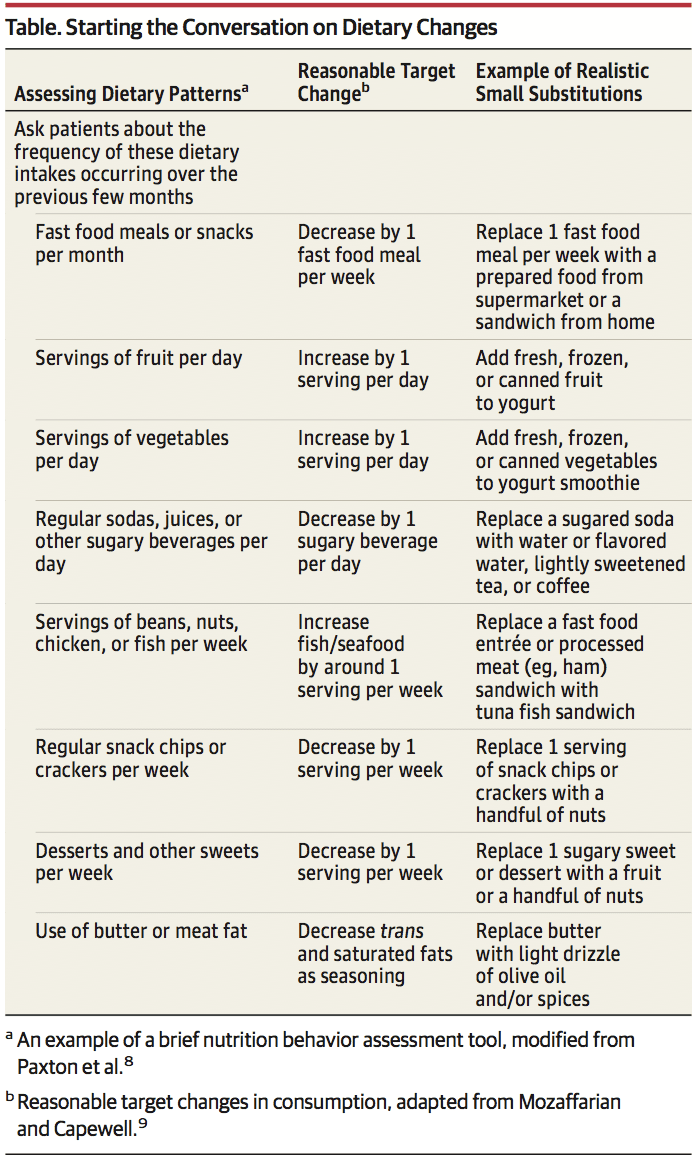
1. Start the conversation. Several short, validated screen- ing questionnaires are available to quickly assess need for nutrition counseling, such as the Starting the Conversation tool8 (Table). This approach can be efficiently used prior to seeing the patient at an appointment, either delivered by medical assistants as part of vital sign assessment or as prescreening paperwork for patients to complete online or in the waiting room.
2. Structure the encounter.�Using methods such as the �5 A�s� (assess, advise, agree, assist, arrange), which has been adapted from tobacco counseling. Motivational interviewing, which has documented efficacy in numerous behavior change settings, is particularly helpful to engage patients who are not yet committed or are hesitant to consider behavioral change.
3. Focus on small steps. Changing lifelong nutrition behaviors can seem overwhelming, but even exceedingly small shifts can have an effect (Table). For example, increasing fruit intake by just 1 serving per day has the estimated potential to reduce cardiovascular mortality risk by 8%, the equivalent of 60 000 fewer deaths annually in the United States and 1.6 million deaths globally.9 Other examples include reducing intake of sugar-sweetened beverages, fast food meals, processed meats, and sweets, while increasing vegetables, legumes, nuts, and whole grains. Emphasize to patients that every food choice is an opportunity to accrue benefits, and even small ones add up. Small substitutions still allow for �treats,� such as replacing potato chips and cheese dip with tortilla chips and salsa, the latter lowering trans fats and saturated fat and increasing whole grain and vegetable intake (Table).
4. Use available resources. Numerous extracurricular resources are readily available for clinicians. The Nutrition in Medicine program offers online, evidence-based nutrition education and tutorials for clinicians and an online, core nutrition curriculum for medical students. The Dietary Guidelines for Americans offers evidence- based and freely available nutrition guidance, tutorials, and tools for clinicians and patients alike. A companion website, Choose My Plate, offers nutrition and counseling advice for clinicians and handy resources for patients, including recently added videos with useful examples of small substitutions that patients will appreciate.
5. Do not do it all at once. Expecting to create long-term behavioral change during a single episode of care is a recipe for frustration and failure, for both the patient and clinician. Empowering and sup- porting patients is an ongoing process, not a 1-time curative event. Use a few minutes at the close of a patient visit to identify opportunities for future counseling, offer to serve as a resource, and be- gin a discussion and support that can be reinforced over time. Take solace in knowing that small initial steps can quickly improve health; for example, reducing trans fats at a single meal (eg, replacing baked goods with fruit or nuts or fried foods with non-fried alternatives) promptly improves endothelial function.10
6. Do not do it all alone.�The primary care physician need not be the sole clinician who provides nutrition counseling. Proactive use of physician extenders (eg, physician assistants, nurses, medical assistants, and health coaches) and referrals can alleviate much of the burden for the busy clinician. Receptionists can distribute assessment and screening questionnaires for patients to complete in the waiting room; medical assistants can document behavioral change progress while assessing vital signs; administrative staff can identify and con- tact patients who are overdue for interaction. Large practices may benefit from including nutrition or health coaches on staff. Referring to clinical specialists and community-based support programs can significantly extend the clinician�s reach.7 In addition to registered dietitians, numerous clinical and community resources are available and often covered by insurance plans. Board-certified obesity medicine specialists, certified diabetes educators, and physician nutrition specialists are available as referrals in many areas. Diabetes Prevention Program group counseling sessions are now covered by Medicare and available throughout communities, such as in many YMCA sites, and electronically.
Summary
Although there is no conclusive evidence that these steps will improve diet and health outcomes for patients, there is virtually no harm in counseling and the potential gains, especially at the population level, are substantial. Nutrition and health behavior change must become a core competency for virtually all physicians and any other health professionals working with patients who have or are at risk for nutrition-related chronic disease.
A Healthier You
Scott Kahan, MD, MPH Department of Health Policy and Management, Johns Hopkins Bloomberg School of Public Health, Baltimore, Maryland; and George Washington University School of Medicine, Washington, DC.
JoAnn E. Manson, MD, DrPH Department of Medicine, Brigham and Women’s Hospital and Harvard Medical School, Boston, Massachusetts; and Department of Epidemiology, Harvard T. H. Chan School of Public Health, Boston, Massachusetts.
ARTICLE INFORMATION
Published Online: September 7, 2017. doi:10.1001/jama.2017.10434 Conflict of Interest Disclosures: All authors have
completed and submitted the ICMJE Form for Disclosure of Potential Conflicts of Interest and none were reported.
REFERENCES
1. Ward BW, Schiller JS, Goodman RA. Multiple chronic conditions among US adults: a 2012 update. Prev Chronic Dis. 2014;11:E62.
2. Office of Disease Prevention and Health Promotion. Healthy People 2020. https://www.healthypeople.gov/2020/data-search/Search-the-Data#srch=nutrition. Accessed January 23, 2017.
3. Kolasa KM, Rickett K. Barriers to providing nutrition counseling cited by physicians. Nutr Clin Pract. 2010;25(5):502-509.
4. Adams KM, Kohlmeier M, Zeisel SH. Nutrition education in U.S. medical schools: latest update of a national survey. Acad Med. 2010;85(9):1537-1542.
5. Batsis JA, Bynum JPW. Uptake of the Centers for Medicare and Medicaid obesity benefit: 2012-2013. Obesity (Silver Spring). 2016;24(9):1983-1988.
6. Kahan S, Cheskin LJ. Obesity and eating behaviors and behavior change. In: Kahan S, Gielen AC, Fagan PJ, Green LW, eds. Health Behavior Change in Populations. Baltimore, MD: Johns Hopkins University Press; 2014:chap 13.
7. Rehm CD, Pe�alvo JL, Afshin A, Mozaffarian D. Dietary intake among US adults, 1999-2012.JAMA. 2016;315(23):2542-2553.
8. Paxton AE, Strycker LA, Toobert DJ, Ammerman AS, Glasgow RE. Starting the conversation performance of a brief dietary assessment and intervention tool for health professionals. Am J Prev Med. 2011;40(1):67-71.
9. Mozaffarian D, Capewell S. United Nations� dietary policies to prevent cardiovascular disease. BMJ. 2011;343:d5747.
10. Williams MJA, Sutherland WHF, McCormick MP, de Jong SA, Walker RJ, Wilkins GT. Impaired endothelial function following a meal rich in used cooking fat.J Am Coll Cardiol. 1999;33(4):1050-1055
Biocentrism is the ethical perspective with the moral standing or holding that all life deserves equal, ethical consideration and value. Although components of biocentrism can be discovered in spiritual traditions, it was not until the late decades of the 20th century�that the topic was dealt with by philosophical ethics in the Western tradition in a systematic method.
As a normative theory, biocentrism has practical implications for human behaviour. The good of all living beings generates responsibilities on the part of human beings.
Biocentrism may best be viewed as a means with which to follow and not as a set of rules to approach life. Approaching any and every living being with awe and humility can help to make life more purposeful, and it is in this manner that with which humans interact with other beings. Biocentric ethics can help to develop a group of attitudes and habits.
Biocentrism and Chiropractic Perspective
Following a biocentric ideal, in order for humans to achieve overall health and wellness, healthcare professionals and specialists have discussed the importance of maintaining and caring for the well-being of all living organisms which can be found within the human body, including microorganisms like bacteria. One natural medicine option is available to help safely and effective treat the body, much like the biocentrism belief: chiropractic care.
Chiropractic care, involving manual manipulations and spinal adjustments, can naturally provide relief from bodily pain and symptoms of bigger problems at hand, however, it’s crucial to understand that chiropractic doesn’t aim to become a cure for any one illness, disease, or health condition. Rather, chiropractic helps ease these by bringing the body back into balance, alignment, and stability. Chiropractic allows the body to naturally heal itself.
Chiropractors believe that when your system is aligned from adjustment methods, it has a greater prospect of recovering and repairing itself from the inside out. This may indirectly treat issues impacting a patient, while also preventing potential health concerns from taking hold too. Studies have shown that a manipulation of the spinal column can help to reduce inflammation and stress as well as help boost a person’s disposition, regulate sleep cycles, and also stabilize blood pressure levels. These effects often add up to bring relief from more serious health conditions, such as diabetes. In this way, chiropractic does not treat the issue, but it helps the body combat it naturally.
In order to comprehend how the body is really helped by this kind of care, it’s important to understand the parts of the body it benefits, such as the brain and spine. When you think about it, the spine is the base of our bodies, as it’s in charge of carrying out many of the body’s important functions. Primarily, it keeps us vertical and gives us both equilibrium and stability. It is also a part of the nervous system, which is the human body’s communication center. The central nervous system as a whole, sends and receives messages all over the body, and its wellness determines body functions. Though you might immediately understand its importance, much like biocentrism, the ethical perspective that all life deserves equal moral consideration or has equal moral standing, the health and wellness of the spine is linked to the entire body, which is exactly what makes its general well-being so crucial to a lot of structures and functions.
Involving Biocentrism with Nutrition
Chiropractic is based on the premise that the body is able to achieve and maintain health through its own natural recuperative powers, provided it has a properly functioning nervous system which also receives the essential health care elements. These components include sufficient nourishment, water, rest, exercise and a clean atmosphere. Through a biocentric ideal, the human body can continue maintaining a healthy system by taking care of the microorganisms, such as the bacteria found in our gut, as well as the plants and animals which we consume. Biocentrism also involves taking care of the environment. A healthy environment can ensure humans are consuming healthy organisms as well.
The body consists of two synergistic elements that have to function at optimal for health. Issues in the biomechanical component, comprising joints, tendons, ligaments and bones controlled by the nervous system, can be handled by the chiropractic care, therapy and rehabilitation. Problems in the biochemical component, consisting of the organs with all of their functions and also controlled by the nervous system, are best addressed by nutrition, which includes food, water and supplements. As you can’t function without impacting the other, it is important to address both elements. With knowledge of nutrition and the ability to help individuals, individuals can begin to follow more biocentric ideals in order to make better decisions and to support the health of their own bodies.
Many chiropractors believe that their patients must accept responsibility for their wellness and well-being. Consequently, DCs, or doctors of chiropractic, provide exercise recommendations, dietary guidance, health-risk avoidance advice and wellness counseling. Chiropractors are often active in public health efforts to improve the well-being of individuals.
“All good health starts with the gut. A lack of gut health leads to more musculoskeletal issues. Sixty to 70 percent of our immune cells are in our gut,” stated Dr. Silverman, DC. His therapy revolves around changing patients’ lifestyles, making them more active and putting them on a suitable dietary plan. “It is important to indicate a healthy diet plan to keep a healthy nutrient supply to help the body with natural purpose and recovery procedures,” concluded Dr. Silverman.
The scope of our information is limited to chiropractic and spinal injuries and conditions. To discuss options on the subject matter, please feel free to ask Dr. Jimenez or contact us at 915-850-0900 .�
By Dr. Alex Jimenez
Additional Topics: Back Pain
Back pain is one of the most common symptoms reported among the general population. While back pain can occur due to a variety of injuries and/or underlying conditions, a work accident has often been associated as a frequent origin of back pain issues. Back pain can affect an individual at least once throughout their lifetime. Fortunately, federal employees who experience back pain, such as symptoms of sciatica, can benefit from programs like FECA.
Ketosis is a metabolic state where the liver takes proteins and fat and produces molecules to use for energy. Ketosis allows a starving person to survive for days (or even months). Some athletes see improvements while others feel miserable whenever they are in a condition that is ketogenic. Is a ketogenic diet right for you?
Ketogenic Diet and the Brain
Your brain is about 2 percent of your body mass, even though it requires approximately 20 percent of your basal metabolic rate, more if you are a thinker. Various parts of your brain use different amounts of glucose, and almost twice as much in the morning. You will need to fuel your mind more if you are using your mind working hard through the day and solving problems. If you’re working more on engine control, (state a skill involving precision or equilibrium), then you will use less glucose. Many people can attest to how much energy is used by the brain when challenged.
Although sugar is run off by our brains rather than fat, they are also able to run off of ketones as an alternate fuel source. People who market diets tend to be aware the simple fact that an increase in ketones improves repair and the healing of neurons and increases the neurotransmitter GABA. (GABA makes it possible to sleep. It’s also the main neurotransmitter that sleep drugs and antipsychotic drugs influence.) Due to the impact of ketones on the brain, a ketogenic diet can really help those with seizures. Of course, ketosis means you’re burning far more fat, (in the form of ketones), for energy compared to glucose, and also, for the most part, that’s usually great thing.
You won’t venture to some harmful diabetic ketosis amount as long as you are generating even only a tiny amount of insulin. So as long as you are not Type 2 or a Type 1, there is nothing to immediately worry about. However, to stay in a state of ketosis, you typically need to eat less than 50g of carbs per day if not less than that. In this state, the body’s functions are based on fat rather than glycogen, and the brain is based on ketones instead of glucose.
People wishing to achieve ketosis can not consume an excessive amount of protein. This means no more than 150g per day. Protein could be converted into glycogen and as it may have been mentioned before by professionals, this protein can also be used to make glucose and you would throw the body out of ketosis.
Ketones vs Glucose
So, should you attempt to achieve this ketogenic state? For many people, they need to do it at least to change their body from insulin resistance. Again, like most things, it is very individualized. If you’re severely resistant this might be your way out of it and about the road to health again.
Overall, most people could do much better, (significance become more fit and more healthy), eating less carbs. But when they don’t need to, some people have a tendency to go to the stress and extreme carbs. Many people also fear insulin because everything we read about obesity, cancer, and pretty much any disorder talks about insulin and inflammation. But remember it is all about making just the right amount. Insulin is not a bad guy, just too much of it is. If you don’t make insulin when you ought to be you’re really in a more dire situation than becoming insulin resistant.
It typically takes two to three weeks to really shift your body over to fat from using glucose as a main fuel source, which is with an extremely low carb, high fat diet plan. Merely tweaking your diet a little bit won’t do the job. You have to go to the more extreme for a few weeks, and after that you can add in some carbohydrates and determine how you react to them, mentally and physically. The nice thing about changing your body from sugar burning is that you also won’t convert back to being a sugar-burner if you consume too many carbs for a brief period of time.
Whether your want to be in ketosis or not is your choice, but you should be able to go days with no carbs (other than veggies) in your diet plan. Carbohydrates should generally only be consumed when you only want to eat them, like pizza, or anything you are into, or once you are training hard or extended.
Remember, even if you’re only eating about 2,000 calories per day then 100g of carbohydrates is only 20 percent of your diet plan. You’re getting the identical amount of protein and the fat is left by that around 60 percent, which is grams of fat. (Fat is 9 calories per gram; protein and carbohydrates are every 4 cals.) You are going to want some more carbs, if you are training hard. You’ll need some carbohydrates. If you’re trying to select a diet , training difficult or in any medium to high intensity for a period. Therefore, if you are going to try a diet do it in the off season when you are building a strong base or when you’re in a recovery interval in racing or training hard.
On a clinical note, many individuals perform well staying in ketosis for more than a month or two months, max. Health disorders and pain have been a result of being in a ketogenic condition for such a long time. The diet helps people progress mentally and physically, but it can turn on them, without proper understanding. Therefore, if you’re going to go keto, have a rest every few months or so, and see how you operate and feel in and out of ketosis.
The scope of our information is limited to chiropractic and spinal injuries and conditions. To discuss options on the subject matter, please feel free to ask Dr. Jimenez or contact us at 915-850-0900 .�
By Dr. Alex Jimenez
Additional Topics: Wellness
Overall health and wellness are essential towards maintaining the proper mental and physical balance in the body. From eating a balanced nutrition as well as exercising and participating in physical activities, to sleeping a healthy amount of time on a regular basis, following the best health and wellness tips can ultimately help maintain overall well-being. Eating plenty of fruits and vegetables can go a long way towards helping people become healthy.
Since ketones are a preferred fuel for the heart and the diaphragm, and because a state of ketosis may provide extreme focus and cognitive performance during difficult mental activities, a ketogenic diet can be extremely useful for endurance athletes such as triathletes, distance swimmers, cyclists, marathoners, ultra-runners, etc..
Problem is, there are not a ton of tools out there about how highly active people can really get into a state of ketosis.
In this guide, author, triathlete, and ketogenic expert extraordinaire Patricia Daly explains how to do things the ideal way. Patricia just finished writing an amazing publication called “Practical Keto Meal Plans For Endurance Athletes: Tips, Tricks And How To’s For Optimizing Performance Using A High Fat, Low Carb Meal Plan”, and she has a wealth of information on this topic.�So in this article, you’re going to get the top 10 mistakes low-carb athletes make.
Mistake #1: Being Scared of Fat
The ketogenic diet is quite different from other typical diets. The objective of your lifestyle is to teach the body to utilize ketone bodies rather than glucose as the primary source of energy. That is why the quantity is about 75 to 85+ percent of daily caloric consumption.
Quite simply, if you operate out quite a bit you probably eat about 2,900 calories a day, of which about 2,300 will come from fat should you follow a ketogenic diet. Fat contains 9 calories per gram, and you will eat 256g of fat daily, based on how much you train of course. To simplify this further: all your intake will be approximately 18 tablespoons, one tablespoon of olive oil, for example, weighs approximately 14g.
Mistake #2: Eating Too Much Protein
Another mistake novices make is to substitute most of the carbs they used to consume with protein instead of fat. This happen all of the time. The problem is that excess protein intake can result in gluconeogenesis, which is the conversion of amino acids to glucose. This is not what we need on a ketogenic diet, to the contrary, promote the creation of ketone bodies from fatty acids to keep glucose levels low.
A lot of men and women are amazed when they start weighing their food according to the proper meal plans and realize how small protein they actually must consume on a ketogenic dietplan. But fat is protein sparing, meaning that a high fat consumption is decreased with by your need for protein.
Mistake #3: Carbs Creeping In
Carbohydrates can quickly add up if you’re eager to get your veggies, herbs and spices in. They can in fact be found in products that you’d never think contained carbs.
Good examples are any processed foods, shop bought salad dressings, milk replacements (many almond and coconut milks have added sugar), tomato sauce, a few meats, such as duck confit, starchy vegetables and even herbal tea, to name only a few. Eating out can be challenging because most restaurants prefer to use dressings, sauces and dips that have added alternative or honey sources of sugar. It tastes nice but is not keto-friendly. Having strong, reliable information is key to carb restriction, especially in the first stages when metabolic alterations occur.
Mistake #4: Giving Up Too Early
The faster you enter nutritional ketosis, the more side effects you could suffer from initially. The metabolic changes may be striking because every single cell in the body wants to do the change from glucose. Insulin is influenced: Amounts return because of reduced consumption. Insulin allows the kidneys to hold on to sodium. If insulin is at a lower level, the body starts getting rid of excess sodium and also water.
This is why it’s so important to guarantee you add sufficient sodium to your diet and keep well hydrated, especially in the first few days of beginning to reduce carbohydrates. This will make certain that you don’t suffer from some of the symptoms of the dreaded “keto flu”: shivers, foggy mind, headaches or nausea are some of the possible symptoms. It is probably more appropriate to call them “carbohydrate withdrawal symptoms” because of the effects on hormonal and electrolyte balance.
Things that help to get over these initial obstacles are strong bone broth with good quality salt, a great deal of rest, no extreme exercise and plenty of mineral-rich water, e.g. San Pellegrino. However, the best advice I could give is to take things slowly and not to give up when you are feeling a bit off in the initial phases, provided you’ve done all of the suggested blood tests to exclude any underlying health issues before starting a ketogenic diet.
Mistake #5: Scared of the New; Eating the Same
Many people feel overwhelmed from the first phases of executing a low carb and ketogenic diet. And because they have very little experience with certain new foods, they still keep eating the same “safe” low-carb stuff. For instance bacon and eggs for breakfast and nuts for snacks.
Of course this means that you’re eating low carbohydrate but its often a first priority to always improve their wellness. And this is only possible using a healthy diet. Eating the same things over and over again is dull, it may set you up for having deficiencies and growing food intolerances. This happens quite frequently especially if you’re somewhat worried, your gut function is not optimal or if you’re using medications.
Food intolerances may have an effect not only on your stomach health by causing nausea, bloating, diarrhea, constipation or other symptoms, but also in your immune system. The best advice is to continue experimenting with new foods, even if they seem completely strange to you, such as (for example) chicken liver, that is way easier to find and prepare than you’d think. There is a wonderful recipe for each and every food.
Mistake #6: Eating Processed Foods
This is particularly common for people who have read about the Atkins diet and noticed the products that are sold online and in stores. Yes, they keep you inside the limits that you select and may make life easier but they are also full of artificial flavors, polydextrose, odor, sucralose and other artificial sweeteners that can mess with your psychological and physical health.
A rule of thumb: if you wouldn’t have the ability to bake or cook a meal depending on the components list (because you don’t recognize half of them or wouldn’t know where to buy them), then you should stay away from it. Hopefully, with a growing amount of research to verify the advantages of low carb and ketogenic diets there will be plenty of incentives for companies to create snacks based on real foods.
Mistake #7: Deficiency Of Planning (And Obsessing)
Both absence of preparation and obsessing too much could be stumbling stone. If you don’t plan you’re much more likely to “fail” and give up in your lifestyle modifications. You see, the challenge is that if you realize you haven’t got all you might not find them.
Some of the goods that are staples on a low carb or ketogenic diet like olive oil, olives, fatty fish or ghee can only be bought in health stores or on the internet. More and more supermarkets start to inventory them but this depends where you live. Planning makes it more easy to cook in bulk and save cash and time.
Evidently, it’s a different story for somebody who follows a ketogenic diet for medical reasons, for instance in the case of epilepsy, no mistakes could be made without a consequence and where the diet has to be nicely calculated. But occasionally people become stressed out about dietary modifications that they wake in the middle of the night and can not go back to sleep. They fear what their next meal could look like ketones could be further increased by them or what to eat on a vacation In cases like this, it’s time to choose a (big) step back, relax, try some recipes without weighing and counting and possibly give it another go after a couple of weeks with a great deal of preparation and support. Stressing about meals can cancel the positive effects of good nutrition out.
Mistake #8: Ignoring the Body’s Warning Signs
Trainers who obsess over dietary modifications can get caught up in measuring blood sugar and ketones, weighing their meals all the time, producing exact meal programs and they are able to get really scared of eating out where items are out of their hands. In experience, they are also likely candidates to ignore the warning signs of their body.
Please remember that you just know your body best and that no meal or instruction program can conquer your innate wisdom and intuition. Take warning signs since you have it in your head to adhere to a specific regime, and do not override them. Low carb and ketogenic diets are not for everybody and if you are feeling worse than before, even after getting over the first symptoms talked about before, then it is probably time to stop and reconsider.
Mistake #9: Social Pressure
Even years into following a ketogenic diet, many people get opinions from close friends and family regarding this specific nutritional plan and it can sometimes be difficult for individuals to follow their keto diet close when social pressure pushes them to eat a variety of foods outside of their meal plan.
Ketogenic diets are still very poorly known even by the medical profession. People don’t understand where a few treats are allowed in moderate quantities, that you can not follow the famous 80/20 rule. You are either in ketosis or you’re not.
Mistake #10: Bad Timing
And lastly, lets discuss when to start lowering your carbs or attempting to go into ketosis. Please don’t do it a week before your competition of the season or during a period when you’re super busy at the office.
The best period of the year to make key adjustments to lifestyle and diet is when you are “off season”. Another fantastic time is before a few preparatory competitions to build towards the most important race. That’s when you see how your body responds to intensity and if the diet doesn’t suit you, you have loads of time to make changes.
The scope of our information is limited to chiropractic and spinal injuries and conditions. To discuss options on the subject matter, please feel free to ask Dr. Jimenez or contact us at 915-850-0900 .�
By Dr. Alex Jimenez
Additional Topics: Wellness
Overall health and wellness are essential towards maintaining the proper mental and physical balance in the body. From eating a balanced nutrition as well as exercising and participating in physical activities, to sleeping a healthy amount of time on a regular basis, following the best health and wellness tips can ultimately help maintain overall well-being. Eating plenty of fruits and vegetables can go a long way towards helping people become healthy.
Only about 5 to 10 percent of cancer is hereditary, although most cancer scientists have thought that cancer was a disease, states Dr D’Agostino.
A metabolic disorder is one that interrupts normal metabolism, the process of converting food to energy on a cellular level. The mitochondria create the energy that our cells will need to perform their job, and these are usually known as the powerhouses of the cells.
When carbohydrates (composed of glucose) are consumed, they cause the blood glucose levels to rise. The hormone insulin, responsible for regulating energy use, is secreted by the pancreas because it damages the structure of all proteins, as a high blood sugar concentration is toxic for human tissues.
Based on Dr Fettke, we could simply metabolise about one teaspoon (4 grams) of glucose at once and the remainder is stored in the liver and muscles as glycogen, or if this cannot happen, it’s stored as fat.
The longer carbs are ingested, the more glucose is produced, the more our body becomes resistant.
Insulin resistance occurs when the body does not respond to insulin properly. This results in increased blood glucose levels, which can not be saved in muscles or the liver must store it as fat, as discussed by Prof Noakes.
Relation of Insulin and Health
Insulin is consequently the fat storing hormone, which leads to an expanding waist. In case a high carb diet is followed, and if unchecked, it can cause obesity, metabolic syndrome (a combination of hypertension, obesity and hypertension) and to type 2 Diabetes.
The long-term impairment which occurs in Diabetes is because of the effect of always high blood glucose levels on a lot of different organs. If blood glucose levels are high, so too will insulin amounts be, and will consequently add to the damage.
“The more I read the more I’m convinced of the connection between diet and cancer. A lot hinges on stimulating factors involved in metabolism and cellular division, says Dr Gary Fettkesaid
In his study, Dr Elio Riboli notes the higher risk of late onset breast cancer, colon, rectum, endometrial, oesophageal and kidney disorders together with obesity. He explains the link between endometrial cancer and obesity: “Essentially, endometrial cancer is quite closely connected with oestrogen levels. So the tissue there is, the more oestrogens. So there are two outcomes. One is that in the obese, oestrogens are produced by the tissue, converts androgens to oestrogens. The second one is that down-regulating sex hormone binding globulin, insulin, makes oestrogen more bioavailable.
According to Dr Gary Fettke, in his lecture at the LCHF Convention before this season, cancer could be tied up with sugar metabolism. Cancer cells cannot use any additional fuel for growth, except for sugar. Without sugar they starve to death. This theory is based upon the Warburg effect, by Dr Otto Warburg, who won the 1931 Nobel Prize for discovering aerobic glycolysis – a flaw in subcutaneous sugar metabolism which diverts glucose away from energy production to cell development and causes fermentation of sugar. In other words, he discovered that cancer cells thrive on glucose and have mitochondria. Dr Gary Fettke also thinks that the problem with modern cancer treatment is that it ignores the glucose metabolism.
“We also haven’t fully recognised the institution of diet in the causation of cancer. The problem is sugar, especially fructose, refined fats and polyunsaturated seed oils. The modern diet is inflammatory and it generates masses of oxygen free radicals.”
Ketogenic Diet Health Benefits
A low carb, high fat Ketogenic diet (that is in nature the Banting diet, but with carb consumption below 25g per day) has successfully treated many different ailments like obesity, epilepsy, Diabetes, Alzheimer’s and cardiovascular disease. Dr Seyfried requires it a single metabolic procedure for a profusion of ailments that are distinct.
By maintaining carbs below 25g a day, your system moves from a carb burning state to a fat burning state. Ketones are formed when the liver for energy breaks down fatty acids. Ketosis is reached when ketones are formed through withdrawal of carbs within the body. These compounds are generated throughout metabolism — and are a sign that your body is presently using fat for energy. This process forces the body. Prof Noakes explains this in more detail in the Beginner Banting Online Program, in which you may find the tools to stick to a way of life.
“Virtually all the wholesome cells in our body have the metabolic versatility to utilize glucose, fat and ketones to survive, but cancer cells lack this metabolic versatility and require large quantities of sugar and can’t survive on ketones. Therefore by limiting carbohydrates, we could reduce insulin and glucose, and thus limit the key fuel for cancer cell growth.” Says Dr Seyfried. Dr Gary Fettke has a vested interest in this study as he had brain cancer 15 decades ago. He switched to a diet plan and shattered the cancer.
Prof Noakes says, “When fighting cancer, just the finest will do. Grass-fed beef, pasture-reared chickens, organic vegetables, etc.. Since hormones and tainted foods have been fed to animals, pesticides sprayed on veg and genetically modified soya and corn is routinely fed to cows and livestock, one must be dedicated to quality in order to avoid the dangers of the substances, highly carcinogenic independently.”
What to eat and drink on a Ketogenic diet
Animal protein
Saturated fat
Olive oil
Avocado
Above the ground vegetables
Water
What to avoid on a Ketogenic diet
Processed food
Fizzy drinks
Toxic oils
Processed meat
Fast food
Cancer Fighting Foods
Tomatoes: cooking enhances cancer-fighting and anti inflammatory properties. Lycopene was found to prevent cancer cell growth in a study in Cancer and Nutrition.
Chilli: capsaicin that gives chillies their powerful, spicy personality is anti-bacterial, anti-carcinogenic and anti-diabetic.
Cruciferous vegetables: such as cabbage, cauliflower, broccoli, spinach, Brussels sprouts and kale have powerful anti-carcinogens. Cabbage in particular contain anti-oxidants known to help protect against prostate, colon and breast cancers. Broccoli is the only one having a sizable quantity of sulforaphane, an especially potent chemical that boosts the body enzymes and flushes compounds out .
Mushrooms: include the amino acid ergothioneine, which is an anti-oxidant and an anti-inflammatory, it protects against free radicals and boosts the immune system.
Aubergine: that the epidermis is rich in anti-oxidants known as anthocyanins, which are believed to fight cancer, inflammation, aging and neurological diseases.
Turmeric: includes curcumin that’s a powerful anti-oxidant and anti inflammatory. According to Cancer Research UK, it seems to have the ability to kill cancer cells and stop more from growing. It’s the very best consequences on breast cancer, bowel cancer, stomach cancer and skin cancer cells.
Berries: the idea of berries as anticarcinogens began in the late 1980s, when it was discovered that berries, and specifically black peppers, comprised ellagic acid, which is believed to inhibited the genesis of tumours.
Garlic: belongs to the Allium class of bulb-shaped plants, which also includes onions, chives, leeks, and scallions. It’s an strong and excellent neutraliser of free radicals. It contains good levels of selenium and, in several studies, selenium has been shown to decrease cancers. Phytochemicals in garlic have been found to stop the formation of nitrosamines, carcinogens formed in the stomach.
In summary, from the evidence that we have collected from all of the various sources, it’s obvious to see that the link between diet and health is a serious one and that what we consume really has an impact in the long term. Dr D’Agostino goes as far as to state, “let food be thy medicine.”
The scope of our information is limited to chiropractic and spinal injuries and conditions. To discuss options on the subject matter, please feel free to ask Dr. Jimenez or contact us at 915-850-0900 .�
By Dr. Alex Jimenez
Additional Topics: Wellness
Overall health and wellness are essential towards maintaining the proper mental and physical balance in the body. From eating a balanced nutrition as well as exercising and participating in physical activities, to sleeping a healthy amount of time on a regular basis, following the best health and wellness tips can ultimately help maintain overall well-being. Eating plenty of fruits and vegetables can go a long way towards helping people become healthy.
The benefits that come from a ketogenic diet are much like those of any strict low-carb diet. The effect may be greater since protein is significantly more restricted. This raises ketones more, and reduces insulin (the fat-storing hormone).
Weight Loss
Turning your body to some fat-burning machine has clear benefits for weight loss. Fat burning is significantly increased while insulin, the hormone that focuses on fat-storing, drops considerably. This produces the perfect circumstances.
About 20 scientific research of the maximum category (RCTs) reveal that, compared to other diets, low-fat and ketogenic diets result in more effective weight reduction.
Reverse Type 2 Diabetes
A ketogenic diet is excellent for reversing type 2 diabetes, because it lowers blood-sugar levels as well as also helping to reverse the negative effect of elevated insulin levels from this condition.
Improved Mental Focus
Ketosis ends in a steady stream of gas (ketones) to the brain. And on a ketogenic diet you stay away from swings in blood glucose. This contributes to the experience of concentration and attention.
A lot of people use keto diets specifically for improved mental performance. Interestingly, there is a frequent misperception that eating a great deal of carbs6 is necessary for proper brain functioning. When ketones aren’t available but this is only true.
Following a couple of times (up to a week) of keto adaptation, through that people can experience some difficulty concentrating, have headaches and be easily irritated, both the human body and mind can run smoothly on ketones.
Inside this state, lots of men and women experience more energy and enhanced mental focus.
Increased physical endurance
Ketogenic diets may vastly increase your physical endurance, by giving you constant access to all of the energy of your own fat stores.
The body’s source of stored carbohydrates (glycogen) only lasts for a few hours of intense exercise, or less. But your fat stores hold sufficient energy to easily last for weeks or perhaps months.
When you’re accommodated to burning primarily carbs — like most individuals are now — that your fat stores aren’t readily accessible, and they can not fuel your brain. This results in needing to fill up by eating before, during and after exercise sessions that are longer. Or even simply to fuel your everyday activities and prevent “hanger” (hungry and irritable). On a ketogenic diet this dilemma is solved. As the body and brain can be fueled 24/7 from the stores that are powerful, you can keep going.
Whether you are competing in a bodily endurance event, or just trying to remain focused on reaching some other target, your body gets the fuel it needs to keep you going and going.
Two Problems
So how is it possible that the majority of people feel that carbohydrates are essential to do exercise? There are just two reasons. Not, and to unlock the power of ketogenic diets for bodily endurance rather suffer reduced performance, you’ll need:
Enough fluid and salt
Fourteen days of adaptation into burning fat — it does not happen immediately
Metabolic Syndrome
There are many studies demonstrating that low-carb diets improve markers of metabolic syndrome, such as blood lipids, insulin levels, HDL-cholesterol, LDL particle size and fasting blood sugar levels. Improvements have been demonstrated to be greater when carbs and protein are limited to some the point of becoming.
Epilepsy
The ketogenic diet is a proven medical therapy for epilepsy that’s been utilized since the 1920s. Traditionally it has been used in children with uncontrolled epilepsy despite drugs.
More recently it has also been tested successfully by adults with epilepsy, with similar good results. There are randomized controlled trials that demonstrate the potency of the ketogenic diet in seizures in patients with epilepsy.
Employing a ketogenic diet in epilepsy is that usually enables people to take less anti-epileptic drugs, while staying seizure-free. It is not uncommon to even be in a position to completely stop taking these drugs.
As a number of medications have side effects, such as nausea, reduced concentration, personality changes or even reduced IQ — being able to shoot less or no medications can be enormously beneficial.
More Prevalent Advantages
The advantages will be the most frequent ones. However there are many others that are potentially even more unexpected and, at least for some people, lifechanging.
The scope of our information is limited to chiropractic and spinal injuries and conditions. To discuss options on the subject matter, please feel free to ask Dr. Jimenez or contact us at 915-850-0900 .�
By Dr. Alex Jimenez
Additional Topics: Wellness
Overall health and wellness are essential towards maintaining the proper mental and physical balance in the body. From eating a balanced nutrition as well as exercising and participating in physical activities, to sleeping a healthy amount of time on a regular basis, following the best health and wellness tips can ultimately help maintain overall well-being. Eating plenty of fruits and vegetables can go a long way towards helping people become healthy.
IFM's Find A Practitioner tool is the largest referral network in Functional Medicine, created to help patients locate Functional Medicine practitioners anywhere in the world. IFM Certified Practitioners are listed first in the search results, given their extensive education in Functional Medicine