Numbness in any portion of the hand or in specific fingers, followed by a tingling sensation and sharp pain traveling through the hands can occur as a result of various underlying conditions. Many people report symptoms suggesting the development of carpal tunnel syndrome but, although diagnosis might indicate the cause for the condition, sometimes a diagnosis could point to the incorrect root of the problem.
The median nerve and various other tendons travel from the forearm to the hand through a small indentation in the wrist known as the carpal tunnel. The role of the median nerve is to provide movement and feeling in the thumb and first three fingers, excluding the smallest finger in the hand. When an individual begins experiencing the associated symptoms of carpal tunnel syndrome, such as tingling, numbness, weakness, or pain in the fingers or hand, these could be the result to an impingement of the median nerve at the carpal tunnel, generally caused by irritation on the nerves of the wrist.
Thoracic Outlet Syndrome
Although many people could experience numbness in their fingers, the compression could be occurring at another region within the body. Regardless of the cause of your symptoms, if you�re experienced numbness in the hands and fingers, you should consider seeking chiropractic care.
Carpal tunnel syndrome is a condition caused by an impingement of the median nerve found at the wrist, usually causing symptoms of hand and finger numbness, tingling sensations, weakness, and pain. But, occasionally, the symptoms associated with carpal tunnel syndrome can be caused by complications to the spine, generally the cervical spine. For more information on the subject matter, please feel free to ask Dr. Jimenez or contact us at (915) 850-0900.
Women often seek out chiropractic care during their pregnancies. One of the main reasons for this is that if they are having musculoskeletal pain, their Obstetrician or Midwife generally has very limited options for conventional medical treatment. They are less likely to prescribe medication, which presents an amazing opportunity for us as chiropractors. What initially began as a strange combination of a sports certification and a prenatal/pediatric certification has created a successful and in-demand niche for us. For the most part, I cannot imagine treating prenatal patients without having the sports background. First, most women at some point in their lives have been or currently are an athlete. And second, one of the most common complaints women have during pregnancy is myofascial pain, and who better to treat that than a sports chiropractor? Here are 5 common and easy-to-treat complaints during pregnancy:
One: Pubic Bone Pain
This pain is very common during the second and third trimesters of pregnancy. Women will often describe it as exquisitely tender, worse with rolling over in bed at night, walking or climbing stairs. Conventional medical opinion is that the ligaments during pregnancy are much more relaxed (due to the hormone, relaxin) causing separation of the pubic symphysis and thus inflammation and pain. Sports chiropractors are uniquely qualified to assess this joint, and the common causes of pain can include:
1. Adductor hypertonicity easily addressed with myofascial release or techniques such as Graston, which can be done over leggings or on skin.
2. SI Joint fixation or Pubic Symphysis fixation. While I am generally a diversified adjuster, an activator adjustment to the superior or more-tender pubic rami will go a long way in terms of providing relief. I strongly discourage any audible manipulation of the pubic symphysis.
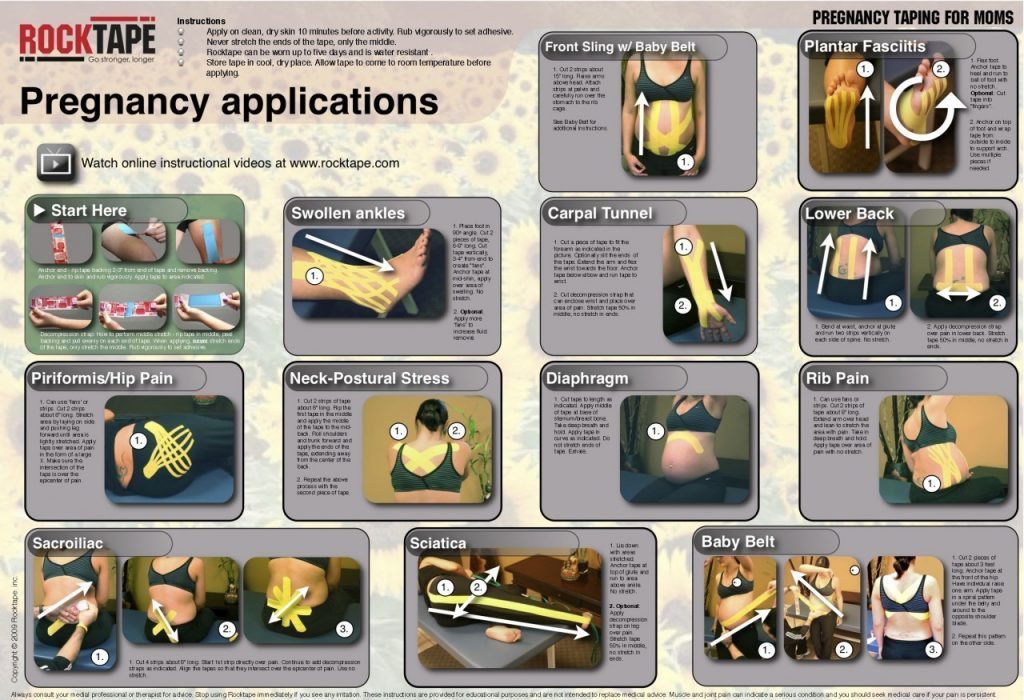
3.�Kinesiology taping�of a �RockTape Baby Belt� or modified version of this can provide significant relief and is much more comfortable than a pelvic support belt.
4. Using an ice pack for 15 minutes prior to going to bed at night will decrease pain and inflammation while sleeping.
Two: Rib Pain
Rib pain, especially in the lower and floating ribs, is common as the weight of the abdomen is pulling on the oblique abdominal muscles and their attachments at the ribs. Adjusting the ribs at the thoracic spine and incorporating myofascial release or Graston Technique will work quickly (often in just 1 treatment). Finish up with a few strips of kinesiology tape and your patient will feel significantly better.
Three: Upper Abdominal Numbness
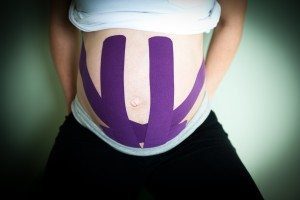
Upper abdominal numbness is a common symptom during the later stage of pregnancy. It often presents as numbness but can also be painful and worse with sitting. One of the easiest ways to provide relief is with one simple strip of kinesiology tape over the top of the abdomen directly under the rib cage.
Four: Swelling in the arms and legs
Swelling in the arms and legs is very common and can lead to numbness, tingling or pain. Before beginning treatment, be sure to assess if the swelling in the feet is significant and test for pitting edema which can be a warning sign of preeclampsia. This can be corroborated with a high blood pressure reading and is very dangerous. Two very effective sports techniques for use with lower extremity swelling include 1.�NormaTec PULSE Recovery System�which is not contraindicated in pregnancy. Patients can do a few 20-30 minutes sessions per week to promote circulation and decrease swelling. 2. Kinesiology taping for edema on the ankles.
Five: Lower Back Pain
Lower back pain in pregnancy is very common. Evaluating a pregnant patient prone is very easy if you have pregnancy cushion that sits on top of your table. If you do not, you can evaluate the lower back in the seated or side lying position. Lower back pain can generally be addressed with diversified adjustments (without any rotation as to not stress the abdomen). In addition, the Webster Technique for pregnancy is a valuable tool for assessing and treating lower back pain during all stages of pregnancy. There are also valuable kinesiology tape applications for lower back pain,�RockTape features a pregnancy taping pdf online. In addition, there are no contraindications to using the Graston Technique to address myofascial pain in the lower back.�
Most of the taping techniques discussed above can be done by patients themselves after a one-time demonstration. Have an assistant or patient�s family member take a video of the application for reference at home. Many sports chiropractic techniques can be used very effectively on prenatal patients.
IFM's Find A Practitioner tool is the largest referral network in Functional Medicine, created to help patients locate Functional Medicine practitioners anywhere in the world. IFM Certified Practitioners are listed first in the search results, given their extensive education in Functional Medicine