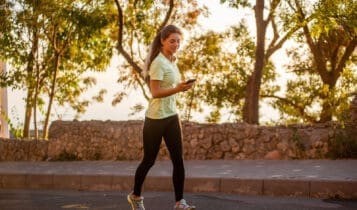
Should individuals wanting to engage in the exercise start with a warm-up and end with a cooldown to prepare the muscles for optimal performance and post-workout recovery?
Warming Up, Cooling Down
Warming up 5 to 10 minutes before exercise is beneficial for pumping blood to the muscles and preparing them for a run. Dynamic or active stretching and light aerobic activity are a few ways to warm up. This could be active stretching, such as walking lunges, brisk walking, or riding a stationary bike for a few minutes before running. However, individuals should avoid static stretches before running, as they can increase the risk of injury. The minimum length of time for an effective cooldown session is five minutes. Depending on the intensity of the workout, individuals may choose to extend that to 10 minutes.
Steps for a Running Warmup
Do five to 10 minutes of light aerobic exercise to loosen up muscles.
Walk briskly, march, jog slowly, or cycle on a stationary bike.
Don’t rush.
Perform dynamic stretches and movements during the warmup, including walking lunges, jumping jacks, or toe touches.
Begin the run with a slow jog and gradually increase speed.
Slow down if you run out of breath.
This is part of knowing how fast you should run; starting too fast is a common mistake.
Pay attention to posture and form.
Ensure you are using the best technique before speeding up.
Warm Up Benefits
When warming up, the blood vessels dilate. The increased blood flow primes the muscles with oxygen and prepares them to perform at their best. Blood flow also increases the temperature in the muscles for enhanced flexibility. Allowing the heart rate to increase gradually is beneficial, instead of going full max heart output by jumping full speed into the running. (The American Heart Association, 2024)
Properly Cooling Down
At the end of the run:
Cool down by walking or slowly jogging for five to 10 minutes.
Breathing and heart rate should gradually return to normal.
Drink water or an electrolyte-infused drink to rehydrate the body.
Benefits of a Cooldown
The cool-down keeps blood flowing throughout the body at a consistent level. Stopping immediately can cause light-headedness because heart rate and blood pressure can drop rapidly. Winding down slowly allows heart rate and blood pressure to fall gradually. The cooldown is also a good mental transition from the intensity and accomplishing the workout.
Before or After Stretching
Stretching evidence shows it doesn’t have the benefits once thought. Static stretching before, during, or after exercise has not been shown to prevent injury or delayed onset muscle soreness. (Herbert R. D., de Noronha M., & Kamper S. J. 2011) Stretching cold muscles is not recommended. However, there is some evidence that dynamic or active stretching after a warmup can benefit performance. Active stretching is done with exercises that take the muscles through their full range of motion and mimic the actions that will be done during the workout. (Van Hooren B., & Peake J. M. 2018)
Stretching After Running
Standard stretching includes the hamstring stretch, quad stretch, calf stretch, low lunge stretch, IT band stretch, butterfly stretch, hip and backstretch, arms and abs stretch, and triceps stretch. Tips for proper stretching:
Don’t Bounce
Avoid bouncing, as this mimics pulling a rubber band back and forth. You want the muscle to stay stretched.
Hold the stretch for 15 to 30 seconds.
Don’t Stretch Through Pain
Don’t stretch beyond the point where tightness is felt in the muscle.
Do not push through muscle resistance.
Never stretch to the point of pain.
Stretch Whole Body
Don’t just stretch the areas with tightness and/or soreness.
Stretch the whole body equally to prevent injury.
Don’t Hold Your Breath
Take deep breaths during the stretch.
Stay relaxed and breathe in and out slowly.
If starting a new fitness routine, consult your healthcare provider to determine the optimal running warmups and stretching exercises.
Injury Medical Chiropractic and Functional Medicine Clinic
Injury Medical Chiropractic and Functional Medicine Clinic works with primary healthcare providers and specialists to build optimal health and wellness solutions. We focus on what works for you to relieve pain, restore function, prevent injury, and help mitigate issues through adjustments that help the body realign itself. They can also work with other medical professionals to integrate a treatment plan to resolve musculoskeletal problems.
The Science of Motion
References
The American Heart Association. (2024). Warm up, cool down. https://www.heart.org/en/healthy-living/fitness/fitness-basics/warm-up-cool-down
Herbert, R. D., de Noronha, M., & Kamper, S. J. (2011). Stretching to prevent or reduce muscle soreness after exercise. The Cochrane database of systematic reviews, (7), CD004577. https://doi.org/10.1002/14651858.CD004577.pub3
Van Hooren, B., & Peake, J. M. (2018). Do We Need a Cool-Down After Exercise? A Narrative Review of the Psychophysiological Effects and the Effects on Performance, Injuries and the Long-Term Adaptive Response. Sports medicine (Auckland, N.Z.), 48(7), 1575–1595. https://doi.org/10.1007/s40279-018-0916-2
Individuals with the autoimmune disease lupus may be more sensitive to sun exposure. Are there ways to help protect the skin?
Lupus Sun Exposure
Lupus is an autoimmune disease in which the body mistakenly attacks the joints, muscles, and skin. Around 5 million individuals worldwide, and 1.5 million in the United States, have been diagnosed with lupus. The disease is most common in early to mid-adulthood, and 90% develop in women. (Lupus Foundation of America, 2021) For some, the symptoms manifest as joint swelling or muscle soreness. Skin rashes, mottling or red or purple marbled skin, and sun sensitivity are common lupus symptoms. (Medline Plus, 2024) While exposure to UV radiation from natural and artificial light can be damaging to everyone, minimal exposures can cause a flare-up for those with chronic lupus.
Certain medications can impact individual sensitivity to the sun and UV radiation.
Sun Exposure
Lupus can increase photosensitivity or immune system reaction to the sun’s rays. This symptom affects 40% and 70% of individuals with lupus. (Lupus Foundation of America, 2021) UV radiation damages cells and alters DNA. However, the damage can be more severe in those with lupus because their cells are more sensitive, and damaged cells are removed from the body more slowly, which can cause an attack on the immune system. (Lupus Foundation of America, 2021)
Symptoms
UV light and certain artificial light sources can trigger reactions in those with lupus. These reactions can happen immediately or develop weeks later and include: (Lupus Foundation of America, 2013)
Rashes or skin lesions that appear after sun exposure can come and go within hours or days, or they can last for months. (Lupus Foundation of America, 2013) UV light can also cause a lupus flare-up of symptoms, including fatigue, joint pain, tingling, and numbness. (Lupus Foundation of America, 2021)
Protection
Protecting the skin from UV radiation is recommended for everyone, but it is especially important for individuals with photosensitivity from lupus. Some strategies to protect the skin include.
Sunscreen
Applying sunscreen to the skin provides a chemical or physical barrier to UV radiation. (MD Anderson, 2024) Most commercial sunscreens offer a combination of protection:
Physical Barriers
These include minerals like titanium dioxide or zinc oxide.
The finely ground minerals lay on top of the skin’s surface and reflect UV rays away.
Chemical Absorbers
These offer a thin, protective film that absorbs UV rays before they can penetrate the skin.
Proper sunscreen application is crucial, regardless of which type is chosen. The recommended application is to apply a palmful of sunscreen every two hours or more often if it gets wet or sweaty. Look for sunscreens that offer broad-spectrum protection against:
Ultraviolet A (UVA) rays
Ultraviolet B (UVB) rays
A sun protection factor (SPF) of at least 30 is recommended.
Most clothing offers protection against UV radiation.
Individuals can purchase clothing or hats with UV-blocking properties or washing products for their clothes to increase their level of UV protection. (American Cancer Society, 2024)
Sunglasses are also important against UV radiation, eye damage, and other problems.
Utilize Shade Areas
In the summer, the sun is strongest in most locations between 10 a.m. and 4 p.m. UV rays can pass through windows, and the body is exposed to UV radiation on cloudy days (American Cancer Society, 2024). Avoiding sunlight or other strong sources of UV radiation will help protect the skin. Staying indoors or in shaded areas is the best choice during these hours.
Seeing a Healthcare Provider
Lupus treatment varies and changes over time. Individuals with lupus schedule regular appointments with their healthcare provider to review treatment and symptoms, especially after sun exposure. Avoiding sun exposure by seeking shade and wearing sunscreen and protective clothing can help reduce the chances of experiencing a flare-up. Some cases of photosensitivity are mild, while others can require more intense treatments to avoid larger flare-ups.
Injury Medical Chiropractic and Functional Medicine Clinic works with primary healthcare providers and specialists to develop a personalized care plan for each patient through an integrated approach to treating injuries and chronic pain syndromes, improving flexibility, mobility, and agility programs to relieve pain and help return to normal and optimal function. If other treatments are needed, Dr. Jimenez has teamed up with top surgeons, clinical specialists, medical researchers, and rehabilitation providers to provide the most effective treatments.
Unlocking Pain Relief
References
Medline Plus. (2024). Lupus. Retrieved from https://medlineplus.gov/lupus.html
Lupus Foundation of America. (2021). Lupus facts and statistics. https://www.lupus.org/resources/lupus-facts-and-statistics
U.S. Environmental Protection Agency. (2024). Health effects of UV radiation. Retrieved from https://www.epa.gov/sunsafety/health-effects-uv-radiation
Centers for Disease Control and Prevention. (2024). UV radiation. Retrieved from https://www.cdc.gov/radiation-health/features/uv-radiation.html?CDC_AAref_Val=https://www.cdc.gov/nceh/features/uv-radiation-safety/index.html
Lupus Foundation of America. (2021). UV exposure: What you need to know. https://www.lupus.org/resources/uv-exposure-what-you-need-to-know
Lupus Foundation of America. (2013). Research on photosensitivity among people with lupus. https://www.lupus.org/resources/research-on-photosensitivity-among-people-with-lupus
MD Anderson Center. (2024). How does sunscreen work? https://www.mdanderson.org/cancerwise/how-does-sunscreen-work.h00-159698334.html
Skin Cancer Foundation. (2020). Ask the expert: Does sunscreen stay effective after its expiration date? https://www.skincancer.org/blog/ask-the-expert-does-a-sunscreen-stay-effective-after-its-expiration-date/
American Cancer Society. (2024). How do I protect myself from ultraviolet (UV) rays? https://www.cancer.org/cancer/risk-prevention/sun-and-uv/uv-protection.html
IFM's Find A Practitioner tool is the largest referral network in Functional Medicine, created to help patients locate Functional Medicine practitioners anywhere in the world. IFM Certified Practitioners are listed first in the search results, given their extensive education in Functional Medicine