
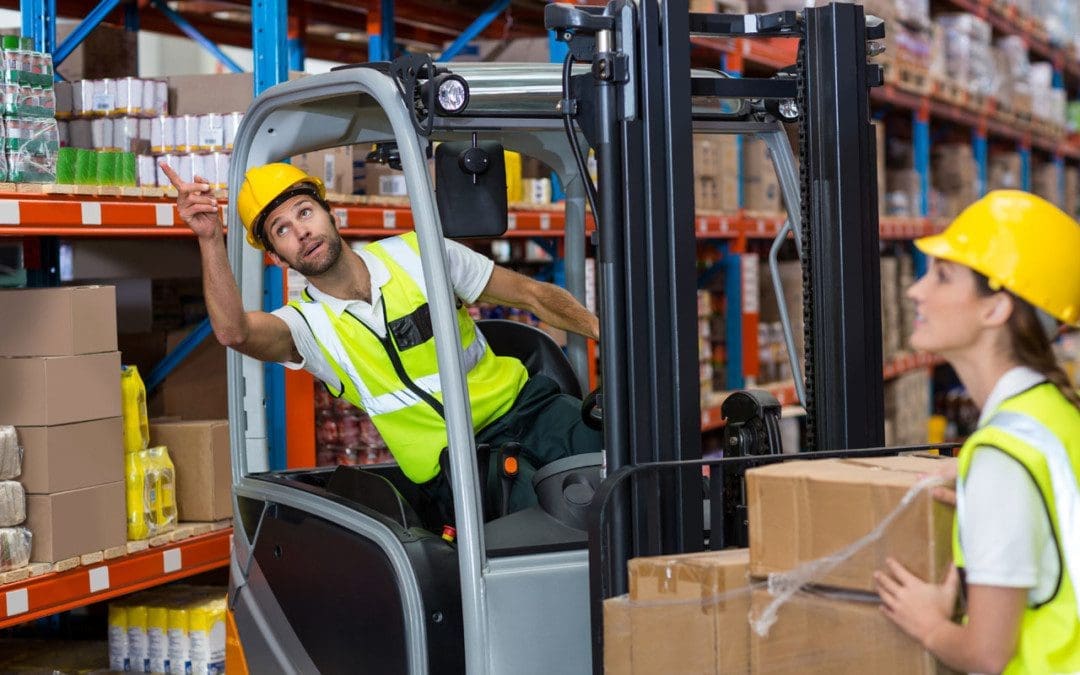
Forklift and Lift Truck Accidents and Injuries Back Clinic
Forklifts, also known as lift trucks, are used for loading, unloading, and transporting various goods and materials in construction, shipping, and retail industries. They are heavy-duty equipment and require extensive training to operate safely. Forklifts are involved in many serious workplace accidents causing thousands of injuries annually. Chiropractors specialize in injury care and rehabilitation from vehicle accidents and collisions. They can help restore optimal musculoskeletal function and health through adjustments, massage, decompression, and traction therapies.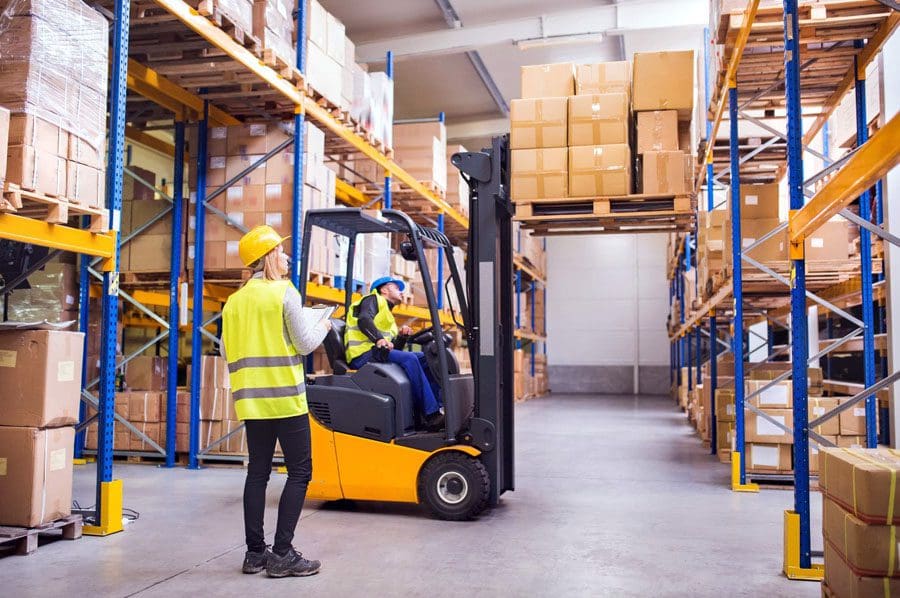
Forklift Operation
The forklift is one of the most widely used pieces of equipment to raise, lower, or remove pallets, boxes, crates, or other containers and transport and stock goods and materials. There are a variety of lift trucks that include:
- Counterbalance forklifts
- Aisle trucks
- Reach trucks
- Order pickers
- Stackers
- Pallet jacks
- Side loaders
- Tow tractors
Operation
The weight, speed, and operation difficulty increase the risk of an accident, increasing the risk of injuries. Other factors include:
- They can reach up to 20 miles per hour or more.
- They have front braking systems making it harder to stop.
- The weight distribution is in the back.
- The rear wheels turn instead of the front, causing tip-overs.
- Most carry their loads in front and can obstruct an operator’s view.
- Lifting too heavy a load can destabilize a forklift and cause it to turn over.
Accident and Injury Causes
Federal work safety regulations require individuals to complete a training program to operate a forklift safely. The most common causes of accidents include:
- Lack of training and experience.
- Lack of safety equipment – helmets, seatbelts, grab handles, roll cages, cage guards, warning lights, and sirens.
- Lack of maintenance – bent forks, no load backrest, unbalanced wheels, etc.
- Improper loading – off center, damaged goods, loose loads.
- Lifting, moving or tilting the mast too fast.
- Riding with a raised load.
- Speeding.
- Improper backing-up techniques.
- Poor communication.
- Horseplay.
- Giving rides.
- Failing to immobilize the machine when the operator leaves.
- Failing to pay attention to the position of the forks.
- Failing to yield to pedestrians.
- Traveling up or down unsafe inclines.
- Driving off the side of a ramp.
- Design or manufacturing defects.
Common Accidents
The most common type of accidents involve:
- Tip-overs and Rollovers.
- Falling off the lift.
- Getting struck by falling materials or objects.
- Pedestrian injuries like getting hit by the vehicle or tripping over the forks.
- Getting caught in or compressed/crushed by the vehicle or objects.
Injuries
The most common injuries that result from lift accidents include:
- Contusions
- Sprains
- Muscle tears
- Back pain disorders
- Crush injuries
- Fractures
Chiropractic Therapy and Rehabilitation
Chiropractic therapy can help heal and rehabilitate musculoskeletal injuries. A chiropractic team will relieve pain symptoms and restore the body’s alignment and function. Treatment includes:
Adjustments
- To gently realign joints.
- Decrease pain.
- Increase range of motion.
- Improves posture.
Soft-tissue massage
- To relax tight muscles.
- Relieve spasms.
- Release tension in the connective tissue surrounding the muscles.
- Reduces pain.
- Improves the range of motion of the spine and joints.
Exercises and stretches
- To restore and maintain flexibility, joint stability, and mobility.
Joint bracing and taping
- To support sprained joints or muscles during healing.
Health Coaching
- Guides diet and nutrition to reduce inflammation and promote healthy eating to manage weight.
Forklift Fails
References
Bage, T et al. “Forklift-related lower limb injuries: a retrospective case series study with patient-reported outcome measures (PROMs).” Annals of the Royal College of Surgeons of England vol. 103,10 (2021): 730-733. doi:10.1308/rcsann.2020.7124
Born, C T et al. “Patterns of injury and disability caused by forklift trucks.” The Journal of trauma vol. 40,4 (1996): 636-9. doi:10.1097/00005373-199604000-00020
Hong, Choon Chiet, et al. “Forklift-Related Crush Injuries of the Foot and Ankle.” Foot & ankle international vol. 36,7 (2015): 806-11. doi:10.1177/1071100715576486
Ull, Christopher et al. “Injuries after Forklift Trucks Accidents – Injury Patterns, Therapy and Outcome in the Context of the Statutory Accident Insurance.” “Gabelstaplerunfälle – Verletzungsmuster, Therapie und Outcome im berufsgenossenschaftlichen Kontext.” Zeitschrift fur Orthopadie und Unfallchirurgie, 10.1055/a-1402-1649. 19 Apr. 2021, doi:10.1055/a-1402-1649
Waters, Thomas et al. “Lower back disorders among forklift operators: an emerging occupational health problem?.” American journal of industrial medicine vol. 47,4 (2005): 333-40. doi:10.1002/ajim.20146







