Treating Hip Tendonitis: Restoring Mobility and Reducing Pain
Can understanding the causes and symptoms of potential hip tendonitis help healthcare providers diagnose and treat the condition for individuals experiencing pain in the front of the hip with restricted hip flexibility that worsens during movement?
Hip Tendonitis
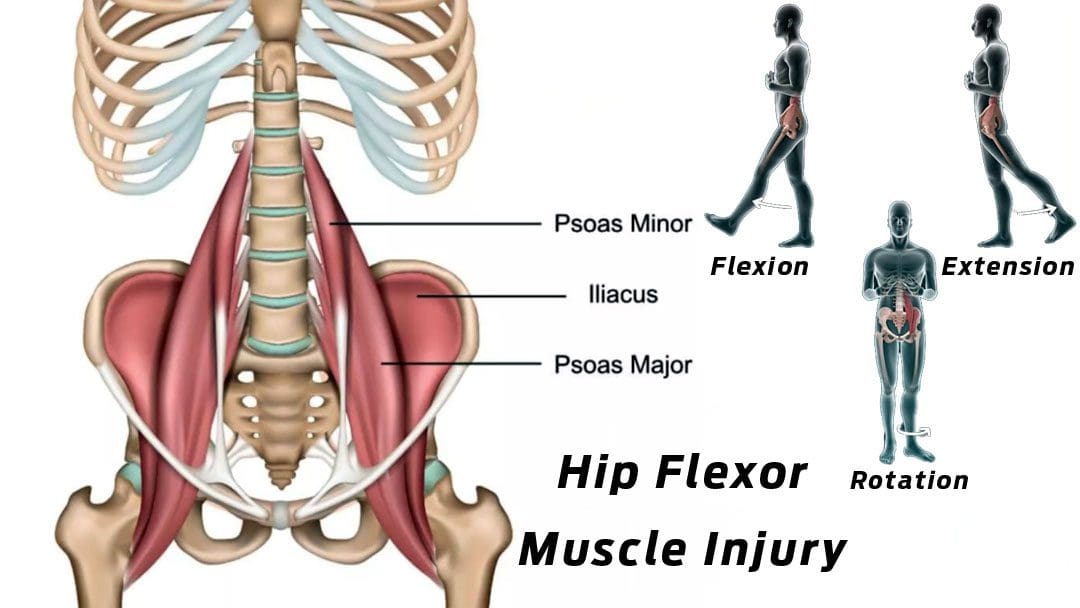
Hip tendonitis is inflammation of the iliopsoas tendon. It is most commonly caused by overuse of the hip flexors without adequate rest for recovery. The condition can occur when the hip muscles overpower the tendons attached to the hip bone, causing inflammation and irritation. This can lead to pain, tenderness, and mild swelling near the hip joint. Hip tendonitis can be diagnosed with a physical examination, and treatment can include:
- Rest
- Ice
- NSAIDs
- Stretching
- Physical therapy
- Chronic cases may require a cortisone injection into the iliopsoas tendon to decrease inflammation.
- Surgical release of the iliopsoas tendon may be recommended to decrease tightness and pain.
There is a high prognosis for a full recovery.
Tendonitis
Inflammation in a muscle’s tendon leads to pain and tenderness that worsens the more the muscle is used. An overuse injury means the tendon becomes repeatedly stressed through repetitive muscle contractions, causing muscle and tendon fibers to micro-tear. If not enough rest is allowed for the micro-tears to heal, a chronic cycle of pain and inflammation develops within the affected tendon. Other tendons that are prone to developing the condition include:
- The tendon of the wrist extensors/tennis elbow.
- The tendon of the wrist flexors/golfer’s elbow.
- The Achilles’ tendon/Achilles tendonitis.
- The patellar tendon/jumper’s knee.
- The tendons of the thumb/De Quervain’s tenosynovitis.
Bursitis
- Bursae are small fluid-filled sacs that help cushion and decrease friction around joints.
- Because the iliopsoas tendon overlays bursae, inflammation of the tendon can also cause bursitis or inflammation of the bursae surrounding the tendon.
- Tendonitis and bursitis can and often occur together due to overlapping symptoms.
Causes
The iliopsoas originates in the pelvis and vertebrae of the lower spine and attaches to the top of the femur or thigh bone. It allows the hip joint movement that brings the leg closer to the front of the body, like lifting the leg to step up or jump. It also helps keep the torso stable when standing with one or both feet on the ground and rising from a lying position. Hip tendonitis most often results from physical activities that require repeated leg lifting when stepping, running, kicking, or jumping. This can include:
- Running
- Dancing
- Gymnastics
- Martial arts
- Cycling
- Playing soccer
Iliopsoas tendonitis can also occur after hip arthroscopy, a minimally invasive surgical procedure to repair structures inside the hip joint because of altered joint movement and muscle activation patterns after surgery. (Adib F. et al., 2018)
Symptoms
The primary symptoms of hip tendonitis include a soreness or deep ache in the front of the hip that worsens after physical activity and limits the range of motion because of the pain. Other symptoms include:
- Tenderness to touch in the front of the hip.
- The pain can feel like a dull ache.
- Stiffness may also be present.
- Hip flexor tightness.
- Altered posture, with the pelvis rotated forward and an exaggerated curve in the lower back.
- Lower back pain.
- Discomfort after prolonged sitting.
- Altered walking pattern characterized by shortened steps.
Diagnosis
- Hip tendonitis is diagnosed through a physical examination and medical history reviews of individual symptoms.
- Individuals may also have an X-ray of their hip performed to examine the joint alignment and determine if a fracture or arthritis is present.
Treatment
- Initial treatment involves rest from physical activities, applying ice, and gentle stretching.
- Nonsteroidal anti-inflammatory drugs/NSAIDs can ease pain and swelling, decrease inflammation, and reduce muscle spasms.
- If chronic pain persists, individuals may receive a cortisone injection into their iliopsoas tendon. (Zhu Z. et al., 2020)
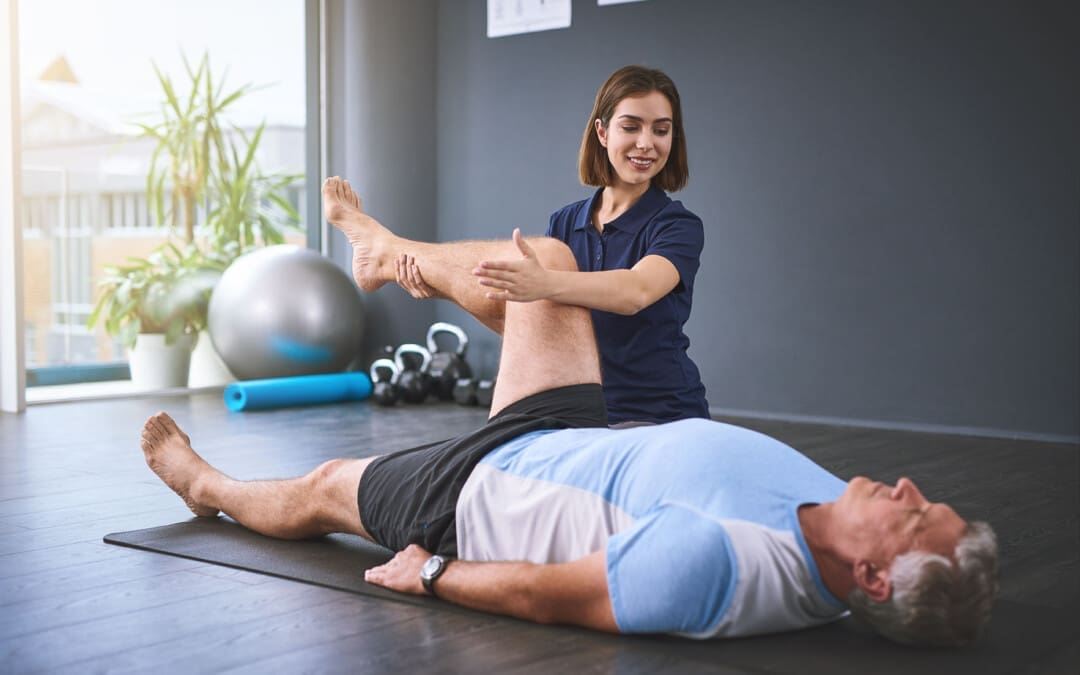
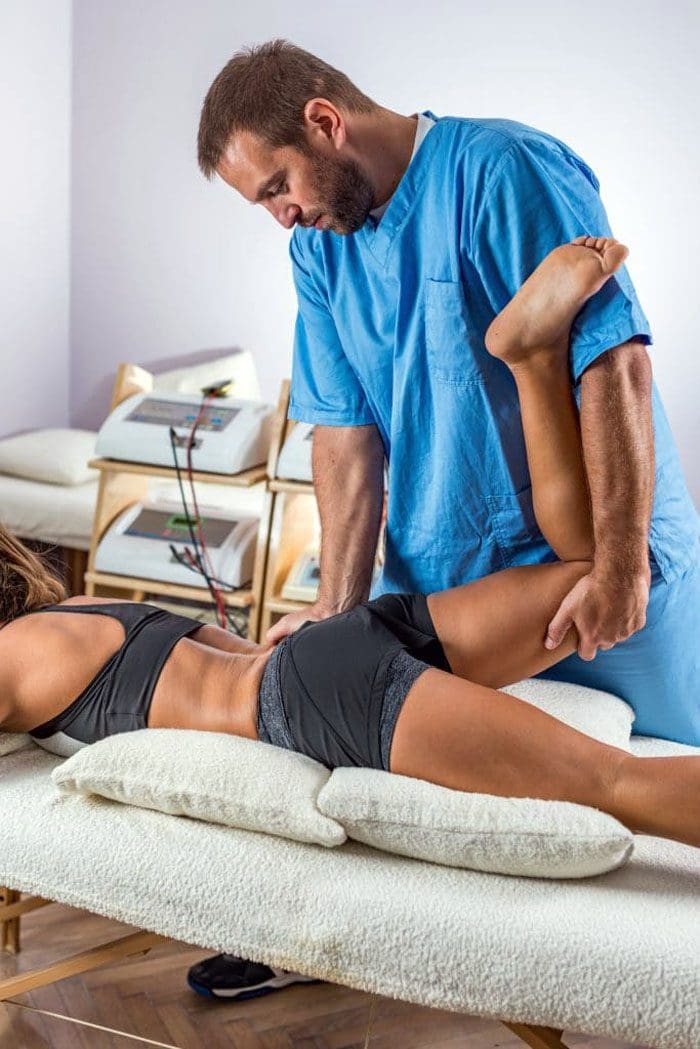
- A personalized physical therapy program focusing on hip flexor stretching and strengthening, as well as strengthening the glutes and core, will help expedite an optimal recovery.
Surgery
For cases that do not improve after three months of treatment, surgery to lengthen the iliopsoas tendon, a procedure known as a tenotomy, may be performed. It involves making a small cut into a portion of the tendon, allowing the tendon to increase in length while decreasing tension as it heals back together. A tenotomy temporarily reduces the strength of the iliopsoas; however, this weakness usually resolves within three to six months after surgery. (Anderson C. N. 2016)
Chiropractic Care
Chiropractic care can be an effective treatment because it can help restore proper alignment and motion in the hip, reduce inflammation, and improve muscle and joint function. Treatments may include:
- Spinal adjustments to realign the spine and other joints, reducing pressure on nerves and inflammation.
- Non-surgical decompression
- Manual therapy – massage, trigger point therapy, or spinal manipulation.
- Acupuncture
- Graston technique
- Rehabilitative exercises like stretching, strengthening, and range of motion exercises.
Tendonitis generally has an excellent prognosis for full recovery as long as thorough rest from activities is taken to allow the inflamed tendon to heal. The postsurgical prognosis is positive for chronic and severe cases of iliopsoas tendonitis that require surgery.
Injury Medical Chiropractic and Functional Medicine Clinic works with primary healthcare providers and specialists to develop a customized treatment program through an integrated approach to treating injuries and chronic pain syndromes, improving flexibility, mobility, and agility to relieve pain and help individuals return to normal activities. If other treatments are needed, Dr. Jimenez has teamed up with top surgeons, clinical specialists, medical researchers, and rehabilitation providers to provide the most effective treatments.
Inflammation and Integrative Medicine
References
Adib, F., Johnson, A. J., Hennrikus, W. L., Nasreddine, A., Kocher, M., & Yen, Y. M. (2018). Iliopsoas tendonitis after hip arthroscopy: prevalence, risk factors and treatment algorithm. Journal of hip preservation surgery, 5(4), 362–369. https://doi.org/10.1093/jhps/hny049
Zhu, Z., Zhang, J., Sheng, J., Zhang, C., & Xie, Z. (2020). Low Back Pain Caused by Iliopsoas Tendinopathy Treated with Ultrasound-Guided Local Injection of Anesthetic and Steroid: A Retrospective Study. Journal of pain research, 13, 3023–3029. https://doi.org/10.2147/JPR.S281880
Anderson C. N. (2016). Iliopsoas: Pathology, Diagnosis, and Treatment. Clinics in sports medicine, 35(3), 419–433. https://doi.org/10.1016/j.csm.2016.02.009