Can incorporating sauerkraut into one’s diet help promote healthy gut bacteria?
Sauerkraut
Sauerkraut, a fermented cabbage food, is a great source of probiotics and fiber, both of which can contribute to gut health. It’s a living food containing various microbial strains and can help improve digestion, reduce inflammation, and improve overall gut health. (Shahbazi R. et al., 2021)
Fermented foods like sauerkraut have live cultures that promote the growth of beneficial probiotics, bacteria that provide powerful health benefits. Probiotics also help make foods more digestible, increasing the gut’s ability to absorb the vitamins and minerals they contain. A study found that fermented cabbage may help protect intestinal cells from inflammatory damage more than raw cabbage. (Wei L., & Marco M. L., 2025)
Homemade sauerkraut likely contains more live cultures than store-bought since processing may destroy some of the healthy bacteria. (National Institutes of Health Office of Dietary Supplements, 2023) Depending on which supplement is chosen, sauerkraut may have a greater diversity of probiotic strains. This is because an oral supplement has a known quantity and strain of probiotics. Individuals who want to add probiotics to their diet for potential gut health benefits should take a food-first approach, which is generally recommended over oral supplements. (National Institutes of Health, 2025)
Look at the Benefits
Probiotics
Sauerkraut contains lactic acid bacteria, which are beneficial bacteria that can help support the immune system and reduce inflammation. (Healthline, 2023)
Fiber
Sauerkraut is a robust source of fiber, which aids in digestion and can help you feel full longer.
Digestion
The probiotics in sauerkraut can improve digestion by promoting a healthy gut microbiome. (Medical News Today, 2023)
Consult with a doctor before adding sauerkraut to your diet if you are taking monoamine oxidase inhibitors (MAOIs).
Start small and learn how you like to eat sauerkraut, which can be as a condiment, side dish, or sandwich ingredient.
Injury Medical Chiropractic and Functional Medicine Clinic
As a Family Practice Nurse Practitioner, Dr. Jimenez combines advanced medical expertise with chiropractic care to address various conditions. Injury Medical Chiropractic and Functional Medicine Clinic works with primary healthcare providers and specialists to develop highly effective treatment plans through an integrated approach for each patient and restore health and function to the body through nutrition and wellness, functional medicine, acupuncture, electroacupuncture, and integrated medicine protocols. We focus on what works for you to relieve pain, restore function, prevent injury, and mitigate issues through adjustments that help the body realign itself. The clinic can also work with other medical professionals to integrate a treatment plan to resolve musculoskeletal problems.
Body In Balance: Chiropractic, Fitness, and Nutrition
References
Shahbazi, R., Sharifzad, F., Bagheri, R., Alsadi, N., Yasavoli-Sharahi, H., & Matar, C. (2021). Anti-Inflammatory and Immunomodulatory Properties of Fermented Plant Foods. Nutrients, 13(5), 1516. https://doi.org/10.3390/nu13051516
Healthline. (2023). 8 Surprising Benefits of Sauerkraut (Plus How to Make It). https://www.healthline.com/nutrition/benefits-of-sauerkraut#nutrients
Medical News Today. (2023). What are the benefits of eating sauerkraut? https://www.medicalnewstoday.com/articles/health-benefits-of-sauerkraut
Wei, L., & Marco, M. L. (2025). The fermented cabbage metabolome and its protection against cytokine-induced intestinal barrier disruption of Caco-2 monolayers. Applied and environmental microbiology, e0223424. Advance online publication. https://doi.org/10.1128/aem.02234-24
National Institutes of Health Office of Dietary Supplements. (2023). Probiotics. Retrieved from https://ods.od.nih.gov/factsheets/Probiotics-Consumer/
National Institutes of Health. (2025). Probiotics. Retrieved from https://ods.od.nih.gov/factsheets/Probiotics-HealthProfessional/
U.S. Department of Agriculture. (2018). Sauerkraut, canned, solids and liquids. Retrieved from https://fdc.nal.usda.gov/food-details/169279/nutrients
Can kimchi benefit individuals trying to incorporate more fermented foods into their diet?
Kimchi
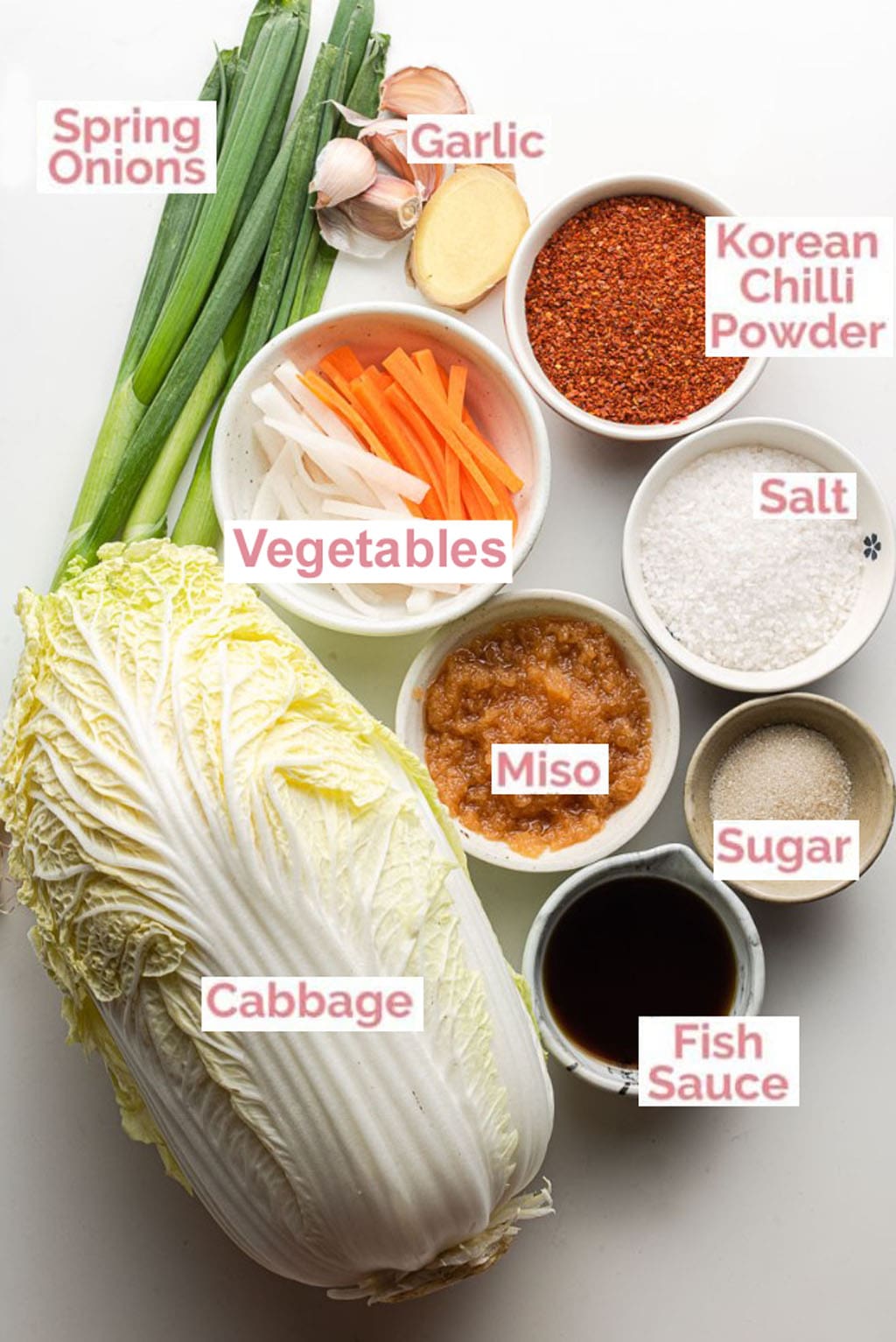
Kimchi is a flavorful and nutritious food packed with nutritious vegetables. It is high in vitamin C, vitamin A, and iron. It is made of salted, fermented vegetables and typically served as a side dish that starts with cabbage as the base. Other varieties use different vegetables, like radish, cucumber, and onion. It has minimal calories, a low carb count, zero fat, and health benefits like an abundance of probiotics from its fermentation process.
Nutrition
Kimchi is an excellent source of vitamin C and vitamin A. A typical half-cup of kimchi is 85 grams and provides the following. (U.S. Department of Agriculture. 2017)
Calories – 20
Fat – 0g
Sodium – 290 milligrams
Carbohydrates – 4 grams
Fiber – 1 grams
Sugars – 2 grams
Protein – 1 grams
Vitamin C – 18 milligrams
Iron – 1.08 milligrams
Vitamin A – 375 micrograms
Calcium – 40 milligrams
Calories
A half-cup serving provides 20 calories, about 53% of which are carbohydrates, 21% are protein, and 26% are fat.
Carbohydrates
Kimchi comprises 4 grams of carbohydrates per serving, with 1 being fiber.
However, many kimchi recipes add sweeteners, like honey or fruit juice, to balance the sourness.
More sweeteners means more carbohydrates.
Fats
Because it is primarily vegetables, it is naturally fat-free.
Protein
Kimchi isn’t exactly a protein-power player.
A half-cup serving provides just 1 gram of plant-based protein from veggies.
However, recipes that include seafood like shrimp or squid will contain higher amounts of this macronutrient.
Vitamins and Minerals
Vitamins and minerals vary depending on the vegetables used.
A Napa cabbage-based kimchi includes abundant vitamins C and K and smaller amounts of iron, calcium, copper, and potassium.
A recipe with carrots will contain significant vitamin A.
A recipe with radishes will supply folate, potassium, and riboflavin.
All varieties are made with salt, so sodium is a mineral to watch.
A half-cup serving may provide nearly 300 milligrams or 13% Daily Value of sodium.
Benefits
Kimchi is a versatile food that can provide health benefits.
Digestion
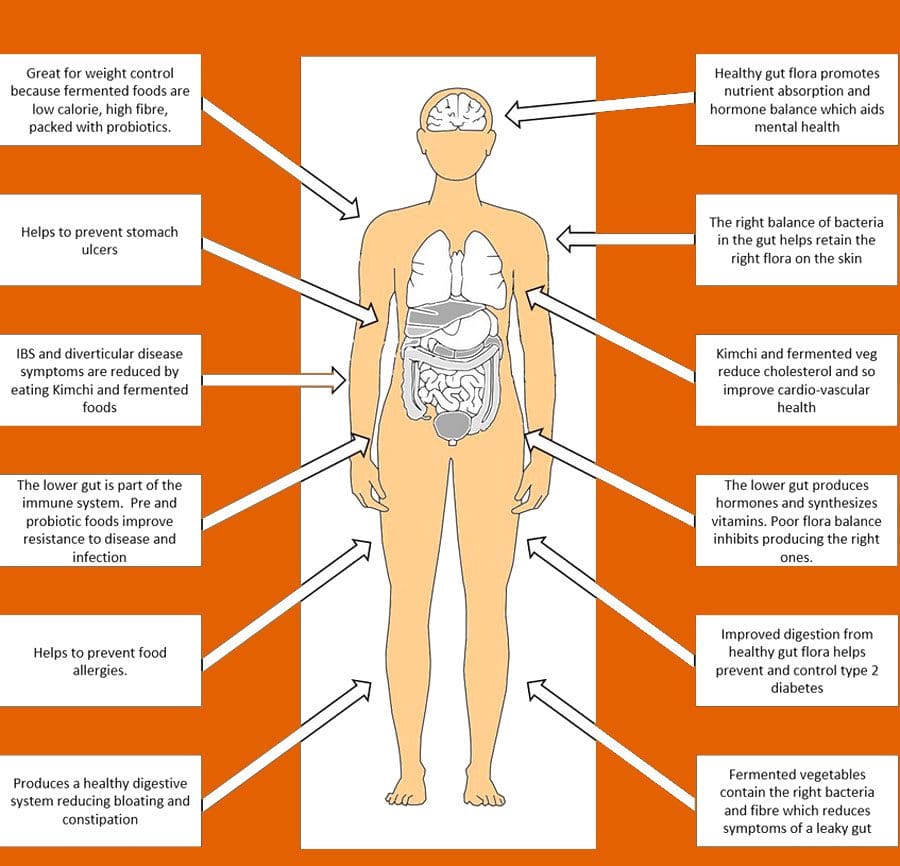
The lactic acid that ferments the cabbage also provides healthy gut bacteria.
Consuming probiotics through kimchi promotes healthy digestion and helps alleviate constipation problems. (Higashikawa, F. et al., 2010)
Compatible with Special Diets
With simple plant-based ingredients it can be suitable for specialized diets.
It suits vegan, vegetarian, low-carb, gluten-free, and dairy-free diets.
Immune System Support
The probiotics in fermented foods improve digestion and may help improve immune function.
Research has suggested that when individuals stop eating fermented foods, their immune response decreases. (Olivares, M. et al., 2006)
Researchers isolated a compound in kimchi called HDMPPA – 3-(4′-hydroxyl-3′,5′-dimethoxyphenyl) propionic acid –
and studied its interaction with inflammatory proteins.
They discovered that HDMPPA counteracted the proteins’ inflammatory effect.
It is not enough to conclude that kimchi readily reduces inflammation, but further research could help confirm its ability. (Jeong, J. W. et al., 2015)
Improve Asthma Symptoms
A study of Korean adults with asthma found that the more kimchi they consumed, the less likely they were to experience an asthma attack.
Further research is needed, but the results are promising. (Kim, H. et al., 2014)
Allergies
Commercial and home-prepared kimchi is often free of all top eight food allergens—but check ingredient labels to be sure.
Some preparations, for example, may contain fish sauce, shrimp, or shrimp paste, which are a no-go for those with a fish or shellfish allergy.
Adverse Effects
Kimchi may have adverse effects on some individuals depending on its preparation.
It could be high in sodium, which may not be recommended for individuals on a heart-healthy or sodium-restricted diet.
With high levels of probiotics, it could cause bloating or an upset stomach.
Individuals sensitive to strong flavors may not enjoy the taste.
Varieties
Traditionally, kimchi is made from cabbage, but a wide variety of vegetables can be substituted for or combined with recipes that use alternative vegetables, spices, or other additions. Some recipes include fish or meat to turn it inta a main dish. Water kimchi is a soup version served in broth. But what makes kimchi is its base of fermented vegetables.
Storage and Safety
Fermentation can be tricky when it comes to food safety. Store-bought or homemade kimchi properly canned in a sterilized jar can be kept at room temperature for up to a week after opening. Stored in the refrigerator, it will stay fresh for three to six months. The beneficial bacteria working and fermentation process is ongoing, making the taste increasingly sour and texture mushier over time. This does not mean the jar has gone bad as long as it has no odd smell or mold.
Preparation
The process is not that complex.
Select a recipe with vegetables like cabbage, radish, and carrots.
Slice the vegetables into chunks and rub with salt.
Leave the vegetables in salt; some recipes include water for several hours to allow fermentation.
Drain the excess water, then add flavoring ingredients like sweeteners and spices.
Serve as a side dish with fried rice or noodles, or make it a main course by adding fish, meat, or tofu.
Injury Medical Chiropractic and Functional Medicine Clinic focuses on and treats injuries and chronic pain syndromes through personalized care plans that improve ability through flexibility, mobility, and agility programs to relieve pain. Our providers use an integrated approach to create personalized care plans for each patient, to restore health and function to the body through Nutrition and Wellness, Functional Medicine, Acupuncture, Electro-Acupuncture, and Sports Medicine protocols. If the individual needs other treatment, they will be referred to a clinic or physician best suited for them, as Dr. Jimenez has teamed up with the top surgeons, clinical specialists, medical researchers, nutritionists, and health coaches to provide the most effective clinical treatments.
The Healing Diet
References
U.S. Department of Agriculture. FoodData Central. (2017). Kimchi. Retrieved from https://fdc.nal.usda.gov/fdc-app.html#/food-details/516912/nutrients
Higashikawa, F., Noda, M., Awaya, T., Nomura, K., Oku, H., & Sugiyama, M. (2010). Improvement of constipation and liver function by plant-derived lactic acid bacteria: a double-blind, randomized trial. Nutrition (Burbank, Los Angeles County, Calif.), 26(4), 367–374. https://doi.org/10.1016/j.nut.2009.05.008
Olivares, M., Paz Díaz-Ropero, M., Gómez, N., Sierra, S., Lara-Villoslada, F., Martín, R., Miguel Rodríguez, J., & Xaus, J. (2006). Dietary deprivation of fermented foods causes a fall in innate immune response. Lactic acid bacteria can counteract the immunological effect of this deprivation. The Journal of dairy research, 73(4), 492–498. https://doi.org/10.1017/S0022029906002068
National Institutes of Health Office of Dietary Supplements. (2021). Vitamin C: Fact sheet for health professionals. Retrieved from https://ods.od.nih.gov/factsheets/VitaminC-HealthProfessional/
Jeong, J. W., Choi, I. W., Jo, G. H., Kim, G. Y., Kim, J., Suh, H., Ryu, C. H., Kim, W. J., Park, K. Y., & Choi, Y. H. (2015). Anti-Inflammatory Effects of 3-(4′-Hydroxyl-3′,5′-Dimethoxyphenyl)Propionic Acid, an Active Component of Korean Cabbage Kimchi, in Lipopolysaccharide-Stimulated BV2 Microglia. Journal of medicinal food, 18(6), 677–684. https://doi.org/10.1089/jmf.2014.3275
Kim, H., Oh, S. Y., Kang, M. H., Kim, K. N., Kim, Y., & Chang, N. (2014). Association between kimchi intake and asthma in Korean adults: the fourth and fifth Korea National Health and Nutrition Examination Survey (2007-2011). Journal of medicinal food, 17(1), 172–178. https://doi.org/10.1089/jmf.2013.3013
Fermentation is a process where bacteria and yeast are used to break down foods. The fermentation process has been around for centuries and was initially produced to preserve foods, improve flavor and eliminate toxins. Research has found that eating fermented foods can also increase the beneficial bacteria/probiotics in the gut. Functional medicine practitioners recommend these foods for their health benefits, including improved digestion, increased immunity, and weight loss and maintenance.
Fermented Foods
Fermented foods and beverages undergo controlled microbial growth and fermentation in which microorganisms like yeast and bacteria break down food elements like sugars/glucose into other products like organic acids, gases, or alcohol. The process gives fermented foods unique taste, aroma, texture, and appearance. There are many different types of fermented foods, including:
Whole foods like vegetables, fruits, cereals, dairy, meat, fish, eggs, legumes, nuts, and seeds can go through fermentation. These foods are nutritious in their original form, but through fermentation, they can provide probiotic and prebiotic health benefits.
Probiotics
Probiotics are live microorganisms that benefit the gut by creating a more favorable digestive environment. This helps:
Digest food easier.
Support a healthy immune system.
Support organ health – lungs, reproductive organs, skin.
Improves mood.
However, not all fermented foods contain probiotics, especially commercially produced foods that are pasteurized, killing bacteria and their associated health benefits.
Prebiotics
Prebiotics are food ingredients that the microorganisms like gut bacteria consume to grow and live, leading to improving the digestive environment. These include:
Milk
Honey
Tomato
Garlic
Onions
Asparagus
Wheat
Barley
Rye
However, most fruits, vegetables, and legumes contain prebiotics.
The Benefits of Fermented Foods
Fermented foods’ health benefits include reduced risk of:
Diabetes
Inflammation
High blood pressure
Cardiovascular disease
Obesity
They have also been linked to:
Better weight management
Improved brain activity
Increased bone health
Faster recovery after exercise and physical activity
There are currently no official guidelines regarding how often individuals should eat fermented foods. It is recommended to consult a nutritionist or dietician to figure out the best nutrition plan for the individual and their needs.
The Science
References
Aslam, Hajara, et al. “Fermented foods, the gut, and mental health: a mechanistic overview with implications for depression and anxiety.” Nutritional neuroscience vol. 23,9 (2020): 659-671. doi:10.1080/1028415X.2018.1544332
Dimidi, Eirini, et al. “Fermented Foods: Definitions and Characteristics, Impact on the Gut Microbiota and Effects on Gastrointestinal Health and Disease.” Nutrients vol. 11,8 1806. 5 Aug. 2019, doi:10.3390/nu11081806
King, Sarah, et al. “Effectiveness of probiotics on the duration of illness in healthy children and adults who develop common acute respiratory infectious conditions: a systematic review and meta-analysis.” The British journal of nutrition vol. 112,1 (2014): 41-54. doi:10.1017/S0007114514000075
Kok, Car Reen, and Robert Hutkins. “Yogurt and other fermented foods as sources of health-promoting bacteria.” Nutrition reviews vol. 76, Suppl 1 (2018): 4-15. doi:10.1093/nutrit/nuy056
Parker, Elizabeth A et al. “Probiotics and gastrointestinal conditions: An overview of evidence from the Cochrane Collaboration.” Nutrition (Burbank, Los Angeles County, Calif.) vol. 45 (2018): 125-134.e11. doi:10.1016/j.nut.2017.06.024
Şanlier, Nevin, et al. “Health benefits of fermented foods.” Critical reviews in food science and nutrition vol. 59,3 (2019): 506-527. doi:10.1080/10408398.2017.1383355
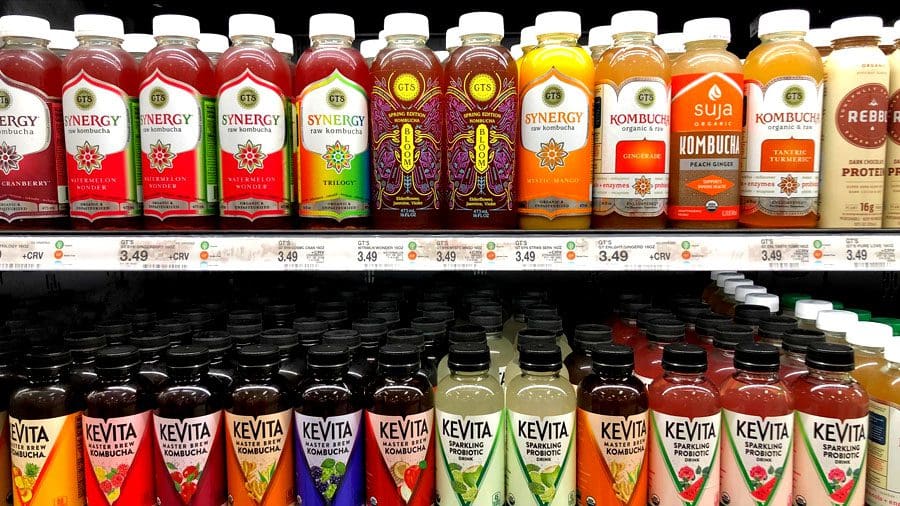
Kombucha is a fermented tea that has been around for nearly 2,000 years. It became popular in Europe in the early 20th century. It has the same health benefits as tea, is rich in probiotics, contains antioxidants, and can destroy harmful bacteria. Kombucha sales are growing at stores because of its health and energy benefits.
Kombucha
It is typically made with black or green tea, sugar, healthy bacteria, and yeast. It is flavored by adding spices or fruits into the tea while it ferments. It is fermented for about a week, when gases, 0.5 percent of alcohol, beneficial bacteria, and acetic acid are produced. The fermentation process makes the tea slightly effervescent. It contains B vitamins, antioxidants, and probiotics, but the nutritional content will vary depending on the brand and its preparation.
Benefits
The benefits include:
Improved digestion from the fact that fermentation makes probiotics.
Helps with diarrhea and irritable bowel syndrome/IBS.
Toxin removal
Increased energy
Improved immune system health
Weight loss
Helps with high blood pressure
Heart disease
Kombucha, made from green tea, includes the benefits of:
Beneficial bacteria are known as probiotics. These same probiotics are found in other fermented foods, like yogurt and sauerkraut. Probiotics help populate the gut with healthy bacteria that aid digestion, reduce inflammation, and produce essential vitamins B and K. The probiotics improve bowel movements and alleviate nausea, bloating, and indigestion.
Antioxidants
The antioxidants and polyphenols benefits include:
Increased metabolic rate
Reduced blood pressure
Lowered cholesterol
Improved cognitive function
Decreased risk of chronic diseases – cardiovascular disease, type 2 diabetes, and certain cancers.
Anti-Bacterial Properties
The fermentation process produces acetic acid that destroys harmful pathogens like invasive bacteria and yeasts, preventing infection.
The anti-bacterial effect also preserves the beneficial bacteria.
Liver Detoxification
It can help detoxify the liver, which:
Improves overall skin health
Improves liver function
Decreases abdominal bloating and pain
Improves digestion and bladder function
Pancreatic Support
It can improve pancreatic function, which can help protect the body from diseases and illnesses like:
Acid reflux
Abdominal spasms
Numbness
Pancreatic cancer
Joint Support
The tea contains compounds like glucosamines that have been shown to improve joint health and relieve joint pain.
Glucosamines increase hyaluronic acid, lubricating the joints, which helps protect and strengthen them.
Satisfy Soda Craving
The variety of flavors and natural carbonation can satisfy the craving for a soda or other unhealthy beverages.
Injury Medical Chiropractic and Functional Medicine Clinic includes elements of integrative medicine and takes a different approach to health and wellness. Specialists take a comprehensive view of an individual’s health, recognizing the need for a personalized treatment plan to help identify what is needed to get healthy. The team will create a customized plan that fits an individual’s schedule and needs.
Dietitian Explains Kombucha
References
Cortesia, Claudia et al. “Acetic Acid, the active component of vinegar, is an effective tuberculocidal disinfectant.” mBio vol. 5,2 e00013-14. 25 Feb. 2014, doi:10.1128/mBio.00013-14
Costa, Mirian Aparecida de Campos et al. “Effect of kombucha intake on the gut microbiota and obesity-related comorbidities: A systematic review.” Critical reviews in food science and nutrition, 1-16. 26 Oct. 2021, doi:10.1080/10408398.2021.1995321
Gaggìa, Francesca, et al. “Kombucha Beverage from Green, Black and Rooibos Teas: A Comparative Study Looking at Microbiology, Chemistry and Antioxidant Activity.” Nutrients vol. 11,1 1. 20 Dec. 2018, doi:10.3390/nu11010001
Kapp, Julie M, and Walton Sumner. “Kombucha: a systematic review of the empirical evidence of human health benefit.” Annals of epidemiology vol. 30 (2019): 66-70. doi:10.1016/j.annepidem.2018.11.001
Villarreal-Soto, Silvia Alejandra, et al. “Understanding Kombucha Tea Fermentation: A Review.” Journal of food science vol. 83,3 (2018): 580-588. doi:10.1111/1750-3841.14068
IFM's Find A Practitioner tool is the largest referral network in Functional Medicine, created to help patients locate Functional Medicine practitioners anywhere in the world. IFM Certified Practitioners are listed first in the search results, given their extensive education in Functional Medicine