You may be familiar with osteoporosis, the so-called “brittle bone” disease, but there is another condition – sarcopenia – that can lead to disability as we age, a top expert says.
“Sarcopenia is an age-related condition that can make walking and daily functioning difficult. It can also set the stage for bone fractures but, unlike osteoporosis, few people are aware of it,” Dr. Neerav Padilya, Ph.D., tells Newsmax Health.
Sarcopenia is defined as condition resulting in age-related loss of muscle mass, strength, and function, the National Institutes of Health (NIH) says.
The condition was first described in 1997, and experts – including the NIH – say it is an independent risk factor for physical disability, unrelated to age or other health problems.
Our bones get larger and stronger until the age of 30, when muscle mass begins to diminish, and sarcopenia can begin to set in, says Padilya, vice president of research at Qurr, a New Jersey based company which makes a supplement that targets the condition.
“We rely upon our muscle mass for our mobility, as well as to maintain balance, so if you start to lose it due to sarcopenia, by time you’re in your late 60s or 70s, this will have a direct impact on your life,” adds Padilya, a researcher and patent-holding inventor.
“The condition also causes a lack of hand grip strength, so if this becomes weak, imagine trying to open a jar of pickles,” he adds.
In addition, a loss of muscle mass may increase the risk of diabetes, he says.
Research studies note that increased muscle mass can help the body handle glucose, reducing the risk of the disease, Padilya notes.
But the biggest danger that sarcopenia poses, says Padilya, is that it predisposes people to falling, and suffering a potentially life-threatening fracture.
“About 50 percent of the people over the age of 65 that die have suffered a fracture, so it is a very serious problem,” he adds.
Since muscle mass begins to diminish in your 30s, it’s never too early – or too late – to take steps to prevent sarcopenia, says Padilya.
Here are his recommendations:
Make sure you are eating enough protein. Eat foods with protein uniformly at meals throughout the day, not only at dinner. Consume 60 grams of protein daily, or 20 grams at each meal.
Get up and move. Even a small amount of activity on a daily basis really helps you reduce body fat and maintain muscle.
Introduce weight lifting and resistance training into your exercise program.
Make sure you’re getting enough vitamin D. Take a multi-vitamin with vitamin D in it, and also make sure you are getting calcium from milk or eggs. Bone health and muscle health are closely connected.
UK research has revealed that many middle-aged office workers are as sedentary as elderly pensioners.
Carried out by the University of Edinburgh’s Physical Activity for Health Research Centre, the team gathered data on 14,367 people in Scotland taken from the 2012-14 Scottish Health Survey, to look at how age and sex affected weekday and weekend sedentary time.
Defined as time spent in any waking activity done while sitting or reclined, sedentary time includes working, eating, reading, watching TV, or spending time on a computer.
Many recent studies have looked at the effects of sedentary time on health, with some experts warning that more than seven hours of inactivity a day can increase the risk of cardiovascular disease, type 2 diabetes, some cancers, and an early death, even if people are physically active at other times of the day.
The results of the new research found that men aged 45 to 54 spend on average 7.8 hours per weekday sitting down, compared with 7.4 hours for the over-75s.
Time spent sitting at work is the main reason for their sedentary time.
The team also found that only the youngest group of men — 16 to 24-year-olds — are significantly less sedentary than the over-75s on weekdays.
Most of the time spent sedentary in this age group is spent in front of a TV or screen.
At the weekend, those aged 25 to 54 were the least sedentary, sitting for between 5.2 and 5.7 hours a day, and in contrast the over 75s were the most sedentary, at 7.3 to 7.4 hours a day.
In addition, the researchers also found that men spend less time in front of a screen as they get older, with women peaking in middle-age.
The results now replace previous findings that older adults are the most sedentary age group in the UK and highlights the potential health risks of excessive sitting at work.
“Large parts of the population are dangerously sedentary, something we have underestimated. We need to tackle high levels of sedentary time in early and middle age, when patterns may develop. Our findings suggest that changing habits in the workplace could be an appropriate place to start, given how much time we spend sitting there every day,” commented one of the study’s authors Tessa Strain.
The findings were published in the Journal of Sports Sciences.
Obesity is not only an epidemic for the human race. One third of dogs and cats also suffer from it, according to a new American study. A lack of exercise, overfeeding and genetics are all contributory factors.
According to this American study published recently by Banfield Pet Hospital, the number of overweight and obese cats rose by 169% in the US over the past 10 years. For dogs, the increase was 158%. And the numbers are still trending upwards.
The survey analyzed data gathered on 2,521,832 dogs and 505,389 cats based on visits and checks made at veterinary clinics across the country. Almost 30% of the dogs and 33% of the cats seen during these visits were overweight or obese.
The main causes are a lack of exercise and too much food. A genetic predisposition can also be a factor, as some breeds of dogs and cats are more likely to become obese. Pets that have been sterilized also have an increased risk of gaining weight, as hormonal changes can boost their appetite and make them less inclined to play and take a walk.
Obesity has consequences for animal health. It raises the risk of type 2 diabetes, arthritis and heart disease.
Banfield Pet Hospital says that up to the age of 4 months, a kitten should be fed 4 times a day, and then 3 times daily when it is aged between 4 and 6 months. After that, feeding should be no more than twice a day. For dogs, it varies according to the animal’s size, age, physical condition and how active it is.
The study warns against the common attitude of giving treats to a dog or filling its bowl out of love or guilt for leaving it home alone. Portion size is also a problem, as it is often too generous.
Banfield Pet Hospital advises that the ideal weight for a dog or cat is when you can feel the animal’s ribs without being able to see them. If the animal is 10% above its correct weight, its ribs are no longer visible and cannot be felt, and if it is 20% above, no waist can be seen. Anywhere above the 20% mark is considered to be obese.
Only sport and a diet should be used to lower a pet’s weight.
Obesity also affects other types of pets. A British study in 2014 undertaken by the Pet Food Manufacturing Association revealed that 28% of pet rodents were obese and 15% of indoor birds.
And awareness can be an issue. In France, a 2010 survey by BVA/Gamm Vert revealed that only 13% of pet owners thought that their dog had a weight problem.
Chiropractor, Dr. Alex Jimenez looks at lumbar spine disc herniation. What are the Likely signs and symptoms associated with disc herniation, and what would be the selection criteria for micro-discectomy operation in athletes? Complaint in the young college age athlete and professional athlete, and it’s been estimated that over 30% of athletes complain of back pain at least once in the profession(1).
Lumbar spinal disc herniation is one kind Of lumbar injury that can’t just cause painful low back pain, but can also compress nerve roots and create radicular referral of pain into the lower leg with related sensation changes and muscle contraction. This injury will not only influence the short-term opponent ability of the athlete, but might also reoccur and eventually become persistent possibly causing a career ending injury.
Managing disc herniation from the athlete Usually begins with conservative therapy and if this fails, surgical solutions are considered. But often elite athletes will request a quicker resolution to their symptoms to minimize time away from competitors. Therefore, providing the criteria for lumbar spine surgery are suggested, the conservative period will often be compressed, and surgery will be sought earlier. The favored surgical process for the athlete with a disc herniation is that the lumbar disc micro-discectomy.
Anatomy & Biomechanics
A significant biomechanical role in the spine, allowing for motion between the spinal segments while spreading compressive, shear, and torsional forces(2). These discs include a thick outer ring of fibrous cartilage termed the annulus fibrosis (akin to the onion rings enclosing the center of the onion), which encompasses a more gelatinous core called the nucleus pulposus, which is included within the cartilage end plates inferiorly and superiorly.
The intervertebral disc consists of Cells and substances such as collagen, proteoglycans, and thin fibrochondrocytic tissues, which enable transmission and absorption of forces arising from body weight and muscle activity. To do so, the disc depends mainly on the structural condition of the nucleus pulposus, annulus fibrosis and the vertebra lend plate. If the disc is normal and is functioning optimally, then forces are spread across the disc evenly(3).
But disc degeneration (mobile Degradation, lack of hydration( disc failure) may decrease the capacity of the disc to withstand extrinsic forces, as forces are no longer distributed and spread evenly. Tears and fissures from the annulus can lead, and with adequate external forces, the disc material may herniate. Alternatively, a sizable biomechanical force set on a healthy, ordinary disc may cause extrusion of disc material as a result of crushing failure of this annular fibers — illustrations include a hefty compression type mechanism because of a fall on the tailbone, or strong muscle contraction such as heavy weight lifting(4).
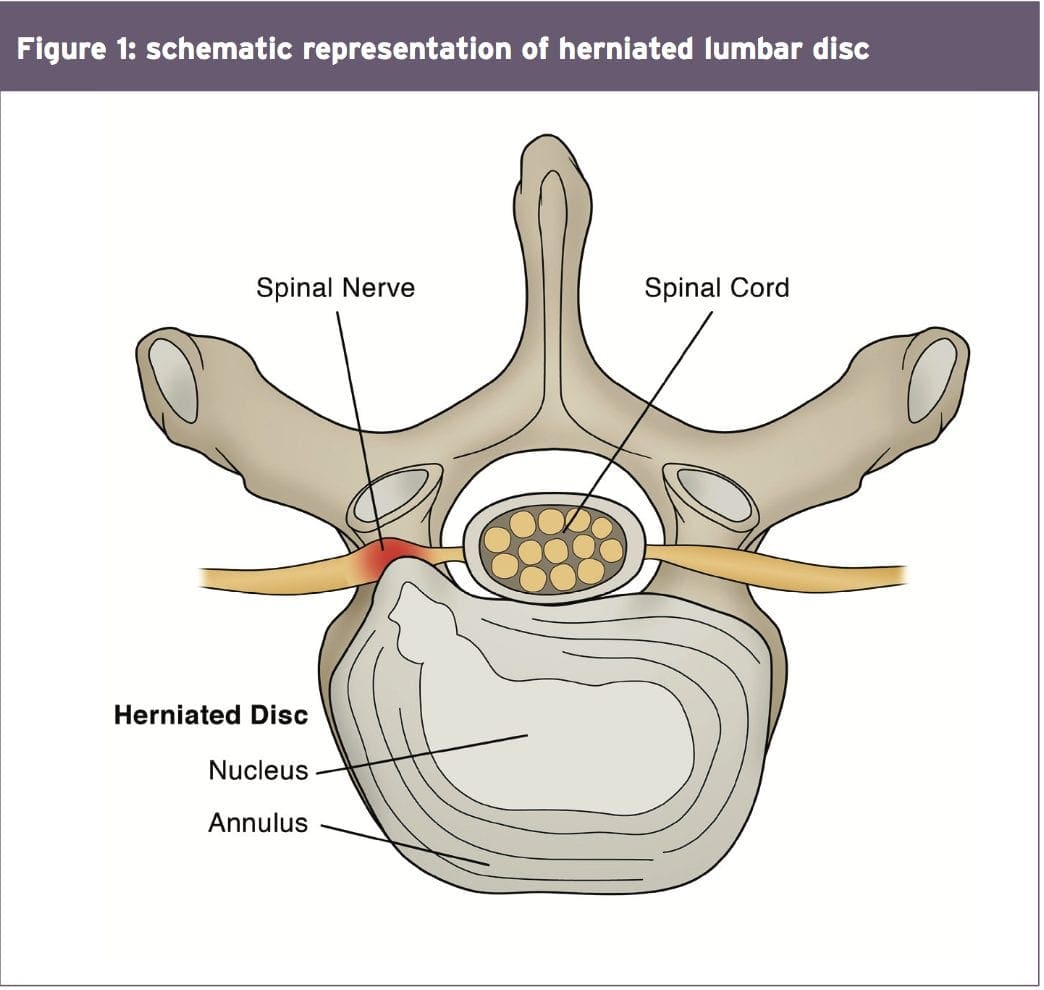
Herniations represent protrusions of Disc material beyond the confines of this annular lining and in the spinal canal (see Figure 1)(5). If the protrusion does not invade the canal or undermine nerve roots then back pain may be the only symptom.
Endoscopic Discectomy 3D Simulation
The pain associated with lumbar Radiculopathy happens due to a mix of nerve root ischemia (due to compression) and inflammation (because of neurochemical inflammatory mediators released from the disc). Throughout a herniation, the nucleus pulposus puts pressure on weakened regions of the annulus, and proceeds through the diminished websites in the annulus in which it ultimately forms a herniation(6 ft). It follows from this that some kind of disc degeneration may exist prior to the disc may really herniated(7).
In contrast to other respiratory Tissues, discs have a inclination to degenerate earlier in life, with some studies demonstrating adolescents presenting signs of degeneration between the ages of 11 to 16(8). With increasing age, there’s further degeneration of the intervertebral discs.
While the disc might be in danger of harm in All fundamental planes of motion, it’s particularly susceptible during repetitive flexion, or hyper-flexion, combined with lateral bending or rotation(10). Traumatic events such as excessive axial compression may also damage the inner structure of the disc. This can occur as a result of a fall or powerful muscular forces developed during tasks such as heavy lifting.
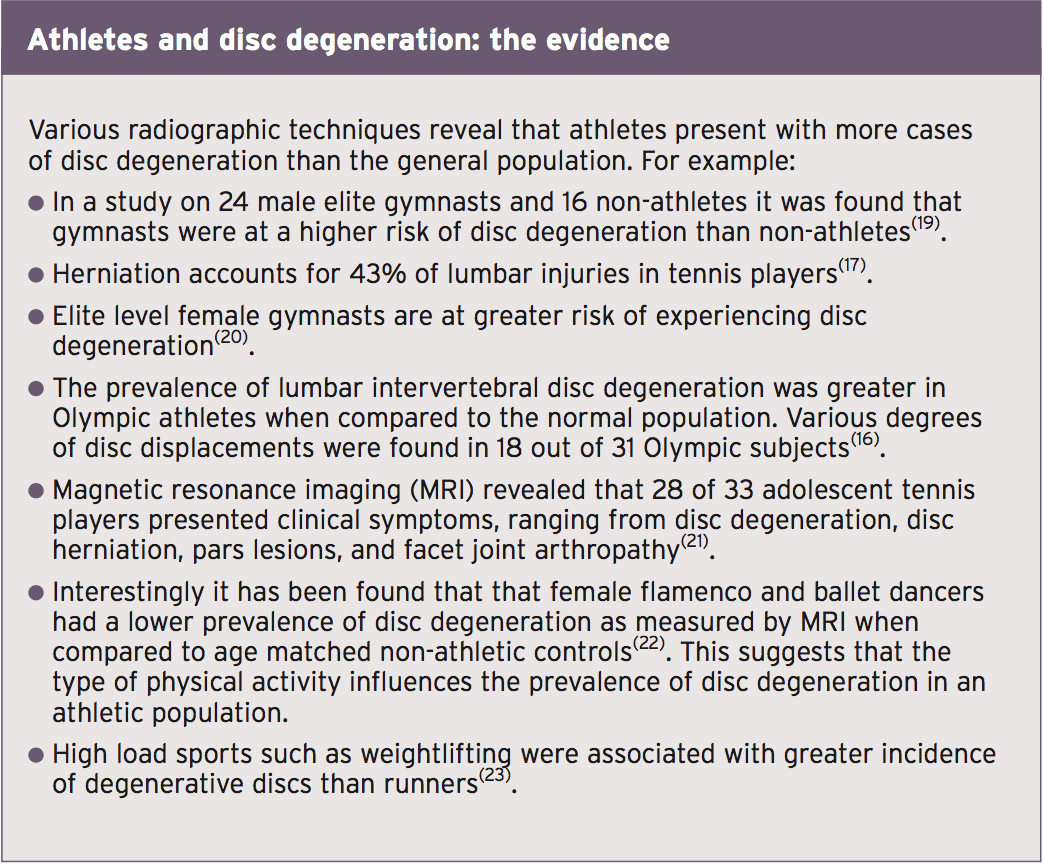
Athletes are generally exposed to high loading conditions. Examples of this include:
1. World-class power lifters, in which the calculated compressive loads on the backbone are involving 18800 Newtons (N) and also 36400N acting in the L3-4 motion segment(11).
2. Elite level football linesmen who have Been proven to present time-related hypertrophy of this disc and changes in vertebrae endplate in response to this repetitive high loading and axial pressure(12).
3. Long distance runners have been Shown to undergo significant strain into the intervertebral disc, indicated by a reduction in disc height(13).
Herniations could be classified depending on Ultimately, herniations are also identified based on level, with most herniations happening at the L4/5 and L5/S1 intervertebral disc level; these can then in turn affect the L5 and S1 nerve roots resulting in clinical sciatica(15). Upper level herniations are less common, and when they do occur with radiculopathy, they will affect the femoral nerve. Finally, the prevalence of disc injury rises increasingly caudally, with the best numbers at the L5/S1 degrees(16).
Herniation In Athletes
The offending movements implicated in The 20-35 age group are the most common group to herniate a disc, most likely because of the fluid nature of the nucleus pulposis and due to behavior(18). This age group are more likely to participate in sports which need high lots of flexion and spinning or are reckless with their positions and positions during loading.
The sports most at risk of disc herniation are:
Hockey
Wrestling
Soccer
Swimming
Basketball
Golf
Tennis
Weightlifting
Rowing
Throwing events
These are the sports that involve either significant Furthermore, those who take part in more and more severe training regimes seem to be at higher risk of spinal pathologies, as do people involved in sports.
Signs & Symptoms Indicating Discectomy
The efficacy of management programs for lumbar spine disc herniation — in terms of the decision to operate or treat conservatively — will be discussed in greater depth in part 2 of this series. However, the decision to operate within an athlete is generally driven by the motivation and approaching goals the athlete has put themselves. They may in fact favor a comparatively simple micro-discectomy instead of waiting for symptoms to abate through an extended period of rehabilitation.
This conservative period of Management may involve medicine therapy, epidural injections, relative back and back muscle recovery, acupuncture, osteo/chiropractic interventions. On the other hand, the normal presenting symptoms and signs that suggest a substantial disc herniation that will require surgical intervention in the athlete comprise:
Low back pain with pain radiating down one or both legs
Positive straight leg raise test
Radicular pain and neurological signs consistent with the nerve root level affected
Mild weakness of distal muscles such as extensor hallucis longus, peroneals, tibialis anterior and soleus. These would fit with the myotome relevant for the disc level
MRI confirming a disc herniation
Possible bladder and bowel symptoms
Failed conservative rehabilitation
Time span in which to enable conservative rehabilitation to be effective. In the overall population, medical practitioners will most likely prescribe a minimal 6-week traditional period of treatment with an overview at 6 weeks as to whether to expand the rehabilitation a further 6 weeks or to seek a specialist opinion. The expert may then attempt more medically orientated interventions such as epidural injections.
The athlete nevertheless will have these They might be more inclined to experience an epidural very early in the conservative period to assess the effectiveness of this procedure. If no signs of progress are evident in a couple of weeks then they may choose to get an immediate lumbar spine micro- discectomy.
Endoscopic Lumbar Discectomy
Local Doctor performs lumbar discectomy using minimally invasive techniques. From the El Paso, TX. Spine Center.
Imaging
MRI remains the favored system of Identifying lumbar spine disc herniation, since it’s also very sensitive to detecting nerve root impingements(23). However, abnormal MRI scans can occur in otherwise asymptomatic patients(25); hence, clinical correlation is always essential before any surgical thought. What’s more, patients can present with clinical signs and symptoms which suggest the diagnosis of acute herniated disc, and yet lack evidence of sufficient pathology on MRI to warrant operation.
Therefore it has been proposed that a Volumetric analysis of a herniated disc on MRI may be potentially beneficial in checking the suitability for operation. Several writers have previously mentioned the possible value of volumetric evaluation of herniated disc on MRI as part of their selection criteria for lumbar surgery(26).
In a survey conducted in Michigan State University, it was found that the size and positioning of the herniated disc determined that the likelihood for operation with what researchers called ‘types 2-B’ and ‘types 2-AB’ being the most likely candidates for surgery(27).
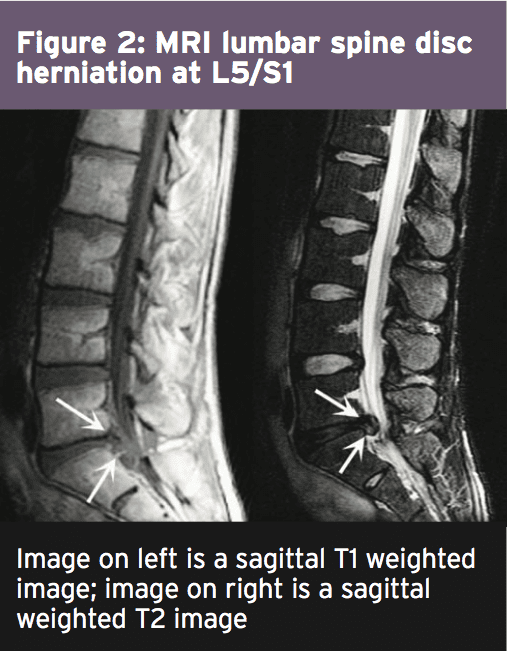
The MRI protocol to your lumbar spine consists of (see Figure 2)
1.Sagittal plane echo T1- weighted sequence
2. Sagittal fast spin echo proton density sequence
3. Sagittal fast spin echo inversion recovery sequence
4.Axial spin echo T1- weighted sequence
Summary
Disc herniations are not a common Complaint in athletes, but they do happen in sports which involve high loads or repetitive flexion and rotation movements. Sufferers of a disc herniation will normally feel focused low-back pain, maybe with referral in the lower limb with associated neurological symptoms if the nerve root was compressed.
Managing a disc herniation within an General population as frequently the risk of a Protracted failed rehabilitation period is Bypassed for the protected and low risk Micro-discectomy procedure. In the Discuss the exact surgical alternatives involved Observing a lumbar spine micro-discectomy.
References
1. Sports Med. 1996;21(4):313�20
2. Radiology. Oct 2007;245(1):62-77
3. Arthritis Research & Therapy. 2003;5(3):120-30
4. The Journal of Bone and Joint Surgery. American volume. Feb 2004;86-A(2):382 � 96
5. Radiology. Oct 2007;245(1):43-61
6. Spine. Sep 15 1996;21(18):2149-55
7. Spine. May-Jun 1982;7(3):184-91
8. Spine. Dec 1 2002;27(23):2631-44
9. Lancet 1986;2:1366�7
10. Disease-A-Month:DM. Dec 2004;50(12):636-69
11. Spine. Mar 1987;12(2):146-9
12. The American Journal of Sports Medicine. Sep 2004;32(6):1434-9
13. The Journal of International Medical Research. 2011;39(2):569-79
14. Spine. 2001;26:E93-113
15. Spine. 1990;15:679-82
16. British Journal of Sports Medicine. Jun 2003;37(3):263-6
17. Prim Care. 2005;32(1):201�29
18. McGill, S.M. Low back disorders: Evidence based prevention and rehabilitation, Human Kinetics Publishers, Champaign, IL, U.S.A., 2002. Second Edition, 2007
19. Spine. Apr 1991;16(4):437-43
20. Skeletal radiology. Jul 2006;35(7):503-9
21. British Journal of Sports Medicine. Nov 2007;41(11):836-41
22. The American Journal of Sports Medicine. Jun 2009;37(6):1208-13
23. Spine. Mar 15 1995;20(6):699-709
24. Phys Sportsmed. 2005;33(4):21�7
25. J Bone Joint Surg Am 1990 . 2:403�408
26. J Orthop Surg (Hong Kong) 2001. 9:1�7
27. Eur Spine J (2010) 19:1087�1093
The more alcohol people drink, the faster their cells appear to age. Researchers from Japan’s Kobe University Graduate School of Medicine found that alcoholic patients had shortened telomeres which placed them at greater risk for age-related illnesses.
Telomeres are the pieces of DNA that act as protective caps on the ends of chromosomes. Chromosomes, which protect our genes, get shorter every time a cell divides. Once a chromosome gets too short, it dies. Many studies have shown that shortened chromosomes are associated with the diseases of aging, especially cardiovascular disease, dementia, and diabetes.
“Telomeres, the protein caps on the ends of human chromosomes, are markers of aging and overall health,” said Naruhisa Yamaki, M.D. But aging isn’t the only cause of shortened telomeres.
“Our study showed that alcoholic patients have a shortened telomere length, which means that heavy drinking causes biological aging at a cellular level,” he said.
Yamaki and his co-authors recruited 255 study participants from alcoholism treatment services at Kurihama National Hospital in Yokosuka, Japan: 134 alcoholic patients and 121 age-matched controls or non-alcoholics, ranging in age from 41 to 85 years old. DNA samples, as well as drinking histories and habits, were collected from all participants.
“We also found an association between telomere shortening and thiamine deficiency (TD),” said Yamaki. Thiamine is a B vitamin.
“TD is known to cause neuron impairments such as Wernicke-Korsakoff Syndrome. Although how exactly TD can cause neural impairments is unclear, it is well known that oxidation stress causes telomere shortening and, thus, it is possible that oxidation stress may also cause neuron death.”
According to a study from King’s College London, one in five seniors drinks too much, which could have devastating effects on baby boomers. “As the baby boomer generation become seniors, they represent an ever increasing population of older people drinking at levels that pose a risk to their health,” said lead author Dr. Tony Rao.
“This study shows the need for greater awareness of the potential for alcohol related harm in older people.”
Good Night’s: Feeling stressed at work can lead to us reaching for unhealthy snacks and extra portions, but a new study has found that getting enough sleep could help buffer the negative effect of stress on eating habits.
Carried out by a team of researchers from Michigan State University, the University of Illinois, the University of Florida, and Auburn University in the US, along with Sun Yat-sen University in China, the study is one of the first to look at how psychological experiences at work can affect eating behaviors.
The team looked at two studies of 235 total workers in China who experienced regular stress in their jobs.
One study included IT employees who had a high workload and felt there was never enough time in the workday, while the second included call-center workers who experienced stress from dealing with rude and demanding customers.
The researchers found that in both studies employees who had a stressful workday also had a tendency to take these negative feelings home with them, and to the dinner table, leading to them eating more than usual and make unhealthier food choices.
However, the study also showed that sleep could be a way to buffer this effect of stress on unhealthy eating, with the team finding that employees who got a good night’s sleep the night before tended to eat better the next day after a stressful day at work.
Yihao Liu, co-author and assistant professor at the University of Illinois gave two possible explanations for the findings.
“First,�eating is sometimes used as an activity to relieve and regulate one’s negative mood, because individuals instinctually avoid aversive�feelings�and approach desire feelings,” he said.
“Second, unhealthy eating can also be a consequence of diminished self-control. When feeling stressed out by work, individuals usually experience inadequacy�in exerting effective control over their cognitions and behaviors to be aligned�with personal goals and social norms.”
Chu-Hsiang “Daisy” Chang, MSU associate professor of psychology and study co-author, also commented that the findings that sleep has a protective effect against unhealthy food habits shows how the three health behaviours of sleep, stress, and eating are related.
“A good night’s sleep can make workers replenished and feel vigorous again, which may make them better able to deal with stress at work the next day and less vulnerable�to unhealthy eating,” she explained.
The team now believe that companies should take into consideration the importance of sleep and healthy behaviors and think about providing sleep-awareness training and flexible scheduling for employees, as well as rethinking�food-related job perks, which have become very common.
“Food-related�perks may only serve as temporary mood-altering remedies�for stressed employees,” Chang said, “and failure to address the sources of the�work�stress�may have potential long-term detrimental effects on�employee�health.”
The findings were published in the�Journal of Applied Psychology.
Gray hair could be an early warning sign of heart disease. Hiccups that won’t go away may foreshadow cancer. Sometimes your body sends seemingly unrelated signals that something is wrong.
Since the key to treating most health problems is to catch them early, it can pay off big time to spot the tip-offs. And the first thing to check out is your skin.
“Skin is the only organ of the body that you wear on the outside,” says dermatologist Dr. Robert Brodell. “Since it’s connected to internal organs through blood vessels, nerves and other things, it can be like a window to see what’s going on inside.”
Here are 10 symptoms and what they may really mean:
Rash on shins: Formally called necrobiosis lipoidica diabeticorum (NLD), a raised red-brown patch with yellow blotches could mean that you have diabetes or are poised to get it. “Sometimes we see this in patients and know they are diabetic before they know it themselves,” says Brodell, chairman of the dermatology department at the University of Mississippi Medical Center. “In some cases, their blood sugar is normal, but over the next six months to two years, they develop diabetes.”
Splinter hemorrhages: They look like thin red splinters running lengthwise under fingernails and could be caused by endocarditis, a bacterial infection of the heart valves. “You wouldn’t think that someone looking at fingernails could detect what could be a significant heart problem,” Brodell tells Newsmax Health.
Rash on eyelids: This violet-hued rash is a symptom of dermatomyositis, an inflammatory muscle disease that is associated with various forms of cancer, most commonly ovarian. Other symptoms include raised scaly bumps on knuckles and ragged cuticles that separate from the nail.
Skin discoloration: The most common is jaundice, a yellowing of the skin that is a classic symptom of hepatitis and other liver conditions. Less known is a darkening of the skin in creases and old scars that may indicate an adrenal gland problem, such as Addison’s disease.
Tender nodules on shins: A condition called erythema nodosum is marked by red swollen bumps on the front of the legs. Brodell says that while they are sometimes a reaction to medications or oral contraceptives, they could also be a warning of the inflammatory pulmonary disease sarcoidosis.
Persistent hiccups: For most of us, this spasm of the diaphragm is an annoying but harmless problem. But when hiccups last two days or more, they could be an early warning sign of deadly esophageal cancer.
Shoplifting: If your elderly mom or dad starts getting sticky fingers, it could be a sign of a certain type of dementia. A study published in the Journal of the American Medical Association’s Neurology details how people with frontotemporal dementia lose their sense of societal conventions and may take items in shops without paying for them.
Color blindness: The inability to distinguish between different hues is a sign of Parkinson’s disease. Other odd symptoms of the neurological disorder are writing smaller and swimming in circles.
Earlobe wrinkle: A diagonal crease in one or both earlobes has long been linked to heart disease. Also called “Frank’s sign” after Dr. Sanders T. Frank, the physician who first made the association, this odd symptom has been supported in several studies, though no one has yet to figure out why.
Gray hair: A touch of gray is another early warning sign of cardiovascular problems, regardless of age and other factors, according to a recent study by Egyptian researchers. Heart disease in general can generate several seemingly unrelated symptoms, including bleeding gums, swollen feet, frequent urination at night, uncontrollable head bobbing, yellow spots on eyelids…and the list goes on.
“The reason that heart disease has so many varied symptoms may be because there are many types of heart disease that will present in different ways,” explains Dr. Richard Greenberg, a cardiologist at Temple University Hospital in Philadelphia, Pa. “Another reason is that the circulatory system is connected to every cell in the body, so it follows that symptoms of heart disease could show up anywhere.”
IFM's Find A Practitioner tool is the largest referral network in Functional Medicine, created to help patients locate Functional Medicine practitioners anywhere in the world. IFM Certified Practitioners are listed first in the search results, given their extensive education in Functional Medicine