We may know Amy Schumer as the funny girl who can crack a joke on command, but there is one thing that the star of the new movie Snatched takes seriously: her workouts.
The proof in this video, which shows�Schumer�sweating it out under the watchful eye of her trainer Harley Pasternak. Pasternak�recently posted this clip of the comedienne�performing a two-minute cardio burst on a Helix. (More on that later.)
RELATED: 24 Fat-Burning Ab Exercises (No Crunches!)
�First of all, Amy’s naturally an athlete,� notes Pasternak who says Schumer has an effortless humor that lights up the room� and makes everyone around her smile. �She played sports at a high-level through high school and college, and was an aerobics instructor. So she’s very coordinated, and easy to push in the gym.�
So how exactly does Pasternak help keep Schumer looking her best? The simple seven, he says�that is, a circuit of seven strength moves that target the entire body. �The exercises sometimes vary, but I usually pick one exercise for each of the seven major body parts,� explains Pasternak who offered up the skater lunge, dumbbell stiff-leg deadlift, dumbbell curl press, single arm dumbbell row, lying dumbbell triceps extension with hip thrust, spider plank and Superman. �Sometimes I have her just pick one of these exercises and do anywhere from three to five sets with 15 to 30 reps. Other times I’ll have her do all seven exercises, doing one to three sets of 15 to 20 reps.�
Pasternak also has Schumer hit the Helix, a gym machine that works the body on a lateral plane. �Most of what we do is forward and back, so to find something that works us more side to side I think is really helpful for those under-worked muscles like the abductors and obliques, while still hitting the glutes and quads,� he says. �I mainly use the Helix as a cardio burst when doing a circuit, but it can easily be used for more prolonged bouts of cardio.� Don�t have access to a Helix? No worries. Pasternak, says you can put two towels underneath your feet and slide side to side on a hardwood floor to mimic the movement of the machine.
For overall wellness, though, Pasternak reminds us that walking is essential. �This is by far the most important thing that I can ever tell someone to do,� he says. �Get a Fitbit, set a daily step goal of at least 10,000, and keep moving.�
Now that you�re armed with Pasternak’s A-list tips, give Schumer�s simple seven a try:
1. Skater Lunge
Stand with feet shoulder-width apart and knees slightly bent. Hinge forward at waist as you raise left foot. Push off right foot and explode toward the left, landing on left foot with knees slightly bent; touch right toes to the ground behind left foot. Push off left foot and explode back toward the right, landing on right foot with left toes touching behind it. Continue, alternating back and forth. (Click here to see a photo.)
2. Dumbbell Stiff Leg Deadlift
Stand with feet hip-width apart and a dumbbell in each hand, palms face thighs. Brace core, and keeping weight in heels, hinge at hips and lower torso as you slide dumbbells down the front of thighs. Weights should only go down as far as hamstrings will allow without your back rounding. Slowly rise to standing, and then repeat.
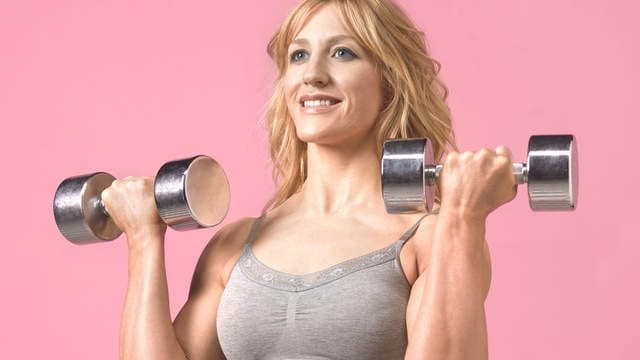
3. Dumbbell Curl Press
Stand holding a dumbbell in each hand, palms facing out, with� hands shoulder-width apart and arms hanging in front of you. Curl the weight toward shoulders and then press weights up directly over shoulders until arms are straight. Lower back to start and then repeat.
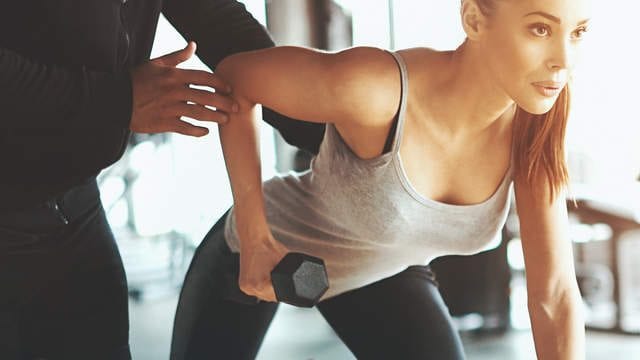
4. Single Arm Dumbbell Row
Start from a lunge position with left leg forward and�left elbow resting on�knee. (Or, place left knee and left palm on a bench.) Grab a dumbbell with your right hand. Row the dumbbell up along your ribs, squeezing the right shoulder blade. Lower back to start and then repeat. When you switch sides, switch legs so that the right is forward.
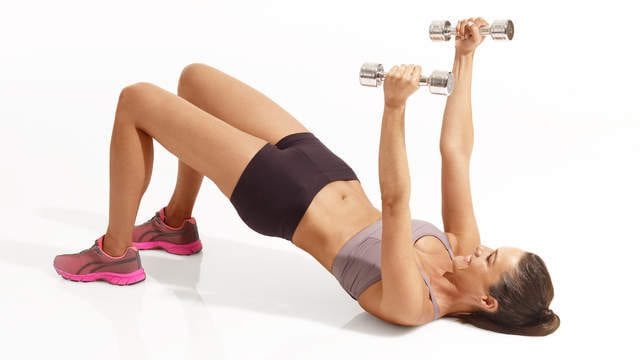
5. Lying Dumbbell Triceps Extension With Hip Thrust
Lie faceup with knees bent, feet flat and a dumbbell in each hand. Extend arms straight up; palms face each other. Hinge arms at elbows, and lower dumbbells back toward ears. Contract triceps and extend arms back up as you simultaneously engage glutes and push hips up as high as possible. As you lower hips, lower dumbbells back towards ears again; repeat.
6. Superman
Lie facedown with arms and legs fully extended and shoulder-width apart. Simultaneously lift legs and arms at least 6 inches off the floor; hold for 5 seconds, lower and then repeat.
7. Spider Plank
Get into the �up� part of a pushup. Lift right foot, bending right knee and brining it toward the outside of right elbow. Return to start, switch legs and repeat on the left side. (Click here to see a photo.)
Jordan Alexander (Trinity Valley Community College), Leandra Echi (Vermont Academy/Beacon High School) and Neidy Ocuane (Seward County Community College) have each signed national letters of intent to attend UTEP and compete with the Miners starting in 2017-18, head women’s basketball coach Kevin Baker revealed Tuesday.
Alexander and Ocuane will have two years of eligibility while Echi has four.
A bio on each of them, along with a quote from Baker, follows below.
Jordan Alexander Forward 5-11
Trinity Valley Community College | Skyline High School Dallas, Texas
“Jordan will be a strong presence on both ends of the floor for us this season. She can play the stretch 4 position which means she can step out and make the three point shot. She also has the ability to score inside and post with effectiveness. Jordan’s biggest strength is her ability to rebound the ball on offense or the defensive end of the floor. Also, Jordan can defend a smaller guard and out work a larger post player in the paint. Jordan will be able to help our team immediately.”UTEP head coach Kevin Baker
Will have two years of eligibility with the Miners after playing one season each with Trinity Valley Community College (2016-17) and Louisiana (2015-16) … last year helped TVCC qualify for its 10th straight trip to the national tournament and finish with an overall record of 30-6 … put up 6.5 points/game while also grabbing 2.5 rebounds/game … played in 35 contests, including 12 starts … reached double figures in scoring in eight games, including tallying 18 points in a home triumph against Panola College (1/11/17) … was 6-6 from the floor and 4-4 at the free-throw line in the contest … as a freshman with ULL appeared in 27 games, including eight starts, for a team that finished 25-10 … earned 10.1 minutes/game, pitching in 2.4 points/game and 1.7 rebounds/game … nailed 43.0 percent (23-53) of her shots from the floor and 87.0 percent (14-16) from the charity stripe … four-year letter winner at Dallas Skyline High School (2011-15) under head coach Cassandra McCurdy … the team won the district championship all four years of her career … as a senior the squad earned runner-up honors in the state … daughter of Patricia and Bobby Alexander … has three siblings … her sister (Ratysha) and cousin (Khamra Echols) both played basketball at Sam Houston State.
**
Leandra Echi Guard 5-8
Vermont Academy | Beacon High School Beacon, N.Y.
“Leandra is a guard who can do it all. She has the ability to play the point guard position as well as shooting guard. She is extremely athletic and has a unique ability to make plays and scoring opportunities for others. She plays extremely hard at all times and has a motor that never stops running. She will help our team on the defensive end as well because she plays with so much energy.”–UTEP head coach Kevin Baker
Led the Vermont Academy Varsity Girls’ Basketball team to its first New England Preparatory School Athletic Council (NEPSAC) Class D Championship … named the NEPSAC tournament’s MVP … posted a huge double-double (19 points, 21 rebounds) in the championship game victory against Southfield (3/6/17) … aided team to 17-6 regular-season record to earn the top seed in the tournament … joined the academy for a postgrad year while also reclassifying into the class of 2017 …also helped the Vermont Academy soccer team claim a league title, scoring the lone goal in the NEPSAC Championship victory against Hebron Academy (11/21/16) … prior to her time at Vermont Academy had been a standout guard at Beacon High School … accounted for 20+ points/game, 10 rebounds/game and five assists/game as a senior with Beacon HS … poured in 28 points while securing 18 rebounds in a 60-49 road win at Fox Lane (12/18/15) … effort allowed her to reach 1,000 points for her high school career … sustained a torn ACL during her junior season, which made her numbers the ensuing year even more impressive … paced the team in points (16) and rebounds (five) in a 52-49 road win at Our Lady of Lourdes (1/12/14), which was believed to be Beacon’s first win in the series in at least 30 years … member of National Honor Society.
***
Neidy Ocuane Guard 5-5
Seward County Community College | CFP Dom Bosco Maputo, Mozambique
“Neidy is a solid point guard who plays the position the right way. She looks to run the offense smoothly and makes very few mistakes that result in turnovers. She can score the ball a variety of ways. She can really shoot the ball from the perimeter, drive to the paint to draw a foul, and has tremendous vision in the open floor. Neidy is the complete package at her position and will help our team the minute she steps on to the floor.”-UTEP head coach Kevin Baker
Will have two years of eligibility at UTEP after earning a pair of letters at Seward County Community College … squad went a combined 57-10 in those two season and in 2017 won the program’s first conference title in eight years … burst into the starting line-up as a sophomore (2016-17) … started 34 contests, pacing the team in assists/game (4.7) and steals/game (2.4) while ranking fourth in scoring (11.2) … her 82 total steals ranked 37th nationally, an even more impressive feat considering she was called for a total of 35 fouls on the year … nailed 39.0 percent (130-333) from the floor, including 34.3 percent (60-175) from distance … also connected on 76.9 percent (60-78) at the charity stripe … hit double figures in scoring in 22 games, including a career-high 24 points in an 83-78 win at Cloud County Community College (1/25/17) … credited with at least five assists in 18 contests, including a career-best 11 against Cowley College (2/4/17) … named the Jayhawk Conference Player of the Week (1/6/17) after averaging 15.5 points, 6.5 assists and 4.5 steals in a pair of wins … appeared in all 33 games as a freshman (2015-16), earning 13.9 minutes/contest off the bench … chipped in 3.9 points per game and 1.5 assists per game … tallied a season-best 14 points in only 16 minutes in a romp against Pratt Community College (12/12/15) … drilled 4-6 from distance in the game … dished out seven assists vs. North Central Missouri College (10/31/15) … hails from Maputo, Mozambique … put up 10.1 points/game, 5.4 rebounds/game and 3.3 assists/game for Mozambique at the 2014 Afrobasket U18 Women’s Championships … accounted for 14.7 points/game, 3.5 rebounds/game an 2.0 assists per game with Mozambique in the2013 FIBA Africa U16 Championship for Women … played for Clube de Desportes do Costa do Sol under the direction of coach Calos Dezanove … selected as the team MVP after averaging 16 points and three assists … effort helped team post its fourth consecutive top-five finish … has two siblings.
IRVING, Texas � �For the first time since 2008 and second time in program history, a trio of UTEP softball players were named to the All-Conference USA team.
Utility player Kaitlin Ryder, and infielders Taylor Sargent and Cortney Smith were announced to the second team as voted by the league�s 12 head coaches on Tuesday.
Ryder, Sargent and Smith each established career highs in respective categories during the 2017 campaign. Ryder set her career best with a .354 batting average, which ranked second on the team, while Smith led the Miners with career highs in batting average (.364), home runs (eight), slugging (.636) and on-base percentage (.438). Sargent led the squad with a career-high three triples, ranked fourth on the team with a career-best .326 average and recorded a career-high 19 RBI.
Ryder came up with big moments during the season as the junior racked up a career-high five RBI during UTEP�s 12-2 (5) triumph against Southern Miss. She also connected on a career-high two home runs at Incarnate Word to lead the Miners in an 11-3 (5) victory. The Chatsworth, Calif., native ranked second on the team in long balls (five) and RBI (28). She added 22 runs, seven doubles and a triple. Ryder played 31 contests in the outfield and 16 games behind the plate.
Sargent, who was hitting .250 after March 26, picked up the pace and finished with that career-high .326 average. The Albuquerque, N.M., native lit up the stat sheet the last 17 games of the season by hitting .429 (24-56) with 12 RBI, seven doubles, three triples, two stolen bags and eight runs. The junior set a career high with three RBI at UTSA (April 2) and crossed the dish a career-most three times during a 10-2 (6) win against WKU.
During UTEP�s epic 10-inning victory at UTSA, Sargent finished the 3-for-6 with a double and a RBI, along with 11 putouts at first base.
Smith returned her sophomore season, providing power to the lineup with her team-leading eight dingers. The Moreno Valley, Calif., native also established career marks in runs (26), hits (47), doubles (nine), triples (one) and RBI (22). Smith led the Miners past powerful Utah State, 8-5, when she connected on a career-best two home runs, a pair of solo shots. Smith recorded a career high three hits two times during the season, the first came on a 3-for-4 outing, while also tying her career most with three RBI at UC Riverside, and the second came on a 3-for-3 effort with a career-best three runs during a 12-2 (5) victory against Southern Miss.
Sargent and Smith were the backbone behind UTEP�s 30 double plays turned in 2017. Sargent led the team with 15 double play, while Smith ranked tied second with 12. Ryder contributed to one of the double plays behind the plate. The Miners� 30 double plays led C-USA and ranks tied third nationally. UTEP�s .63 double plays turned per game ranks second in the nation.
For Sargent and Smith, it�s their first accolade as Ryder was named to the All-C-USA Preseason team on Jan. 18. Ryder was also named the team�s MVP at Dinner with the Miners on April 27. The 2008 squad saw two first teamers in Camilla Carrera and Stacie Townsend, and second team pick Amber Bennett.
In 2015, a trio of Miners earned postseason awards as Kawehiokalani Netane was named first team, Ashley Eldridge was recognized to the second team and Courtney Clayton was named to the C-USA All-Freshman team.
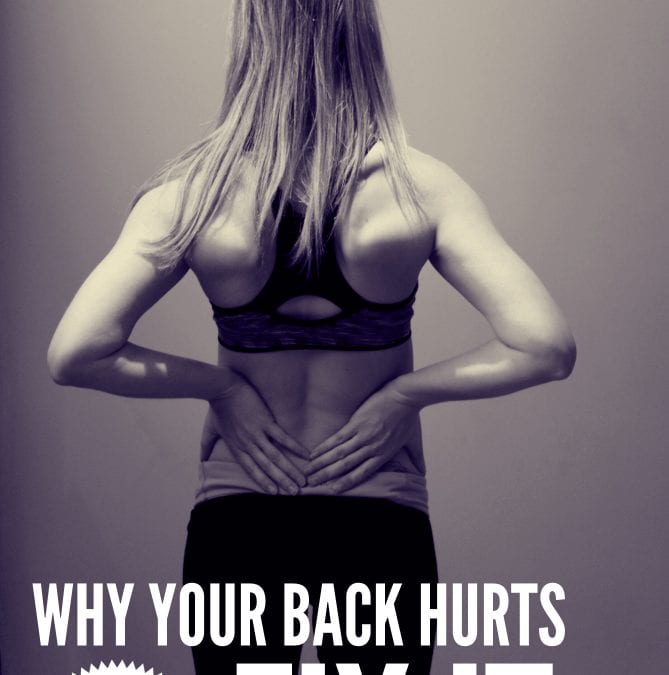
As one of the most common reasons for doctors visits, frequency of back pain is sky rocketing. Both active and inactive people will experience back pain at some point within the year and it�s estimated that 5/10 Canadians suffer back pain within a six month period.
I originally wrote this post for The Mommy Confessionals, if you haven�t been over there check it out!
This post contains affiliate links. For more information click here.
As moms, it�s not uncommon for us to grumble about our backs. We pick up, lift, twist and bend all day every day. And aside, from serious medical conditions (slipped and herniated discs, osteoarthritis etc) most back pain is caused by two things:
Poor Posture and Improper Movement Mechanics
Cause #1: Poor Posture
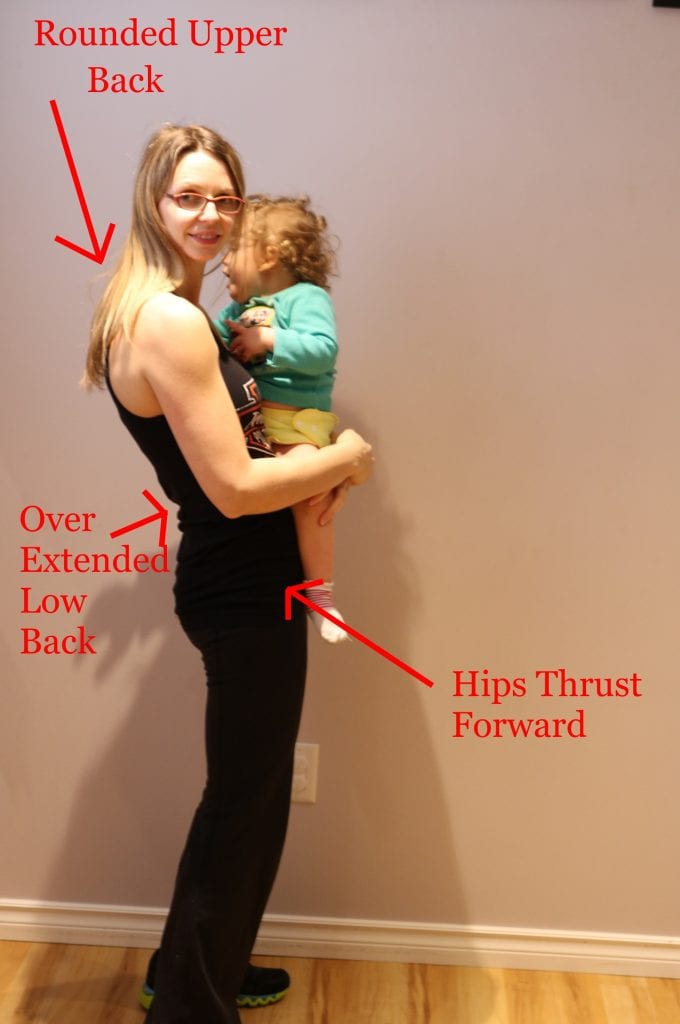
This is one of the most overlooked causes of chronic back pain especially in moms and pregnant ladies (I�ve actually touched on this posture here). Beginning during pregnancy, our center of gravity shifts to accommodate a growing baby. This shift makes our posture (which was probably not great to begin with) even worse. It causes our shoulders to round and low back to sway.
Outside of pregnancy, even those of us who are active lead fairly sedentary lifestyles and daily tasks like involving sitting (to eat, to drive, to relax) affects the way our muscles function. Throughout our day we lean forward frequently which causes our chest muscles to become chronically tight and out upper backs unable to do their job. Our posterior chain becomes under developed and all of it adds up and leads to back pain.
Cause #2: Poor Mechanics
As I mentioned, as moms we lift, twist, bend and pick up all day long. Unfortunately, all of those movements require a sound technique and a strong musculature. Picking up kids, moving furniture and playing can easily leave you with some low back tenderness when you fail to use proper movement patters and the necessary muscles (I�ve written before about why we need to learn to pick things up properly!)
If you�re feeling a bit overwhelmed- it�s okay! With the exception of medical conditions, back pain is pretty preventable if you put in the time and effort.
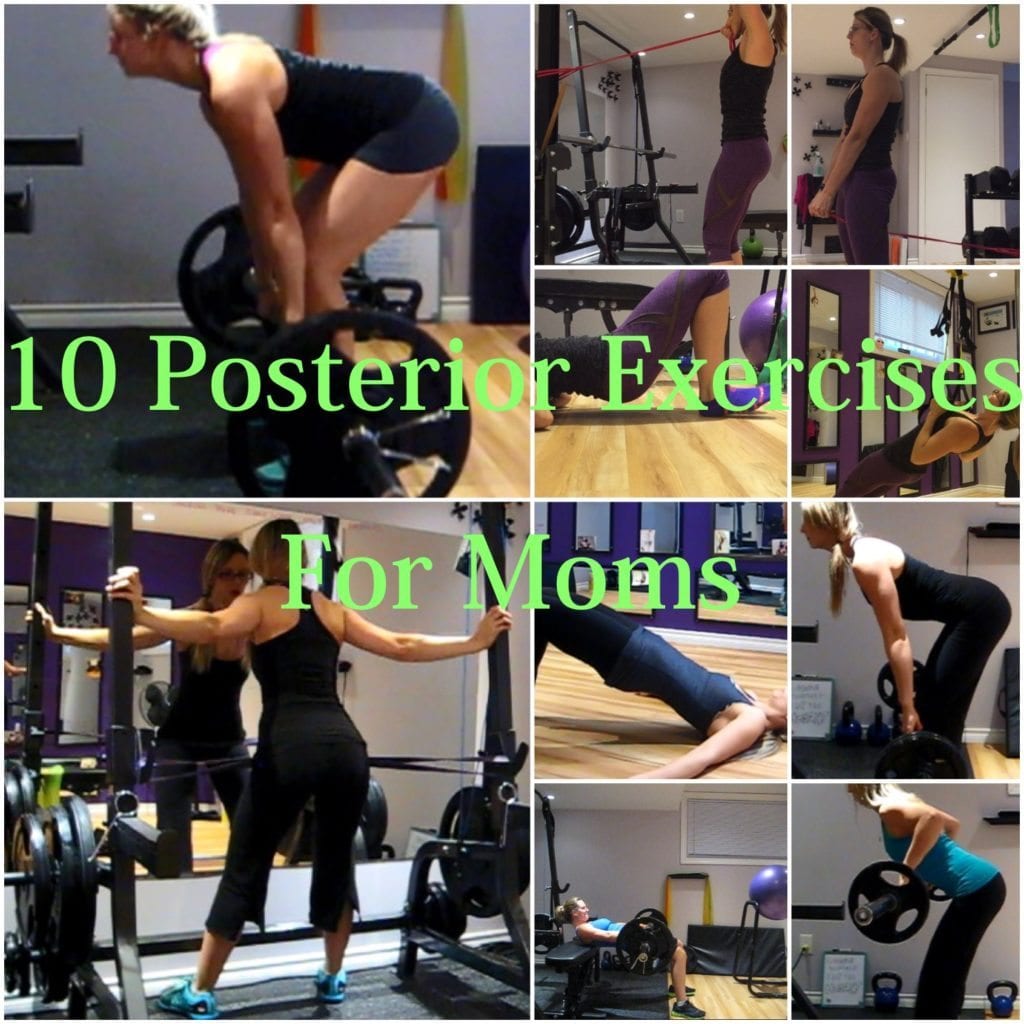
In fact, the number one thing you can do to prevent your back hurting is strengthen your posterior chain (back of the body).
Creating a strong back of body allows your muscles to pull your body back into alignment and spread some of the force more evenly.
Learning to pick things up properly (using a hip hinge or squat) is crucial to preventing any injury to your low back. Meaning, strengthening the muscles of the back of the body is crucial. My two favorite things to focus on when preventing back pain are: contracting the glutes and learning to hip hinge
The Glutes
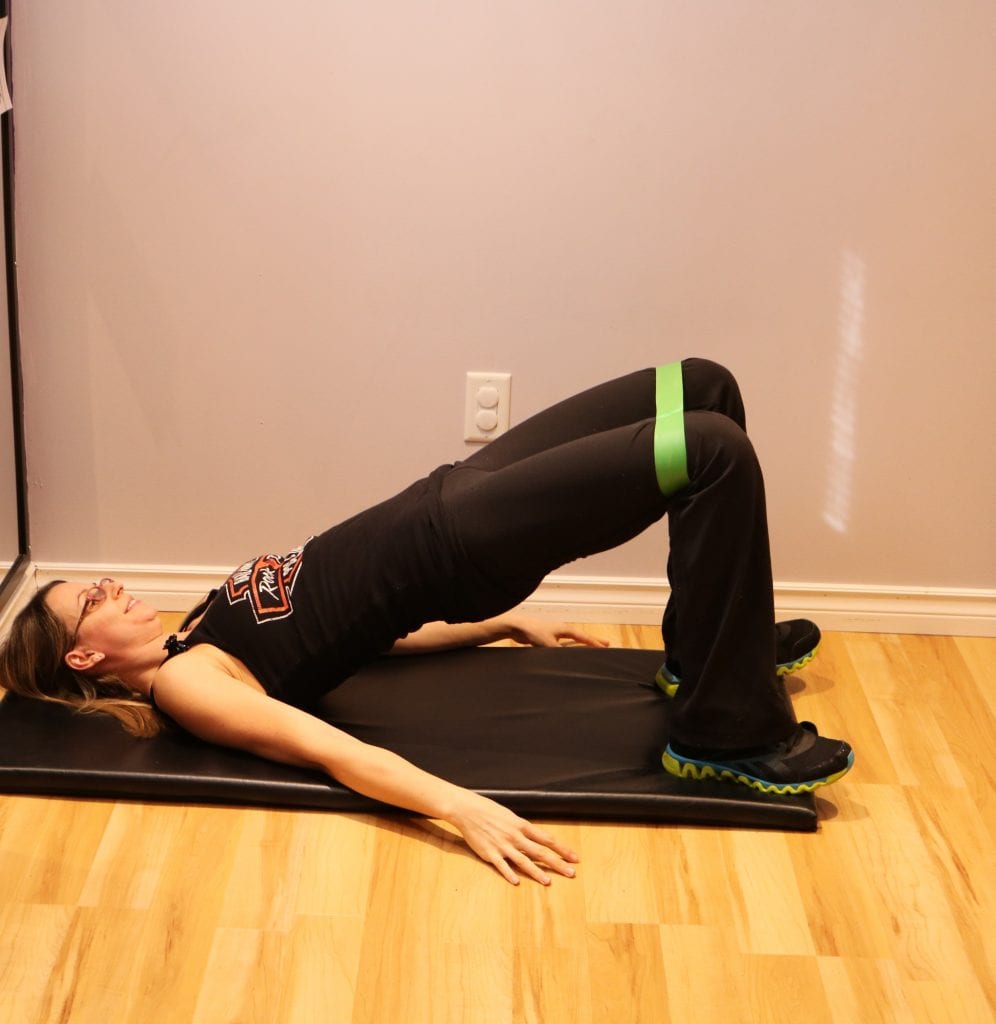
Learning how to make your glutes strong and contract them has a host of benefits but one of the biggest is their help in posture. Glutes are part of the posterior chain but also the pelvic floor. They help keep your pelvis in proper alignment, keep you upright and move correctly (and yes they can look pretty!). Glutes are beyond important and one of my all time favorite body parts to train.
Check out six of my favorite glute exercises here.
Hip Hinging
Learning to hip hinge is crucial as a mom and as a person. It�s a basic movement that we seemed to have forgotten and evolved out of.
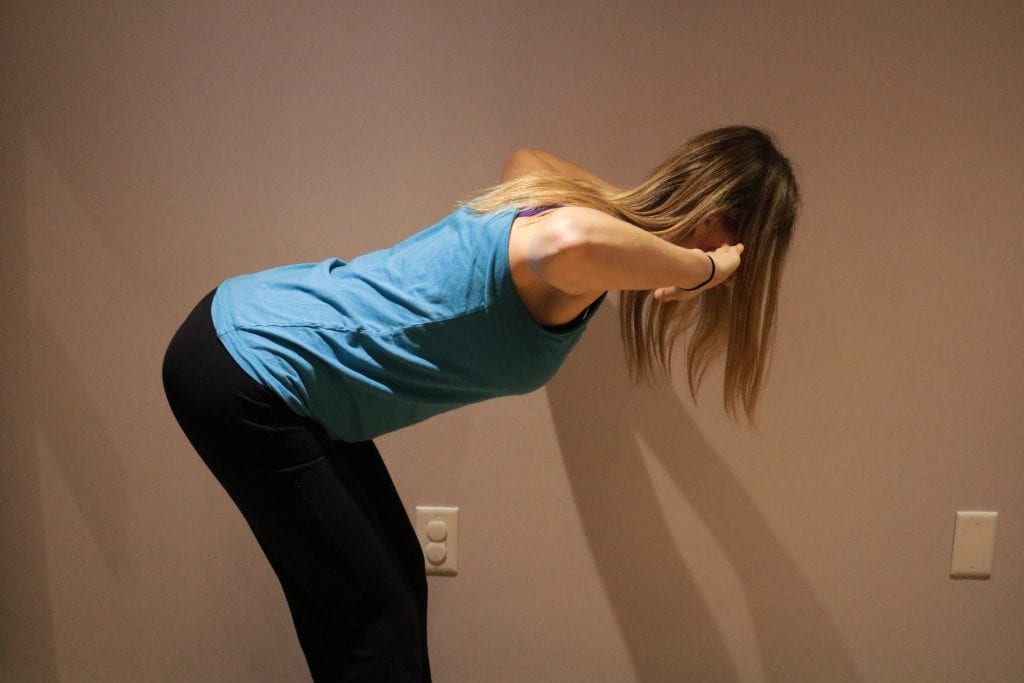
When you hinge from the hips you strengthen the back of the body and shift the weight back there also. Allowing your muscles to lift the object instead of the ligaments in your low back helps prevent lifting injuries.
I�ll be chatting about my favorite drills to teach and train the hip hinge in a couple weeks so peek back- but in the meantime check out the video below!
As moms, we�re moving all day long. But rarely are we moving correctly. Instead of using our muscles and proper mechanics we rely on our joints, tendons and ligaments. This is a recipe for disaster and, as you know all too well, back pain. Instead work on building strength, improving posture and becoming proficient in basic movements and your back pain will be far less.
I�m Shelby � strength coach, nutrition coach, chronic foodie & mama bear. I�ve been a coach for the better part of the past decade and I truly love helping people.
Through fitness, food, mommyhood or making natural changes in your home, I�ve done it all � and I want to help you too!
Even as life expectancy is rising in many places across the U.S., there are some places where lifespans are getting shorter and geographical inequalities are becoming more pronounced, a new study suggests.
Nationwide in 2014, the average life expectancy was about 79.1 years, up 5.3 years from 1980, the study found. For men, life expectancy climbed from 70 years to 76.7 years, while for women it increased from 77.5 years to 81.5 years.
But the study also highlighted stark disparities: a baby born in Oglala Lakota County, South Dakota, can expect to live just 66.8 years, while a child born in Summit County, Colorado, can expect to live 86.8 years, on average.
“For both of these geographies, the drastically different life expectancies are likely the result of a combination of risk factors, socioeconomics and access and quality of health care in those areas,” said senior study author Dr. Christopher Murray, director of the Institute for Health Metrics and Evaluation at the University of Washington in Seattle.
“We found that risk factors – obesity, lack of exercise, smoking, hypertension, and diabetes – explained 74 percent of the variation in longevity in the U.S.,” Murray said by email. “Socioeconomic factors – a combination of poverty, income, education, unemployment and race – were independently related to 60 percent of the inequality, and access to and quality of health care explained 27 percent.”
To examine changes in life expectancy over time, researchers looked at death certificates from each county in the country.
Several counties in South and North Dakota, typically with Native American reservations, had the lowest life expectancy, the study found. Counties along the lower half of the Mississippi and in eastern Kentucky and southwestern West Virginia also had very low life expectancy compared with the rest of the country.
In contrast, counties in central Colorado had the highest life expectancy.
Some of the biggest gains in life expectancy during the study were seen in counties in central Colorado, Alaska and in metropolitan areas around San Francisco and New York.
But there was little, if any, improvement in life expectancy in some southern counties in states stretching from Oklahoma to West Virginia. Many counties where life expectancy dropped the most are in Kentucky.
One limitation of the study is that there might be errors in county death records, the authors note. Researchers also lacked data to explore how much the findings might be explained by migration of certain types of people to certain communities.
“The bottom line is that our life expectancy is increasingly being shaped by where we live within the U.S.,” said Jennifer Karas Montez, a sociology researcher at Syracuse University in New York who wasn’t involved in the study.
“Lifestyle behaviors are not causes, they are symptoms,” Montez said by email. “They are symptoms of the environment and the social and economic deprivation that many parts of the country now endure thanks to decades of policy decisions.”
If you suffer from chronic pain, make sure you get plenty of sleep, say researchers from Boston Children’s Hospital and Beth Israel Deaconess Medical Center, who found that sleep loss increases pain sensitivity. Can’t get more sleep? Then drink a cup of coffee, which also can help you cope with pain.
Both getting more sleep and drinking coffee (or taking medications that keep you alert) eased chronic pain better than standard pain-relievers, according to a study published in Nature Medicine.
Pain physiologist Alban Latremoliere, Ph.D. and sleep physiologist Chloe Alexandre, Ph.D. measured the effects of acute or chronic sleep loss on sleepiness and sensitivity to both painful and non-painful stimuli in mice. They then tested standard pain medications, like ibuprofen and morphine, as well as wakefulness-promoting agents like caffeine and modafinil.
“We found that five consecutive days of moderate sleep deprivation can significantly exacerbate pain sensitivity over time in otherwise healthy mice,” says Alexandre. “The response was specific to pain, and was not due to a state of general hyperexcitability to any stimuli.”
Surprisingly, common analgesics like ibuprofen did not block sleep-loss-induced pain hypersensitivity. Even morphine lost most of its efficacy in sleep-deprived mice.
The results suggested that patients using these drugs for pain relief might have to increase their dose to compensate for lost efficacy due to sleep loss, thereby increasing their risk for side effects.
In contrast, both caffeine and modafinil, drugs used to promote wakefulness, successfully blocked the pain hypersensitivity caused by both acute and chronic sleep loss. Interestingly, the compounds had no pain-relieving effects in mice who weren’t sleep-deprived.
Meditation has also been found to be more effective than drugs to ease chronic back pain. Scientists at Seattle’s Group Health Research Institute found that eight weekly sessions of mindfulness-based stress reduction (MBSR), such as meditation and yoga, relieved pain and improved ease of movement better than conventional care, such as over-the-counter pain killers.
Cognitive behavior therapy, which taught people to change the way they felt about pain, also helped improve both pain and ease of movement better than conventional care.
According to the Institute of Medicine of the National Academies, 100 million Americans suffer from chronic pain.
Hundreds of studies show that teas bestow a multitude of health benefits. And with teas ranging from mild green to robust Earl Grey along with a wide variety of herbal teas, you’re sure to find one to suit your taste — and your ailment.
Below are different types of tea along with their health benefits.
Black
A study published in Frontiers of Nutrition found that black tea may reduce blood sugar levels naturally, and that drinking three or more cups a day lowers the risk of Type 2 diabetes and helps those who have the disease keep it under control. Researchers at Framingham State University extracted several types of antioxidants from black tea that block the enzymes responsible for increasing blood sugar.
Another study found that those same three cups of black tea reduced the risk of fractures in elderly women by up to 42 percent.
Green
Researchers at Japan’s Kyoto University found that drinking green tea could help prevent deadly abdominal aortic aneurysms. They believe that the beneficial compounds in green tea are polyphenols, a type of antioxidant that fights free radicals and reduces inflammation. The polyphenols also appear to make arteries stronger and more flexible by regenerating elastin, an essential protein that makes arteries stretchy, yet sturdy.
Australian researchers found that three cups of tea a day reduced the risk of fractures by 30 percent. Experts at Flinders University believe that chemicals in black and green tea called flavonoids accelerate the building of new bone while slowing the breakdown of existing bone.
Green and white teas contain large amounts of EGCG, a powerful antioxidant linked to a lower risk of heart disease, Alzheimer’s disease, and numerous types of cancer. A study at Japan’s Okayama University found that senior citizens who drank large amounts of green tea slashed their risk of dying from heart disease by as much as 76 percent, and a Chinese study found that drinking green tea cut the risk of lung cancer by two-thirds.
Earl Grey
The distinctive flavor of Earl Grey tea is due to an extract made from the bergamot fruit, which is a bitter citrus fruit. Studies have found it lowers cholesterol naturally and safely by reducing LDL (bad) cholesterol and triglycerides, while raising levels of HDL (good) cholesterol. Bergamot lowers an especially harmful type of LDL called LDL-B, and lowers inflammation as well as blood sugar. “That’s a trifecta!” says nationally known nutritionist Jonny Bowden, author of Smart Fat: Eat More Fat. Lose More Weight. Get Healthy Now.
Rooibos.
Rooibos tea, also called redbush tea, is an herbal tea made from the South African shrub Aspalathus Lineraris. One study found that rooibos protected the liver against cirrhosis caused by alcohol or the liver toxin carbon tetrachloride as well as N-acetyl-L-cysteine (NAC), the supplement commonly used to treat the condition. Other studies have found it lowers blood pressure, may help prevent diabetes and cancer, and even aids in weight loss.
Ginger.
Ginger contains active phenols, including gingerols and shogaols, and ginger tea has been used to sooth upset stomachs for centuries, relieving gas and diarrhea. Numerous modern studies have found that ginger can help alleviate morning sickness and motion sickness, and can even lessen the nausea caused by chemotherapy. Ginger is anti-inflammatory, and a study published in The Journal of Pain found that ginger eases muscle pain following exercise. Ginger can also suppress the appetite and help with weight loss. An article published in the journal Metabolism found that drinking ginger tea after meals quelled hunger pangs.
Peppermint.
According to a study in the International Journal of Neuroscience, peppermint tea increases concentration and focus. Peppermint oil is a natural stimulant, and merely sniffing a warm cup can boost your energy levels. Numerous studies have found that peppermint oil decreases fatigue, soothes nerves, and sharpens memory.
Peppermint also tackles headaches. A placebo-controlled study published in the International Journal of Clinical Practice found peppermint reduced the pain of migraines. An earlier German study found that peppermint reduced pain as effectively as 1,000 mg of acetaminophen.
Peppermint tea also aids in digestion, and several studies found that peppermint reduced the symptoms of irritable bowel syndrome by 75 percent.
IFM's Find A Practitioner tool is the largest referral network in Functional Medicine, created to help patients locate Functional Medicine practitioners anywhere in the world. IFM Certified Practitioners are listed first in the search results, given their extensive education in Functional Medicine