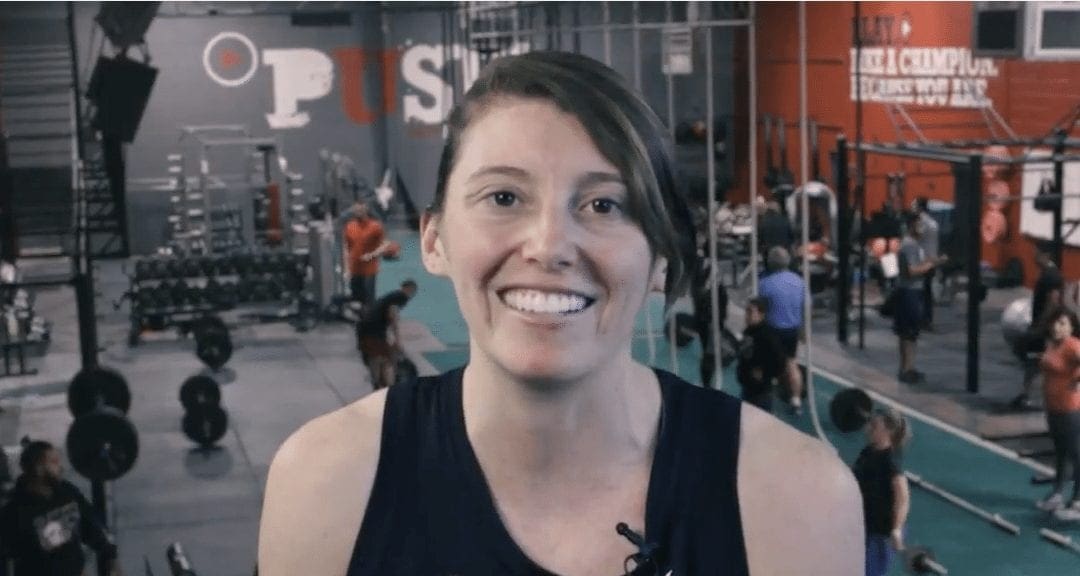
Lauren Baldwin, never felt better about herself until after she came to Push-as-Rx �. Together with her husband, they came together to Push as Rx, where they were able to bond and become stronger. Lauren Baldwin appreciates how thoughtful and encouraging the trainers are, always making sure they are safe as well as always making sure every person is achieving their goals to become the best they can be.
PUSH-as-Rx � is leading the field with laser focus supporting our youth sport programs.� The�PUSH-as-Rx � System is a sport specific athletic program designed by a strength-agility coach and physiology doctor with a combined 40 years of experience working with extreme athletes. At its core, the program is the multidisciplinary study of reactive agility, body mechanics and extreme motion dynamics. Through continuous and detailed assessments of the athletes in motion and while under direct supervised stress loads, a clear quantitative picture of body dynamics emerges. Exposure to the biomechanical vulnerabilities are presented to our team. �Immediately,�we adjust our methods for our athletes in order to optimize performance.� This highly adaptive system with continual�dynamic adjustments has helped many of our athletes come back faster, stronger, and ready post injury while safely minimizing recovery times. Results demonstrate clear improved agility, speed, decreased reaction time with greatly improved postural-torque mechanics.��PUSH-as-Rx � offers specialized extreme performance enhancements to our athletes no matter the age.
Please Recommend Us: If you have enjoyed this video and/or we have helped you in any way please feel free to recommend us. Thank You.
The primary fundraising event for UTEP Athletics, Orange Fever Fiesta, is just a few days away. This year’s event will be held on Saturday, May 20 at 6 p.m. at Grace Gardens, 6701 Westside Drive.
Presented by Western Refining and hosted by the Miner Athletic Club, Orange Fever Fiesta features dinner, dancing and entertainment, along with a live and silent auction with all monies raised supporting scholarships for UTEP student athletes.
Attendees can also go online to preregister for the event saving time at check in. They can also start building their watch list and bid on great silent auction items already available.
This event is at capacity and fans unable to attend the event can still participate through two ways. Both options are available on the Orange Fever Fiesta event site.
If attendees were able to secure tickets or simply want to participate off site, they can register their information and bid on a variety of fabulous silent auction packages via computer or smart phone. Also available is the option to donate to the Fund-An-Athlete scholarship.
The Miner Athletic Club (MAC) serves as the fund-raising arm of the UTEP Department of Athletics. The MAC’s mission is to annually raise funds to offset the departmental cost of scholarships and sport programs supporting UTEP student-athletes.
Funds are raised by the Miner Athletic Club through special events (such as Orange Fever Fiesta), annual donations, major and planned gifts, and through the donor portions of season ticket sales.
People who are genetically intolerant to lactose, the main sugar found in milk and dairy products, have lower than average vitamin D levels, according to new Canadian research.
Limiting or eradicating dairy products from the diet due to lactose intolerance has been associated with lower levels of vitamin D in the blood, according to research from the University of Toronto studying 1,495 Canadian men and women aged between 20 and 29 years old.
The researchers found that people of Caucasian origin who were genetically intolerant to lactose had lower than average levels of vitamin D.
The study, published in The Journal of Nutrition, also found people who carry a gene associated with lactose intolerance, called LCT, to be slightly shorter than those who don’t, suggesting an insufficient intake of vitamin D could limit bone growth.
The inability to digest lactose was found in 32% of Caucasian participants, 99% of East Asians, 74% of South Asians and 59% of mixed ethnicities, the study reports.
The researchers advise lactose-intolerant people to ensure they make up for the lack of vitamin D by eating other fortified foods or by adding lactose-free dairy products to their diets.
Produced by exposure to sunlight, vitamin D helps the body absorb calcium. Food sources include oily fish (salmon, trout, tuna, sardines and mackerel), calf’s liver, soy drinks and egg yolks. Hard cheeses (cheddar, edam, gouda, gruyere), in particular, contain very low levels of lactose.
Dietary sources of vitamin D and exposure to sunlight are not always sufficient to ensure healthy levels of vitamin D. In such cases, health care professionals may prescribe supplements.
Previous research has highlighted the importance of vitamin D and its role in the prevention of cardiovascular disease, cognitive decline, autoimmune disease and cancer. It is also known for its role in bone health, protecting against osteoporosis and increasing muscle mass.
Proponents of intermittent fasting contend that this popular way to lose weight is better than conventional dieting. But this type of diet isn’t necessarily best for everyone, a top expert says.
“Fasting is currently one of the newest diet fads and, while there are studies showing benefits, there are also potential downsides,” Dr. Kent Holtorf tells Newsmax Health.
A recent University of Illinois at Chicago study finds intermittent, or alternate-day fasting, was equal in results to calorie counting when it came to weight loss, along with keeping off the excess pounds.
The study, which followed 100 obese people for a year, found that those who engaged in intermittent fasting lost 6 percent of their body weight, while those who ate a calorie-restricted diet lost 5.3 percent, not a statistically significant difference, the researchers say in JAMA Internal Medicine.
Holtorf is the Los Angeles-based medical director of the Holtorf Medical Group and a founder and director of the nonprofit National Academy of Hypothyroidism. He also has appeared as a medical expert on several TV shows, including “The Today Show,” “Good Morning America,” and “ABC News.”
Here are excerpts from his recent interview with Newsmax Health.
Q: What exactly is intermittent fasting?
A: The idea is to intermittently significantly reduce calories in a strategic way to reduce overall caloric intake instead of eating less per day. One common method is called the 5:2 diet, which involves significant caloric restriction two non-consecutive days per week while eating normally the other five days.
Q: How did this type of diet catch on?
A: Several studies were published showing that severe periodic calorie reduction had been shown to have many benefits including changing gene expression and stimulating cell repair, reducing the risk of Type 2 diabetes, improving cholesterol, lowering the risk of cholesterol levels, reducing heart disease and cancer risk and even extending lifespan.
Q: What do you think of intermittent fasting for weight loss?
A: There is a large amount of research supporting the safety and efficacy of intermittent fasting. If an individual fasts for a designated period of time, weight loss is to be expected as caloric intake has been reduced; however, research finds fasting offers long-term benefits including reduction of inflammation and improvement in mood. For example, a randomized, clinical trial of 71 people who followed intermittent fasting for three months lost an average of 5.7 pounds while the weight of the control group, which didn’t alter their eating habits, lost no weight. Those in the fasting group saw a reduction in blood pressure, body fat, and waist size.
Q: What effect does intermittent fasting have on mood?
A: Going without food for 10-16 hours causes the body to release fatty acids known as ketones. According to Mark Mattson, a senior investigator for the National Institute of Aging, who has done extensive investigation on the health benefits of intermittent fasting, ketones have been shown to protect memory and learning function as well as slow disease processes in the brain. Ketones are also shown to boost the body’s formation of particular stress reducing neurotransmitters, such as serotonin and GABA, which helps you stay calm under stress and have fewer cravings.
Q: What are the drawbacks of using this type of diet for weight loss?
A: While it can be a way to jumpstart weight loss and have health benefits, studies also show that it can permanently reduce metabolism (calories burned per day). The metabolism may not go back to normal when normal eating is resumed unless steps are taken to prevent or reverse the drop in metabolism. Thus, fasting or so-called “yo-yo dieting” can contribute to long-term weight gain, wiping out the short-term health benefits of fasting.
Q: Are there any groups for which this may be a particular problem?
A: This is shown to be more of an issue for women because women’s bodies appear to perceive fasting as more of a threat of starvation and respond by lowering metabolism to survive the perceived famine. This is especially true if a woman has any signs of low thyroid, including low body temperature, depression, cold intolerance, PMS, cold extremities or suffers with fatigue.
Q: So is there any one best diet out there for everyone?
A: Studies show that most diets are successful short-term but most suffer from equal long-term failure. But thyroid evaluation and optimization, if low, can increase the likelihood of successful weight loss whether via fasting or other diet plan.
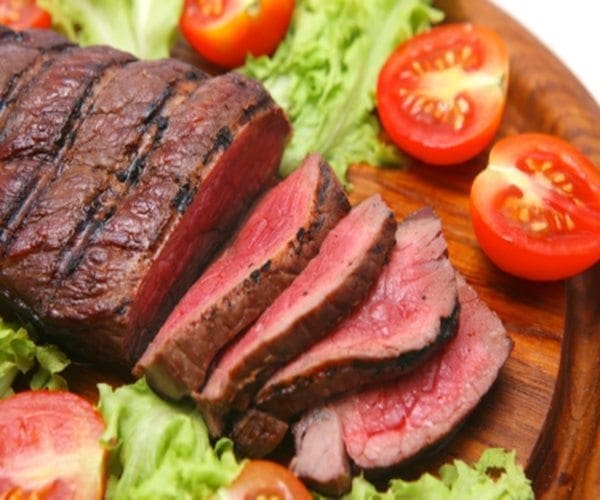
Eating red meat increases your risk of death from nine diseases, according to a new study.
Researchers tracked the diet and health of more than 536,000 people, ages 50-71, for an average of 16 years, The New York Times reported.
Compared with the one-fifth who ate the least red meat, the one-fifth who ate the most were 26 percent more likely to die from cancer, heart disease, respiratory disease, stroke, diabetes, infections, Alzheimer’s disease, kidney disease and liver disease.
People who ate the most white meat were 25 percent less likely to die from various causes than those who ate the least white meat, according to the study in the journal BMJ.
“This is an observational study and we can’t determine whether red meat is responsible for these associations. But we have a 16-year follow-up, and we had the numbers to look at different causes, and we can see that it’s happening” said lead author Arash Etemadi, an epidemiologist at the U.S. National Cancer Institute, The Times reported.
A coffee, a caffeinated and an energy soda proved a deadly combination for a South Carolina teenager who died within two hours of consuming them, triggering warnings about the risks of caffeine overdose.
Davis Allen Cripe died on April 26 from a “caffeine-induced cardiac event causing a probable arrhythmia,” the Richland County coroner’s office in the southern US state wrote in a statement.
Two hours before he collapsed, Cripe drank a cafe latte, large Diet Mountain Dew and an energy drink.
Richland County Coroner Gary Watts noted Tueday that such occurrences are “highly unusual.”
“It was mainly due to the time period that he ingested a rapid amount of caffeine that affected his heart,” Watts told The Post and Courier, adding that Cripe had collapsed just 15 minutes after taking the energy drink.
The US Food and Drug Administration recommends that adults consume no more than 400 mg of caffeine per day, which is equivalent to four or five cups of coffee.
“While adults should be mindful of their caffeine consumption, it’s important for parents to know the risks of children and adolescents consuming caffeine,” Jill Michels of the Palmetto Poison Center said in a statement.
“Take the time to talk with your children about the dangers of caffeinated drinks.”
At a news conference on Monday, the boy’s father said his son was very careful about drugs and alcohol.
However, “it wasn’t a car crash that took his life. Instead, it was an energy drink,” Sean Cripe said.
While energy drinks account for just a small segment of the non-alcoholic beverages industry, they are very popular with young people.
Health experts have expressed concern about the drinks’ high caffeine content, which can cause arrhythmia and raise blood pressure in young people.
Energy drinks can contain up to 240 mg of caffeine, according to a 2012 Consumer Reports study.
After three days of the 2017 Outdoor Conference USA Championships, the UTEP women’s team have recorded 44 points for second place, while the men have tallied 36 points for third place.
The women’s team is looking to capture their first outdoor title.
The UTEP women picked up 16 total points in two events on the afternoon: Samantha Hall defended her title in the discus throw with a toss of 54.40m (178-06) for 10 points and Fayon Gonzales launched the disc out to 46.44m (152-04) for seventh-place, adding two points. Tobi Amusan leaped out to a mark of 5.81m (19-00.75) in the long jump to finish in fifth place, garnering four team points.
2017 CUSA Track and field meet, Kidd Field El Paso Texas
On the men’s side, Brandon Moss garnered silver in the long jump with a mark of 7.44m (24-05) earning eight points. Scoring in the 3,000m steeplechase, Daniel Cheruiyot took home silver with a time of 9:02.70, followed by Cosmas Boit crossing the line in 9:15.69 for seventh place. The two combined for 10 team points.
Qualifying to Sunday’s finals were a slew of Miners. Lilian Koech and Linda Cheruiyot both crossed the finish line simultaneously with the top qualifying time of 4:35.28 in the 1,500m.
Amusan (13.07) and Rebecca Oshinbanjo (13.75) placed first and sixth in the 100m hurdles.
Florence Uwakwe (54.07) and Ada Benjamin (54.17) both qualified for the 400m final. Lilian Koech clocked 2:12.70 in the 800m for the third qualifying spot.
In the 400m hurdles, Yanique Bennett crossed the finish line with the fastest-time of 59.21.
UTEP’s Samantha Hall takes the gold medal in the Women’s Discus Throw at 2017 CUSA Track and field meet, Kidd Field El Paso Texas
Jonah Koech (3.55.67), Michael Saruni (3:55.71) and Cosmas Boit (3:57.93) each qualified for the 1,500m final. Saruni also qualified for the 800m final with a time of 1:53.87, along with teammate Jonah Koech (1:51.65).
Emmanuel Korir cruised to the 400m final with the fastest qualifying time of 46.67. James Bias qualified for both the 200m (21.26) and the 400m (47.63) final.
Sunday’s action begins at 1:00 p.m. with the men’s discus final.
For live updates and breaking news be sure to follow @UTEPTrack on Twitter and uteptrack on Instagram.
2017 CUSA Track and field meet, Kidd Field El Paso Texas
IFM's Find A Practitioner tool is the largest referral network in Functional Medicine, created to help patients locate Functional Medicine practitioners anywhere in the world. IFM Certified Practitioners are listed first in the search results, given their extensive education in Functional Medicine