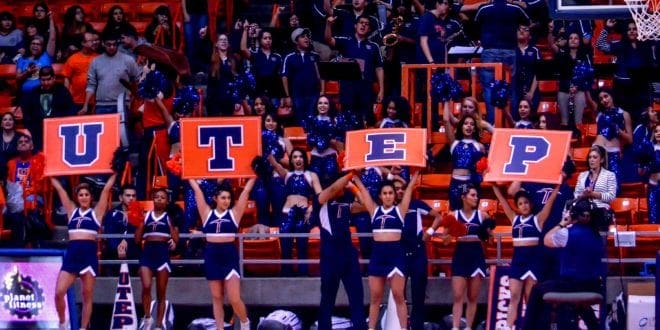
Kids of all ages are invited to sign up for the 2017 edition of the UTEP Miners Summer Camps. Officials say this year’s camps are offered for cheerleading, men’s basketball, football, soccer, track & field and volleyball.
The cheer camp is slated for July 5-8 at the Don Haskins Center. Men’s basketball has two sessions – June 19-21 (Miner Basketball Camp) and June 26-29 (Boys and Girls Camp), both at the Don Haskins Center.
Football will hold its annual Youth Camp on June 10 in the Sun Bowl. Soccer has two Advanced Camps and two Soccer & Splash Camps, both June 19-22 and July 17-20.
Track & Field will conduct a Speed and Agility Camp June 15-16 at Kidd Field. Volleyball has two Li’l Miners Indoor Camps (June 7-9 and July 13-15), two Miners Indoor Camps (June 7-9 and July 13-14), two Miner Position Camps (July 11 and July 12), and four Miners Beach Volleyball Camps (June 7–10 am and pm and July 12-15 am and pm).
Visit the UTEP Athletics Website for full details on all the camps or to sign up. Inquiries will also be accepted by phone (747-6065) or via e-mail (minercamps@utep.edu).
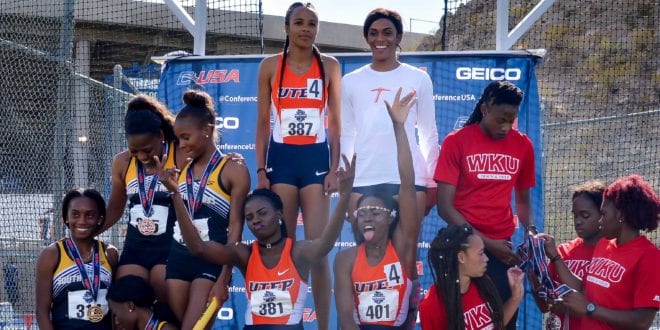
The UTEP track and field team will be sending 16 student-athletes to compete in the NCAA West Preliminaries next weekend (May 25-27) in Austin, Texas.
In order to advance to the NCAA Championships in Eugene, Ore., an athlete or relay team must finish in the top 12 at the preliminaries.
The Orange and Blue will have four athletes running the 800m race. Lilian Koech (2:04.68) and Linda Cheruiyot (4:23.60) will be representing the women’s side on Thursday starting at 7:10 p.m. CT. All-American Emmanuel Korir (1:43.73) and Michael Saruni (1:45.82) will on Thursday scheduled to start at 7:35 p.m.
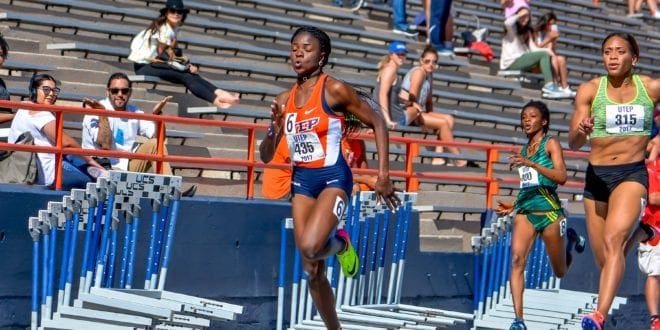
Last year’s runner up in the 100m hurdles, Tobi Amusan (12.67) will compete in the 100m hurdles on Friday at 3:30 p.m.She goes in ranked second in the west region. Senior duo, Ada Benjamin (52.87) and Florence Uwakwe (53.29) will compete in the 400m on Thursday at 3:30 p.m.
Senior Yanique Bennett (58.57) and sophomore Dreshanae Rolle (1:00.19) will take the track in the 400m hurdles, when Bennett took silver at the C-USA Championships. Distance runner, Winny Koech (33:51.31) will compete in the 10,000m run. Last week, she claimed gold in both the 5,000m and 10,000m at the conference meet.
Samantha Hall (55.17m) will compete in the discus throw. Hall claimed gold in this event at the conference meet last week.
On the men’s side, Jonah Koech (3:41.22) and Cosmas Boit (3:45.97) will take part in the 1,500m run on Thursday at 5:00 p.m. Asa Guevara (46.92) will race in the 400m at 6:45 p.m.
Karol Koncos (64.29m) will be heaving the hammer throw on Thursday at 2:30 p.m. Koncos heads into his first NCAA West Prelims ranked 18th.
Lucia Mokrasova will not be competing in the NCAA Prelims, but she has earned a spot in the NCAA Championships in the heptathlon. For the heptathlon, there is no qualifying round. The top 24 marks automatically advance to the NCAA Championships. Mokrasova (5,671 points) is the 12th best mark in the nation.
UTEP also will be sending three relay teams to the preliminaries. The women’s 4x100m (44.81) relay, the women’s 4x400m relay (3:38.56) and the men’s 4x400m relay team. The men’s team (3:06.35) heads to Austin ranked in the top 10 in the west region.
For live updates and breaking news be sure to follow @UTEPTrack on Twitter and uteptrack on Instagram.
UTEP’s sophomore Tobi Amusan was named Conference USA Female Track Performer of the Meet for her stellar showing at the conference championships, announced the league Friday afternoon.
The All-American led the Miners by scoring 24.5 points, helping the women’s team capture its first outdoor title in program history. The sprinter took gold in the 100m hurdles and 4x100m relay, silver in the 200m (22.92) and fifth place in the long jump (5.81m).
The Nigerian native, will return to the track next week at the NCAA West Regional Preliminaries in Austin, Texas. Amusan will compete in the 100m hurdles where she ranks second in the west region. She qualified by clocking a personal best of 12.63 at the UTEP Springtime earlier this year.
For live updates and breaking news be sure to follow @UTEPTrack on Twitter and uteptrack on Instagram.
Check Also
The deadline to register for one of several 2017 UTEP Volleyball Summer Camps is just …
A growing number of U.S. children may develop vision problems before they reach kindergarten, according to a study that suggests eye screenings will become increasingly important for the preschool set.
For the study, researchers analyzed data from U.S. census records and from eye exams on about 12,000 kids under 6 years old. Nationwide, researchers estimated that more than 174,000 kids from 3 to 5 years old had vision impairment as of 2015 and projected that their ranks will swell by 26 percent to more than 220,000 by 2060.
Most of these kids have what’s known as refractive errors, or difficulties focusing on things either up close or far away, that can be often be corrected with glasses. This means parents should take kids for at least one comprehensive eye exam by age 3 and watch for signs of vision issues, said lead study author Dr. Rohit Varma, director of the Roski Eye Institute and dean at the Keck School of Medicine at the University of Southern California in Los Angeles.
“Parents should watch out for signs such as sitting close to the TV or holding a book too close, squinting, tilting their head, frequently rubbing their eyes, short attention span for the child’s age, turning of an eye in or out, sensitivity to light, difficulty with eye-hand-body coordination when playing ball or bike riding, or avoiding coloring activities, puzzles and other detailed activities,” Varma said by email.
“If children display such symptoms or behaviors then they should certainly get an eye examination,” Varma added.
Hispanic children were most likely to have vision problems, researchers report in JAMA Ophthalmology. As of 2015, Hispanic kids accounted for 38 percent of vision impairment cases, and researchers estimated this proportion would climb to 44 percent by 2060 aided by higher birth rates in this population relative to other racial and ethnic groups.
Based on changing demographics across the country, the second most-affected group is expected to shift from non-Hispanic white kids, who represented 26 percent of cases in 2015, dropping to 16.5 percent in 2060, to African American kids, representing 25 percent of cases in 2015 and 22 percent in 2060, according to the researchers.
The states projected to have the most children with vision impairment by 2060 are California, Texas and Florida, all of which have large Hispanic populations.
Overall, the types of vision problems found in kids are projected to remain little changed by 2060, however.
Refractive errors will make up about 70 percent of cases by 2060, followed by amblyopia, or lazy eye, accounting for 24 percent. About 6 percent of cases will result from eye disease.
One limitation of the study is the reliance on census records with self-reported data on race and ethnicity, the authors note. Researchers also assumed the prevalence of impaired vision within different racial and ethnic groups would not change over time, so increases and decreases are based just on population changes.
Still, the findings should serve as a reminder to parents not to wait to get children’s eyes checked until kids complain about their vision, said Dr. Janet Leasher of the Nova Southeastern University College of Optometry in Fort Lauderdale, Florida.
“Many children don’t know that the way they see may not be normal, and the only way to find out is to have them assessed by a qualified eye care professional,” Leasher, who wasn’t involved in the study, said by email. “There are pediatric ophthalmologists and optometrists who specialize in children’s vision, but any eye doctor can conduct the tests necessary to determine if there is a problem.”
As warm weather approaches, U.S. health officials are warning that outbreaks of diarrhea caused by swallowing swimming pool water containing parasites have doubled in the past few years.
The infections occur when swimmers ingest water contaminated by diarrhea from a person infected by Cryptosporidium or Crypto, a parasite that is notoriously difficult to kill.
Crypto caused at least 32 outbreaks in swimming pools or water parks in 2016, compared with 16 in 2014, according to a report published in the U.S. Centers for Disease Control and Prevention’s weekly report on death and disease.
Arizona last year reported that 352 people became sick with Cryptosporidiosis from July through October, compared with no more than 62 cases per year from 2011 to 2015. Ohio reported 1,940 infections in 2016, compared with no more than 571 in any one year from 2012 to 2015.
The CDC said it was not clear if there are actually more outbreaks, or if states are doing a better job of reporting them since it introduced a new DNA-based tracking tool in 2010.
Crypto is the most common cause of diarrhea outbreaks linked with swimming pools or water parks because it can survive up to 10 days in chlorinated water. It only takes a mouthful of contaminated water to make a healthy person sick for up to three weeks. Infections can cause watery diarrhea, stomach cramps, nausea or vomiting, and can lead to dehydration.
To kill the parasite, the CDC recommends closing pools and treating the water with high levels of chlorine, called hyperchlorination.
The CDC advises parents not to let children swim if they have diarrhea. People who are infected with Crypto should wait two weeks after the diarrhea stops before swimming. And to keep from getting sick, the CDC advises swimmers not to swallow pool water.
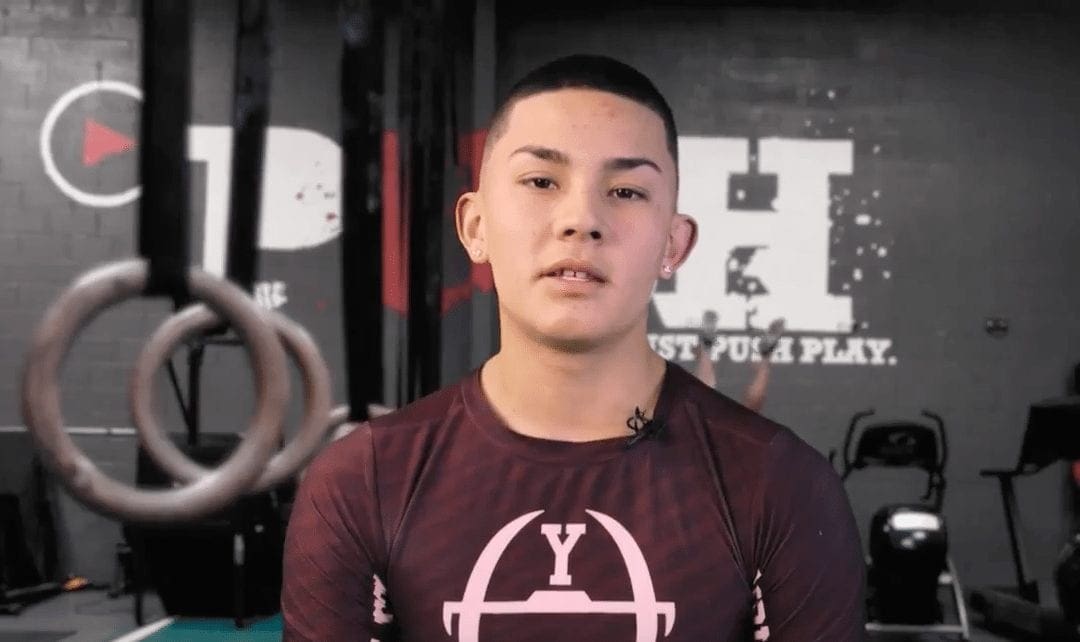
Gino Martinez was motivated to come into Push-as-Rx � by none other than his trainer and uncle, Mike Quinones. Gino’s drive to become a better athlete also motivated him to come to Push as Rx and he’s been able to accomplish many of his personal goals so far. Ever since pushing himself further to train, Gino Martinez has seen considerable improvements in his performance.
PUSH-as-Rx � is leading the field with laser focus supporting our youth sport programs.� The�PUSH-as-Rx � System is a sport specific athletic program designed by a strength-agility coach and physiology doctor with a combined 40 years of experience working with extreme athletes. At its core, the program is the multidisciplinary study of reactive agility, body mechanics and extreme motion dynamics. Through continuous and detailed assessments of the athletes in motion and while under direct supervised stress loads, a clear quantitative picture of body dynamics emerges. Exposure to the biomechanical vulnerabilities are presented to our team. �Immediately,�we adjust our methods for our athletes in order to optimize performance.� This highly adaptive system with continual�dynamic adjustments has helped many of our athletes come back faster, stronger, and ready post injury while safely minimizing recovery times. Results demonstrate clear improved agility, speed, decreased reaction time with greatly improved postural-torque mechanics.��PUSH-as-Rx � offers specialized extreme performance enhancements to our athletes no matter the age.
Please Recommend Us: If you have enjoyed this video and/or we have helped you in any way please feel free to recommend us. Thank You.
Recommend: PUSH-as-Rx ��915-203-8122
Facebook: https://www.facebook.com/crossfitelpa…
PUSH-as-Rx: http://www.push4fitness.com/team/
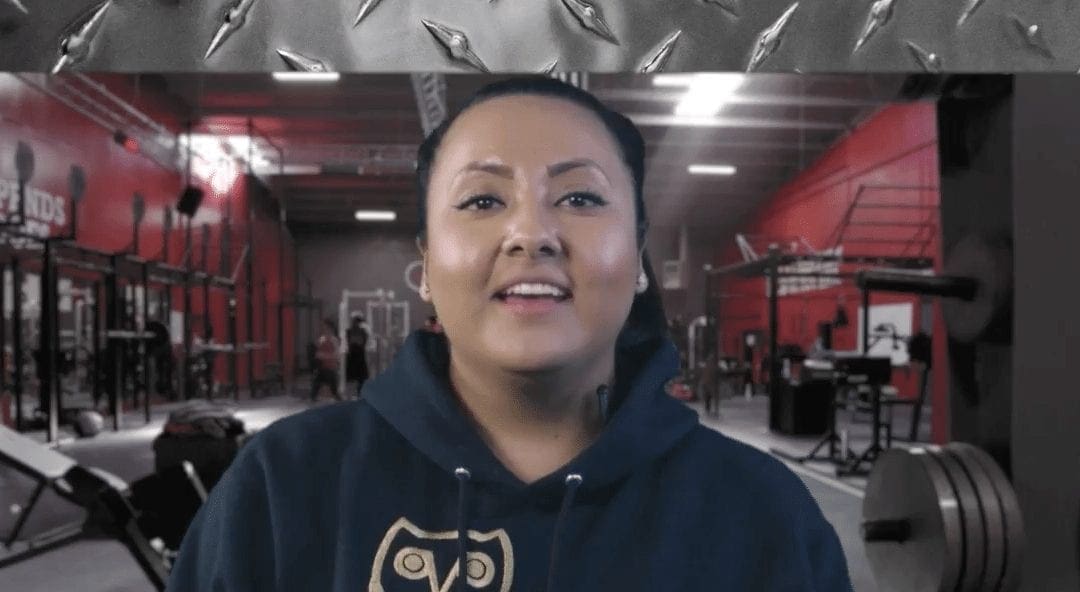
Charlie Quiroga realized she needed to make a change in her lifestyle. She was in need of improving her health and the environment at Push-as-Rx � greatly helped her, motivating and encouraging her to keep going. The trainers at Push as Rx personally mean a lot to Charlie Quiroga. She appreciates how the trainers push her to reach her goals by keeping her focused with every aspect of fitness.
PUSH-as-Rx � is leading the field with laser focus supporting our youth sport programs.� The�PUSH-as-Rx � System is a sport specific athletic program designed by a strength-agility coach and physiology doctor with a combined 40 years of experience working with extreme athletes. At its core, the program is the multidisciplinary study of reactive agility, body mechanics and extreme motion dynamics. Through continuous and detailed assessments of the athletes in motion and while under direct supervised stress loads, a clear quantitative picture of body dynamics emerges. Exposure to the biomechanical vulnerabilities are presented to our team. �Immediately,�we adjust our methods for our athletes in order to optimize performance.� This highly adaptive system with continual�dynamic adjustments has helped many of our athletes come back faster, stronger, and ready post injury while safely minimizing recovery times. Results demonstrate clear improved agility, speed, decreased reaction time with greatly improved postural-torque mechanics.��PUSH-as-Rx � offers specialized extreme performance enhancements to our athletes no matter the age.
Please Recommend Us: If you have enjoyed this video and/or we have helped you in any way please feel free to recommend us. Thank You.
Recommend: PUSH-as-Rx ��915-203-8122
Facebook: https://www.facebook.com/crossfitelpa…
PUSH-as-Rx: http://www.push4fitness.com/team/
IFM's Find A Practitioner tool is the largest referral network in Functional Medicine, created to help patients locate Functional Medicine practitioners anywhere in the world. IFM Certified Practitioners are listed first in the search results, given their extensive education in Functional Medicine