It is very well known that spices and herbs have a great many positive healthy qualities. But often we get confused as to how many, how much and which of the ingredients we must use as a supplement to boost our body.
We have zeroed in on three basic but power house spices from your kitchen that can help you stay healthy. It goes without saying that in today�s times of excessive pesticide use, using organic varieties of these spices is the best and only way to go.
Ginger
Ginger root, which is a staple in every Indian Kitchen can work many wonders.
Ginger has been known for over two thousand years as a medicinal herb effective in treating digestive problems, nausea, hangover and gases. Modern studies have found that it is effective in the treatment of vomiting, protects the gastric mucosa and improves inflammatory conditions.
Turmeric
Turmeric has anti-aging, antioxidant, anti-inflammatory properties. Curcumin is the magical substance, which gives turmeric its golden color and its many health benefits. Pure extracts of Curcumin are also available in the market these days.
Many studies have revealed that turmeric has low absorption and rapid metabolism. This helps in cleansing your system of toxins and also to help in absorption of nutrients. it is a front runner for fighting infections.
Cinnamon
Cinnamon is one of the most versatile spices of all. With its sweet and spicy notes, it is a favourite that can be easily used for a wide variety of preparations. This spice is also very high on antioxidants and can help with heart health, fights diabetes and protects brain function.
It is great as a mouth freshener.
A simple drink can be made using a teaspoon full of each of these ingredients mixed with a cup of hot water. Adding a drop of honey and a squeeze of lime makes it even better. You can use ether the powdered version of the spices or them fresh and grate them as per your requirements.
Other than consuming it as a drink, you can incorporate a pinch of each spice in almost everything you cook. Get creative and think about using more of these ingredients in your salads and even smoothies.
Once a day, right at the start of the day, having a cup of this booster will make your body thankful to you.
The scope of our information is limited to chiropractic and spinal injuries and conditions. To discuss options on the subject matter, please feel free to ask Dr. Jimenez or contact us at 915-850-0900 .
Additional Topics: Lower Back Pain After Auto Injury
After being involved in an automobile accident, neck injuries and aggravated conditions, such as whiplash, are some of the most commonly reported types of injuries, due to the force of the impact. A study discovered, however, that the seat of a vehicle can often lead to injuries as well, causing lower back pain and other symptoms. Lower back pain is also among one of the most common types of automobile accident injuries in the U.S. alone.
When the weather starts getting warmer, most of us immediately ramp up our ab and glute exercises. But what about your arms? Here, Health’s contributing fitness editor Tracy Anderson demonstrates a challenging arm workout you can do anywhere—no equipment necessary.
Tracy notes that the key to strong arms is all about working different parts, not just isolated areas. These bodyweight exercises offer incredibly challenging resistance to get your shoulders, biceps, and triceps in shape for summer. Watch this video to see six of Tracy’s favorite arm-sculpting moves.
No time to watch? Here’s a breakdown of the workout:
Move 1: Start by lying on the ground. Push up into a plank position, then twist your body, creating an award pushup position. Press back up into a full plank and extend your top leg. Lower your body down and extend your leg up again. Do this 30 times. You’re going to start to feel your back arm really working, because you’re twisting your body weight to the back arm, while the front one is just stabilizing. Be sure to do both sides.
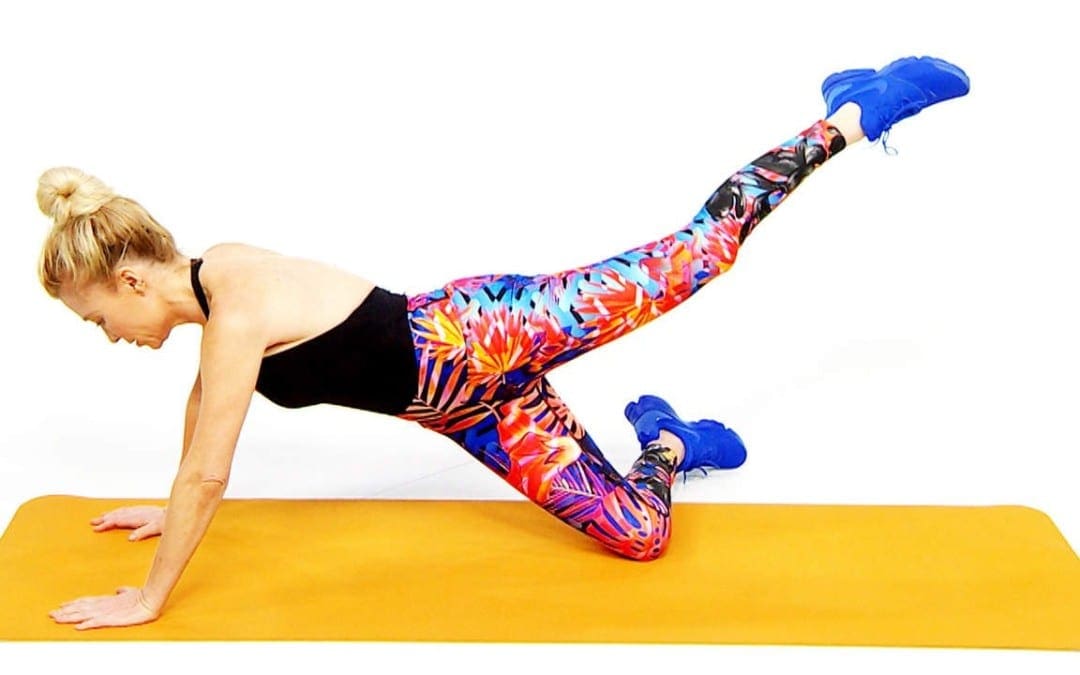
Move 2: Get into a full plank position, then straighten one leg to the back. Lift one leg and dangle your knee. Tuck it in towards your chest, then cross it over your other leg, and extend your leg into the air behind you.
Move 3: Get into a plank position. Alternate bringing your knees underneath your body, crossing diagonally, and tapping your knee with the opposite hand. Use your arms to stabilize yourself during this move.
Move 4: Get into a tabletop position. Reach one arm into the sky while pushing your hips up. Twist your body down into a high plank, then press your outside leg up into the air.
Move 5: Get into a plank position. Bend your knee and rest your outer leg on the ground in a twisted position. From here, lift your knee up and extend it out behind you. Keep twisting, lowering, and lifting for 30 reps.
Move 6: Get into a wide leg plank. Lower down to one forearm, then switch to the other. Next, energetically push your body back up using just one arm.
It’s no secret that sitting at a desk all day isn’t good for you. A sedentary lifestyle can lead to weight gain, which may then lead to a host of other issues. Research has shown that sitting too much throughout the day can lead to a number of different health problems, including obesity, heart problems, and diabetes.
However, there are things you can do to offset the health risks of sitting at your desk, such as getting up to take frequent walks. But even if you can’t leave your chair, there are even plenty of movement exercises you can do right from your desk, such as chair yoga. You could also take advantage of the time to work on some mobility training—a form of exercise that focuses on improving your stability, range of motion, and loosening your muscles so you can perform better during any workout.
Frank Baptise, founder of Frankly Fitness, is a big fan of mobility training as an effective way to help promote healthy joints, balance, and flexibility in your body. Here, he demonstrates six simple yet effective moves to try at your desk. All you need is a stress ball and a desk chair!
Don’t have time to watch? Here’s a quick rundown of Baptiste’s go-to mobility moves:
Feeling stressed? On any given day, you’re likely bombarded with many different stress-inducing situations. Perhaps it’s a challenging project at work, a fight with your partner, or just someone who unapologetically bumped into you on the street.
Life is filled with challenges and frustrations like these. But the good news is there are plenty of smart strategies that can help you refocus your energy so you feel calm and peaceful instead of frazzled. Take meditation and mindfulness, for example—both practices are all about checking in with yourself and filtering stress out of the mind. And if meditation isn’t your thing, exercise is also a great way to help release your daily frustrations and send a healthy dose of feel-good endorphins to your brain.
Better yet, combine two of these mindful practices: meditation and exercise. Yoga is perfect for this, especially if it’s a calming flow that can quiet your mind while simultaneously strengthening your muscles. By forcing you to pay close attention to your breath, yoga helps stop your racing thoughts.
Watch this video for a calming 10-minute yoga flow from Kirby Koo of Yoga With Kirby. It focuses on the importance of your breath, so you can calm your mind and banish stress.
Anyone who struggles with back pain knows how distressing it can be. Whether it�s soreness that impedes your sleep or aches that hurt your productivity while you sit at your desk at work, back pain is hard to ignore no matter what position you�re in.
The good news? Yoga can be a surprisingly helpful remedy. In this video, yoga expert and Retox author Lauren Imparato takes you through a 20-minute yoga flow designed to soothe and prevent back pain. Yes, please!
�How you sit, how you sleep, something you ate, how you moved,� can all contribute to upper or lower back issues, Imparato explains. And while treatment options do exist�such as massage and acupuncture�studies have shown that yoga may actually be more effective than these and other alternatives. Research from the Annals of Internal Medicine found that people with chronic lower back pain saw more improvement of their symptoms after a 12-week yoga class compared to those who only received medicine or physical therapy to treat their pain.
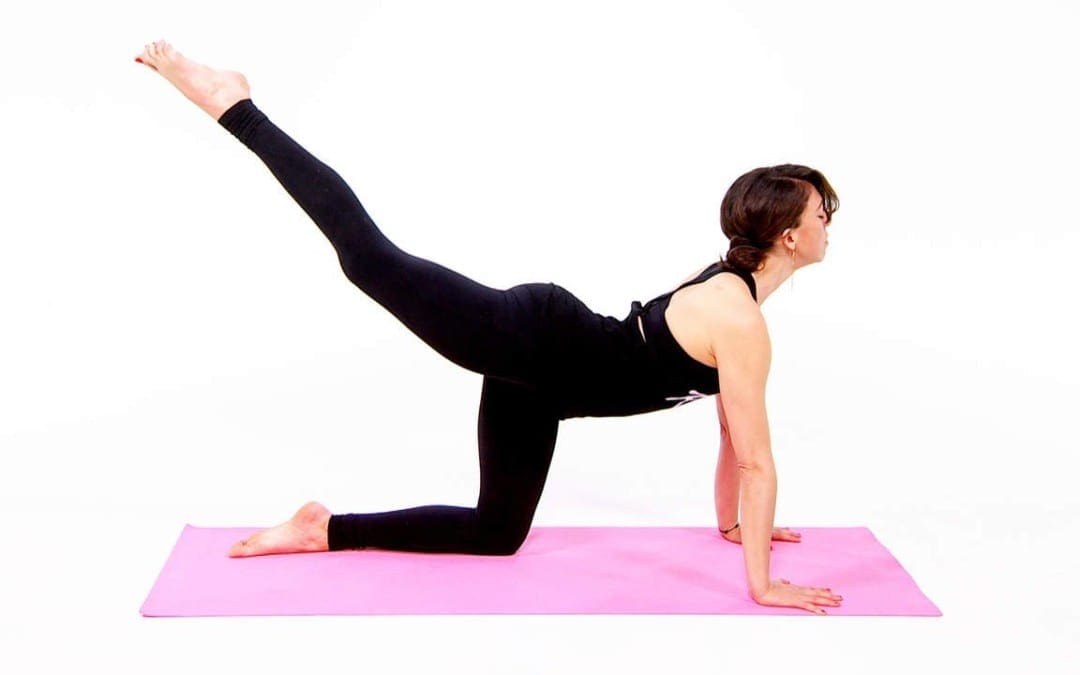
Want to experience the same relief? In this video, Imparato will first help you release tightness and tension in your back by guiding you through classic stretches like cat and cow. Next, she�ll show you how to do a quick, equipment-free flow that works to stabilize the spine and strengthen the muscles in your core that support it. (Hi, toned abs!) Watch the clip above for a yoga routine that not only reduces back pain but crafts long, lean muscle at the same time.
Also check out our sister company: Best Yoga Routines for Sleep. �This is a great article that helps you doze off…. WAY Better…
This is a partial workout. You can find the rest of the moves at Life by Daily Burn.
When you look at a slam ball, leg and glute exercises may not be the first thing that comes to mind. But incorporating this soft weighted ball into your booty routine will work your lower half hard. Weak hamstrings, glutes and hips can lead to knee and back pain. So if you’re looking for a way to strengthen these muscles, while building power, the slam ball can kill two birds with one big, squishy ball.
Gerren Liles, PROJECT by Equinox master trainer and Reebok ONE Elite ambassador likes to use it for a quick leg workout. “The slam ball is a simple tool that allows you to move in multiple dimensions and directions, and can serve as a load to develop strength and power,” Liles says.
In addition to tightening and toning, the slam ball creates an unstable environment that forces your body to work harder to balance weight. (Stability challenge, anyone?) And because you’ll move in different planes of motion, you’ll work your core, legs and arms, too.
“The ball can be used as a prop to challenge your stability, as you’ll see in the Bulgarian squat and soccer tap drill. It can also be used as a form of resistance in the squat with front push and hamstring curls,” Liles explains. Check out just how versatile this space-efficient piece of equipment can be in the six exercises below.
6 Slam Ball Exercises That Build Lower-Body Strength
These moves will not only blast your lower half, they’ll help improve your ankle mobility, agility and reflexes. Add some intensity, and they’ll get your heart rate up, too, Liles says. Do 8 to 10 reps of each exercise for two sets.
GIFs: Tiffany Ayuda / Life by Daily Burn
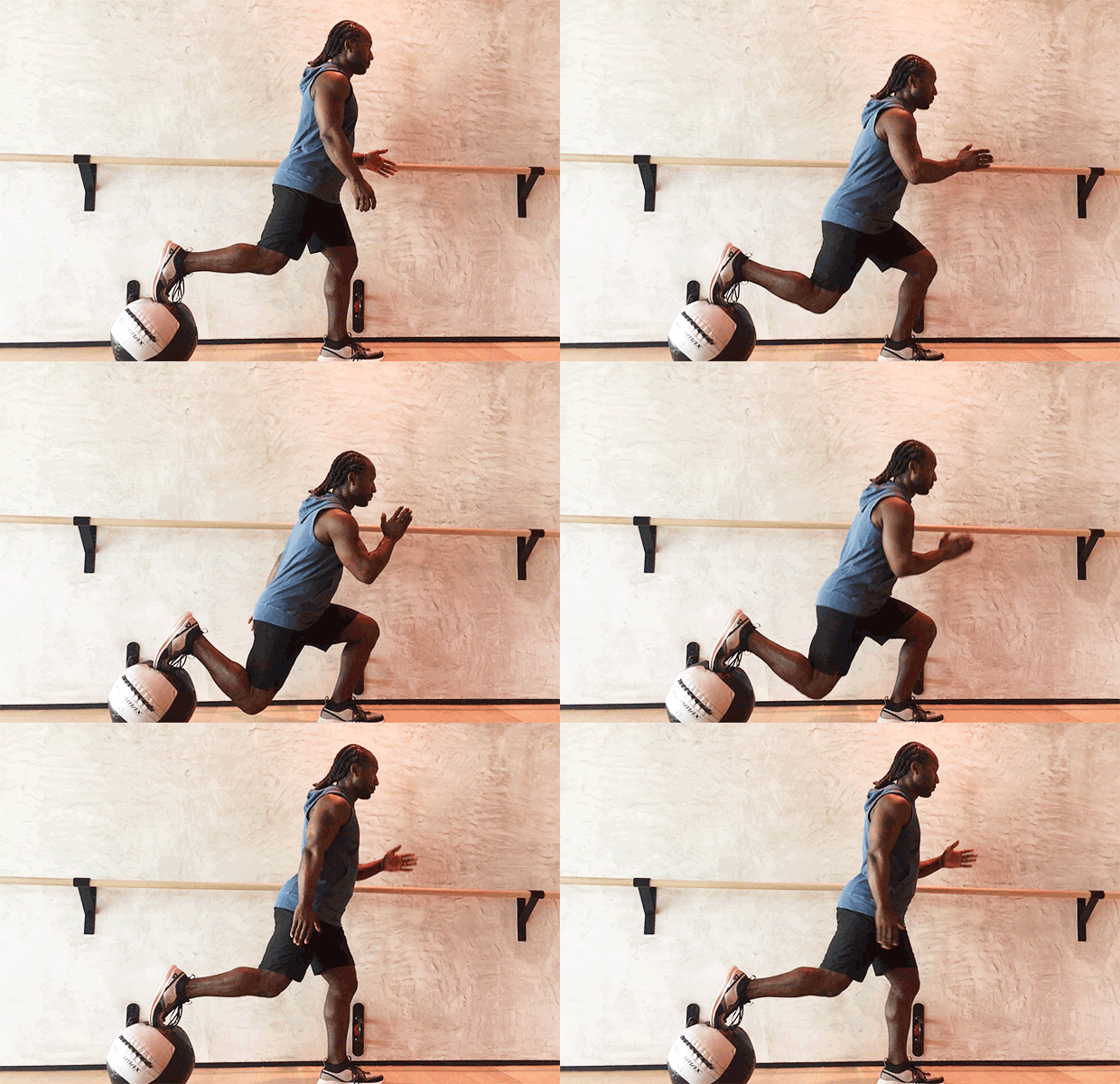
1. Bulgarian Squat
This variation of the squat challenges your balance. To keep your foot from rolling off the ball, engage your core so you can move with more control, Liles says.
How to: Stand with your feet together in front of a slam ball. Step your right foot back and place your toes on top of the ball (a). Keeping your weight in your left heel, slowly lower your body into a lunge, bending your right knee towards the floor. Your left knee should form a 90-degree angle to the floor. Be sure your left knee is stacked above your ankle (b). Straighten both legs and return to standing (c).
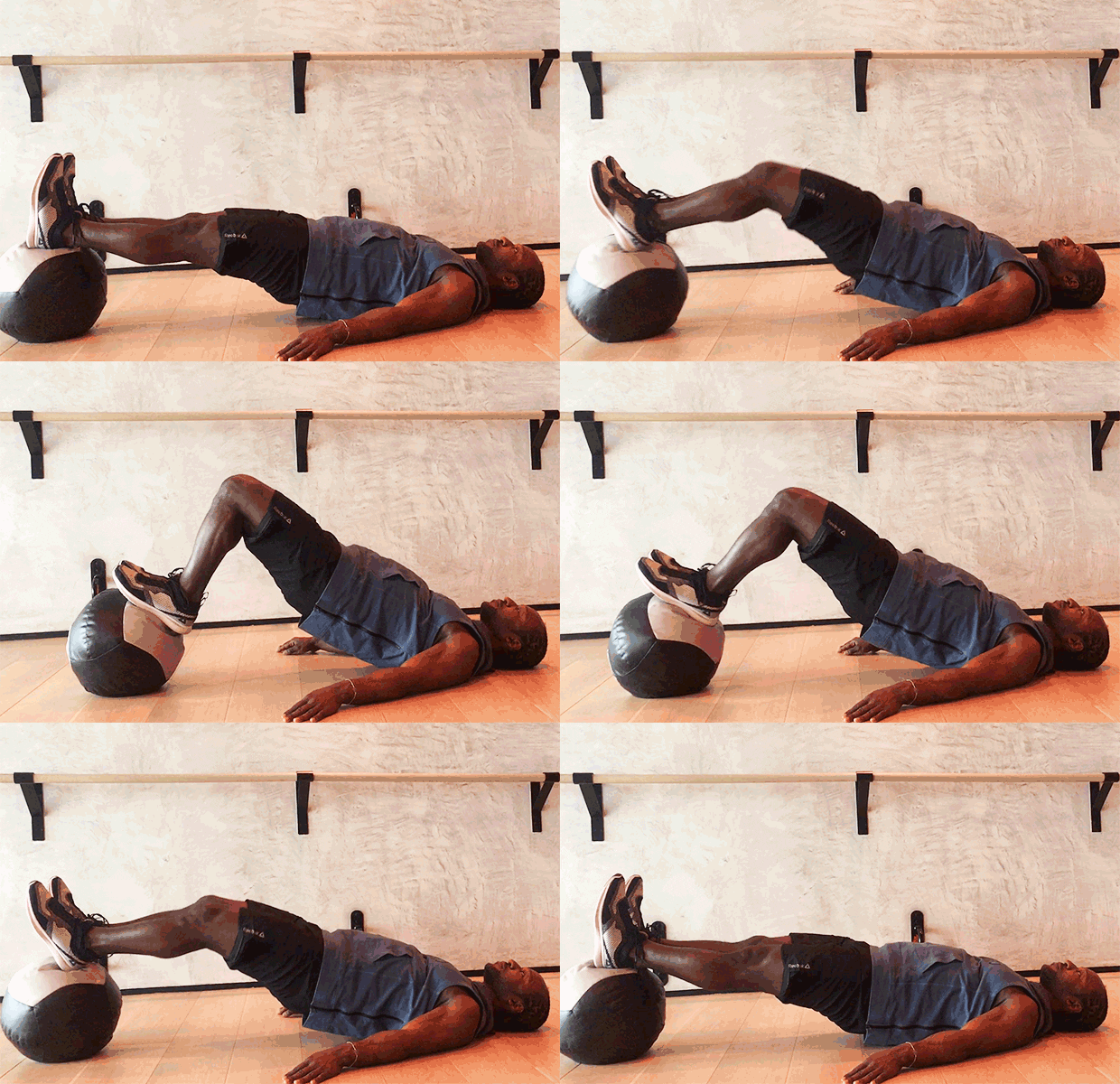
Take your glute bridges to the next level with this variation that also strengthens your hamstrings. The lack of surface area on the ball is an added challenge to making the movement slower.
How to: Lay on your back with your hips lifted off the floor and your calves and heels on top of the ball. Plant your hands on the floor at your sides (a). Draw your heels in toward your butt with control, bending your legs. Your hips should elevate even higher as you squeeze your glutes to bring your heels in (b). Slowly extend your legs back out to the starting position (c).
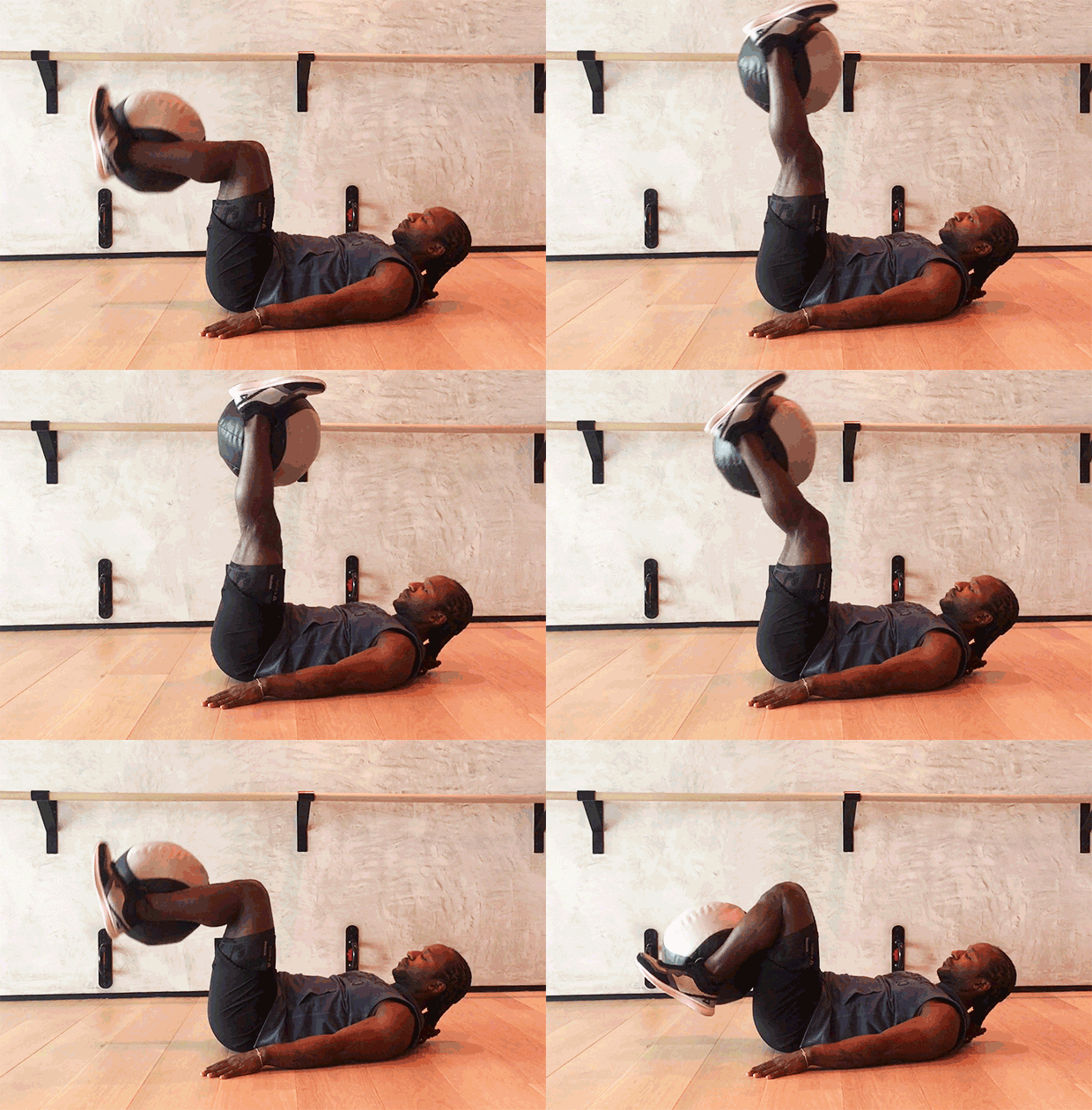
3. Lying Quad Extension
Your quads, hamstrings and glutes are some of the biggest muscles groups in your body. This simple move fires up all three, helping you torch more calories per workout.
How to: Lie flat on your back and place the ball between your calves with your knees bent. For an added core challenge, you can lift your head off the floor and bring your chin towards your chest (a). Without moving your hips, bring your legs straight up towards the ceiling (b). Then, bend your knees until the ball touches the back of your legs. Remember to press your low-back into the floor throughout the entire movement (c).
When your metabolism is running like a well-oiled machine, your body is working for you. Not only can it make maintaining (or losing) weight a little easier, but maximizing your system’s calorie-burning engine will also help you feel more energetic, active, and alive. To figure out how to get it to that happy place, incorporate these everyday eating and exercise habits into your regular routine.
Do more heavy lifting
It’s so easy to glance at the “calories burned” figure on the cardio machine and then add more time to your workout to make the number higher. But if you want your metabolic furnace to burn hotter during the day, you’re going to need to add muscle. “Muscle burns more calories than fat,” says Alissa Rumsey, RD, CSCS, author of Three Steps to a Healthier You. She advises fitting in a total-body strength workout two to three times per week, using a weight that’s heavy enough to make the 10th rep very difficult.
You already know that cranking your metabolism means filling your dinner plate with quality protein (in the form of lean meats, eggs, fish, legumes, and yogurt). Thing is, it’s easy to get that chicken breast or piece of salmon in at dinner. What’s harder is remembering to eat a high-protein meal at breakfast and lunch, says Rumsey, when you’re typically on the go and too rushed to do much more than grab a piece of fruit or carb-heavy sandwich.
Getting good protein in the a.m. and p.m. “will also help you maintain and build muscle as long as you consume it before and after regular weight training workouts,” she says. Plus, research suggests that your body works harder to break down and process calories from protein than from fat or carbs, resulting in a slight bump in metabolism. And don’t forget, protein promotes satiety. You’ll feel fuller and burn more calories breaking it down. Double win.
Dial back your work stress
No one has to tell you that chronic stress is unhealthy. But stress at work is especially detrimental. One study of women with a history of mood disorders in the journal Biological Psychiatry found that those who experienced extra stress during the workday burned 104 fewer calories in response to a higher-fat meal compared to women who were not stressed. As the researchers discovered in a later study, stress can change the way your body metabolizes fats, even reducing the benefits of eating a healthy meal.
Snack before bedtime
You heard that right—it’s time to consider disregarding all those warnings about not eating after 8 p.m. “Conventional wisdom says that food you eat right before bed will sit in your stomach all night long, which will result in packing on the pounds,” says Cassie Bjork, RD, author of Why Am I Still Fat?. Instead, the right bedtime snack “will actually boost your metabolism by keeping your blood-sugar levels stable, which allows your pancreas to secrete the fat-burning hormone glucagon,” she says.
Sleep may be the last thing on your to-do list, yet it deserves priority status, and here’s one out of a million reasons why. Not getting enough rest has a disastrous effect on your metabolism, prompting you to misread your system’s hunger cues and revving your appetite. As one study suggests, this appetite boost happens when your body calls for extra calories to fuel the additional time you’re awake—and that leads you to overeat. The National Sleep Foundation recommends adults snag seven to nine hours of shuteye per night. Give it a try tonight.
Maybe you put in your 45 minutes of daily heart-pumping exercise on the regular. But if you spend the rest of the day with your butt planted firmly in a chair, you’re keeping your metabolism in stall, says Rumsey. “It’s important to move as much as possible,” she says, not just because movement burns calories but because it keeps your metabolism on high.
So make an effort to get up and stand at your desk, head outside to eat lunch and then taking a stroll, or walk or down the stairs when possible. Moving more during the day, even if you’re just heading down the halls of your office or taking the long route to the parking lot where you left your car, will keep your metabolism running, she says.
Stop counting calories
“People often think that restricting calories boosts metabolism, but this does the complete opposite,” says Bjork. Here’s why: calories are the energy that fuels your body and helps your metabolism run efficiently. Take in too few, and you’ll start to feel fatigued and hangry. Ensuring that you’re filling up your plate with lean protein (like fish or meat), healthy fats (avocado, olive oil, almond butter), and lots of fruits and veggies will deliver high-quality, nutritionally dense calories to your body. That helps your metabolism run optimally, in turn burning calories rather than conserving them.
IFM's Find A Practitioner tool is the largest referral network in Functional Medicine, created to help patients locate Functional Medicine practitioners anywhere in the world. IFM Certified Practitioners are listed first in the search results, given their extensive education in Functional Medicine