For individuals trying to achieve healthy posture, could using posture awareness training be effective in treatment and prevention?
Posture Awareness
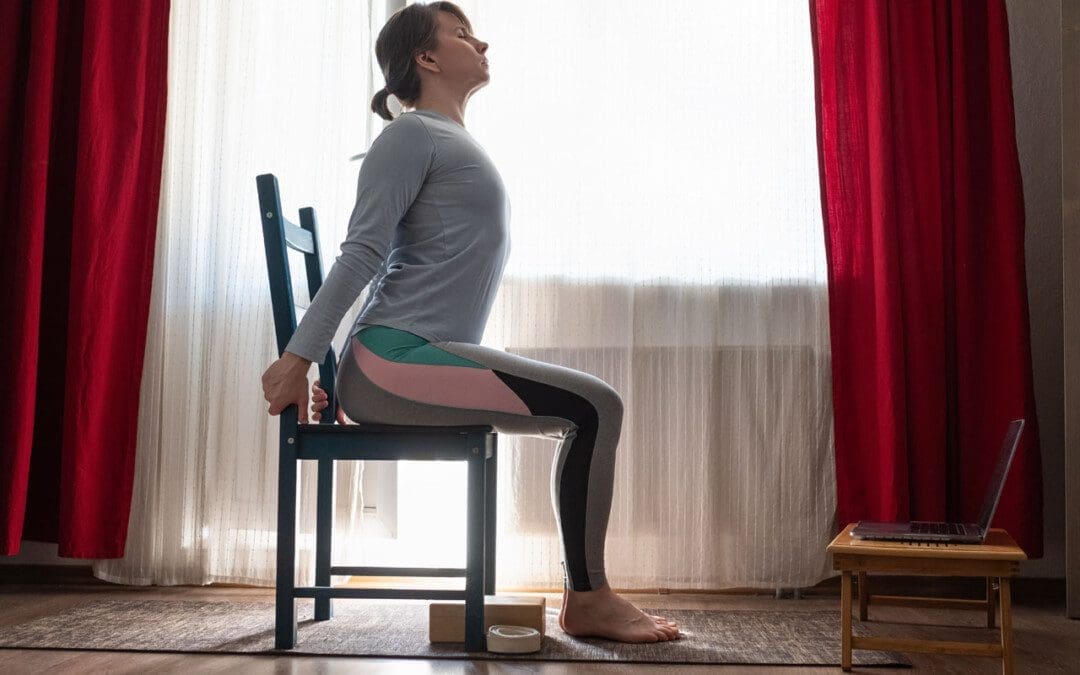
Spinal curves help support the body’s weight, movement, and balance. Five areas include the neck, upper back, lower back, sacrum, and coccyx. The bottom of the spine or sacrum rests between the two hip bones that comprise the pelvis. Because of this location, the movements made with the pelvis significantly affect the spine. (Ibrahim Alkatout, et al., 2021) When the pelvis moves, the spine moves.
Posture-related back pain and associated symptoms are often caused by a weakened strength and flexibility ratio between the opposing muscle groups that hold the body upright.
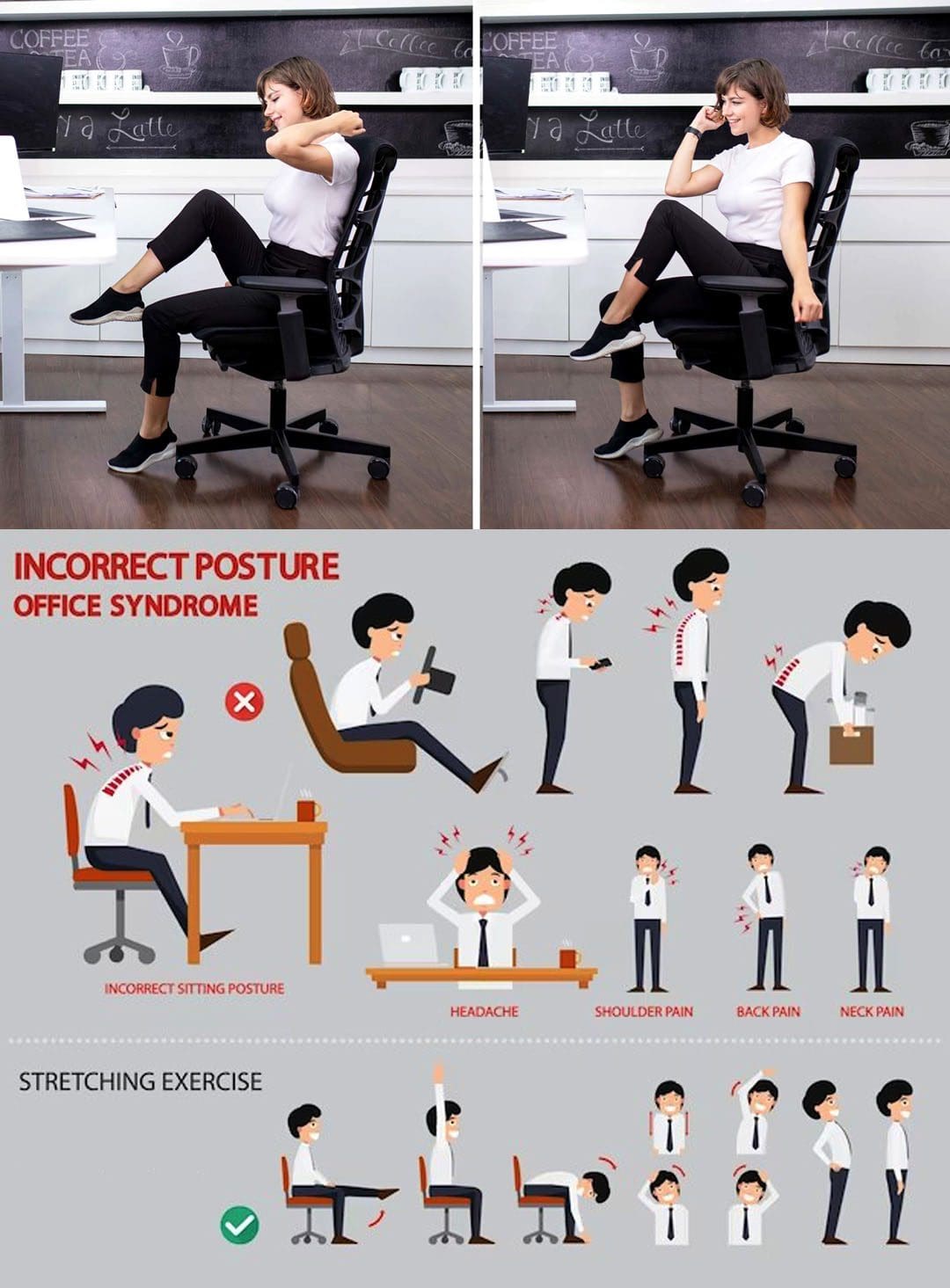
Achieving healthy posture requires technique and consistent practice for maintaining a healthy pelvis and low back curve. (DeokJu Kim, et al., 2015)
Finding the low back curve and exploring how it responds when moving the pelvis is important to effective posture awareness training.
Kim, D., Cho, M., Park, Y., & Yang, Y. (2015). Effect of an exercise program for posture correction on musculoskeletal pain. Journal of physical therapy science, 27(6), 1791–1794. https://doi.org/10.1589/jpts.27.1791
Alkatout, I., Wedel, T., Pape, J., Possover, M., & Dhanawat, J. (2021). Review: Pelvic nerves - from anatomy and physiology to clinical applications. Translational neuroscience, 12(1), 362–378. https://doi.org/10.1515/tnsci-2020-0184
Żurawski, A. Ł., Kiebzak, W. P., Kowalski, I. M., Śliwiński, G., & Śliwiński, Z. (2020). Evaluation of the association between postural control and sagittal curvature of the spine. PloS one, 15(10), e0241228. https://doi.org/10.1371/journal.pone.0241228
Zemková, E., & Zapletalová, L. (2021). Back Problems: Pros and Cons of Core Strengthening Exercises as a Part of Athlete Training. International journal of environmental research and public health, 18(10), 5400. https://doi.org/10.3390/ijerph18105400
Individuals with fixed sagittal imbalance, a condition where the normal curve of the lower spine is greatly reduced or absent altogether that can cause pain and difficulty balancing. Can chiropractic treatment, physical therapy, and exercise help improve the condition?
Fixed Sagittal Imbalance
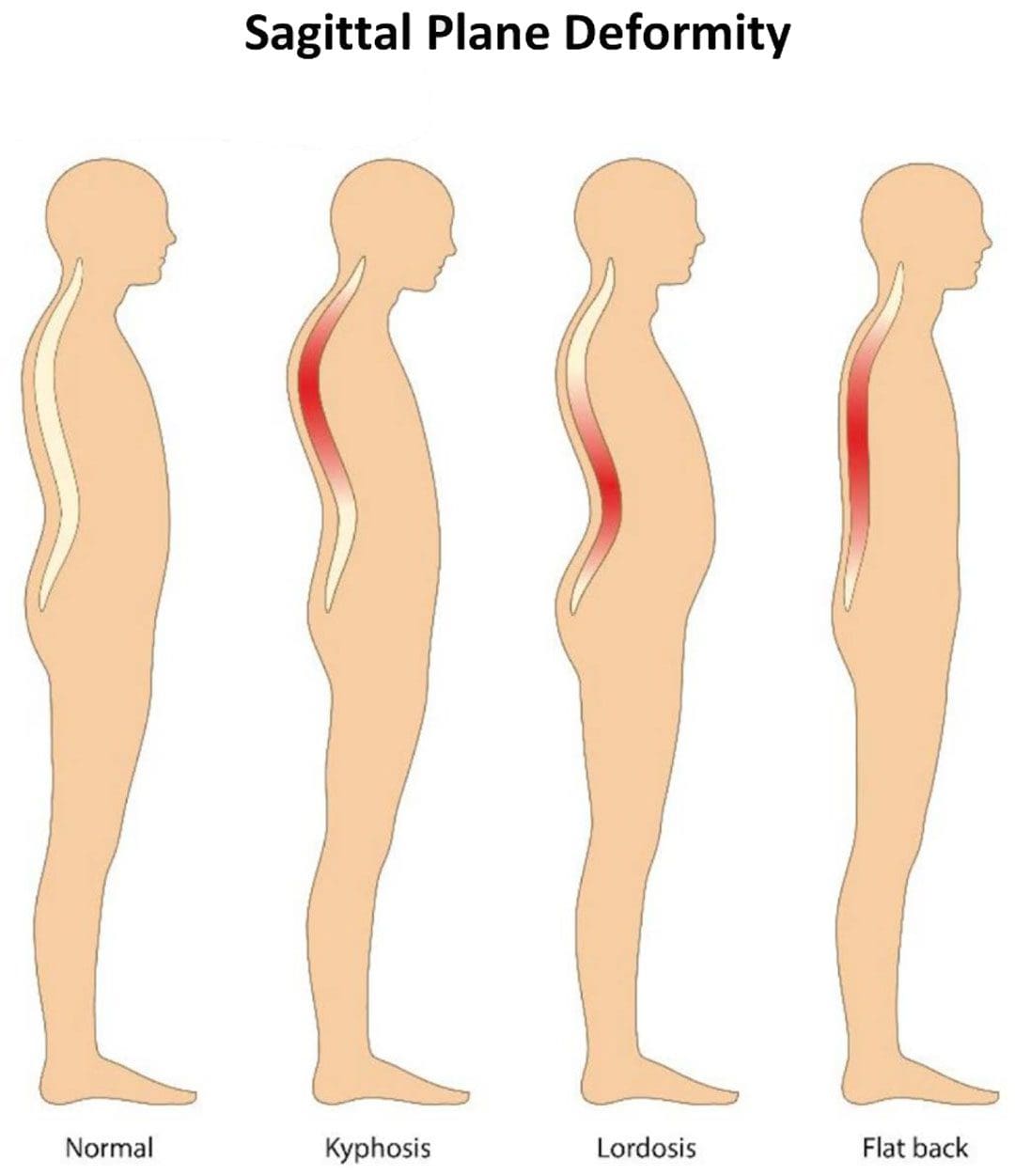
The condition is commonly known as flat back syndrome and can be present at birth or can happen as a result of surgery or a medical condition.
Individuals with flat back syndrome position their head and neck too far forward.
A major symptom is difficulty standing for long periods of time.
Symptoms
The spine has two curves. The lumbar spine in the lower back and cervical spine in the neck curve inward. The thoracic spine in the upper back curves outward. The curves are part of the spine’s natural alignment. They help the body balance and maintain the center of gravity.
If these curves begin to disappear the body can have trouble and difficulty standing up straight.
The loss of curvature causes the head and neck to pitch forward, making it hard to walk and do regular normal activities.
A chiropractor and/or physical therapist can recommend exercises and other forms of treatment. (Won-Moon Kim, et al., 2021)
Life-Changing Chiropractic Relief
References
Columbia University Irving Medical Center. Flatback syndrome.
National Health Service. Common posture mistakes and fixes.
Lee, B. H., Hyun, S. J., Kim, K. J., Jahng, T. A., Kim, Y. J., & Kim, H. J. (2018). Clinical and Radiological Outcomes of Posterior Vertebral Column Resection for Severe Spinal Deformities. Journal of Korean Neurosurgical Society, 61(2), 251–257. https://doi.org/10.3340/jkns.2017.0181
Kim, W. M., Seo, Y. G., Park, Y. J., Cho, H. S., & Lee, C. H. (2021). Effect of Different Exercise Types on the Cross-Sectional Area and Lumbar Lordosis Angle in Patients with Flat Back Syndrome. International journal of environmental research and public health, 18(20), 10923. https://doi.org/10.3390/ijerph182010923
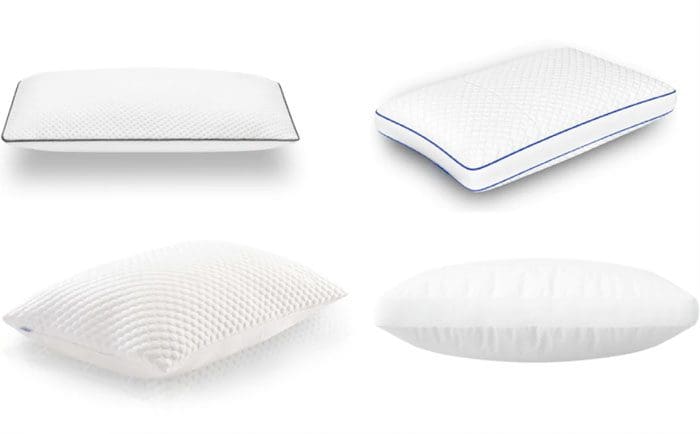
Many individuals do not realize the importance of the type of pillow they use for sleep. Sleeping on the wrong pillow is the perfect set-up for neck, shoulder, and back pain. Here are a few chiropractic tips on what to know about picking the best pillow. Knowing which is the right pillow for you can be the key to proper sleep and waking up pain-free.
Importance of Pillows
Neck and shoulder pain can be a nightmare, especially when the body cannot get decent rest. The right pillow/s can help with neck and back pain symptoms and recover from injuries quicker. When the head is in an awkward position for sleep duration, this causes neck, shoulder, and headache problems. The importance of finding the right pillow follows a set of guidelines.
Shape
The shape of the pillow has a definitive role in the cervical/neck’s curvature.
Posture
Sleep posture is important in preventing neck, shoulder, and back musculoskeletal pain.
Sleep quality
Craniocervical pressures and cervical spine alignment are height-specific. Any changes can affect an individual’s sleep quality.
Height
Cervical alignment can become significantly impacted by the shape and height of the pillow.
Pillow Comfort Importance
Trying to find the right pillow will require trial and error. The basics to consider include:
One sign that it’s time for a new pillow is waking up with pain.
Age of current pillows. The recommendation is they should be replaced every year or two. This depends on the stuffing/material used as different types wear down quicker.
If problems are getting comfortable and being able to fall asleep.
Constantly readjusting or fluffing the pillow/s.
The pillow has become lumpy or lost its shape.
It is flat with no cervical support or, too high placing the head in a forward tilt.
This is an online quiz along with a personalized process in their stores.
The process helps choose a pillow based on individual support preferences and sleep position for the best spinal alignment.
Customizable or adjustable pillows are another option. These pillows allow the individual to change the amount of filling to fit their needs.
Research, personal preference, and advice from a doctor and or chiropractor will help find the pillow that is right for you.
A third of an individual’s life is spent in bed. Make it as comfortable as possible.
Body Health
Sleep Body Composition Importance
Not getting enough sleep makes it difficult to gain muscle.
Not getting enough sleep means that the body experiences less short wave sleep, affecting the body’s ability to secrete Growth Hormone and develop muscle.
Testosterone is negatively affected by lack of sleep.
Not enough sleep increases cortisol levels, impairing muscle development.
Not getting enough sleep makes it difficult to lose fat.
Irregular sleep throws off the body’s ghrelin/leptin cycles, causing hunger.
Not getting enough sleep has been linked to eating more.
Not getting enough sleep can cause reductions in the body’s Basal Metabolic Rate, reducing total energy output.
Tiredness reduces spontaneous movements.
References
“Effect of sleep posture on neck muscle activity.” Journal of Physical Therapy. June 2017. https://pubmed.ncbi.nlm.nih.gov/28626314/
“Effect of pillow height on the biomechanics of the head-neck complex: investigation of the craniocervical pressure and cervical spine alignment.” PeerJ. August 2016. https://pubmed.ncbi.nlm.nih.gov/27635354/
“How Often Should You Replace Your Pillows?” Sleep Foundation, Seattle, WA. https://www.sleepfoundation.org/bedding-information/how-often-should-you-replace-your-pillows
“Improving the quality of sleep with an optimal pillow: a randomized, comparative study.” Tohoku Journal of Experimental Medicine. July 2014. https://pubmed.ncbi.nlm.nih.gov/25008402/
“The effects of pillow designs on neck pain, waking symptoms, neck disability, sleep quality and spinal alignment in adults: A systematic review and meta-analysis.” Clinical Biomechanics. May 2021. https://pubmed.ncbi.nlm.nih.gov/33895703/
Okamoto-Mizuno, Kazue, and Koh Mizuno. “Effects of thermal environment on sleep and circadian rhythm.” Journal of physiological anthropology vol. 31,1 14. 31 May. 2012, doi:10.1186/1880-6805-31-14
IFM's Find A Practitioner tool is the largest referral network in Functional Medicine, created to help patients locate Functional Medicine practitioners anywhere in the world. IFM Certified Practitioners are listed first in the search results, given their extensive education in Functional Medicine