The world of health and fitness has evolved with all kinds of technical jargon and terminology that can require a guide to get a handle on things. It can become confusing and terms like Lean Body Mass and Lean muscle can get mixed up. Body composition analysis allows an individual to understand their body in a much clearer way with insight into the body’s health. Here we break down this technical terminology to get a basic understanding of how it is relevant to the body’s health. Think of this as a combination glossary, and action guide. �
�
Guide to Basic Body Composition
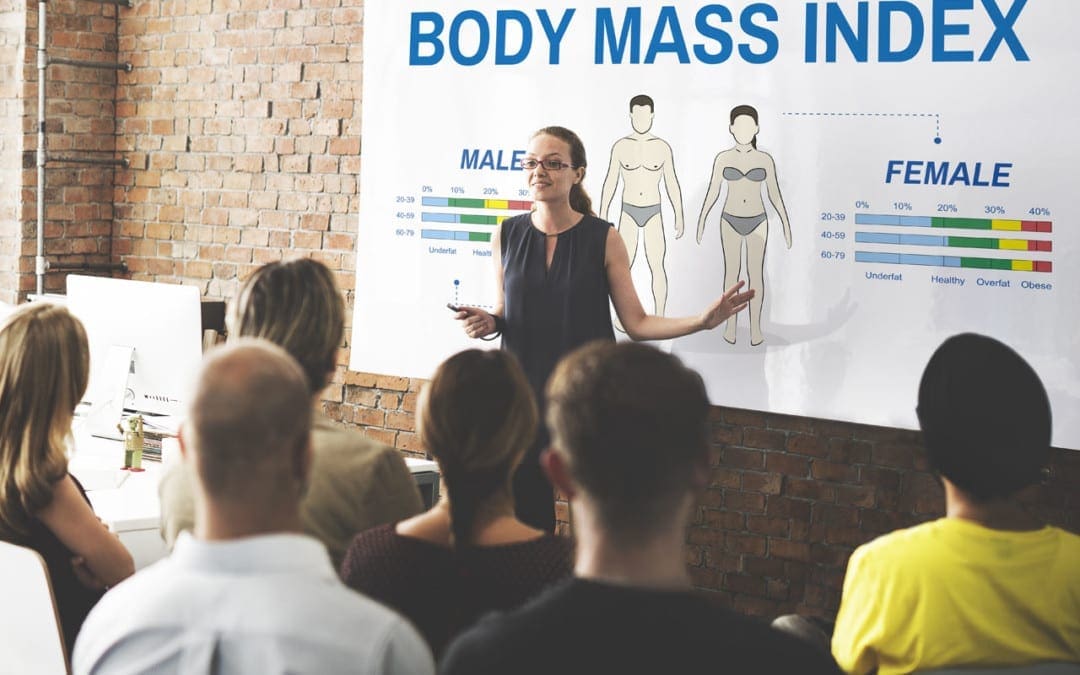
Percent Body Fat Body/Fat Percentage
Percent Body Fat is a reflection of how much of the body’s weight is made up of fat.
It is calculated by dividing the weight of body fat mass by total weight.
It helps to track progress whether trying to lose weight or gain muscle.
�
Takeaway
This percentage can be applied to set percent body fat ranges.
The healthy ranges are around 10-20% percent body fat for men and 18-28% for women.
�
Lean Body Mass/Fat-Free Mass Guide
Lean Body Mass is sometimes used interchangeably with Fat-Free Mass.
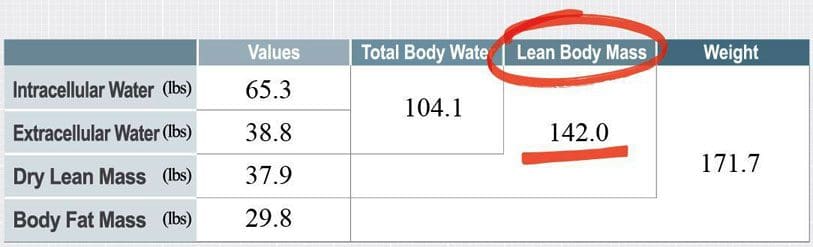
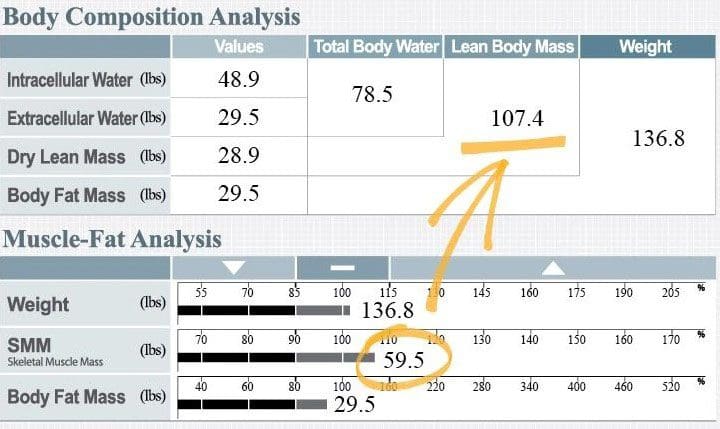
Lean Body Mass is the weight of everything in the body that is not fat.
This includes muscles, organs, bones, and body water.
Lean Body Mass plus Body Fat Mass make up entire body weight.
If the Lean Body Mass value is in pounds subtract this number from total body weight to get an approximation of Body Fat Mass.
Divide this number by body weight, results are percent body fat.
Lean Body Mass is closely related to the total number of calories the body needs every day.
The Lean Body Massforms the core of the body’s metabolism, and this number can be used to help determine unique dietary needs.
No more basing nutrition off the 2,000-calorie diet. This is a poor one-size-fits-all approach to food intake.
�
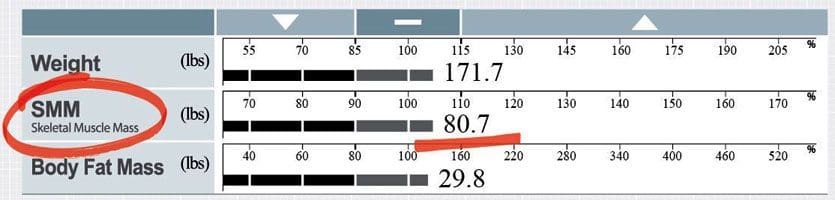
Skeletal Muscle Mass Guide
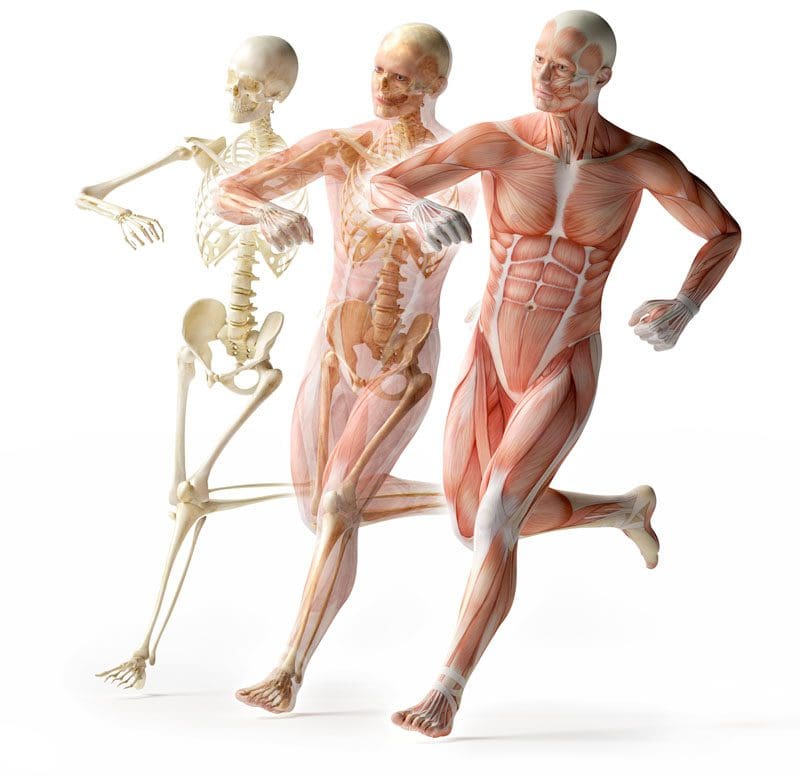
Skeletal muscle is one of four major muscle typesand governs all the movements that are consciously controlled. Everything from texting to deadlifting a barbell.
It is the muscle group that grows/builds when exercising.
Increased Skeletal Muscle Mass translates into increased strength.
When trying to build up the body and grow in size, this is the value to track and watch increase over time.
�
However, muscle is not just for strength.
Muscle is made up primarily of protein and can act as protein storage.
When the body is under severe stress like a traumatic injury, the recovery process is triggered and needs added protein, up to four times the amount.
When the body is not able to get the proper amount of protein from a normal diet, the body begins to get what it needs from the protein storage/muscles.
�
Basal Metabolic Rate/BMR
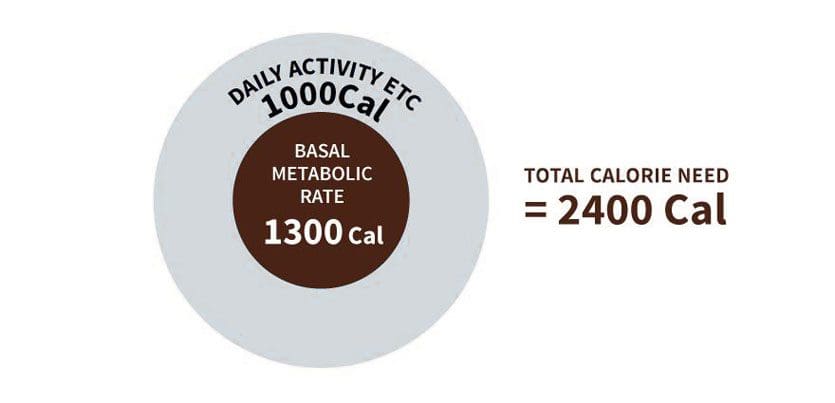
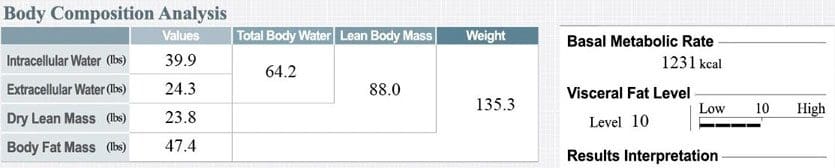
The Basal Metabolic Rate, or BMR, is the number of calories that the body needs to maintain Lean Body Mass. It is a significant component of overall metabolism.
An individual with more Lean Body Mass will have a higher Basal Metabolic Rate.
This is the reason why a 250-pound athlete needs to eat more than a 150-pound sedentary adult. Because the athlete has more Lean Body Mass.
�
BMR can help make a healthy diet plan designed for fat loss or muscle gain by helping understand how much energy/calories from food the body needs.
Using the TDEE as a baseline an individual can develop a nutritional plan based on body composition goals.
�
Body Water Guide
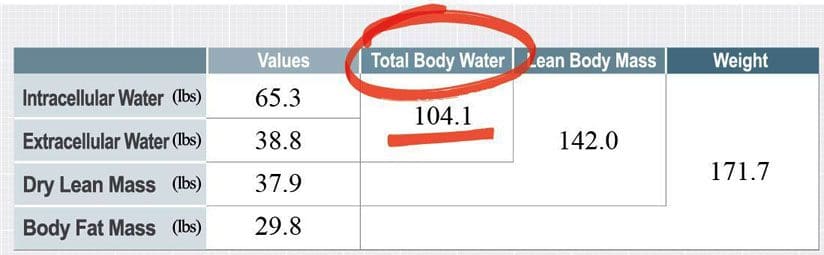
Body Water includes all the water in the body. This means everything from:
The water in the blood
Water in the organs
The water inside the bones
Body water can be subdivided into two types:
Intracellular
Extracellular
Intracellular means inside the cells and includes the water in the organs, muscles, composing 2/3 of total body water.
The remaining 1/3 is extracellular outside the cells and includes the water in the blood.
�
Takeaway
When the body is generally healthy it maintains a healthy balance of intracellular to extracellular water with a ratio of around 3:2.
When the balance becomes unbalanced or falls apart water monitoring becomes important.
For example, individuals with severe health problems, like kidney ailments/failure, are unable to rid the body of extracellular water. This causes a buildup of water and requires removal through procedures like dialysis.
�
Dry Lean Mass
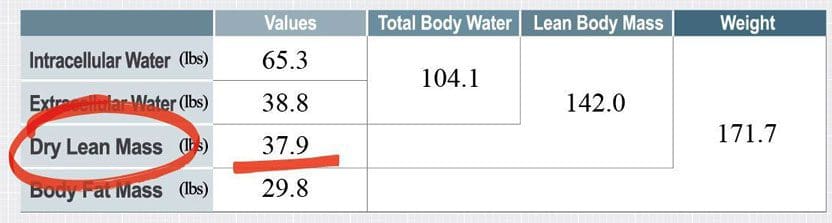
Lean Body Mass includes everything that�s not body fat and includes body water.
When all the water has been taken out what remains is known as Dry Lean Mass.
�
Lean Body Mass – Body Water = Dry Lean Mass
This amounts to the protein content of the muscles and the mineral content of the bones.
Most Dry Lean Mass will be found in these areas.
�
Takeaway
Water monitoring can help track real, physical changes in the body.
Lean Body Mass contains body water, and body water levels can be influenced by different factors like a recent workout or being low on carbohydrates.
Changes in body water are considered technical changes in Lean Body Mass.
When building muscle, the body is actually building new physical protein stores and reflects in Dry Lean Mass.
An increase in Lean Body Mass can signal muscle growth, or not.
However, an increase in Dry Lean Mass is a more favorable indicator that there is muscle growth.
�
Visceral Fat
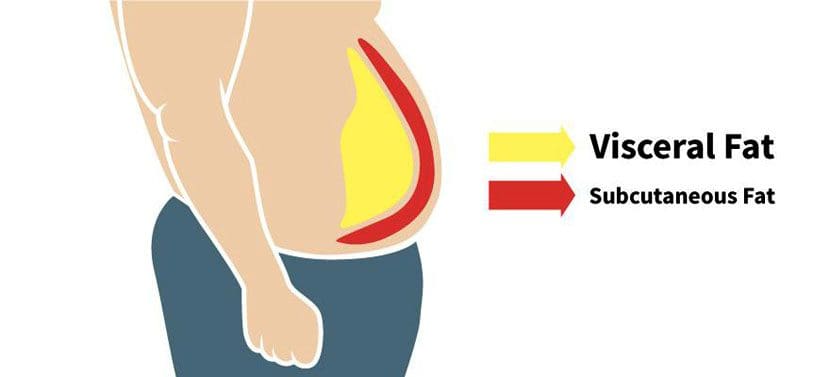
Two major categories of body fat.
Subcutaneous fat is the fat under the skin and is the type that can be seen.
The second type is called visceral fat.
This fat collects inside the abdomen and wraps around the internal organs.
�
Takeaway
Just because it cannot be seen does not mean it is not there.
If it is there it is something definitely worth knowing about.
This is because visceral fat is not just extra pounds but an active organ that secretes harmful hormones into the body that triggers never-ending inflammation.
The more visceral fat, the greater risk of inflammation.
Inflammation over time places added stress on the heart that can lead to cardiovascular problems.
�
Get Tested Today
Hopefully, this guide has clarified some of the common body composition terminology. This is a basic overview designed to provide essential information about body composition and how it applies. A general understanding can help in making healthy lifestyle choices, like deciding to lose weight or dietary adjustments.
Body Health
Dr. Alex Jimenez�s Blog Post Disclaimer
The scope of our information is limited to chiropractic, musculoskeletal, physical medicines, wellness, and sensitive health issues and/or functional medicine articles, topics, and discussions. We use functional health & wellness protocols to treat and support care for injuries or disorders of the musculoskeletal system. Our posts, topics, subjects, and insights cover clinical matters, issues, and topics that relate and support directly or indirectly our clinical scope of practice.*
Our office has made a reasonable attempt to provide supportive citations and has identified the relevant research study or studies supporting our posts. We also make copies of supporting research studies available to the board and or the public upon request. We understand that we cover matters that require an additional explanation as to how it may assist in a particular care plan or treatment protocol; therefore, to further discuss the subject matter above, please feel free to ask Dr. Alex Jimenez or contact us at 915-850-0900. The provider(s) Licensed in Texas& New Mexico*
References
Westerterp, Klaas R. �Exercise, energy balance, and body composition.� European journal of clinical nutrition�vol. 72,9 (2018): 1246-1250. doi:10.1038/s41430-018-0180-4
Borga, Magnus et al. �Advanced body composition assessment: from body mass index to body composition profiling.��Journal of investigative medicine: the official publication of the American Federation for Clinical Research�vol. 66,5 (2018): 1-9. doi:10.1136/jim-2018-000722
High-intensity interval training or bodybuilding? Getting to the gym, choosing a strength-training method, and figuring out which method is right for you can be frustrating and confusing. With all of the options available, there�s just no easy way to figure out which training regimen is right.
Here are two of the most popular training methods broken down. The principles behind each training method and how they influence body composition. The journey to getting healthy goes a lot smoother when knowing which training program will help reach optimal fitness goals.
Not all training programs are the same
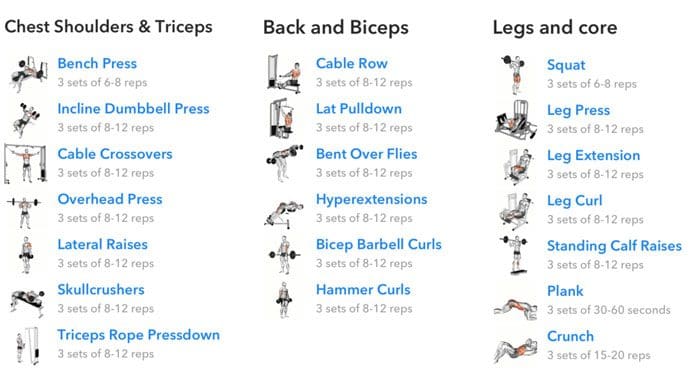
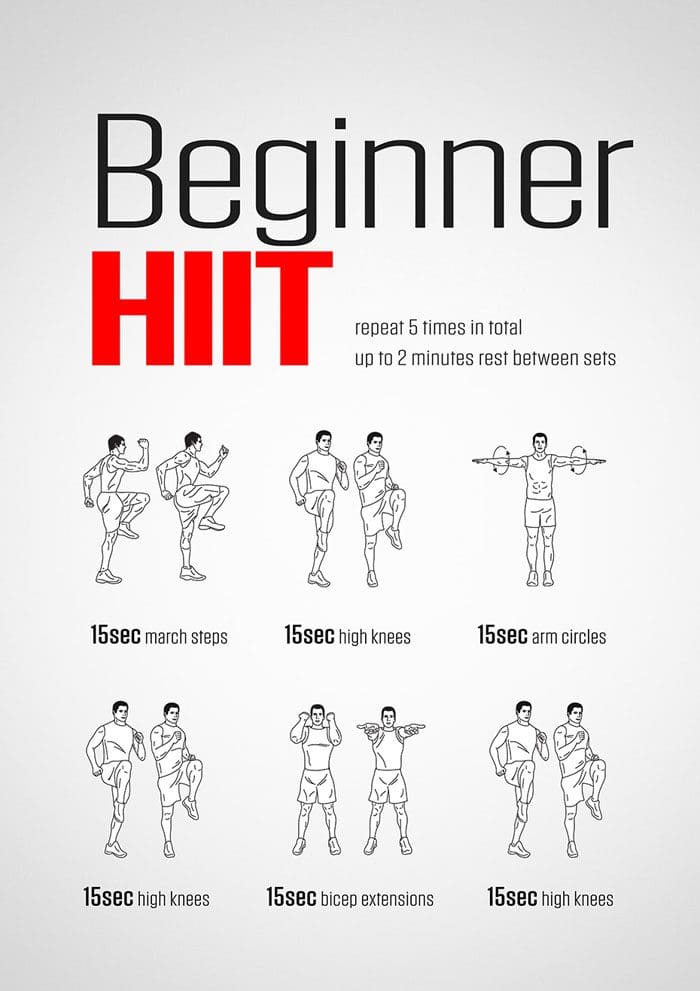
Bodybuilding is about physical appearance. This means big muscles and low body fat which is accomplished by heavyweight training workouts. High-Intensity Interval Training/HIIT workouts focus on performing high-intensity exercises in large volume repetitions quickly to raise an individual’s heart rate, cycling between high intensity and rest. This is accomplished by using:
Light weights
Bodyweight
Cardio exercises
It�s important to understand that different training methods will affect body composition differently. Body composition is about painting an accurate picture of what�s going on in the body. The key is to break down:
What each training program looks like
What it does
How to choose the program that�s best for the individual
Gaining Lean Body Mass
Losing Fat Mass
Bodybuilding
Bodybuilding at its core is about gaining muscle while minimizing body fat. Minimizing fat is a key to building a muscular-defined physique, and requires a detailed focus on protein and calorie intake. It is the emphasis on aesthetically increasing muscle size and reducing body fat. Bodybuilders focus on higher reps and lighter-weight workouts. This encourages muscle hypertrophy. Other factors in bodybuilding are:
Adequate cardio
Consistent protein intake
Calorie restrictions
These are important aspects of this type of regimen and building visually impressive musculature.
This impressive musculature is not only for looks, as it can help with fat loss as well. This is because resistance training/weight training can burn a lot of calories and lose a substantial amount of fat. A study by the Department of Exercise Science showed that 10 weeks of resistance training can reduce fat weight by 1.8kg and increase resting metabolic rate by 7%.
Body Composition
For the average person, if the focus is on building visible muscle while keeping a low body fat percentage, bodybuilding is a great choice. Ideal body composition focuses on keeping fat content to a minimum without compromise.
High-Intensity Interval Training/HIIT
Modern training programs like CrossFit utilize HIIT-style workouts. HIIT burns calories through workouts that significantly increase heart rate. The exercises are short, loaded with mini-breaks in between high-intensity sets designed to test cardio. The focus is on high repetitions. However, HIIT workouts are so intense that professional trainers recommend individuals only train 2-3 times a week, to avoid overstressing the body. There are bodybuilding exercises included like:
However, they are done with different goals in mind. The priority of a HIIT workout is to reduce fat, improve cardio, and developing some muscle.
Body Composition
Scientists from Ohio State University observed more than 40 subjects at all levels of cardio fitness. Over the next 10 weeks, the subjects completed a variety of HIIT workouts. The scientists realized that the individuals were developing a more capable cardio system, and their body fat percentages were dropping significantly.
If the goal is to get stronger and lose weight, then bodybuilding is the best option.
If the goal is to have stronger cardio and lose serious weight then HIIT workouts are the best option.
No matter what training program is chosen. Remember that achieving a healthy body composition that the individual feels comfortable with is the most important thing. Making positive changes and achieving optimal health is the objective. Both workout strategies can be incorporated into a regular strength training regimen. Both training methods can be challenging, but the health benefits are absolutely worth it. Contact us today to help figure out which training regimen will achieve optimal health.
InBody
Dr. Alex Jimenez�s Blog Post Disclaimer
The scope of our information is limited to chiropractic, musculoskeletal, physical medicines, wellness, and sensitive health issues and/or functional medicine articles, topics, and discussions. We use functional health & wellness protocols to treat and support care for injuries or disorders of the musculoskeletal system. Our posts, topics, subjects, and insights cover clinical matters, issues, and topics that relate and support directly or indirectly our clinical scope of practice.*
Our office has made a reasonable attempt to provide supportive citations and has identified the relevant research study or studies supporting our posts. We also make copies of supporting research studies available to the board and or the public upon request. We understand that we cover matters that require an additional explanation as to how it may assist in a particular care plan or treatment protocol; therefore, to further discuss the subject matter above, please feel free to ask Dr. Alex Jimenez or contact us at 915-850-0900. The provider(s) Licensed in Texas& New Mexico*
References
Ross, Leanna M et al. �High-intensity interval training (HIIT) for patients with chronic diseases.��Journal of sport and health science�vol. 5,2 (2016): 139-144. doi:10.1016/j.jshs.2016.04.005
Westcott, Wayne L. �Resistance training is medicine: effects of strength training on health.��Current sports medicine reports�vol. 11,4 (2012): 209-16. doi:10.1249/JSR.0b013e31825dabb8
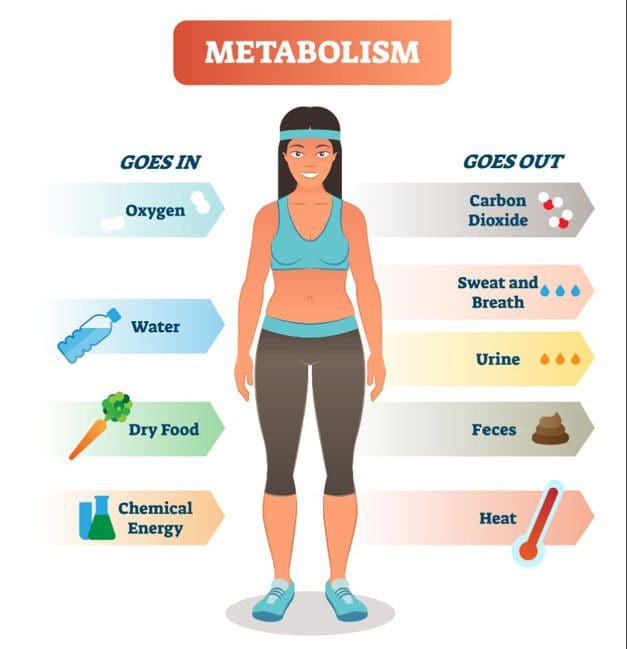
The body’s metabolism along with body composition go hand in hand. The higher the metabolism the faster the body burns calories. The slower the metabolism the longer it takes and leads to fat storage as well as other issues, which include:
Metabolism is linked with weight gain and loss because it is a biological process involved with energy and calories. The process of the body converting food and drink into energy. The process involves the calories in food and drinks that get combined with oxygen to release energy that the body needs to operate.
Body Composition Linked To Body’s Metabolism
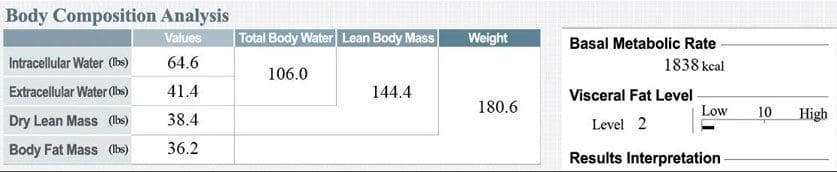
Metabolism varies for every individual. Here are two body composition profiles.
Individual A
Individual B
Individual A has a much smaller Basal Metabolic Rate than Individual B. This means individual B needs more calories than individual A to provide the body with the proper energy to function without losing weight. Because the Basal Metabolic Rate is bigger, the metabolism is bigger. The most important factor playing into Basal Metabolic Rate is the amount of Lean Body Mass every individual has.
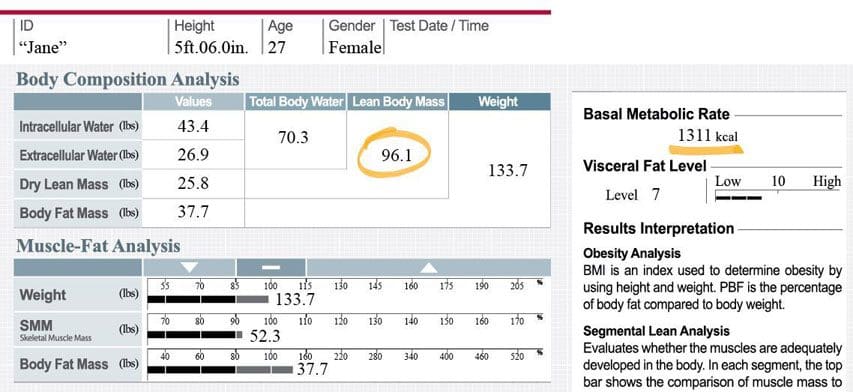
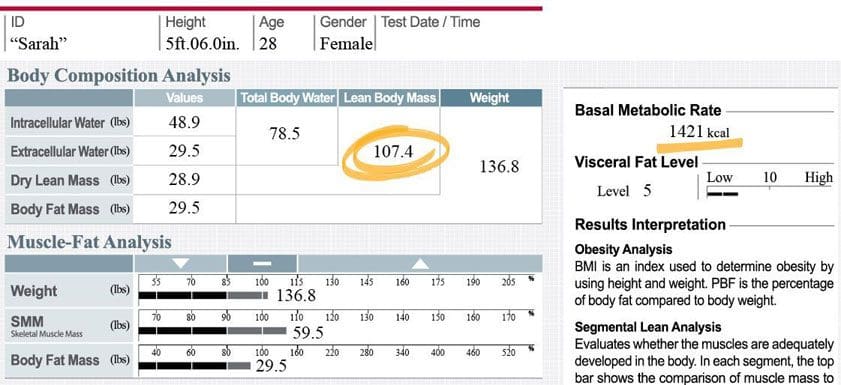
The more Lean Body Mass the greater the Basal Metabolic Rate will be. Strength training for muscle gain will increase lean body mass and is recommended to increase metabolism. For example: Take a look at Jane and Sarah, two individuals who are similar in age, height, weight, and gender.
Jane
Sarah
Despite being similar in age, height, weight, and gender, these two individuals have very different body compositions, as well as have different Basal Metabolic Rates.
Metabolism and Weight Gain
Take a deeper look at slow metabolism. It is not about being fast or slow but weight gain is almost always the result of caloric imbalance that goes on over a period of time. Two major factors are:
An individual’s energy level and how active they are
The thermic effect of food or the energy the body uses when digesting food
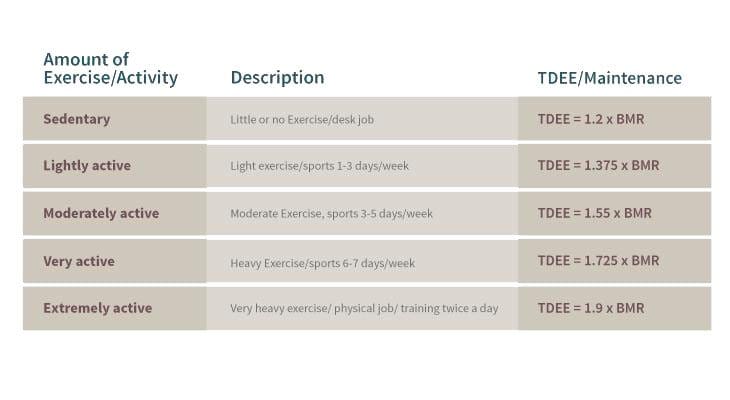
To take a closer look into the body’s metabolism and weight gain, take the two individuals above, Jane and Sarah, and see what could happen in real treatment development that includes diet and exercise. First, the TDEE for Jane and Sarah needs to be estimated, using their BMRs as a guide. Based on their compositions, it’s fair to assume that Jane is involved in less physical activity/exercise than Sarah. So an activity level of sedentary for Jane will be assigned and light activity will be assigned for Sarah.
Using these numbers and multiplying them by the appropriate activity factor, Jane�s TDEE can be estimated to be 1573 calories and Sarah�s 1953 calories, a difference of 380 calories. When activity levels are factored in, the difference in actual caloric needs gets magnified. This is an estimate of the calories Jane and Sarah will need to burn in a day. The nutritionist and/or health coach place both of them on a diet of 1,800 calories a day. This is the estimated calorie intake recommended by the USDA for sedentary women between 26-30 years of age.
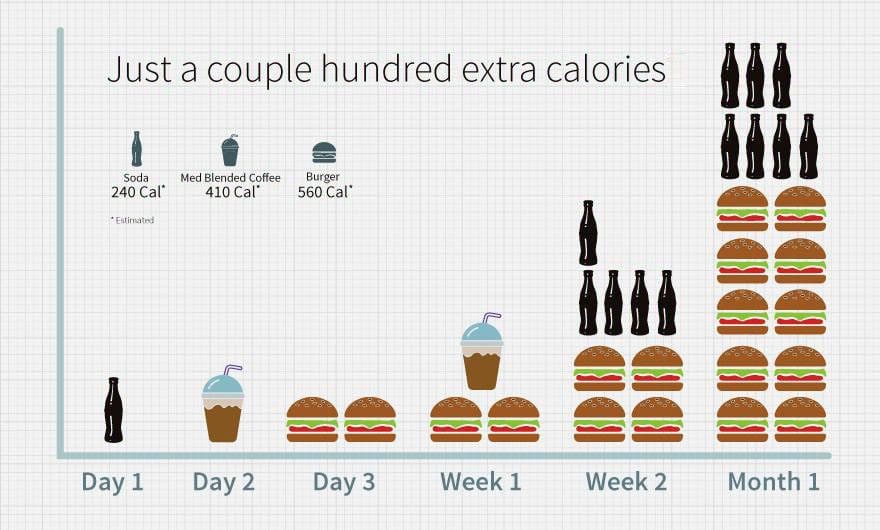
Let’s say they both follow the diet perfectly without any extra, high-calorie snacks/treats. Jane will end each day with a surplus of 227 calories, while Sarah ends each day with a slight calorie deficit of 153 calories a day. When in a calorie surplus taking more calories and living a sedentary lifestyle, weight gain, specifically, fat storage will be experienced. 227 extra calories a day doesn’t seem like a lot, but that is a single soda. However, over time, 227 calories a day becomes 1,589 extra calories a week and 7,037 extra calories a month, which is around 2 pounds of fat gain every month.
So despite the same height, gender, similar weight, and similar ages, the difference between Jane and Sarah is their body compositions. Jane will experience weight gain over time while Sarah might experience some weight loss because of the calorie deficit, even though the diets are the same. This is because each individual’s caloric needs are different and may seem small at first, but increases to significant differences over time.
Making The Body’s Metabolism Work
With the correct exercise and dietary plan, an individual can make their metabolism work for them. Because the body needs more energy to support itself when it has more Lean Body Mass, working to increase Lean Body Mass will increase Basal Metabolic Rate. Avoiding a decrease in metabolism can be done by maintaining the Lean Body Mass that is already present and also means maintaining Skeletal Muscle Mass. Skeletal Muscle Mass is not the same as Lean Body Mass but is the overall largest contributor. It is the muscles that will grow and develop through exercise.
Skeletal Muscle Mass is effectively developed through strength training, resistance exercise, and a healthy diet. This will help maintain Skeletal Muscle Mass. This is especially important as the body ages. Activity levels tend to drop and a healthy diet can become harder to maintain as responsibilities increase. Poor nutrition can lead to loss of Lean Body Mass over time, which leads to a decrease in overall metabolism. Balancing diet and metabolism. The example of Jane shows a well-intentioned dietary plan that does not match the metabolism of the person practicing it.
Even though Jane was told that 1,800 calories are right for her based on age and gender, her metabolism does not require that calorie intake. This will cause weight gain despite any efforts to eat a healthy diet. This is where a health coach and nutritionist come in. The first step is to get the information needed to get the answers by getting an accurate body composition analysis.
InBody Composition
Dr. Alex Jimenez�s Blog Post Disclaimer
The scope of our information is limited to chiropractic, musculoskeletal, physical medicines, wellness, and sensitive health issues and/or functional medicine articles, topics, and discussions. We use functional health & wellness protocols to treat and support care for injuries or disorders of the musculoskeletal system. Our posts, topics, subjects, and insights cover clinical matters, issues, and topics that relate and support directly or indirectly our clinical scope of practice.*
Our office has made a reasonable attempt to provide supportive citations and has identified the relevant research study or studies supporting our posts. We also make copies of supporting research studies available to the board and or the public upon request. We understand that we cover matters that require an additional explanation as to how it may assist in a particular care plan or treatment protocol; therefore, to further discuss the subject matter above, please feel free to ask Dr. Alex Jimenez or contact us at 915-850-0900. The provider(s) Licensed in Texas& New Mexico*
References
Westerterp, Klaas R. �Exercise, energy balance, and body composition.��European journal of clinical nutrition�vol. 72,9 (2018): 1246-1250. doi:10.1038/s41430-018-0180-4
Mazzoccoli, Gianluigi. �Body composition: Where and when.��European journal of radiology�vol. 85,8 (2016): 1456-60. doi:10.1016/j.ejrad.2015.10.020
The new year offers a blank slate to better our lives and try new things that will help us achieve our life goals. Health goals can be achieved through chiropractic treatment and nutritional coaching. Improving one’s health is one of the quickest ways to boost the body and mind’s quality of life.
Health Goals and A New Year
Individuals set health goals only to forget about them after a few weeks or months. When setting goals that don�t stick, the biggest issue is the focus is on the wrong process to achieve these goals. Individuals tend to aim for goals that are doable but too advanced to jump right into. Much like someone that has never worked on home renovation, but decides they can knock out a kitchen, or bathroom remodel in two weeks. This is where training comes in to learn how to go about achieving these goals properly and in a healthy fashion. Common goals include:
If there are health goals that have been a struggle to maintain then it is time to get expert professional help. Chiropractic and health coaching could be a practical option. Chiropractic addresses whole-body health with sustainable changes/adjustments to achieve optimal health. Chiropractic is a specialized branch of medicine dedicated to addressing body dysfunction through non-invasive spinal realignment.
A misaligned spine leads to poor nerve and blood circulation that affects the body’s functional health at every level. Treatment with a chiropractic provider can help achieve health goals from the ground up. Once spinal alignment has been achieved and the body is ready, thenguidance and recommendations with lifestyle changes, like exercise and stress management can be addressed to reach full health potential.
Stop Waiting
There is no better time than now to start working toward health goals that can actually be controlled. We can control how we perceive our lives, treat our bodies and minds. A chiropractor and health coach will help set small attainable goals that can be kept, contact Injury Medical and Chiropractic Clinic today.
The Body’s Composition
Invest In Your Body
It is easy to think of your body as healthy and invincible. This is true when young, but age will catch up. The muscles will begin to plateau in strength in an individual’s 30s, which can lead to less physical activity. Being aware of the body’s fat percentage and keeping track is a great way to determine if body composition is declining. If weight has not changed over a couple of years but body fat percentage seems to have increased, this is a red flag that could indicate age-related muscle loss is taking place.
Dr. Alex Jimenez�s Blog Post Disclaimer
The scope of our information is limited to chiropractic, musculoskeletal, physical medicines, wellness, and sensitive health issues and/or functional medicine articles, topics, and discussions. We use functional health & wellness protocols to treat and support care for injuries or disorders of the musculoskeletal system. Our posts, topics, subjects, and insights cover clinical matters, issues, and topics that relate and support directly or indirectly our clinical scope of practice.*
Our office has made a reasonable attempt to provide supportive citations and has identified the relevant research study or studies supporting our posts. We also make copies of supporting research studies available to the board and or the public upon request. We understand that we cover matters that require an additional explanation as to how it may assist in a particular care plan or treatment protocol; therefore, to further discuss the subject matter above, please feel free to ask Dr. Alex Jimenez or contact us at 915-850-0900. The provider(s) Licensed in Texas& New Mexico*
References
Maiers, Michele et al. �Chiropractic in Global Health and wellbeing: a white paper describing the public health agenda of the World Federation of Chiropractic.��Chiropractic & manual therapies�vol. 26 26. 17 Jul. 2018, doi:10.1186/s12998-018-0194-y
Individuals are tired of feeling sick. Many doctors prescribe medications to just control the symptoms of the various ailments.
Headaches
Migraines
Nausea
Fatigue
Acid reflux
Asthma
Allergies
Chiropractic care combined with Health coaching will:
Bring the body back into balance
Restore optimal circulation
Detox the body
Increase immune system response
Tired Nervous System
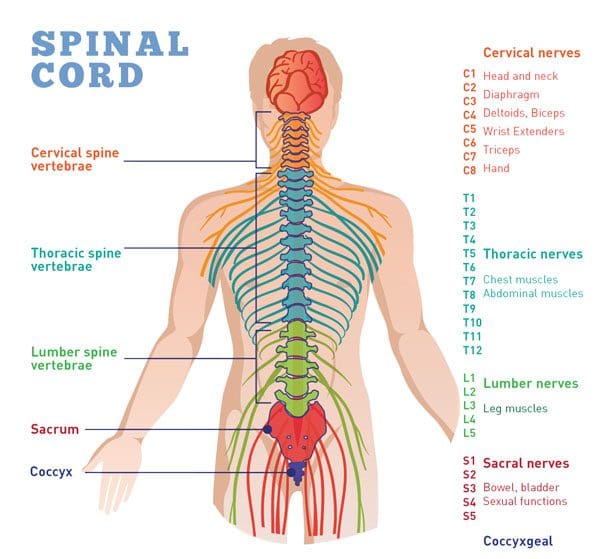
Many of these problems are rooted deep within the nervous system. This system controls pain, movement, organ function, and action/reaction in the body and needs consistent maintenance to continue to operate at an optimal level. Chiropractors are trained to detect nerve interference brought on from spinal misalignment. Chiropractic along with body scanning/imaging can detect nerve interference, and help identify any issues.
Nerve Interference
Nerve interference along the spine can lead to being tired, weakness, pain, discomfort, organ dysfunction, and disease if it is not addressed by a professional chiropractor. The interference can be a result of poor postural habits that have caused the spine to misalign. This places added and dangerous pressure on the delicate nerves flowing throughout the spine.
Chiropractors can determine the root cause back to the region of the spine that is causing any type of impediments. Spinal rehabilitation and realignment will restore the spine back to health eliminating nerve interference. As the body is realigned health coaching recommendations that include diet, supplements, and learning healthy habits will enhance chiropractic maintenance. The end result is a healthy energetic body free of disease, dysfunction, and pain.
Body Composition
Body composition is a way of breaking down the body into components, which are: fat, protein, minerals, and body water. It describes an individual’s accurate weight and provides a new perspective on overall health than traditional methods. Proper body composition analysis will show changes in fat mass, muscle mass, and body fat percentage.
The scope of our information is limited to chiropractic, musculoskeletal, physical medicines, wellness, and sensitive health issues and/or functional medicine articles, topics, and discussions. We use functional health & wellness protocols to treat and support care for injuries or disorders of the musculoskeletal system. Our posts, topics, subjects, and insights cover clinical matters, issues, and topics that relate and support directly or indirectly our clinical scope of practice.*
Our office has made a reasonable attempt to provide supportive citations and has identified the relevant research study or studies supporting our posts. We also make copies of supporting research studies available to the board and or the public upon request. We understand that we cover matters that require an additional explanation as to how it may assist in a particular care plan or treatment protocol; therefore, to further discuss the subject matter above, please feel free to ask Dr. Alex Jimenez or contact us at 915-850-0900. The provider(s) Licensed in Texas& New Mexico*
References
Stochkendahl, Mette Jensen, et al. �Can chiropractors contribute to work disability prevention through sickness absence management for musculoskeletal disorders? – a comparative qualitative case study in the Scandinavian context.� Chiropractic & manual therapies�vol. 26 15. 26 Apr. 2018, doi:10.1186/s12998-018-0184-0
Westerterp, Klaas R. �Exercise, energy balance, and body composition.��European journal of clinical nutrition�vol. 72,9 (2018): 1246-1250. doi:10.1038/s41430-018-0180-4
Body composition analysis is becoming a standard tool that is being used by fitness experts, coaches, and healthcare professionals.
In 2019 we can�discard reliance on body mass index (BMI)�as a means to measure health.
Other than our appearance, there is a list of diseases associated with obesity. This is what’s at the top of our minds. The list is long and includes heart disease, hypertension, cancer, joint problems, dementia, and diabetes.
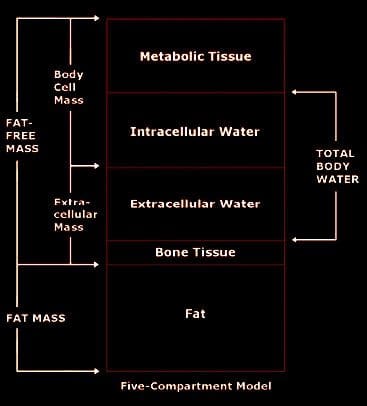
Body composition analysis is defined as the clinical assessment of tissue and fluid in the human body.
Fat Mass
Fat-Free Mass
Body Cell Mass
Extracellular Mass
Total Body H2O
Intracellular H2O
Extracellular H2O
Normal distribution of tissue and fluid is associated with immunity, high function, and longevity.
However, not being able to have detailed insight�into your personal body composition can�lead to critical errors�in understanding what’s going on, along with recommendations. This can hinder the�ability to reach a specific fitness goal.
Body composition analysis is utilized in preventative, therapeutic, and research applications.
Nutrition
Anti-Aging
Physical Performance Assessment
Weight Management
Geriatrics
Lifestyles Assessment
Athletic Performance
To perform body composition analysis, mass and fluid are modeled, measurements taken, and results analyzed.
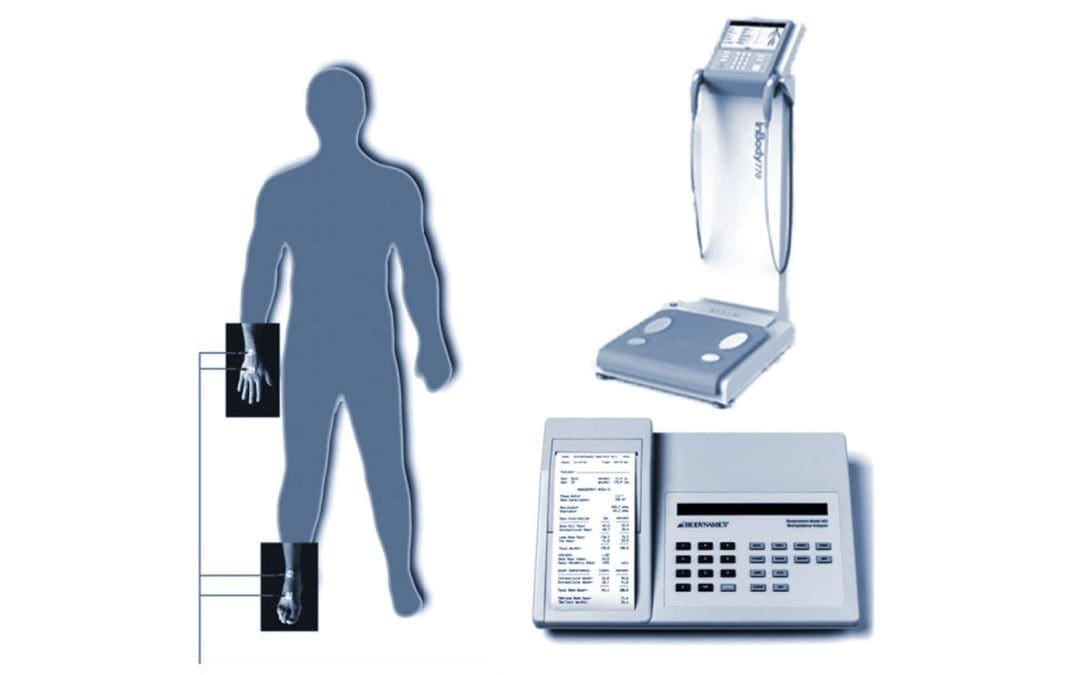
Bioimpedance (BIA) body composition analyzers measure body composition electronically. However, they do not, diagnose disease, or calculate treatment options. Only qualified health care professionals can diagnose and recommend treatment options.
There are concerns that affect everyone, which is why knowledge of body composition is important for your health in 2019 onward.
Model Body
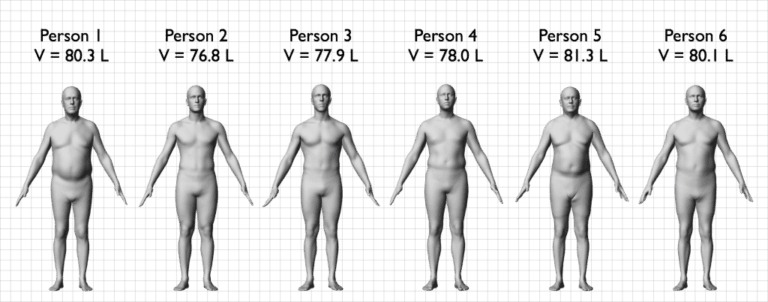
Look at the images below of six males, all of whom are 5′ 9″ and 170 pounds. There could be some envy from their 25.4 BMI, as the results are come up on the computer screen. However, looking at the actual patient or their scans using today’s technology, the results are pretty revealing.
Notice the difference in the midsection, where there is an abnormal accumulation of visceral fat.
This occurs in metabolic syndrome and what is known as Adiposity disease.
Fat Mass (FM): Total amount of stored lipids in the body and consists of the following types:
Subcutaneous Fat is located right under the skin. Subcutaneous fat functions as an energy reserve and as insulation from the cold.
Visceral Fat is located deeper in the body. This fat serves as an energy reserve and as a cushion between the organs.
Fat-Free Mass (FFM), aka Lean Body Mass (LBM): Total amount of nonfat (lean) parts of the body.
Consists of approximately 73% water, 20% protein, 6% mineral, and 1% ash.
Fat-free mass divides further into body cell mass and extracellular mass:
Body Cell Mass (BCM): All the metabolically active tissues (cells) of the body, which include muscle, organ, blood, and immune cells.
BCM includes the “living” portion of fat cells, but not fat lipids.
BCM also includes H2O inside living cells. This water is called Intracellular Water (ICW). The main electrolyte is potassium.
Extracellular Mass (ECM): All the metabolically inactive (non-living) parts of the body, such as bone minerals and blood plasma. ECM includes water contained outside living cells. This water is called Extracellular Water (ECW). The main electrolyte is sodium.
Composition & Body Health
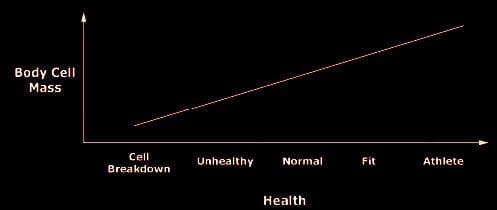
Body composition correlates directly to maintained proper health, that range from mortality/morbidity to immunity, longevity, high function, and athletic performance.
Body composition analysis’ purpose is to monitor and improve function.
Healthy patients analysis of fat-free mass and body cell mass helped maintain function, productivity, immunity, physical performance, and longevity.
Every case is different but through body composition analysis, people can have a better understanding of their body, what options are available to them, and most importantly do not have to be on medication/s for the rest of their lives.
References:
Kyle UG, et al. Physical activity and fat-free and fat mass by bioelectrical impedance in 3853 adults. Medicine and Science in Sports and Exercise, 2001;33:576-584.
Mattar JA, et al. Application of total body bioimpedance to the critically ill patient. New Horizons, 1995, Vol 4., No. 4; 493-503.
Ott M, et al. Bioelectrical impedance analysis as a predictor of survival in patients with human immunodeficiency virus infection. Journal of Acquired Immune Deficiency Syndromes and Human Retrovirology, 1995; 9:20-25.
When it comes to body composition analysis and body composition testing, most tend to think about muscle mass and body fat percentages. However, today’s medical BIA (bioelectrical impedance analysis) equipment does a lot more than that.
Body fat percentages are only a small part of a body composition analysis. For body composition equipment utilizing Direct Segmental Multi Frequency-BIA technology (DSM-BIA), means that you are able to measure and monitor other valuable indicators of your health such as visceral fat, body water, segmental readings, and phase angle values.
What�s Phase Angle?
Phase Angle or PhA allows us to see how the body is responding to changes in health – good or bad.
For example, people with cancer or who are malnourished have low PhA’s.
PhA decreases with age. This is due to the body’s slowed down capacity to repair cells quickly.
When ill, the Phase Angle goes down
When healthy the Phase Angle goes up.
When you boost your Phase Angle, aging slows down.
Solving The Riddle of Phase Angle
PhA is a�direct measurement of cell integrity and the distribution of water inside and outside the cell membrane.
How Do You Measure Phase Angle?
In healthy humans, the cell membrane is made of a layer of non-conductive (insulator) lipid material that’s between two layers of conductive fluids (the body’s water).
Two conducting materials that surround an insulator are often referred to as a capacitor.
The cell membrane is a fortress with capacitor capabilities that prevent currents from entering the cells and other unwanted materials, e.g., toxins and waste.
This means healthy cells/tough capacitors better prevent unwanted substances from entering.
Lean Body Mass (LBM) is the total weight of the body’s organs, skin, bones, body H2O, and muscles.
Describes the entire body weight minus body fat.
Also referred to Fat-free mass.
Resistance/Reactance/Impedance
Resistance is when a conductor transfers the energy of an electric current.
Greater the conductor, lower the resistance.
Low resistance/associated with large LBM.
High resistance/associated with low LBM.
A person that has large lean body mass, has a lot of body water, which means greater conductivity of the current and less overall resistance.
Reactance�measures the cells� ability to store energy.
The body has high reactance if the cells can store energy easily and has low reactance if it stores energy poorly.
Healthy cells with healthy cellular membranes hold the electrical energy charge longer.
Impedance�is the sum of resistance and reactance.
Measuring PhA and cell health can be done with a Bioelectrical impedance device, which assesses cell membrane health.
To measure impedance a small alternating current is run into the body, which then measures the effects on the current caused by the body.
50 KHz is considered ideal to maximize reactance and determine the point where the strongest cells resist the current.
As current travels through your body, the body’s water will naturally resist the flow of the current and this is referred to as resistance.
When current encounters a cell, the cell wall causes a delay, as the voltage builds up, in order to pass through the cell wall while the current continues instantly.
This brief time delay, which is caused by the cells is compared to the amount of water, which provides us with a PhA.
Impedance is a combination of these two values.
Phase Angle and Overall Health
Tracking your PhA, allows you to gain a more precise picture of your health, as it examines cell health/integrity and the amount of water inside.
Higher PhA values mean greater cellular integrity and reflect better cell health.
Low PhA, is predictive of decreased muscle strength, compromised quality of life, and increased mortality in older adults with cancer.
Low phase angles are consistent in individuals with malnutrition, HIV/AIDS, cancer, and chronic alcoholism.
How To Know If My PhA Is Normal?
Certain factors can influence PhA such as (Age, Gender, BMI) but there are differences in PhA’s across different populations. Which means that PhA values tend to differ based on the BIA equipment being used.
Example of a Phase Angle Reading Utilizing The InBody 770:
What everyone needs to know is that phase angle depends on the individual makeup of everyone.
The Connection Between My Body’s Composition & Phase Angle
Inflammation reduction along with body fat reduction
Phase�Angle�Decrease�May�Result�From:
Muscle tissue loss
Increased inflammation
Phase Angle In A Clinical Practice
A study, monitoring PhA values in a hospital setting found that it helped identify nutritionally at-risk patients quickly, thus saving the staff time, as the patients did not have to answer the in-depth nutritional questions. Instead, they took a quick BIA.
Phase Angle Takeaway
PhA values can be highly informative of what is going on in one’s body.
PhA can help in identifying health risks/issues
Track lifestyle change progress
Medical Clinics can use PhA to help create custom treatment and health care plans
IFM's Find A Practitioner tool is the largest referral network in Functional Medicine, created to help patients locate Functional Medicine practitioners anywhere in the world. IFM Certified Practitioners are listed first in the search results, given their extensive education in Functional Medicine