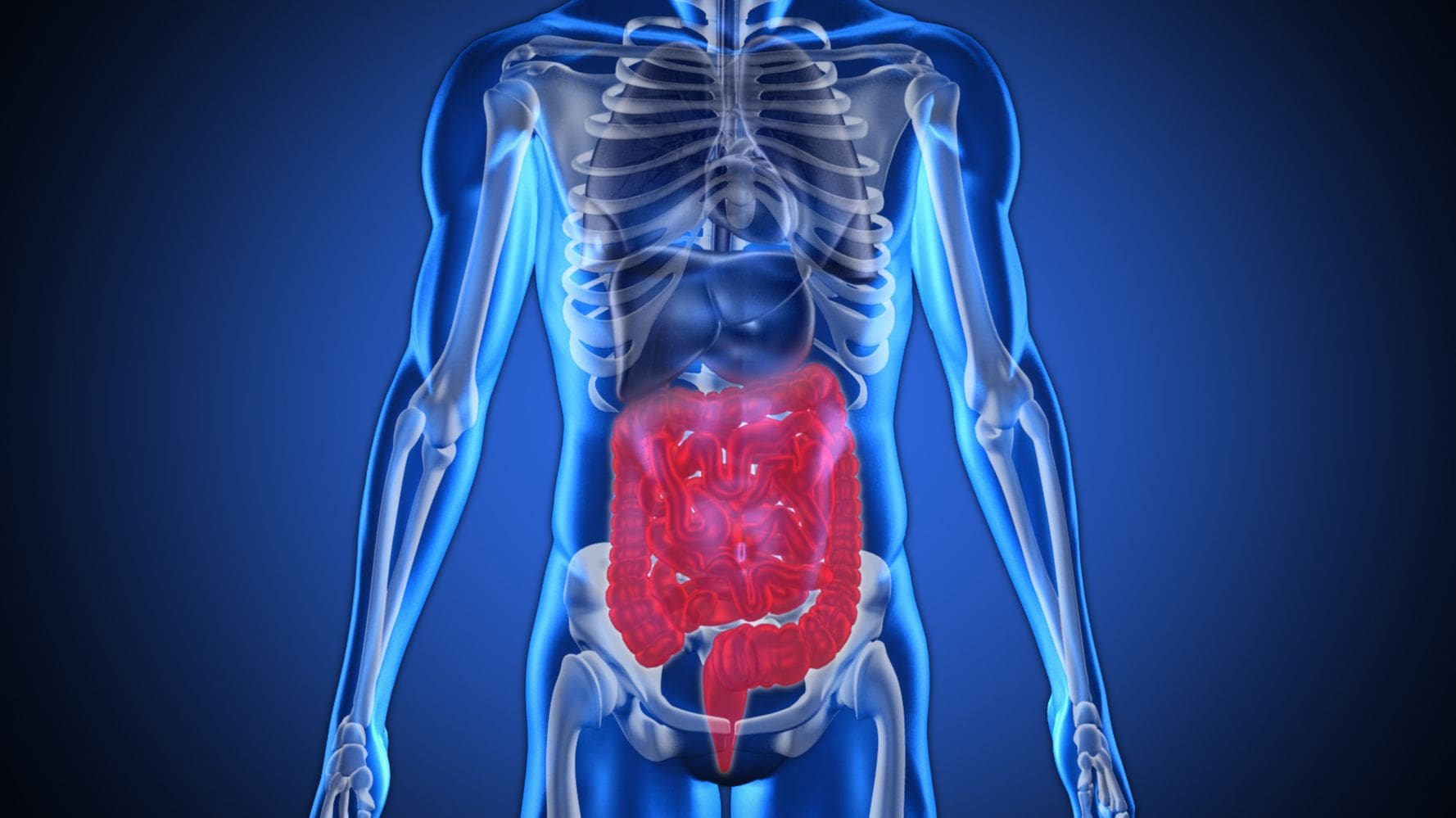
For individuals experiencing frequent bloating or constipation, could performing a colon cleanse help alleviate your symptoms?
Colon Cleanse
Individuals can clean out their bowels, colon, or large intestine by drinking more water and adding certain foods to their diet, like whole grains, fruits, and vegetables. Some may find that the practice helps decrease bloating or other digestive issues. While a colon cleanse is safe for most, the practice can cause side effects, like nausea or dehydration.
Benefits
Natural colon cleanses can provide various benefits that include:
Reducing bloating.
Improving the immune system.
Removing toxins from the body.
Helping with weight loss.
Decreasing the risk of colon cancer.
While individuals may feel better after a natural colon cleanse, there is currently no research to support the medical benefits. (Cedars Sinai. 2019)
Another type is known as hydrotherapy of the colon or irrigation.
A healthcare provider performs this type of cleansing and sends water into the colon with instrumentation.
This type of cleanse is not used to prepare individuals for a colonoscopy.
Cleansing
Cleansing the body safely can be done with ingredients from the local grocery store.
Thorough Hydration
Water will improve body function, including digestion and elimination.
Use the color of urine as a guide.
If it’s pale yellow, the body is getting enough water.
If it’s darker, the body needs more.
Increasing Fiber Consumption
Fiber is a type of carbohydrate that the body cannot digest but influences:
Fiber can be found in fruits, vegetables, oats, lentils, peas, and almonds.
Increasing fiber intake will help regulate the bowels and maintain overall colon health. (Cornell University. 2012)
Probiotics
Probiotics are live bacteria and yeasts that have health and digestion benefits.
Researchers believe they help to replace healthy bacteria and balance the healthy and unhealthy bacteria in the body, which maintains smooth digestion. (Mount Sinai. 2024)
Fermented foods like yogurt, kimchi, sauerkraut, and pickles are healthy sources of probiotics.
They also come as supplements.
Apple Cider Vinegar and Honey
Both ingredients contain probiotics, and mixing them can help improve gut health.
Individuals also believe that this concoction can help remove toxins from the body, but there’s no scientific evidence to support this.
Individuals can try 1 tablespoon of raw honey and 2 tablespoons of apple cider vinegar in a warm glass of water.
Juice and Smoothies
Adding more fruits, including juice and smoothies, is a healthy way to stay hydrated.
It also adds fiber and other nutrients to improve gut health.
Bananas and apples are a healthy source of probiotics.
Individuals can also add yogurt to the smoothies for extra probiotics.
These elements can help improve the gut microbiome and regulate bowel movements.
Precautions
Doing a colon cleanse should be safe for most, as long as the individual is not fasting at the same time or performing them too frequently. However, it’s recommended to consult a healthcare provider before changing eating patterns or trying new treatments or supplements, including a colon cleanse, especially for individuals who have an underlying condition.
Side Effects
Colon cleansing can come with risks that can include: (Cedars Sinai. 2019)
Dehydration
Cramping
Nausea
Electrolyte imbalance
Doing occasional colon cleanses may not result in side effects, but the chances of side effects increase the longer or more often cleanses are performed. It’s recommended to consult a healthcare provider if experiencing any symptoms.
Improving Colon Health
The best way to improve colon health is by drinking enough water and eating foods that promote a healthy digestive system. Healthy approaches include:
Increasing fruit and vegetable intake.
Increasing whole grain intake provides fiber and more nutrients.
Eating ground flaxseed improves digestion and elimination.
Integrative Medicine
References
Rosenblum, C. S. K. (2019). Ask a doc: Are colon cleanses healthy? (Cedars-Sinai Blog, Issue. https://www.cedars-sinai.org/blog/colon-cleansing.html
University., C. (2012). Fiber, digestion, and health. (Health Services, Issue. https://health.cornell.edu/sites/health/files/pdf-library/fiber-digestion-health.pdf
Sinai., M. (2024). Lactobacillus acidophilus. (Health Library, Issue. https://www.mountsinai.org/health-library/supplement/lactobacillus-acidophilus
For individuals with stomach issues, can maintaining gut flora balance promote and improve gut health?
Gut Flora Balance
Maintaining gut flora balance is part of optimal digestive health. Gut microbiota, gut microbiome, or gut flora, are the microorganisms, including bacteria, archaea, fungi, and viruses that live in the digestive tract. The type and amount of bacteria present depend on their location in the body which could be the small intestine and colon. This is the storage housing for waste/stool, and the colon comprises hundreds of different types of bacteria, which have specific jobs and functions.
Unhealthy Flora
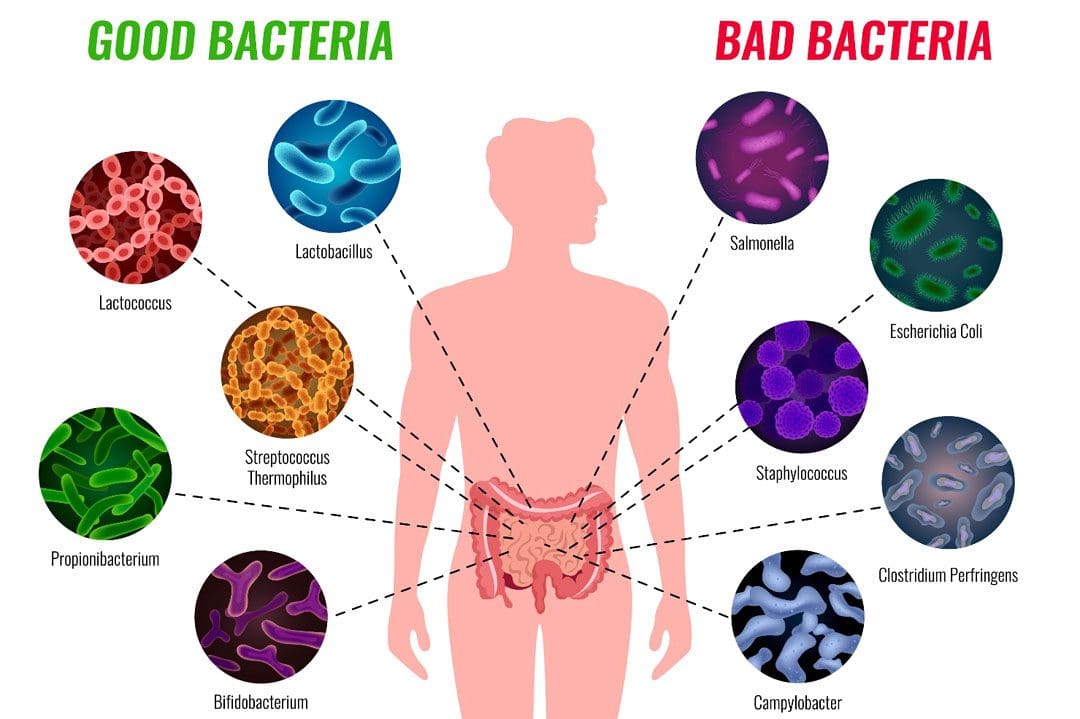
The more common pathogens are bacteria that can cause illness if left unchecked, including germs like streptococcus/strep throat or E. coli/urinary tract infections and diarrhea. Other common germs found in the colon include: (Elizabeth Thursby, Nathalie Juge. 2017)
Clostridioides Difficile
C. diff overgrowth can cause watery foul-smelling stools daily, and abdominal pain and tenderness.
Enterococcus Faecalis
Enterococcus faecalis is a cause of post-surgical abdominal and urinary tract infections.
Escherichia Coli
E. coli is the most common cause of diarrhea in adults.
This bacteria is present in almost every healthy adult’s colon.
Klebsiella
Klebsiella overgrowth is associated with a Western diet that consists of various meat and animal products.
Bacteroides
Bacteroide overgrowth is associated with colitis, which causes painful inflammation of the colon.
Healthy Flora
Healthy bacteria like Bifidobacteria and Lactobacillus, help maintain gut flora balance and keep the unhealthy bacteria in check. Without healthy flora, the entire colon can become overrun by bad flora, which can result in symptoms like diarrhea and/or illness. (Yu-Jie Zhang, et al., 2015) These protective, microscopic germs have important functions that include:
Assisting with vitamin synthesis – vitamins B and K in the small intestine.
Increases immune system function.
Maintaining regular bowel movements.
Maintaining a clean colon naturally without the need for colon cleansers.
Destroying the unhealthy bacteria.
Preventing unhealthy bacteria overgrowth.
Breaking up gas bubbles from food fermentation.
Bacterial Dismantling
Whether labeled as healthy bacteria or unhealthy, they are both single-celled organisms that can be destroyed quite easily. Sometimes, it is necessary, like when having to take antibiotics to kill a strep throat infection. However, the antibiotics also kill the beneficial bacteria, which can lead to compounding problems that can include: (Mi Young Yoon, Sang Sun Yoon. 2018)
Bowel irregularity – diarrhea and constipation.
Yeast overgrowth – can cause itching, burning around the anus and lead to vaginal and oral yeast infections.
Dysbiosis – the technical name for a lack of healthy bacteria or a bacterial imbalance.
Complications for individuals suffering from irritable bowel syndrome.
There are different ways to destroy bacteria including.
Prolonged diarrhea – can flush out the bad and good bacteria.
Stress
Completing a bowel prep, like those required for a colonoscopy.
Diagnosing Gut Flora Issues
Many times, problems with gut flora will correct themselves, and no action is required. However, individuals facing chronic bowel problems, like colitis or inflammatory bowel disease, may require medical intervention of their colon’s bacteria.
Comprehensive Digestive Stool Analysis/CDSA is a stool test that checks what type and amount of bacteria are present, nutrient absorption rates/digestion speed, and how well food is digested.
If there is a significant difference in the proportion of unhealthy versus beneficial bacteria, a healthcare provider may suggest taking a probiotic or a live microbial supplement to help repopulate and maintain gut flora balance.
Gut Dysfunction
References
Thursby, E., & Juge, N. (2017). Introduction to the human gut microbiota. The Biochemical journal, 474(11), 1823–1836. https://doi.org/10.1042/BCJ20160510
Zhang, Y. J., Li, S., Gan, R. Y., Zhou, T., Xu, D. P., & Li, H. B. (2015). Impacts of gut bacteria on human health and diseases. International journal of molecular sciences, 16(4), 7493–7519. https://doi.org/10.3390/ijms16047493
Yoon, M. Y., & Yoon, S. S. (2018). Disruption of the Gut Ecosystem by Antibiotics. Yonsei medical journal, 59(1), 4–12. https://doi.org/10.3349/ymj.2018.59.1.4
Quigley E. M. (2013). Gut bacteria in health and disease. Gastroenterology & hepatology, 9(9), 560–569.
IFM's Find A Practitioner tool is the largest referral network in Functional Medicine, created to help patients locate Functional Medicine practitioners anywhere in the world. IFM Certified Practitioners are listed first in the search results, given their extensive education in Functional Medicine