Medical experts have seen how pain education and cognitive behavioral therapy or CBT classes effectively manage chronic back pain; even a one-time pain management class can help. Individuals experiencing back pain often try a variety of remedies to find relief. These include:
Eliminating activities
Over-the-counter medications
Prescription pain medications
Support devices and braces
Pain specialists
Surgery
All treatment options can help alleviate discomfort and pain, but sometimes taking a pain management class and getting educated on what is happening in the body has been shown to help individuals gain a better understanding helping them to find relief. A recent study suggests that a one-time class may be all that is needed. These quick classes can give more individuals immediate access to information and skill sets that can help reduce the pain and everything that comes with it.
Cognitive Behavioral Therapy Classes
Cognitive Behavioral Therapy for chronic pain provides individuals with information and pain management skills. Cognitive-behavioral therapy is handled by a therapist and can take multiple individual or group sessions that last one or two hours. A session can include:
Education on pain and how it works.
How thoughts and emotions influence pain.
How pain affects mood.
Sleep and pain.
Activity and action plan development.
Chronic lower back pain or CLBP is considered a physical ailment; cognitive behavioral therapy can provide mental health strategies to manage symptoms better. For example, individuals with chronic pain begin to fear doing activities that could increase their pain level and begin to constantly worry about worsening the injury or creating a new injury. This can lead to severe stress that exacerbates the chronic symptoms and can lead to other health issues.
Single Session Vs. Multiple
Doctors and medical experts are trying to make pain education and relief skills more accessible. They do not require multiple sessions and instead consist of single-session, two-hour management classes. A randomized clinical trial of adults with chronic low back pain was compared to:
2-hour back pain health education class with no skill set training.
16-hour, 8-session cognitive behavioral therapy group class.
The study found that three months after treatment, the Empowered Relief group showed positive results. In the randomized trial, a single-session pain relief class was found to be non-inferior to an eight-session cognitive behavioral therapy class to:
Reduce pain-related distress
Pain intensity
Pain interference
Benefits
The individuals that completed the one-time 2-hour class reported positive results after three months. They found that the course had significantly reduced:
Pain intensity
Pain interference
Sleep disturbance
Anxiety
Fatigue
Depression
However, doctors caution that the two-hour class does not replace comprehensive cognitive-behavioral therapy. This is to get individuals on a positive path of pain management that can further develop into a healthy lifestyle. The objective is to create a range of options that meets an individual’s needs. The most significant advantage of a two-hour class is the convenience. Individuals can participate in these classes in person or online.
Body Composition
Supplements That Can Help Improve Lean Body Mass
A few dietary supplements that directly support body composition improvement.
Protein Powders
Protein powders are common nutritional/dietary supplements. Protein powders come in a variety of sources:
Plant-based – rice, hemp, pea, pumpkin seed, and soy.
Rice Protein
Rice protein is a plant-based protein powder used by vegans, vegetarians, and individuals who can’t tolerate dairy products. Research has found that rice protein has similar effects on body composition as whey. Scientists found that individuals who took rice protein and individuals that took whey protein both experienced positive body composition changes.
References
Cochrane Database of Systematic Reviews. (Oct 2015) “Psychological therapies for the management of chronic neuropathic pain in adults.” https://www.ncbi.nlm.nih.gov/pmc/articles/PMC6485637/
Darnall BD, Roy A, Chen AL, et al. Comparison of a Single-Session Pain Management Skills Intervention With a Single-Session Health Education Intervention and 8 Sessions of Cognitive Behavioral Therapy in Adults With Chronic Low Back Pain: A Randomized Clinical Trial. JAMA Netw Open. 2021;4(8):e2113401. doi:10.1001/jamanetworkopen.2021.13401
Future Neurology. (Nov 2014) “Neuroimaging chronic pain: what have we learned and where are we going?” https://www.ncbi.nlm.nih.gov/pmc/articles/PMC5289824/
HRB Open Research. (Aug 2020) “The relative effectiveness of psychotherapeutic techniques and delivery modalities for chronic pain: a protocol for a systematic review and network meta-analysis” https://www.ncbi.nlm.nih.gov/pmc/articles/PMC7459872/
Journal of Psychosomatic Research. (Jan 2010) “Mindfulness-based stress reduction for chronic pain conditions: variation in treatment outcomes and role of home meditation practice.”
National Institutes of Health. (March 2016) “Meditation and cognitive-behavioral therapy ease low back pain.” https://www.nih.gov/news-events/nih-research-matters/meditation-cognitive-behavioral-therapy-ease-low-back-pain
Pain. (Feb 2008). “Mindfulness meditation for the treatment of chronic low back pain in older adults: A randomized controlled pilot study. https://www.ncbi.nlm.nih.gov/pmc/articles/PMC2254507/
Pain and Therapy. (Jun 2020) “Rehabilitation for Low Back Pain: A Narrative Review for Managing Pain and Improving Function in Acute and Chronic Conditions.” https://www.ncbi.nlm.nih.gov/pmc/articles/PMC7203283/
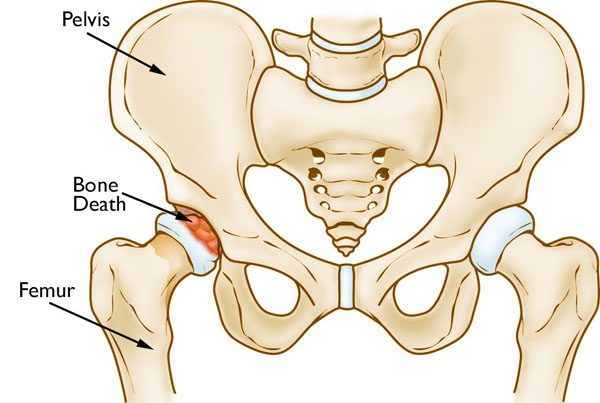
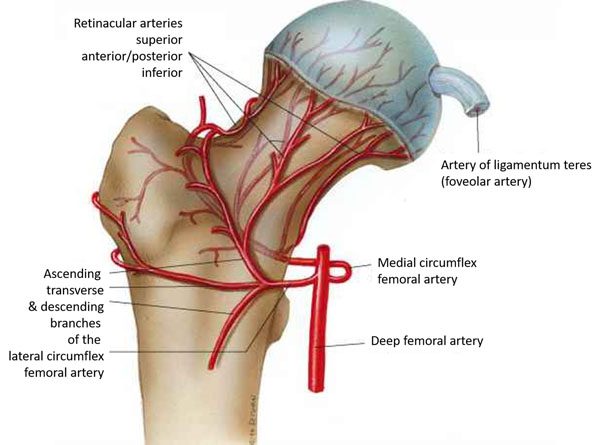
Osteonecrosis is a condition that causes the death of bone tissue from temporary or permanent loss of blood supply to the affected area. It is commonly known asAvascular necrosis and can lead to miniature/tiny breaks in the bone and the bone/s eventually collapsing. Specifically, it affects the upper part of the femur or femoral head and surrounding joints.
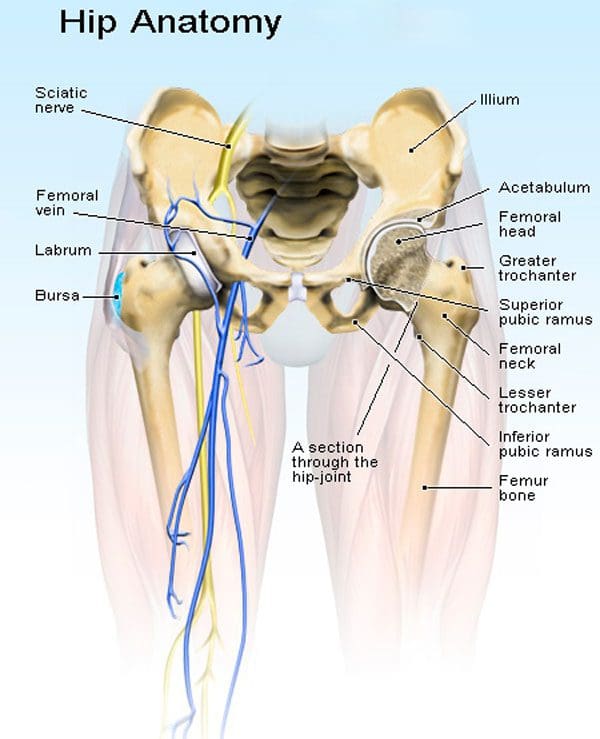
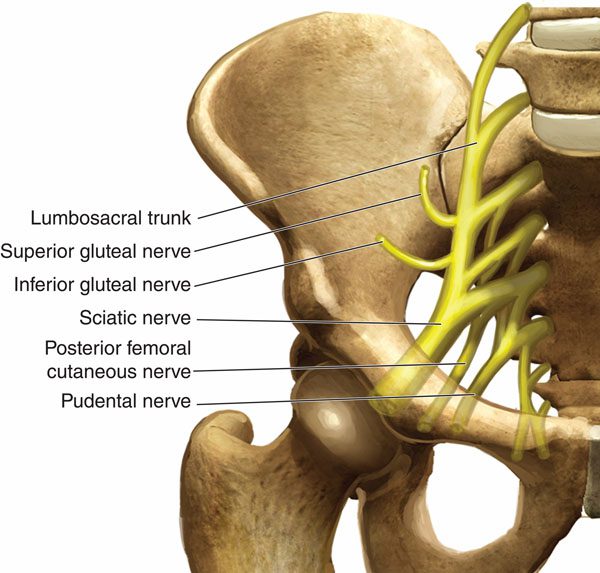
It can occur in any bone however, osteonecrosis typically affects the hip/s. Pain associated with osteonecrosis of the hip can be localized to the center of the groin, thigh, or buttock. Because of the hip joint’s close proximity to the sciatic nerve, misdiagnosis for sciatica is common.
Mimicking Sciatica Symptoms
Unfortunately, many health care providers can misdiagnose osteonecrosis hip pain as sciatica. Whatever the cause of the hip injury, most individuals with hip pathology report pain in the groin, upper thigh, and buttocks.
That is why a trained medical professional that knows the differences in the symptoms of each condition can make all the difference in making a proper diagnosis. And a proper diagnosis leads to proper and complete treatment of whichever condition it may be. With osteonecrosis, misdiagnosis often delays the proper treatment and continues to progress. Common symptoms of sciatica:
Leg pain is the primary symptom can be mild to severe
Low back pain is secondary can be mild to severe
Nerve-related symptoms
Numbness
Tingling
Shooting pain
Pins-and-needles sensation
Muscle weakness
Hip pain especially flexion and internal rotation of the hip.
Leg or foot weakness
Osteonecrosis Symptoms and Similarities
For many, there are no symptoms in the early stages of osteonecrosis. As the condition worsens, the affected joint could present pain symptoms only when weight is placed on it. Eventually, individuals begin to feel the pain even when lying down. Pain can be mild to severe with a gradual development. Other symptoms that mimick sciatica:
Walking Inability
Walking gait is complicated with both conditions which is a major cause behind the misdiagnosis.
Limping
Individuals often limp with osteonecrosis of the hip and spinal disc problems. This is another reason that the condition is misdiagnosed as a spinal disc problem or nerve root compression of the sciatic nerve.
Hip Pain
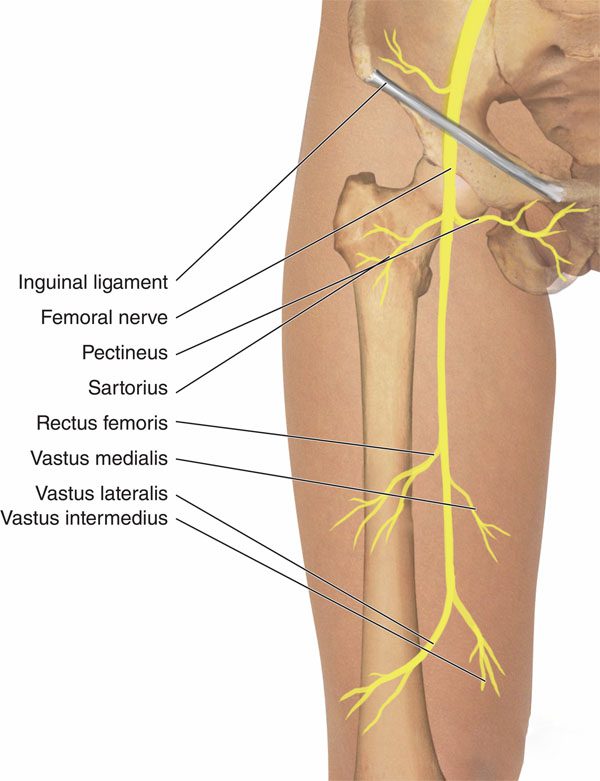
The tributaries/veins of the sciatic nerve also supply the hip area and often cause confusion between the two conditions.
Differences
Despite all of the similarities. There are differences in both conditions.
Nature of The Pain
With sciatica, the pain is related to the nervous system. Movement can complicate the pain. While rest helps to reduce the pain.
With Osteonecrosis the pain is geared toward the muscular. Rest does not help reduce the pain. In fact, the pain increases at night.
Location
Sciatica pain can radiate through the whole leg from the low back to the toe.
Osteonecrosis pain is confined to the hip joint, groin, and radiates to the knee joint only. Osteonecrosis pain does not radiate below the knee joint.
Restricted Movement
Osteonecrosis of the hip joint, means the movements involving the hip joint are restricted. Individuals cannot rotate the leg to the right and left. Individuals cannot bend or fold from the hip.
With sciatica, the rotation of the leg is not affected. Movements involving stretching the sciatic nerve can cause relief or pain.
Walking Gait Differences
Gait is the way an individual stands and walks.
Osteonecrosis of the hip joint causes individuals to not be able to open the hip joint properly or to step properly.
With sciatica, an individual tends to lean on their side to relax the compression on the nerve.
Risk Factors
More than 20,000 people enter hospitals for the treatment of osteonecrosis of the hip yearly. Other than the hip, areas of the body likely to be affected are the shoulder, knee, hand, and foot. The condition can occur for a variety of reasons. A few of these include:
Fracture – a broken bone can interrupt the blood flow to other sections of the bone.
Dislocation of bone or joint/s
Alcoholism
Trauma
Radiation damage
Steroid use
Some individuals can have more than one condition or injury that contributes to hip flexor pain. An example is that it is possible to have both hip osteoarthritis and hip impingement. Without proper treatment, the condition can worsen, causing joint or hip pain from the degradation of the bone.
Anyone can be affected, but osteonecrosis is most common in individuals aged 30 to 50. Treatment options include a total replacement of the hip known as arthroplasty. And if it is sciatica then chiropractic treatment is a first-line treatment protocol. However, a chiropractor can make the distinction between the two and treat sciatica or refer the patient to the proper specialist.
Lower Back Pain Relief
Dr. Alex Jimenez�s Blog Post Disclaimer
The scope of our information is limited to chiropractic, musculoskeletal, physical medicines, wellness, and sensitive health issues and/or functional medicine articles, topics, and discussions. We use functional health & wellness protocols to treat and support care for injuries or disorders of the musculoskeletal system. Our posts, topics, subjects, and insights cover clinical matters, issues, and topics that relate and support directly or indirectly our clinical scope of practice.*
Our office has made a reasonable attempt to provide supportive citations and has identified the relevant research study or studies supporting our posts. We also make copies of supporting research studies available to the board and or the public upon request. We understand that we cover matters that require an additional explanation as to how it may assist in a particular care plan or treatment protocol; therefore, to further discuss the subject matter above, please feel free to ask Dr. Alex Jimenez or contact us at 915-850-0900. The provider(s) Licensed in Texas& New Mexico*
References
Li, Wen-Long et al. �Exploring the Risk Factors for the Misdiagnosis of Osteonecrosis of Femoral Head: A Case-Control Study.��Orthopaedic surgery, 10.1111/os.12821. 16 Oct. 2020, doi:10.1111/os.12821
IFM's Find A Practitioner tool is the largest referral network in Functional Medicine, created to help patients locate Functional Medicine practitioners anywhere in the world. IFM Certified Practitioners are listed first in the search results, given their extensive education in Functional Medicine