Can understanding antinutrients and the importance of a balanced diet help individuals get the most out of their foods?
Antinutrients
Antinutrients are compounds in some plant foods that can reduce the body’s ability to absorb and use certain nutrients. (Petroski W., & Minich D. M. 2020) The purpose of these compounds is to protect the plants from infections and insects, which benefits the plant. It can also lower the human body’s ability to absorb nutrients properly. They are found in many grains, legumes, seeds, nuts, fruits, and vegetables. Plant-based foods high in antinutrients have beneficial nutrients, such as antioxidants, fiber, and other vitamins and minerals, and have been associated with a lower risk of chronic disease. The antinutrients may prevent the digestion and absorption of some minerals and have other negative effects that include:
Altered gut function
Increased inflammation
Endocrine disruption
Increased risk of calcium kidney stones
Common Types
Some of the main antinutrients of concern include phytates, lectins, oxalates, tannins, and phytoestrogens.
Phytates (phytic acid)
They are found in grains, legumes, nuts, and seeds.
They are found in various plant foods, including fruits, vegetables, nuts, and grains. (Mitchell T. et al., 2019)
Oxalates bind to certain minerals, such as calcium-forming calcium oxalate.
Tannins
They are found in many plant foods, such as legumes, cereal grains, nuts, cacao, leafy and green vegetables, coffee, and tea. (Ojo M. A. 2022)
Tannins are antioxidant-phenolic compounds that can reduce the absorption of some minerals and proteins in the body.
Phytoestrogens
They are found in various plant foods, such as fruits, vegetables, legumes, nuts, and seeds.
These estrogen-like compounds have many health benefits but may also act as endocrine disruptors (interfering with hormones). (Petroski W., & Minich D. M. 2020)
Effects on the Body
Antinutrient compounds typically bind to minerals or other nutrients, which inhibits digestion and absorption. For example,
How these foods containing antinutrient compounds are prepared and consumed can influence their impact on the body and the quantity consumed.
Advantages and Disadvantages
Plant foods have long been associated with improved health and a decreased risk of some chronic diseases, such as heart disease, diabetes, cancer, stroke, and others. (Craig W. J. et al., 2021) For most, the effects of antinutrients are not of major concern after processing and cooking. The benefits and drawbacks of consuming foods high in antinutrients include: (Petroski W., & Minich D. M. 2020)
Benefits
Some antinutrients act as antioxidants.
Some have cancer-fighting abilities.
Some may increase immune system function.
They are often sources of dietary fiber and other beneficial nutrients.
Drawbacks
It may be difficult for some individuals to digest.
Phytoestrogens may behave like endocrine disruptors.
High amounts of oxalates can contribute to kidney stones.
Cooking methods to minimize antinutrient content, like boiling, steaming
Autoclaving – a cooking process that uses high pressure and heat to cook and sterilize food.
Peeling the skins of fruits and nuts is effective for reducing tannins.
Combining foods to enhance nutrient absorption.
For example, pairing high-oxalate foods with high-calcium foods.
Combining different cooking and processing methods can completely degrade and reduce many antinutrient compounds. The exception is phytoestrogens, where boiling, steaming, and fermentation can increase antinutrients. (Petroski W. & Minich D. M., 2020)
Injury Medical Chiropractic & Functional Medicine Clinic
Individuals concerned about antinutrients in their diet and who want individualized advice on how to get the most out of the food they eat should consider consulting with a registered dietitian nutritionist or another healthcare professional. Injury Medical Chiropractic and Functional Medicine Clinic works with primary healthcare providers and specialists to develop an optimal health and wellness solution.
Smart Choices, Better Health
References
Petroski, W., & Minich, D. M. (2020). Is There Such a Thing as “Anti-Nutrients”? A Narrative Review of Perceived Problematic Plant Compounds. Nutrients, 12(10), 2929. https://doi.org/10.3390/nu12102929
Gupta, R. K., Gangoliya, S. S., & Singh, N. K. (2015). Reduction of phytic acid and enhancement of bioavailable micronutrients in food grains. Journal of food science and technology, 52(2), 676–684. https://doi.org/10.1007/s13197-013-0978-y
Adamcová, A., Laursen, K. H., & Ballin, N. Z. (2021). Lectin Activity in Commonly Consumed Plant-Based Foods: Calling for Method Harmonization and Risk Assessment. Foods (Basel, Switzerland), 10(11), 2796. https://doi.org/10.3390/foods10112796
Mitchell, T., Kumar, P., Reddy, T., Wood, K. D., Knight, J., Assimos, D. G., & Holmes, R. P. (2019). Dietary oxalate and kidney stone formation. American journal of physiology. Renal physiology, 316(3), F409–F413. https://doi.org/10.1152/ajprenal.00373.2018
Ojo, M. A. (2022). Tannins in Foods: Nutritional Implications and Processing Effects of Hydrothermal Techniques on Underutilized Hard-to-Cook Legume Seeds-A Review. Preventive nutrition and food science, 27(1), 14–19. https://doi.org/10.3746/pnf.2022.27.1.14
Craig, W. J., Mangels, A. R., Fresán, U., Marsh, K., Miles, F. L., Saunders, A. V., Haddad, E. H., Heskey, C. E., Johnston, P., Larson-Meyer, E., & Orlich, M. (2021). The Safe and Effective Use of Plant-Based Diets with Guidelines for Health Professionals. Nutrients, 13(11), 4144. https://doi.org/10.3390/nu13114144
Harvard T.H. Chan School of Public Health. (2022). Are anti-nutrients harmful? https://nutritionsource.hsph.harvard.edu/anti-nutrients/
U.S. Department of Agriculture. (2020). Dietary Guidelines for Americans, 2020-2025. Retrieved from https://www.dietaryguidelines.gov/sites/default/files/2021-03/Dietary_Guidelines_for_Americans-2020-2025.pdf
National Institutes of Health Office of Dietary Supplements. (2024). Iron. Retrieved from https://ods.od.nih.gov/factsheets/Iron-HealthProfessional/
The body’s ability to heal itself is quite remarkable. When injury or illness presents, the body’s systems activate to deal with the problem and restore itself to health. The spine’s bones protect the communication pathways of the spinal cord and nerve roots. If the nervous system suffers injury or is damaged in some way, causing impairment, it can cause malfunctioning of the tissues and organs throughout the body. Chiropractic care combined with functional medicine can restore and enhance the body’s self-healing abilities to optimal levels.
The Body’s Ability To Heal Itself
A healthy body regenerates, fights infection, heals wounds, and repairs damage. The body is in a constant state of removing damage and producing new, healthy tissues.
Cells can heal themselves when they become unhealthy and replicate to replace injured or damaged cells.
The body produces new cells to heal the damage if a bone gets fractured or broken.
When the skin gets cut, the blood clots, stopping the bleeding, white blood cells remove the injured and dead cells, and new healthy cells repair the damaged tissue.
The immune system deals with viruses, bacteria, and toxins.
Natural destroyer cells recognize when the body’s cells have been invaded by a virus and destroy the infected cell.
Inflammation
Inflammation is the body’s reaction to an injury or infection, activating the immune system to restore the injured or infected area to health.
A fever is the body’s raising its temperature to levels that will kill viruses and bacteria.
The elevation in temperature also triggers certain cellular mechanisms which help the body fight the infection.
Stem Cells
The body heals and regenerates itself through stem cells.
Once the body is formed, embryonic stem cells disappear, and adult stem cells take over.
The adult stem cells divide, producing an identical stem cell and a healthy, mature cell of a specific type.
Each type of adult stem cell only can become certain types of tissue.
For example, Mesenchymal Stem Cells can regenerate bone, fat, muscle, and cartilage cells.
Neural Stem Cells help regenerate nerve tissue in the brain and spinal cord.
Epithelial Stem Cells regenerate skin.
Adult stem cells can reproduce for a long time but eventually stop reproducing as efficiently.
Nervous System
The nervous system assists the whole body in maintaining communication, using electrical and chemical impulses to send and receive messages. The system reacts to changes inside and outside the body. Infections, injuries, disorders, and conditions can cause imbalances causing communication problems that can lead to health issues. Common problems of the nervous system include:
Sciatica – Pressure on a nerve/s caused by a slipped, bulging, or herniated disc in the spine or arthritis of the spine and, sometimes, other factors.
Parkinson’s disease – The death of neurons in a part of the brain called the midbrain. Symptoms include shaking and mobility problems.
Epilepsy – Abnormal electrical activity in the brain causing seizures.
Meningitis – Inflammation of the membrane covering the brain.
Multiple sclerosis – The myelin sheaths protecting the nerves of the central nervous system become damaged and deteriorates.
Chiropractic Care
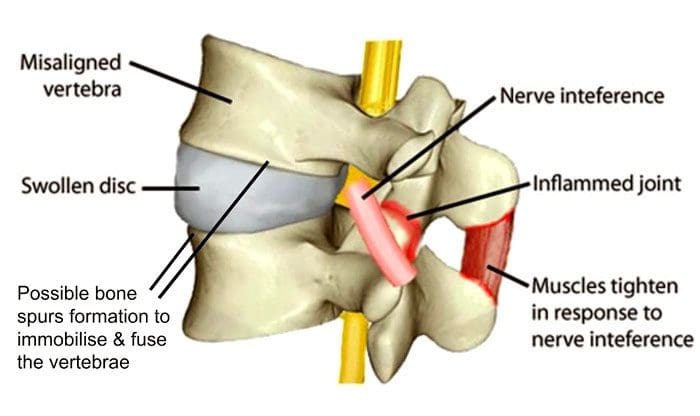
Subluxations are misaligned or damaged joints that are not functioning correctly. These joints can place pressure on a nerve, which interferes with the normal nervous system function. Chiropractic care can realign, restore and maintain neuromusculoskeletal system health to reactivate the body’s natural healing abilities.
Cerebral Palsy Chiropractic Treatment
References
Haavik, Heidi, et al. “Effects of 12 Weeks of Chiropractic Care on Central Integration of Dual Somatosensory Input in Chronic Pain Patients: A Preliminary Study.” Journal of manipulative and physiological therapeutics vol. 40,3 (2017): 127-138. doi:10.1016/j.jmpt.2016.10.002
Lee, Courtney, et al. “Mind-body therapies for the self-management of chronic pain symptoms.” Pain medicine (Malden, Mass.) vol. 15 Suppl 1 (2014): S21-39. doi:10.1111/pme.12383
Maltese PE, Michelini S, Baronio M, Bertelli M. Molecular foundations of chiropractic therapy. Acta Biomed. 2019 Sep 30;90(10-S):93-102. doi: 10.23750/abm.v90i10-S.8768. PMID: 31577263; PMCID: PMC7233649.
McSwan, Joyce, et al. “Self-Healing: A Concept for Musculoskeletal Body Pain Management – Scientific Evidence and Mode of Action.” Journal of pain research vol. 14 2943-2958. 21 Sep. 2021, doi:10.2147/JPR.S321037
Navid, Muhammad Samran et al. “The effects of chiropractic spinal manipulation on central processing of tonic pain – a pilot study using standardized low-resolution brain electromagnetic tomography (sLORETA).” Scientific reports vol. 9,1 6925. 6 May. 2019, doi:10.1038/s41598-019-42984-3
Individuals don’t like to read the warning signs of their spinal health, saying to themselves the pain will go away. Individuals will feel their back seize up or sting for a moment and then goes back to normal. The body is doing its job to warn you that something is not right. This is where choices come into play:
Ignore the warning because the tingling or pain went away.
Pay attention to the warning before more damage is done.
This is where waiting, hoping that it will resolve on its own, is not recommended. This is because something did happen but did not fully present, like a loose part that is still functioning. However, time, movement, or action, can throw the body off balance and create all kinds of health issues.
Paying attention to the Warning Signs
The body is always adapting to the internal and external environments. For example, external adaptation is sweating during a hot summer day. The body adapts to the heat by sweating to cool down and bring down the temperature. An example of internal adaptation is the spine has been slowly shifting out of alignment. The muscles that support the spine have been adapting to this shifting. However, it is not the ideal adaptation situation as some muscles over/under stretch while others under/over-contract to compensate, causing pain. The body gets stressed out physically, with possible damage occurring. This is where an individual knows something is not right and needs to listen to their body.
The Impact
A spine that is misaligned/subluxated does not move properly or function correctly. Improper movement damages the spinal:
Bones
Discs
Cord
Nerves
The spinal cord and nerves transmit and receive all the vital information the body needs to function. These include:
Heart function
Intestinal function
Lung function
A misaligned spine can hurt or cause symptoms for a split second. The effects of an untreated misaligned spine can affect an individual for life. If you have experienced any of these or other warning signs, contact a chiropractor. Injury Medical Chiropractic and Functional Medicine Clinic will help assess your symptoms and develop a personalized treatment plan.
Body Composition
Work On Goals One at A Time
To reach goals faster, it’s best to target one goal at a time. How to decide which goal to begin with:
Fat Loss First
This goal is best for individuals whose body compositions have a high body fat percentage and high overall weight.
Lean Body Mass First
Individuals may want to begin by increasing Lean Body Mass if they are skinny fat. Skinny fat means the individual is not overweight but has low amounts of Lean Body Mass and high amounts of Fat Mass.
Resistance training to build muscle will likely bring down Fat Mass as well. Increasing Lean Body Mass will increase the calorie needed by the body to maintain itself. This increased calorie need can lead to the body acquiring energy by burning extra fat. The calories burned in resistance training also speed up fat loss. Everyone is different in how the body responds to programs targeting fat and those designed to build muscle. Consult with our health coach, nutritionist, and fitness chiropractic team with any questions you may have.
Flynn, Diane M. “Chronic Musculoskeletal Pain: Nonpharmacologic, Noninvasive Treatments.” American family physician vol. 102,8 (2020): 465-477.
Sanzarello, Ilaria et al. “Central sensitization in chronic low back pain: A narrative review.” Journal of back and musculoskeletal rehabilitation vol. 29,4 (2016): 625-633. doi:10.3233/BMR-160685
Rheumatoid arthritis is said to affect around 1.5 million individuals. Recognized as an autoimmune condition that presents with chronic pain in the body’s joints. It commonly affects regularly used joints like the shoulders, hands, and feet. The condition can begin to present in individuals in their 30s. Concerns that come with a rheumatoid arthritis diagnosis are the condition's effect on the spinal facet joints. These joints are susceptible to attack from a dysfunctional immune system, leaving them prone to weakness, inflammation, and nerve compression. Chiropractors understand the manifestation of rheumatoid arthritis. They can pinpoint at-risk facet joints and provide corrective relief before more dangerous symptoms begin to present.
Facet joint risks
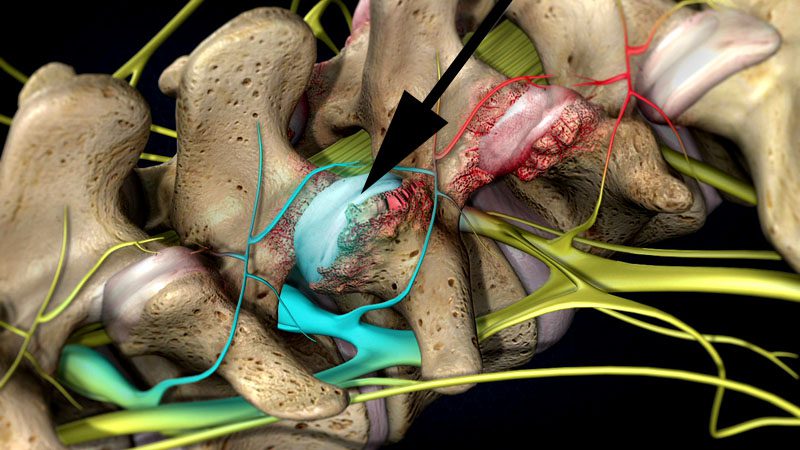
There are two facet joints that connect each vertebra to the one above and below. Their objective is to stabilize the spine, whether in a neutral position or engaged in flexion/extension movement. When targeted by the body’s immune system, the joints begin to weaken. The body attacks the synovial fluid that lubricates the joints. This creates friction that generates inflammation. Over time the joints break down leading to everything from loss of mobility to bone spurs. When left untreated the facet joints begin to deteriorate, causing nerve compression that can lead to permanent nerve damage. When the joints are not working properly the spine has to work around them.
Subluxations
Disc herniation
Ruptured discs
Sciatica all are possible with facet joint dysfunction.
Treatment
Currently, rheumatoid arthritis cannot be cured but symptoms can go into remission when treatment begins early.Chiropractic is an effective treatment at disrupting the symptoms of joint deterioration that stops the progression.
It has the ability to increase and maintain an individual's range of motion, from a condition that causes loss of mobility.
It helps to bring rapid pain relief and helps with postural improvements.
It maintains positive spinal health and homeostasis.
Prevents problems with compression and subluxations.
Stretching and strengthening exercises are incorporated to preserve an individual's spinal integrity.
Diet and nutrition are also adjusted to mitigate the effects, helping with inflammation prevention.
The spinal focus
As rheumatoid arthritis affects the body's joints, it is vital to protect the facet joints. These joints can experience degenerative damage that can cause long-term problems. Injury Medical Chiropractic and Functional Medicine Clinic provide individuals with the tools necessary to combat rheumatoid arthritis that medications by themselves might not be able to.
Body Composition
Muscle Mass Fitness for Long-Term Health
Muscle building is not just for bodybuilders and athletes. Everyone benefits from building muscle for long-term health. Monitoring the changes in Lean Body Mass can be accomplished by having body composition measured. Body composition analysis can divide an individual's weight into various components. These include:
Fat Mass
Lean Body Mass
Basal Metabolic Rate will give a clearer picture of overall fitness and health.
Building Lean Body Mass is an investment for maintaining health long-term. The more Lean Body Mass that is built the more is in storage/reserve when the body really needs it. Before adding protein shakes and resistance workouts to the daily regimen, a plan needs to be developed. The first step to building a healthy level of lean body mass is to measure how much there is with a body composition analysis.
Disclaimer
The information herein is not intended to replace a one-on-one relationship with a qualified health care professional, licensed physician, and is not medical advice. We encourage you to make your own health care decisions based on your research and partnership with a qualified health care professional. Our information scope is limited to chiropractic, musculoskeletal, physical medicines, wellness, sensitive health issues, functional medicine articles, topics, and discussions. We provide and present clinical collaboration with specialists from a wide array of disciplines. Each specialist is governed by their professional scope of practice and their jurisdiction of licensure. We use functional health & wellness protocols to treat and support care for the musculoskeletal system’s injuries or disorders. Our videos, posts, topics, subjects, and insights cover clinical matters, issues, and topics that relate to and support, directly or indirectly, our clinical scope of practice.* Our office has made a reasonable attempt to provide supportive citations and has identified the relevant research study or studies supporting our posts. We provide copies of supporting research studies available to regulatory boards and the public upon request. We understand that we cover matters that require an additional explanation of how it may assist in a particular care plan or treatment protocol; therefore, to further discuss the subject matter above, please feel free to ask Dr. Alex Jimenez or contact us at 915-850-0900.
Dr. Alex Jimenez DC, MSACP, CCST, IFMCP, CIFM, CTG* email: [email protected] phone: 915-850-0900 Licensed in Texas & New Mexico
References
Pope JE, Cheng J. Facet (Zygapophyseal) Intraarticular Joint Injections: Cervical, Lumbar, and Thoracic. Injections for Back Pain. 129-135. ClinicalKey.com. Accessed July 16, 2019.
Brummett CM, Cohen SP. Pathogenesis, Diagnosis, and Treatment of Zygapophyseal (Facet) Joint Pain. 816-844. ClinicalKey.com. Accessed July 16, 2019.
IFM's Find A Practitioner tool is the largest referral network in Functional Medicine, created to help patients locate Functional Medicine practitioners anywhere in the world. IFM Certified Practitioners are listed first in the search results, given their extensive education in Functional Medicine