Can converting a bicycle into a stationary bike be a way for individuals to exercise more while still enjoying cycling?
Bicycle Stationary Conversion
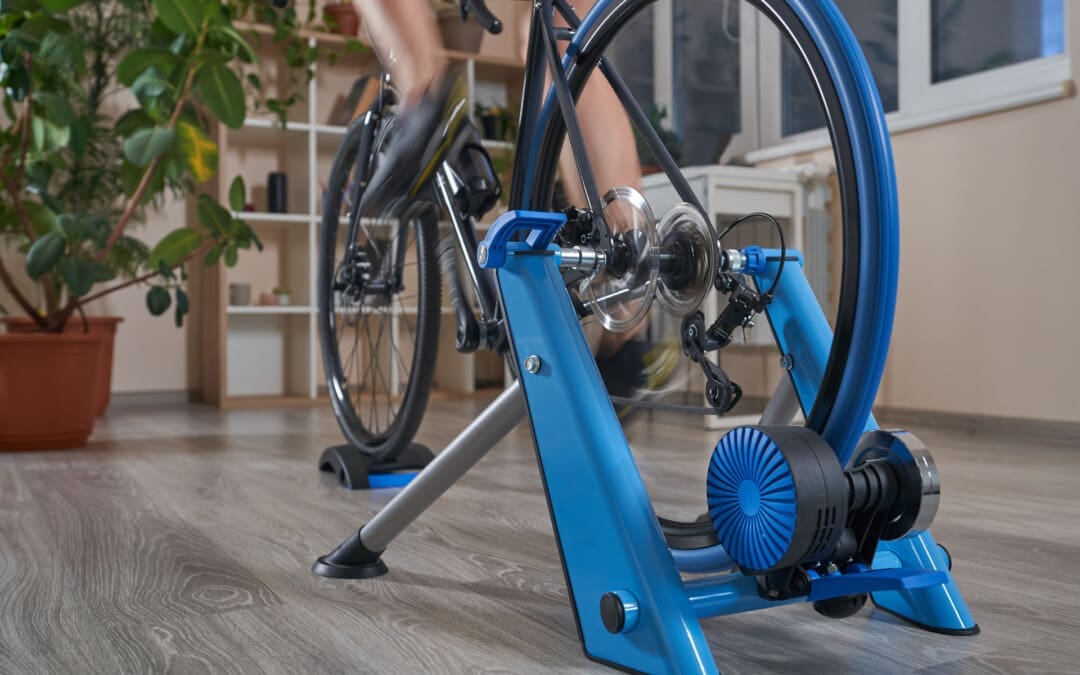
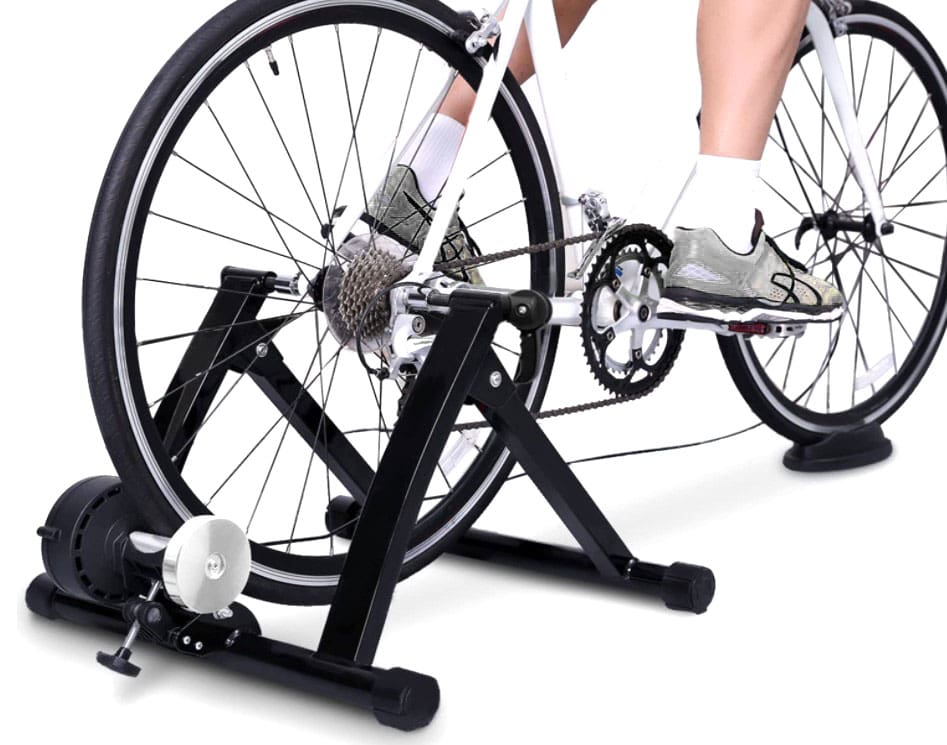
Is your bike collecting dust in the garage? Do you miss riding, but the weather or temperatures keep you indoors? Why not quickly and painlessly turn your bike into a stationary bike? An indoor stationary bike is a great way to maintain physical activity while avoiding inclement weather and outdoor elements. Plus, bicycle stationary conversion in your home, office, or garage is quick and straightforward. A bike trainer or roller is needed to convert a bicycle into a stationary bike. The bike is mounted onto the trainer stand, and its rear axle is replaced with a special axle provided with the trainer kit to secure it and hold the wheel in place while allowing you to pedal, creating resistance for indoor cycling.
Cycling
Bicycle stationary conversion isn’t only for die-hard cyclists. Research shows indoor cycling is a great way to stay healthy and consistent with your workouts. One study showed that indoor cycling improves aerobic capacity, blood pressure, lipid profile, and body composition. (Chavarrias, M. et al., 2019)
Stationary Bikes Types
For those who don’t have the space or know that they won’t regularly use a stationary bike, indoor bike trainers and rollers can provide convenient, economical, and compact options. Whether individuals want to exercise more, maintain a riding schedule, or train for an event, trainers and rollers can be highly effective tools for any cyclist. However, choosing between a bike trainer and rollers varies depending on the pros and cons. Selecting the right equipment depends on several factors, including:
Personal needs
Space – indoor or garage.
Cycling experience
Most cyclists, even hobbyists, prefer indoor cycling bikes over traditional stationary bikes because they are riding a real bicycle, including the positioning and pedaling, compared to upright, air, or recumbent bikes.
Trainer
A bike trainer is a stand that lets an individual ride a regular bicycle while stationary. Cyclists often use it to warm up before races, and it comes in handy when weather conditions or time constraints prevent riding outdoors. Most trainer stands can accommodate bicycles. Trainers are suitable for beginners and professional riders. There are two types of indoor bike trainers.
Direct-drive
Direct-drive trainers attach to the bike’s rear dropouts, replacing the wheel and providing a direct connection to the resistance unit.
These can cost more, but they’re worth the investment because they’re more accurate and deliver the highest resistance levels.
Friction
A small roller is installed against the rear wheel with friction trainers, which use magnetic or fluid resistance.
These are typically lighter and easier to transport than direct-drive trainers but are less accurate and provide less resistance.
Rollers
Rollers are the most basic type of indoor stationary bike but may not be the best option for individuals new to indoor cycling. This is because it requires advanced cycling techniques, such as balancing and keeping the front tire straight while riding. The cycle is on rollers instead of being fixed, allowing the resistance to range from zero to the equivalent of a direct-drive trainer. Rollers help refine pedaling technique and improve cycling form because you balance and stabilize while riding.
Conversion – What Is Needed
The most important equipment needed to convert the cycle is a bike stand, which will be the foundation of the stationary bike setup. (Bike To Work Day, 2025) There are two-piece stands and one-piece stands. (Bike To Work Day, 2025) Tools like an Allen wrench may be needed. Various bike trainer kits contain all the parts needed for this conversion, but extra standard tools may be required to remove the back wheel and replace the axle.
Choose the right trainer: Consider your bike type, desired resistance levels, and budget.
Install the trainer: Follow the manufacturer’s instructions to position and secure the trainer properly.
Mount the bike: Remove the rear wheel quick release, insert the trainer’s axle, and tighten it securely.
Adjust resistance: Most trainers have a knob or lever to control the difficulty level.
If you are uncertain whether your bike stand is set up correctly or having issues with the installation, contact a professional bike mechanic. They can help get the stationary bike up and running properly.
Considerations
Tire wear: Using a dedicated trainer tire for the rear wheel can minimize wear and tear.
Noise level: Some trainers can be noisy, especially wheel-on types.
Stability: Ensure the bike is properly secured on the trainer and your training area is stable.
Injury Medical Chiropractic and Functional Medicine Clinic
Injury Medical Chiropractic and Functional Medicine Clinic works with primary healthcare providers and specialists to build optimal health and wellness solutions. Regarding musculoskeletal pain, specialists like chiropractors, acupuncturists, and massage therapists can help mitigate the pain through spinal adjustments that help the body realign itself. The clinic can also work with other medical professionals to integrate a treatment plan to resolve musculoskeletal problems.
Body In Balance: Chiropractic, Fitness, and Nutrition
References
Chavarrias, M., Carlos-Vivas, J., Collado-Mateo, D., & Pérez-Gómez, J. (2019). Health Benefits of Indoor Cycling: A Systematic Review. Medicina (Kaunas, Lithuania), 55(8), 452. https://doi.org/10.3390/medicina55080452
Bike To Work Day. (2025). How to turn a bike into a stationary bike: Things to know. https://biketoworkday.us/turn-a-bike-into-a-stationary-bike/#Setting_up_Your_Stationary_Bike
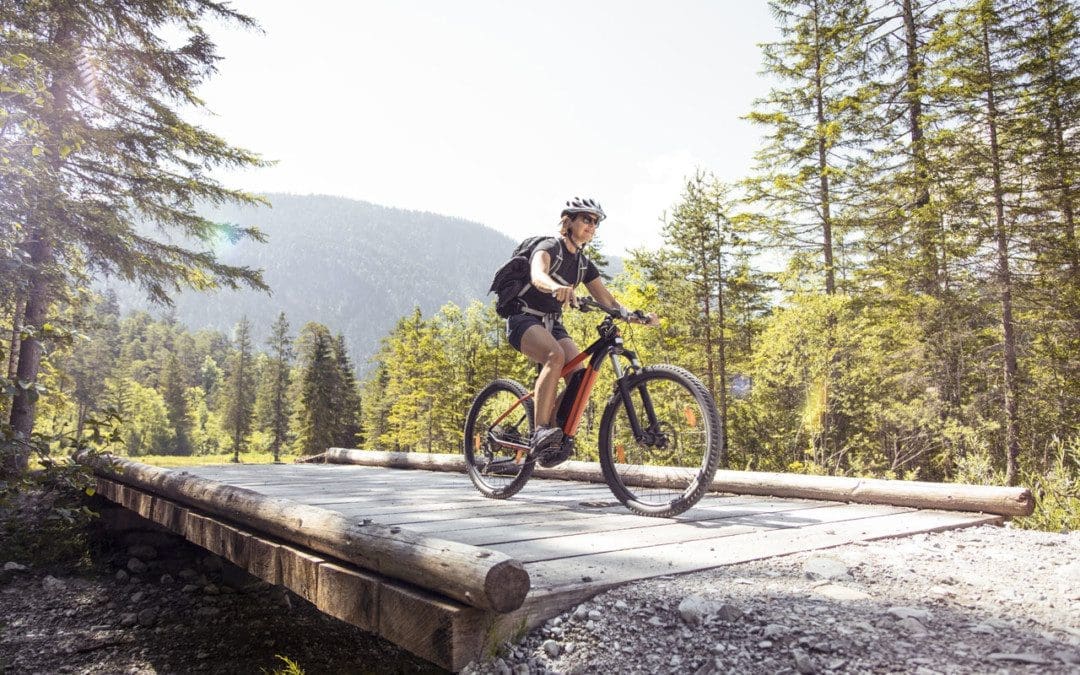
Mountain biking is a recommended sport for building muscle power and strength, endurance, and agility. Mountain biking uses bicycles designed to ride off-road and over rough terrain. The sport requires core strength, endurance, balance, and self-reliance. This is because riders are often far from civilization. Riders must learn to repair broken bike parts and fix flat tires to avoid being stranded. Mountain biking gear that riders carry includes a heavy-duty backpack with plenty of water, food, tools for repairs, and a first aid kit. Using the appropriate gear and equipment will help make the next ride safer and more comfortable.
Mountain Biking Gear
The first piece of equipment is a properly fitting and well-maintained mountain bike. There are all types of bicycles for every type of rider and trail. There are variations of bikes with full suspension, front suspension, disc brakes, V-brakes, different wheel sizes, and frame materials. It is recommended to consult a professional or visit a bicycle shop specializing in mountain biking to match the individual with the best bike. The right bike makes for a better ride.
Brakes
Disc brakes offer more secure braking when going high speed and needing the option to stop safely and at the proper distance.
Frame Size
The bike’s frame must be properly set up so the individual can easily step over and pedal at the correct height.
Suspension
Individuals that plan on taking on all kinds of terrains need the bike to absorb the shock and impact and are recommended to consider a full-suspension bike or one with a suspension fork.
Wheels
Mountain bike wheels range in size from 26 to 29 inches, and depending on the terrain and speeds, the right wheel diameter is key.
Larger wheels accelerate slower but provide improved traction.
Smaller wheels are lighter and easier to maneuver.
Helmet
A helmet is the most important safety gear that significantly reduces the severity of head injuries; no one should ride without one. Mountain bike helmets generally have a visor to help block the sun when riding so individuals can focus on the trail and not be distracted by glare. Three styles of mountain bike helmets are available, depending on the type of activity.
A trail mountain biking helmet covers part of the face and has a visor to help protect the head from the sun and other weather elements.
Trail helmets are recommended for mountain biking, road, and trail cycling.
Full-Face
Full-face helmets are essential for downhill trails at high speeds and on varying terrains.
They feature an adjustable visor and chin protection for added safety.
Eye Protection
Eye protection helps keep dirt, dust, and debris out of the eyes and helps have clear vision in dark shadows and bright sunlight.
Glasses or goggles protect the eyes if not using a full-face helmet.
Choosing a frame with an interchangeable lens system that comes with different lenses for varying light conditions is recommended.
Hydration Pack
Wearing a hydration packwhen riding provides easy access to hands-free hydration.
This is important for anyone exercising for more than two hours and with limited access to refills on the trail.
Mountain Biking Shoes
Beginners can wear comfortable sports shoes when starting.
Riders who begin riding more frequently will eventually want to transition to mountain biking shoes.
Cleated bike shoes work with pedals and lock the rider’s feet to the bike.
There is a variety of cycling footwear, but all-mountain bike shoes provide thorough traction off the bike, durability, comfort, and a heavy-duty sole for optimal pedaling efficiency.
Clipless Pedals
Clipless pedals are recommended for cross-country trail riding.
Cycling shoes and clipless pedal systems lock the shoes into the pedals for secure and efficient pedaling and can be unclipped easily with a twist of the foot.
Use shoes and pedals that work together.
Gloves
Mountain bike gloves provide additional padding and finger coverage.
They absorb the shock and protect the hands from falls on rough terrain.
The handlebar grips are padded, but additional cushion from the gloves is beneficial for long or downhill rides for extra comfort and protection.
Full-finger gloves offer the best coverage, protection, and grip on the brake levers.
These shorts provide a padded inner liner like underwear that increases comfort and reduces chafing.
The exterior looks like a baggy pair of shorts made of tough, abrasion-resistant fabric to take the wear and tear.
Bicycle Repair Kit
A repair kit can be attached to the bike saddle and holds all the essential tools for mechanical trouble or a flat tire.
The repair kit should include a bicycle multi-tool, an extra tube and patch kit, tire levers, a mini pump, and emergency cash.
Riders should keep an identification card with a list of contact numbers in the seat bag in case of a serious injury or other emergencies.
First Aid Kit
Riders can lose traction on loose rock and crash on the trail.
A first aid kit with various bandages, tape, pain relievers, and antiseptic wipes to treat cuts, scrapes, blisters, rashes, and everything in between is highly recommended.
Also include an eye drop solution, a small pocketknife, moleskin, energy gels, and an emergency whistle.
Biking Franklin Mountains
References
Alena Høye, Bicycle helmets – To wear or not to wear? A meta-analysis of the effects of bicycle helmets on injuries, Accident Analysis & Prevention, Volume 117, 2018, Pages 85-97, ISSN 0001-4575, https://doi.org/10.1016/j.aap.2018.03.026.
Ansari, Majid, et al. “Mountain Biking Injuries.” Current sports medicine reports vol. 16,6 (2017): 404-412. doi:10.1249/JSR.0000000000000429
Clark, Gregory, et al. “Do Mountain Bikers Know When They Have Had a Concussion and, Do They Know to Stop Riding?.” Clinical Journal of sports medicine: official journal of the Canadian Academy of Sports Medicine vol. 31,6 (2021): e414-e419. doi:10.1097/JSM.0000000000000819
Hall, Cougar et al. “Pedal-Assist Mountain Bikes: A Pilot Study Comparison of the Exercise Response, Perceptions, and Beliefs of Experienced Mountain Bikers.” JMIR formative research vol. 3,3 e13643. 13 Aug. 2019, doi:10.2196/13643
Impellizzeri, Franco M, and Samuele M Marcora. “The physiology of mountain biking.” Sports medicine (Auckland, N.Z.) vol. 37,1 (2007): 59-71. doi:10.2165/00007256-200737010-00005
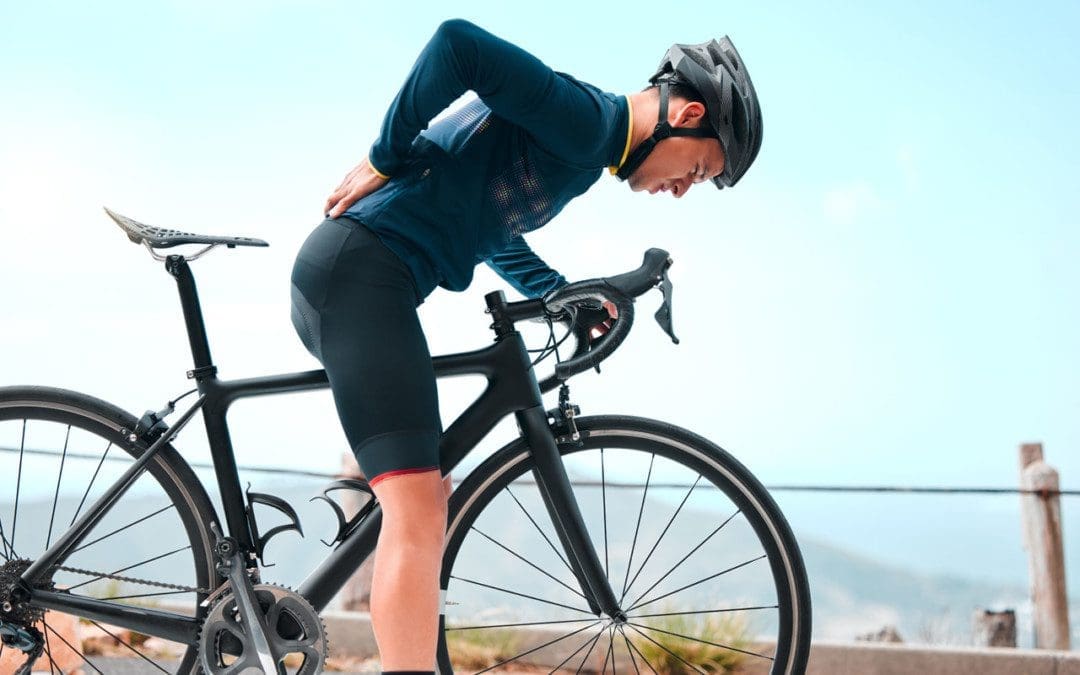
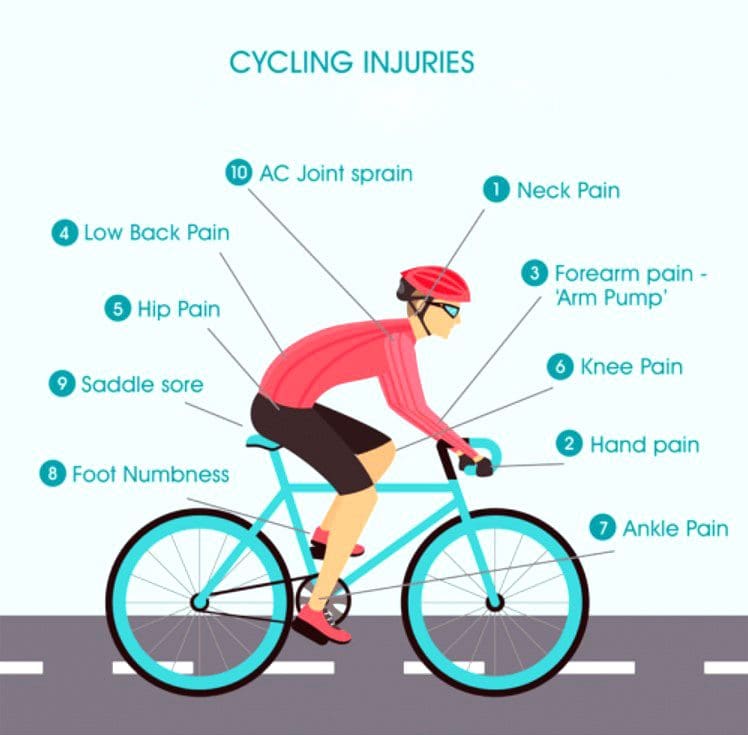
Bicycle riding is a form of transportation and a popular leisure and exercise activity. It helps with brain, heart, and whole body health. Whether recreational or pro cyclist, road or mountain biking, injuries are most often caused by overuse, repetitive strain, or a traumatic fall. If not treated properly by a medical professional, bicycle riding injuries can develop into long-term problems. Chiropractic care, sports massage, and decompression therapy combined with functional medicine can alleviate symptoms, rehabilitate the muscles, release compressed nerves, and restore mobility and function.
Bicycle Riding Injuries
Long-term cycling can cause muscle fatigue, leading to various injuries.
Overuse injuries occur when performing the same motion over and over again.
Musculoskeletal injuries range from sprains, torn ligaments, and tendons to fractures from crashes and falls.
Bicycle Setup
Not having the correct bike setup for the individual affects posture.
A seat that is too high causes the hips to rotate, leading to hip, back, and knee pain.
A seat that is too low causes over-flexion of the knees and pain.
Improper footwear not set in the right position can lead to pain in the calves and feet.
Handlebars that are too far forward can cause neck, shoulder, and back problems.
If any discomfort symptoms result from cycling, it’s recommended to get checked by a medical professional as soon as possible. After a correct diagnosis, resolving the issue/s could involve altering the bike setup to reduce the strain on certain body parts. Conversely, a condition could be developing that needs a personalized treatment program consisting of chiropractic care, physical therapy, steroid injections, or, if necessary, surgery.
Injuries
Hips
Tightness develops at the front of the hip/hip flexors from prolonged sitting and can lead to decreased flexibility and cause irritation of the bursa (fluid-filled sacs between the muscle and bone to reduce friction) at the front of the hip.
Symptoms at the front and outer side of the hip can travel down the thigh toward the knees.
Checking that the saddle height is correct can help.
Knees
The knee is the most common site for overuse injuries. Common knee overuse injuries include:
Patellofemoral syndrome
Patella and quadriceps tendinitis
Medial plica syndrome
Iliotibial band friction syndrome
The first four involve discomfort and pain around the kneecap. The last condition results in outer knee pain. Shoe insoles, wedges, and positioning can help prevent some of these injuries.
Feet
Foot tingling, numbness, burning sensations, or pain on the underside of the foot are common.
This occurs from pressure on the nerves that travel through the ball of the foot and toward the toes.
Shoes that are poorly fitted, too tight, or narrow are often the cause.
This comes from increased pressure in the lower leg and results in compressed nerves.
Neck and Back
Discomfort and pain in the neck result from staying in one riding position for too long.
Usually, if the handlebars are too low, the rider has to round their back, adding strain to the neck and back.
Tight hamstrings and/or hip flexor muscles can also cause riders to round/arch the back, causing the neck to be hyperextended.
Doing shoulder shrugs and neck stretches will help relieve neck tension. Regular stretching will create flexibility and make it easier to maintain proper form.
Shoulders
Shoulder overuse injuries cause muscle weakness, stiffness, swelling, tingling or numbness in the fingers, and pain. Treatments depend on the severity of the condition.
Shoulder impingement/pinching
Swelling of soft tissues
Rotator cuff tears
Injuries to the ball-and-socket joint tend to be labral tears of the socket lining cartilage or damage to other structures. Damage to the cartilage can lead to arthritis if not treated effectively.
Falls can cause:
Minor fractures or dislocation.
Fractured collarbone/clavicle – must be immobilized for four to six weeks before rehabilitation exercises are started.
Damage to the joint on the top of the shoulder/acromioclavicular joint or ACJ.
Many of these impact-related injuries can be treated with chiropractic and targeted physical therapy to strengthen the muscles and improve mobility. However, some cases, like severely displaced fractures, require surgical reconstruction or repair.
Intense aching in the forearm can make gripping and ungripping the hands difficult and painful.
These can be prevented by changing hand positions and alternating the pressure from the inside to the outsides of the palms ensuring the wrists don’t drop below the handlebars.
Cyclists are recommended to ride with their elbows slightly bent, not with their arms locked or straight. Bent elbows act as shock absorbers when riding over bumps or rough terrain.
Using padded gloves and stretching the hands and wrists before riding can help. Changing the grip on the handlebars takes the stress off of over-used muscles and redistributes pressure to different nerves.
Head Injuries
Head injuries can range from scrapes, contusions, concussions, or traumatic brain injury.
Wearing a helmet can reduce the risk of head injury by 85 percent.
Chiropractic Treatment
Chiropractic for cyclists can relieve symptoms, rehabilitate and strengthen muscles, improve posture, and prevent future injuries. Cyclists have also reported enhanced:
Respiration
Range of motion
Heart rate variability
Muscle strength
Athletic ability
Neurocognitive functions such as reaction time and information processing.
Common Bicycle Riding Injuries
References
Mellion, M B. “Common cycling injuries. Management and prevention.” Sports medicine (Auckland, N.Z.) vol. 11,1 (1991): 52-70. doi:10.2165/00007256-199111010-00004
Olivier, Jake, and Prudence Creighton. “Bicycle injuries and helmet use: a systematic review and meta-analysis.” International journal of epidemiology vol. 46,1 (2017): 278-292. doi:10.1093/ije/dyw153
Silberman, Marc R. “Bicycling injuries.” Current sports medicine reports vol. 12,5 (2013): 337-45. doi:10.1249/JSR.0b013e3182a4bab7
IFM's Find A Practitioner tool is the largest referral network in Functional Medicine, created to help patients locate Functional Medicine practitioners anywhere in the world. IFM Certified Practitioners are listed first in the search results, given their extensive education in Functional Medicine