The biceps curl is an exercise to build strength in the upper arm. Curls are a common exercise used in upper-body strength training. Specifically, the curl works the muscles in the front of the upper arm. It’s recommended for achieving strength and definition and provides core and stability challenges. Injury Medical Chiropractic and Functional Medicine Clinic can educate individuals on fitness, strength training, nutrition, and injury prevention.
Bicep Curls
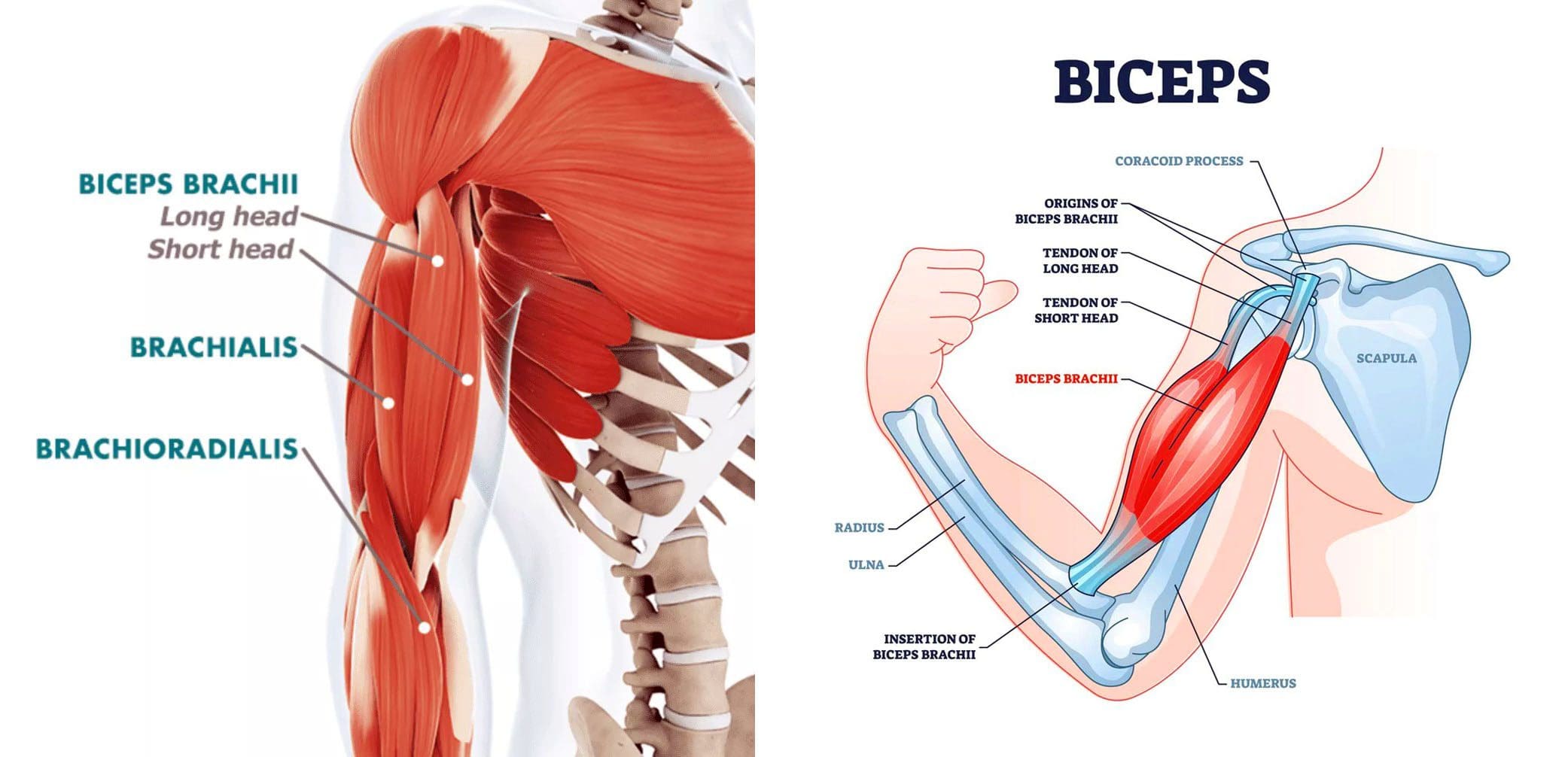
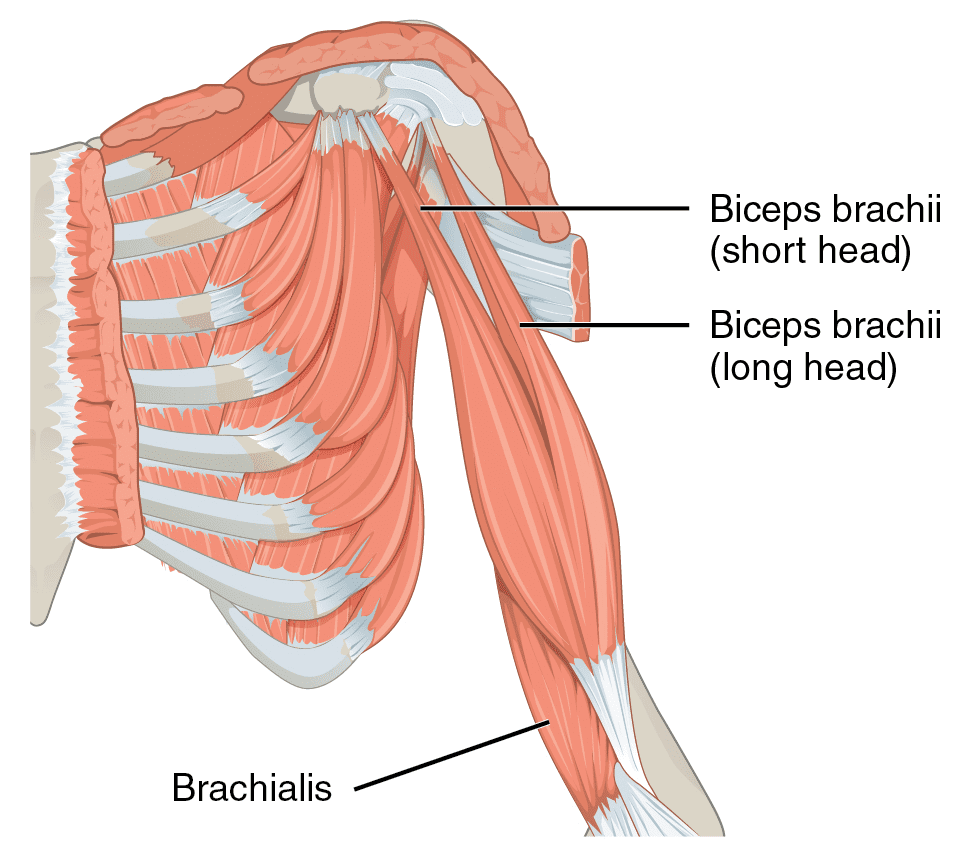
Located at the upper arm, the biceps comprise a short and long head that operates as a single muscle.
The bicep heads begin at different places around the shoulder/scapula region,
They have a common insertion point on the elbow tendon.
Together allow the bending of the arm at the elbow joint to curl and pull weight.
Curls work the muscles at the front of the upper arm and the lower arm. The brachialis and brachioradialis.
Dumbbells
Different equipment and grips can be used, including dumbbell weights, kettlebells, barbells, resistance bands, or cable machines. Select equipment with enough weight that can be lifted ten times using proper form, ensuring the last three repetitions are challenging to the point of being unable to raise another. From there, use this same weight to perform eight repetitions or slightly lower the weight and perform ten repetitions.
Begin by standing with the feet about hip-width apart.
Keep the abdominal/core muscles engaged.
Hold one dumbbell in each hand.
Relax the arms down at the sides with palms facing forward.
Keep the upper arms stable and shoulders relaxed.
Bend at the elbow and lift the weights so the dumbbells approach the shoulders.
Raise the dumbbells to eye or forehead level for a full range of motion.
Tension will be felt in the muscles in the front of the upper arm.
Keep movements smooth and controlled.
The elbows should stay tucked in close to the body.
Be careful to keep the wrist straight and rigid.
Flexing the wrist while bending the elbow won’t target the biceps effectively and can result in a wrist or elbow injury.
Exhale while lifting.
Lower the weights to the starting position.
For most, one set of 12 to 15 repetitions is adequate.
Train to failure performing the desired reps, staying within 3 to 5 repetitions of total failure.
When able, slightly increase weight and/or reps over time to increase muscle and strength.
Both biceps can be worked out by alternating arms.
Get the most out of the workout by avoiding these errors.
Rushing Through
Focus on proper form and avoid rushing through the workout.
Lift the weights with a smooth motion.
Take as much time to lower the weight as when lifting it.
Lowering the weight slowly can help build more muscle, making the most of the workout.
Improper Elbow Position
The position of the elbows should remain close to the side of the body.
Only the lower arm should move until the end of the movement when the elbows rise. This is a complete range of motion.
If the elbows move away from the torso or swing behind the body, there is probably too much weight.
Avoid Swinging the Weights
Focus on maintaining a tall, upright spine and a tight core.
The shoulders or torso should not swing the weights up when doing the curl.
It can feel like swinging, twisting, or heaving movements.
Don’t let the hips hinge, or the lower body assist the movement.
Keep the elbows at the sides until they naturally rise at the end of the motion.
Keep the shoulders relaxed
Make sure the shoulders don’t move forward to initiate the movement.
Use lighter weights or reduce the number of repetitions if this happens.
Safety
This exercise is generally recommended for most individuals. However, getting clearance from a primary caregiver before beginning any exercise routine is recommended.
Individuals with an arm injury or who experience pain during the motion should not perform the exercise without a doctor’s approval.
Don’t try to lift weights that are too heavy.
After a few lifts, expect to feel fatigued and a burning sensation in the biceps and forearm muscles.
This is the desired effect to get the muscles strong and growing.
Do not force extra repetitions once proper form cannot be achieved.
These muscles are in constant use when picking things up.
Consistently performing the biceps curl will help build strength in the upper arm.
Individuals learn to use their arm muscles correctly and with the core muscles.
Unlocking Athletic Potential with Chiropractic
References
Coratella, Giuseppe, et al. “Biceps Brachii and Brachioradialis Excitation in Biceps Curl Exercise: Different Handgrips, Different Synergy.” Sports (Basel, Switzerland) vol. 11,3 64. 9 Mar. 2023, doi:10.3390/sports11030064
Coratella, Giuseppe, et al. “Bilateral Biceps Curl Shows Distinct Biceps Brachii and Anterior Deltoid Excitation Comparing Straight vs. EZ Barbell Coupled with Arms Flexion/No-Flexion.” Journal of functional morphology and Kinesiology vol. 8,1 13. 19 Jan. 2023, doi:10.3390/jfmk8010013
Marchetti, Paulo H et al. “Seated row and biceps curl exercises present similar acute responses on muscle thickness, arm circumference, and peak force for elbow flexors after a resistance training session in recreationally-trained subjects.” The Journal of sports medicine and physical fitness vol. 60,11 (2020): 1415-1422. doi:10.23736/S0022-4707.20.10996-4
Sato, Shigeru, et al. “Elbow Joint Angles in Elbow Flexor Unilateral Resistance Exercise Training Determine Its Effects on Muscle Strength and Thickness of Trained and Non-trained Arms.” Frontiers in physiology vol. 12 734509. 16 Sep. 2021, doi:10.3389/fphys.2021.734509
Schoenfeld, Brad Jon, et al. “Differential effects of attentional focus strategies during long-term resistance training.” European Journal of sports science vol. 18,5 (2018): 705-712. doi:10.1080/17461391.2018.1447020
The upper arms allow the individual to move the arms, hands, and fingers, enabling them to do everyday activities without feeling pain or injuries. Different muscles in the upper arms allow precise movements, from threading a needle to throwing a ball across the field. These muscles also work with the shoulders, allowing a full range of motion and flexion. One of the muscles that help the upper arms is the bicep brachii, which provide flexion to the arm. However, like all the muscles in the body, they can succumb to pain caused by trigger points. Today’s article looks at the bicep muscles’ function, how trigger points affect the muscles, and how to manage trigger points associated with the bicep muscles. We refer patients to certified providers who specialize in arm pain treatments to aid individuals suffering from trigger points associated with the bicep brachii muscles along the upper arms. We also guide and inform our patients by referring them to our associated medical providers based on their examination when appropriate. We established that education is a great solution to asking our providers profound questions the patient requests. Dr. Jimenez DC takes note of this information as an educational service only. Disclaimer
What Are The Bicep Muscles Function?
Have you been dealing with radiating pain down to your elbow? Do your upper arm muscle ache when carrying items from place to place? Or have you experienced muscle spasms in your arms and hands? Many people experiencing these symptoms might risk developing trigger points along their bicep muscles. The bicep brachii is a large, thick muscle that covers the joints and is located in the upper arms. The bicep muscle consists of two attachments: the short head (caput breve) and the ling head (caput longum). It works together with the coracobrachialis muscle to support stability to the shoulders.
Studies reveal that these two muscle bands work together to provide multiple actions between the shoulder and elbow joints by being in conjunction with the other muscles. The main function of the bicep muscles is that it is one of the three muscles that can flex the elbow and shoulders. The biceps also allow flexion and supination or outward rotation of the forearms at 90 degrees. This muscle is very important for athletes that require lifting, carrying, or throwing and can make the individual stronger. To that point, the bicep muscle can also succumb to injuries that can cause pain to the upper arms and shoulders.
How Does Trigger Points Affect The Bicep Muscles?
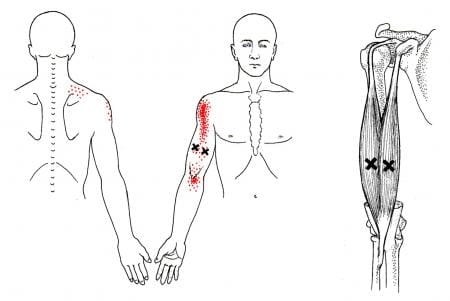
When the bicep muscles succumb to injuries, it can be due to overusing the long head of the bicep muscles and can lead to bicep tendon rupture. When the bicep muscle succumbs to a tendon rupture, it is due to excessive eccentric force that brings the arms to an extension rather than flexion. Other issues affecting the biceps can correlate to rotator cuff pathology and can be associated with being a common source of shoulder pain. Studies reveal that since the bicep is closely associated with the rotator cuff, tendinopathy can form due to repetitive traction, friction, and rotation of the shoulder joints. To that point, it can lead to the development of trigger points along the bicep muscles. Trigger point pain can be complicated to diagnose since it can mimic other chronic conditions. For trigger points to occur along the bicep muscles, pain-like symptoms are caused when the arm is above the shoulder. To that point, it causes symptoms of aches, stiffness, and muscle weakness in the bicep muscles.
Trigger Points Affecting The Bicep Brachii- Video
Have you experienced muscle aches and stiffness when lifting your arms above your shoulders? Do you find difficulty to bend your elbows? Or have you been experiencing radiating pain along the shoulders, arms, and hands? These pain-like symptoms are associated with trigger points along the bicep muscles and can evoke motor dysfunction in the upper arms. The video above gives an overview how trigger points affect the bicep brachii and cause symptoms like “frozen shoulder” to affect the entire arm. Studies reveal that trigger points are the most frequent causes of chronic musculoskeletal pain that causes the muscle tissue to become hyperirritable. Trigger points can also cause referred pain to the affected muscles, causing limited range of motion to the joints. When the bicep muscles are being affected by trigger points, it can cause stress on the muscle and cause hyper-extension to the arm. According to Dr. Travell, M.D., when trigger points affect the bicep brachii muscles and cause referred pain and tenderness on the ball-and-socket joint, the symptoms associated with trigger points are mistaken as a rheumatic joint disease unless the affected bicep is examined for trigger points. Thankfully, there are ways to manage trigger points associated with the bicep muscles to reduce pain in the upper arms.
Managing Trigger Points Associated With The Bicep Muscles
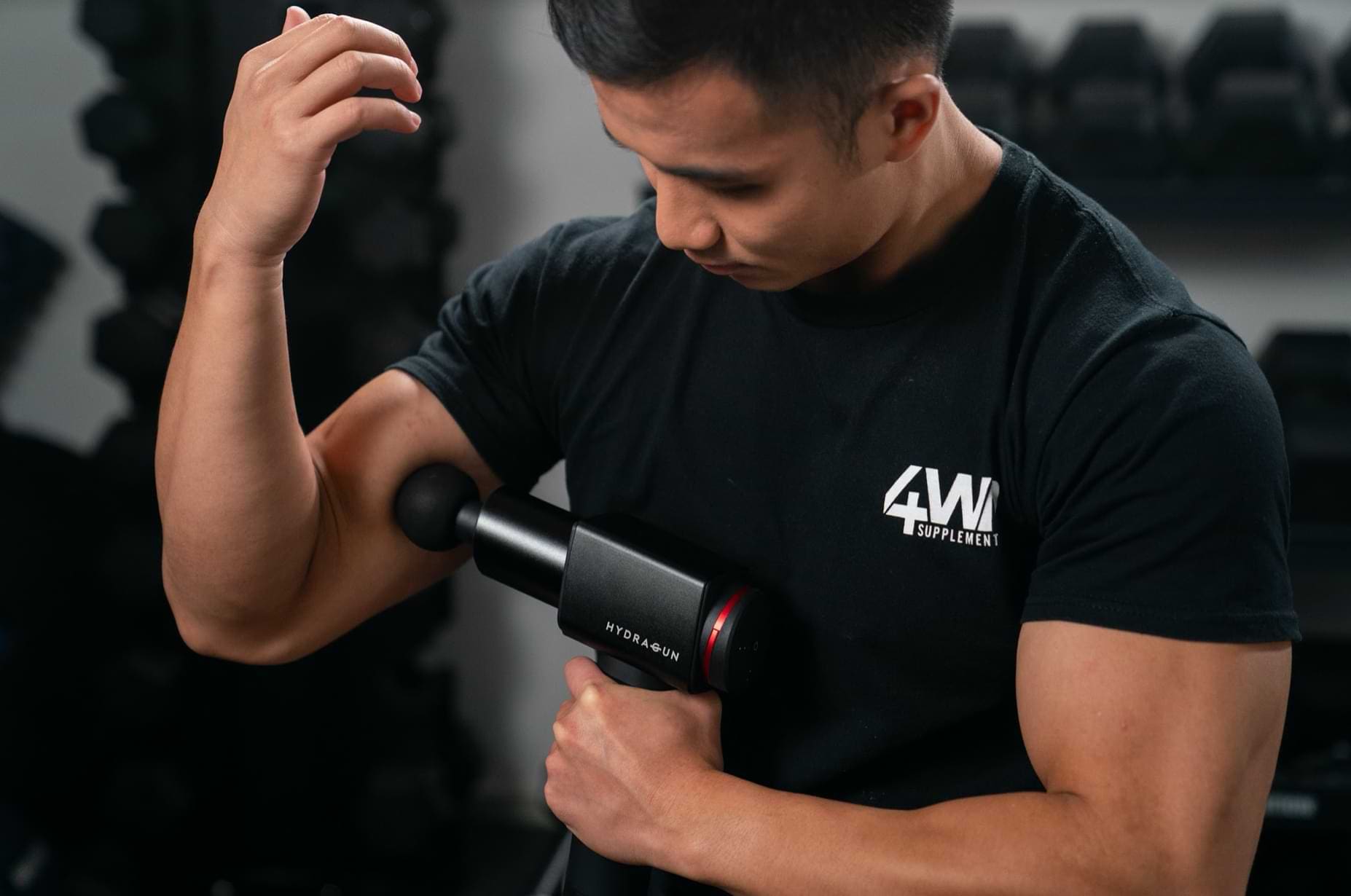
When individuals are suffering from pain along their bicep muscles, it can cause them to be miserable as they cannot participate in various activities that require their arms; when trigger points are formed along the taut muscle band of the bicep muscles, the radiating pain from the shoulder to the elbow, causing stiffness and muscle aches. Fortunately, various techniques can help manage trigger points associated with the bicep muscles. Studies reveal that many people can manage trigger points related to the bicep muscles to reduce shoulder pain by resting, modifying their activities, and seeking more non-invasive treatments to reduce the pain associated with the bicep muscles. Many people can do various arm and shoulder stretches to reduce the stiffness of the bicep muscles. This allows gentle stretching along the upper arm muscles and releases tension through slow, even breathing and prolonged shortening of the bicep muscles.
Conclusion
The bicep has two attachments that provide mobility and are a large thick muscle that covers the upper arm joints. The bicep muscles also work together with the coracobrachialis muscle to help support the shoulders by making them stable. When the bicep muscles become overused and succumb to injuries, they can develop trigger points along the bicep muscles, causing referred pain to the arms and shoulders. When this happens, the muscles become stiff and can become painful when doing simple actions like lifting their arms or playing a sport. When this happens, many individuals become miserable since they can’t participate. Fortunately, various techniques can help reduce the pain symptoms in the arms and prevent future injuries. Gentle stretching and muscle massages can release the trigger points from the bicep muscles and improve arm mobility to the biceps.
References
Akamatsu, Flávia Emi, et al. “Trigger Points: An Anatomical Substratum.” BioMed Research International, Hindawi Publishing Corporation, 2015, https://www.ncbi.nlm.nih.gov/pmc/articles/PMC4355109/.
Landin, Dennis, et al. “Actions of the Biceps Brachii at the Shoulder: A Review.” Journal of Clinical Medicine Research, Elmer Press, Aug. 2017, https://www.ncbi.nlm.nih.gov/pmc/articles/PMC5505302/.
McDevitt, Amy W, et al. “Physical Therapy Interventions for the Management of Biceps Tendinopathy: An International Delphi Study.” International Journal of Sports Physical Therapy, NASMI, 1 June 2022, https://www.ncbi.nlm.nih.gov/pmc/articles/PMC9159730/.
Raney, Elise B, et al. “Pain and the Pathogenesis of Biceps Tendinopathy.” American Journal of Translational Research, e-Century Publishing Corporation, 15 June 2017, https://www.ncbi.nlm.nih.gov/pmc/articles/PMC5489872/.
Tiwana, Manpreet S, et al. “Anatomy, Shoulder and Upper Limb, Biceps Muscle.” In: StatPearls [Internet]. Treasure Island (FL), StatPearls Publishing, 11 Aug. 2021, https://www.ncbi.nlm.nih.gov/books/NBK519538/.
IFM's Find A Practitioner tool is the largest referral network in Functional Medicine, created to help patients locate Functional Medicine practitioners anywhere in the world. IFM Certified Practitioners are listed first in the search results, given their extensive education in Functional Medicine