ClickCease
+1-915-850-0900 [email protected]
Select Page
Introduction To The Cerebellum | El Paso, TX. | Part II

Introduction To The Cerebellum | El Paso, TX. | Part II

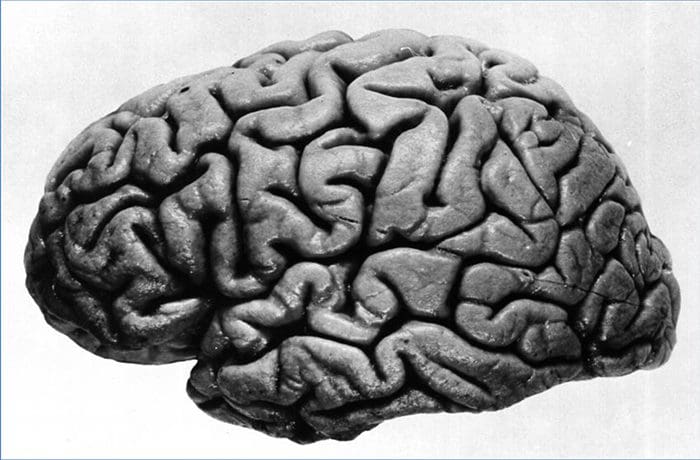
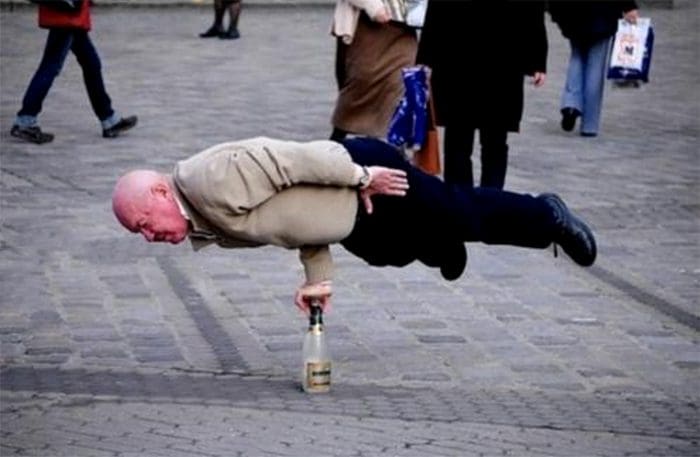
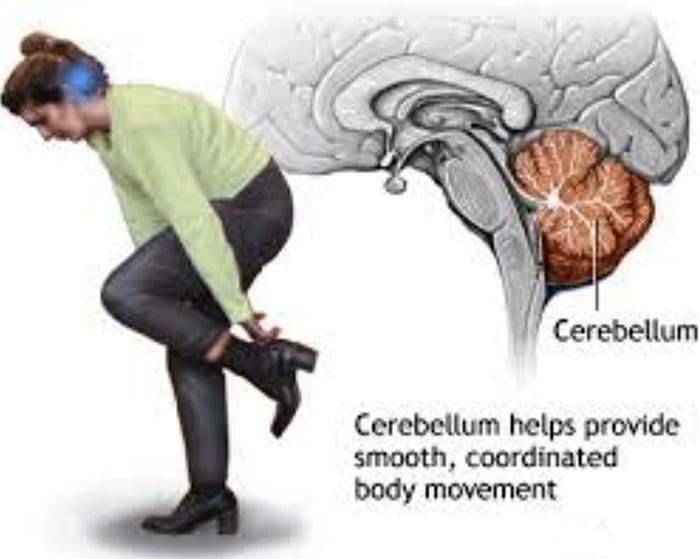
El Paso, TX. Chiropractor, Dr. Alexander Jimenez continues with the cerebellum overview. The cerebellum is one of the most identifiable parts of the brain based on its unique shape and location. It is an extremely important part of the brain. It is responsible for being able to perform everyday voluntary tasks likes walking and writing. And it’s essential for being able to keep balance and remain upright. People who have suffered from a damaged cerebellum struggle with balance and maintaining proper muscle coordination.

EVERYTHING PERIPHERAL HAS A CENTRAL CONSEQUENCE!

CASE STUDY

Cerebellar Ataxia

54-YEAR-OLD FEMALE PRESENTED TO OUR CLINIC FOR FEELINGS OF �UNSTEADINESS�
cerebellum el paso tx.

  • Patient woke up one morning over one year ago with vertigo.cerebellum el paso tx.
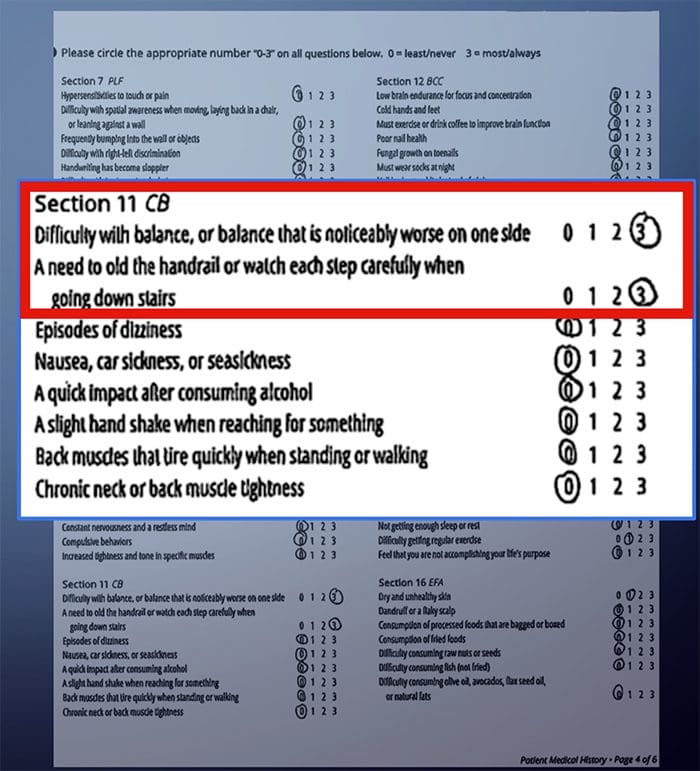
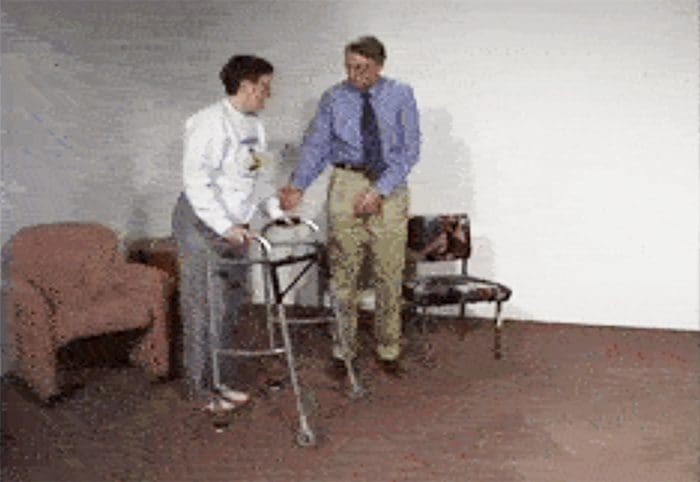
  • Patient has difficulty with balance and walking. She sometimes resorts to using a cane. Extreme difficulty walking downstairs
  • Patient has been proactive in her weight loss, however, this has served as a speed bump in her plan of getting back to health.
  • She has not been able to exercise like she had in the past.
  • Patient has been to several vestibular rehabilitation clinics to no avail.


PHYSICAL EXAMINATION HIGHLIGHTS
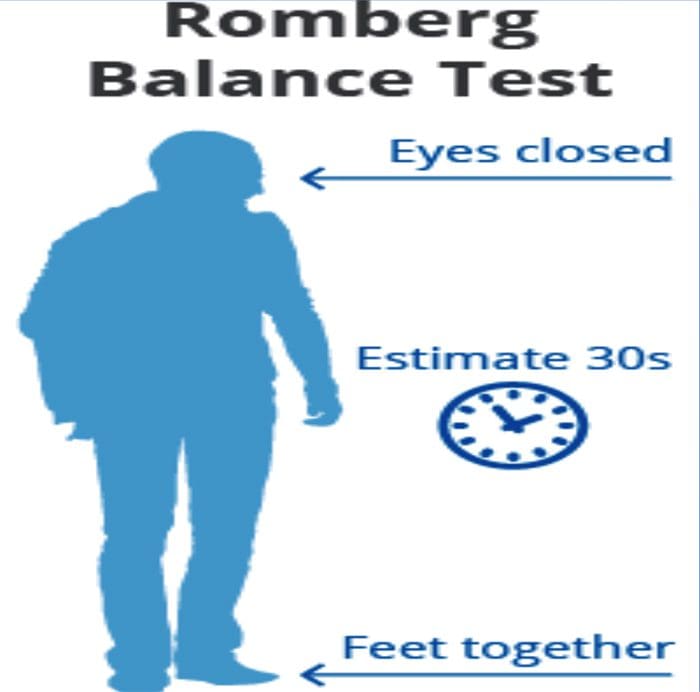
  • cerebellum el paso tx.Cranial nerves I-XII WNL
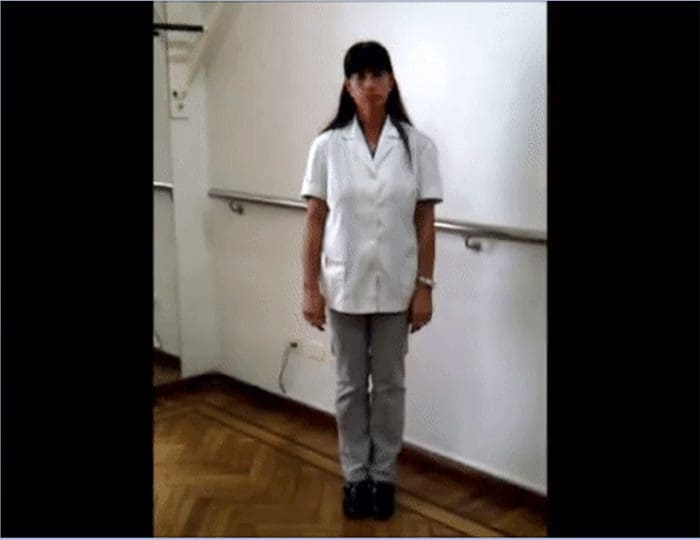
  • Wide-based gait
  • Right cerebellar findings
  • Provocative Romberg testing produced significant sway in the right posterior and left anterior canal position.


THERAPEUTIC INTERVENTIONS
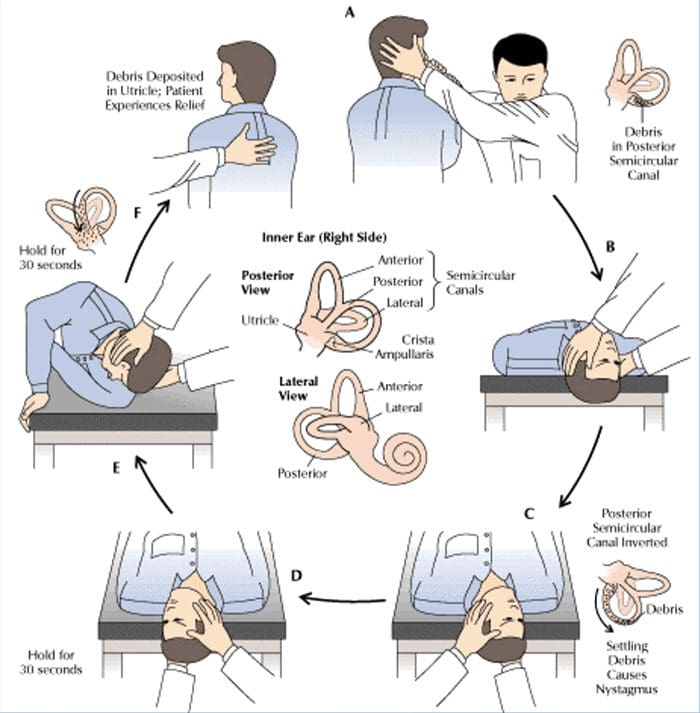


AFTER 1ST DAY

  • cerebellum el paso tx.Marked improvement in balance.
  • Comfortable walking and standing with more narrow- based gait.
  • Ability to walk down stairs without holding handrail.


CASE STUDY

Meet Aaron & McKayla
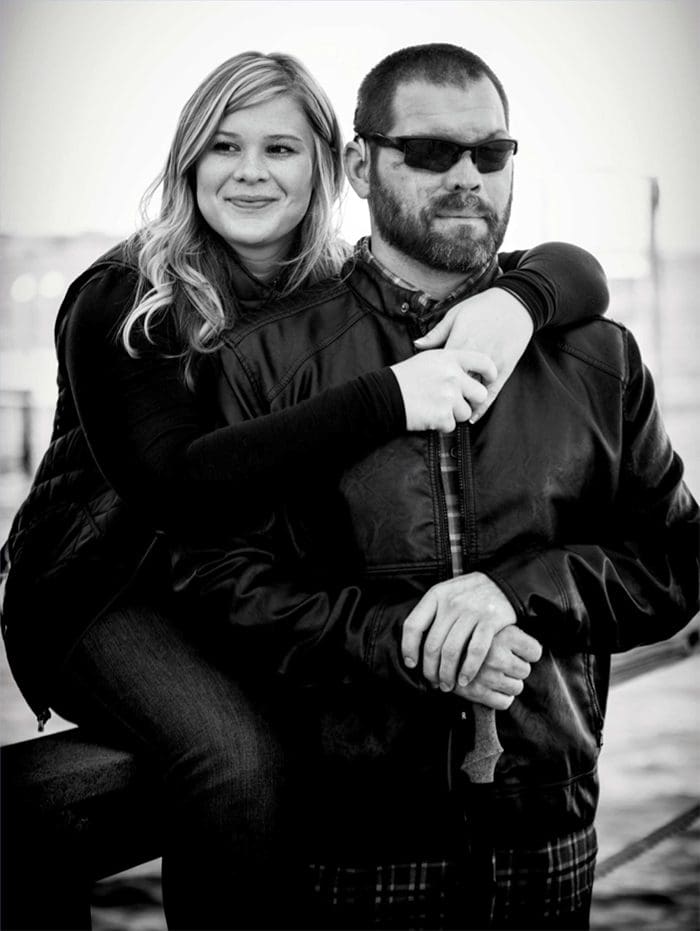
cerebellum el paso tx.

**Permission given to use names, images and whatever else needed to spread the word

A 39-year-old retired Explosives Ordinance Disposal Technician who in 2011…
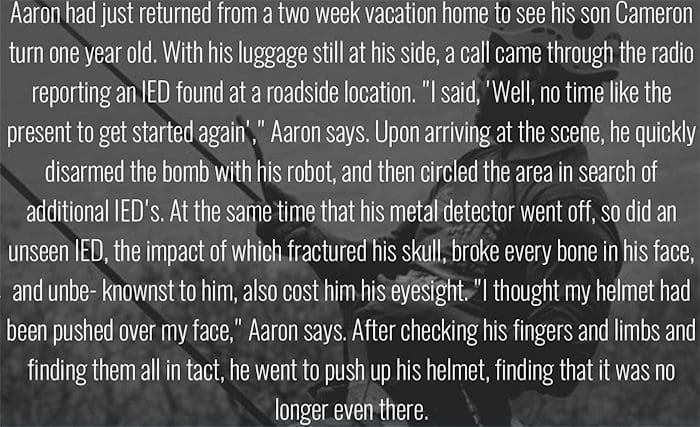
cerebellum el paso tx.

And in 2015…

cerebellum el paso tx.

WHAT CAN FUNCTIONAL NEUROLOGY DO FOR AARON?

HOW CAN WE HELP HIS BALANCE?


IF YOU DON�T USE IT….

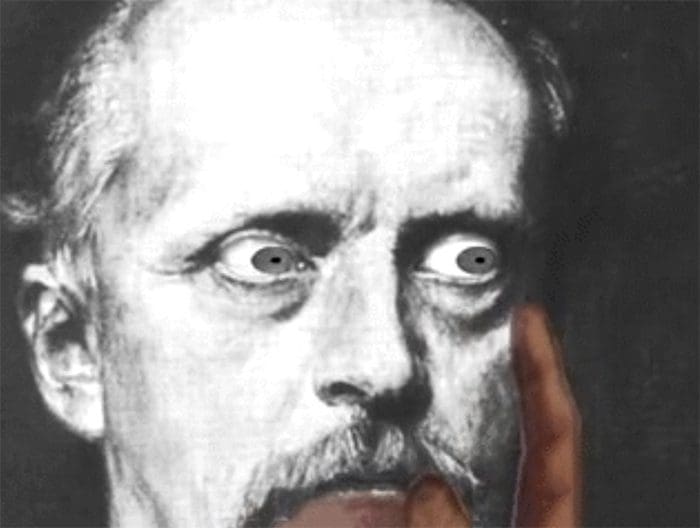
cerebellum el paso tx.WHAT DO YOU SEE?

cerebellum el paso tx.WHAT DO YOU SEE?

cerebellum el paso tx.

WHAT DO YOU SEE?

cerebellum el paso tx.

WHAT DO YOU SEE?

WHAT DOES IT MEAN?

cerebellum el paso tx.

cerebellum el paso tx.AFFERENTATION WITH METABOLIC CONSIDERATIONS

A-BETA – MECHANORECEPTORS
  • Merkel�s disc � slow adapting to pressure and texture. Sharpest resolution for spatial patterning. �steady light pressure�
  • Meissner�s Corupuscle � superfiicial motion detection. Two point discretion.
  • Ruffini�s Corpuscle � located in dermis. Steady skin stretch and joint pressure.
  • Pacinian Corpuscle � rapid adapter, Associated with vibration.
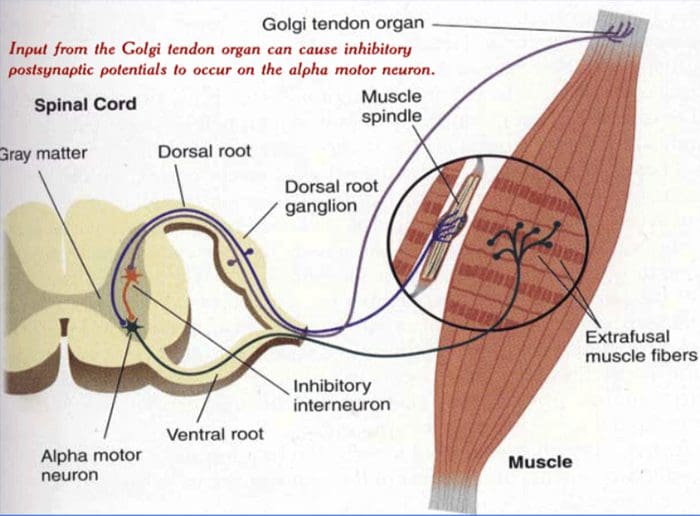
GOLGI TENDON ORGAN IB FIBERS
  • Responds to muscle tension changes.

cerebellum el paso tx.

1A IIA SOMATOSENSORY
  • Muscle spindle fiber is the largest fiber in the human body.
  • Respond to the rate of change in muscle length, as well to change in velocity, rapidly adapting.
  • This will require the most demands on metabolic capacity.

BACK TO THE CASE
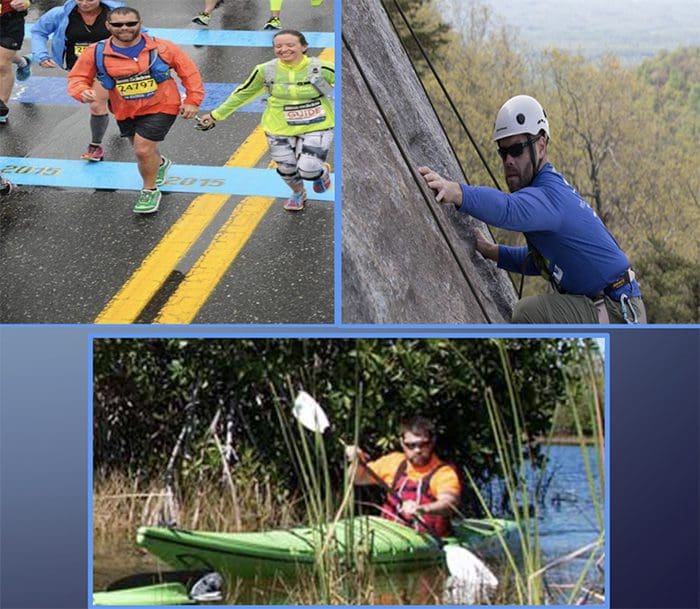
  • cerebellum el paso tx.In 2011, Aaron had lost both of his eyes in an IED explosion.
  • Due to the blast, Aaron also lost his sense of smell and taste.
  • After several months of rehab, Aaron learned how to �be really good at being blind.�
  • Although he could not see, balance was no major issue. �I was climbing mountains, running marathons, kayaking…you name it.�


  • In 2015, a few months after running the Boston Marathon, Aaron was on the phone with Mckayla.
  • �He said he was not feeling well and was going to go lie down. I was concerned but did not think much of it.�
  • After a day and a half of waiting for his call, McKayla found out Aaron contracted meningitis and was intubated in the ICU.
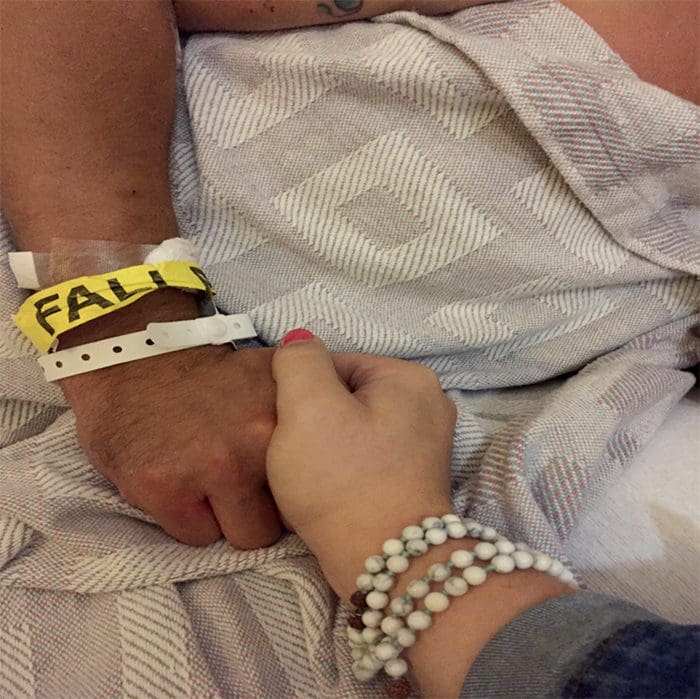
cerebellum el paso tx.

  • Finding out Aaron is completely deaf after meningitis…
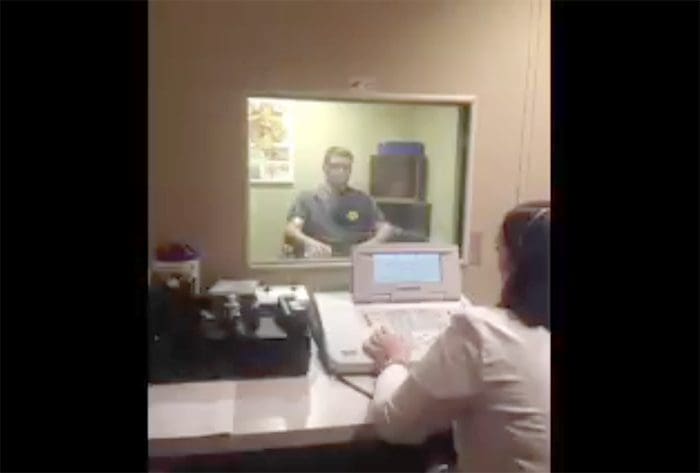
cerebellum el paso tx.

  • The meningitis obliterated his hearing and left him completely deaf for 5 months.
  • Not only that, the meningitis wreaked havoc on Aaron�s balance centers (his vestibulocerebellum) and he suffered from severe vertigo and difficulty standing and walking.

cerebellum el paso tx.After recovering from meningitis:
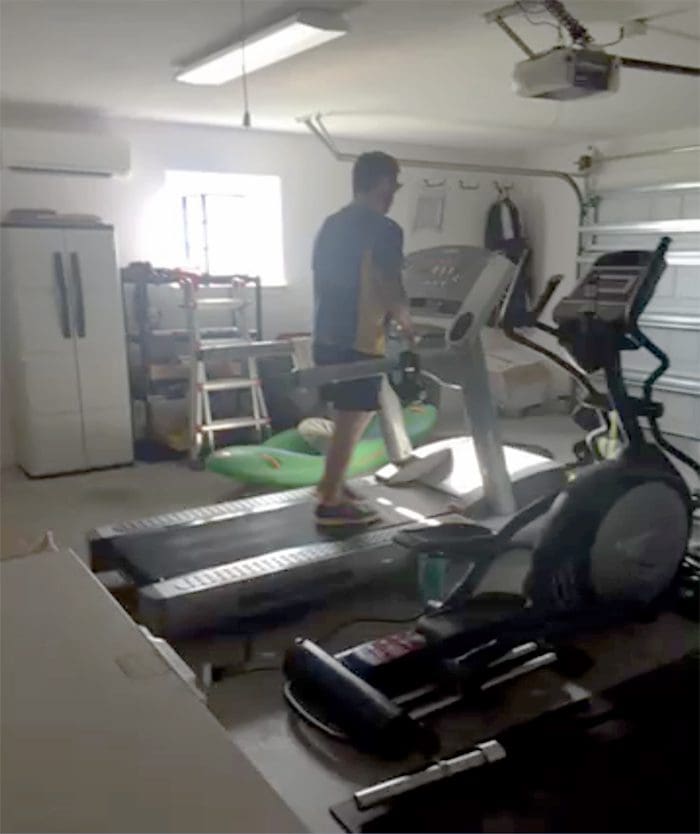
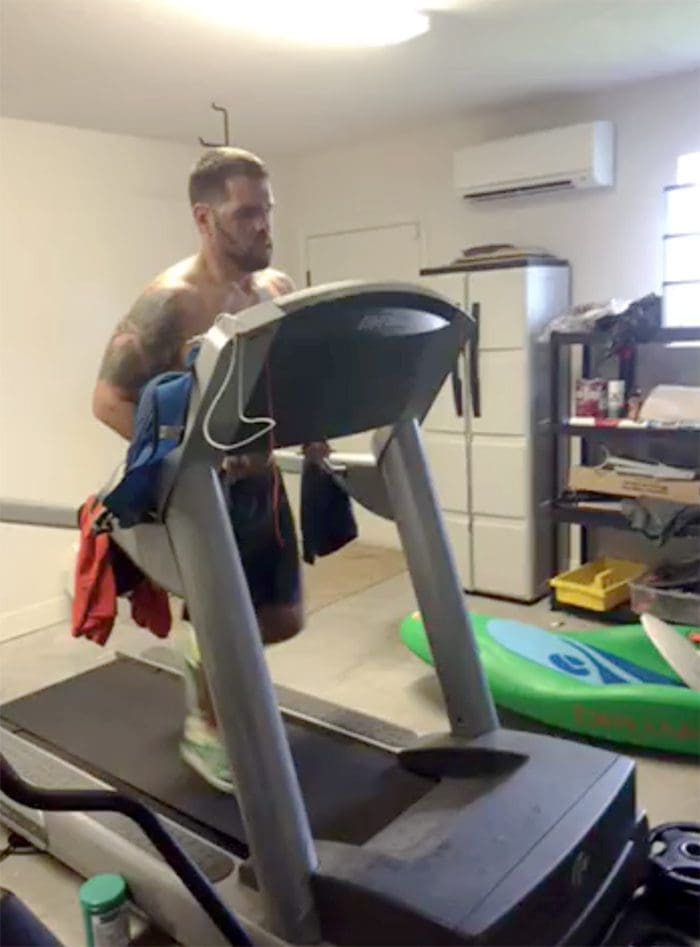
  • �You can see how he’s walking on the treadmill in the very beginning. It took so much out of him to be able to do that.� � Mckayla
  • Remember �metabolic capacity?�

cerebellum el paso tx.

  • Aaron was actually able to get himself back into running shape and ran one of his best times in Ohio, but not without struggle.
  • �Every little change in pace and every little movement was a huge calibration for me and it took a lot out of me.�
  • �I still have a lot of work to do…�

cerebellum el paso tx.

cerebellum el paso tx.CHALLENGE ACCEPTED

  • Sooooo….back to the basics!

cerebellum el paso tx.

  • We utilized different surfaces to challenge his balance system (foam pads, wobble boards, etc….
  • We also had him do most of his therapies barefoot to increase afferentation to the somatosensory cortex
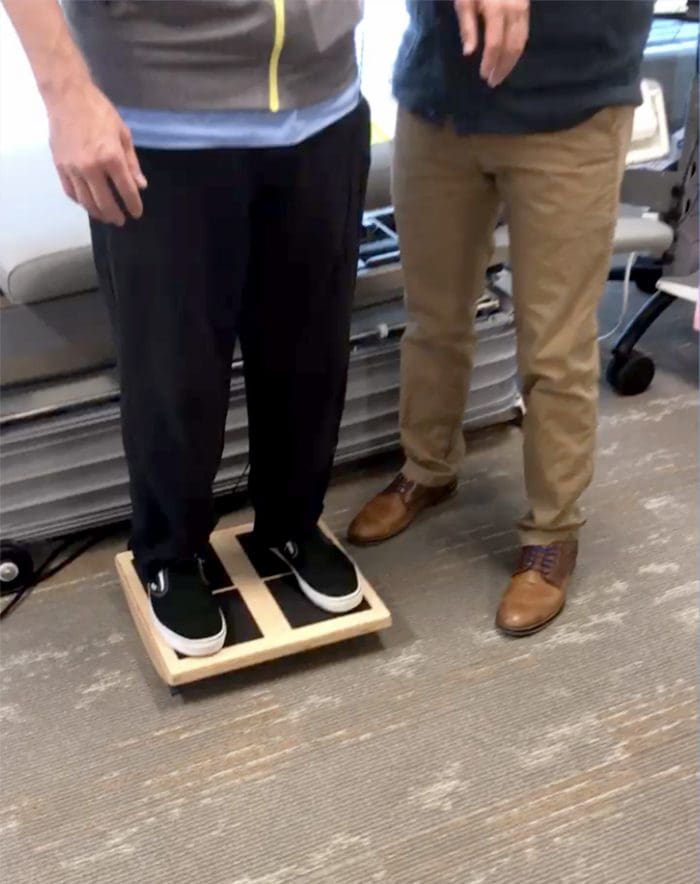
cerebellum el paso tx.Updates from McKayla:

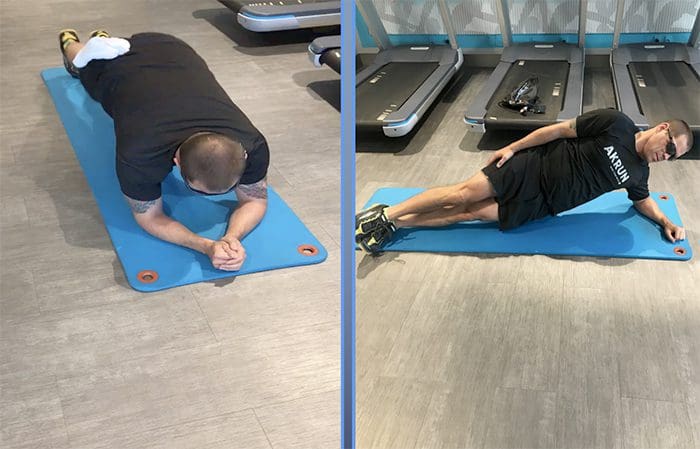
  • �Pace is a 7:30 and he’s doing 6 miles. Completed core work too.�
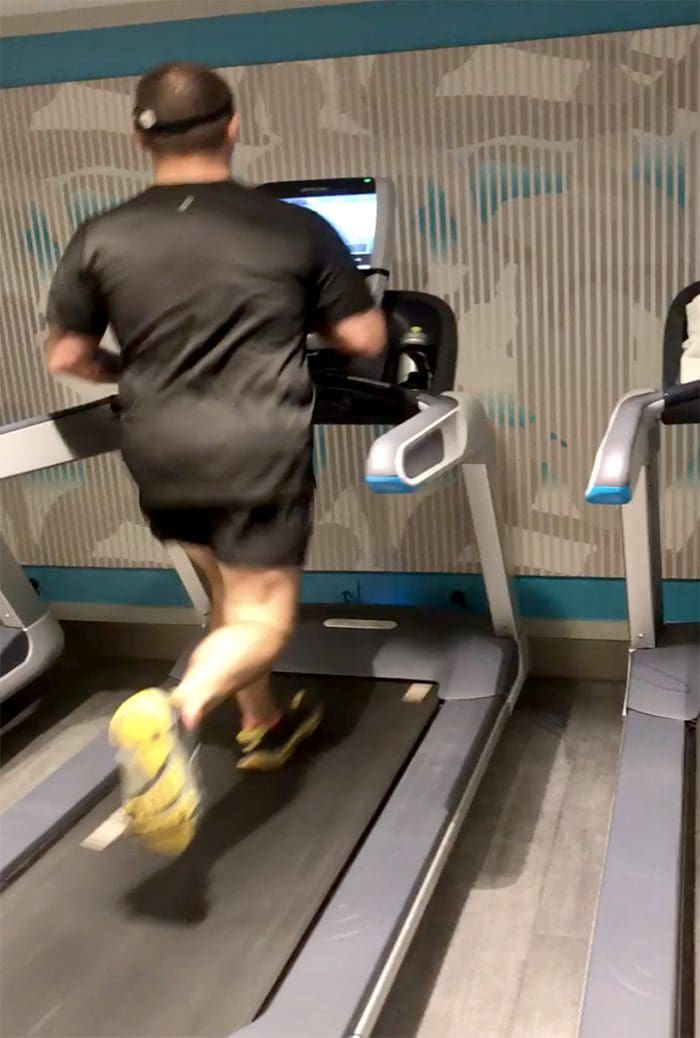
cerebellum el paso tx.

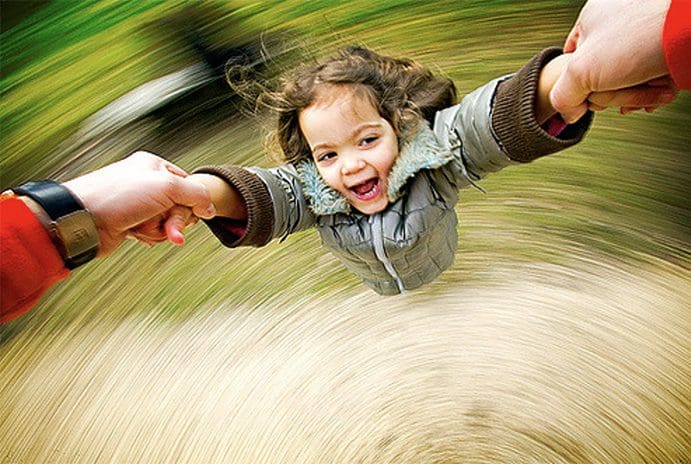
  • Typically in the OVARD we would spin Aaron in specific directions and he would tell us which direction he was spinning in.
  • At first this was very difficult and he could not perceive the movement, however it was not long until he was sensing each direction of his spin.
  • We let him have a little fun in this particular video….
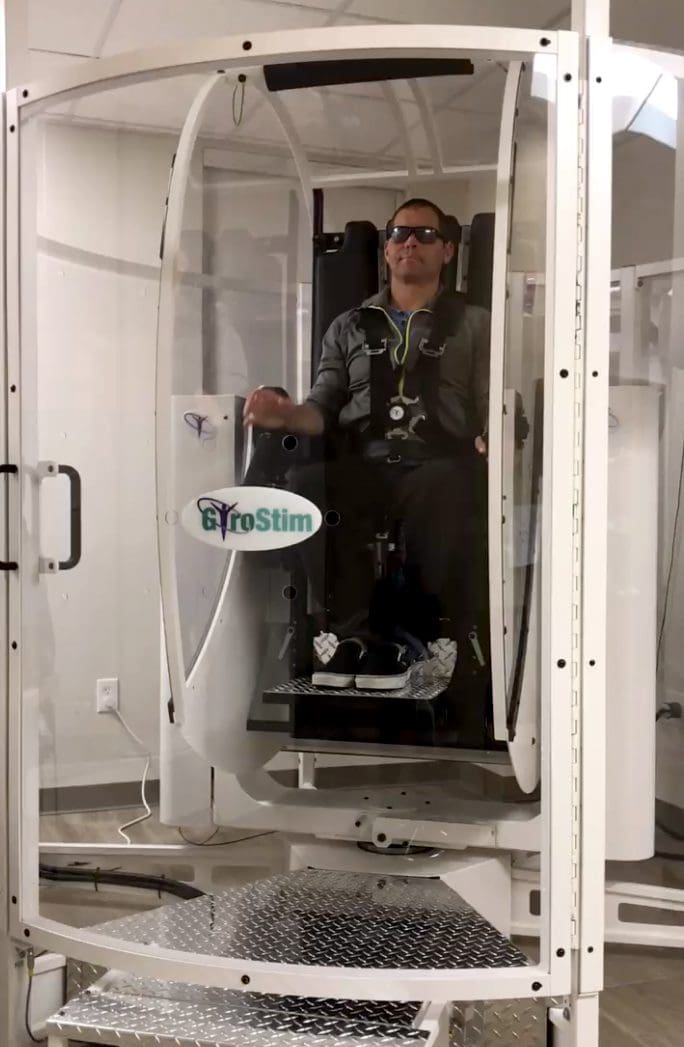
cerebellum el paso tx.

  • I asked Aaron and McKayla how they felt therapy was going.
  • They responded �great, but we won�t really know until he goes for a run outside…�
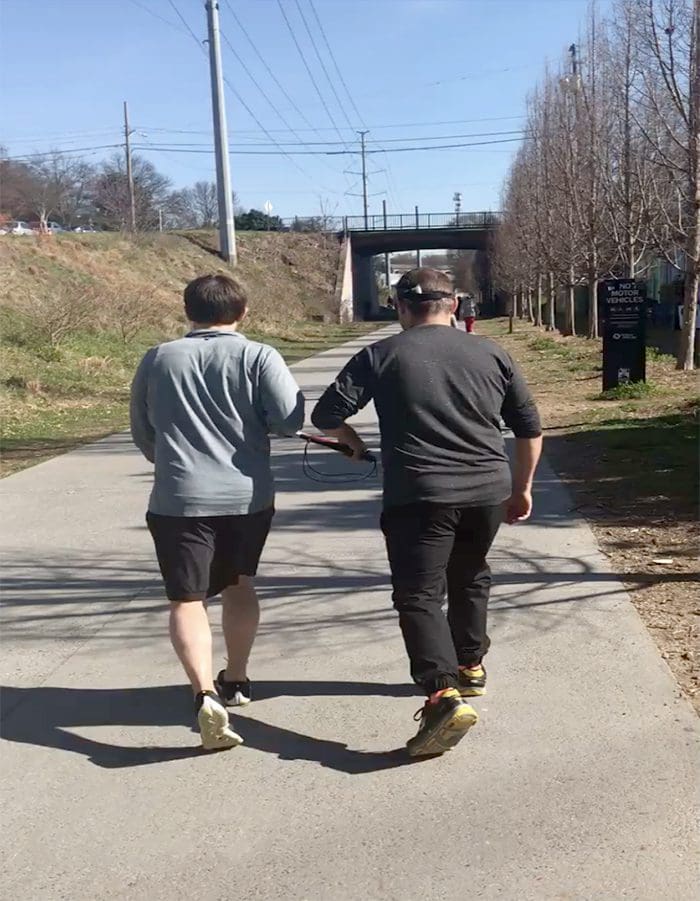
  • So we went on a seven mile run at an 8 minute pace.
  • Here we are working on turns.

cerebellum el paso tx.

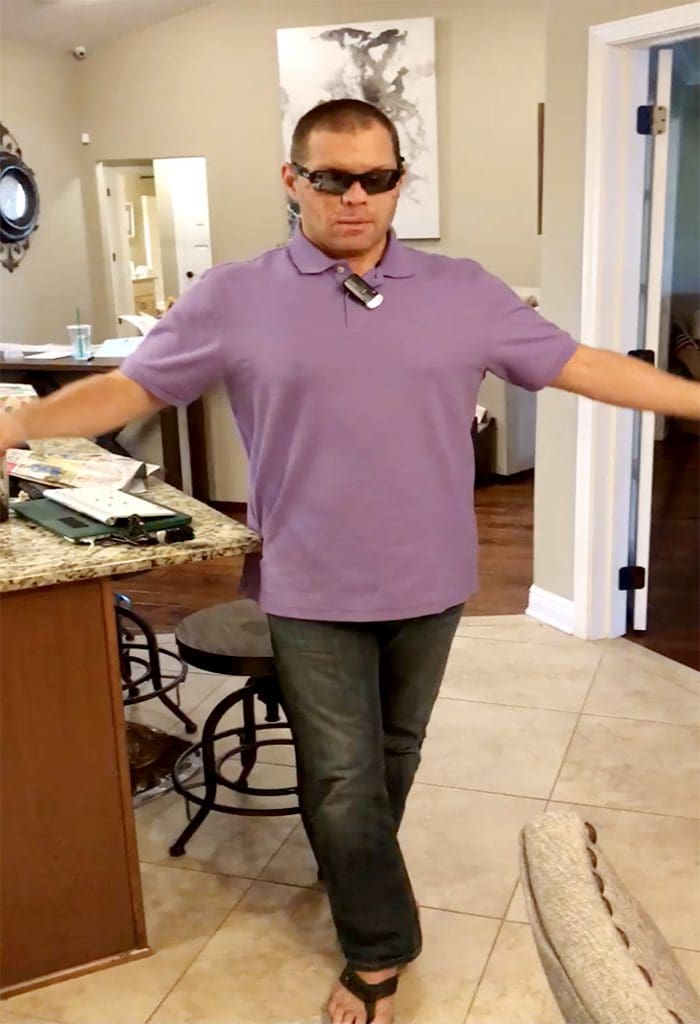
  • Cured!
  • Aaron is back home in Florida continuing his training for Boston in two weeks.
  • He is continuing at-home exercises and vestibular rehab with specialists
  • He and I are running a half marathon together in the not-so-distant future
cerebellum el paso tx.SOME SIMPLE CEREBELLAR THERAPIES

GENERAL CEREBELLAR EXERCISES

  • Spinning in desk chair will stimulate ipsilateral cerebellum
  • Passive muscle stretch will stimulate ipsilateral cerebellum
  • Squeezing tennis ball will stimulate ipsilateral cerebellum
  • Passive or active non-linear complex movements will stimulate ipsilateral cerebellum
  • Finger to nose pointing will stimulate ipsilateral cerebellum

Vermal & Paravermal Exercises

  • Passive and active gaze stabilization exercises with central fixation
  • Wobble board/unsteady surface exercises
  • Balance beam exercises and tandem walking
  • Bouncing a ball against the ground or throwing it against the wall
  • Core exercises such as planks, sit-ups and yoga
  • Learning how to balance on a bicycle
  • Supine cross crawl activity

Lateral Cerebellum Exercises

  • Cognitive processes
  • Learning a musical instrument
  • Tracing a maze
  • Playing �catch�
  • Tapping fingers/hand or toes/feet to the beat of a metronome
  • Trying to write with eyes closed
  • Strategic board games

THE LANGUAGE OF THE BRAIN IS REPETITION!

By RYAN CEDERMARK, RN BSN MSN DC DACNB
Introduction To The Cerebellum | El Paso, TX. | Part I

Introduction To The Cerebellum | El Paso, TX. | Part I

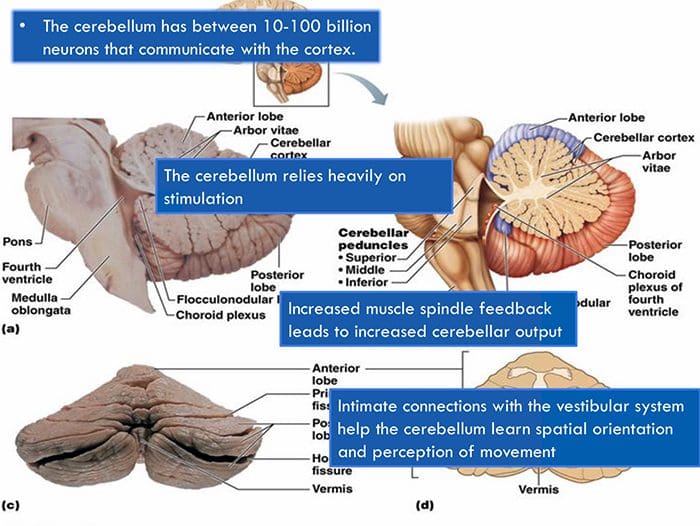
El Paso, TX. Chiropractor Dr. Alexander Jimenez presents an introduction to the cerebellum. The brain is a complex structure that has billions of nerve cells. The basic anatomy is easily understandable. But there is one part of the brain, the cerebellum, which is involved in virtually all movement. This is the part of the brain that helps a person drive, throw a ball, or walk across the street.

Problems with the cerebellum are uncommon and mostly involve movement and coordination difficulties. This article will give an overview of the anatomy, purpose, and disorders of the cerebellum, as well as, how to keep the brain healthy.

FAGIOLINI ET AL. EPIGENETIC INFLUENCES ON BRAIN DEVELOPMENT AND PLASTICITY CURR OPIN NEUROBIOL, 2009

cerebellum el paso tx.

  • �Enhancing plasticity in the adult brain is an exciting prospect and there is certainly evidence emerging that suggest the possible use of epigenetic factors to induce a �younger� brain.�
  • �Recent findings support a key role of epigenetic factors in mediating the effects of sensory experience on site-specific gene expression, synaptic transmission, and behavioral phenotypes.�


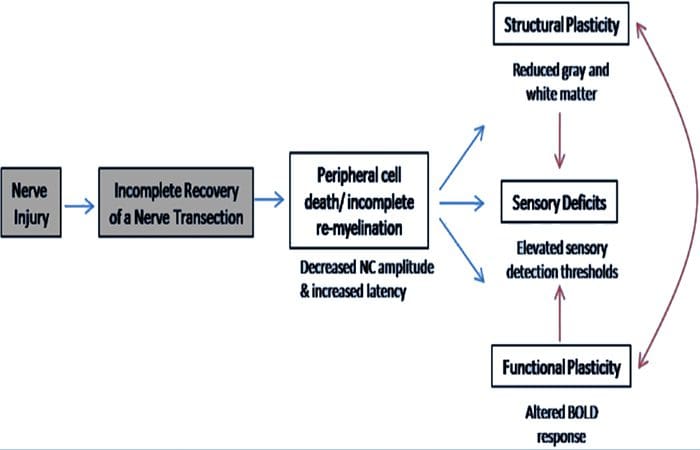
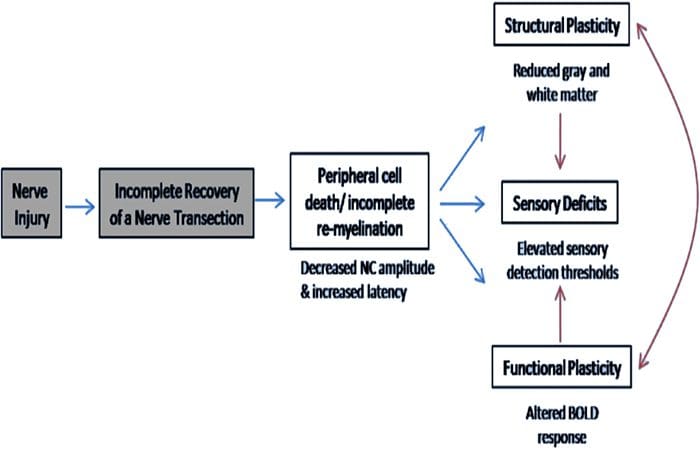
TAYLOR ET AL. CUTTING YOUR NERVE CHANGES YOUR BRAIN BRAIN, 2009

  • �Animal studies have established that plasticity within the somatosensory cortex begins immediately following peripheral nerve transection, and that 1 year after complete nerve transection and surgical repair, cortical maps contain patchy, noncontinuous representations of the transected and adjacent nerves.�
  • �Here, we have demonstrated for the first time that there is functional plasticity and both grey and white matter structural abnormalities in several cortical areas following upper limb peripheral nerve transection and surgical repair.�

cerebellum el paso tx.

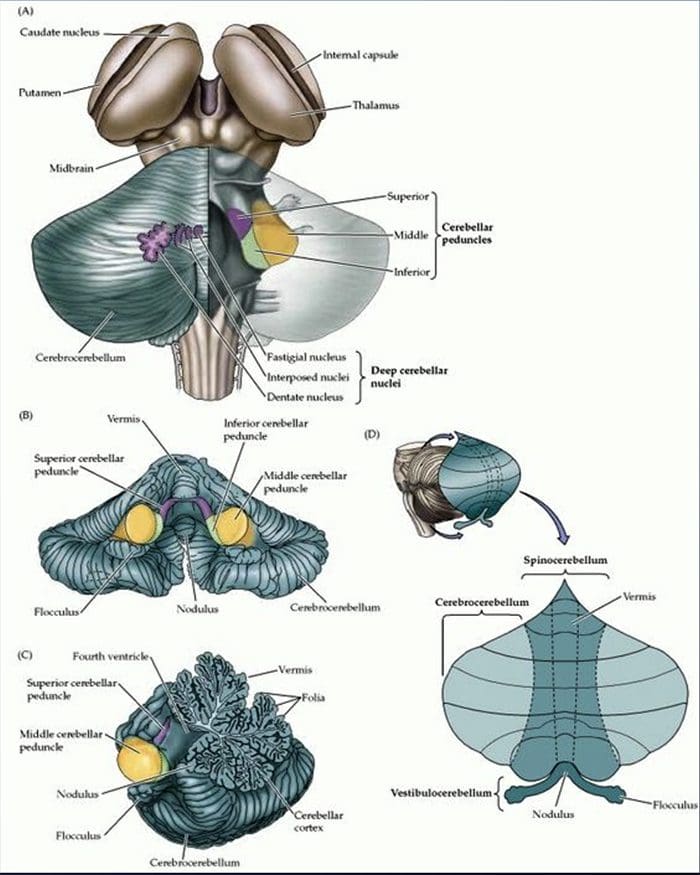
THE CEREBELLUM

cerebellum el paso tx.

cerebellum el paso tx.

cerebellum el paso tx.

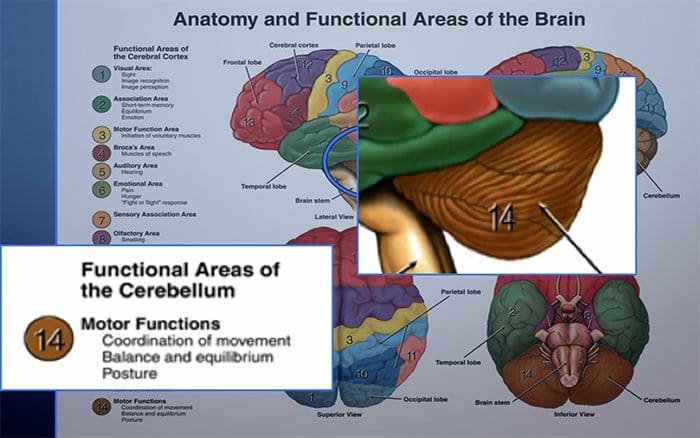
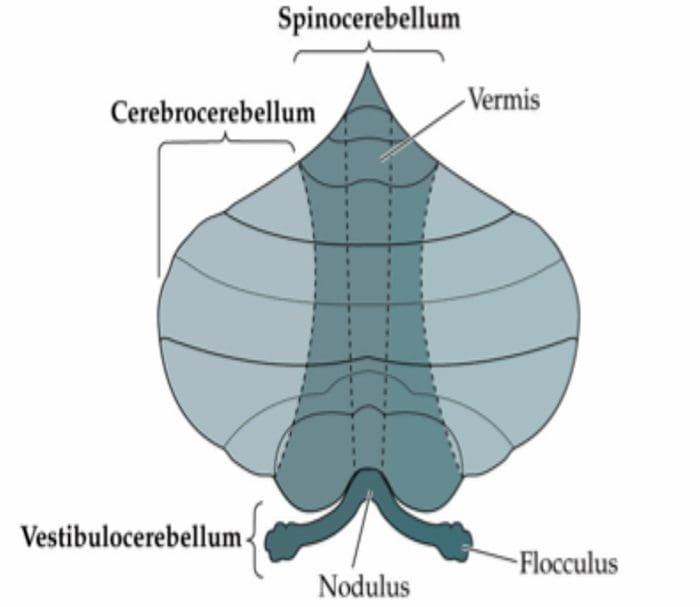
IMPORTANT FUNCTIONAL AREAS OF THE CEREBELLUM

  • Spinocerebellum
  • Vestibulocerebellum
  • Cerebrocerebellum

cerebellum el paso tx.

SPINOCEREBELLUM

  • cerebellum el paso tx.Responsibilities:

  • Regulation of muscle tone for posture and locomotion
  • Balance
  • Patient Complaints:

  • Difficulty with balance
  • Difficulty walking in the dark
  • Difficulty going down stairs
  • Sway to one side while walking
  • Examination Findings:

  • Wide based gait
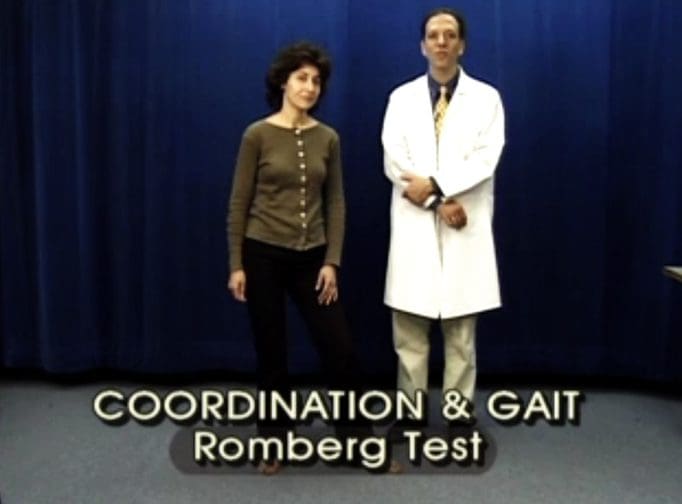
  • Sway in Romberg�s position


cerebellum el paso tx.http://www.neuroexam.com/neuroexam/content.php?p=37

cerebellum el paso tx.http://www.neuroexam.com/neuroexam/content.php?p=37

WHAT DO YOU SEE?

cerebellum el paso tx.

cerebellum el paso tx.WHAT CAN YOU DO?

  • cerebellum el paso tx.Have the patient perform balance exercises:

  • Practice Romberg�s
  • Practice one leg standing
  • Bosu Ball exercises
  • Foam Pad exerscises
  • Balance Board exercises
  • Increase core stability:

  • Plank�s
  • Yoga
  • Increase proprioception:

  • Adjust!
  • But which side?

VESTIBULOCEREBELLUM

  • cerebellum el paso tx.

    Responsibilities:

  • Regulation of vestibular system
  • Regulation of balance
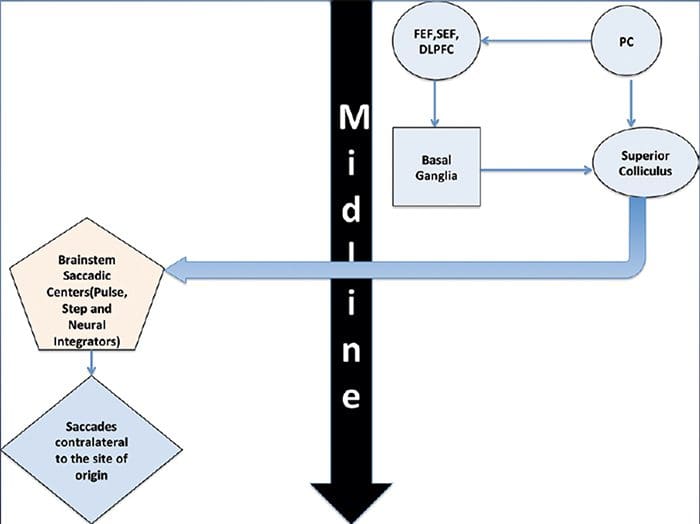
  • Assistance with eye movements (encoding retinal slip)
  • Patient Complaints:

  • Postural muscle fatigue
  • Dizziness
  • Disorientation
  • Difficulty riding in a car
  • Nausea
  • Examination Findings:

  • Wide based gait
    Sway in Romberg�s position
  • Nystagmus
  • Impaired VOR
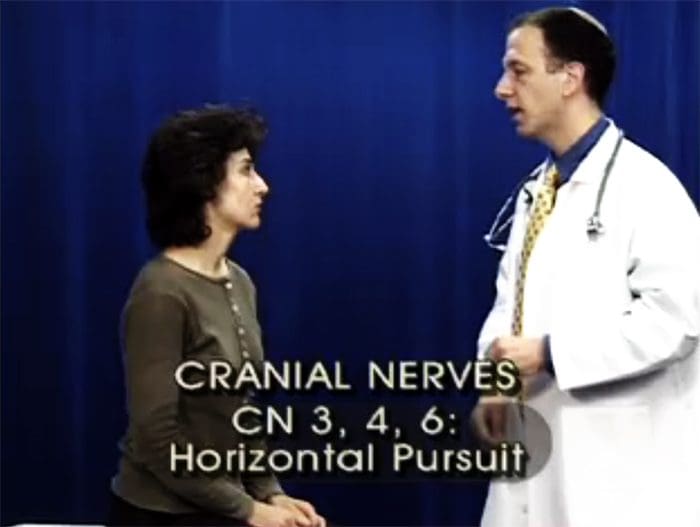
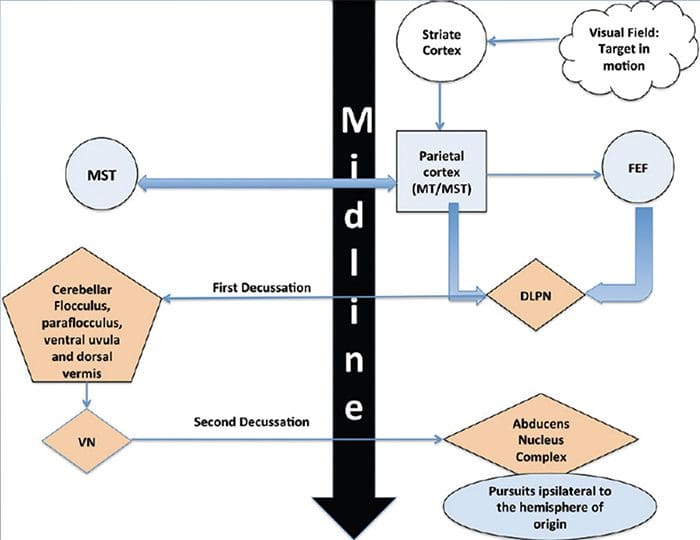
  • Impaired smooth pursuits
  • Hypermetric Saccades

cerebellum el paso tx.http://www.neuroexam.com/neuroexam/content.php?p=37

cerebellum el paso tx.

cerebellum el paso tx.

cerebellum el paso tx.http://www.neuroexam.com/neuroexam/content.php?p=37

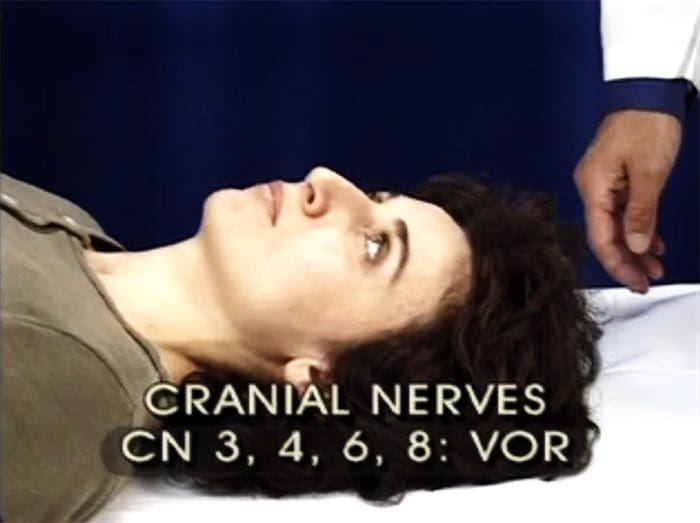
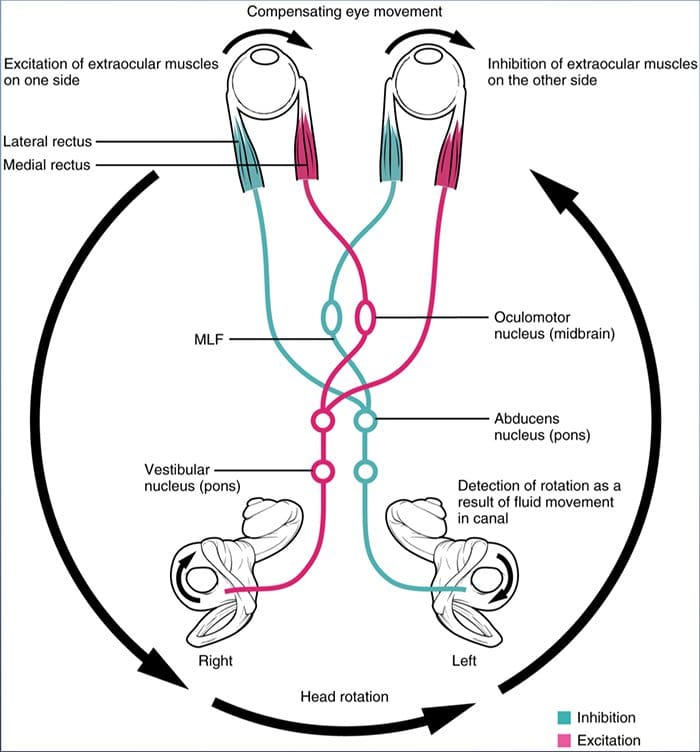
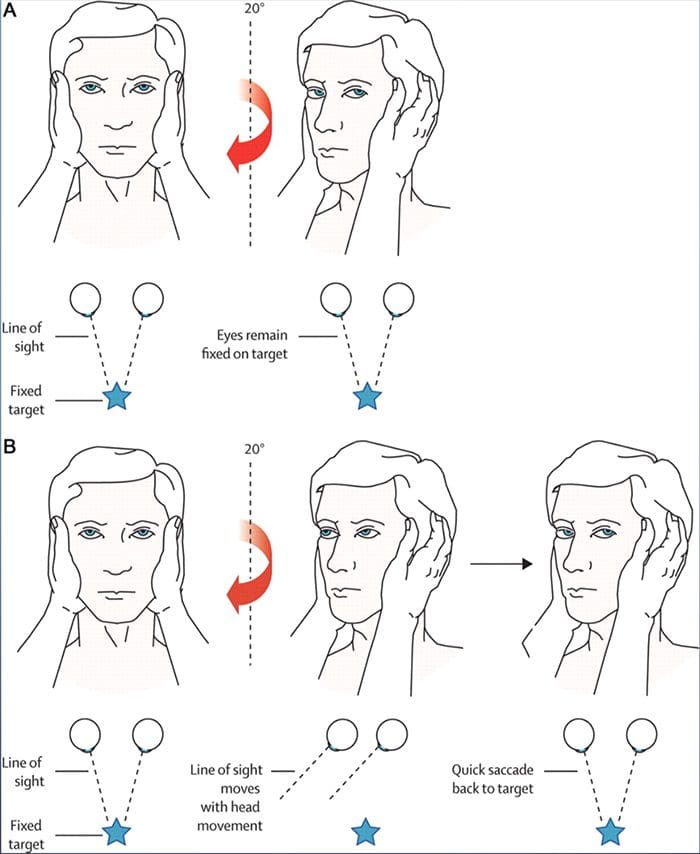
VOR

cerebellum el paso tx.

cerebellum el paso tx.

WHAT DO YOU SEE?

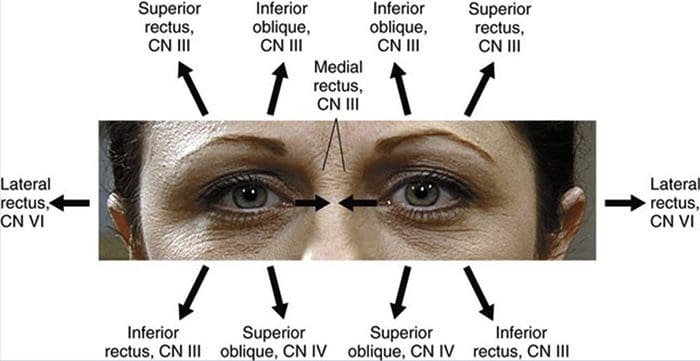
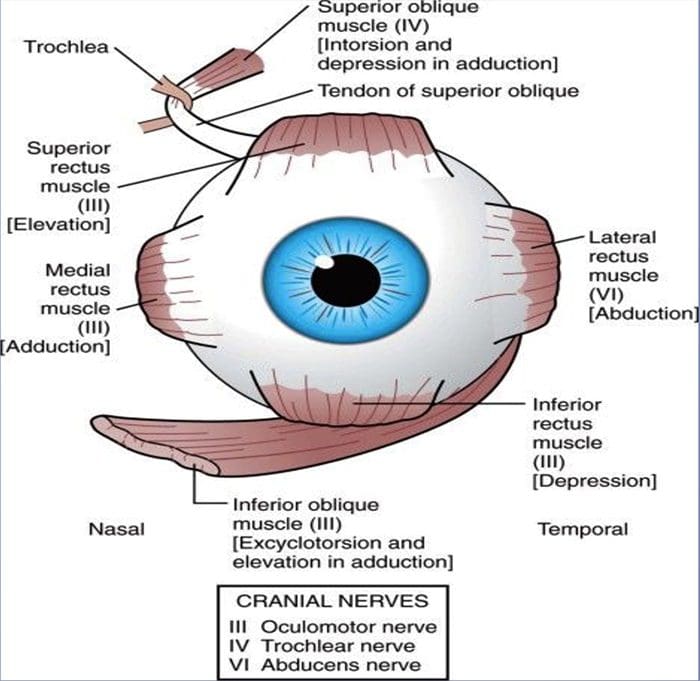
cerebellum el paso tx.EYE MOVEMENT REVIEW

cerebellum el paso tx.

cerebellum el paso tx.WHAT CAN YOU DO?

  • cerebellum el paso tx.Have the patient perform gaze stability exercises:

  • Sit arms length away
  • Fixate on dot
  • Rotate head in different directions
  • Rotation exercises:

  • Activate VOR
  • Activate side less active
  • Provide OPK stimulation:

  • Which side do you stimulate?

CEREBROCEREBELLUM

cerebellum el paso tx.Responsibilities:

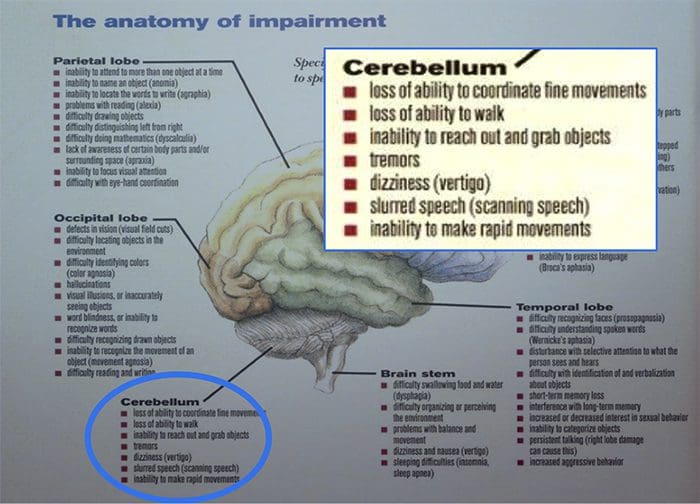
  • Coordination of fine movements
  • Coordination of speech
  • Coordination of thought
  • Patient Complaints:

  • Clumsiness with hands
  • Clumsiness with feet
  • Tripping over feet
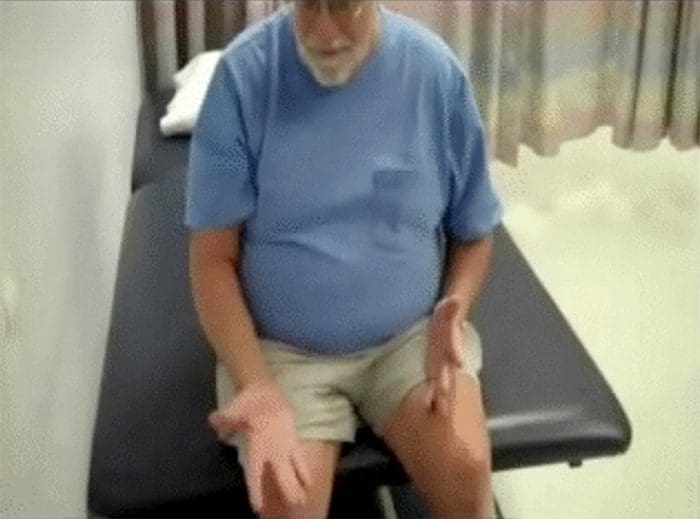
  • Hand shaking with intention
  • Examination Findings:

  • Intention tremor
  • Termination tremor
  • Dysmetria
  • Dysdiadochokinesia

cerebellum el paso tx.http://www.neuroexam.com/neuroexam/content.php?p=37

cerebellum el paso tx.http://www.neuroexam.com/neuroexam/content.php?p=37

cerebellum el paso tx.http://www.neuroexam.com/neuroexam/content.php?p=37

cerebellum el paso tx.http://www.neuroexam.com/neuroexam/content.php?p=37

WHAT DO YOU SEE?

cerebellum el paso tx.WHAT CAN YOU DO?

  • cerebellum el paso tx.Have the patient perform coordinated movements!
  • Example: piano playing, finger taping, finger to nose, etc.


TAYLOR ET AL. CUTTING YOUR NERVE CHANGES YOUR BRAIN BRAIN, 2009

  • �Animal studies have established that plasticity within the somatosensory cortex begins immediately following peripheral nerve transection, and that 1 year after complete nerve transection and surgical repair, cortical maps contain patchy, noncontinuous representations of the transected and adjacent nerves.�
  • �Here, we have demonstrated for the first time that there is functional plasticity and both grey and white matter structural abnormalities in several cortical areas following upper limb peripheral nerve transection and surgical repair.�

cerebellum el paso tx.

By�RYAN CEDERMARK, RN BSN MSN DC DACNB
Hips Positioning And MRI Anatomy

Hips Positioning And MRI Anatomy

Hips Positioning & MRI Anatomy

hipsMRI may be requested for:
  • Bone tumor
  • Osteoarthritis
  • Aseptic or avascular necrosis
  • Bursitis
  • Pain

Bones & Cartilage Of The Hips

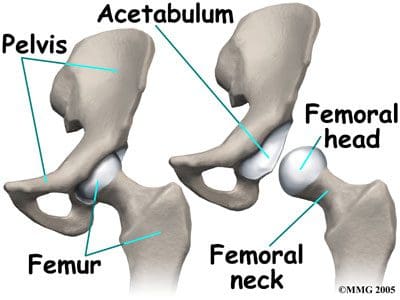
The hips joints join the legs to the trunk of the body, and are formed by the femurs and pelvic bones. The hips are ball-and-socket type joints, where the femoral head (ball) fits into the cup-shaped acetabulum (socket) of the pelvis (Figure 1). When compared to the shoulder, which is also a ball-and-socket joint, the acetabulum is a deeper socket, and encompasses a greater area of the ball, or femoral head. This accommodation is necessary to provide stability for the hip, as it is a major weight-bearing joint, and one of the largest joints in the body. When not weight-bearing, the ball and socket of the hip joint are not perfectly fitted. However, as the hip joint bears more weight, the surface area contact increases, and the joint becomes more stable. When in a standing position, the body�s center of gravity passes through the center of the acetabula. While walking, weight-bearing stresses on the hips can be five times a person�s body weight. Healthy hips can support your weight and allow for pain-free movement. Hip injuries or disease can cause changes that affect your gait, as well as changes that affect the ability of the hips to distribute weight bearing. Abnormal stress is then placed on the joints that are above and below the hips.

hips

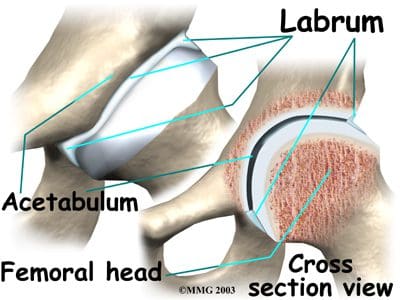
The three fused hips or innominate bones that form the acetabulum include the ilium, pubis, and ischium. The ilium forms the superior aspect, the pubis forms the inferior and anterior aspect, and the ischium forms the inferior and posterior aspect. The depth of the acetabulum socket is further increased by the attached fibrocartilaginous labrum (Figure 2). In addition to providing stability to the hip joint, the labrum allows flexibility and motion. Hip joint stability can be hampered by injuries resulting from playing sports, running, overuse, or falling, as well as by disease or tumor. MRI of the hips may be ordered to assess the joint(s) for internal derangement, fracture, or degenerative joint disease. A blow to the hip joint or a fall can result in dislocation of the hip, or a hip fracture. Osteoporosis or low bone density can also lead to hip fractures. Successful prevention and/or treatment of osteoporosis may be achieved through nutrition (adequate amounts of calcium, vitamin D and phosphorus), exercise, safety measures, and medications.


hips

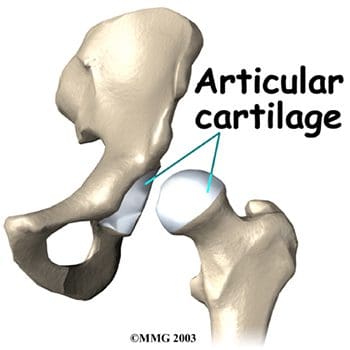
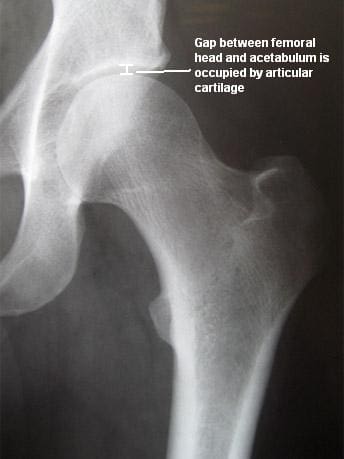
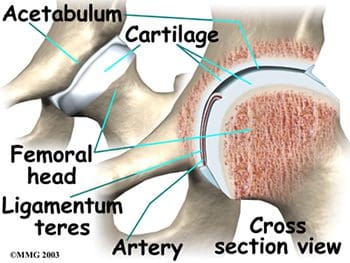
Articular cartilage covers the femoral head and the acetabulum (Figure 3). This cartilage is thin but tough, flexible, smooth and slippery, with a rubbery consistency. It absorbs shock, and allows the bones to move against each other easily and without pain. It is kept lubricated by synovial fluid, which is made in the synovial membrane (joint lining). Synovial fluid is both viscous and sticky. This fluid is what allows us to flex our joints under great pressure without wear. The articular cartilage of the hip is typically about � inch thick, except in the posterior aspect of the hip socket (Figure 4). Here, the cartilage is thicker, as this area absorbs most of the force during walking, running, and jumping. MRI of the hip joint can detect problems involving both the articular cartilage and the fibrocartilaginous ring, or labrum. Cartilage has minimal blood vessels, so it is not good at repairing itself. Fraying, fissuring, and other abnormalities or defects of the cartilage can lead to arthritis in the hip joint. Contrast can be directly injected in the hip joint for a detailed look at the cartilage and labrum.

hipships

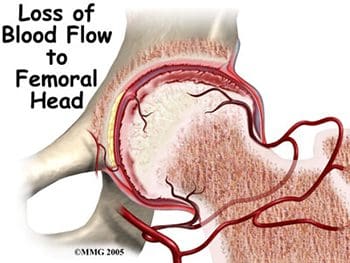
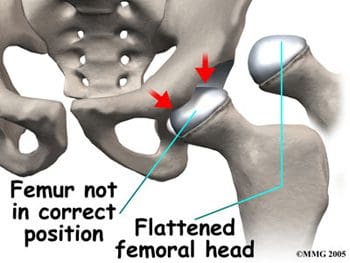
The femurs are the longest bones in the body, with large round heads that rotate and glide within the acetabula of the pelvis. The femoral head is particularly subject to pathologic changes if there is any significant alteration of blood supply (avascular necrosis). The femoral neck connects the head of the femur to the shaft. The neck ends at the greater and lesser trochanters, which are sites of muscle and tendon attachments. A disease characterized by an inadequate blood supply to the femoral head is Legg-Calve-Perthes disease, also known as LCP or simply Perthes disease. This is a degenerative disease of the hip joint that affects children, most commonly seen in boys ages two through twelve. One of the growth plates of the femoral head, the capital femoral epiphysis, is inside the joint capsule of the hip. Blood vessels that feed this epiphysis run along the side of the femoral neck, and are in danger of being torn or �pinched off� if the growth plate is damaged. This can result in a loss of blood supply to the epiphysis, leading to a deformity of the femoral head (Figure 5). The femoral head may become unstable and break easily, which can lead to incorrect healing and deformities of the entire hip joint (Figure 6). Treatment of Perthes disease is centered on the goal of returning the femoral head to a normal shape. Surgical and non-surgical treatments are used, based on the idea of �containment�- holding the femoral head in the acetabulum as much as possible, while still allowing motion of the hip joint for cartilage nutrition and healthy growth of the joint.


hipships

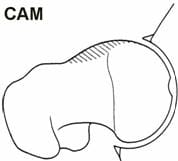
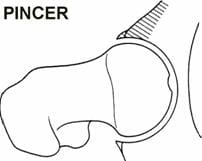
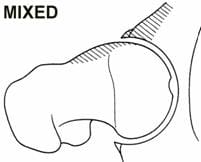
High level athletes and active individuals may be susceptible to a hip condition known as Femoro-Acetabular Impingement, or FAI. FAI is characterized by excessive friction in the hip joint. The femoral head and acetabulum rub abnormally, and can create damage to the articular or labral cartilage. FAI is also associated with labral tears, early hip arthritis, hyperlaxity and low back pain. FAI generally occurs in two forms: Cam and Pincer. The Cam form results in abnormal contact between the femoral head and the socket of the hip because the femoral head and neck relationship is aspherical (Figure 7). Males and those involved in significant contact sports typically display Cam impingement. Pincer impingement occurs when the acetabulum covers too much of the femoral head, resulting in the labral cartilage being pinched between the rim of the socket and the anterior femoral head-neck junction (Figure 8). Pincer impingement may be more common in women. Typically, these two forms exist together, and are labeled as �mixed impingement� (Figure 9).

 

hipshipships

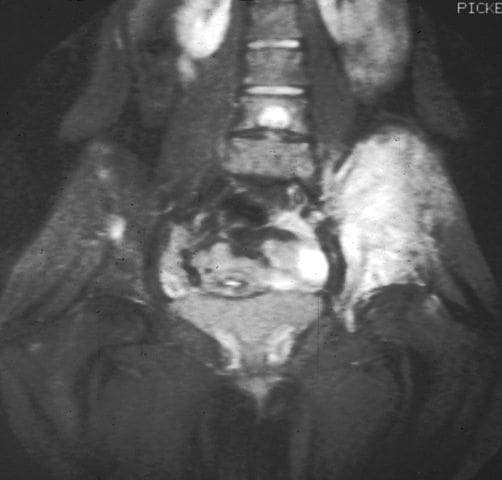
Ewing�s sarcoma is a malignant bone tumor that may affect the pelvis and/or femur, thereby also affecting the stability of the hips. Like Perthes disease, Ewing�s sarcoma is more common in males, typically presenting in childhood or early adulthood. MRI is routinely used in the work-up of these malignant tumors to show bony and soft tissue extent of the tumor, and its relation to nearby anatomic structures (Figure 10). Contrast may be used to help determine the amount of necrosis within the tumor, which aids in determining the response to treatment before surgery.


hips

Figure 10. MRI demonstrating Ewing�s sarcoma.

Ligaments Of The Hips

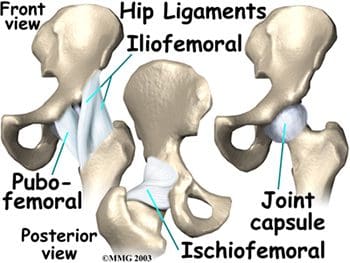
Hip stability is further increased by three strong ligaments that encompass the hip joint and form the joint capsule. These ligaments connect the femoral head to the acetabulum, with names suggestive of the bones they connect. They include the pubofemoral and iliofemoral ligaments anteriorly, and the ischiofemoral ligament posteriorly (Figure 11). The iliofemoral ligament is the strongest ligament in the body. However, sports and overuse can still result in sprains of these sturdy ligaments of the joint capsules of the hips. A smaller ligament, the ligamentum teres, is an intracapsular ligament that connects the tip of the femoral head to the acetabulum (Figure 12). A small artery within this ligament brings some of the blood supply to the femoral head. Damage to the ligamentum teres, and its enclosed artery, can result in avascular necrosis.


hipships

Muscles & Tendons Of The Hips

The muscles of the thigh and lower back work together to keep the hip stable, in alignment, and able to move. The hip gains stability because the hip muscles do not attach right at the joint. Hip muscles allow the movements of flexion, extension, abduction, adduction, and medial and lateral rotation. To better understand the functions of the muscles surrounding the hip, they can be divided into groups based on their locations- anterior, posterior, and medial.

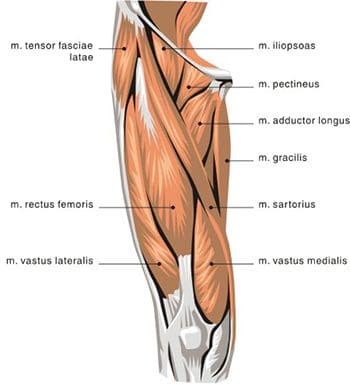
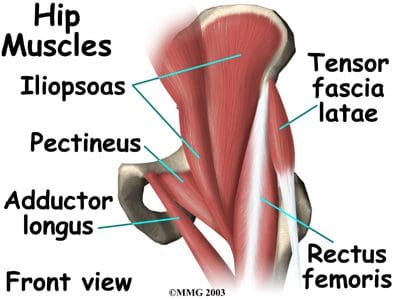
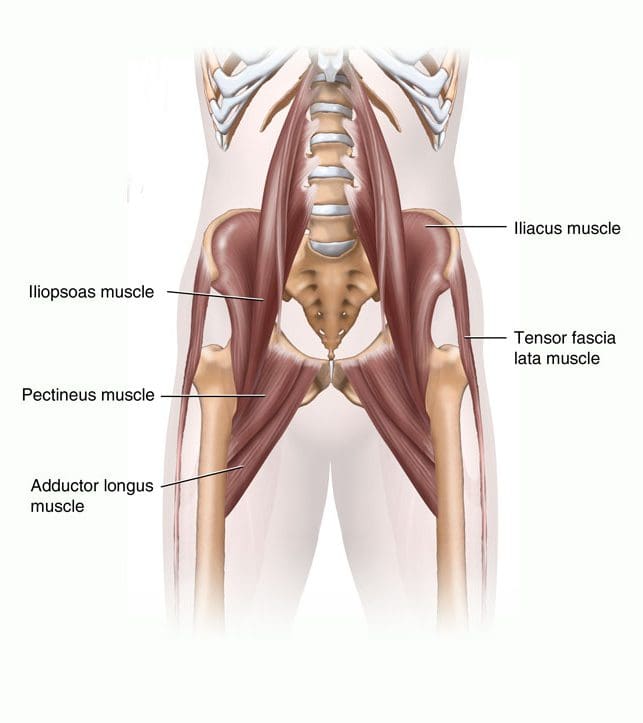
The anterior thigh muscles are the main hip flexors, and are located anterior to the hip joint. Seventy percent of the thigh�s muscle mass is made up of the quadriceps femoris muscle, so named because it arises from four muscle heads- the rectus femoris, vastus medialis, vastus intermedius, and vastus lateralis (Figures 13, 14). The rectus femoris is the only one of the �quad� muscles to cross the hip joint. The sartorius muscle is found anterior to the quadriceps, and also serves as an abductor and lateral rotator of the hip. The most powerful of the anterior thigh hip flexors is the iliopsoas, which originates in the low back and pelvis and attaches at the lesser trochanter.


hipships

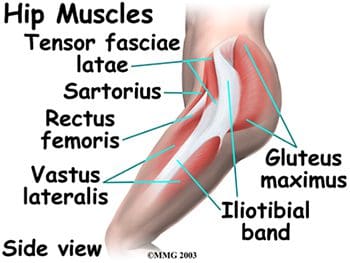
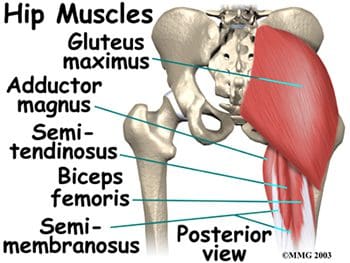
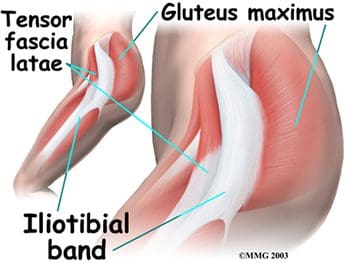
Posterior hip muscles include those of both the thigh and gluteal regions. The posterior thigh muscles are also known as the hamstrings- semimembranosus, semitendinosus, and biceps femoris (Figure 15). These muscles originate at the inferior pelvis, and are the extensors for the hip. They are active in normal walking motions. When the hamstrings are �tight�, they limit hip flexion when the knee joint is extended (bending forward from the waist with knees straight), and can limit lumbar movement, leading to back pain. The gluteal muscles include the gluteus maximus, medius, and minimus, six deep muscles that serve as lateral rotators, and the tensor fasciae latae. The three gluteals and the anterior sartorius muscle are all involved in abduction. The gluteus maximus is the main hip extensor, and is the most superficial of the gluteal muscles. It is involved in running and walking uphill, and assists with normal tone of the iliotibial band, which lies lateral to it. The gluteus medius and minimus both insert at the greater trochanter of the femur. The minimus is the deepest of the three gluteal muscles. Anterior to the gluteus minimus is the tensor fasciae latae muscle. It is a flexor and medial rotator of the hip, originating from the anterior superior iliac spine (ASIS) and inserting on the iliotibial band. The term �tensor fasciae latae� defines this muscle�s job- �muscle that stretches the band on the side�. This muscle helps the iliopsoas, gluteus medius, and gluteus minimus muscles during flexion, abduction and medial rotation of the thigh by making the iliotibial band taut, thereby steadying the trunk and stabilizing the hip (Figure 16). The iliotibial band or tract is not a muscle, but a thickened, fibrous band of deep fascia, or connective tissue. It is found at the lateral aspect of the thigh, and runs from the ilium to the tibia. It encloses the muscles and helps with lateral stabilization of the knee joint, as well as helping to maintain both hip and knee extension. Tightening of the iliotibial (IT) band typically causes more problems at the knee as opposed to the hip, but hip pain can result from the IT band rubbing as it passes over the greater trochanter.

hipships

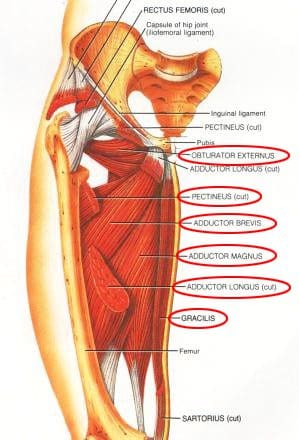
The medial thigh (groin) muscles include five muscles of adduction, and one lateral rotator (Figures 17, 18). The lone lateral rotator is the obturator externus, which covers the external surface of the obturator foramen in the deep upper medial thigh. The adductors include the gracilis, the pectineus, and the adductor brevis, longus and magnus. The gracilis is the longest adductor, extending from the medial inferior aspect of the pubic bone, to the medial aspect of the tibia. The adductor magnus is the most massive of the medial muscles of the thigh.


hipships

The tendons and muscles of the hips are very powerful and create great forces, making them prone to inflammation and irritation. Tendonitis of the hip can result from repetitive movements involving the soft tissues surrounding the hip joint. Overuse of the hip joint in fitness workouts can lead to tendonitis. Tendons lose their elasticity as we age, resulting in swelling and irritation when the tendons are no longer �gliding� on their normal paths. Iliopsoas tendonitis plays a major role in snapping hip syndrome, or dancer�s hip. A snapping sensation when the hip is flexed and extended may be accompanied by an audible snapping or popping noise, as well as pain. This can be both an extra-articular and an intra-articular occurrence. Extra-articular snapping is often found in those patients with a leg length difference (the longer leg is symptomatic), those with tightness of the iliotibial band on the involved side, and those with weak hip abductors and external rotators. Lateral extra-articular snapping can be caused by the iliotibial band, tensor fascia latae or gluteus medius tendon as they slide back and forth across the greater trochanter (Figure 19). If any of these connective tissue bands thickens, they can �catch� on the greater trochanter during the motion of hip extension, thereby creating the �snapping� sensation and sound. Medial extra-articular snapping, which is less common, can occur when the iliopsoas tendon catches on the anterior inferior iliac spine, lesser trochanter, or iliopectineal ridge during hip extension. Intra-articular snapping hip syndrome is similar in many ways to the extra-articular type, but often involves an underlying mechanical problem in the lower extremity, and more intense pain. Intra-articular snapping may be indicative of a torn acetabular labrum, recurrent hip subluxation, a tear of the ligamentum teres, loose bodies, articular cartilage damage, or synovial chondromatosis (cartilage formations in the synovial membrane of the joint). Snapping hip syndrome is usually found in those ages 15-40, often in those in training for the military. It can also affect athletes, especially those involved in dance, gymnastics, soccer, and track and field. These athletes will all be performing repeated hip flexions, which can lead to tendonitis in the hip area. The repetitive motions of those involved in weightlifting and running generally lead to a thickening of the tendons in the hip region, rather than snapping hip syndrome. Prevention, or at least a lessening, of this syndrome may be found with increased stretching of the iliopsosas muscle or the iliotibial band. Surgery is usually not required, unless intra-articular pathology is present.


hips

Figure 19. Hip muscles.

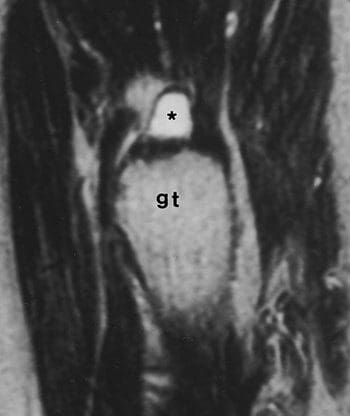
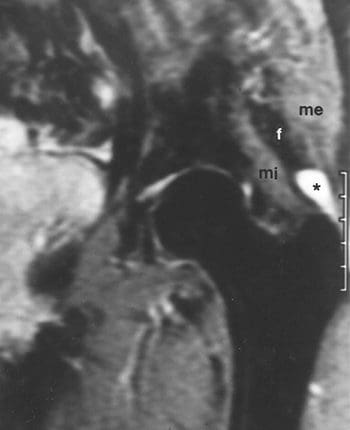
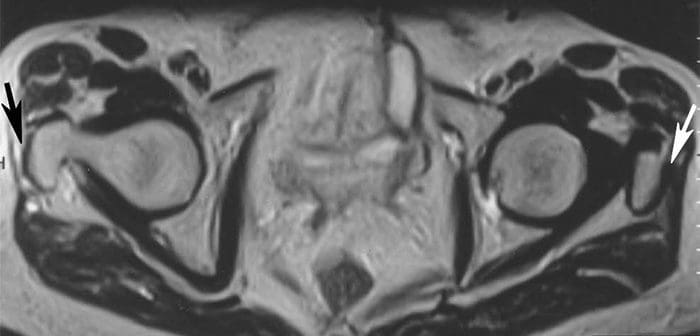
Tendon or muscle strains can occur suddenly, as in sports injuries, or they can develop over time, with symptoms including pain, swelling, muscle spasms, and difficulty moving certain muscles. MRI can be used to detect tendon and muscle tears and strains, as well as bone tumors and infection. MRI has shown good accuracy for the diagnosis of tears of the gluteus medius and gluteus minimus tendons, which are both abductor tendons of the hip. An association was found between these tears and areas of high signal intensity superior or lateral to the greater trochanter on T2-weighted images, tendon elongation in the gluteus medius, and tendon discontinuity (Figure 20). STIR and fat-suppressed T2-weighted coronal images are very sensitive for detection of areas of high signal intensity superior to the greater trochanter. Coronal T1-weighted images demonstrate tendon elongation in the gluteus medius (Figure 21). Axial images may prove superior for localizing involvement to individual abductor tendons and confirming tendon discontinuity (Figure 22). Tears of the abductor tendons may be the leading cause of greater trochanteric pain syndrome.

hips

Figure 20. Sag. T2 shows high signal intensity superior to greater trochanter (gt) corresponding to swollen bursa (*).

hips

Figure 21. Coronal STIR shows high signal intensity superior to greater trochanter in bursa (*) between gluteus medius (me) and gluteus minimus (mi) tendons.

hips

Figure 22. Axial T2 shows high signal intensity corresponding to fluid replacing distal rt. gluteus medius tendon (black arrow); normal left tendon (white arrow).

Nerves Of The Hips

The nerves of the hip supply the various muscles in the hip area. The major nerves include the femoral, obturator, and lateral femoral cutaneous nerves anteriorly, and the large sciatic nerve posteriorly (Figure 23). The femoral nerve innervates the quadriceps femoris and sartorius, and is the sensory nerve to the anterior thigh. Trauma to this nerve usually occurs in the pelvis, as it passes through or near the psoas muscle. The obturator nerve passes along the lateral pelvic wall and through the obturator foramen, then splits into branches that supply the adductor muscle group. This nerve can also be subject to trauma in the pelvis due to its passage through the obturator foramen. The lateral femoral cutaneous nerve is a sensory nerve that travels along the anterolateral aspect of the thigh. It supplies sensation to the skin surface of the thigh. This is the single nerve involved in a painful condition called meralgia paresthetica, which is characterized by tingling, numbness, and burning pain in the outer part of the thigh. Meralgia paresthetica results from focal entrapment of the lateral femoral cutaneous nerve as it passes through the tunnel formed by the lateral attachment of the inguinal ligament and the ASIS. The posterior sciatic nerve passes deep to the gluteus maximus into the posterior thigh, where it innervates the hamstring muscles, on its way down to the lower leg and foot. The sciatic nerve is approximately as big around as the thumb, and is the largest single nerve in the human body. It can be injured in cases of posterior hip dislocation. Pressure on this nerve can cause nerve pain, numbness, tingling and weakness (sciatica symptoms) in the buttocks, leg, or foot, depending on the site of origin of the sciatic nerve compression.

hips

Figure 23. Anterior and posterior views of the nerves of the hip.

Arteries & Veins Of The Hips

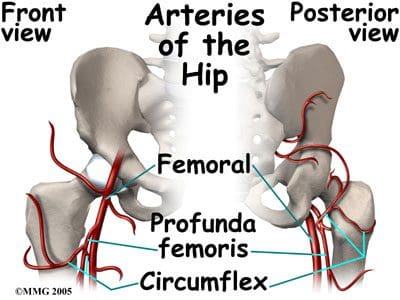
The arterial blood vessels that supply the hips are branches of the internal and external iliacs. The internal iliac artery gives off the superior and inferior gluteals, and the obturator artery. The inferior gluteal flows to the posterior aspect of the hip joint and proximal femur, where it joins a branch of the femoral artery. The obturator artery runs through the obturator foramen, and sends its acetabular branch to the ligamentum teres as part of the blood supply to the femoral head. The external iliac becomes the femoral artery, which has numerous branches that supply the hip and proximal femur. The largest femoral branch is the profunda femoris, which branches superiorly into the medial and lateral circumflex femorals (Figure 24). The circumflex femorals and the inferior gluteal artery contribute to the anastomoses to supply the femoral head, femoral neck, and the hip joint. The medial circumflex also has an acetabular branch to the ligamentum teres. Congenital anomalies in the hip anastomoses, degenerative processes, and trauma can all compromise the blood supply to the hip joint area.

hips

Figure 24. Anterior and posterior views of the arteries of the hip.

Venous flow in the hip and proximal femur typically follows the arterial flow, including the same names for the vessels. The deep veins of the hip and thigh can be the origination of a deep vein thrombosis, which can result in a pulmonary embolus. This can be caused by immobility after hip surgery, sitting in cars or airplanes for extended trips, being overweight, or slow or low blood flow. These blood clots can break off, travel through the larger veins of the thigh and hip, continue through the heart, and become lodged in the smaller vessels of the lung. MRI is being used more frequently to diagnose this very serious condition.

Bursae Of The Hips

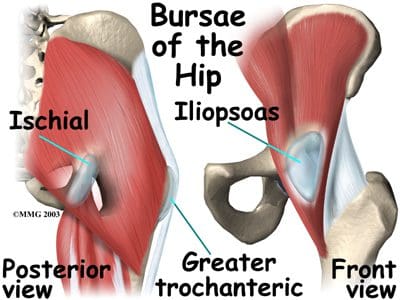
The hip joint is surrounded by bursae, similar to the shoulder. These fluid-filled sacs are lined with a synovial membrane, which produces synovial fluid. Their function is to lessen the friction between tendon and bone, ligament and bone, tendons and ligaments, and between muscles. There may be as many as 20 bursae around the hip. If they become infected or inflamed, the result is a painful condition called bursitis. Common hip bursae that may become inflamed include the greater trochanteric bursa, the iliopsoas bursa, and the ischial bursa (Figure 25). The greater trochanteric bursa is sandwiched between the greater trochanter of the femur, and the muscles and tendons that cross over it. If this bursal sac becomes inflamed, patients experience pain with every step they take, as each step requires the tendon to move over the femur at the hip joint. A tight iliotibial band can also cause irritation of the greater trochanteric bursa. Iliopsoas bursitis can result from irritation of the bursa found between the hip joint and the iliopsoas muscle that passes in front of it. Another common site for bursitis is the ischial bursa, which acts as a lubricating pad between tendons and the ischial tuberosity, which is the bony prominence of the pelvis that you sit on. The ischial bursa acts to prevent destruction of the tendons as they move over the ischial tuberosity. Prolonged sitting can cause ischial bursitis. Inflammation around the ischial tuberosity can irritate the sciatic nerve, and trigger symptoms similar to sciatica. Hip bursitis is seen in runners and athletes in sports that involve excessive running (soccer, football, etc.). It can also be caused by an injury (traumatic bursitis), and is seen in post-op hip replacement and hip surgery patients. Treatment for hip bursitis typically includes rest, anti-inflammatory medications, and ice. It may become necessary to aspirate the bursa, which can be combined with a cortisone injection. MRI may be needed if the diagnosis is unclear, or if the problem does not resolve with normal treatments.

hips

Figure 25. Bursae of the hip.


Axial Scans

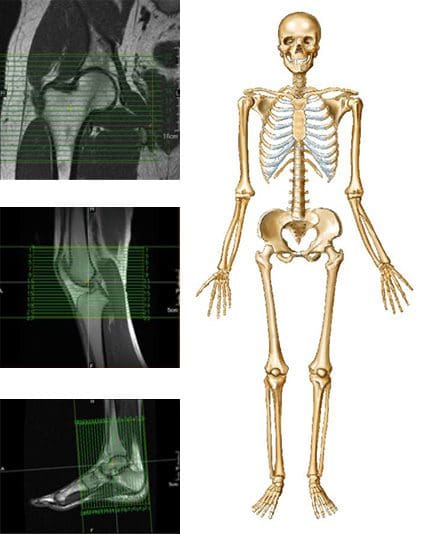
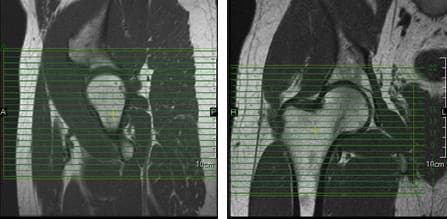
When positioning unilateral axial slices for the hip, a coronal image can be used to ensure inclusion of all pertinent anatomy. The slices should extend superiorly to include the entire femoral head and acetabulum, and inferiorly to include anatomy below the lesser trochanter. The slices should be aligned perpendicular to the shaft of the femur, as seen in the coronal image in Figure 39.

hips

Figure 39. Axial slice setup using sagittal and coronal images.

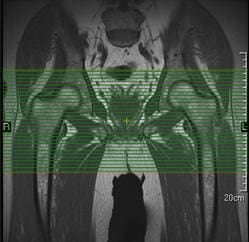
For bilateral axial hip slice setup, parameters may have to be altered to maintain adequate resolution with the larger FOV that is required (Figure 40). The slice group may require angulation to maintain alignment of the femoral heads on the resultant images.

hips

Figure 40. Bilateral axial slice setup using a coronal image.

Coronal Scans

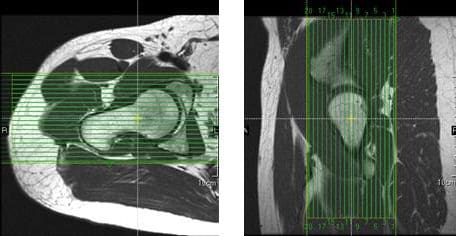
Coronal slices of the hip should cover the area from the posterior margin to the anterior margin of the femoral head. The area from the proximal margin of the femoral shaft to the greater sciatic notch should be included in the image (Figure 41). Slices may be angled so that they are parallel to the femoral neck. Thinner slices may be requested for coronal scanning.

hips

Figure 41. Coronal slice setup using axial and sagittal images.

Sagittal Scans

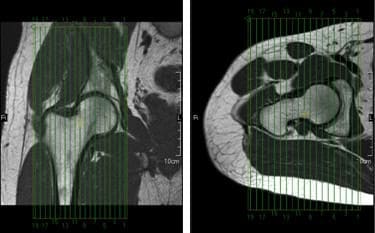
Sagittal slices of the hip should extend past the greater trochanter laterally, and through the acetabulum medially. The slices should be aligned along the long axis of the femur, and perpendicular to the coronal slices, as seen in the coronal image in Figure 42. Two different slice groups will be necessary when performing bilateral sagittal scans.

hips

Figure 42. Sagittal slice setup using coronal and axial images.

Hips Arthrography

MR hip arthrography is often times referred to as the gold standard for assessment of the labrum of the hip. The most clinically significant abnormal findings that result from hip arthrography are labral detachments and tears. Detachment of the labrum, which is more common than a labral tear, can be diagnosed from the appearance of the injected contrast at the acetabular-labral interface (Figure 43). A labral tear can result in injected contrast appearing within the substance of the labrum (Figure 44). Contrast injection is necessary to differentiate torn or detached labra from other pathologic conditions, which may have separate signal intensities. The sensitivity and accuracy for the diagnosis of labral tears and detachment with MR arthrography vs. nonarthrographic MR is 90%. Hip arthrography with MR can also depict intrarticular loose bodies, osteochondral abnormalities, and abnormalities of soft-tissue structures.

Hip arthrography can be performed under fluoro in the x-ray dept., with the patient being moved to the MRI dept. for further imaging, or the entire procedure can be performed in the MRI suite, if MR compatible supplies are available for interventional techniques. The patient should be securely positioned with the hips in internal rotation.

T1-weighted imaging is performed post-contrast to visualize the high signal of the intraarticular contrast. T1 gradient echo sequences offer the benefits of thin sections, elimination of partial volume averaging, and increased detection of small tears. Fatsat sequences are helpful in increasing the contrast between the injected contrast and the adjacent soft tissue. STIR or fatsat T2 sequences performed in the coronal plane may help to detect unsuspected pathologic conditions in the soft tissue and adjacent osseous structures.

Post-contrast axial oblique images have been shown to optimize the detection of the most common sports-related acetabular labral tears, which are anterior or anterosuperior in location. Using a mid-coronal localizer, the axial oblique slices should be prescribed parallel to the long axis of the femoral neck.

hips

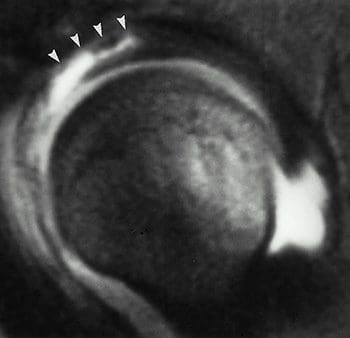
Figure 43. Labral detachment as seen in a fat-suppressed T1-wtd. sag. image; arrowheads indicate involvement of anterior and anterosuperior labrum.

hips

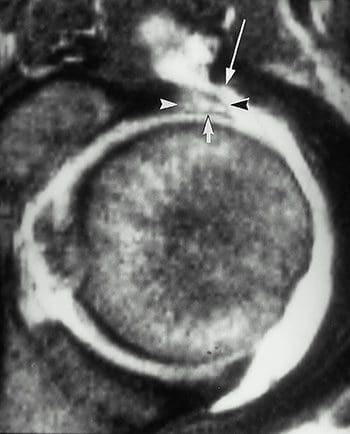
Figure 44. Labral tear as seen in a T1-wtd. image; arrowheads indicate enlarged labrum; short arrow indicates linear intralabral collection of contrast material; long arrow indicates communication between the joint and the iliopsoas bursa.

blank
References:

Kapit, Wynn, and Lawrence M. Elson. The Anatomy Coloring Book. New York: HarperCollins, 1993.

Hip Anatomy, Function, and Common Problems. (Last updated 28July2010). Retrieved from http://healthpages.org/anatomy-function/hip-structure-function-common-problems/

Cluett, J. M.D. (Updated 22May2012). Labral Tear of the Hip Joint. Retrieved from http://orthopedics.about.com/od/hipinjuries/qt/labrum.htm

Hughes, M. D.C. (15July2010). Diseases of the Femur Bone. Retrieved from http://www.livestrong.com/article/175599-diseases-of-the-femur-bone/

A Patient�s Guide to Perthes Disease of the hip. (n.d.). Retrieved from http://www.orthopediatrics.com/docs/Guides/perthes.html

Hip Injuries and Disorders. (Last reviewed 10February2012). Retrieved from http://nlm.nih.gov/medlineplus/hipinjuriesanddisorders.html

Ligament of head of femur. (Updated 20December2011). Retrieved from http://en.wikipedia.org/wiki/Ligament_of_head_of_femur

Ewing�s sarcoma. (Last modified 06January2012). Retrieved from http://en.wikipedia.org/wiki/Ewing%27s_sarcoma

Hip Anatomy. (n.d.). Retrieved from http://www.activemotionphysio.ca/Injuries-Conditions/Hip

Iliotibial Band Friction Syndrome. (n.d.). Retrieved from http://www.physiotherapy-treatment.com/iliotibial-band-friction-syndrome.html

Snapping hip syndrome. (Last modified 09November2011). Retrieved from http://en.wikipedia.org/wiki/Snapping_hip_syndrome

Sekul, E. (Updated 03February2012). Meralgia Paresthetica. Retrieved from http://emedicine.medscape.com/article/1141848-overview

Yeomans, S. D.C. (Updated 07July2010). Sciatic Nerve and Sciatica. Retrieved from http://www.spine-health.com/conditions/sciatica/sciatic-nerve-and-sciatica

Mayo Clinic staff. (26July2011). Meralgia paresthetica. Retrieved from http://www.mayoclinic.com/health/meralgia-paresthetica/DS00914

Deep Vein Thrombosis (DVT)-Blood Clots in the Legs. (n.d.). Retrieved from http://catalog/nucleusinc.com/displaymonograph.php?MID=148

Petersilge, C. M.D. (03May2000). Chronic Adult Hip Pain: MR Arthrography of the Hip. Retrieved from http://radiographics.rsna.org/content/20/suppl_1/S43.full

Acetabular branch of medial circumflex femoral artery. (Last modified 17November2011). Retrieved from http://en.wikipedia.org/wiki/Acetabular_branch_of_medial_circumflex_femoral_artery

Cluett, J. M.D. (Updated 26March2011). Hip Bursitis. Retrieved from http://orthopedics.about.com/cs/hipsurgery/a/hipbursitis.htm

Steinbach, L. M.D., Palmer, W. M.D., Schweitzer, M. M.D. (10June2002). Special Focus Session MR Arthrography. Retrieved from http://radiographics.rsna.org/content/22/5/1223.full

Schueler, S. M.D., Beckett, J.M.D., Gettings, S.M.D. (Last updated 05August2010). Ischial Bursitis/Overview. Retrieved from http://www.freemd.com/ischial-bursitis/overview.htm

Hwang, B., Fredericson, M., Chung, C., Beaulieu, C., Gold, G. (29October2004). MRI Findings of Femoral Diaphyseal Stress Injuries in Athletes. Retrieved from http://www.ajronline.org/content/185/1/166.full.pdf

The Femur (Thigh Bone). (n.d.). Retrieved from http://education.yahoo.com/reference/gray/subjects/subject/59

Norman, W. PhD, DSc. (n.d.). Joints of the Lower Limb. Retrieved from http://home.comcast.net/~wnor/lljoints.htm

Femur. (Last modified 24September2012). Retrieved from http://en.wikipedia.org/wiki/Femur

Wheeless, C. III, M.D. (Last updated 25April2012). Ligaments of Humphrey and Wrisberg. Retrieved from http://wheelessonline.com/ortho/ligaments_of_humphrey_and_wrisberg

Muscle Strains in the Thigh. (Last reviewed August2007). Retrieved from http://orthoinfo.aaos.org/topic.cfm?topic=A00366

Shiel, W. Jr., M.D. (Last reviewed 23July2012). Hamstring Injuries. Retrieved from http://www.medicinenet.com/hamstring_injury/article.htm

Hamstring Muscle Injuries. (Last reviewed July 2009). Retrieved from http://orthoinfo.aaos.org/topic.cfm?topic=a00408

Knee. (Last modified 19September2012). Retrieved from http://en.wikipedia.org/wiki/Knee

DeBerardino, T. M.D. (Updated 30March2012). Quadriceps Injury. Retrieved from http://emedicine.medscape.com/article/91473-overview

Kan, J.H. (n.d.). Osteochondral Abnormalities: Pitfalls, Injuries, and Osteochondritis Dissecans. Retrieved from http://www.arrs.org/shopARRS/products/s11p_sample.pdf

Nerves of the Lower Limb. (Last updated 30March2006). Retrieved from http://download.videohelp.com/vitualis/med/lowrnn.htm

The Adductor Canal. (Last updated 30March2006). Retrieved from http://download.videohelp.com/vitualis/med/addcanal.htm

Nabili, S. M.D. (n.d.). Varicose Veins & Spider Veins. Retrieved from http://www.medicinenet.com/varicose_veins/article.htm

Basic Venous Anatomy. (n.d.). Retrieved from http://vascular-web.com/asp/samples/sample104.asp

Femoral nerve. (Last modified 23September2012). Retrieved from http://en.wikipedia.org/wiki/Femoral_nerve

Peron, S. RDCS. (Last modified 16October2010). Anatomy � Lower Extremity Veins. Retrieved from http://www.vascularultrasound.net/vascular-anatomy/veins/lower-extremity-veins

Medical Multimedia Group, L.L.C. (n.d.). Knee Anatomy. Retrieved from http://www.eorthopod.com/content/knee-anatomy

Knee Joint Anatomy, Function and Problems. (Last updated 06July2010). Retrieved from http://healthpages.org/anatomy-function/knee-joint-structure-function-problems/

Coronary ligament of the knee. (Last modified 09May2010). Retrieved from http://en.wikipedia.org/wiki/Coronary_ligament_of_the_knee

Walker, B. (n.d.). Patellar Tendonitis Treatment � Jumper�s Knee. Retrieved from http://www.thestretchinghandbook.com/archives/patellar-tendonitis.php

Osgood-Schlatter disease. (Last reviewed 12November2010). Retrieved from http://www.ncbi.nlm.nih.gov/pubmedhealth/PMH0002238/

Grelsamer, R. M.D. (n.d.). The Anatomy of the Patella and the Extensor Mechanism. Retrieved from http://kneehippain.com/patient_pain_anatomy.php

Oblique popliteal ligament. (Last modified 24March2012). Retrieved from http://en.wikipedia.org/wiki/Oblique_popliteal_ligament

Shiel, W. Jr., M.D. (Last reviewed 27July2012). Chondromalacia Patella (Patellofemoral Syndrome). Retrieved from http://www.medicinenet.com/patellofemoral_syndrome/article.htm

Knee. (Last modified 19September2012). Retrieved from http://en.wikipedia.org/wiki/Knee

Mosher, T. M.D. (Last updated 11April2011). MRI of Knee Extensor Mechanism Injuries Overview of the Knee Extensor Mechanism. Retrieved from http://emedicine.medscape.com/article/401001-overview

Carroll, J. M.D. (December 2007). Oblique Menisco-meniscal Ligament. Retrieved from http://radsource.us/clinic/0712

DeBerardino, T. M.D. (Last updated 30March2012). Medial Collateral Knee Ligament Injury. Retrieved from http://emedicine.medscape.com/article/89890-overview#a0106

Farr, G. (Last updated 31December2007). Joints and Ligaments of the Lower Limb. Retrieved from http://becomehealthynow.com/article/bodyskeleton/951/

Knee anatomy overview. (02March2008). Retrieved from http://www.kneeguru.co.uk/KNEEnotes/node/741

Dixit, S. M.D., Difiori, J. M.D., Burton, M. M.D., Mines, B. M.D. (15January2007). Management of Patellofemoral Pain Syndrome. Retrieved from http://www.aafp.org/afp/2007/0115/p194.html

Knee Muscles. (Last updated 05September2012). Retrieved from http://www.knee-pain-explained.com/kneemuscles.html

Popliteus muscle. (Last updated 20February2012). Retrieved from http://en.wikipedia.org/wiki/Popliteus_muscle

Kneedoc. (10February2011). Nerves. Retrieved from http://thekneedoc.co.uk/neurovascular/nerves

Wheeless, C. III, M.D. (Last updated 15December2011). Popliteal Artery. Retrieved from http://wheelessonline.com/ortho/popliteal_artery

The Popliteal Artery. (n.d.) Retrieved from http://education.yahoo.com/reference/gray/subjects/subject/159

Knee bursae. (Last updated 09May2012). Retrieved from http://en.wikipedia.org/wiki/Bursae_of_the_knee_joint

Hirji, Z., Hunjun, J., Choudur, H. (02May2011). Imaging of the Bursae. Retrieved from http://www.ncbi.nlm.nih.gov/pmc/articles/PMC3177464/

Kimaya Wellness Limited. (n.d.). Organ>Popliteal Artery. Retrieved from http://kimayahealthcare.com/OrganDetail.aspx?OrganID=103&AboutID=1

Total Vein Care. (Last updated 24February2012). Varicose Vein Anatomy and Function for Patients. Retrieved from http://www.veincare.com/education/

Tibia. (Last updated 01April2012). Retrieved from http://en.wikipedia.org/wiki/Tibia

Norkus,S., Floyd, R. (Published 2001). The Anatomy and Mechanisms of Syndesmotic Ankle Sprains. Retrieved from http://www.ncbi.nlm.nih.gov/pmc/articles/PMC155405/

Soleus muscle. (Last updated 10April2012). Retrieved from http://en.wikipedia.org/wiki/Soleus_muscle

Achilles Tendinitis. (Last reviewed June2010). Retrieved from http://orthoinfo.aaos.org/topic.cfm?topic=A00147

Wheeless, C. III,M.D. (Last updated 11April2012). Sural Nerve. Retrieved from http://wheelessonline.com/ortho/sural_nerve

Medical Multimedia Group, L.L.C. (Last updated 26July2006). Ankle Syndesmosis Injuries. Retrieved from http://www.orthogate.org/patient-education/ankle/ankle-syndesmosis-injuries.html

Cluett, J. M.D. (Last updated 16September2008). Exertional Compartment Syndrome. Retrieved from http://orthopedics.about.com/od/overuseinjuries/a/compartment.htm

Leg Veins (Thigh, Lower Leg) Anatomy, Pictures and Names. (Last updated 21November2010). Retrieved from http://www.healthype.com/leg-veins-thigh-lower-leg-anatomy-pictures-and-names.html

Cluett, J.M.D. (Last updated 6October2009). Stress Fracture. Retrieved from http://orthopedics.about.com/cs/otherfractures/a/stressfracture.htm

Ostlere, S. (1December2004). Imaging the ankle and foot. Retrieved from http://imaging.birjournals.org/content/15/4/242.full

Inverarity, L. D.O. (Last updated 23January2008). Ligaments of the Ankle Joint. Retrieved from http://physicaltherapy.about.com/od/humananatomy/p/ankleligaments.htm

Golano, P., Vega, J., DeLeeuw, P., Malagelada, F.,Manzanares, M., Gotzens, V., van Dijk, C. (Published online 23March2010). Anatomy of the ankle ligaments:a pictorial essay. Retrieved from http://www.ncbi.nlm.nih.gov/pmc/articles/PMC2855022/

Numkarunarunrote, N., Malik, A., Aguiar, R.,Trudell, D., Resnick, D. (11October2006). Retinacula of the Foot and Ankle: MRI with Anatomic Correlation in Cadavers. Retrieved from http://www.ajronline.org/content/188/4/W348.full

Medical Multimedia Group, L.L.C. (n.d.). A Patient�s Guide to Ankle Anatomy. Retrieved from http://www.eorthopod.com/content/ankle-anatomy

The Anterior Tibial Artery. (n.d.). Retrieved from http://education.yahoo.com/reference/gray/subjects/subject/160

Foot and Ankle Anatomy. (Last updated 28July2011). Retrieved from http://northcoastfootcare.com/pages/Foot-and-Ankle-Anatomy.html

Donnelly, L., Betts, J., Fricke, B. (1July2009). Skimboarder�s Toe: Findings on High-Field MRI. Retrieved from http://www.ajronline.org/content/184/5/1481.full

Foot. (Last updated 28August2012). Retrieved from http://en.wikipedia.org/wiki/Foot

Wiley, C. (n.d.). Major Ligaments in the Foot. Retrieved from http://www.ehow.com/list_6601926_major-ligaments-foot.html

Turf Toe: Symptoms, Causes, and Treatments. (Last reviewed 9August2012). Retrieved from http://www.webmd.com/fitness-exercise/turf-toe-symptoms-causes-and-treatments

Cluett, J. M.D. (Last updated 02April2012). Turf Toe. Retrieved from http://orthopedics.about.com/od/toeproblems/p/turftoe.htm

Neurology and the Feet. (n.d.) Retrieved from http://footdoc.ca/www.FootDoc.ca/Website%20Nerves%20Of%20The%20Feet.htm

The Veins of the Lower Extremity, Abdomen, and Pelvis. (n.d.). Retrieved from http://education.yahoo.com/reference/gray/subjects/subject/173

Corley, G., Broderick, B., Nestor, S., Breen, P., Grace, P., Quondamatteo, F., O�Laighin, G. (n.d.). The Anatomy and Physiology of the Venous Foot Pump. Retrieved from http://www.eee.nuigalway.ie/documents/go_anatomy_of_the_plantar_venous_plexus_manuscript.pdf

Morton�s neuroma. (Last modified 8August2012). Retrieved from http://en.wikipedia.org/wiki/Morton%27s_metatarsalgia

Close Accordion
blank
References Anatomy Pics:

Figures 1, 5, 6, 24- http://www.orthopediatrics.com/docs/Guides/perthes.html

Figures 2, 3, 11, 12, 14, 15, 16, 18, 23, 25- http://www.activemotionphysio.ca/Injuries-Conditions/Hip/Hip-Anatomy/a~299/article.html

Figure 4- http://hipkneeclinic.com/images/uploaded/hipanatomy_xray.jpg

Figures 7, 8, 9- http://hipfai.com/

Figure 10- http://en.wikipedia.org/wiki/File:Ewing%27s_sarcoma_MRI_nci-vol-1832-300.jpg

Figure 13- http://www.chiropractic-help.com/Patello-Femoral-Pain-Syndrome.html

Figure 17- http://www.thestretchinghandbook.com/archives/ezine_images/adductor.jpg

Figure 19- http://media.summitmedicalgroup.com/media/db/relayhealth-images/hipanat.jpg

Figures 20-22- http://www.ajronline.org/content/182/1/137.full.pdf+html

Figure 43, 44- http://radiographics.rsna.org/content/20/suppl_1/S43.full

Figure 45- http://www.exploringnature.org/db/detail.php?dbID=24&detID=2768

Figures 46-48- http://www.ajronline.org/content/185/1/166.full.pdf

Figure 49- http://arrs.org/shopARRS/products/s11p_sample.pdf

Figure 50- http://www.thestretchinghandbook.com/archives/medial-collateral-ligament.php

Figures 51, 52- http://www.radsource.us/clinic/0712

Figures 53, 54- http://www.osteo-path.co.uk/BodyMap/Thighs.html

Figure 55- http://www.ncbi.nlm.nih.gov/pmc/articles/PMC1963576/

Figure 56- http://legacy.owensboro.kctcs.edu/gcaplan/anat/Notes/API%20Notes%20M%20%20Peripheral%20Nerves.htm

Figure 57- http://www.keywordpictures.com/keyword/lateral%20cutaneous%20nerve%20of%20thigh/

Figure 58- http://home.comcast.net/~wnor/postthigh.htm

Figure 59- http://becomehealthynow.com/glossary/CONG437.htm

Figure 60- http://fitsweb.uchc.edu/student/selectives/Luzietti/Vascular_pvd.htm

Figure 61- http://www.fashion-res.com/peripheral-vascular-disease-with-stenting-in-the/

Figure 62- http://www.wpclipart.com/medical/anatomy/blood/femoral_artery_and_branches_in_leg.png.html

Figure 63- http://www.globalteleradiologyservices.com/Deep_Vein_Thrombosis_Overview.htm

Figure 64- http://www.vascularultrasound.net/vascular-anatomy/veins/lower-extremity-veins

Figure 82- http://www.jeffersonhospital.org/diseases-conditions/knee-ligament-injury.aspx?disease=658f267f-75ab-4bde-8781-f2730fafa958

Figure 83- http://javierjuan.ifunnyblog.com/anatomybackofknee/

Figure 84- http://www.kneeandshouldersurgery.com/knee-disorders/tibial-osteotomy.html

Figure 85- http://www.disease-picture.com/chondromalacia-patella-physical-therapy/

Figure 86- http://www.eorthopod.com/content/bipartite-patella

Figure 87- http://www.orthogate.org/patient-education/knee/articular-cartilage-problems-of-the-knee.html

Figure 88- http://www.webmd.com/pain-management/knee-pain/menisci-of-the-knee-joint

Figure 89- http://sumerdoc.blogspot.com/2008_07_01_archive.html

Figure 90- http://www.concordortho.com/patient-education/topic-detail-popup.aspx?topicID=55befba2d440dc8e25b85747107b5be0

Figure 91- http://trialx.com/curebyte/2011/08/16/pictures-for-chondromalacia-patella/

Figure 92- http://radiopaedia.org/images/1059

Figure 93- http://radiologycases.blogspot.com/2011/01/osgood-schlatter-disease.html

Figure 94- http://www.physioquestions.com/2010/09/07/knee-injury-acl-part-i/

Figure 95- http://www.jeffersonhospital.org/diseases-conditions/knee-ligament-injury.aspx?disease=4e3fcaf5-0145-43ea-820f-a175e586e3c8

Figures 96, 97- http://radiology.rsna.org/content/213/1/213.full

Figures 98-101- http://appliedradiology.com/Issues/2008/12/Articles/Imaging-the-knee–Ligaments.aspx

Figure 102- http://radiopaedia.org/images/408156

Figure 103- http://aftabphysio.blogspot.com/2010/08/joints-of-lower-limb.html

Figures 104, 105- http://www.radsource.us/clinic/0310

Figure 106- http://nwrunninglab.com/patellar-tendonitis.html

Figure 107- http://www.aafp.org/afp/2007/0115/p194.html

Figure 108- http://www.reboundsportspt.com/blog/tag/knee-pain

Figure 109- http://www.norwellphysicaltherapy.com/Injuries-Conditions/Knee/Knee-Issues/Quadriceps-Tendonitis-of-the-Knee/a~1803/article.html

Figure 110- http://kneeguru.co.uk/KNEEnotes/node/479

Figure 111- http://www.magicalrobot.org/BeingHuman/2010/03/fascia-bones-and-muscles

Figure 112- http://home.comcast.net/~wnor/postthigh.htm

Figures 113, 115, 157-159- http://ipodiatry.blogspot.com/2010/02/anatomy-of-foot-and-ankle_26.html

Figure 114- http://medchrome.com/basic-science/anatomy/the-knee-joint/

Figure 116- http://www.sharecare.com/question/what-are-varicose-veins

Figure 117- http://mendmyknee.com/knee-and-patella-injuries/anatomy-of-the-knee.php

Figures 118-120- http://www.ncbi.nlm.nih.gov/pmc/articles/PMC3177464/

Figure 121- http://www.riversideonline.com/health_reference/Disease-Conditions/DS00448.cfm

Figure 122- http://arthritis.ygoy.com/2011/01/01/what-is-an-arthritis-knee-cyst/

Figure 143- http://usi.edu/science/biology/mkhopper/hopper/BIOL2401/LABUNIT2/LabEx11week6/tibiaFibulaAnswer.htm

Figure 144- http://web.donga.ac.kr/ksyoo/department/education/grossanatomy/doc/html/fibula1.html

Figure 145- http://becomehealthynow.com/popups/ligaments_tib_fib_bh.htm

Figure 146- http://www.parkwayphysiotherapy.ca/article.php?aid=121

Figure 147- http://aidmyankle.com/high-ankle-sprains.php

Figure 148- http://legsonfire.wordpress.com/what-is-compartment-syndrome/

Figures 149, 152- http://www.stepbystepfootcare.ca/anatomy.html

Figures 150, 151- http://www.gla.ac.uk/ibls/US/fab/tutorial/anatomy/jiet.html

Figure 153- http://www.athletictapeinfo.com/?s=tennis+leg

Figure 154- http://radsource.us/clinic/0608

Figure 155- http://www.eorthopod.com/content/achilles-tendon-problems

Figure 156- http://achillesblog.com/assumptiondenied/not-a-rupture/

Figure 181- http://www.orthopaedicclinic.com.sg/ankle/a-patients-guide-to-ankle-anatomy/

Figure 182- http://www.activemotionphysio.ca/article.php?aid=47

Figure 183- http://www.ajronline.org/content/193/3/687.full

Figures 184, 186- http://www.eorthopod.com/content/ankle-anatomy

Figure 185- http://www.crossfitsouthbay.com/physical-therapy/learn-yourself-a-quick-anatomy-reference/ankle/

Figures 187, 227- http://www.activemotionphysio.ca/Injuries-Conditions/Foot/Foot-Anatomy/a~251/article.html

Figure 188- http://inmotiontherapy.com/article.php?aid=124

Figures 189, 190- http://home.comcast.net/~wnor/ankle.htm

Figure 191- http://skillbuilders.patientsites.com/Injuries-Conditions/Ankle/Ankle-Anatomy/a~47/article.html

Figure 192- http://metrosportsmed.patientsites.com/Injuries-Conditions/Foot/Foot-Anatomy/a~251/article.html

Figure 193- http://musc.edu/intrad/AtlasofVascularAnatomy/images/CHAP22FIG30.jpg

Figure 194- http://musc.edu/intrad/AtlasofVascularAnatomy/images/CHAP22FIG31B.jpg

Figure 195- http://veinclinics.com/physicians/appearance-of-vein-disease/

Figure 196- http://mdigradiology.com/services/interventional-services/varicose-veins.php

Figure 216- http://kidport.com/RefLib/Science/HumanBody/SkeletalSystem/Foot.htm

Figure 217- http://www.joint-pain-expert.net/foot-anatomy.html

Figure 218- http://www.thetoedoctor.com/turf-toe-symptoms-and-treatment/

Figures 219, 220- http://radsource.us/clinic/0303

Figure 221- http://www.ajronline.org/content/184/5/1481.full

Figure 222- http://www.answers.com/topic/arches

Figure 223- http://www.mayoclinic.com/health/medical/IM00939

Figure 224- http://radsource.us/clinic/0904

Figure 225- http://www.ortho-worldwide.com/anfobi.html

Figure 226- http://www.coringroup.com/lars_ligaments/patientscaregivers/your_anatomy/foot_and_ankle_anatomy/

Figure 228- http://www.stepbystepfootcare.ca/anatomy.html

Figure 229- http://iupucbio2.iupui.edu/anatomy/images/Chapt11/FG11_18aL.jpg

Figure 230- http://www.ajronline.org/content/184/5/1481.full.pdf

Figure 231- http://metrosportsmed.patientsites.com/Injuries-Conditions/Foot/Foot-Anatomy/a~251/article.html

Figure 232- http://www.painfreefeet.com/nerve-entrapments-of-the-leg-and-foot.html

Figures 233, 234- http://emedicine.medscape.com/article/401417-overview

Figure 235- http://web.squ.edu.om/med-Lib/MED_CD/E_CDs/anesthesia/site/content/v03/030676r00.HTM

Figure 236- http://www.nysora.com/peripheral_nerve_blocks/classic_block_tecniques/3035-ankle_block.html

Figure 237- http://ultrasoundvillage.net/imagelibrary/cases/?id=122&media=464&testyourself=0

Figure 238- http://www.joint-pain-expert.net/foot-anatomy.html

Figure 239- http://jap.physiology.org/content/109/4/1045.full

Figure 240- http://microsurgeon.org/secondtoe

Figure 241- http://elu.sgul.ac.uk/rehash/guest/scorm/406/package/content/common_iliac_veins.htm

Close Accordion
Anatomy of Chronic Pain and its Symptoms | Central Chiropractor

Anatomy of Chronic Pain and its Symptoms | Central Chiropractor

Many individuals in the United States suffer from chronic pain without understanding the source of their painful symptoms or why these have triggered from the start. A healthcare professional can help a patient understand their chronic pain but it’s important for the person to first comprehend the function of their own body.


Why does chronic pain occur?


To understand chronic pain, you need to comprehend the anatomy of the nervous system. Throughout the body, the nervous system transmits messages to and from the brain, and it’s a system is very complex and intricate.


The central nervous system primarily consists of the the spinal cord and the brain. Branching off the spinal cord is the peripheral nervous system; both the central or peripheral nervous systems can be impacted by neuropathic pain, a kind of chronic pain which is commonly caused by a malfunction of the nerves.


Anatomy of Chronic Pain


The peripheral nervous system has 31 pairs of nerve roots which stretch from the spinal cord to the various areas of the body. These nerves help you feel (those are the sensory nerves) and move (those are the motor nerves). Following is a graph that shows you just how many pairs of spinal nerves are at each level of the spine.


SPINAL CORD 31 Pairs � Spinal Nerves
Cervical 8 pair
Thoracic 12 pair
Lumbar 5 pair
Sacral 5 pair
Coccyx 1 pair


The peripheral nervous system is further divided into:


  • The somatic nervous system, which has nerves that go into the musculoskeletal system (bones, ligaments, joints, tendons) along with the epidermis. It is what helps you feel pain.
  • The autonomic nervous system, which operates on the “involuntary” functions of the body. That means that it makes sure that your heart keeps pumping and your food is digested by you without even thinking of it.


Nociceptors are yet another important part of your nerves, and you want to understand them if you would like to know certain forms of chronic pain. Nociceptors are receptors at nerve endings, that function when something occurs that causes pain and they’re triggered. If you slam your finger in the car door, the nociceptors on your finger will turn on and send a pain message through the nerve to the spinal cord and forth into the brain. Two minutes until you slammed your finger, however, the nociceptor was not active because there was no stimulus (or harm) to make it react.


It is believed that a single cause of chronic pain may be due to malfunctioning nociceptors. They may be constantly sending pain messages even if there is no direct cause. Continuing the above example, state that your finger is treated after you slammed it but you still continue to feel discomfort. The nociceptors in the nerves of your finger might be malfunctioning within this case. This could result in chronic pain symptoms.


Symptoms of Chronic Pain


Chronic pain, long-term, persistent pain, is a very subjective experience, however, we can’t mention something as categorical as, “all chronic pain patients will experience chronic pain this way.” Instead, it’s more likely to say that chronic pain can take on many forms and may manifest into a variety of symptoms. Such may include:


  • throbbing
  • aching
  • shooting
  • electric
  • burning
  • sharp
  • feeling stiff
  • feeling tight
  • feeling sore


Chronic pain may result in other issues, especially social and emotional ones. Pain may:


  • Result in sleeplessness,
  • Drain you of energy,
  • Lead to depression,
  • Make you not want to do activities you typically like,
  • Weaken your immune system because a lot of your body’s energy is spent dealing with all the pain.


Lots of these other issues build off each other, which means you might hear the term “vicious cycle” when speaking about chronic pain. For instance: The pain makes it hard to sleep through the night, and that means you’re excessively tired the following day. You don’t want to go to work since you’re so tired, or do anything else. Your self-esteem begins to draw out even more, as you are not too active, in the end even withdrawing from social events.


To acquire the very best remedy for chronic pain, you must take inventory of just how much it is affecting your life–outside the physical pain. You can’t simply take care of the chronic pain on your own. Seek for a solution along with the help of medical professionals and your physician can assist you to live your own life coping with chronic pain.


The scope of our information is limited to chiropractic and spinal injuries and conditions. To discuss options on the subject matter, please feel free to ask Dr. Jimenez or contact us at 915-850-0900 .�
 

By Dr. Alex Jimenez


Additional Topics: Wellness


Overall health and wellness are essential towards maintaining the proper mental and physical balance in the body. From eating a balanced nutrition as well as exercising and participating in physical activities, to sleeping a healthy amount of time on a regular basis, following the best health and wellness tips can ultimately help maintain overall well-being. Eating plenty of fruits and vegetables can go a long way towards helping people become healthy.

blog picture of cartoon paperboy big news


TRENDING TOPIC: EXTRA EXTRA: New PUSH 24/7�? Fitness Center


Mastodon