For individuals suffering from allergies, could using acupuncture help relieve and manage symptoms?
Acupuncture Can Help With Allergies
Acupuncture is becoming a more respected alternative treatment for various medical issues, from anxiety to fibromyalgia to weight loss. There is evidence that acupuncture can help with allergies by alleviating symptoms and improving the quality of life. (Shaoyan Feng, et al., 2015) The American Academy of Otolaryngology-Head and Neck Surgery Foundation recommends doctors offer acupuncture to patients looking for nonpharmacological treatments for their allergies or refer them to an acupuncturist. (Michael D. Seidman, et al., 2015)
Acupuncture
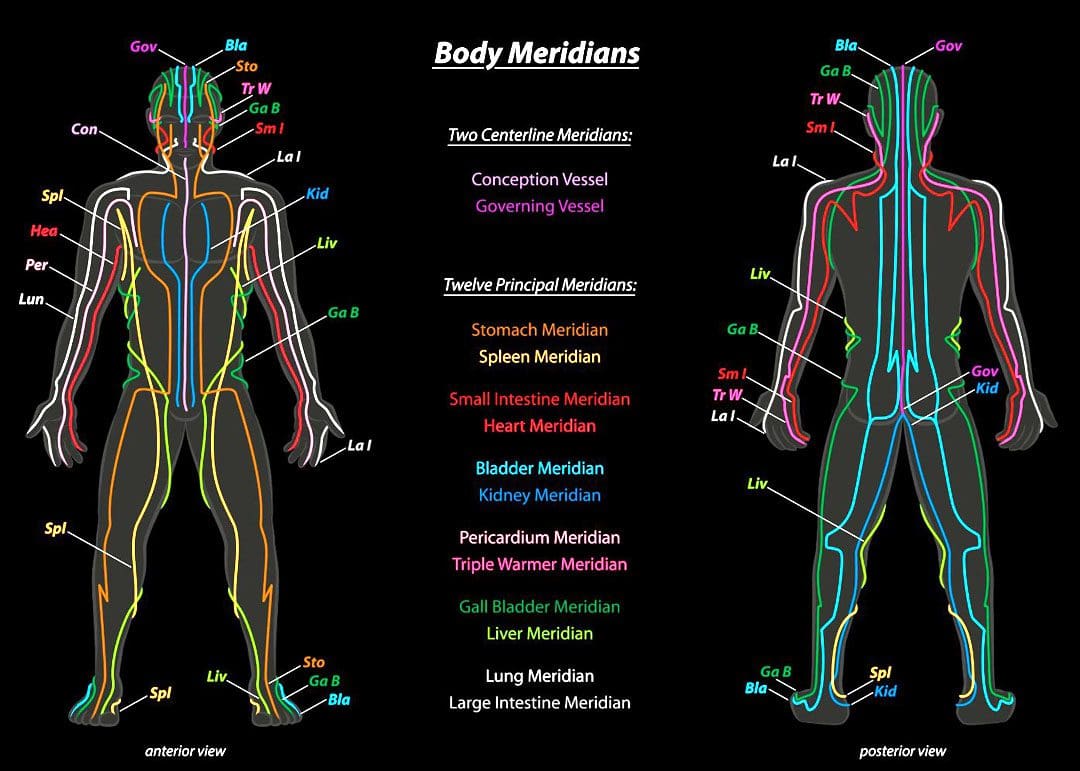
Acupuncture is a traditional Chinese medicine/TCM practice in which extremely thin needles are inserted into the body at specific points, creating a network of energy pathways known as meridians.
These pathways circulate vital life energy/chi or qi.
Each meridian is associated with a different body system.
Needles are placed to target the organs associated with the condition being treated.
Acupuncture can help with allergies by targeting several meridians, including the lungs, colon, stomach, and spleen. These meridians are believed to circulate defensive life energy or a type of immunity energy.
A backup of defensive energy or a deficiency can cause allergy symptoms like swelling, watery eyes, runny nose, sneezing, allergic eczema, and conjunctivitis. (Bettina Hauswald, Yury M. Yarin. 2014)
The objective is to stimulate the points to restore balance in the energies and relieve symptoms.
Scientific Theories
One theory is the needles work directly on nerve fibers, influencing messages to the brain or the autonomic nervous system and transmission of signals within the body, including the immune system. (Tony Y. Chon, Mark C. Lee. 2013)
Another is the needles influence certain activities of cells, particularly the transport, breakdown, and clearance of bioactive mediators.
The combination of these actions is thought to decrease inflammatory conditions like allergic rhinitis – hay fever, in which the inside of the nose becomes inflamed and swollen after breathing in an allergen. (Bettina Hauswald, Yury M. Yarin. 2014)
A 2015 review concluded there have been high-quality randomized controlled trials demonstrating acupuncture’s efficacy in treating seasonal and perennial allergic rhinitis. Smaller studies have shown some preliminary benefits of acupuncture when compared with antihistamines, but more research is needed. (Malcolm B. Taw, et al., 2015)
Treating Allergies
Some individuals who choose acupuncture are seeking alternatives to standard treatment like medications, nasal sprays, and immunotherapy.
Others are looking for ways to enhance the effectiveness of medications already being taken, such as antihistamines or nasal sprays, or shorten how long or how frequently they are needed.
Initial treatment usually involves weekly or twice-weekly appointments over several weeks or months, depending on symptom severity.
Improperly administered acupuncture needles can cause serious side effects that range from infections, punctured organs, collapsed lungs, and injury to the central nervous system. (National Center for Complementary and Integrative Health. 2022) Before trying acupuncture, consult your primary healthcare provider, allergist, or integrative medicine specialist to make sure it’s a safe and viable option and the best way to integrate it into overall allergy care.
Fighting Inflammation Naturally
References
Feng, S., Han, M., Fan, Y., Yang, G., Liao, Z., Liao, W., & Li, H. (2015). Acupuncture for the treatment of allergic rhinitis: a systematic review and meta-analysis. American journal of rhinology & allergy, 29(1), 57–62. https://doi.org/10.2500/ajra.2015.29.4116
Seidman, M. D., Gurgel, R. K., Lin, S. Y., Schwartz, S. R., Baroody, F. M., Bonner, J. R., Dawson, D. E., Dykewicz, M. S., Hackell, J. M., Han, J. K., Ishman, S. L., Krouse, H. J., Malekzadeh, S., Mims, J. W., Omole, F. S., Reddy, W. D., Wallace, D. V., Walsh, S. A., Warren, B. E., Wilson, M. N., … Guideline Otolaryngology Development Group. AAO-HNSF (2015). Clinical practice guideline: Allergic rhinitis. Otolaryngology–head and neck surgery : official journal of American Academy of Otolaryngology-Head and Neck Surgery, 152(1 Suppl), S1–S43. https://doi.org/10.1177/0194599814561600
Hauswald, B., & Yarin, Y. M. (2014). Acupuncture in allergic rhinitis: A Mini-Review. Allergo journal international, 23(4), 115–119. https://doi.org/10.1007/s40629-014-0015-3
Chon, T. Y., & Lee, M. C. (2013). Acupuncture. Mayo Clinic proceedings, 88(10), 1141–1146. https://doi.org/10.1016/j.mayocp.2013.06.009
Taw, M. B., Reddy, W. D., Omole, F. S., & Seidman, M. D. (2015). Acupuncture and allergic rhinitis. Current opinion in otolaryngology & head and neck surgery, 23(3), 216–220. https://doi.org/10.1097/MOO.0000000000000161
For individuals dealing with pain, inflammatory conditions, and stress issues, could adding acupuncture to a treatment plan help bring relief and healing?
Acupuncture Treatment
Acupuncture treatment is a traditional Chinese medicine based on circulating the body’s life energy, or qi, with the idea that a blockage or disturbance in the energy flow can cause health issues. Acupuncturists insert thin needles into specific points throughout the body to rebalance the body’s energy, stimulate healing, and promote relaxation. (Johns Hopkins Medicine. 2023) Researchers are not exactly sure how the treatment works; however, theories suggest that it can help release endorphins, as well as influence the autonomic nervous system.
How Does It Work?
Researchers have not been able to understand how acupuncture works fully, but some theories include:
The needles stimulate the release of endorphins – the body’s natural pain-relieving chemicals.
They can influence the autonomic nervous system, and specific needle placement impacts breathing, blood pressure, and heart rate. (Tony Y. Chon, Mark C. Lee. 2013)
The health benefits can vary depending on the individual. It may take several sessions before benefits are noticed. (Tony Y. Chon, Mark C. Lee. 2013) Research is still limited; however, there are some studies that found acupuncture to be helpful for certain conditions.
Low Back Pain
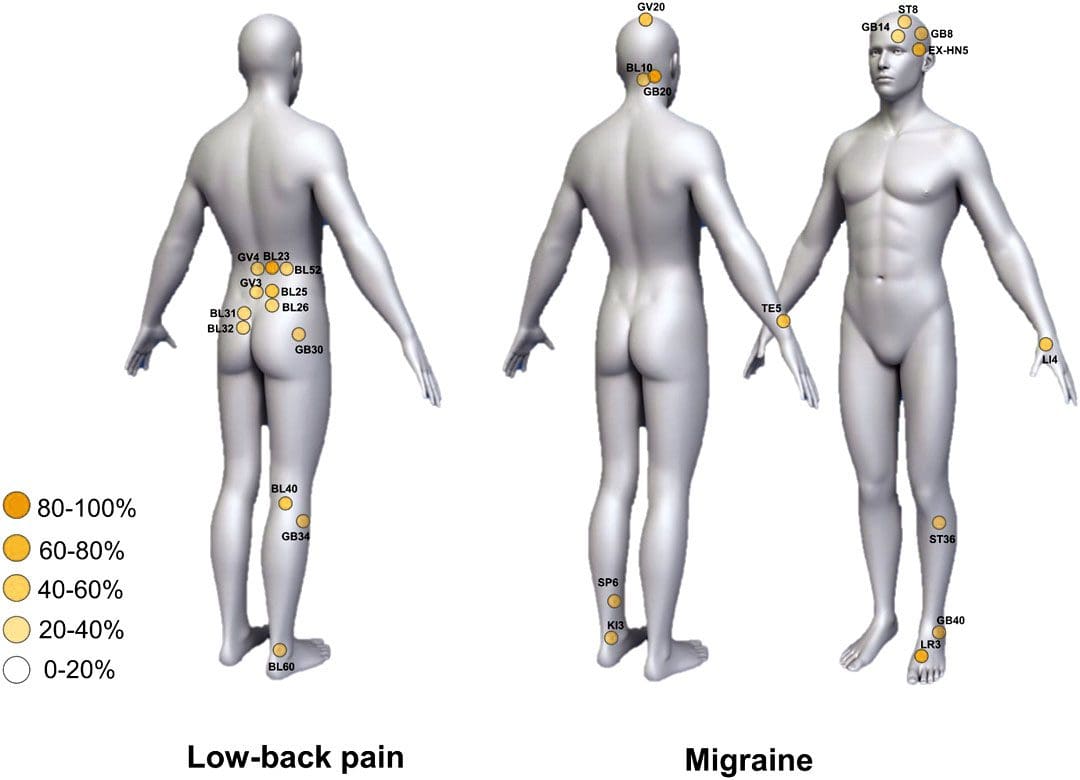
A study on non-pharmacological options for lower back pain showed that acupuncture treatment relieved intense pain and promoted better back functioning.
However, in terms of long-term benefits, it was not clear how helpful the treatment was. (Roger Chou, et al., 2017)
Migraines
Research done over a six-month period showed that:
Acupuncture was able to reduce the frequency of migraine symptoms by half in 41% of individuals compared to those not receiving acupuncture.
Treatment was noted as being helpful as preventative migraine medications. (Klaus Linde, et al., 2016)
Tension Headaches
According to research, having at least six acupuncture sessions may be helpful for individuals with frequent head pain or pressure/tension headaches.
This study also noted that acupuncture, combined with pain medication, significantly reduced headache frequency compared to those only given medication. (Klaus Linde, et al., 2016)
Knee Pain
Multiple studies found that acupuncture treatment may be able to improve knee function short and long-term in individuals who have knee osteoarthritis.
This condition causes the connective tissue in the knee to break down.
The study also found that treatment was able to help with osteoarthritis and decrease knee pain but was only helpful for the short term. (Xianfeng Lin, et al., 2016)
Another review looked at multiple studies that found that treatment delayed and reduced the use of pain medication in individuals who had knee replacement surgery. (Dario Tedesco, et al., 2017)
Facial Elasticity
Cosmetic or facial acupuncture is used to improve the appearance of the skin on the head, face, and neck.
In a study, individuals had five acupuncture sessions in three weeks, and a little over half of the participants showed skin elasticity improvement. (Younghee Yun et al., 2013)
The Process
Before getting acupuncture treatment, the acupuncturist will ask the individual about their medical history and may perform a physical examination.
Thin needles are placed in specific areas to address your concern or condition.
The acupuncturist may gently twist the needles to emphasize stimulation.
The needles are left in for 20 to 30 minutes, with the total session lasting anywhere from 30 minutes to an hour. (Tony Y. Chon, Mark C. Lee. 2013)
This is the burning of dried herbs near the acupuncture needles to warm and stimulate the points and enhance healing.
Electroacupuncture
An electrical device is connected to the needles, providing a gentle electrical current that stimulates the muscles.
Cupping
Glass or silicone cups are placed on the area, creating a vacuum/suction effect, which helps stimulate blood circulation and rebalance the energy. (Johns Hopkins Medicine. 2023)
After the treatment, some individuals may feel relaxed, while others may feel energized.
Is It Painful?
Individuals may feel a slight ache, sting, or pinch as the needle is inserted. Some acupuncturists adjust the needle after it has been inserted, which can cause additional pressure.
Once the needle is properly placed, individuals may feel a tingling or heavy feeling, referred to as de qi. (National Institutes of Health. (N.D.)
Let the acupuncturist know if there is discomfort or increased pain at any point during the session.
In order to reduce the risks, the treatment should always be done by a licensed trained healthcare provider using clean, disposable needles. It is recommended to consult with a primary care physician before getting acupuncture, as the treatment may not be right for individuals with certain health conditions.
Chon, T. Y., & Lee, M. C. (2013). Acupuncture. Mayo Clinic proceedings, 88(10), 1141–1146. https://doi.org/10.1016/j.mayocp.2013.06.009
Yun, Y., Kim, S., Kim, M., Kim, K., Park, J. S., & Choi, I. (2013). Effect of facial cosmetic acupuncture on facial elasticity: an open-label, single-arm pilot study. Evidence-based complementary and alternative medicine : eCAM, 2013, 424313. https://doi.org/10.1155/2013/424313
Chou, R., Deyo, R., Friedly, J., Skelly, A., Hashimoto, R., Weimer, M., Fu, R., Dana, T., Kraegel, P., Griffin, J., Grusing, S., & Brodt, E. D. (2017). Nonpharmacologic Therapies for Low Back Pain: A Systematic Review for an American College of Physicians Clinical Practice Guideline. Annals of internal medicine, 166(7), 493–505. https://doi.org/10.7326/M16-2459
Linde, K., Allais, G., Brinkhaus, B., Fei, Y., Mehring, M., Vertosick, E. A., Vickers, A., & White, A. R. (2016). Acupuncture for the prevention of episodic migraine. The Cochrane database of systematic reviews, 2016(6), CD001218. https://doi.org/10.1002/14651858.CD001218.pub3
Linde, K., Allais, G., Brinkhaus, B., Fei, Y., Mehring, M., Shin, B. C., Vickers, A., & White, A. R. (2016). Acupuncture for the prevention of tension-type headache. The Cochrane database of systematic reviews, 4(4), CD007587. https://doi.org/10.1002/14651858.CD007587.pub2
Lin, X., Huang, K., Zhu, G., Huang, Z., Qin, A., & Fan, S. (2016). The Effects of Acupuncture on Chronic Knee Pain Due to Osteoarthritis: A Meta-Analysis. The Journal of bone and joint surgery. American volume, 98(18), 1578–1585. https://doi.org/10.2106/JBJS.15.00620
Tedesco, D., Gori, D., Desai, K. R., Asch, S., Carroll, I. R., Curtin, C., McDonald, K. M., Fantini, M. P., & Hernandez-Boussard, T. (2017). Drug-Free Interventions to Reduce Pain or Opioid Consumption After Total Knee Arthroplasty: A Systematic Review and Meta-analysis. JAMA surgery, 152(10), e172872. https://doi.org/10.1001/jamasurg.2017.2872
Chan, M. W. C., Wu, X. Y., Wu, J. C. Y., Wong, S. Y. S., & Chung, V. C. H. (2017). Safety of Acupuncture: Overview of Systematic Reviews. Scientific reports, 7(1), 3369. https://doi.org/10.1038/s41598-017-03272-0
IFM's Find A Practitioner tool is the largest referral network in Functional Medicine, created to help patients locate Functional Medicine practitioners anywhere in the world. IFM Certified Practitioners are listed first in the search results, given their extensive education in Functional Medicine