

Fixed Sagittal Imbalance
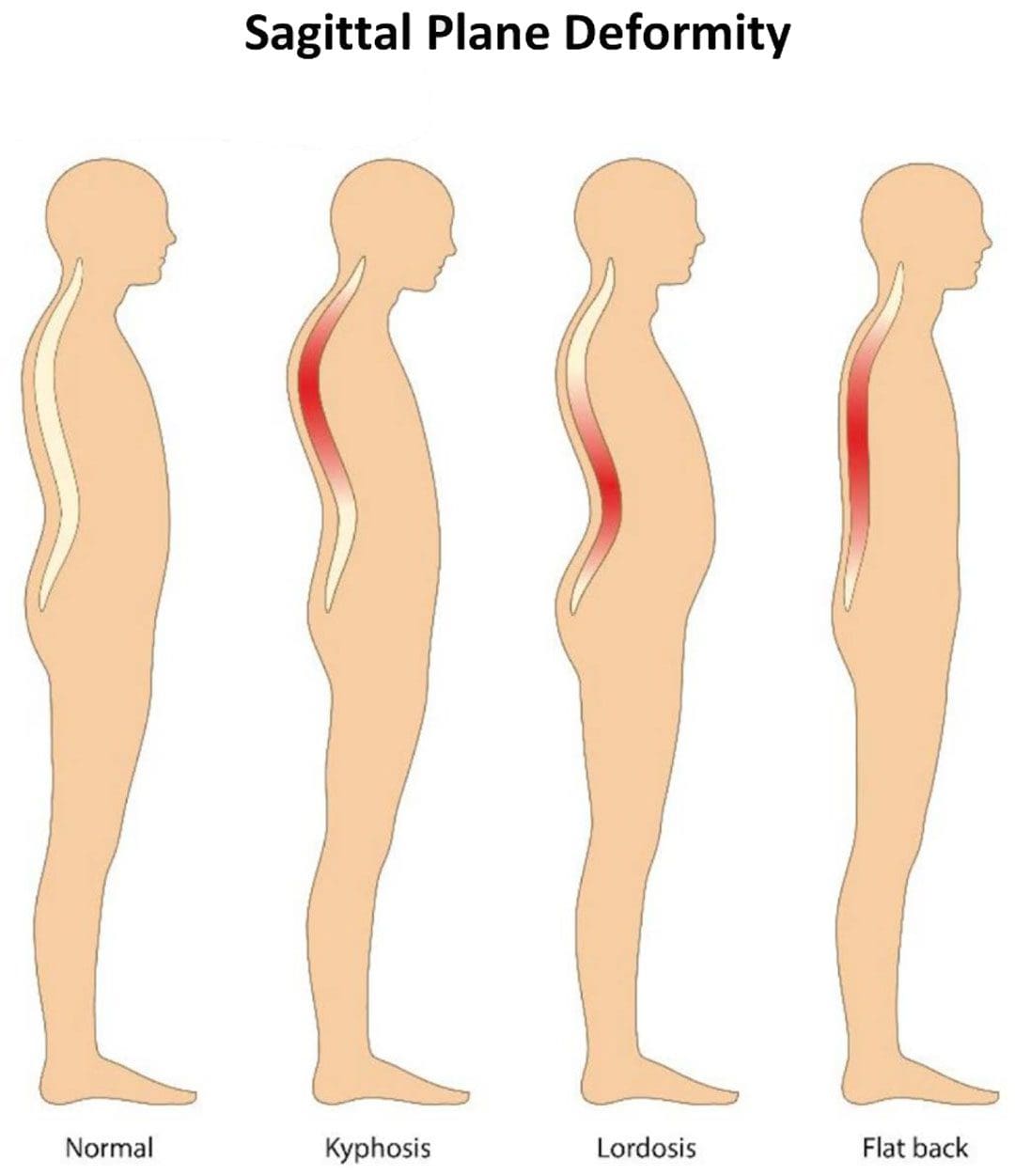
Individuals with fixed sagittal imbalance, a condition where the normal curve of the lower spine is greatly reduced or absent altogether that can cause pain and difficulty balancing. Can chiropractic treatment, physical therapy, and exercise help improve the condition?
Fixed Sagittal Imbalance
The condition is commonly known as flat back syndrome and can be present at birth or can happen as a result of surgery or a medical condition.
- It can also happen for other reasons, including degenerative disc disease, traumatic injury, or as a result of spinal surgery. (Columbia University Irving Medical Center. 2023)
- Individuals with flat back syndrome position their head and neck too far forward.
- A major symptom is difficulty standing for long periods of time.
Symptoms
The spine has two curves. The lumbar spine in the lower back and cervical spine in the neck curve inward. The thoracic spine in the upper back curves outward. The curves are part of the spine’s natural alignment. They help the body balance and maintain the center of gravity.
- If these curves begin to disappear the body can have trouble and difficulty standing up straight.
- The loss of curvature causes the head and neck to pitch forward, making it hard to walk and do regular normal activities.
- Individuals have to flex their hips and knees and adjust their pelvis in order to stand up straight. (Columbia University Irving Medical Center. 2023)
- There is a tendency to stoop forward which gradually increases and can even feel like the body is falling forward.
- By the end of the day, the body is exhausted from the strain of trying to maintain balance.
Causes
Some causes of fixed sagittal imbalance include: (Columbia University Irving Medical Center. 2023)
- Congenital – present at birth.
- Degenerative disc disease.
- Ankylosing spondylitis – a type of inflammatory arthritis of the spine.
- Compression fractures of the vertebrae – for example, caused by osteoporosis.
- The condition used to be common after spine surgery to correct scoliosis/abnormal curvature of the spine.
- The devices implanted could cause flat back syndrome, especially for older individuals.
- However, new and updated surgical techniques have decreased the complications.
Diagnosis
A doctor will ask about medical history, injuries, or back surgery. This will followed by a physical exam, that can include:
- A musculoskeletal exam.
- A neurologic exam.
- A gait examination will assess standing and walking ability.
- The gait exam is done because the gait can change to compensate for the loss of the curvature.
- X-ray imaging will show spinal alignment.
- Other possible sources of symptoms will be considered before a diagnosis can be confirmed.
Treatment
Treatment often involves physical therapy and exercise, bracing to provide increased support, and sometimes surgery.
- Physical therapy typically begins with stretching and targeted strengthening exercises to improve posture.
- The goal is to reverse the pattern of muscle imbalance that keeps the lower back flat.
- Exercises to strengthen the neck, rear shoulder muscles, back, core, and buttocks can include: (National Health Service. n.d.)
- Abdominal stretches
- Hamstring stretches.
- Hamstring stretches improve the alignment of the lumbar spine.
- Hold the stretch for about 30 seconds at a time.
- Repeat three to five times once or twice a day.
- Back extensions
- Chest stretches
- Planking
- Side-lying leg raises
- Seated rows in a gym or pull-ups
In severe cases, patients may need corrective surgery. A few options include: (Columbia University Irving Medical Center. 2023)
- Polysegmental wedge osteotomy.
- Pedicle subtraction osteotomy.
- Posterior vertebral column resection. (Byoung Hun Lee, et al., 2018)
A chiropractor and/or physical therapist can recommend exercises and other forms of treatment. (Won-Moon Kim, et al., 2021)
Life-Changing Chiropractic Relief
References
Columbia University Irving Medical Center. Flatback syndrome.
National Health Service. Common posture mistakes and fixes.
Lee, B. H., Hyun, S. J., Kim, K. J., Jahng, T. A., Kim, Y. J., & Kim, H. J. (2018). Clinical and Radiological Outcomes of Posterior Vertebral Column Resection for Severe Spinal Deformities. Journal of Korean Neurosurgical Society, 61(2), 251–257. https://doi.org/10.3340/jkns.2017.0181
Kim, W. M., Seo, Y. G., Park, Y. J., Cho, H. S., & Lee, C. H. (2021). Effect of Different Exercise Types on the Cross-Sectional Area and Lumbar Lordosis Angle in Patients with Flat Back Syndrome. International journal of environmental research and public health, 18(20), 10923. https://doi.org/10.3390/ijerph182010923







