Hiking is a form of exercise accessible to a wide range of physical abilities, which makes it a great outdoor activity for all. The health benefits include improved blood pressure, sleep, and reduced stress and anxiety. However, being out in the elements without conditioning the body can lead to serious injuries and other health issues. Many trails are rough, uneven, and have elevation gain, so even the easiest courses require balance and strength to avoid injury. Hiking training that includes strength, cardio, and practice will help condition the body to allow the trip to be more enjoyable and safe.
Hiking Training
Two of the most common hiking injuries are rolling the ankle and ankle sprains. Individuals that are out of shape or haven’t been active for some time are recommended to start with basic movements and exercises to warm up the muscles and increase heart rate.
Walk/Run Through Sand
This builds the muscles that protect the knees and ankles.
Increase Range of Motion
Using a resistance band will strengthen muscles through their full extension.
Standing on a tennis ball or balance disc is great as it builds the small stabilizer muscles around the ankles and knees.
Crunches
Building core strength will help maintain balance on uneven surfaces.
Squats and Lunges
Keep the back straight and take each squat and lunge slowly to strengthen the core muscles.
Push-ups
Sufficient upper body strength, especially the back muscles will help on long trips and when carrying a heavy pack.
Cardiovascular
Walking around the neighborhood, on a treadmill, or stationary bike will work to increase cardiovascular ability.
The objective is to get the heart rate up to build lung capacity.
Step-ups
Before a backpacking trip, weigh the pack – try 20 lbs. – and step up onto a park bench 16 to 18 inches high.
Add 5 pounds a week until the pack is as heavy as it will be on the hike.
Strength Hiking Training for Backpacking
Carrying a heavy pack activates many muscles, including those of the arms and shoulders, and back. Hiking for an extended period with a backpack requires getting used to the weight and feel of it. Nothing conditions the body for a pack better than actually experiencing it.
Shoulder and Neck
The trapezius muscles radiate out from the base of the neck.
This is where the shoulder harness of the pack sits.
Strong traps help prevent soreness.
Most of the pack’s weight should be on and around the hips, but it doesn’t always happen due to pack design and body shape.
Shoulder and Arm
The shoulder of the arm used to put on and take off the pack does a lot of work at awkward angles.
The rotator cuff of the shoulder is vulnerable to these loads.
Upper Back
The muscles of the upper and mid back contract to stabilize the pack, especially with heavy loads.
Beginning hikers and backpackers tend to get a dull pain right in the center of the shoulder blades.
Lower Back
The lower back takes the brunt of the force from lifting and twisting the posterior chain of muscles.
Abdominal Muscles
The abdominal muscles work to stabilize the pack when twisting and turning.
Legs
Walking, squatting, and standing with the pack requires strong support from the legs.
Strong legs, especially thighs, make a difference.
Start small and go slow until you feel comfortable in the surroundings. Start off with lightweight and short distances and gradually extend to heavier weights and longer distances. Remember to go at your own pace and don’t try to be an expert.
Hikers Strength Training
References
Chrusch, Adam, and Michelle Kavin. “Survey of Musculoskeletal Injuries, Prehike Conditioning, and On-Trail Injury Prevention Strategies Self-Reported by Long-Distance Hikers on the Appalachian Trail.” Wilderness & environmental medicine vol. 32,3 (2021): 322-331. doi:10.1016/j.wem.2021.04.004
Fleg, Jerome L. “Aerobic exercise in the elderly: a key to successful aging.” Discovery Medicine vol. 13,70 (2012): 223-8.
Gatterer, H et al. “Effect of weekly hiking on cardiovascular risk factors in the elderly.” Zeitschrift fur Gerontologie und Geriatrie vol. 48,2 (2015): 150-3. doi:10.1007/s00391-014-0622-0
Huber, Daniela, et al. “Sustainability of Hiking in Combination with Coaching in Cardiorespiratory Fitness and Quality of Life.” International journal of environmental research and public health vol. 19,7 3848. 24 Mar. 2022, doi:10.3390/ijerph19073848
Liew, Bernard, et al. “The Effect of Backpack Carriage on the Biomechanics of Walking: A Systematic Review and Preliminary Meta-Analysis.” Journal of applied biomechanics vol. 32,6 (2016): 614-629. doi:10.1123/jab.2015-0339
Li, Simon S W, et al. “Effects of a backpack and double pack loads on postural stability.” Ergonomics vol. 62,4 (2019): 537-547. doi:10.1080/00140139.2018.1552764
Li KW, Chu JC, Chen CC. Strength decrease, perceived physical exertion, and endurance time for backpacking tasks. Int J Environ Res Public Health. 2019;16(7):1296. doi:10.3390/ijerph16071296
Mitten, Denise, et al. “Hiking: A Low-Cost, Accessible Intervention to Promote Health Benefits.” American Journal of lifestyle medicine vol. 12,4 302-310. 9 Jul. 2016, doi:10.1177/1559827616658229
Sports-specific performance training is an approach to develop an athlete’s full potential in their sport. This involves three different factors: physical, technical, and experience. Physical ability is the exercise physiology that consists of strengthening and conditioning the body to handle the conditions of the sport. This includes:
Strength
Power
Speed
Endurance
Mobility
Stability
Flexibility
Balance
Technical ability involves the skill sets needed for the sport. This includes:
Running
Jumping
Kicking
Throwing
Catching
Hitting
Sliding
And finally is the athlete’s experience. This takes the knowledge, combined with the physical and technical abilities brought together to perform at optimum levels. However, it all begins with physical ability that needs to be developed. Even naturally gifted individuals need to develop their physical ability.
Sports Specific Performance Training
Strength & conditioning objectives are to develop the whole athlete. This involves:
An athlete’s health takes into consideration their body composition and current or past injuries. Along with injuries, the athlete’s mobility, flexibility, and stability are examined to determine if these were among the contributors or conditions that caused or could lead to an injury. Strength & conditioning is used so an athlete can return to play and allow them to be more resilient to injuries. Maintaining the body’s health means:
Keeping track of nutrition by making healthy food choices.
Maintaining proper hydration levels.
Allowing the body to recover from training thoroughly.
Keeping the body loose and flexible through chiropractic sports massage or a personal training therapist.
Stability is the coordination of muscle action that allows a joint to remain in the proper position during movement.
If an athlete is mobile and flexible but not stable, it increases the risk of sustaining an injury. The same can be said of an athlete with stability but limited mobility.
Athletic Mindset
An athlete’s mindset can win or lose games.
Athletes are encouraged to push themselves to see what they are capable of, which relies on mental strength.
Athletes that doubt their ability become their own worst critics and hold themselves in low self-esteem tend to underperform or become overly cautious when competing.
This is where a sports psychologistcan help an athlete overcome any confidence issues.
Athleticism
Developing athleticism involves strength, power, speed. These physical attributes allow athletes to perform within their technical and strategical abilities.
It is recommended to spend 10-15 minutes warming up with each sports-specific performance training session. The warm-up:
Speed training addresses linear, lateral, and multi-directional speed. The objective is to keep athletes learning and developing better reaction skills while maintaining high-quality movement. Speed training can last 10 to 15-minutes with the number of repetitions.
Strength training follows an individualized system for each athlete based on an initial evaluation. The objective is to eliminate any weaknesses that an individual may have and develop functional strength, giving the athlete the ability to take that strength onto the field, court, mat, etc.
It is essential to understand how the body moves. Kinesiologyand programming parameters involve – sets, repetitions, overall training volume, and the body’s response to the stimulus.
Body Composition
Exercise and Blood Pressure
Blood pressure typically rises naturally as the body ages. The American Heart Association recommends individuals get at least 150 minutes of moderate-intense aerobic exercise or 75 minutes of vigorous aerobic activity each week. This can be split up into 30 minutes per day on at least five days a week or in 10 minute short sessions throughout the day. Aerobic exercise can include:
Walking
Dancing
Running
Cycling
Hiking
Swimming
Resistance Training
Research suggests that resistance training with bands or weights can supplement aerobic exercise to reduce blood pressure. It is recommended to complete 2 to 4 sets of 8 to 12 repetitions for each major muscle group during workouts. It is recommended that resistance training be spaced out throughout the week to limit the potential muscle soreness that can lead to injury. Resistance training can include:
Weight machines like chest press, shoulder press, etc.
Bahr, R, and T Krosshaug. “Understanding injury mechanisms: a key component of preventing injuries in sport.” British journal of sports medicine vol. 39,6 (2005): 324-9. doi:10.1136/bjsm.2005.018341
Iaia, F Marcello et al. “High-intensity training in football.” International journal of sports physiology and performance vol. 4,3 (2009): 291-306. doi:10.1123/ijspp.4.3.291
Jeukendrup, Asker E. “Periodized Nutrition for Athletes.” Sports medicine (Auckland, N.Z.) vol. 47,Suppl 1 (2017): 51-63. doi:10.1007/s40279-017-0694-2
Kraemer, William J, and Nicholas A Ratamess. “Fundamentals of resistance training: progression and exercise prescription.” Medicine and science in sports and exercise vol. 36,4 (2004): 674-88. doi:10.1249/01.mss.0000121945.36635.61
Nagorsky, Eugen, and Josef Wiemeyer. “The structure of performance and training in esports.” PloS one vol. 15,8 e0237584. 25 Aug. 2020, doi:10.1371/journal.pone.0237584
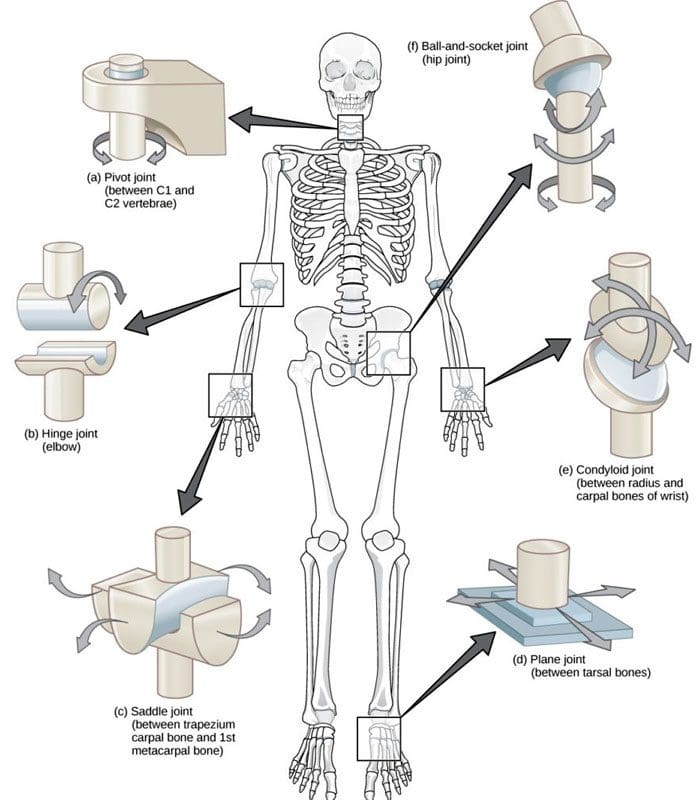
Optimal joint health is vital to keeping the body moving. They allow us to function throughout the day and perform various tasks. When healthy joints become injured or damaged, the body loses mobility. Joint issues/pain primarily present in the shoulders, wrists, hands, knees, ankles, and spine. Healthy joints are necessary for the full range of motion and comfortable movement. To keep joints healthy and fully functioning, chiropractic treatment is recommended to alleviate joint pain and improve joint health.
Joint Health
Joints are designed to provide a full range of motion for the body parts they affect.
Joints are made to be able to endure weight and forces applied to them.
Every joint consists of two surfaces that make contact.
The bones that make up the joint allow for movement, but the actual muscles pull the bones that generate movement.
The muscles are attached to bones by tendons.
Tendons are strong enough to facilitate movement and flexible to prevent damage to the muscle tissues.
Ligaments connect the bones and help to prevent uncontrolled movement.
The muscles, tendons, and ligaments are attached around each joint at specific positions and shaped to exact dimensions.
Synovial fluid lines the joints and lubricates the surfaces to reduce friction.
Injury and Conditions
Most injuries to joints occur from added and abnormal stresses placed on a joint.
A joint can become injured from a basic trauma accident. An ankle sprain, for example.
The ankle joint is protected by ligaments on the inside and outside.
When the ankle moves too far inward, the ligaments on the outside can tear.
The ankle swells, leading to pain.
In some instances, small pieces of bone and cartilage can also tear away.
Other injuries
Overuse/Repetitive stress injuries, also known as cumulative trauma disorders, can cause joint pain symptoms.
These injuries happen when stress is repeatedly placed on the joints.
The stress can come from:
Poor posture
Awkward/unusual positioning while working.
Little to no workstation ergonomics.
Arthritis
The most common cause of joint pain is arthritis.
Rheumatoid arthritis causes inflammation of the joints causing swollen and stiff joints, limiting mobility.
Osteoarthritis can also cause joint pain. This is when the joint cartilage breaks down from regular wear and tear.
The aging body becomes stiff, swollen and decreases the range of motion.
Other conditions
Pregnancy can place an incredible amount of pressure on the spine, knees, and hips as the body tries to balance itself with the added weight, causing joint pain.
Obesity can also lead to joint pain from the added weight and pressure.
Health conditions that cause inflammation can lead to joint pain, including Lyme disease and Lupus.
The jawbone is also a joint; Temporomandibular Joint Dysfunction causes jaw pain, difficulty chewing and clicking, or locking.
Chiropractic can restore joint health.
Chiropractic can keep the joints in optimal health and functioning to the fullest. The objective is to activate the body’s natural ability to heal itself by improving the function of the central nervous system. Our team is dedicated to utilizing science-based chiropractic approaches to reduce pain and reverse painful conditions. It is also a natural method for relieving arthritis pain, slowing down the degenerative process, and helping to relubricate the joints. Contact us today to learn more about chiropractic and joint health.
Body Composition
Mediterranean Diet Can Be a Great Starting Point
There’s no perfect diet. Although human bodies are basically the same, individuals respond differently to certain diets. Diets can only go so far. The individual still has to put in the work of following the diet, exercising, developing new healthy habits, and maintaining them. The Mediterranean diet was reviewed by a panel of nationally recognized experts in:
Nutrition
Food psychology
Diabetes
Heart disease
They reviewed the diet profile to analyze certain categories. They included:
Ease of taking on the diet.
Weight loss effectiveness. This includes short-term and long-term.
The diet’s potential for preventing and managing diabetes.
The diet’s potential for preventing and managing cardiovascular disease.
The findings found the Mediterranean diet to be one of the best because of the many health benefits that come from the dietary changes.
References
Clark, Kristine L. “Nutritional considerations in joint health.” Clinics in sports medicine vol. 26,1 (2007): 101-18. doi:10.1016/j.csm.2006.11.006
Hui, Alexander Y, et al. “A systems biology approach to synovial joint lubrication in health, injury, and disease.” Wiley interdisciplinary reviews. Systems biology and medicine vol. 4,1 (2012): 15-37. doi:10.1002/wsbm.157
Keep Moving: Preventing Joint Injuries. American Chiropractic Association. https://www.acatoday.org/Patients/Health-Wellness-Information/Joint-Health.
What to Know About Joint Pain. Healthline. https://www.healthline.com/health/joint-pain#symptoms
IFM's Find A Practitioner tool is the largest referral network in Functional Medicine, created to help patients locate Functional Medicine practitioners anywhere in the world. IFM Certified Practitioners are listed first in the search results, given their extensive education in Functional Medicine