A coffee, a caffeinated and an energy soda proved a deadly combination for a South Carolina teenager who died within two hours of consuming them, triggering warnings about the risks of caffeine overdose.
Davis Allen Cripe died on April 26 from a “caffeine-induced cardiac event causing a probable arrhythmia,” the Richland County coroner’s office in the southern US state wrote in a statement.
Two hours before he collapsed, Cripe drank a cafe latte, large Diet Mountain Dew and an energy drink.
Richland County Coroner Gary Watts noted Tueday that such occurrences are “highly unusual.”
“It was mainly due to the time period that he ingested a rapid amount of caffeine that affected his heart,” Watts told The Post and Courier, adding that Cripe had collapsed just 15 minutes after taking the energy drink.
The US Food and Drug Administration recommends that adults consume no more than 400 mg of caffeine per day, which is equivalent to four or five cups of coffee.
“While adults should be mindful of their caffeine consumption, it’s important for parents to know the risks of children and adolescents consuming caffeine,” Jill Michels of the Palmetto Poison Center said in a statement.
“Take the time to talk with your children about the dangers of caffeinated drinks.”
At a news conference on Monday, the boy’s father said his son was very careful about drugs and alcohol.
However, “it wasn’t a car crash that took his life. Instead, it was an energy drink,” Sean Cripe said.
While energy drinks account for just a small segment of the non-alcoholic beverages industry, they are very popular with young people.
Health experts have expressed concern about the drinks’ high caffeine content, which can cause arrhythmia and raise blood pressure in young people.
Energy drinks can contain up to 240 mg of caffeine, according to a 2012 Consumer Reports study.
Conventional knowledge wants us to believe that athletes must eat a high carb diet in order to function at optimum levels. While many people believe this, nothing could be further from the truth. Ben Greenfield conducted extensive tests on himself to prove that it is possible to be a fat burning athlete, and that being a high carb athlete should be a thing of the past.
Ben�s analysis was very detailed and impressive: he had blood work, biopsies, urine and stool samples taken before the study began. He then walked on the treadmill for three hours and retook the blood work, biopsies the urine, and the stool samples, then analyzed the data. The study was called The Faster Study, and the data is available via PDF for those interested in looking at his findings and Ben�s write-up on the experience can be found here.
The Faster Study
When I asked Ben why he did the study, he said it was for his own selfish reasons. He said he was training for an Ironman triathlon at the time and wanted to go faster or at least maintain his speed for longer periods without experiencing the deleterious effects that chronically elevated blood sugar�can cause. He also wanted to avoid the potentially unsettling effects that carbohydrates fermenting in your gut can cause.
Ben also had another incentive: he was diagnosed as having a 17% higher than normal risk for Type 2 diabetes. As a result, he needed to figure out a way to complete an Ironman triathlon without going the traditional route of fueling with gels, bars, and energy drinks.
I can attest that his theory works because I tried it myself: while on an 18 hour intermittent fast, I went on a 3 hour bike ride. By the time I got home, it was 22 or 23 hours before I�d eaten one bite of food, and to everyone�s surprise, I didn�t bonk. Everyone on the ride that day was a seasoned athlete and eating constantly. I was the only one not eating, yet had plenty of energy, even after 20 hours without food. Ben proved that in a laboratory and I successfully tested his hypothesis in a real life situation.
The Faster Diet
In preparation for his experiment, Ben followed a diet of 80 to 90% fat and 5 to 10% carbohydrates. His protein intake would vary depending on the day�s activities. For example, protein intake would be approximately 20% on days he�d run or do weight training. On average, the majority of his diet was fat based. He jokingly said he was banned from Italian restaurants during this time.
While on his high fat/low carb diet, Ben did two ironman triathlons that year (Ironman Canada and Ironman Hawaii.) He stresses that that a low carbohydrate diet does not mean a zero carbohydrate diet. Using Ironman triathlon as an example, participants may be out competing for ten or more hours. When passing someone the on the bike, a person may go from their normal race pace of 250 watts up to 400 watts for a few moments. This surge of energy being exerted can cause a pretty significant glycolytic shift, resulting in the body needing to burn through a high amount of carbohydrates.
Ben took in about a quarter of the amount of carbohydrates that he�d normally consume during the actual event, along with ample amounts of easy to digest proteins, amino acids, easy to digest fats, and medium chain triglycerides. After his triathlon season was completed, Ben added exogenous ketones�to his diet in powder form to increase ketone levels. Ben admitted that he finds the ketones extremely beneficial and says he wish he�d known about them while training for previous triathlons. Personally, I have experimented with exogenous ketones in my own fat burning regime, after learning more about how they work during my interview with Dominic D�Agostino (watch the interview here.)
Study Findings
During that triathlon season, Ben conducted quite a few studies, with a few standing out in particular. In this test, a microbiome analysis was conducted to see how the gut differs between someone who follows a high-carbohydrate diet and someone who follows a high-fat diet.
Fat biopsies were taken both before and after exercise to see to see if his actual fat tissue make-up was any different. Tests were also conducted to see if there was any difference in the ability of his muscles to store carbohydrate and how quickly the muscle would burn through carbohydrates. A resting metabolic test was conducted, which is an analysis of how much fat and carbohydrate is burned at rest. And another measurement was taken to determine how many carbohydrates, fats, and calories are burned during exercise.
What makes these tests interesting is even though most physiology textbooks claim that the average person will burn about 1.0 grams of fat per minute during exercise, the athletes who followed a ketogenic or low-carbohydrate diet for close to 12 month were experiencing fat oxidation values of closer to 1.5 to 1.8 grams of fat per minute. This is significantly higher than what experts expected.
Initially, there was some confusion pertaining to this study because it was called � The Faster Study.� Critics would say Ben wasn�t going any faster on the high fat/low carb diet than those on the high carb diet. What they neglected to understand was the purpose of the study wasn�t to go faster than those on high carb diets. Instead, the goal was to maintain similar speeds while limiting (and possibly eliminating) the chronic fluctuations and elevations of blood sugar.
Ben�s thought process behind the study was simple: If he could go just as fast by eliminating sugars, why not do it? If he slowed down or felt his energy levels being depleted, he�d be forced to ask himself the following questions as an endurance athlete:
What kind of balance did he want between health and performance?
How many years of his life was he willing to sacrifice in exchange for going just a little bit faster?
How much pressure was he willing to put on his joints?
As it turns out, Ben could go just as fast on a carbohydrate-limited diet.
Go Just as Fast, Live Longer
While people are focused on getting faster, the ultimate goal should be to go just as fast and live longer doing it. Unfortunately, many high-carb athletes have a wide assortment of health problems, which can range from joint problems to life threatening emergencies such as heart attacks. Many of them are dying prematurely and don�t realize a contributing factor to their ailments is the high carb diet they had been following for years. Ironically, many athletes are thin but show evidence of degenerative disease indicating years of inflammation and oxidative stress�caused by repeated glucose and insulin spikes. We know this damage is oxidative, is harmful to the cells, and causes premature aging.
There are many studies with research illustrating how endurance sports increase oxidation and aging, but I believe as more research is done this belief will change. Studies by Ben and others show that a fat-adapted endurance athlete does not have the same levels of oxidative stress as high carb endurance athletes. At age 50, I have 8% body fat and can exercise for hours without ingesting carbohydrates because, like Ben, I�m very efficient at fat burning.
I firmly believe Ben�s study proves that people who are efficient at fat burning can burn well over one gram of fat per minute of exercise, whereas before it was believed one gram (or less) was a more realistic number. It should be noted that in order to burn that much fat, a person has to be fat adapted. It�s impossible to accomplish this level of fat burning on a high-carbohydrate diet (read more on how to get fat-adapted here: Part 1 and Part 2.)
Fat Adaption: A trick to Accelerate the Process
Becoming an efficient fat burner takes time. Many of the athletes that Ben coaches have been on a high fat diet for twelve months or more. While the greatest benefits aren�t felt for several months, a person can experience lower blood sugar levels and less oxidation within a few short weeks of starting a high fat diet. However, in order to achieve the mitochondrial density necessary for producing a lot of ATP on a high-fat diet while exercising, a person will need to follow a high-fat diet for at least a year.
It can take anywhere from 6 months to 2 years for a person to become fully efficient at burning fat. While some may balk at how long it can take, it�s not long when compared to the time it may take to become proficient in a sport, learning to play a musical instrument, or getting a college degree.
Adjusting to a high fat diet takes time and patience. To accelerate the process, one can choose to eat within a compressed time window, a strategy known as intermittent fasting. Intermittent fasts can range from 14-24 hours with just liquids being consumed. Intermittent fasting can be a challenge for beginners as the body begins to adapt, but becomes easier with each subsequent fast. I intermittent fast daily and must say it�s been the great contributor to my overall cellular health.
Some side effects beginners may experience while intermittent fasting the first few times may include the following
Fatigue
Nausea
Vomiting
Diarrhea
Headaches
Lack of focus
Bad breath
Lethargy
Joint pain
Minor depression
These side effects are normal as the body eliminates various toxins. Drinking pure water�helps to alleviate some side effects and quickly remove them from the body via urination. Staying focused on the long term is key when embarking on these changes.
Occasionally, I will receive emails from my clients or the doctors of my clients, telling me they are keto-adapted, but they�re not burning fat, they don�t notice any significant changes in their bodies, and they haven�t lost any weight. I explain how this is normal, and the body has to adjust. It takes time for the body to realize it is not starving and that it can begin to burn its own fat for energy. Using my wife as an example, it was almost a year before she was able to use her fat storage for energy. Now, she�s an efficient fat burner and finds it much easier to stay lean.
Not All Fat is the Same
An important aspect of being efficient at fat burning is the type of high fat diet you follow. A plant-rich, ketogenic diet not only limits oxidation and free radical production, but it also causes an increase in stable energy sources due to high fiber content. Having high levels of plant-based chlorophylls in the bloodstream also has the potential to increase ATP production beyond what we fully understand in nutrition science.
Ben encounters many people who follow the Bulletproof Coffee type of approach:
Three cups of coffee with grass-fed butter and MCT oil during the day
Coconut milk with some coconut flakes and some chocolate stevia
Fatty grass-fed steak for dinner
Macadamia nuts for a snack
The problem with this type of diet is there�s very little plant matter eaten, and plants are an integral part of a healthy high fat diet.
Ben Greenfield�s Diet
Ben eats an astonishing 20 to 25 servings of plants per day. He has an enormous backyard garden and eats kale, butter lettuce, bok choy, mustard greens, cilantro, parsley, and tomatoes daily. He says these foods do not count towards his total daily carbohydrate intake, and that eating a high-fat diet does not mean that you�re not eating plants. It�s the opposite. �I eat a lot of plants, a lot of fiber, and it makes a night-and-day difference.�
In order to get 20-25 servings Ben eats huge salads and drinks nutrient dense smoothies. He�ll drink one or two large smoothies a day, using a powerful blender that blends everything from the pit of an avocado to an entire bunch of kale. A sample smoothie includes the following ingredients:
Six to eight different plants (both wild plants and herbs)
Lunch. Lunch is a salad in an enormous bowl filled exclusively with vegetables. Ben will spend 30 to 60 minutes chewing each bite 20 to 25 times and �eating lunch like a cow while I go through emails and things like that during lunch.�
Dinner. Another big salad.
Snack. Snacks are normally smaller versions of the smoothie�he had for breakfast.
He stresses that his salads are extremely large and he prefers thicker smoothies: �If you were to see the size of my salads and the size of my smoothies, you would be shocked. You�d think I would be morbidly obese, but if you dig in and you look at it, it�s really just mostly plant volume. That�s generally what I do, salads and smoothies. I make them so thick I need to eat them with a spoon because I really like to chew my food. Yeah, I�m a smoothie and a salad guy.�
He goes on to say �When I look over the blood and bile markers of people following a high-fat diet, a lot of times I see really high triglycerides and really low HDL, which is often what you�ll see in someone who is eating a ton of animal fats without many plants or without much fiber. I�ll see a lot of CO2 and really low chloride levels, an indicator of a net acidic state, and a lot of biomarkers that aren�t necessarily favorable and that can be a result of a high-fat diet done improperly. I think that�s one important thing to bear in mind, too, is that you don�t want to necessarily eschew plant intake and vegetable intake; you just want to ensure that those are accompanied primarily by healthy fats and oils rather than accompanied by high amounts of protein and starches.�
When it comes to good fats, Ben prefers the following:
Animal fats are eaten sparingly. He�ll eat a grass-fed steak and wild fish a couple of times a week. He also likes pemmican, which comes in a tube that he can snack on while flying or if he needs a quick snack on the go.
When Ben was a bodybuilder, he would aim for 200 grams of protein per day but now only consumes between 100 to 120 grams. Currently, he weighs about 180 pounds and consumes between 0.5 and .8 grams of protein per pound of body weight. He feels this is the amount is sufficient to avoid any loss of muscle.
Ben says he has excellent colonic health. Since he started the high fat diet four years ago, he doesn�t have the fermentation, gas, bloating, or constant gas that many endurance athletes have. He also believes the high fat diet offers a lower risk for things like small intestine bacterial overgrowth (SIBO) and fermentation in the gut.
Diet Variation
In addition to eating a variety of plant based foods, an important eating concept that I have written about is something I like to call �diet variation,� which is basically emulating what our ancestors have done: They were forced into different diet variations seasonally, and in some instances, weekly.
When we look at the Hunza people as an example, they were relying mostly on plant food in the summers to survive. During the cold winter months, vegetables and fruits were scarce or nonexistent, and as a result, they were forced to eat higher-fat foods (meats and animal fats). Over time we can see a pattern: there would be long stretches where their diet consisted mostly of vegetables (summer,) then extended periods of time where their diet was mainly meat products (winter.) This type of seasonal eating created a variation in their diet they had little control over. Today, we have the ability to vary our diet at all times, which can work for us and against us.
I go into ketosis every summer and eat more good fats and protein than I do in the winter, when I eat more healthy carbs. Like Ben, I�m very fat adapted, yet still able to stay in ketosis while eating a lot of plants in my diet. I intermittent fast in the morning and by the afternoon I�m burning high ketones.
One of the popular diet trends these days is the Paleo Diet, where a person is instructed to eat large amounts of protein. Quite frankly, I am not a fan of this diet. I have read many studies on high-protein diets and feel they are not healthy. Eating too much protein can cause weight gain, extra body fat, increased stress on the kidneys, dehydration and other health issues.
If you include the dangers of eating grain fed beef instead of the healthier grass fed beef, we can clearly see how the Paleo Diet could be a recipe for disaster. I tell people as a general rule, eating protein that is equivalent to half your body weight (considering that you�re not morbidly obese) is usually safe and practical. Athletes like Ben (and those who do a lot of strenuous physical exercise) can consume more protein than the average person and utilize it safely. These individuals may require 0.7 to 0.8 grams of protein per day, while the average person only needs .55 grams per day.
Fasting
Ben goes on a 24 hour fast once a month, just to �clean things out a little bit.� He will start the fast Saturday at lunchtime end it at lunchtime on Sunday. Or, he�ll skip dinner on Saturday night and won�t eat again until dinner on Sunday. He�ll drink water, coffee�and tea primarily during the fast, and kombucha on occasion. He also goes on a 12-16-hour intermittent fast daily. The majority of the fast is overnight where he�ll finish dinner around 7:00 or 8:00 p.m. and eat breakfast sometime 9 and 10:30 a.m. During the daily fast, Ben will perform a few low-level exercises in the morning: yoga, foam rolling, or mobility work are exercises of choice.
In addition to daily intermittent fasting, Ben believes a likely factor that helps him to stay lean and maintain a low body fat percentage is taking cold showers. He likes to do one of the following daily:
Fast, perform a low intensity exercises then take cold shower or�
Fast, sit in a sauna for a few minutes, followed immediately with a cold shower.
Ben�s Exercise Regimen
Ben is active all day, but in an unconventional way:
�I generally am active all day long. Today, while I�m writing, doing consults, and reading emails, I�ll walk somewhere in the range of three to five miles at a low intensity like I am right now. When I get up in the morning, I�ll generally spend 20 to 30 minutes doing some deep-tissue work and some mobility work, some foam roller, and some band work for traction on my joints. By the time I get to the end of the day, I�ve been mildly physically active for six to eight hours at just very low-level intensity.
�At the end of the day, I�ll throw in 30 to 60 minutes of a hard workout. That might be a tennis match. It might be kickboxing or jujitsu. It might be some kind of an obstacle course workout with sandbags, and kettlebells, and things like that. It might be a swim. It varies quite a bit, but generally it�s 30 to 60 minutes of something hard in the afternoon to the early evening, then up until that point, low-level physical activity all day long. It�s just tough to quantify because I�m always moving. As far as a formal workout, it comes out to about 30 to 60 minutes a day. We�re talking about a workout where the average heart rate is very close to maximum heart rate, so like a puke-fest style workout. That�s pretty draining from an energy standpoint. Generally, for me to do daily�exceeding 16-hour fasts daily�that gets tough.�
What�s Next For Ben?
Ben is an outdoorsman and wants to experiment with living on the land:
�I�d like to look into more of an ancestral application, a more practical application. I would like to look a little bit more into persistence hunting, something closer to where I live where I�d be going after elk or moose or something like that, preferably in the snow where tracking is a little bit easier, but seeing if it�s doable.
�A five to eight day hunt is realistically what you�re looking at with a bow, or with a spear, or with a close-range weapon, and seeing if it�s possible to actually go and get your own food in the absence of food, just to begin to get people thinking about the state that we live in, the culture that we live in where food is just constantly readily available. What would happen if we didn�t have food but we had to figure out a way to feed ourselves?�
Ben also shares the outdoor life with his children: One day week in the summers, they can only eat the plants they find outside in the garden until dinner. As part of their childhood, he wants them to learn how to take care of themselves. They can use the stove and the blender, stuff like that, but they can�t use ingredients from the pantry, or from the refrigerator. It�s all based on plants.
While many people may think this way of thinking and living is extreme, Ben believes more people can benefit from it if they stay open minded and give it a try:
�I would like to get people more aware of that type of practice because it really goes quite handily with the things that we�ve talked about�fasting and ketosis, and denial of modern food sources and starches and instead just learning how to take care of yourself. I think that there�s a lot of lessons to be had from a health and survival standpoint, and so plant foraging, spreading our message, as well as the potential of seeing the persistence hunting in the absence of any significant sources of calories, to be able to take what allows one to, say, do an Ironman Triathlon with very little calorie intake and then turn that into a more practical level like going out and getting your own meat and stuff. Again, without carrying a bunch of power-bars out with you, I think that�d be a cool little adventure to embark upon.�
A Life of Fitness
Ben believes fitness is a lifestyle, and everyone can incorporate fitness into their daily activities:
If you work in a traditional office setting, put a kettlebell underneath your desk.
Get one of these stools that you lean back on rather than sitting down.
Every time that you go to the bathroom have a rule that you�ve got to do 50 air squats.
�Start to work in those little things throughout the day. You�d be surprise at how fit you can stay and how prepared you can be for a big event without necessarily neglecting your family, your friends, hobbies, or work.�
Ben Greenfield is an inspiration. His research on high fat diets is sure to revolutionize the way athletes view diet and endurance exercise as a whole.
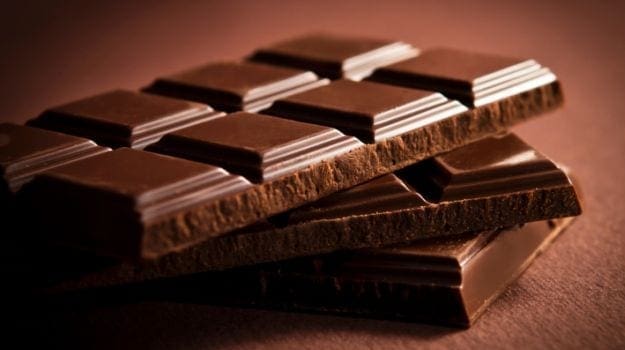
It’s makeover time for the chocolate bars you’ve loved since you were a kid. On Thursday, some big-brand candy companies made a joint announcement that they�ll be shrinking the package size of their products, which in turn will lower the total calorie count. The label on the front of the bar will also list the exact number of calories inside.
The changes, to be completed by 2022, are all part of an effort to tackle the high rates of obesity in the U.S. The companies made the announcement at a meeting organized by the Partnership for a Healthier America; participating brands include Mars Chocolate, Wrigley, Nestle USA, Ferrero, Lindt, Ghirardelli, Russell Stover, and Ferrara Candy Company.
Healthy Changes for Chocolate Bars
Here�s a rundown of how the candy counter is going to change. First, half of the individually wrapped products made by the above brands will be available in smaller single-serving packages that have no more than 200 calories. Calorie counts will also be easier to read and understand, as they’ll be printed right on the front of the package. The calorie count will cover the entire bar or bag. Also, no more serving-size mumbo-jumbo.
Information about candy will be easier to access as well. A new website known as, AlwaysATreat.com, will become a digital resource to help consumers understand what ingredients go into the candy and chocolate and the will help have any questions answered.
Currently, most of the individually wrapped products these companies sell already have less than 250 calories per package, so the change won�t seem drastic. But with more size options, people can more easily choose how they�d like to indulge.
�Educating the public about food products, even candy, is key to helping consumers make informed choices,” says Libby Mills, RD, spokesperson for the Academy of Nutrition and Dietetics. But despite the changes, “consumers need to remember that smaller portions with nutritional information on the packaging doesn�t mean that the candy item is healthy.�
The scope of our information is limited to chiropractic and spinal injuries and conditions. To discuss options on the subject matter, please feel free to ask Dr. Jimenez or contact us at 915-850-0900 .
Additional Topics: Weight Loss Eases Back Pain
Back pain and symptoms of sciatica can affect a majority of the population throughout their lifetime. Research studies have demonstrated that people who are overweight or obese experience more back complications than people with a healthy weight. A proper nutrition along with regular physical fitness can help with weight loss as well as help maintain a healthy weight to eliminate symptoms of back pain and sciatica. Chiropractic care is also another natural form of treatment which treats back pain and sciatica utilizing manual spinal adjustments and manipulations.
To the age-old question �Is coffee bad for you?�, researchers are in more agreement than ever that the answer is a resounding �no.�
A new study published in the journal Nature Medicine found that older people with low levels of inflammation � which drives many, if not most, major diseases � had something surprising in common: they were all caffeine drinkers.
�The more caffeine people consumed, the more protected they were against a chronic state of inflammation,� says study author David Furman, consulting associate professor at the Institute for Immunity, Transplantation and Infection at Stanford University. �There was no boundary, apparently.�
Coffee and Aging
In the study, Furman and his colleagues analyzed blood samples from 100 young and old people. The older people tended to have more activity in several inflammation-related genes compared with the younger group � no surprise, since as people get older, inflammation throughout the body tends to rise. Chronic diseases of aging, like diabetes, hypertension, heart problems, cancer, joint disorders and Alzheimer�s, are all believed to have inflammation in common. �Most of the diseases of aging are not really diseases of aging, per se, but rather diseases of inflammation,� Furman says. The more active these genes were, the more likely the person was to have high blood pressure and atherosclerosis.
What�s more, even among older people, those with lower levels of these factors were more protected against inflammation � and they had something else in common too. They all drank caffeine regularly. People who drank more than five cups of coffee a day showed extremely low levels of activity in the inflammatory gene pathway. Caffeine inhibits this circuit and turns the inflammatory pathway off, the researchers say.
The goal isn�t to make every trace of inflammation disappear, the scientists stress. In fact, inflammation is an important function of the immune system, which uses it to fight off infections and remove potentially toxic compounds. But with aging, the process isn�t regulated as well as it is in a younger body. �Clearly in aging something is breaking down, and we become less effective at managing this inflammation,� says Mark Davis, director of the Stanford institute. �But now in this paper, we identify a particular pathway that was not associated with inflammation before. We are able to point, with a much higher resolution picture, at aging and the things that should be markers for inflammation.�
The key will be to figure out when the inflammatory response starts to spiral out of control. In an upcoming study, Furman and others will soon investigate the immune systems of 1,000 people; he hopes to use that information to develop a reference range of immune-system components to tell people whether their levels are normal, or if they�re at higher risk for developing chronic conditions driven by inflammation. In the meantime, following the example of caffeine-drinking adults with lower levels of inflammation � by having a cup of joe or two � might be a good idea.
The scope of our information is limited to chiropractic and spinal injuries and conditions. To discuss options on the subject matter, please feel free to ask Dr. Jimenez or contact us at 915-850-0900 .
Additional Topics: What is Chiropractic?
Chiropractic care is an well-known, alternative treatment option utilized to prevent, diagnose and treat a variety of injuries and conditions associated with the spine, primarily subluxations or spinal misalignments. Chiropractic focuses on restoring and maintaining the overall health and wellness of the musculoskeletal and nervous systems. Through the use of spinal adjustments and manual manipulations, a chiropractor, or doctor of chiropractic, can carefully re-align the spine, improving a patient�s strength, mobility and flexibility.
The first rule of diet success is to make changes you can stick with for the long term. And that means scheduling — not skipping — meals and snacks. This keeps you feeling satisfied and helps you say no to tempting high-fat foods.
You might do best on a plan with many small meals throughout the day. Or maybe a schedule of three meals, two small snacks and a low-calorie dessert would work better for you. People often find that mid-morning and mid-afternoon snacks help them stick to a diet.
For a small-meal schedule, you might plan out five 200- to 250-calorie meals for 7 a.m., 10 a.m., 1 p.m., 4 p.m. and 7 p.m. For a three-meal/two-snack schedule, you could schedule breakfast, a mid-morning snack, lunch, a mid-afternoon snack and then dinner with dessert. Schedule snacks for about two hours after breakfast and lunch.
Once you decide on a schedule, plan out your meals and snacks. Using a diet diary can help keep you on track. Pick and choose from lean protein, low- or no-fat dairy, whole grains, fruits, vegetables and some heart-healthy fats.
Starting a Dietary Plan
Snacks can be a great way to get more fruits and vegetables into your day.
Great veggie snacks include:
Bell pepper strips.
Baby carrots.
Pea pods.
For fruit snacks, consider:
Small apples or pears.
A cup of melon chunks or berries.
A dozen red or green grapes.
A diet-friendly dessert of frozen yogurt and berries after dinner will keep you from missing high-calorie pies and cakes.
But what about calories? In general, aim for 1,000 to 1,200 a day if you’re a woman, 1,200 to 1,600 if you’re a man.
Bottom line: It might take some time to find the right eating schedule for your lifestyle, but nailing this first step will help you lose weight and keep it off.
News stories are written and provided by HealthDay and do not reflect federal policy, the views of MedlinePlus, the National Library of Medicine, the National Institutes of Health, or the U.S. Department of Health and Human Services.
The scope of our information is limited to chiropractic and spinal injuries and conditions. To discuss options on the subject matter, please feel free to ask Dr. Jimenez or contact us at 915-850-0900 .
Additional Topics: Weight Loss Eases Back Pain
Back pain and symptoms of sciatica can affect a majority of the population throughout their lifetime. Research studies have demonstrated that people who are overweight or obese experience more back complications than people with a healthy weight. A proper nutrition along with regular physical fitness can help with weight loss as well as help maintain a healthy weight to eliminate symptoms of back pain and sciatica. Chiropractic care is also another natural form of treatment which treats back pain and sciatica utilizing manual spinal adjustments and manipulations.
Dozens of studies have found that exercising can lift your spirits by boosting levels of serotonin — the “feel good” hormone — but a study from the University of Connecticut shows the exercise doesn’t have to leave you sweating and panting for breath. If you spend hours at your desk at work or sit at home watching television, just getting up and moving around can reduce depression and make you feel better about yourself.
“We hope this research helps people realize the important public health message that simply going from doing no physical activity to performing some physical activity can improve their subjective well-being,” says study lead author Gregory Panza.
“What is even more promising for the physically inactive person is that they do not need to exercise vigorously to see these improvements,” Panza continues. “Instead, our results indicate you will get the best ‘bang for your buck’ with light or moderate-intensity physical activity.”
Light physical activity is the equivalent of taking a leisurely walk around the mall with no noticeable increase in breathing, heart rate, or sweating, said Linda Pescatello, senior author of the study that was published in the Journal of Health Psychology.
Moderate intensity activity is equivalent to walking a 15-20-minute mile with an increase in breathing, heart rate, and sweating, yet still being able to carry on a conversation. Vigorous activity is equivalent to a very brisk walk or jogging a 13-minute mile with a very noticeable increase in breathing, heart rate, and sweating to the point of being unable to maintain a conversation.
The study tracked the movements of 419 middle-aged adults for four days and then asked them to fill out questionnaires including exercise habits, depression, pain levels, and feelings of well-being.
Researchers found that those who were most sedentary were the least happy. Overall, physical activity improved their sense of well-being. But different levels of physical activity helped some people more than others.
People who were sedentary and engaged in light or moderate physical exercise showed the greatest improvement in their sense of well-being.
“The ‘more is better’ mindset may not be true when it comes to physical activity intensity and subjective well-being,” says Panza. “In fact, an ‘anything is better’ attitude may be more appropriate if your goal is a higher level of subjective well-being.”
Most previous studies found that although exercise increased serotonin levels, the most effective exercises were aerobic, like running, swimming and biking.
There are other simple ways that are clinically proven to increase serotonin levels including massage and getting enough sunlight.
Warding off the joint pain of gout may be as easy as eating right, a new study suggests.
Gout, a joint disease that causes extreme pain and swelling, is caused by excess uric acid in the blood. It’s the most common form of inflammatory arthritis, and its incidence has risen among Americans over recent decades, Harvard researchers noted.
But the DASH (Dietary Approaches to Stop Hypertension) diet — which is high in fruits and vegetables, and low in salt, sugar and red meat — can lower levels of uric acid in the blood.
The American Heart Association has long supported the DASH regimen as a way to help avoid heart disease.
“Conversely, the [unhealthy] Western diet is associated with a higher risk of gout,” said Dr. Hyon Choi, of Harvard Medical School in Boston, and colleagues. The “Western” diet describes the fatty, salty, sugar-laden fare of many Americans.
One nutritionist wasn’t surprised by the new findings, pointing out that the DASH diet is low in compounds called purines, which break down to form uric acid.
“I can see how the DASH diet may benefit someone with gout,” said Jen Brennan, clinical nutrition manager at Lenox Hill Hospital in New York City. “The DASH diet avoids excessive consumption of red and organ meats known to have high purine levels.”
Brennan added that the DASH diet “also encourages high intake of fruits and vegetables. We want to encourage fluids and vitamin C for these patients to help rid the body of uric acid, and fruits/vegetables can support this.”
In their study, the Harvard researchers analyzed data from more than 44,000 men, aged 40 to 75, who had no prior history of gout. The men provided information about their eating habits every four years between 1986 and 2012.
Over the study period, more than 1,700 of the men developed gout.
During 26 years of follow-up, those who followed the DASH diet — high in fruits, vegetables, legumes, nuts, low-fat dairy products and whole grains, and low in salt, sugary drinks and red and processed meats — were less likely to develop gout than those who ate a typical Western diet, the findings showed.
The Western diet is high in items such as red and processed meats, French fries, refined grains, sweets and desserts.
The study wasn’t designed to prove a cause-and-effect relationship. However, the findings suggest that the DASH diet may provide “an attractive preventive dietary approach for the risk of gout,” the researchers concluded.
Choi’s team noted that many people who have high uric acid levels also have elevated blood pressure, or “hypertension” — another reason to switch to the healthier DASH diet.
According to the study’s lead author, Sharan Rai, of Massachusetts General Hospital, “The diet may also be a good option for patients with gout who have not reached a stage requiring [uric acid]-lowering drugs, or those who prefer to avoid taking drugs.” Rai is with Mass General’s division of rheumatology, allergy and immunology.
“And since the vast majority of patients with gout also have hypertension, following the DASH diet has the potential of ‘killing two birds with one stone,’ addressing both conditions together,” Rai said in a hospital news release.
However, more studies are needed to track the diet’s effectiveness in curbing gout flare-ups, the researchers said.
Dana Angelo White is a registered dietitian at Quinnipiac University in Hamden, Conn. She called the new study “another win for the DASH diet, a sensible plan that emphasizes whole foods and a healthy balance of all major food groups. I’m pleased to see a study that highlights the benefits beyond cardiovascular health. If more people ate this way, we would continue to see decreases in all kinds of chronic illness.”
IFM's Find A Practitioner tool is the largest referral network in Functional Medicine, created to help patients locate Functional Medicine practitioners anywhere in the world. IFM Certified Practitioners are listed first in the search results, given their extensive education in Functional Medicine